Balkan cooking isn't one cuisine with one rulebook. It's a shared table shaped by centuries of movement, trade, and Ottoman influence across the region, a history that helps explain why dishes like burek, stuffed vegetables, grilled minced meats, syrup desserts, peppers, and coffee traditions appear across multiple Balkan countries in different local forms, as outlined in this historical overview of Ottoman influence on Balkan foodways from DergiPark.
That's the surprising part for many home cooks. Some of the most recognizable Balkan food recipes feel highly specific, yet they belong to a wider regional pattern rather than a single fixed national template. UNESCO's cultural heritage framework has even treated Balkan cuisine as a meaningful heritage category, including a “Balkan Cuisine” culinary demonstration tied to the convention's anniversary programming, which gives these dishes a documented cultural context beyond everyday home cooking in the UNESCO intangible heritage event record.
A good Balkan table reflects that breadth. You might see flaky pastry next to grilled meat, a chopped salad beside a slow braise, roasted peppers near soft dairy, then end with a syrup-soaked dessert.
The ten dishes below build that table one plate at a time. You'll find appetizers, mains, sides, and sweets, with each recipe broken down by role on the table, core ingredients, timing, skill level, regional context, and one practical technique that makes it easier to cook well at home.
Table of Contents
- 1. Burek (Meat or Cheese Filled Pastry)
- 2. Ajvar (Roasted Red Pepper Spread)
- 3. Cevapi (Grilled Minced Meat Sausages)
- 4. Shopska Salad (Balkan Village Salad)
- 5. Sarma (Cabbage Rolls with Meat and Rice)
- 6. Baklava (Phyllo Pastry with Nuts and Honey)
- 7. Moussaka (Layered Eggplant and Meat Casserole)
- 8. Gibanica (Cheese and Egg Pie)
- 9. Pljeskavica (Balkan Burger)
- 10. Cevapcici Platter with Lepinja Bread and Condiments
- 10 Balkan Recipes Comparison
- Build Your Own Balkan Menu
1. Burek (Meat or Cheese Filled Pastry)
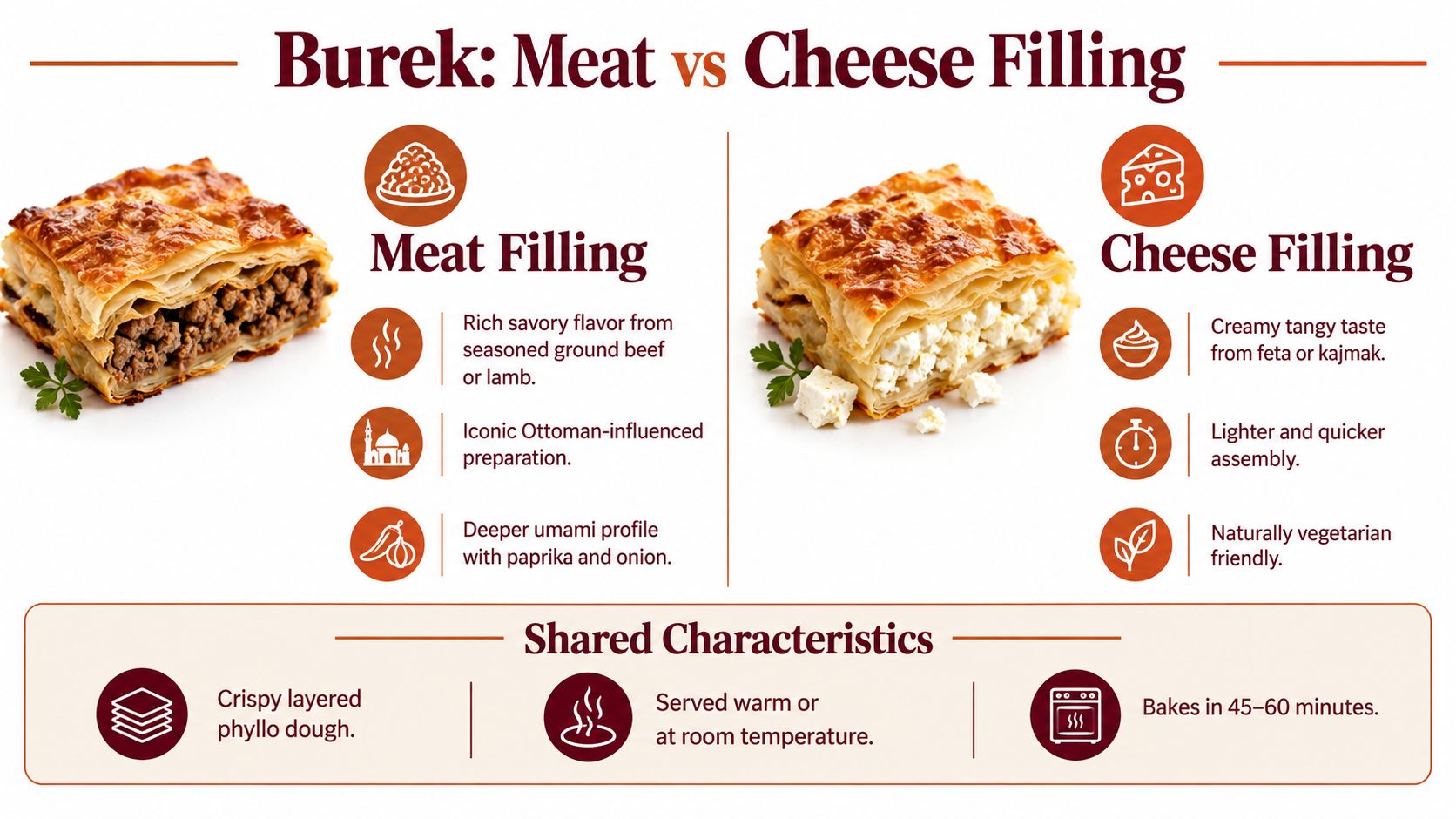
Burek may be the fastest way to understand how Balkan cooking turns a few basic ingredients into a full meal experience. On one table, it can stand in for breakfast with yogurt, serve as a bakery lunch, or anchor a larger spread with salad, roasted peppers, and grilled meat. That range is part of why it remains one of the defining pastries across the region.
Its role is simple to recognize once you know what to look for. Burek brings crisp layers on top, a tender center underneath, and enough richness to make a small slice feel satisfying. The exact form changes by country, city, and even bakery. You will see spirals, long rolled logs, round pans, and fillings that shift from meat to cheese and beyond. In some places, cooks use the word burek only for meat-filled versions. Elsewhere, it functions as a broader category.
How to make sense of the method
For home cooks, the easiest starting point is a layered pan burek made with store-bought phyllo. It gives you the flavor and texture people want from burek without asking you to stretch dough paper-thin by hand. The technique works like building a flaky casserole. Layers of pastry create structure, while the filling stays contained and cooks evenly.
Start by preparing the filling first, then let it cool. This step prevents one of the most common problems. Warm filling releases steam, and steam makes the pastry soggy before it has a chance to crisp. For a meat version, cook ground beef or lamb with onion until the moisture cooks off, then cool it completely. For a cheese version, mix a firm white cheese with egg so the filling sets lightly in the oven instead of slipping out when sliced.
- Time: About 1 hour total, with most of the effort in assembly and baking.
- Skill level: Intermediate, though beginner-friendly with phyllo.
- Best moment to serve: Breakfast, brunch, lunch, or as part of a mixed savory spread.
- Regional context: Found across the Balkans in different shapes and naming traditions. Bosnia and Herzegovina, Serbia, North Macedonia, Bulgaria, Greece, Albania, Croatia, and Montenegro all have local interpretations.
A few handling rules matter more than a long ingredient list. Keep the phyllo covered with a damp towel while you work so it stays flexible. Brush or drizzle fat between layers, but do not soak them. Too little fat makes the pastry dry and brittle. Too much can weigh it down.
Cut the burek before baking. That single step gives you cleaner portions and helps heat reach the center more evenly.
If the top browns too fast, lower the rack or tent the pan loosely with foil for the final stretch. If the bottom stays pale, switch to a metal pan next time, since glass often browns more slowly. If the filling tastes good but the slices collapse, the cause is usually excess moisture or cutting while still too hot. Let it rest for several minutes after baking so the layers can settle.
For cooks who want more context on pastries and the rest of the meal, the The Balkan Kitchen 52-recipe digital PDF collection places burek alongside the salads, grilled dishes, soups, sauces, and desserts that usually surround it on a Balkan table.
2. Ajvar (Roasted Red Pepper Spread)
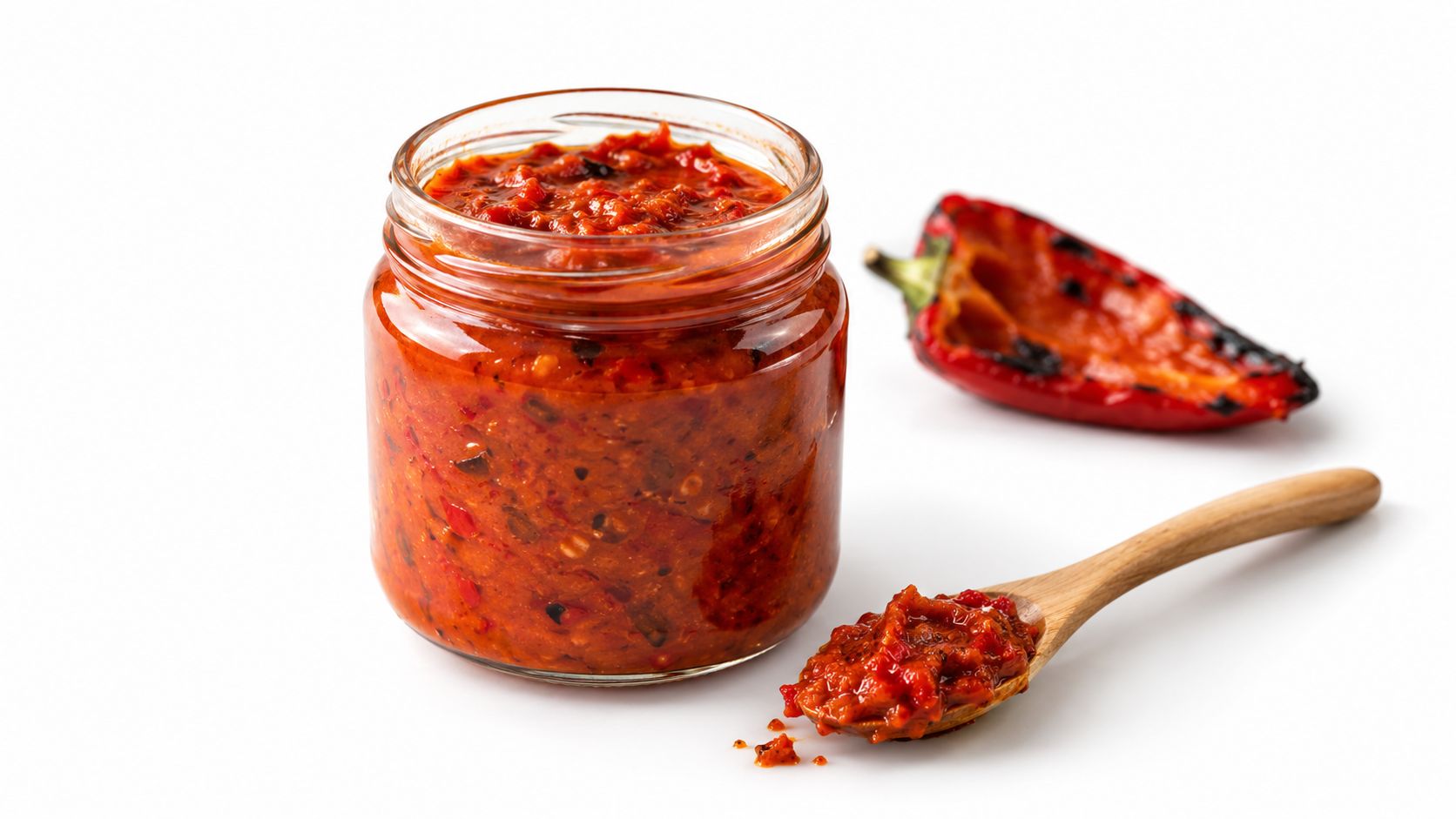
Ajvar is the jar that makes the rest of the meal make sense. Set it beside bread, grilled meat, white cheese, or eggs, and suddenly the plate has contrast. It brings sweetness from peppers, smoke from roasting, and enough acidity to keep richer foods from feeling heavy.
That role matters on a Balkan table. Ajvar is rarely the center of the meal, but it often ties the meal together. A spoonful next to ćevapi, pljeskavica, or a simple slice of bread does the same job mustard, chutney, or salsa might do elsewhere, except the flavor profile is distinctly Balkan.
Home cooks usually get better results by focusing on texture first, then seasoning. If the peppers are properly roasted and peeled, you are already most of the way there. If the vegetables are under-roasted, no amount of garlic or salt will fully fix the flat taste.
Start with red peppers. They give ajvar its familiar sweetness and deep color. Many versions also include eggplant, which softens the spread and adds body, though some regional styles stay pepper-forward. Roast until the pepper skins blister and blacken and the eggplant is fully collapsed. Steam the peppers briefly after roasting so the skins slip off easily, then drain away excess liquid before blending or chopping.
Ajvar can be rustic or smooth. Both are correct.
For a practical home version, roast the vegetables one day and finish the spread the next. That split timing makes ajvar feel less like a project and more like a manageable side dish. It also helps because cooled peppers are easier to peel cleanly.
Here is the part that confuses many cooks. Ajvar should taste concentrated, not just soft. After blending, cook it down if needed until it spreads easily on bread without leaking liquid. If it tastes dull, add salt first. If it still feels heavy, add a small amount of acid. If it tastes thin even after seasoning, it usually needs more reduction, not more spices.
- Best for: Meze plates, grilled meat platters, sandwiches, and breakfast spreads
- Time: Moderate overall, with most of the work in roasting and peeling
- Skill level: Beginner-friendly if you are comfortable roasting vegetables
- Regional context: Common across the Balkans, with differences in heat level, texture, and the use of eggplant
The easiest mistake to avoid is wateriness. Let the vegetables drain after peeling, especially the peppers. The next most common issue is bitterness, which usually comes from too many green peppers or burnt flesh left mixed in with the charred skin. You want the smoky flavor of roasted peppers, not the harsh taste of blackened flesh.
If you enjoy this style of vegetable-first cooking, the roasting approach overlaps with the methods in this Mediterranean cooking guide for home cooks. For cooks building a full menu, The Balkan Kitchen e-book collection places ajvar where it belongs, alongside the breads, grilled meats, salads, and pies it is meant to accompany.
3. Cevapi (Grilled Minced Meat Sausages)
Ćevapi are often the dish that convinces home cooks Balkan grilling is less about complicated seasoning and more about texture, heat, and restraint. On a full table, their job is clear. They anchor the meal. Bread, raw onion, ajvar, kaymak, and salad all exist to support that hot, savory center.
Regional versions differ, and that matters here. Some are made with beef only, some with a mix of beef and lamb, and some stay very lightly seasoned so the smoke and meat carry the flavor. For a home cook, that means you do not need to chase one "correct" formula. You need a mixture with enough fat, a light hand when mixing, and a hot cooking surface.
Build the texture first
If sausages in casings rely on a wrapper to hold shape, ćevapi rely on the meat paste itself. That is the part many cooks miss. The mixture should feel tacky enough to hold together, but not kneaded until springy and dense.
Shape them into short, even logs and chill them before cooking. Cold meat is easier to handle and less likely to slump the moment it hits the grill or pan. If you want an easier dinner workflow, shape them earlier in the day, then cook them just before serving while the bread warms and the onions are sliced.
A useful home approach is to treat ćevapi like the main protein in a composed plate rather than a stand-alone recipe. Serve them for lunch or dinner with lepinja or other flatbread, chopped onion, ajvar, and something fresh on the side. In a ten-recipe Balkan meal plan, this is the fast grilled course that helps balance slower dishes like sarma or baked pies.
- Time: Short cooking time, with extra time helpful for chilling after shaping
- Skill level: Beginner to intermediate
- Best moment to serve: Fast dinner, weekend grilling, or mixed platters
- Regional context: Found across the Balkans, with differences in meat blend, size, and seasoning
Two problems show up again and again. Dry ćevapi usually come from meat that is too lean or from overcooking. Tough, rubbery ćevapi usually come from overmixing. Mix only until the salt and seasonings are evenly distributed, then stop.
If they stick, the surface was not hot enough or they were moved too early. If they crack, the mixture may be too cold and stiff straight from the refrigerator, or too loosely mixed to hold together. Let them sit for a few minutes at room temperature while the grill heats, then cook over strong heat until browned outside and just cooked through inside.
For cooks who want to build confidence across the full Balkan table, ćevapi are a strong midpoint recipe. They teach heat control, meat texture, and platter building in one dish, and those same skills carry into the broader The Balkan Kitchen e-book collection.
4. Shopska Salad (Balkan Village Salad)
Shopska salad is the plate reset. After a bite of flaky burek, grilled meat, or a baked casserole, it brings the meal back into balance with cool vegetables, sharp acidity, and a blanket of salty white cheese. Across a full ten-recipe Balkan menu, this is the fast fresh course that keeps heavier dishes from crowding each other.
Its role is simple, but the result depends on judgment more than complexity. A good Shopska salad should taste lively and clean, not watery, not overdressed, and not buried under cheese. Home cooks sometimes treat it like any chopped salad. Balkan versions usually aim for clearer contrast. Juicy tomato, crisp cucumber, sweet or mildly sharp pepper, a little onion, then cheese that seasons the whole bowl.
Start with the vegetables, because they do most of the work. Choose ripe tomatoes with actual flavor, firm cucumbers, and peppers that still snap when cut. Onion can be white, yellow, or red depending on what tastes balanced to you and what your household prefers. Cut everything into generous, spoonable pieces. The texture should feel rustic, closer to a village table than a finely chopped deli salad.
Then build it in layers. Toss the vegetables with a little salt, oil, and acidity first. Add the cheese at the end so it stays distinct instead of dissolving into the juices. Sirene is the classic Bulgarian choice, while feta is the substitute many cooks use outside the region. Both work, but sirene is usually saltier and firmer, so adjust the final seasoning after the cheese goes on.
For timing and planning, Shopska is one of the easiest recipes in the lineup:
- Time: About 15 minutes, with a few extra minutes helpful if you want the tomatoes to release some moisture first
- Skill level: Beginner
- Best moment to serve: First course, side for grilled or baked dishes, or a light lunch with bread
- Regional context: Closely tied to Bulgaria, though similar chopped salads appear across the Balkans with small changes in pepper, onion, cheese, and dressing
If the bowl turns soupy, the tomatoes are usually the reason. Salt them lightly after cutting, let them sit briefly, then drain off excess liquid before mixing the full salad. If the onion tastes too aggressive, rinse the slices in cold water for a minute and pat them dry. That keeps the bite, but softens the harsh edge.
For home cooks working through the broader Balkan table, Shopska teaches an overlooked skill. It shows how freshness and restraint support richer food. Once you understand that role, menu building gets easier, whether you are pairing it with one grilled dish or using it as part of the wider The Balkan Kitchen e-book collection.
5. Sarma (Cabbage Rolls with Meat and Rice)
Sarma is one of the dishes that teaches you how Balkan comfort food works. It turns modest ingredients, cabbage, minced meat, rice, onions, and time, into something layered and savory. On the table, it often sits in the center like a cold-weather anchor, the dish that makes bread, yogurt, pickles, or a spoonful of sour cream feel complete.
Many home cooks meet sarma at family lunches, winter gatherings, or holiday meals because it holds well and reheats beautifully. That role matters. Unlike a quick salad or a just-grilled meat, sarma is built for cooking ahead, resting, and serving in generous spooned portions from a pot or baking dish.
The method follows a simple sequence. Soften the cabbage leaves, prepare a lightly seasoned filling, roll, pack tightly, then cook slowly until the leaves relax and the juices from the meat, rice, and cabbage blend together. It works like a braise wrapped in its own portioned package.
Regional variation is wide, and that is part of the point. Some cooks use fresh cabbage leaves blanched in hot water. Others prefer sour fermented cabbage, which gives the rolls a sharper, deeper flavor. Smoked ribs, bacon, or dried meat may line the pot in some households, while others keep the dish plain and let the filling carry the meal.
For a home cook, the main challenge is control rather than complexity. Thick cabbage ribs can make rolling awkward, so trim them down with a knife until the leaf bends without cracking. Fill each leaf modestly. A smaller roll cooks more evenly and stays closed more reliably than an overstuffed one.
Here is the practical snapshot for planning:
- Time: About 30 to 45 minutes to prep, then 1.5 to 2 hours of gentle cooking
- Skill level: Intermediate, mostly because shaping takes practice
- Best moment to serve: Family dinners, winter weekends, holiday spreads, and make-ahead lunches
- Regional context: Found across the Balkans with differences in cabbage type, seasoning, smoked meat, and cooking vessel
If the rice turns mushy, it usually started too wet or had too much cooking liquid. Use uncooked or only briefly rinsed rice, and avoid overpacking the pot with broth. If the cabbage still tastes tough after the filling is done, the heat was likely too high or the cooking time too short. Lower, slower cooking gives the leaves time to soften without breaking apart.
A good first batch does not need to look perfect. Sarma is one of those dishes where flavor outruns appearance very quickly. Once you learn how tightly to roll, how much liquid the pot needs, and which cabbage you prefer, you gain a reliable main dish that helps connect the lighter, grilled, baked, and sweet recipes across the wider The Balkan Kitchen e-book collection.
6. Baklava (Phyllo Pastry with Nuts and Honey)
Baklava is the dessert that teaches an important Balkan table rule. Rich sweets are served in small portions because they arrive after a full meal, coffee, and conversation, not as a giant finale on an empty plate. A well-made tray gives you crisp layers, fragrant nuts, and syrup that soaks in without turning the pastry heavy.
Its place on the table matters as much as its ingredients. In many Balkan homes, baklava appears for holidays, religious celebrations, visiting guests, and long family meals where desserts are passed around rather than plated one by one. Versions differ from house to house. Some use walnuts, others pistachios or mixed nuts. Some syrups lean toward honey, while others rely more on sugar and lemon for clarity and balance.
A home cook should focus on sequence. Baklava works like roof shingles. Each thin sheet protects the one below it, and the fat between layers helps them separate into flakes instead of baking into a dense block. Build the base with several buttered sheets, add an even layer of finely chopped nuts, continue layering, then cut the tray before it goes into the oven so the pieces hold their shape.
The syrup deserves equal attention. Hot syrup on hot pastry often softens the top too much, while cold syrup on fully cooled baklava may sit unevenly on the surface. Many cooks get the best texture by creating contrast, either warm pastry with cooler syrup or hot syrup over slightly rested pastry. The goal is absorption with structure, not sogginess.
For planning, baklava fits the dessert slot in this ten-recipe meal path especially well because it can be made ahead.
- Time: About 30 minutes to assemble, plus baking and resting time
- Skill level: Beginner to intermediate, mostly because handling phyllo takes a calm pace
- Best moment to serve: Holiday tables, coffee service, dessert platters, and next-day sweets for guests
- Regional context: Common across the Balkans with differences in nut choice, syrup flavoring, pan shape, and cutting style
Two problems cause most disappointing trays. If the top layer flies apart when you serve it, the phyllo likely dried out during assembly or the tray was cut with too much pressure after baking. Keep unused sheets covered with a towel, and score the pieces cleanly before they go into the oven. If the bottom turns dense and sticky, the syrup quantity was too high or the layers were packed too tightly with butter and nuts.
Baklava rewards patience more than speed. Let it rest long enough for the syrup to settle through the layers, then serve it in small diamonds or squares with coffee or tea. Once you understand that rhythm, you gain a dessert that rounds out the savory side of the Balkan table and opens a natural next step into the broader The Balkan Kitchen e-book collection, where regional sweets become much easier to compare and practice at home.
7. Moussaka (Layered Eggplant and Meat Casserole)
Moussaka earns its place as the centerpiece of a Balkan meal because one pan can do the work of several dishes. You get the comfort of a baked casserole, the savoriness of a meat course, and the softness of vegetables that have absorbed the flavors around them.
Across the Balkans, the name covers more than one style. Some households build it with potatoes, some with eggplant, and some combine both. The eggplant and meat version remains one of the clearest entry points for home cooks because the structure is easy to understand: tender vegetable base, well-seasoned meat in the middle, and a top layer that sets into a soft cap rather than a sauce.
A quick look at the dish helps before you start cooking.
What matters most is moisture control.
Eggplant acts like a sponge, so if you skip the salting or crowd the pan while cooking, it can hold too much water and oil at once. The meat layer should be reduced until it looks rich and spoonable, not loose like pasta sauce. The top layer, whether you use béchamel or an egg-enriched dairy mixture common in some homes, needs enough body to bake into clean slices.
For a home cook, it helps to treat moussaka as three small jobs instead of one complicated recipe. Prepare the eggplant first. Then cook the meat filling until the liquid is mostly gone. Finish with the topping and assemble only when each part looks stable on its own.
Here is how it fits into this ten-recipe meal plan:
- Time: About 1 hour 30 minutes to 2 hours, including salting, frying or roasting, baking, and resting
- Skill level: Intermediate, mostly because several components need to be ready at the same time
- Best moment to serve: Weekend dinner, family gathering, or make-ahead main course
- Regional context: Versions differ by country and household, especially in the choice of eggplant, potatoes, spices, and custard or béchamel topping
If your slices collapse on the plate, check the sequence rather than blaming the whole recipe. Undercooked eggplant turns silky before it turns fully tender, so it may look done too early. A thin meat filling releases steam as the casserole rests. Cutting too soon finishes the damage. Let the baked pan stand until the layers settle, then use a sharp knife for square portions.
Moussaka rewards planning more than speed. That makes it a useful anchor dish in The Balkan Kitchen collection, where recipes are easier to compare once you see how each region solves the same problem in a different way: building a filling meal from layered staples with good texture at every level.
8. Gibanica (Cheese and Egg Pie)
Gibanica earns its place on the Balkan table by doing two jobs at once. It has the comfort of a baked pie, but it serves with the flexibility of a breakfast pastry, a brunch dish, or a light supper. In many homes, it appears when cooks want something generous and filling without the longer shaping work that some other phyllo dishes require.
For a home cook, the easiest way to understand gibanica is to separate it into two parts: a soft dairy filling and crinkled sheets of phyllo that catch that filling in layers. The goal is not sharp, dry flakes. You want a pie that bakes into a golden top with a tender center, almost like the meeting point between a casserole and a savory pastry.
That difference matters, because new cooks often expect it to behave like burek. Gibanica usually welcomes a looser hand. Torn sheets are fine. Uneven folds are fine. What matters is balance. Enough filling to keep the interior moist, enough pastry left exposed on top to brown and crisp.
A practical version for most kitchens uses feta, cottage cheese, or farmer cheese with eggs and a little sour cream or yogurt. Some regional styles enrich the mixture with kajmak or use different white cheeses depending on what the household has on hand. No single blend defines the dish across the Balkans, so use a combination that tastes pleasantly salty and creamy before it goes into the pan.
For this ten-recipe meal plan, gibanica fills an important middle spot. It can open the day, anchor a casual lunch, or sit beside salads and spreads as part of a larger table.
- Time: About 50 minutes to 1 hour 15 minutes, depending on whether you assemble a simple layered pan or a more folded style
- Skill level: Beginner to intermediate, with phyllo handling as the main learning point
- Best moment to serve: Breakfast, brunch, light dinner, or buffet-style gathering
- Regional context: Methods vary widely, from neatly layered versions to rustic, crumpled styles with different fresh and brined cheeses
If the bottom turns soggy, the filling was probably too wet or the pie needed more time in the oven. Strain very soft cheese, and do not pour in extra dairy just because the mixture looks thick. If the top browns before the center sets, cover it loosely for the last part of baking and wait until the middle feels lightly springy rather than liquid.
Let it rest before slicing. That short pause finishes the structure and makes the difference between a spooned casserole texture and clean, bakery-style squares.
Gibanica is one of the clearest examples of what The Balkan Kitchen e-book collection does well. It shows how one familiar set of ingredients, cheese, eggs, and phyllo, can shift from region to region and still keep the same role at the table.
9. Pljeskavica (Balkan Burger)
Pljeskavica is the Balkan table's answer to a fast, satisfying main course: big enough to anchor a meal, simple enough for a weeknight, and flexible enough to dress up with flatbread, raw onion, kajmak, or ajvar. It fills the same role a backyard burger does in the United States, but the eating experience is broader and flatter, with more crust in each bite and more room for condiments.
Home cooks usually get better results once they stop shaping it like a thick burger. Pljeskavica works best as a wide, relatively thin patty. That shape matters because it cooks quickly, browns evenly, and fits lepinja or other flatbread without turning the meal into a stacked sandwich that falls apart.
A good starting point is mixed minced meat with enough fat to stay juicy. Handle it lightly, season it, then press the patties just until they hold together. Overworked meat turns springy and dense. If you have made meatballs or burgers before, the adjustment is small: use a broader shape, keep the center slightly thinner or dimpled, and cook over steady heat rather than chasing a heavy char before the inside is done.
For this ten-recipe set, pljeskavica is one of the quickest dinner options.
- Timing: About 25 to 35 minutes, including shaping and cooking
- Skill level: Beginner
- Where it fits in the meal: Casual lunch, easy dinner, or outdoor grill spread
- Regional context: Some areas prefer pure beef, others use beef and pork, and some versions include onion, paprika, or a bit of baking soda for a softer texture
Two problems show up often. The first is puffing. A shallow dent in the center helps the patty stay flatter as it cooks. The second is dryness. That usually comes from meat that is too lean or from pressing on the patty while it cooks, which pushes flavorful juices into the pan instead of keeping them in the meat.
Serve the bread warm, not steaming, and add the condiments at the table so everyone can build their own balance of richness, sharpness, and heat. For cooks who want a useful comparison point on meat blends and patty handling, this beef and pork burger guide helps clarify where pljeskavica follows familiar burger logic and where it differs.
Pljeskavica also shows why The Balkan Kitchen e-book collection is useful for home cooks. A dish that looks simple on the surface still changes from region to region, and small technique choices decide whether it tastes heavy and ordinary or properly Balkan.
10. Cevapcici Platter with Lepinja Bread and Condiments
A proper ćevapčići platter can cover the whole meal with very little last-minute stress. On a Balkan table, it works like a grill board, bread basket, and condiment tray all at once. The meat gives the platter weight, the lepinja catches juices and sauces, the onion adds sharpness, and ajvar or kajmak rounds out each bite in a different direction.
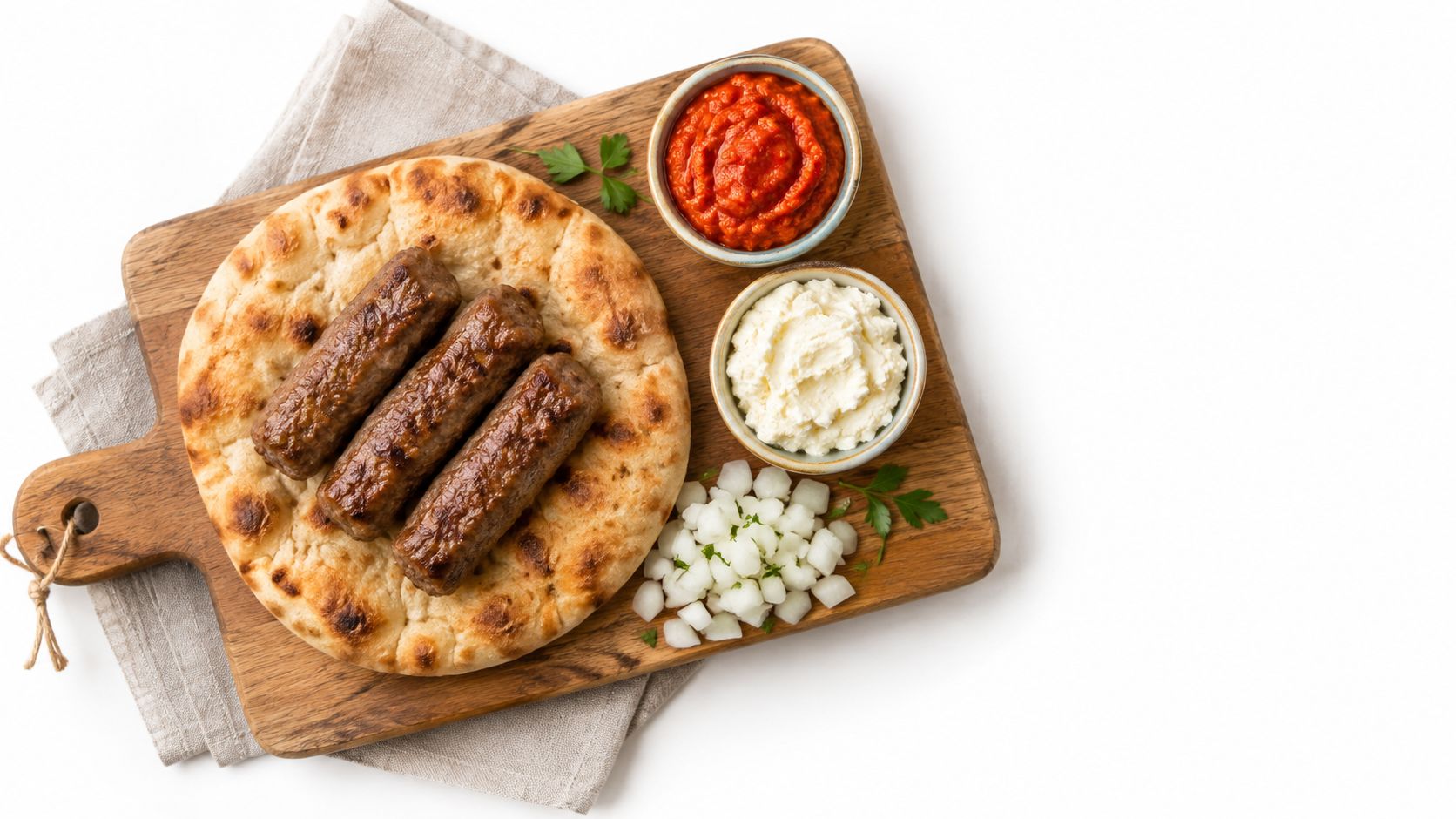
Home cooks often overcomplicate this dish by treating it as ten separate tasks. It is easier to treat it as a service plan. Grill the ćevapčići, warm the bread so it stays soft, set out two or three condiments, and let the table do the rest.
For four people, a useful starting point is 6 to 8 small ćevapčići per person, 1 round of lepinja for every 2 people, 1 medium onion finely diced, and small bowls of ajvar plus kajmak or sour cream. If you are serving other dishes from this list, such as Shopska salad or ajvar, scale the meat down slightly and keep the bread generous.
A simple make-ahead timeline helps:
- 1 day ahead: Mix and shape the meat, dice the onion, and make or buy the condiments.
- A few hours ahead: Bring the bread to room temperature and cover it well so it does not dry out.
- Right before serving: Grill the ćevapčići and warm the lepinja briefly so it bends without cracking.
Regional versions vary, and that is part of the point. Some platters stay very spare with bread, onion, and ajvar. Others add kajmak, roasted peppers, pickled vegetables, or fries. Bosnia is strongly associated with lepinja and onions, while neighboring areas may shift the bread, dairy, or garnish. No single platter defines the whole region.
Two problems show up often. Dry bread usually means it was overheated or left uncovered, so warm it for a minute or two, then wrap it in a clean towel. Meat that tastes flat usually needs more salt in the mix or better heat control, since ćevapčići should brown quickly while staying juicy inside.
For this ten-recipe set, this is one of the best choices for feeding a group without turning dinner into a long assembly project.
- Timing: About 30 to 40 minutes if the meat is already shaped
- Skill level: Beginner to intermediate
- Where it fits in the meal: Shared lunch, casual dinner, or mixed grill spread
- Regional context: Bread, dairy, and garnish choices differ across Bosnia, Serbia, Croatia, and beyond
This platter also shows the value of The Balkan Kitchen e-book collection. The core idea is simple, but the details that make it feel authentic, such as bread texture, condiment balance, and serving order, change from one household and region to the next.
10 Balkan Recipes Comparison
| Dish | Implementation complexity | Resource requirements | Expected outcomes | Ideal use cases | Key advantages |
|---|---|---|---|---|---|
| Burek (Meat or Cheese Filled Pastry) | Medium–High, delicate phyllo handling and assembly | Oven, baking sheet, phyllo, filling ingredients | Crispy layered pastry with savory filling and impressive presentation | Entertaining, breakfast/snack, make-ahead main | Versatile fillings, reheats well, single-dish meal |
| Ajvar (Roasted Red Pepper Spread) | Low–Medium, roasting, peeling and blending steps | Oven or grill, food processor, jars for preserving | Smooth or chunky smoky spread with long shelf life when preserved | Condiment prep, sandwiches, sides, bulk batch cooking | Naturally vegan, economical in batches, freezable |
| Cevapi (Grilled Minced Meat Sausages) | Low–Medium, shaping and high‑heat grilling skill | Grill or griddle, ground meat, simple seasonings | Juicy, smoky minced meat sausages cooked quickly | Weeknight dinners, street‑food style meals, barbecues | Fast to cook, budget‑friendly, crowd‑pleasing |
| Shopska Salad (Balkan Village Salad) | Very Low, chopping and assembly only | Fresh vegetables, crumbled white cheese, bowl and knife | Bright, crisp vegetable salad, light and refreshing side or main | Summer meals, vegetarian mains, quick sides | Quick to prepare, customizable, low cost |
| Sarma (Cabbage Rolls with Meat and Rice) | Medium–High, blanching, rolling, long braise | Large pot, baking dish, cabbage heads, meat and rice | Tender braised rolls with developed, deep flavors | Meal prep, family dinners, cold‑weather comfort food | Improves with time, freezes well, one‑pot complete meal |
| Baklava (Phyllo Pastry with Nuts and Honey) | Medium, careful phyllo layering and syrup timing | Oven, phyllo, nuts, syrup ingredients | Sweet, sticky layered pastry with crisp exterior | Special occasions, desserts for gatherings | Dramatic presentation, make‑ahead friendly, serves many |
| Moussaka (Layered Eggplant and Meat Casserole) | High, multiple component preparations and layering | Oven, multiple pans, béchamel skills, eggplant and meat | Rich, layered casserole with complex textures and flavors | Dinner parties, family meals, make‑ahead mains | Impressive restaurant‑style result, feeds many, reheats well |
| Gibanica (Cheese and Egg Pie) | Low–Medium, simple filling but phyllo care needed | Oven, phyllo, soft cheeses, eggs | Savory custardy cheese pie with flaky phyllo crust | Breakfasts, casual meals, potlucks | Quick assembly, versatile cheeses, freezer‑friendly |
| Pljeskavica (Balkan Burger) | Low–Medium, patty shaping and high‑heat cooking control | Grill or griddle, ground meat blend, flatbread | Large thin grilled patty served in flatbread with condiments | Fast dinners, street‑food style service, casual entertaining | Fast, customizable, budget‑friendly |
| Cevapcici Platter with Lepinja & Condiments | Medium, coordinate multiple hot and cold components | Grill, lepinja/pita, ajvar, kajmak, prep bowls | Interactive communal platter with grilled čevapi and condiments | Entertaining, group meals, barbecues | Scalable for groups, interactive service, showcases regional condiments |
Build Your Own Balkan Menu
The easiest entry point into Balkan cooking is usually the one that matches how you already cook. If you want something quick and low-risk, start with Shopska salad or ajvar. They teach you two important Balkan habits right away: let vegetables taste like themselves, and use simple seasoning to support them rather than bury them.
If you want a faster main, choose ćevapi or pljeskavica. They fit weeknight cooking, especially if you prep the meat ahead. They also show how central grilled minced meat is to the regional table. If your comfort zone is batch cooking, sarma and moussaka make more sense. Both reward a slower session and often taste even better after a rest.
Phyllo cooks should decide what kind of challenge they want. Burek is ideal if you want structure and crisp layers with savory filling. Gibanica is softer and more forgiving. Baklava is the right choice when you want dessert practice and don't mind repetition.
You don't need to make an all-day feast to get the experience right. Pair one fresh dish, one rich dish, and one contrasting condiment. Shopska salad with pljeskavica works. Ajvar with ćevapi and warm bread works. Sarma with a bright chopped salad works. Burek with yogurt on the side works. A good Balkan menu usually balances crunch and softness, smoke and dairy, richness and acidity.
There's also a practical reason to cook this way at home. A usability study of a mobile recipe recommender found favorable ratings for interface design, navigability, and functionality, while overall satisfaction was only somewhat positive, and the analysis explained 94% of satisfaction variability, with navigability among the strong predictors in the mobile recipe usability study PDF. In plain kitchen terms, Balkan dishes are much easier to adopt when instructions are clear, steps are concise, and the cook understands what texture to look for.
That matters because current Balkan recipe coverage still tends to lean on familiar evergreen dishes while leaving a gap around dependable weeknight adaptation, substitutions, and texture cues, as noted by the recipe-content observations summarized through Balkan Lunch Box. There's a second gap around practical health-oriented adaptation, where experimentation exists but step-by-step guidance is thinner, a point reflected in the broader content pattern discussed at Feel the Recipes. So if you've ever felt that Balkan food looks inviting but not always easy to execute, you're not imagining it.
That's where a broader recipe collection can help. If you want more than a ten-dish introduction, The Balkan Kitchen digital cookbook brings together 100 recipes across beverages, appetizers, soups, salads, mains, sides, breads, desserts, and sauces. It's a digital PDF with instant download, device-friendly reading, and lifetime access with no subscriptions or recurring fees, which makes it practical for cooks who want to browse on a phone, tablet, laptop, or print favorite pages. For planning a larger gathering, you might also pair these dishes with ideas from Jolitee's guide to stress-free party food.
A Balkan table doesn't need to be perfect to feel right. It needs generosity, contrast, and a few dishes you trust enough to make again.
Just Cook It publishes downloadable cookbooks and practical cooking resources for home cooks who want reliable recipes without unnecessary complexity. If you'd like more Balkan food recipes, plus clear instructions for everything from grilled meats and breads to sauces and pastries, visit Just Cook It.