Which cookbook is really the best Mediterranean cookbook for beginners, the one with the most recipes, or the one that makes you cook dinner confidently on a busy Tuesday? Those aren't the same thing.
A beginner cookbook earns its place by reducing friction. It shows you what to buy, explains unfamiliar techniques, repeats useful ingredient patterns, and gives you enough structure to keep cooking after the first appealing recipe. The Mediterranean diet's sustained reputation helps explain the demand: U.S. News & World Report ranked it the No. 1 overall diet in 2024 and 2025, and it scored 4.8 out of 5 in the 2025 ranking, also taking first place for categories including easiest to follow, best for healthy eating, family-friendly diets, and heart-healthy diets (Nutrition Insight).
Table of Contents
- Why One Size Does Not Fit All for Beginner Cookbooks
- What Makes a Mediterranean Cookbook Beginner-Friendly
- How to Choose Based on Your Cooking Constraints
- Recommended Cookbooks for Different Beginner Profiles
- Getting Started with Your First Mediterranean Meals
- Common Questions About Mediterranean Cookbooks and Digital Formats
Why One Size Does Not Fit All for Beginner Cookbooks
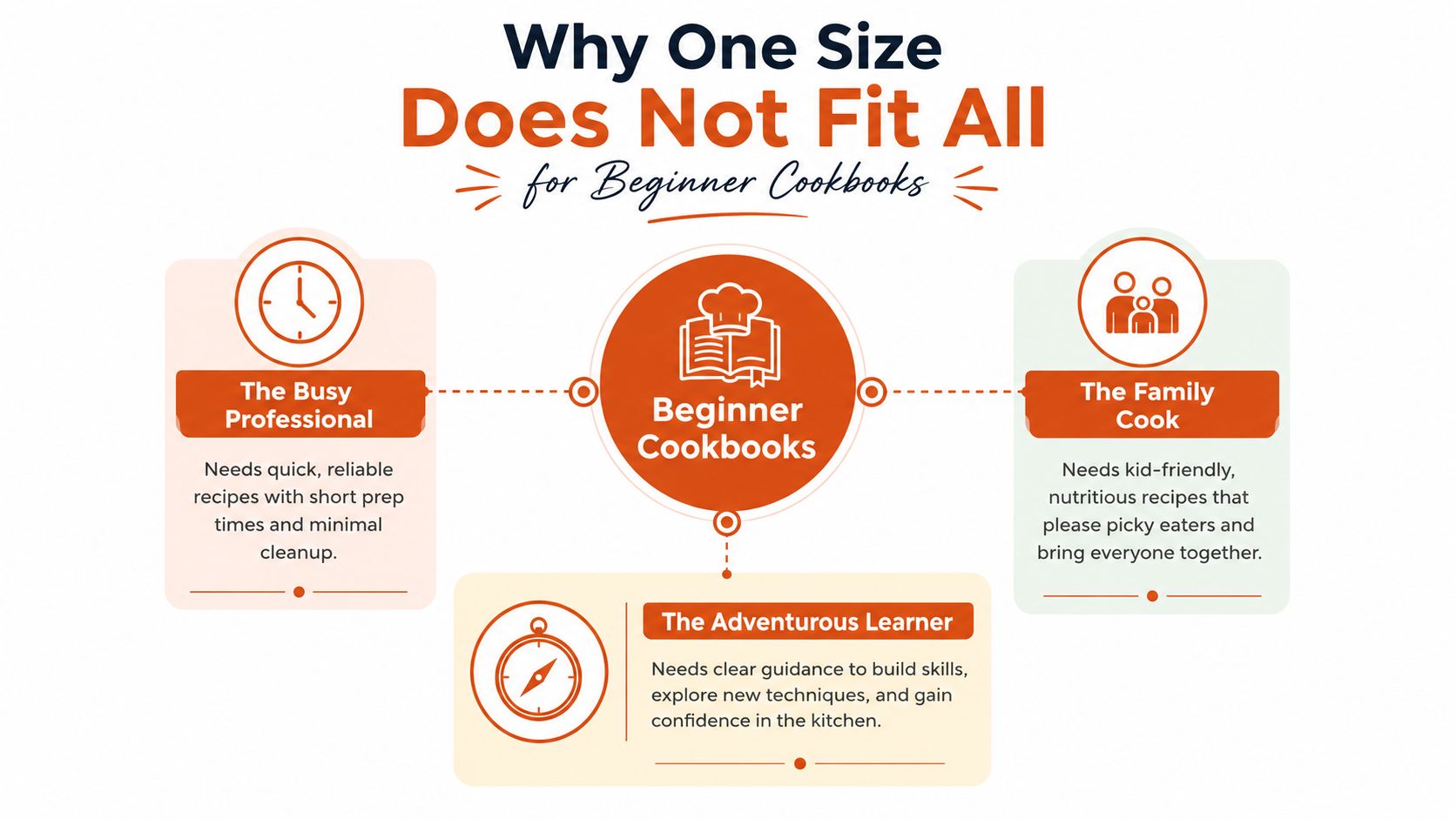
The phrase “best Mediterranean cookbook for beginners” suggests a single winner. In practice, the right choice depends on what makes cooking difficult for you. A parent feeding a family needs a different book from a solo cook who wants to learn regional sauces, while a busy professional may abandon an otherwise excellent title if its recipes require elaborate preparation.
Mediterranean cooking also covers a broad range. Greek salads, Moroccan tagines, Spanish rice dishes, Turkish vegetable recipes, and Levantine dips share useful patterns, but they don't demand identical skills or pantry items. A cookbook that excels at authentic regional flavor may be less useful to someone who needs fast, low-cleanup meals.
Start with your real constraint
Before comparing titles, identify the obstacle most likely to stop you from cooking:
- Time: Do you need short weeknight recipes, or can you spend longer on simmering and preparation?
- Planning: Do you choose dinner spontaneously, or do meal plans and shopping lists keep you consistent?
- Pantry flexibility: Are common supermarket ingredients essential, or are you willing to buy tahini, sumac, preserved lemons, or specialty grains?
- Learning style: Do you follow written instructions comfortably, or do photographs and visual technique guides make the difference?
- Goal: Are you trying to cook healthier family meals, explore regional traditions, eat more plants, or make dependable dinners?
This framework matters because cookbook adoption fails at the point of use, not at purchase. A beautifully photographed book can remain untouched if every recipe introduces new ingredients and unfamiliar methods. Conversely, a modestly designed book can become a favorite if it teaches a small group of techniques you can repeat.
Practical rule: Choose the book that removes your biggest cooking obstacle, not the one with the most impressive cover or the longest recipe list.
The category has deeper roots than a passing food trend. UNESCO recognized the Mediterranean diet as Intangible Cultural Heritage of Humanity in 2010, while Ancel Keys' work in the 1950s, the Seven Countries Study launched in 1956, and the Mediterranean diet pyramid published in 1995 helped shape its modern scientific and educational framework (University of Groningen research paper). That history gives beginners plenty to learn, but a first cookbook should present the knowledge in a usable order.
What Makes a Mediterranean Cookbook Beginner-Friendly
What should a beginner-friendly Mediterranean cookbook teach before it asks you to cook? It should show how to cook, not provide dishes. Recipe count matters less than instructions that connect shopping, preparation, timing, and serving. Meal plans and shopping guidance reduce first-week decision fatigue, while a useful collection should offer enough approachable recipes to support repetition.
Strong instructions explain why each step matters. “Cook until softened” gives limited direction. “Cook until the onion is translucent and sweet-smelling before adding the garlic” teaches a cue you can reuse. Sensory checkpoints matter because stovetop heat, pan size, and ingredient moisture differ from kitchen to kitchen.
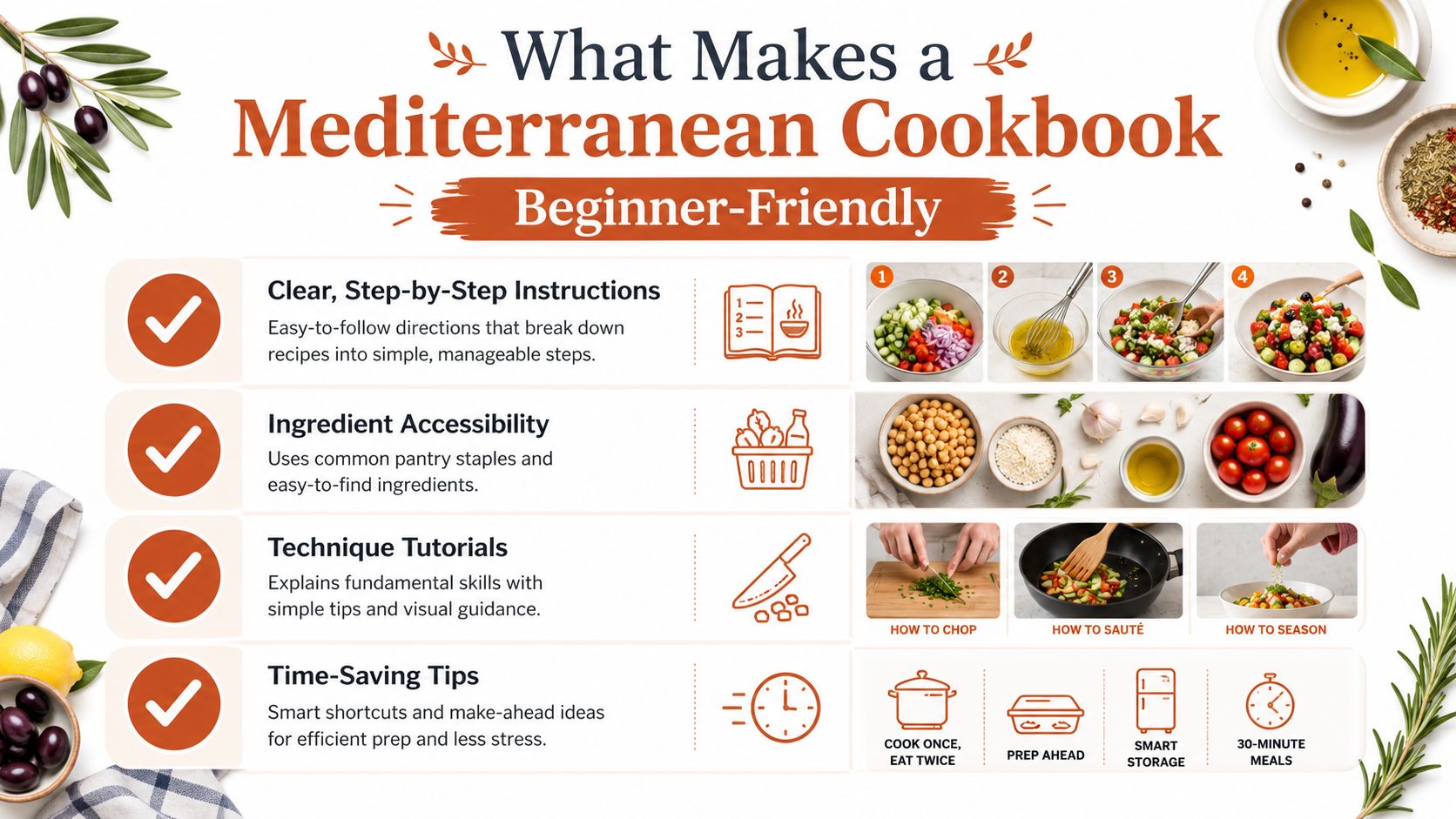
The four features worth checking
Clear sequencing comes first. Each recipe should state what to prepare before heating the pan, when to season, and which components can cook at the same time. Separate preparation, cooking, and finishing steps are easier to scan while your hands are busy.
Accessible ingredients make repetition possible. A good beginner book can introduce tahini, chickpeas, bulgur, or za'atar, but it should explain substitutions and show where those ingredients appear again. One unfamiliar purchase becomes worthwhile when it supports several meals rather than only one recipe.
Technique instruction distinguishes a teaching book from a compilation. Look for foundational methods such as roasting vegetables, making a lemon-and-herb dressing, cooking legumes, blending a dip, and building a grain or bean dish. These methods transfer across recipes and help you progress without mastering every regional specialty at once.
Planning support turns recipes into a routine. Shopping lists, meal plans, make-ahead notes, and leftover suggestions help you use the book before cooking begins, when beginners often lose momentum.
Recipe quantity is a design decision
Large collections can look generous while creating choice overload. Several expert lists favor approximately 85 to 100 recipes for entry-level Mediterranean books, and one reviewer counted 85 recipes in a beginner title while still considering that a suitable number (Goodreads review). A curated collection makes ingredient overlap and skill progression easier to see.
Larger books still have a place. Experienced cooks may want broader regional coverage, while beginners usually benefit from a clearer route through familiar techniques. If you prefer a digital format, Mediterranean Home Kitchen | Digital PDF offers a 69-recipe collection spanning appetizers, soups, salads, main courses, sides, breads, desserts, and sauces. Examples include baba ganoush, avgolemono soup, fattoush, chicken tagine, and tzatziki.
The strongest title balances approachability with culinary identity. Simplification should clarify the method without removing the ingredients, textures, or techniques that make a dish recognizable. Expert coverage also values tested recipes, educational guidance, meal planning, and authentic flavor (Chatelaine).
How to Choose Based on Your Cooking Constraints
Which cookbook will still work when you are tired, missing an ingredient, or unsure what a finished dish should look like? Start with that question, not a popularity ranking.
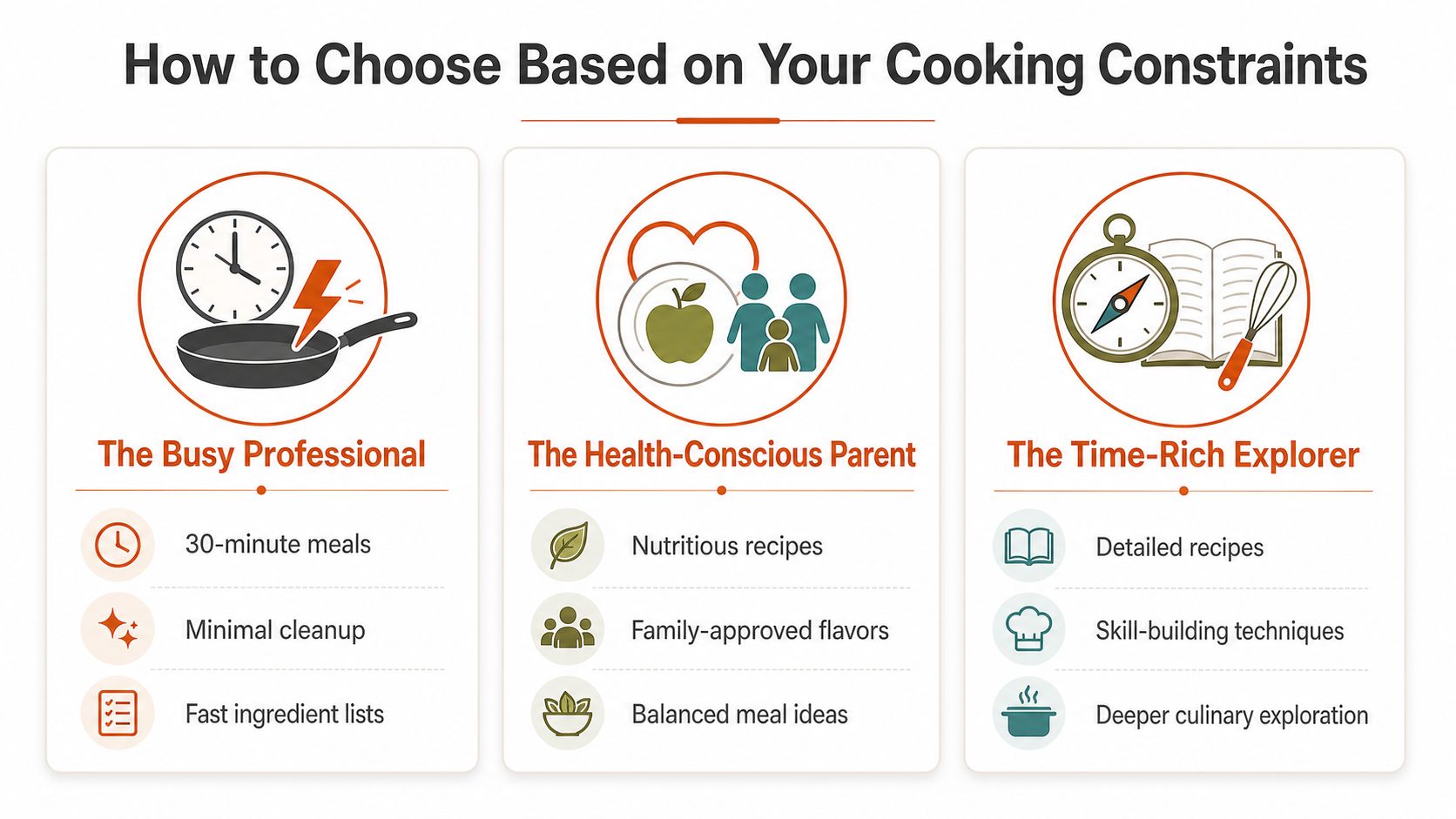
If time is your limiting factor
Choose recipes with short ingredient lists, compact prep, and clear timing. Practical weeknight dishes explain when to chop, marinate, rest, and cook. Collections built around roasted vegetables, canned beans, grains, eggs, fish, and simple sauces usually fit a tight schedule better than books centered on multi-stage projects.
Read several recipe pages before buying. Check whether prep instructions appear before the ingredient list, whether cooking times include preheating or resting, and whether shortcuts are explained without treating them as poor technique. A cookbook that hides these details will slow you down.
If you need structure
Choose meal plans and shopping lists over decorative presentation. A planned sequence gives each purchase a purpose, while leftover notes help you reuse ingredients instead of filling the refrigerator with unrelated components. Reviews of beginner-focused Mediterranean cookbooks identify meal planning and shopping support as useful points of distinction (Live Don't Diet).
If you want to test the eating pattern before committing to a book, use these easy Mediterranean diet recipes. Compare their ingredients, prep demands, and serving styles with the meals you already cook. That comparison will show whether a highly structured book suits your habits.
If you learn visually
Prioritize step photographs, ingredient images, and finished-dish references. Good visuals answer practical questions: How finely should the herbs be chopped? How dark should roasted eggplant become? What texture should the sauce reach before serving?
A beautiful layout cannot replace instructions about heat, timing, and doneness. Choose photography that supports the written method and shows progress, not just a polished final plate.
If flexibility matters most
Look for substitution notes and explanations of ingredient function. A useful book explains when to replace a grain, use canned beans instead of dried, or adjust herbs based on availability. It also identifies which changes preserve the dish and which ones significantly alter its character.
Before buying, answer three questions: How many nights will I cook? Which ingredients do I already keep? Do I want repetition or variety? Your answers reveal the right structure, pantry demands, and learning style faster than a generic ranking.
Recommended Cookbooks for Different Beginner Profiles
Which cookbook fits your kitchen routine, not a generic ranking? Match the book to your available time, pantry flexibility, and preferred way of learning.
For the busy professional
Choose a title built around weeknight meals, concise methods, and ingredients that recur across recipes. A strong fit lets you make a salad, grain bowl, bean dish, or roasted vegetable meal without turning dinner into a research project. Prioritize instructions for parallel tasks, such as starting grains while vegetables roast or mixing sauce while a protein cooks.
The trade-off is limited depth. Speed-focused books may teach fewer elaborate techniques and provide less regional context. That works if your priority is cooking consistently after work.
For the structured planner
Choose a meal-plan-centered book when deciding what to cook causes more friction than the cooking itself. Look for weekly sequences, consolidated shopping lists, make-ahead notes, and clear leftover instructions. These features reduce daily decisions and help beginners turn recipes into a workable routine, as noted earlier.
Planning books depend on ingredient repetition. If you prefer spontaneous meals or dislike eating related dishes across several days, choose a flexible reference instead.
For the flavor-first learner
Choose a book that explains regional foundations instead of treating every dish as a generic “Mediterranean bowl.” Look for guidance on spice blends, herb combinations, sauces, roasting, braising, and the difference between bright acidic finishes and deeper cooked flavors.
This format demands more attention, but it builds judgment you can reuse. Once you understand how lemon, garlic, olive oil, herbs, legumes, and toasted spices balance one another, you can adapt recipes without flattening their character.
For the digital-first family cook
A digital PDF suits cooks who want searchable recipes, phone or tablet access, or printable pages. The Mediterranean Home Kitchen digital recipe collection spans 69 everyday recipes, including family-style mains, soups, salads, breads, desserts, and sauces. Its focus on simple techniques and ingredients available from a local market makes it useful for cooks who want broad coverage without several specialized books.
The compromise is self-direction. A broad digital collection gives you options, but it will not decide what to cook first. If you need a tightly sequenced starting routine, select a book with built-in plans.
For the cautious beginner
Choose the book with clear recipe testing signals, realistic timing, and plain explanations. Reliable instructions identify likely problems and show how to recognize progress. Avoid titles that depend on unexplained culinary shorthand, assume specialized equipment, or bury preparation details in lengthy introductions. A cautious beginner needs visible checkpoints, sensible substitutions, and recipes that make success easy to diagnose.
Getting Started with Your First Mediterranean Meals
Your first week should build confidence through repetition, not attempt to survey every region at once. Begin with a small pantry: extra-virgin olive oil, canned beans or chickpeas, grains or pasta, canned tomatoes, nuts or seeds, dried herbs and spices, tahini, and honey. These ingredients support the vegetable, grain, legume, herb, and healthy-fat pattern described in the Mediterranean diet meal plan guide.
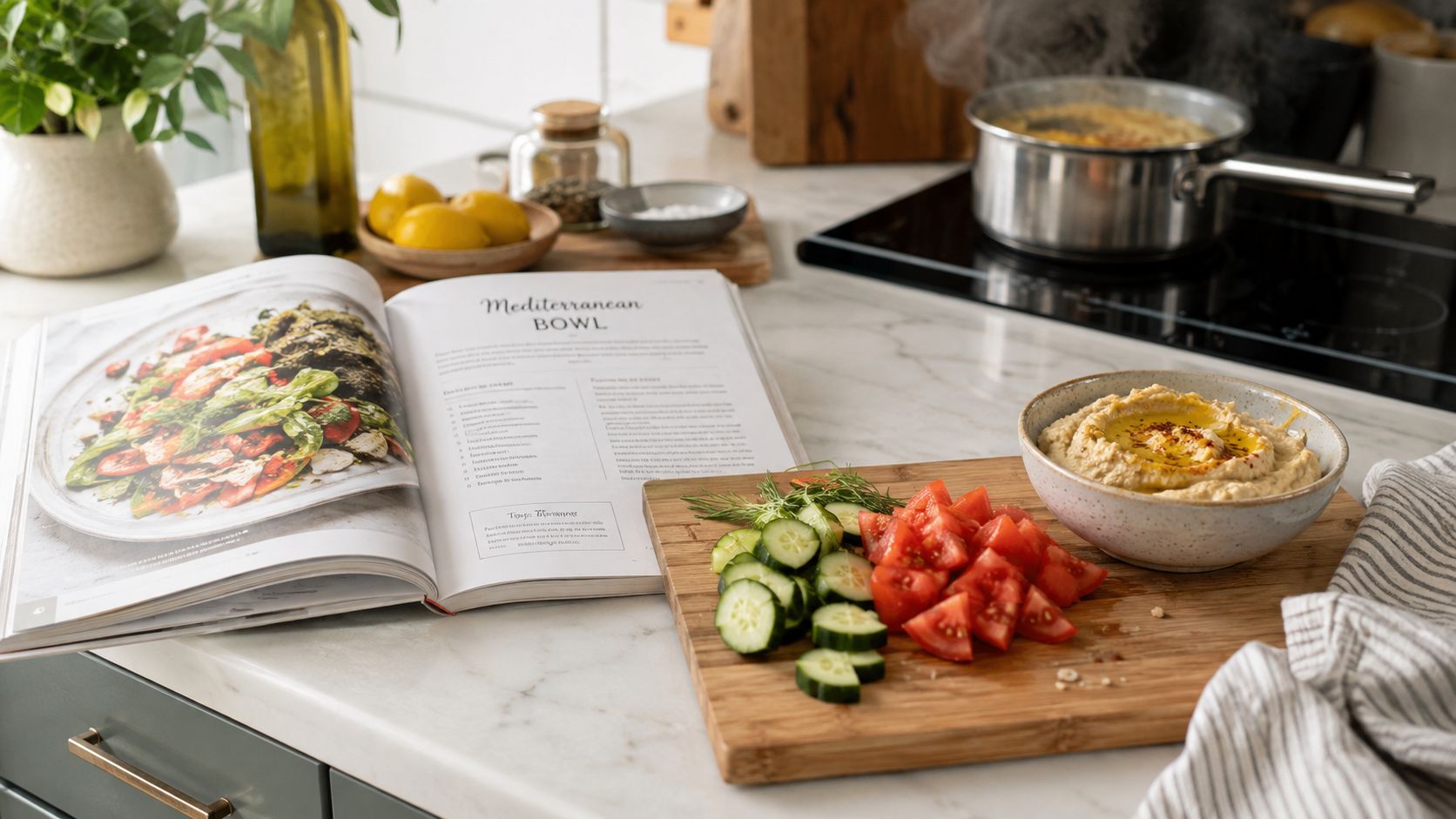
A simple three-day start
Day one, build a cold meal. Make hummus or use prepared hummus with chopped cucumber, tomato, herbs, toasted bread, and a lemony salad. You'll practice knife control, seasoning, and balancing richness with acidity without managing a hot pan.
Day two, roast vegetables. Toss cauliflower, peppers, eggplant, or another sturdy vegetable with olive oil and seasoning, then roast until browned and tender. Browning adds flavor, while checking tenderness teaches you to rely on the food rather than a timer alone.
Day three, cook a complete bowl. Combine a grain, beans, roasted vegetables, herbs, and a sauce. Keep the components separate until serving so you can adjust salt, lemon, and olive oil at the end.
Two lessons beginners should remember
When making a lemon-and-herb dressing, whisk the acidic ingredient into the oil gradually, then taste before adding more salt. The dressing should sharpen the food, not dominate it. If it tastes harsh, add more oil or a small amount of sweetness rather than automatically adding salt.
When cooking a bean or vegetable stew, soften the aromatics before adding liquid. Onion and garlic need time to release sweetness and fragrance, while rushing this stage can leave the finished dish flat even when the seasoning is correct.
Read the entire recipe before turning on the stove. Put ingredients into groups by stage, measure unfamiliar spices, and identify anything that needs draining, soaking, chopping, or resting. For more practical guidance, use this resource on how to cook Mediterranean food.
Kitchen habit: Keep a note beside the recipe and record what you'd change next time. A little less lemon, more garlic, longer roasting, or a different grain turns a cookbook into a personal cooking system.
Common Questions About Mediterranean Cookbooks and Digital Formats
Is a digital cookbook practical in the kitchen?
Yes, if the layout is easy to scan and your device stays visible without constant scrolling. A PDF can be read on a phone, tablet, laptop, or e-reader, and selected recipes can be printed for countertop use. Digital access also makes it easier to search for an ingredient or return to a recipe without carrying a full physical book.
The main weakness is kitchen handling. Screens can dim, lock, or collect splashes, so use a stand, increase the text size, and keep a printed copy of recipes you make repeatedly.
Does Mediterranean cooking require special equipment?
Most beginner recipes need ordinary tools: a knife, cutting board, saucepan, skillet, roasting tray, and blender or food processor for some dips and sauces. A cookbook should identify when equipment is optional and offer a practical alternative. You shouldn't need a specialty appliance to learn the core pattern.
What if I can't find an ingredient?
Start with the ingredient's function. Fresh herbs provide brightness, nuts add richness and texture, and acidic ingredients balance oil and starch. A good cookbook gives substitution guidance, but you can also make a considered swap that preserves the role rather than matching the name exactly.
Can beginners adapt recipes for dietary needs?
Often, but read the recipe's structure before substituting. Beans, lentils, vegetables, grains, eggs, fish, poultry, and dairy appear in many Mediterranean-style meals, so there are usually adaptable foundations. Keep an eye on sauces, broths, breads, and garnishes, where allergens or animal products may be less obvious.
Should I choose a book with many recipes?
Not automatically. Expert coverage places strong beginner value on curated collections, clear guidance, and manageable planning, while larger books may work better as reference libraries. Choose breadth only if you enjoy browsing and can make your own path through the recipes.
How do I judge a failed recipe?
Separate technique from taste. If vegetables are undercooked, continue cooking; if a dressing is too sharp, rebalance it with oil or a little sweetness; if a dish tastes dull, check salt, acid, and browning before abandoning it. A dependable cookbook should help you diagnose these issues, not imply that every result will be perfect on the first attempt.
Just Cook It offers downloadable digital cookbooks for everyday home cooking, with device-friendly PDF reading, kitchen-tested instructions, photography, and lifetime access to purchased titles. Visit Just Cook It to compare its Mediterranean collection with practical resources for building confidence in the kitchen.