Most chipotle pesto sauce advice gets one thing wrong. It treats the sauce as a loose mash of flavorful ingredients, as if texture will sort itself out once everything hits the food processor.
It won’t.
A good chipotle pesto sauce has to do several jobs at once. It has to carry smoke without tasting muddy, hold heat without becoming harsh, and stay creamy instead of splitting into oily streaks and damp herb paste. That takes better choices before blending, better technique during blending, and better handling after the jar goes into the fridge.
Table of Contents
More Than Just a Sauce
Pesto isn't a tiny specialty corner of the condiment world. According to this pesto sauces market analysis, the global pesto sauces market was valued at US$4.2 billion in 2024 and is projected to reach US$5.2 billion by 2030. That matters in the kitchen because it confirms what cooks already see on shelves and menus. Pesto has moved far beyond one classic basil formula.
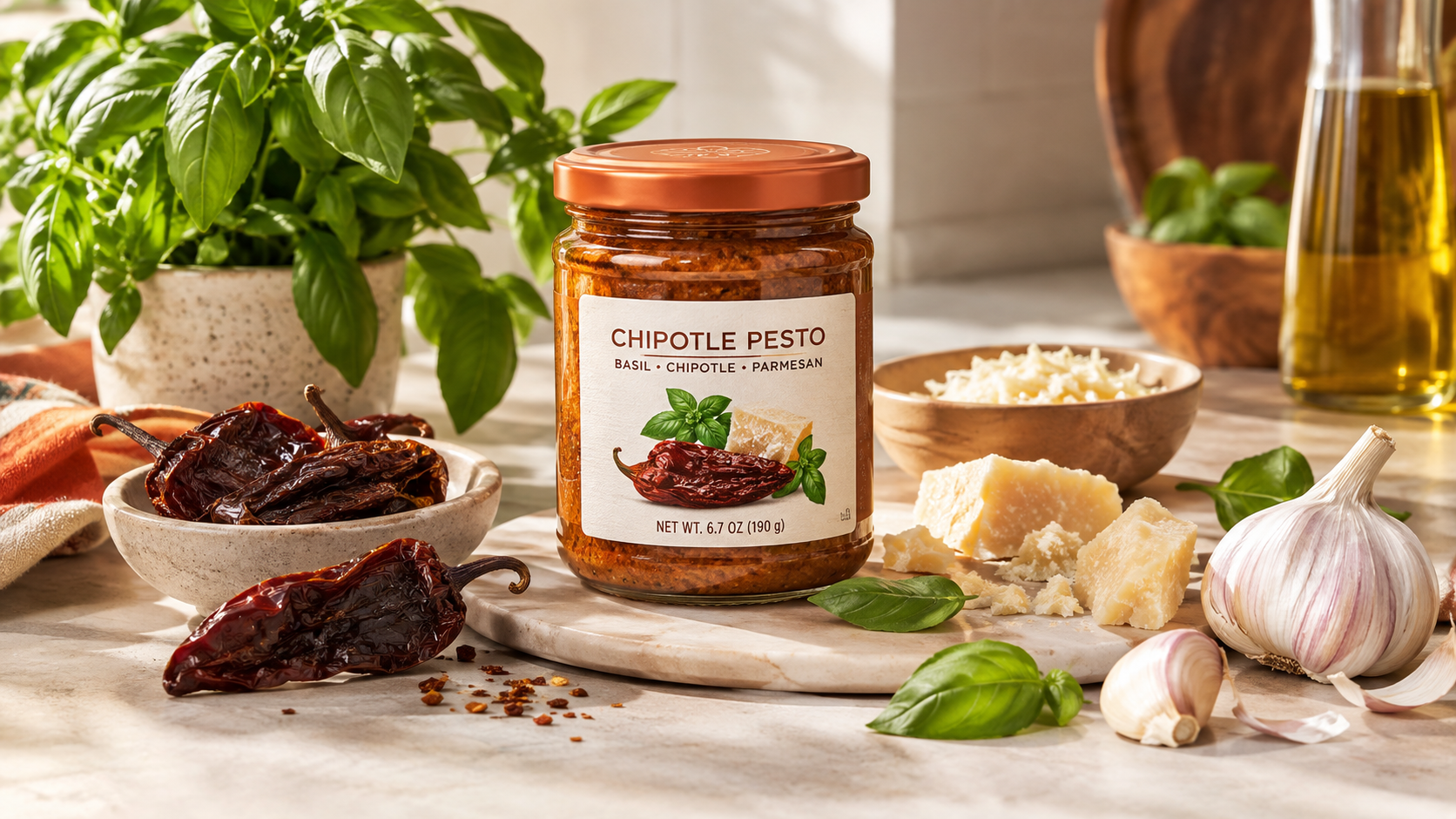
Chipotle pesto sauce makes sense inside that larger story. Pesto already has a long Italian history rooted in pounded herbs, oil, garlic, salt, and cheese. Chipotle brings in smoked jalapeño from Mexican cooking, so the finished sauce isn't a gimmick. It's a practical fusion of two established flavor traditions.
Why this version works
Classic pesto is bright, fatty, salty, and aromatic. Chipotle adds smoke, depth, and a slower kind of heat than fresh chile. That changes the sauce from something that mainly coats pasta into something that can stand up to grilled meat, roasted vegetables, eggs, beans, and sandwiches.
A cook working across Italian and regional European sauce traditions can see why this combination holds together. The structure is still pesto. Only the accent changes.
Chipotle pesto sauce succeeds when the smoke supports the herbs. If the chile dominates, the sauce stops tasting like pesto and starts tasting like a spread with basil added as an afterthought.
What this guide focuses on
Most recipes stop at ingredient lists. The better questions come after that.
-
Texture first: A smoky pesto still needs a stable emulsion.
-
Storage second: Herb-and-oil sauces need careful handling.
-
Nutrition last: The same name can describe very different sauces.
That’s why chipotle pesto sauce deserves more than a quick recipe card. It rewards technique.
Choosing Your Flavor Foundation
The finished sauce is decided long before the oil goes in. Chipotle pesto sauce can lean green and fresh, dark and smoky, sharp and salty, or mellow and nutty depending on a few ingredient choices.
Pick the chile with intention
Canned chipotles in adobo bring smoke, heat, acidity, and sweetness all at once. They’re convenient, but they also push the sauce toward a deeper red-brown color and a more assertive profile. If the goal is a bold spread for sandwiches or grilled chicken, that’s often the right move.
Dried chipotle gives more control. Rehydrating it lets the cook decide how much soaking liquid, acid, and salt to add later. The flavor is often cleaner and less saucy than adobo-packed peppers.
A common mistake is adding too much adobo liquid too early. It can flatten the herb flavor and make the sauce taste more like smoky tomato than pesto.
Choose the herb base
Basil keeps the sauce tied to traditional pesto. It gives sweetness and a familiar perfume that softens chipotle’s darker notes. Cilantro shifts the whole sauce toward a Southwest profile and pairs naturally with lime, pepitas, and Cotija.
Parsley can also help, not as the star, but as support. It stretches the herb base without making the sauce too sweet or too grassy.
For cooks drawing from Mexican and broader Latin pantry flavors, cilantro often feels more natural with chipotle than basil does. For a true fusion version, basil usually gives the cleaner bridge.
Nuts, seeds, and cheese change the personality
Here’s where chipotle pesto sauce really branches out:
| Component | What it does in the sauce | When to use it |
|---|---|---|
| Parmesan | Nutty, salty, classic pesto depth | Best for a basil-forward fusion |
| Cotija | Crumblier, saltier, more direct | Best for cilantro-based versions |
| Pepitas | Earthy and savory | Good with chipotle’s smoke |
| Pecans | Richer and sweeter | Good for a softer, rounder finish |
| Pine nuts | Buttery and delicate | Better when chipotle is used lightly |
Build for the final use
-
Pasta coating: Use basil, Parmesan, and a restrained hand with chipotle.
-
Taco or grain bowl drizzle: Use cilantro, pepitas, and lime.
-
Sandwich spread: Push the smoke a bit harder and keep the texture thicker.
-
Grilled meat finish: Aim for sharper salt and brighter acid so it cuts through char.
A balanced chipotle pesto sauce starts with deciding what the jar is for. Without that, the flavor can wander.
Crafting the Perfect Smoky Emulsion
A stable chipotle pesto comes from particle size, oil control, and temperature. Get those three right, and the sauce stays creamy instead of turning slick in the jar.
According to food science guidance on pesto emulsion stability, the most reliable method is to pulse the solids first to reduce particle size, then drizzle oil slowly while processing at low speed. That same guidance warns that overheating from high-speed blending can denature cheese proteins and break the emulsion.
Start with the dry structure
Load the processor with the chipotle, herbs, nuts or seeds, garlic, and cheese before any oil goes in. Pulse until the mix looks fine, even, and slightly clumpy, with no large leaf pieces or wet pockets of pepper.
This stage is critical. Fine particles give the oil more places to bind, which is what turns a chopped mixture into a cohesive sauce. If the solids stay too coarse, the oil coats them unevenly and the pesto reads greasy on the tongue even if it looks smooth at first.
A good test is simple. Pinch a little between your fingers. It should feel damp and sandy, not chunky.
Add oil slowly, not all at once
Run the machine on low and pour the oil in a thin stream. Slow addition lets the fat disperse into tiny droplets that the cheese, plant fibers, and ground nuts can hold in place.
Dumping the oil in at the start is a common cause of failure. The blade sloshes the mixture around, but it does not build a strong emulsion. You end up with a sauce that loosens in the bowl, leaks oil in the fridge, or turns heavy instead of plush.
Emulsion checkpoint Stop as soon as the pesto looks creamy and unified. If it starts looking fluffy or warm, you have gone too far.
Watch heat and texture
Heat is the quiet troublemaker here. Chipotle already brings a deep, cooked flavor, so the fresh herbs need protection or the whole sauce can taste muddy.
Short pulses help. So does scraping the bowl once or twice instead of letting the motor run nonstop. If the processor bowl feels warm, pause for a minute before finishing. I would rather blend in two short rounds than force it and lose the clean herb notes.
Texture depends on use, but the base emulsion should be slightly thicker than you think. A loose pesto breaks faster in storage and is harder to control on hot food.
Adjust after the emulsion forms
Make final corrections only after the sauce has come together. Acid, salt, and extra oil all change how the emulsion feels, so early adjustments can send you chasing the wrong fix.
-
Acid balance: Add lemon or lime if the smoke feels heavy.
-
Salt edge: Add more cheese or salt if the herbs taste flat.
-
Body control: Thin with a little more oil only if the sauce is too stiff.
-
Heat tuning: Add more chipotle in tiny amounts, because smoke builds fast.
The finished pesto should hold a spoon mark for a second, then settle slowly. That texture clings to pasta, spreads cleanly on sandwiches, and can be loosened later with warm water, citrus juice, or a touch more oil without falling apart.
Creative Ways to Use Your Chipotle Pesto
A jar of chipotle pesto sauce shouldn't be reserved for one pasta dinner and forgotten in the back of the fridge. Its real value is range. The smoke gives it enough backbone for grilled food, while the herb base keeps it fresh enough for quick meals.
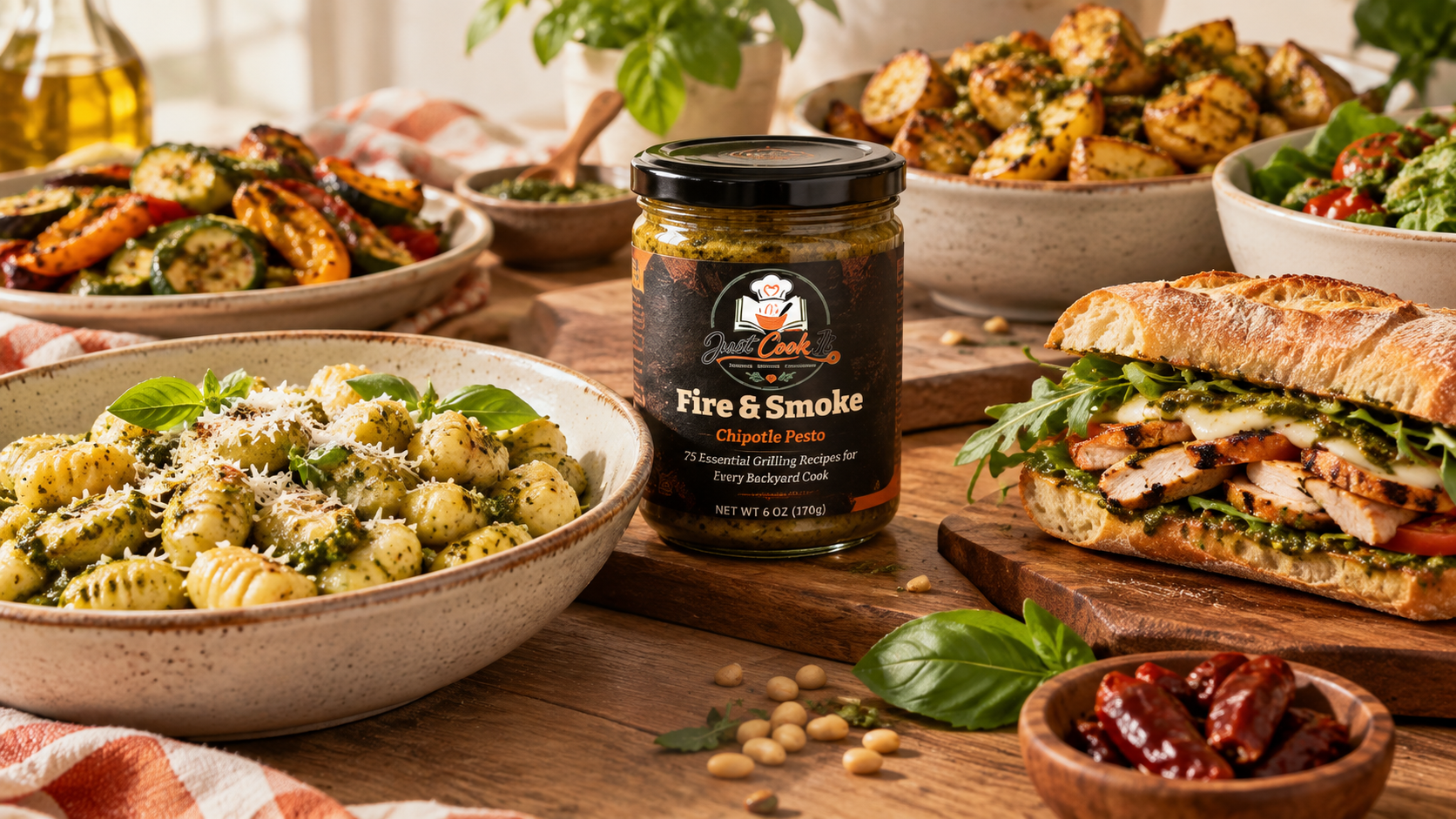
Use it where smoke helps
The easiest win is with grilled food. Spoon it over sliced steak, brush it onto chicken thighs after cooking, or toss grilled zucchini and onions with a little while they’re still warm. A cook planning outdoor meals can pull more pairings from backyard grilling recipes built around smoke and char.
That same logic makes chipotle pesto sauce strong on burgers, grilled corn, and roasted potatoes. It doesn't disappear the way plain basil pesto sometimes can.
Let it replace heavier condiments
Chipotle pesto sauce can stand in for mayo, aioli, or bottled dressings when a dish needs richness plus flavor.
-
Breakfast move: Stir a spoonful into scrambled eggs or fold it into a breakfast burrito.
-
Lunch fix: Spread it on turkey sandwiches, grilled vegetable panini, or wraps with black beans.
-
Dinner shortcut: Toss it with gnocchi, swirl it into rice, or spoon it over salmon.
Match the version to the cuisine
A cilantro-based batch belongs naturally with beans, tacos, roasted sweet potatoes, and grilled shrimp. That’s where Mexican Home Cooking | Digital PDF becomes useful, because it gives a cook more everyday dishes that can carry smoky chile flavors without forcing the sauce into the wrong role.
A basil-heavy batch works better on flatbreads, white beans, roast chicken, and tomato-based plates. Mediterranean Home Kitchen | Digital PDF fits that side of the spectrum, especially when chipotle pesto sauce is being used as a topping, smear, or finishing condiment rather than a marinade.
For cooks who want more grilled applications, Fire & Smoke: 75 BBQ & Grilling Recipes | Digital PDF is the most direct fit. It’s built for the kind of food that welcomes a smoky herb sauce.
Chipotle pesto sauce is strongest when it finishes a dish, not when it drowns it. A spoonful often does more than a half cup.
Storing and Freezing for Lasting Flavor
Homemade chipotle pesto sauce needs a stricter storage routine than many cooks expect. Oil, herbs, cheese, and low oxygen can create safety problems if the sauce is handled casually.
According to public health guidance on pesto safety, homemade pesto can harbor Clostridium botulinum under low-acid, anaerobic conditions. Refrigeration, short storage windows of no more than a few days, and acidification with lemon or lime juice are important controls.
What to do right after blending
The sauce should go into a clean container promptly. Press it down to remove air pockets, then smooth the surface. A thin layer of oil on top can help limit oxidation and slow browning, but it doesn't make the sauce shelf-stable.
Room-temperature storage is not acceptable for chipotle pesto sauce. Once blended, it belongs in the refrigerator or freezer.
Refrigerator habits that matter
The biggest storage mistakes are simple:
-
Counter delay: Letting the sauce sit out after blending.
-
Weak acid: Skipping lemon or lime because the sauce already tastes good.
-
Uneven mixing: Leaving watery bits of chile or herbs poorly incorporated.
-
Loose dating: Keeping a jar without a clear use-by plan.
A small batch is safer than an oversized one if the household won't use it quickly. The flavor is also better when the sauce is fresh.
Freeze in portions, not in one block
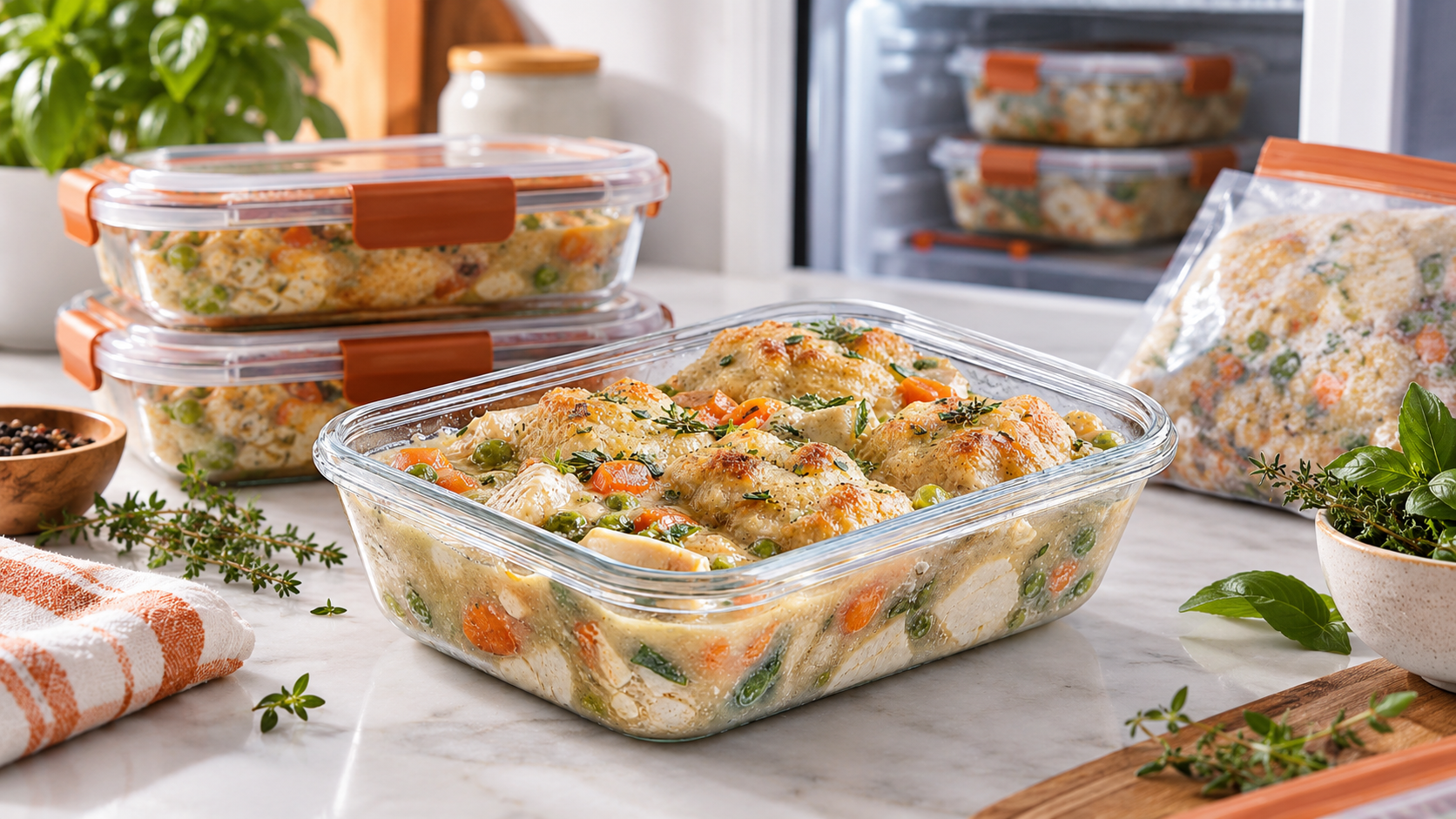
Freezing is the smarter long-term move. Spoon chipotle pesto sauce into ice cube trays, freeze until firm, then transfer the cubes to a sealed freezer container or bag. That gives ready-to-use portions for pasta, soups, eggs, or marinades.
A cook building this habit into weekly prep can pair it with the planning approach in freezer-focused meal prep ideas. Make-Ahead Freezer Meal Cookbook | Digital PDF is for organizing meals around freezer use, and chipotle pesto portions fit that system well.
Frozen pesto is easier to use when it’s portioned before storage. One cube can season a pan of vegetables. Two or three can become a quick pasta sauce.
When thawing, move only what’s needed to the refrigerator or melt it directly into hot food. Repeated warming and re-chilling is where quality starts to slide.
Understanding Chipotle Pesto Nutrition
The nutrition question around chipotle pesto sauce doesn't have one clean answer because the name covers very different formulas. Some are loose condiments with lots of herbs and modest fat. Others are dense spreads built on oil, cheese, and nuts.
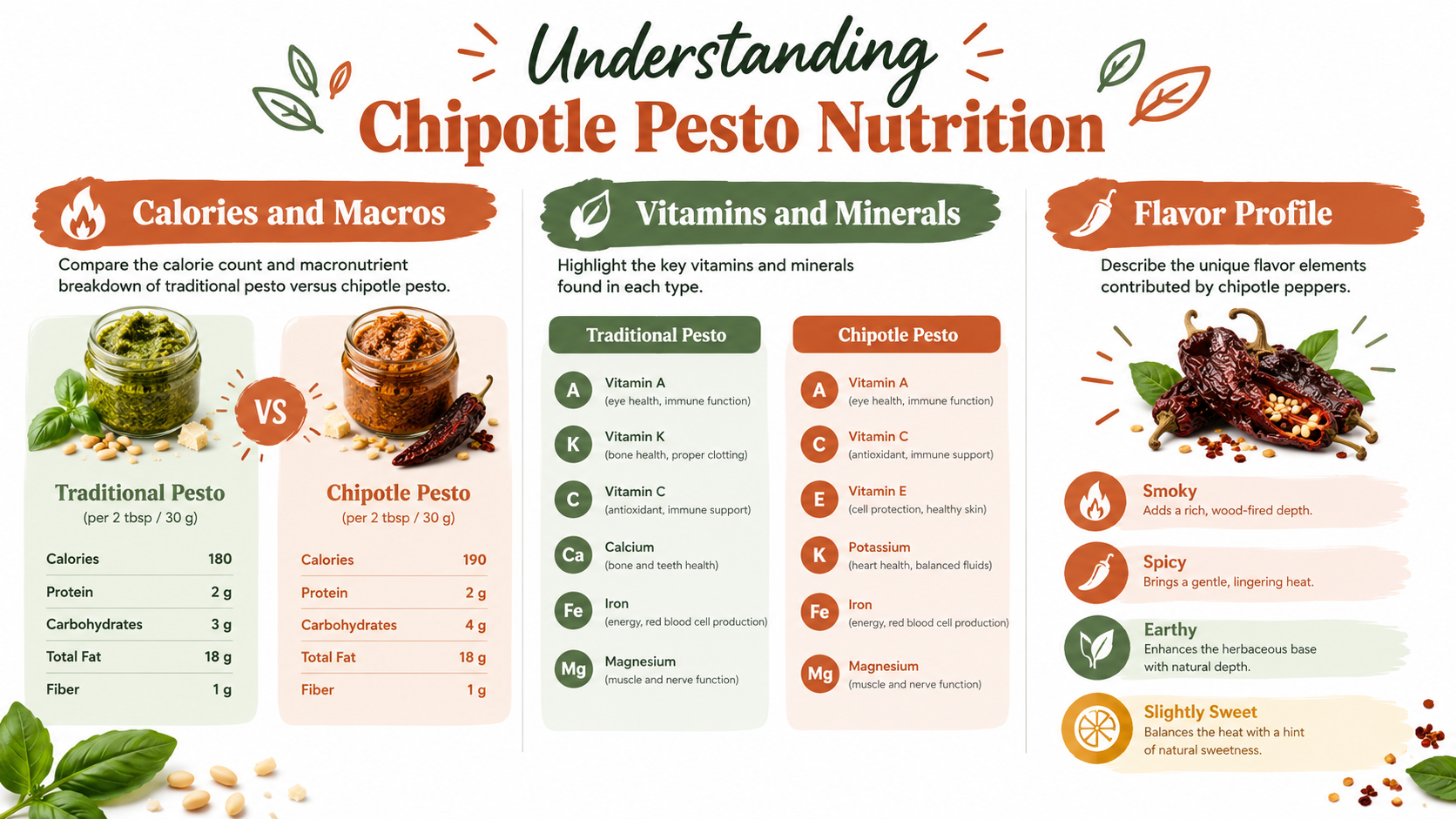
According to available chipotle pesto nutrition label data, serving sizes across products and recipes show calories ranging from 57 to 272 per serving. That spread is wide enough that "chipotle pesto sauce" by itself doesn't tell a cook much.
What changes the numbers most
The biggest drivers are straightforward.
| Ingredient choice | Likely nutrition effect | Flavor effect |
|---|---|---|
| More oil | Raises calorie density quickly | Smoother, richer mouthfeel |
| More cheese | Adds calories and sodium | Saltier, deeper finish |
| More nuts or seeds | Raises density and richness | Fuller body, nuttier taste |
| More herbs | Lowers density per spoonful | Fresher, greener profile |
A sauce made with a heavy pour of oil and a generous amount of cheese will eat very differently from one stretched with herbs, citrus, and a smaller amount of seeds.
How to lighten it without making it dull
Lighter chipotle pesto sauce doesn't mean weak chipotle pesto sauce. It means shifting where the flavor comes from.
-
Herb-forward build: Increase basil, cilantro, or parsley so the sauce tastes vivid even with less oil.
-
Seed choice: Pepitas often give savory body without the sweeter richness some nuts bring.
-
Cheese restraint: Use enough cheese for salt and structure, not enough to dominate.
-
Portion awareness: Use it as a finishing condiment instead of a full coating.
A practical way to read the jar
A cook trying to judge homemade chipotle pesto sauce should ask three questions.
-
Is this mostly oil with herbs suspended in it?
-
Is the cheese level turning it into a salty spread?
-
Is the serving being used as a tablespoon accent or a larger scoop?
Nutrition confusion usually starts with portion confusion. A thin drizzle and a thick sandwich spread can both be called one serving in casual conversation, even when they aren't remotely the same amount of food.
That’s why chipotle pesto sauce is best treated as adjustable. The same basic idea can fit a lighter weekday lunch or a richer grilled dinner, depending on how the jar is built.
Your New Favorite Go-To Sauce
Chipotle pesto sauce gets better when it's treated as a technique, not just a recipe. The flavor starts with smart choices about herbs, chile, cheese, and seeds. The texture depends on patient blending and slow oil addition. The shelf life depends on cold storage, acid, and realistic timing.
That combination is what makes the sauce so useful. It can be bright enough for pasta, smoky enough for grilled meat, and sharp enough to wake up a sandwich or grain bowl. It also leaves room for adjustment. A basil-Parmesan version and a cilantro-pepita version can both be right, as long as each one is built with purpose.
The best next batch usually isn't a copy of the first one. It's a correction. More herbs if the smoke felt heavy. Less oil if the sauce ate too rich. More acid if the finish seemed flat.
For the next batch, pair chipotle pesto sauce with tacos, grilled chicken, beans, or roasted vegetables and build the flavor around dishes from Mexican Home Cooking – 100 Authentic Everyday Recipes from the Mexican Kitchen. That gives the sauce a clear job, which is usually when it tastes best.