A bundle of leftover chives can be surprisingly useful. Their mild onion flavor brings freshness to everything from scrambled eggs and roasted potatoes to soups, sauces, dips, and rich, creamy dishes without overpowering the other ingredients.
Getting the most from chives comes down to timing. Some dishes benefit from adding them during cooking, while others are better finished with fresh chives at the last moment. Because these slender herbs have a delicate flavor and aroma that can fade quickly with heat, knowing when to add them makes all the difference. Master that simple distinction, and chives become an easy ingredient to reach for in everyday cooking, with no dedicated recipe required.
Table of Contents
- Why Chives Deserve a Permanent Spot in Your Kitchen
- What Chives Actually Taste Like
- The Best Foods to Pair With Chives
- How to Cut Chives and When to Add Them
- Storing Chives So They Last
- Five Easy Ways to Start Cooking With Chives Today
- Your New Instinct for Chives
Why Chives Deserve a Permanent Spot in Your Kitchen
Chives are easy to overlook because they're usually sold as a small bundle rather than a main ingredient. Yet that small bundle can finish several meals. Snip them over scrambled eggs in the morning, fold them into mashed potatoes at dinner, or stir them into a cool dip for a quick change in flavor.
Their role is different from that of onions or garlic. Onions and garlic often begin a dish, building a savory base in oil or butter. Chives usually arrive at the end, adding a fresh green aroma and a mild onion note after the main cooking is finished. Think of them as the final brushstroke rather than the foundation of the painting.
Practical rule: If you want chives to taste bright and look green, treat them as a finishing herb first.
Chives have a culinary history reaching back to around 3000 BCE in China, where people used them in cooking and traditional medicine. European use became established by the Middle Ages, and the herb eventually became familiar across food cultures in dishes built around eggs, soups, potatoes, and dairy. You can read more about that long culinary history in this overview of chives.
That history makes sense at the stove. Chives are useful wherever you want onion character without making the dish taste heavily of onion. They're especially helpful when the main ingredients are mild, such as potatoes, eggs, butter, sour cream, cottage cheese, or a clear soup.
You'll also learn how to store them, cut them, and use surplus chives before they wilt. The aim isn't to memorize rigid rules. It's to recognize the moment when a dish needs a little freshness, color, and gentle allium flavor.
What Chives Actually Taste Like
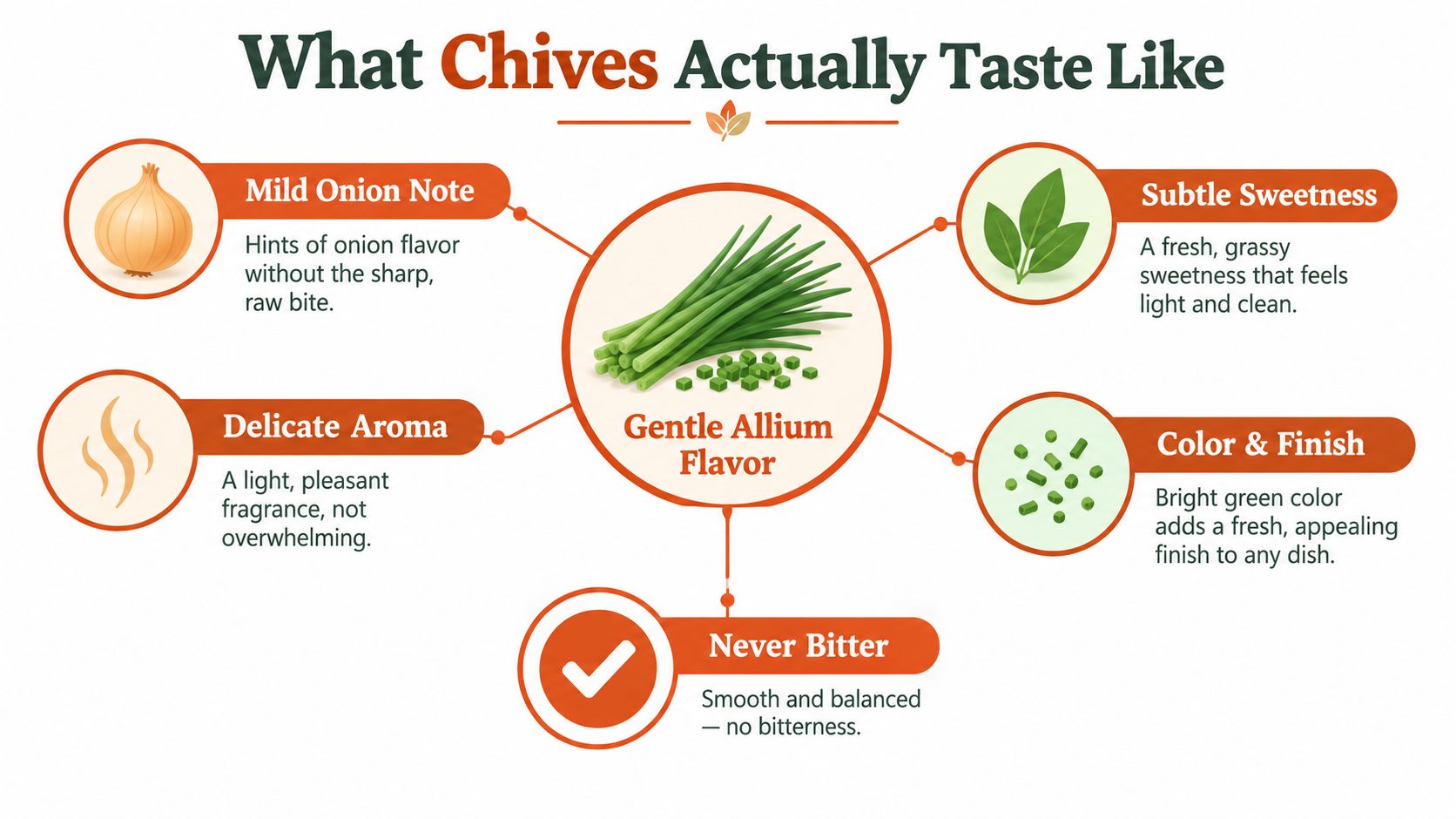
The simplest description is this: chives taste like a soft, fresh version of onion. They have the familiar allium character, but without the sharp raw bite of a sliced onion or the stronger pungency of garlic. If onions shout, chives whisper.
That difference matters when you're choosing how to use them. A spoonful of chives won't replace the deep sweetness created by slowly cooked onions. It also won't provide the strong savory foundation that garlic gives to a sauce. Instead, chives add a light, grassy lift that you notice most clearly at the end of a bite.
A finishing herb, not a base aromatic
Chives are best understood as a finishing herb. Add them to a hot dish near the end, or use them raw in a cold mixture. Their flavor is delicate enough to disappear when exposed to prolonged heat, so they work better as a fresh accent than as the first ingredient in a frying pan.
Taste a small piece raw, then compare it with chives scattered over warm potatoes. The raw piece has a cleaner, more noticeable onion aroma. The warmed version blends into the dish, giving it color and a softer herbal note.
Chives also add measurable nutrients in very small portions. According to USDA-based nutrition reporting on chives, 1 tablespoon of chopped chives provides about 0.9 calories, 6.38 micrograms of vitamin K, 1.74 milligrams of vitamin C, and 3.15 micrograms of folate. That makes them a practical way to add flavor and color without materially changing a dish's energy content.
If you're building meals around eggs, Greek yogurt, cottage cheese, seafood, or legumes, Protein Powerhouse | Digital PDF includes high-protein recipes that use several of those ingredients across breakfasts, soups, salads, main courses, snacks, and desserts.
The Best Foods to Pair With Chives
Chives fit most naturally beside foods that are mild, creamy, starchy, or gently savory. They bring contrast without taking over. That's why the same herb feels at home on a baked potato, in scrambled eggs, or stirred through a cool dairy-based dip.
Start with eggs. Add chopped chives to scrambled eggs after removing the pan from the heat, or scatter them over an omelet just before serving. Eggs provide a soft, rich base, while chives cut through that richness with freshness.
Potatoes are another reliable match. Chives work over baked potatoes with sour cream, folded into mashed potatoes, or sprinkled over roasted potatoes after they leave the oven. The herb adds a mild onion note without competing with the potato's earthy flavor.
Dairy gives chives a smooth surface to spread across. Stir them into sour cream, cream cheese, cottage cheese, butter, or a soft cheese mixture. In these combinations, the chives stay noticeable because they aren't being exposed to high heat.
Soups benefit from a final scattering, especially creamy potato soups and other mild varieties. Add chives to the bowl rather than simmering them in the pot. They'll provide a fresher aroma and a vivid green finish.
| Pairing Family | Example Dishes | Why It Works |
|---|---|---|
| Eggs | Scrambled eggs, omelets, soft-boiled eggs | Chives add freshness to a rich, gentle base |
| Potatoes | Mashed potatoes, baked potatoes, roasted potatoes | Their mild onion flavor complements earthy starch |
| Dairy | Sour cream, cottage cheese, butter, soft cheese | Creamy ingredients soften and carry the herb |
| Soups | Potato soup, creamy vegetable soup, clear broths | A fresh topping brightens a warm bowl |
| Dips | Sour cream dip, yogurt dip, cream cheese spread | Chives add color and savory lift without heaviness |
| Salads and dressings | Green salads, potato salads, vinaigrettes | Their delicate flavor supports sharper ingredients |
The chive pairing guidance also emphasizes eggs, potatoes, soups, dips, and butter, with chives added at the end to protect their flavor and color. When you're unsure, ask whether the dish is gentle enough to let a mild herb be noticed. If the answer is yes, chives are probably a good fit.
How to Cut Chives and When to Add Them
Good chive preparation starts with a simple goal: make small, even cuts and use them soon afterward. You don't need complicated knife work. A sharp chef's knife, paring knife, or clean kitchen scissors is enough.
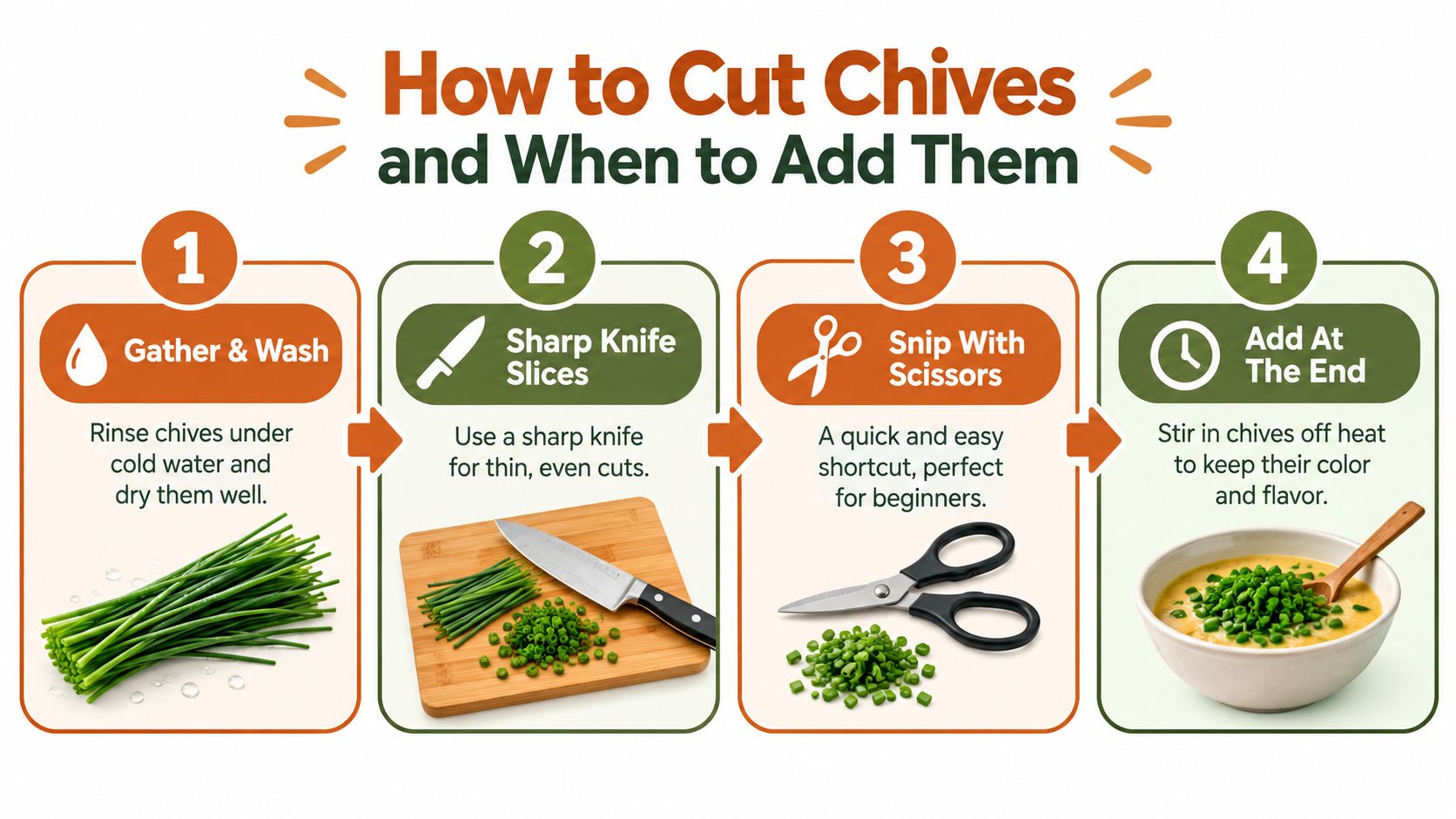
Rinse the chives under cool water and dry them well. Wet herbs are harder to cut neatly, and excess water can dilute a dip or make a garnish sit heavily on the surface.
Cut for the dish
For most meals, line up the chives and slice across them into thin rounds. Keep your fingertips curled slightly as you guide the bundle, and let the knife do the work. Thin slices spread through eggs, dips, and potatoes more evenly than long strands.
Kitchen scissors are an excellent beginner-friendly option. Hold the chives over a bowl and snip them directly into the dish. This works particularly well for sour cream, yogurt, soup, or a plate that's already ready to serve.
Cutting does more than shorten the stems. Chives contain sulfur-containing precursor compounds, including isoallicin, allicin, and methiin. When the plant tissue is cut or bruised, those precursors are converted into aroma compounds, which is why freshly cut chives smell more expressive than chives that have been sitting chopped for a while. The herb flavor factsheet on chives explains this flavor release in detail.
Use the heat test
Use this timing rule whenever you're adapting a recipe:
- Hot dish: Remove the pan from the heat, then stir in chives or sprinkle them over the top.
- Cold dish: Fold chives in whenever the mixture is ready.
- Room-temperature dish: Add them shortly before serving for the freshest aroma.
- Long simmer or fry: Don't rely on chives as the main aromatic. Use onion or another sturdier herb for the cooking stage, then finish with chives.
Chive aroma compounds are volatile, and their green color is sensitive to heat. Prolonged cooking can suppress both, so chives are poor candidates for long, high-heat cooking. If you're making a soup, for example, you can find useful guidance on what chicken bouillon is and how it fits into cooking, then reserve the chives for the finished bowl.
The video below offers a visual reference for handling and preparing fresh chives.
Storing Chives So They Last
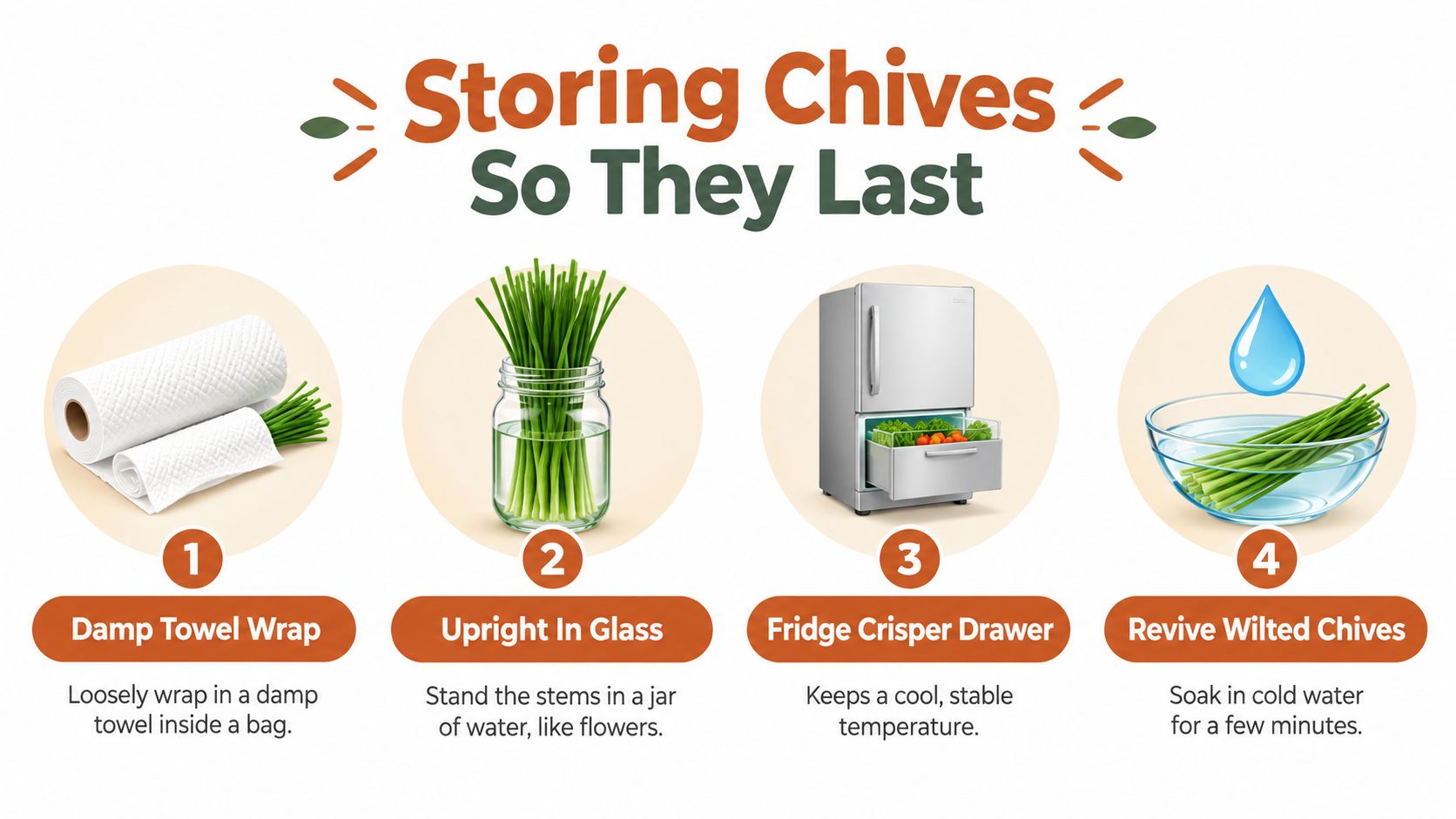
Fresh chives should feel firm, look green, and stand upright rather than collapsing in the bundle. Store them in the refrigerator as soon as you can, but avoid sealing wet herbs tightly in a way that traps excess moisture.
One practical method is to wrap the chives loosely in a damp paper towel, place them in a bag, and keep them in the refrigerator. The towel helps prevent the stems from drying out, while the loose wrapping gives moisture somewhere to escape.
A second method treats the chives like a small bouquet. Trim only if needed, stand them upright in a jar with a little water, and cover the tops loosely with a bag before refrigerating. This keeps the stems supported and makes the bundle easy to see when you open the door.
When you have more than you need
If the chives are still fresh but you won't use them soon, chop them and freeze them in small portions. You can place the pieces in an ice cube tray with a little water or oil, then transfer the frozen portions to a freezer-safe container once solid.
Another useful option is chive butter. Let butter soften, mix in finely chopped chives, shape the mixture into a log or place it in a small container, and refrigerate or freeze it. Use it over potatoes, vegetables, eggs, or warm bread.
Frozen chives won't have exactly the same fresh texture as refrigerated chives, but they can still provide a useful onion note in cooked dishes. The important point is to match the storage method to the final use.
Check before using
Bright green and crisp usually means the chives are ready. Slightly wilted stems may still be usable after a quick rinse and cold-water soak, followed by thorough drying.
Slimy, strongly unpleasant, or badly yellowed chives should be discarded. The same delicacy that makes chives lose flavor under prolonged heat also makes careful handling worthwhile, as culinary guidance on using chives in the kitchen makes clear.
Five Easy Ways to Start Cooking With Chives Today
You don't need a formal chive recipe to begin. Pick a dish you already know, add the herb at the right moment, and taste the result.
Make a quick chive butter
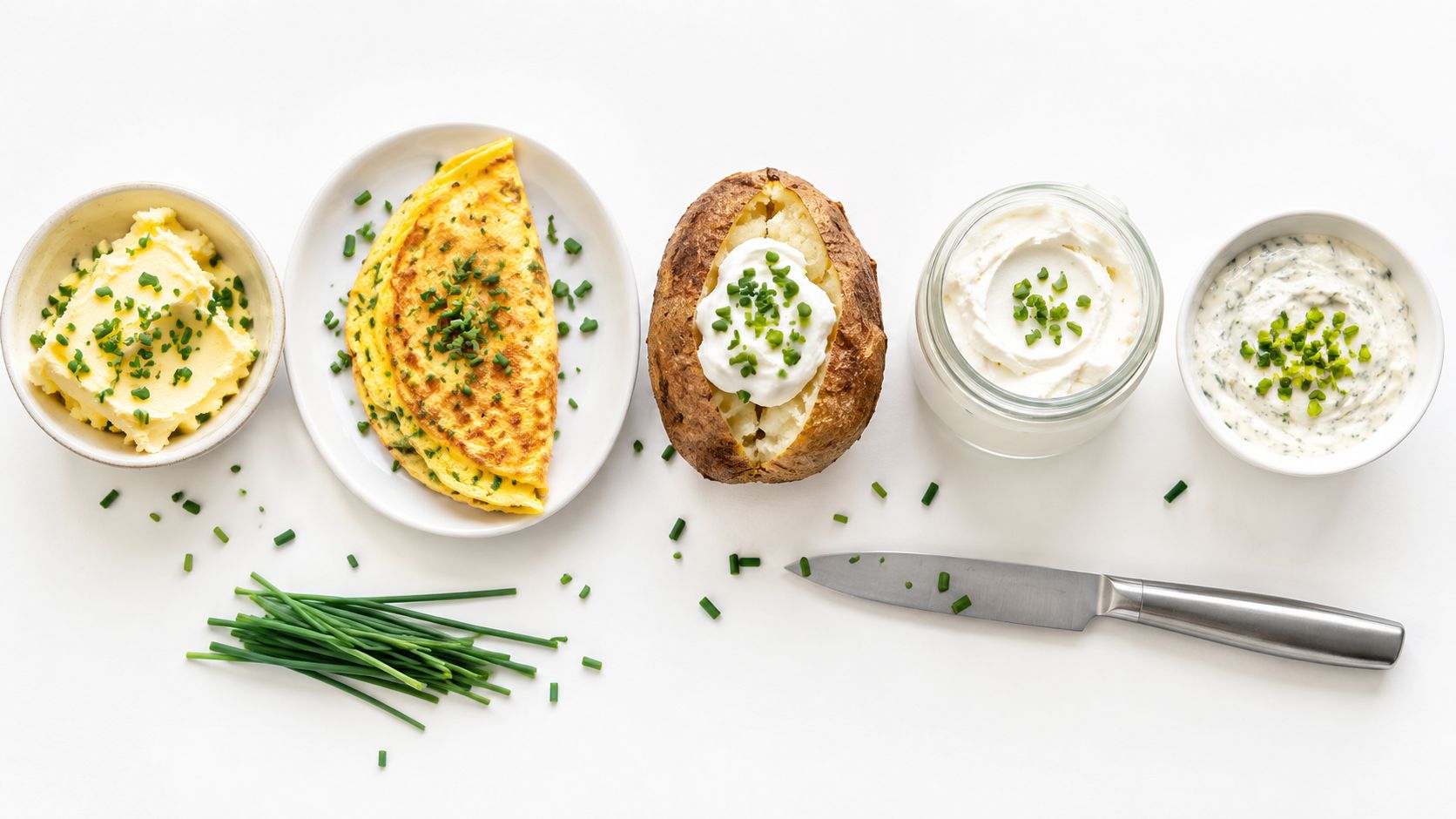
Soften butter and mix in finely sliced chives. Add a little salt if needed, then spread it over warm bread, baked potatoes, corn, or roasted vegetables. The residual warmth softens the butter while allowing the chives to keep their fresh character.
Finish eggs after cooking
Cook scrambled eggs or an omelet as you normally do. Once the eggs are off the heat, add chives over the top or fold them through gently. For more ideas about this classic combination, see eggs and chives.
Upgrade mashed or roasted potatoes
For mashed potatoes, stir chives in after adding butter or dairy. For roasted potatoes, scatter them over the finished tray rather than adding them before roasting. This keeps the herb green and gives each bite a fresher contrast.
Stir them into a dip
Mix chives into sour cream, Greek yogurt, cream cheese, or cottage cheese. Add black pepper, a little salt, and any other ingredients you already like in a dip. Serve it with vegetables, crackers, or potatoes, and adjust the amount of chive until the onion note feels present but not dominant.
Finish a bowl of soup
Ladle soup into bowls first, then add chives just before serving. Try them over a creamy potato soup, a mild vegetable soup, or a clear broth. The hot liquid releases some aroma, while the brief contact keeps the herb from becoming dull.
If you want more dependable everyday cooking ideas after practicing these simple uses, digital recipe collections can provide tested combinations and clear instructions. The important habit remains the same: use chives to finish a dish, not to carry its entire flavor base.
Your New Instinct for Chives
Chives become easy once you stop treating them like small onions. They're fresh, gentle, and best added near the end.
Pair them with mild foods such as eggs, potatoes, dairy, soups, and dips. Cut them shortly before serving so their aroma stays lively. When the dish is hot, add them off the heat or scatter them over the finished plate.
That's enough to improvise confidently. The next time you see chives in the refrigerator, don't wait for a recipe. Snip them over breakfast, stir them into a dip, or finish tonight's soup with a bright green handful.
Just Cook It offers downloadable cookbook e-books with clear, kitchen-tested instructions for everyday meals across global cuisines, including recipes you can read on a phone, tablet, laptop, or e-reader. Visit Just Cook It to explore practical recipe collections and find your next dish to finish with fresh chives.