Dinner dread usually doesn’t show up because a family is doing something wrong. It shows up because the clock hits late afternoon, everyone is hungry in a different way, and nobody wants to solve the same problem again. That’s why family meal planning ideas matter so much. They don’t just organize food. They reduce friction.
That need for simplicity is common. The State of Family Dinner summary reports that the majority of shoppers now plan meals in advance, 74% routinely get dinner on the table in under an hour, and 30% manage it in less than 30 minutes most nights. The same roundup notes that nearly two-thirds of consumers prefer cooking at home because of cost. Planning isn’t about being extra organized. For many households, it’s a practical money and time tool.
Shared meals matter too. The FMI Family Meals Movement research overview says families who share at least three meals per week see better health outcomes, including a 12% lower likelihood of childhood obesity. That same page also notes that 91% of parents surveyed said their family felt less stressed when sharing meals together.
Still, rigid meal plans can backfire. A plan that ignores picky eaters, allergies, changing work schedules, or a rough budget week won’t last. The best systems bend a little. The ideas below are built for real homes, not perfect ones.
Table of Contents
1. Master the Week with Theme Nights
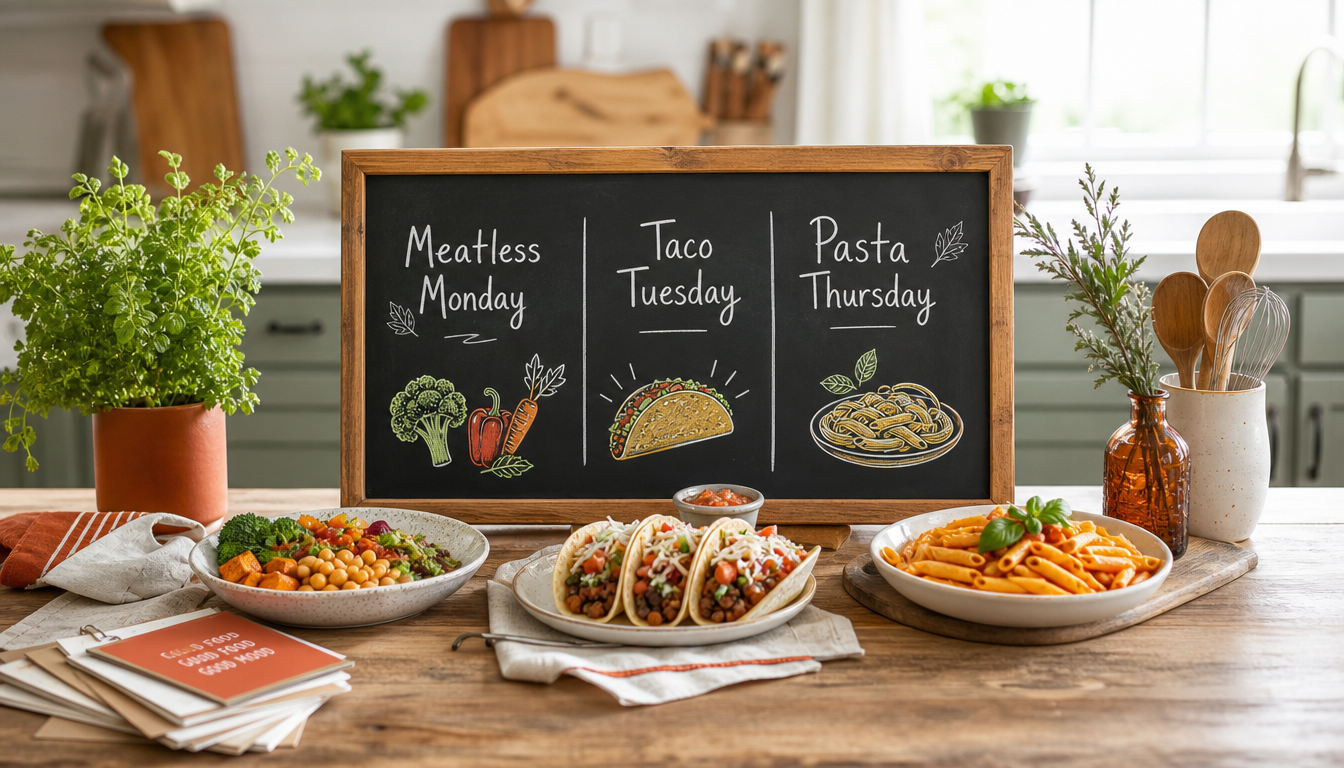
It is 4:45, someone is asking what is for dinner, and your brain feels blank. Theme nights help because they turn a wide-open question into a smaller one. You are not choosing from every meal on earth. You are choosing from one lane.
It's like bumpers in a bowling alley. The bumpers do not pick the ball up for you. They just keep the decision from flying into the gutter.
That is why this works for busy families, picky eaters, and tight weeks. A theme gives structure without forcing one exact recipe. As noted earlier, many households are trying to get dinner done fast and keep costs under control. Familiar themes make both jobs easier because your shopping list, prep steps, and backup options start to repeat.
Effective, simple themes
A strong theme should feel roomy. If it is too narrow, you will get bored or skip it. If it is broad, you can adjust for sales, schedules, and who is willing to eat what that night.
-
Classic comfort themes like taco night, pasta night, soup night, or breakfast for dinner.
-
Low-effort themes like sheet pan night, slow cooker night, or one-pot night.
-
Flavor themes like Mediterranean night or stir-fries, noodle bowls, and other Asian-style meals.
-
Stretch-the-budget themes like pantry night or leftovers remix night.
Here is what that can look like in real life:
-
Monday: Meatless bowls
-
Tuesday: Tacos or quesadillas
-
Wednesday: One-pot dinner
-
Thursday: Pasta
-
Friday: Build-your-own pizzas
The key is flexibility. Taco night can mean ground turkey, black beans, leftover chicken, or roasted sweet potatoes. Pasta night can be red sauce, pesto, butter noodles for one kid, and sautéed vegetables on the side for everyone else. The theme stays the same, even when the ingredients change.
Practical shortcut: if a theme keeps getting skipped, it is usually too fussy for this season of life.
For one-pot night, a simple skillet or Dutch oven meal can cut dishes and stress at the same time. If you want a ready-made starting point.
2. Double Down with the Cook Once, Eat Twice Strategy
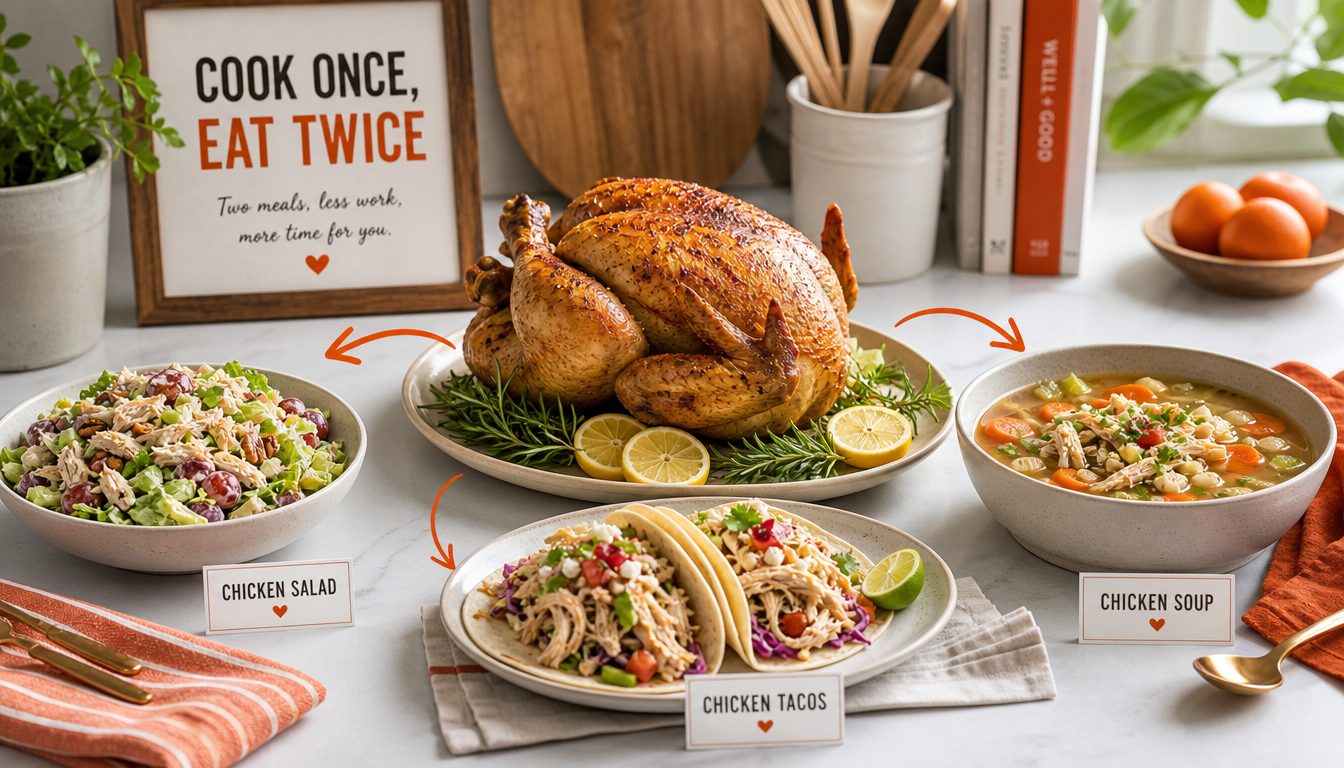
Some family meal planning ideas save time at the planning stage. This one saves time at the cooking stage. The basic move is simple. Make one large batch of a core ingredient, then turn it into a different dinner later.
That second meal should not feel like a sad repeat. It should feel like a shortcut with a new identity.
How to set it up
Pick one anchor food that can change shape easily. Chicken, beans, rice, ground meat, roasted vegetables, and chili all work well.
-
Roast chicken night becomes chicken tacos, chicken salad sandwiches, or chicken noodle soup.
-
Big pot of chili becomes baked potato topping, nacho filling, or stuffed peppers.
-
Ground beef with mild seasoning becomes spaghetti sauce one night and taco bowls the next.
-
Cooked rice becomes stir-fry, burrito bowls, or fried rice-style leftovers.
The appeal is obvious for tired households. The meal planner market report from Business Research Insights says meal kit users save an average of 4.2 hours per week on cooking preparation and planning. Cook once, eat twice is a do-it-yourself version of that same idea.
A simple pairing formula
Use this pattern to keep the second meal from feeling repetitive:
-
Night one: Main plate meal
-
Night two: Handheld, bowl, or soup version
For example, roasted chicken with potatoes on Monday can become chicken wraps on Wednesday. Pulled pork can become rice bowls. Lentils cooked with onions and garlic can become soup first, then sloppy joe-style sandwiches later.
That’s less work, fewer dishes, and one less evening decision.
3. Build Your Own Bowl with Component Prep
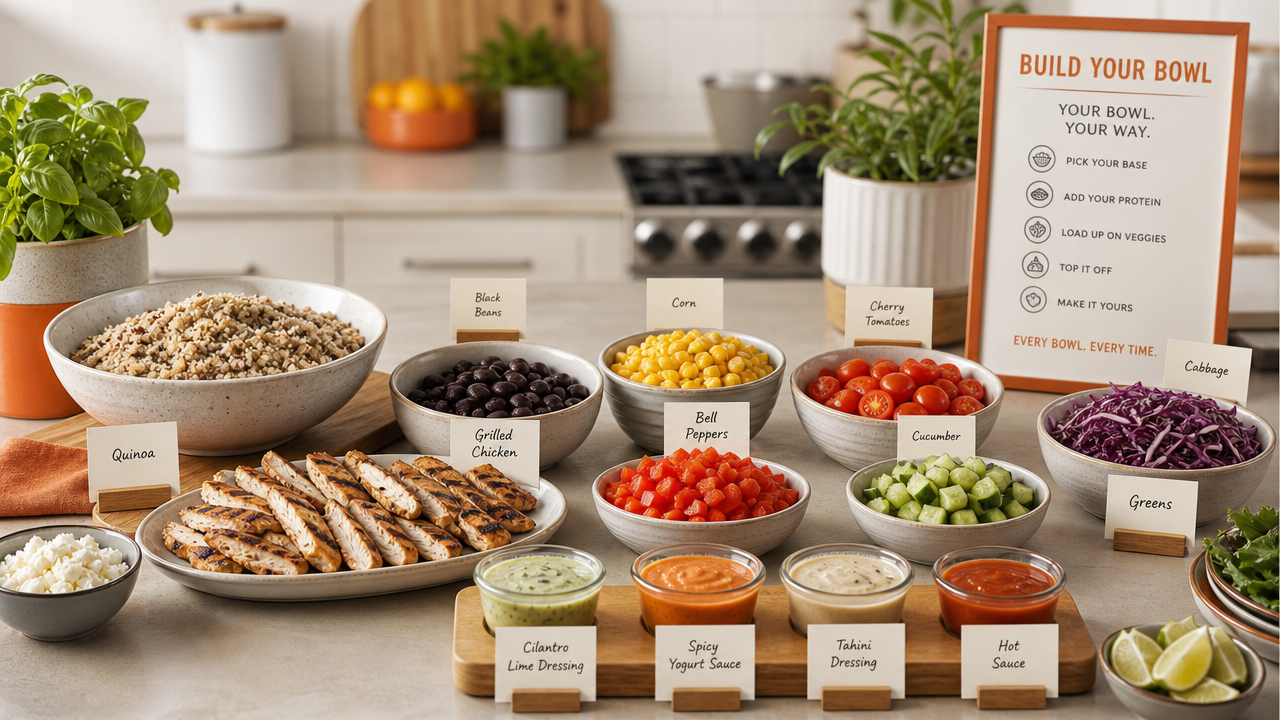
Some families don’t need full meal prep. They need partial prep. That’s where component prep shines. Instead of assembling five complete dinners, a household prepares a few building blocks that can mix and match all week.
This works especially well when one child wants plain food, one adult wants extra vegetables, and another person wants more spice. Everyone starts from the same base, then builds a plate that fits.
What to prep ahead
A short list is enough. Too many components can create its own kind of clutter.
-
Base: rice, quinoa, couscous, noodles, or baked potatoes
-
Protein: grilled chicken strips, beans, baked tofu, boiled eggs, or shredded beef
-
Vegetables: chopped cucumbers, roasted broccoli, shredded carrots, peppers, lettuce
-
Flavor: yogurt sauce, salsa, peanut sauce, vinaigrette, hummus
A bowl night might look like rice, chicken, cucumbers, carrots, and sauce. The next night, the same ingredients can become wraps or lunch boxes.
Good fits for mixed preferences
This system is a gentle step before a full unified meal plan. It gives structure without forcing everyone into one exact dish.
Mediterranean-style components are especially easy because they hold well in the fridge. Families looking for ideas can browse dishes inspired by Mediterranean flavors. Asian-style bowls also work well with rice, vegetables, and a simple sauce.
Helpful rule: prep neutral foods in bigger batches, and stronger flavors in smaller containers.
That one shift keeps food flexible. Plain rice can become almost anything. A heavily seasoned casserole usually can’t.
4. Shop Your Pantry First with the Reverse Meal Plan
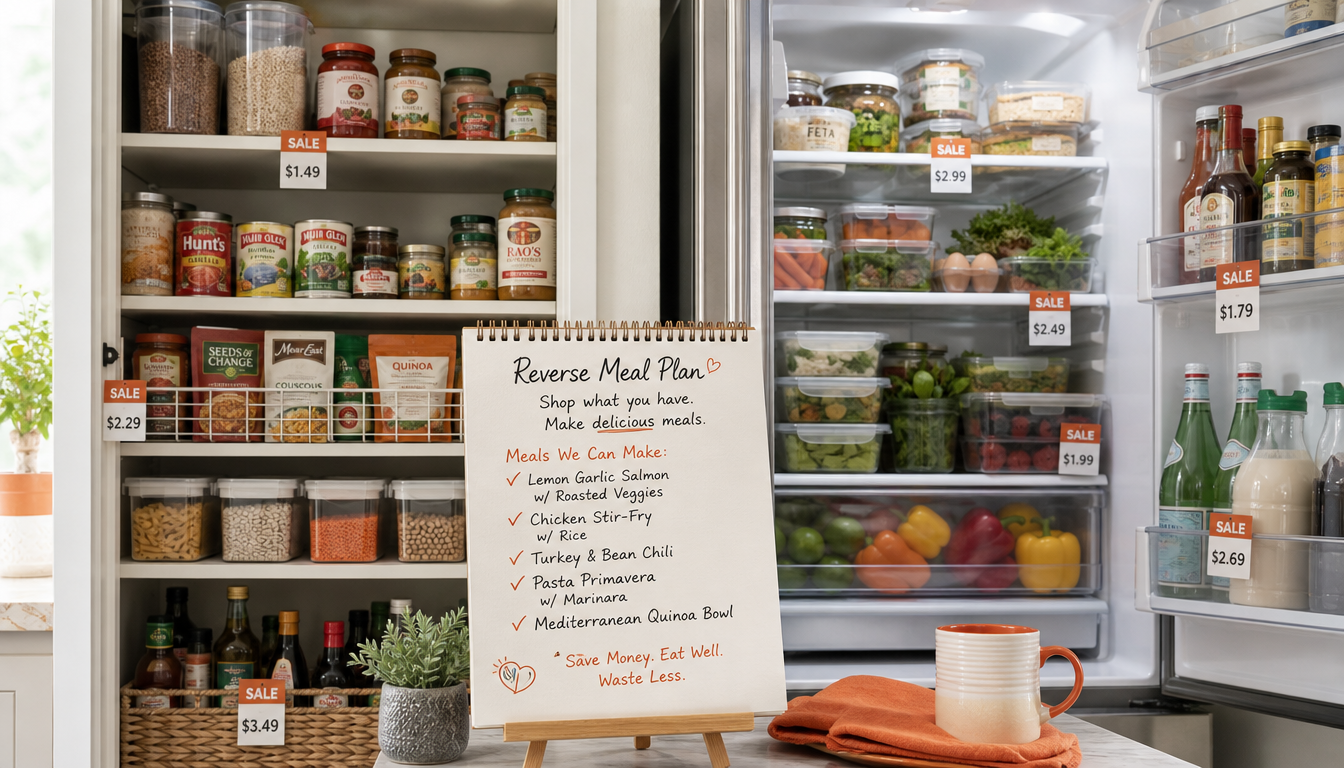
It is 5:30, everyone is hungry, and the fridge looks like a collection of leftovers that do not belong together. The Reverse Meal Plan offers a solution. You start with what you already have, then build meals from that, like solving a small puzzle instead of starting from a blank page.
A regular meal plan asks, "What do we want to cook?" A reverse meal plan asks, "What needs to get used first?" That one shift can save money, reduce waste, and make dinner feel less overwhelming on busy weeks.
The four-step pantry check
Keep this scan simple. You are not taking full inventory like a grocery store manager. You are just looking for building blocks.
-
Shelf staples: pasta, rice, beans, canned tomatoes, broth, oats
-
Fridge items: half-used cheese, yogurt, greens, carrots, eggs
-
Freezer items: frozen vegetables, meat, bread, cooked leftovers
-
Store specials: one or two discounted items that can round out a meal
Then plan backward from those ingredients.
Pasta, canned tomatoes, and frozen spinach can become a quick skillet dinner. Rice, eggs, and mixed vegetables can turn into fried rice. Beans, tortillas, and cheese can become burritos, quesadillas, or nachos. If you want a few more pantry-friendly dinner ideas, keep a short list on your phone for nights when your brain is tired.
Why this method works for real life
This approach is especially helpful if your week changes fast. Maybe payday is still a few days away. Maybe the chicken you planned to cook never thawed. Maybe one child suddenly decides tonight is not a pasta night. Reverse planning gives you a fallback system, not a perfect system.
It also helps you spot food that should be used now, not discovered next week in the back of the fridge. Think of it as rotating the front row before it expires.
A good rule is to choose one ingredient that needs to be used soon, one pantry staple, and one easy flavor boost. That might be wilting spinach, pasta, and jarred pesto. Or leftover rice, frozen peas, and soy sauce. Small combinations are easier to see once you stop planning around recipes and start planning around what is already yours.
5. The Unified Meal for Picky Eaters and Allergies
This is one of the most useful family meal planning ideas for households with competing needs. One child wants plain noodles. Another can’t have dairy. One adult wants more protein. Someone else wants a vegetarian option. It’s easy to end up making two or three dinners by accident.
The better option is a unified meal. One shared base. Several safe and simple add-ons.
According to the meal planning tips article that cites this underserved challenge, 68% of parents struggle to create meals that satisfy all family members without overspending. The same source says families with diverse dietary needs spend 23% more on groceries because of redundant ingredient purchases.
How the unified meal works
The structure is simple:
-
Shared base: potato, rice, pasta, tortillas, pizza dough, salad greens
-
Protein options: beans, chicken, ground meat, tofu, eggs
-
Toppings: cheese, herbs, chopped vegetables, sauces, seeds
-
Safe swaps: dairy-free cheese, gluten-free base, plain version for sensitive eaters
Examples that work well:
-
Baked potato bar with chili, beans, broccoli, cheese, and salsa
-
Noodle bowl bar with plain noodles, vegetables, chicken, tofu, and sauces
-
DIY pizza night with one dough batch and different toppings
-
Rice bowl night with separate proteins and crunchy toppings
Why it reduces stress
A unified meal avoids the trap of “one meal for the adults, one meal for the kids.” Everyone is eating from the same plan, just with different assembly.
Parent-friendly test: if one prep session can feed everyone, the plan is unified. If the cook has to start over for one person, it isn’t.
For inspiration, customizable regional dishes can be especially helpful. Just Cook It’s The Balkan Kitchen offers plenty of adaptable meal ideas that can be served family-style and adjusted at the table.
6. The $20 Emergency Pantry Plan for Tight Weeks
Some weeks don’t need a clever meal plan. They need a survival plan with dignity. A job change, medical bill, missed paycheck, or surprise expense can wipe out the usual grocery routine fast.
That’s why an emergency pantry plan matters. It gives a family a script for hard weeks, so stress doesn’t have to make every dinner decision from scratch.
The poverty meals discussion linked in the underserved-angle research highlights how often people look for ultra-low-cost staple meals. The same underserved-angle summary says 76% of families skip meal planning during emergencies, even though many want a structure that helps them avoid food insecurity.
A simple three-day framework
The goal isn’t variety for variety’s sake. The goal is filling meals from overlapping ingredients.
Sample grocery focus
-
Staples: oats, rice, lentils
-
Protein support: eggs, peanut butter
-
Vegetables: seasonal produce, carrots, onions, cabbage, or frozen vegetables
-
Flavor basics: salt, pepper, oil, garlic, or whatever is already on hand
Three-day example
-
Day 1 dinner: lentil and rice bowls with sautéed onions and carrots
-
Day 2 dinner: vegetable fried rice with scrambled egg
-
Day 3 dinner: savory oats with egg and greens, or lentil soup with toast
Lunches can repeat leftovers. Breakfast can stay simple with oats or eggs.
How to make it feel less bleak
Use one pot when possible. Season the same staples in different ways. Keep one crunchy or fresh element if the budget allows, even if it’s just shredded cabbage or sliced apple.
Many affordable home-style dishes from Indian cooking rely on pantry basics like lentils, rice, onions, and spices. Just Cook It’s Indian Comfort Food collection can offer useful inspiration when a family wants low-cost meals that still feel warm and familiar.
7. Let Technology Help with the Tech-Assisted Plan
It is 5:15, everyone is hungry, and your brain is already done for the day. A tech-assisted plan offers a solution. Picture it as providing your meal routine with a decent assistant. Not a replacement parent, not a magic fix, just a tool that remembers things so you do not have to.
Some families love a paper planner on the fridge. Others do better with phone reminders, shared grocery lists, and a place to save the five dinners everyone will eat. If your week changes fast, digital tools can make meal planning easier to adjust without starting over.
The DataIntelo meal planning app market report points to steady growth in meal planning apps, which fits what many families already feel. More people want help with the boring parts of planning, like organizing recipes, tracking ingredients, and building a shopping list.
What these tools do well
Good meal planning apps are strong at repeatable tasks. They can save favorite meals, sort recipes by allergy or diet, and turn a dinner plan into a grocery list in a few taps.
That matters more than it sounds. Meal planning often breaks down in the small gaps. You remember a recipe but not the ingredients. You know what to cook but forget to thaw the chicken. You buy duplicates because nobody checked the pantry first. A decent app can close those gaps.
Some families also use AI tools to generate ideas from what is already in the house. That can work well if you are staring at rice, eggs, frozen vegetables, and one random zucchini. It is a little like having a brainstorming partner who never gets tired.
Where families still need judgment
Technology is good at sorting. It is not always good at reading the room.
An app might suggest a beautiful dinner that takes 45 minutes, uses three pans, and includes a sauce your kids will reject on sight. It may understand nutrition labels better than it understands Tuesday night soccer practice. As noted earlier, some digital meal tools are built more for optimization than real family life.
So use tech for the parts machines handle well. Let it store recipes, send reminders, and build lists. Keep the final decision with you.
A simple rule helps here. If a tool saves time, keep it. If it creates more choices, more tabs, or more guilt, ignore it.
A low-stress way to use the Tech-Assisted Plan
Try this setup for one week.
Pick one app or shared note. Save 10 family-approved meals. Tag them with labels like fast, cheap, freezer, picky-eater safe, or vegetarian. Then build your week by choosing from those tags instead of searching from scratch every night.
This works especially well for families balancing different needs. You can create your own mini system inside the app. One tag for school-night meals. One for allergy-safe meals. One for backup dinners made from pantry staples. That makes this plan a useful partner to your Unified Meal Plan and your Emergency Pantry Plan, not a separate project.
Start small. You do not need a perfect digital kitchen. You need one place that helps you think less at 5:15.
8. Get Buy-In with the Kid's Choice Collaborative Plan
It is 4:45, everyone is hungry, and the loudest question in the house is, “What are we having?” This plan helps you answer that question before dinner turns into a debate.
The goal is not to hand over the whole menu. It is to give kids a small, real job in the planning process. Imagine bumpers at a bowling alley: You set the lane. They still get a turn.
That turn can look different by age. A younger child can pick the fruit or vegetable. An older child can choose between two parent-approved dinners. A teen can plan one meal with a budget, a time limit, and a short shopping list. That structure matters, especially if you are already juggling picky eaters, food allergies, or a tight grocery budget.
Easy ways to make this work
-
Two-choice method: You offer two workable dinners. Your child picks one.
-
Assigned night: One child chooses one dinner each week within your ground rules.
-
Helper role: A child rinses produce, stirs sauce, sets toppings out, or builds plates.
-
Quick rating system: After dinner, everyone votes yes, no, or maybe again.
This works because kids are more likely to eat a meal they helped shape. Not always. Kids are still kids. But even a small choice can lower resistance because the meal feels familiar before it hits the table.
It also teaches life skills without making it feel like a lesson. Kids start to see that meals involve tradeoffs. If we choose homemade pizza on Friday, maybe we keep Monday simple. If one person wants tacos, we still need a side everyone can eat. That is useful practice in compromise.
One boundary keeps this from becoming exhausting. Kids choose within a framework, not from an unlimited menu. You are not asking, “What do you want for dinner?” You are asking, “Which of these two dinners should we make?” That small shift protects your time and keeps the plan collaborative.
If your family has mixed needs, this method fits nicely with the rest of your system. A child can choose from meals that already work with your Unified Meal Plan. On a hard week, they can pick from your Emergency Pantry Plan options instead of adding extra cost. That is a distinct advantage here. You get more buy-in without creating more work.
8-Point Family Meal Planning Strategy Comparison
| Method/Strategy | Core Features/Characteristics | User Experience/Quality Metrics | Target Audience | Unique Selling Points |
|---|---|---|---|---|
| Theme Night Method | Classic themed nights, e.g., Meatless Monday, Taco Tuesday | Reduces decision fatigue, sub-30-minute meal prep | Families aiming for quick meals | Variety of themes beyond basics, e.g., 'One-pot wonders' |
| Cook Once, Eat Twice | Large batch cooking, repurpose for different meals | Saves 4.2 hours/week on meal prep | Busy individuals/families | DIY efficiency similar to meal kits |
| Component Prep System | Prepping individual components, e.g., quinoa, veggies, sauces | Customizable meals for different preferences | Families with diverse tastes | Entry point to full 'unified meal' |
| Reverse Meal Plan Approach | Start with pantry/fridge contents and store sales | Cuts down on food waste and grocery bills | Budget-conscious cooks | Drastically reduces food waste |
| Unified Meal for Diverse Diets | Deconstructed meals with shared base and customizable toppings | Reduces 23% extra grocery spend for diverse needs | Parents struggling to please everyone | One prep session, multiple happy eaters |
| Emergency Pantry Plan | 3-day meal plan using ultra-cheap staples | Avoids food insecurity, under $20 grocery list | Families facing financial shocks | Supportive, judgment-free tool |
| Tech-Assisted Plan | Meal planning apps and AI tools | Grocery list automation, personalized suggestions | Tech-savvy planners | Inspiration and organization with trusted recipe sources |
| Kid's Choice Collaborative Plan | Involves kids in planning, dedicated night or choice between options | Reduces mealtime battles, fosters communication and life skills | Families with children | Extends family connection through planning |
Find Your Family's Perfect Meal Planning Rhythm
It is 5:20 p.m. You open the fridge and see half a rotisserie chicken, two carrots, a yogurt cup, and a container nobody has claimed. One child wants noodles. Another wants plain food only. You want dinner to happen without spending the last bit of your energy.
Here, a meal planning rhythm helps.
Not a perfect system. A rhythm. It's about finding the beat your family moves to on a busy weeknight. Some weeks call for structure. Some call for shortcuts. Many call for both.
The best family meal planning ideas work because they match real life. Theme nights help when decision fatigue hits by Tuesday. Cook once, eat twice helps when cooking every night feels like a second shift. Component prep works well when everyone wants the same dinner in a different form. A unified meal gives you one base meal with easy swaps for picky eaters, allergies, or different preferences.
You do not need to marry one method forever, either. These approaches are more like tools than rules. You can reach for the reverse meal plan when the pantry is full but inspiration is low. You can lean on the $20 Emergency Pantry Plan when money gets tight without warning. You can use tech tools when your brain feels overloaded, and bring in a kid's choice night when dinner battles are starting to run the show.
That flexibility matters. A lot of meal planning advice stops at "make a list." Helpful, yes, but incomplete. A list does not solve the problem of one child refusing mixed foods, one adult avoiding dairy, and a grocery budget that suddenly shrank this week. Frameworks do. They give you a shape to follow, which is often the missing piece.
So what should you do next?
Pick the strategy that solves your biggest pain point first. If your problem is time, start with cook once, eat twice. If your problem is variety, try bowls or component prep. If your problem is conflicting food needs, test the Unified Meal Plan. If your problem is money, begin with reverse planning or the Emergency Pantry Plan. You are not building a perfect kitchen system in one weekend. You are finding one small change that makes tonight easier, then repeating what works.
That is the goal. Less stress at 5 p.m. Less wasted food. Fewer expensive last-minute pivots. More dinners that feel possible, even on the messy weeks.
Start with one experiment. Give it a week. Keep the parts that help, drop the parts that do not, and let your plan evolve with your family.
For families ready to turn these family meal planning ideas into actual dinners, Just Cook It offers recipe collections that make weeknight cooking feel more doable. Browse the store and pick a collection that fits the family’s tastes, schedule, and budget at Just Cook It.