What if the biggest problem with most grilling advice isn't bad recipes, but the assumption that a recipe alone is enough?
A lot of home cooks buy grilling recipe books expecting a stack of marinades, rubs, and burger ideas. Then the same problems keep showing up. Chicken sticks. Steaks gray instead of brown. Vegetables burn before they soften. Brisket tastes smoky but still chews like rope. The missing piece usually isn't enthusiasm. It's instruction that teaches how fire behaves.
The strongest grilling recipe books don't just hand over dinner ideas. They teach heat control, timing, setup, and judgment. They show when to bank coals, when to move food off direct heat, and when a thermometer matters more than a clock. That shift turns grilling from guesswork into repeatable cooking.
Modern readers also need more than the old meat-only formula. Today's cooks use kettle grills, gas grills, smokers, compact patio setups, and flattops. Some want ribs. Others want charred cabbage, grilled shrimp, tofu skewers, or fast weeknight meals. A useful guide has to meet that reality.
Table of Contents
-
Frequently Asked Questions About Grilling Books
-
Are grilling recipe books still worth buying when so much is online
-
Is a science-based grilling book too advanced for casual cooks
-
Do meat-focused books still help plant-based or seafood cooks
-
How can a reader tell if a cookbook is mostly style and not much substance
-
Are digital grilling collections a good substitute for print books
-
Should a cook buy one big grilling bible or several narrower books
-
Why Your Grill Has More Potential Than You Think
Fire cooking has a way of making simple food feel bigger. A skewer of vegetables gets sweeter. A chicken thigh picks up smoke, char, and crisp skin. Even bread changes character over a grate. That appeal is old, but the way people learn it has changed.
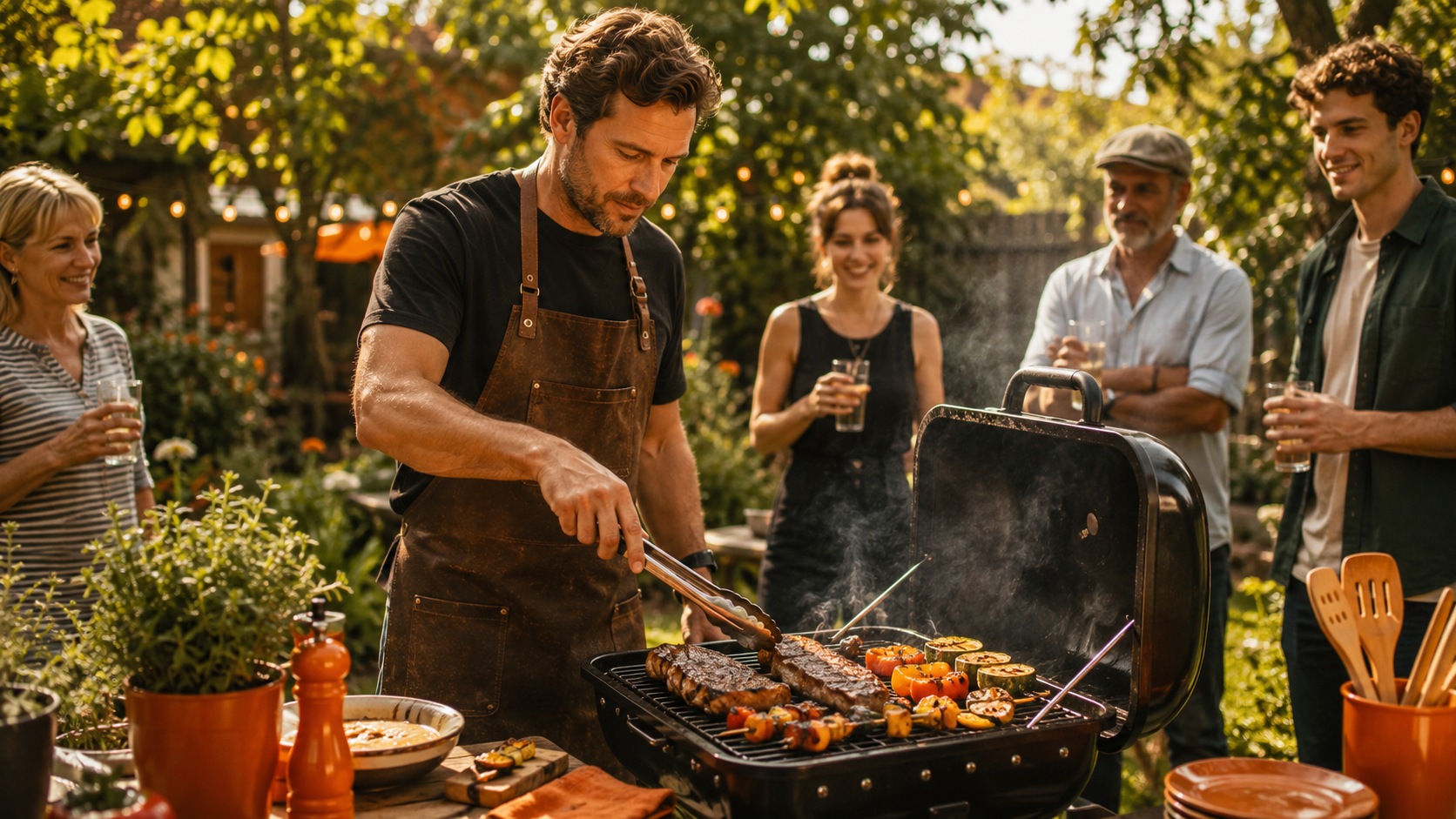
Older grilling pamphlets often treated the grill as a place to finish food fast. Newer grilling recipe books treat it as a full cooking system. They cover direct heat, indirect heat, smoke, resting, carryover cooking, and regional styles from beyond the usual burger-and-steak routine. That matters because a grill can roast, sear, smoke, blister, toast, and gently cook, depending on setup.
What a good book unlocks
A strong guide helps a cook see more options in the same piece of equipment.
-
Broader meals: One grill can handle skewers, whole fish, pizza, fruit, flatbreads, and slow-cooked cuts.
-
Better control: Clear instruction on zones and airflow helps prevent the common cycle of flare-up, panic, and overcooking.
-
More confidence: Once a cook understands heat, recipes stop feeling rigid and start feeling flexible.
A grill becomes more useful the moment a cook stops asking only "what recipe?" and starts asking "what kind of heat does this food need?"
That is why grilling recipe books still matter, even in a world full of short videos. A video can show a flashy finish. A good book teaches the pattern behind it. That pattern is what lets someone grill salmon one night, mushrooms the next, and a pork shoulder on the weekend without starting from zero each time.
The Anatomy of a Great Grilling Cookbook
Not every grilling book deserves permanent space near the tongs and instant-read thermometer. Some are little more than photo collections with sauce recipes. Others act as working manuals. The difference shows up fast once a cook knows what to look for.
Steven Raichlen sets a useful benchmark here. In a profile discussing his body of work, Raichlen is described as the most prolific author in the grilling genre, with more than 30 cookbooks devoted to barbecue and grilling. The same source notes that The Barbecue Bible has helped millions of grillers build their skills. That kind of reach points to something bigger than popularity. It shows the value of books that teach systems, not just dishes.
A clear point of view
The best grilling recipe books have a philosophy. Some focus on live-fire tradition. Some emphasize precision. Some center global flavors. A reader should know, within a few pages, what the author believes matters most.
That point of view shapes every useful choice in the book:
-
Fire management first: Good authors explain whether they prefer direct heat, two-zone setups, or low-and-slow methods for certain foods.
-
Ingredient logic: Strong books explain why a fatty cut can take smoke well, or why delicate fish needs a cleaner, gentler approach.
-
Flavor structure: Rubs, marinades, glazes, and finishing sauces should feel connected to the cooking method, not pasted on.
Technique has to be teachable
A recipe that says "grill until done" doesn't teach much. A better book breaks down setup and decision points. It explains where the coals go, when the lid stays on, when to rotate food, and what visual cues matter.
The most useful books usually include:
-
Zone setup diagrams for direct and indirect cooking.
-
Doneness cues such as color, texture, and resistance.
-
Tool guidance for chimney starters, grill brushes, thermometers, and skewers.
-
Troubleshooting notes for flare-ups, sticking, and uneven browning.
A reader shouldn't have to guess whether "medium heat" means a barely warm grate or a ripping-hot fire.
Recipes should build skill, not just fill pages
A great grilling cookbook teaches in layers. Early recipes often cover forgiving foods such as sausages, bone-in chicken, or thick vegetables. Later recipes ask for more judgment, such as reverse-seared steaks, whole fish, or smoked cuts.
Skill marker: The strongest books leave a cook better at grilling foods that aren't even in the book.
Photography matters too, but not just for beauty. The best images show stages: coal arrangement, grate placement, crust development, and slicing. That visual teaching is often what separates a coffee-table book from a kitchen book.
When grilling recipe books combine philosophy, technique, progression, and clear visuals, they stop being entertainment and start becoming instruction.
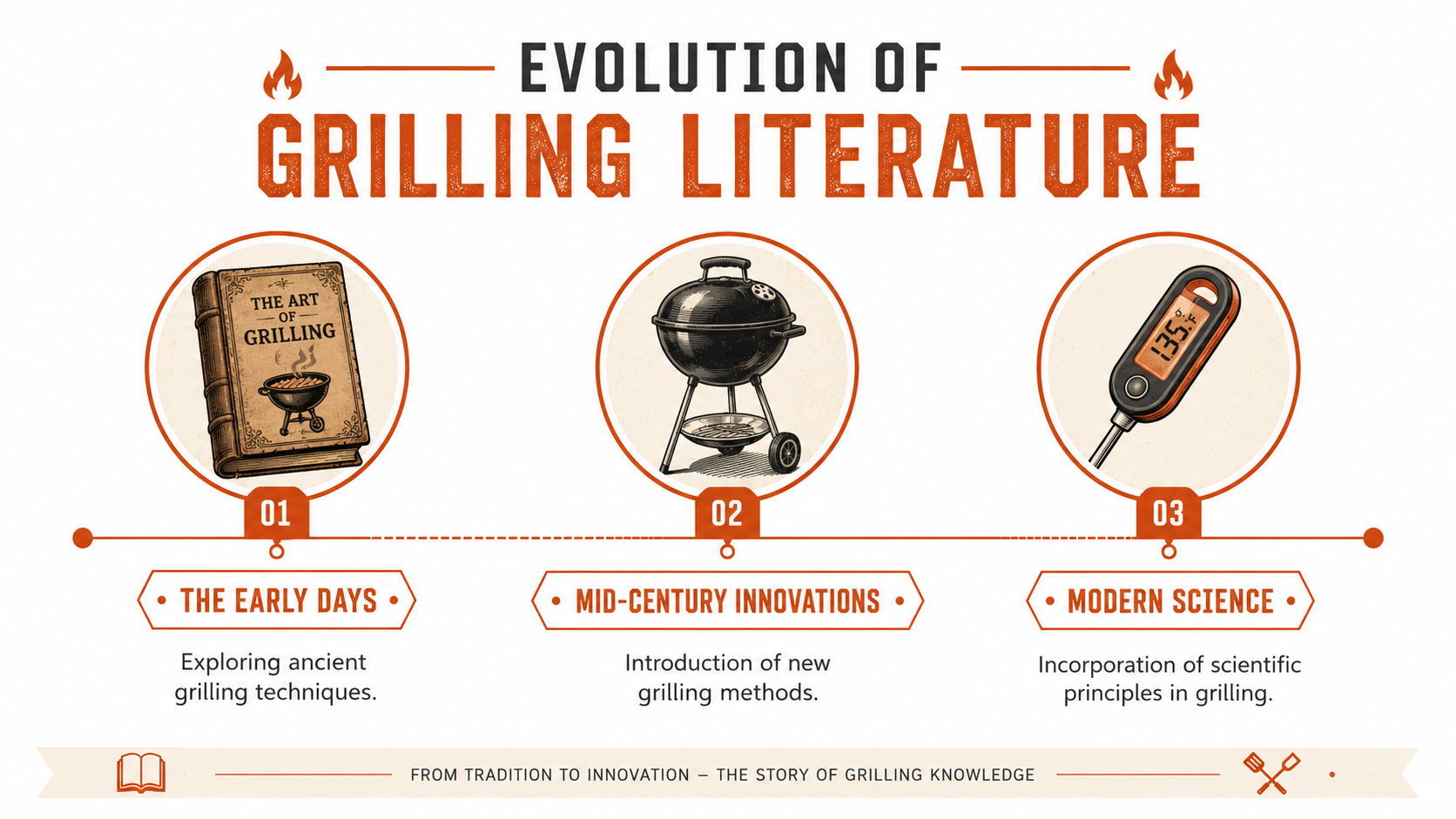
From Classic Tomes to Modern Science
What changed grilling books from family scrapbooks into practical field guides? The short answer is this. Authors stopped treating fire like a mystery and started explaining its logic.
Grilling literature began as preservation. Early books captured regional barbecue habits, favored cuts, wood choices, and house methods learned by repetition. They worked a bit like oral history in print. You were not only learning how to cook. You were learning what a community valued at the table.
That older style still matters. It protects taste memory and local identity, and it gives context for why one place builds a tradition around pork shoulder while another centers beef, lamb, or whole animals over coals. A good modern reader should see those books as maps of culture, not outdated manuals.
The shelf got bigger
The grilling shelf is now wide enough that readers can shop by purpose, not just popularity. A roundup at Grill Momma's survey of grilling, smoker, and BBQ cookbooks shows how broad the category has become, with books aimed at different tools, skill levels, and cooking styles.
That expansion matters because it reveals the anatomy of the market. Traditional barbecue books still dominate the center aisle. Around them, newer niches have grown. Weeknight grilling. Global live-fire cooking. Technique-first books. Science-heavy titles. The same pattern shows up in other cuisines too, where Turkish fire-cooking traditions help readers see grilling as more than steaks and ribs.
The gap is just as interesting as the growth. Print shelves still lean heavily toward classic backyard barbecue, while newer cooking habits often need more support than they get. Flattop cooking, vegetable-led grilling, and plant-based live-fire recipes are still easier to find in digital collections than in many traditional cookbook stacks. That is one reason modern readers often mix a trusted print book with online recipe libraries.
The science era changed expectations
Then the teaching style changed. Instead of saying, "cook it this way because that is how it has always been done," newer authors began explaining cause and effect. Lid position affects airflow. Airflow affects combustion. Combustion affects heat and smoke. Once a cook understands that chain, a grill stops feeling temperamental and starts feeling readable.
As noted earlier in the Grill Momma overview, scientifically rigorous titles such as Meathead: The Science of Barbecue and Grilling helped push that shift into the mainstream. They treated outdoor cooking less like folklore and more like a repeatable system, while still respecting tradition.
This changed what readers should expect from a great grilling book. A classic volume may tell you what people have loved for generations. A science-forward book shows why those results happen and how to reproduce them on a different grill, in different weather, with different ingredients.
The strongest modern collections do both. They keep the story, then hand you the blueprint. That blend is especially useful in areas where print has lagged behind, such as flattops, mixed-fuel setups, and plant-based grilling, because readers need principles they can transfer, not just recipes they can copy.
Why Temperature and Technique Trump All
Why do two cooks follow the same recipe and end up with completely different food?
Because recipes are the map. Temperature and technique are the steering wheel and brakes. A great grilling book understands that difference. It does not just hand you ingredient lists. It teaches you how heat behaves, how food responds, and how to make small adjustments before dinner goes off course.
For low-and-slow cooking, steady heat is the whole game. As noted earlier in The Smoke Shop BBQ roundup of essential BBQ books, strong barbecue books keep returning to the same lesson: tough cuts improve when a cook can hold a consistent low temperature long enough for connective tissue to soften. The practical takeaway is bigger than brisket. If a book cannot teach heat management, its recipes will only work on the author's best day, on the author's grill.
That is why the most useful books read a little like a flight manual. Not intimidating. Clear. Specific. Repeatable. They show where to bank the coals, how to build a two-zone fire, when to trust the thermometer, and when to leave the lid closed. A vague instruction like "cook until tender" sounds friendly, but it leaves beginners guessing about airflow, fuel timing, and placement.
A strong grilling book usually helps readers answer four questions:
-
Where should the food sit? Direct heat and indirect heat do different jobs.
-
What temperature matters most? Grate temperature, dome temperature, and internal food temperature are not interchangeable.
-
What should change first? Vent position, burner setting, lid position, or fuel amount.
-
What is the goal of this stage? Browning, gentle rendering, smoke absorption, or finishing.
High-heat grilling is a separate skill. Searing a steak is not a faster version of smoking a pork shoulder. It is a different assignment. The same Smoke Shop BBQ discussion points readers to benchmarks from The Cook's Illustrated Guide to Grilling that highlight how quickly charcoal setups can reach searing temperatures. That matters because good browning depends on intense surface heat and short exposure, not patience.
This is also where many older grilling books show their limits. They often do a solid job with steaks, chops, and burgers, but give less guidance for flattops, griddle inserts, delicate vegetables, or plant-based proteins that brown fast and dry out faster. A modern collection should explain how technique shifts when the cooking surface changes. A smash burger on steel, a blistered cabbage wedge, and a marinated tofu skewer all ask for different heat contact, timing, and turning habits. Readers who want broader weeknight range often benefit from pairing grilling titles with healthy cooking book recommendations that treat vegetables, legumes, and lighter mains as central, not as side notes.
Gas grills deserve the same honesty. They can produce excellent food, but they store and deliver heat differently from charcoal. A book that matches real life will say so. It will suggest longer preheats, the use of cast iron or griddle surfaces when needed, and methods for building a hot zone and a cooler zone even on a smaller grill.
Recipes suggest possibilities. Technique decides texture, color, and juiciness.
That is why temperature and technique outrank any single recipe. Once a cook understands the difference between roasting heat, searing heat, and holding heat, the book becomes more useful. Chicken thighs, shrimp skewers, mushrooms, burgers, and steaks stop feeling like separate puzzles and start following the same core rules.
Finding the Grilling Book That Matches Your Style
The right book depends less on skill level than on cooking habits. Someone who grills twice a week after work needs a different resource than someone tending a smoker on Saturday. A buyer who wants seafood and vegetables will judge a book differently from someone chasing bark on brisket.
Four common grilling personalities
The table below helps sort the field.
| Which Grilling Cookbook Style is Right for You? | |||
|---|---|---|---|
| Griller Persona | Primary Focus | Best For... | Typical Recipes |
| Weekend Pitmaster | Long cooks, smoke management, fire control | Cooks who enjoy setup, patience, and larger cuts | Brisket, ribs, pork shoulder, smoked chicken |
| Weeknight Griller | Speed, reliability, fewer ingredients | Busy households and repeatable dinners | Burgers, kebabs, salmon fillets, grilled vegetables |
| Global Adventurer | Regional techniques and flavor variety | Cooks who want broader live-fire traditions | Skewers, kebabs, spice-rubbed meats, charred flatbreads |
| Food Scientist | Temperature, method, repeatability | Readers who want to know why each step works | Reverse-seared steak, controlled low-and-slow cuts, side-by-side tests |
How each reader should choose
A smart pick starts with honest self-assessment.
-
Schedule fit: A weeknight cook should avoid books built around all-day projects unless weekend cooking is realistic.
-
Equipment match: A kettle grill owner needs different guidance than someone using a gas grill on a small patio.
-
Food preference: Readers who want lighter meals should look for books that treat seafood, vegetables, and balanced plates as core material, not side notes.
-
Learning style: Some cooks want stories and tradition. Others want charts, temperatures, and test-driven instruction.
Books also differ in how they handle health-minded cooking. Some still assume heavy cuts, rich sauces, and large outdoor setups. Others are better for lean proteins, vegetables, and portion-friendly meals. That distinction matters for readers comparing grilling recipe books with broader collections focused on healthy eating cookbooks, where balance and everyday practicality often get more attention.
A quick way to avoid buyer's regret
Before buying, a reader can scan the table of contents and ask three questions:
-
Does this book match the grill or cooker sitting at home?
-
Are the recipes built for the way meals happen during the week?
-
Does the author teach technique clearly enough that the recipes can be adapted?
If the answer to any of those is no, the book may still be interesting, but it probably won't become a regular kitchen tool. The best choice is the one that gets opened often, stained a little, and trusted.
The Untapped Potential Beyond Traditional Grilling
For all the progress in grilling publishing, a lot of books still assume the same cook, the same equipment, and the same menu. That cook usually has outdoor space, time for meat-heavy projects, and interest in classic grate cooking. Many readers don't fit that picture.
According to Jill Hough's discussion of gaps in grill cookbooks, existing grilling recipe books still focus heavily on traditional techniques while failing to address the rise of flattop griddling. The same source also notes that many books remain meat-centric, leaving plant-based, seafood-focused, urban, and budget-conscious cooks underserved.
The flattop gap is real
A flattop isn't just a grill without grates. It changes what outdoor cooking can do. Smash burgers, fried rice, chopped vegetables, delicate fish, tortillas, breakfast spreads, and thin-sliced proteins all behave differently on a solid hot surface.
Yet many traditional books barely touch it. That leaves readers piecing together methods from scattered videos and forum posts instead of learning from a curated collection with tested sequences, heat guidance, and menu planning.
The audience has changed faster than the shelf
Modern cooks often want flexibility more than ritual. They may need recipes that work in small spaces, use affordable ingredients, or support mixed households where one person wants chicken and another wants mushrooms or tofu.
That creates several blind spots in older books:
-
Space limits: Apartment cooks may have a compact gas grill or electric outdoor cooker, not a full backyard setup.
-
Budget pressure: Premium cuts and specialty gear can make classic barbecue books feel distant from daily cooking.
-
Diet variety: Seafood, beans, vegetables, and lean proteins deserve full treatment, not token chapters.
-
Meal speed: Many readers need outdoor cooking that fits a normal evening.
Digital collections are well suited to fill those gaps because they can be narrower, faster to update, and easier to organize around specific needs. A focused set of high-protein recipe ideas in digital form can serve a very different reader than a traditional smokehouse volume, especially when the goal is practical meal building rather than barbecue lore.
The next wave of grilling knowledge won't be defined only by ribs and brisket. It will be shaped by griddles, vegetables, seafood, compact spaces, and cooks who need flexibility.
That doesn't make the old books obsolete. It means they no longer cover the whole field.
Your Next Great Grilling Adventure Awaits
The best grilling recipe books do more than collect food people already like to eat outdoors. They teach judgment. They show how to build a fire for the result a cook wants, how to read a grate, and how to recover when dinner starts going sideways.
That is why the strongest books tend to outlast trend-driven titles. They offer method, not just menus. Some readers will want tradition and regional barbecue history. Others will want charts, thermal guidance, and repeatable tests. Many will want something the older shelf still doesn't provide, such as flattop meals, plant-forward grilling, or compact-space practicality.
A smart next step is to choose resources by cooking reality, not aspiration. The useful question isn't which title looks most authoritative on a shelf. It's which one matches the grill at home, the food a household routinely eats, and the amount of time available on a normal week. For a great resource that meets these needs, consider Fire & Smoke: 52 Essential Grilling Recipes for Every Backyard.
When a book or digital collection meets those conditions, outdoor cooking gets wider, calmer, and more fun. The grill stops being a special-occasion machine and starts becoming part of regular life.
Frequently Asked Questions About Grilling Books
Are grilling recipe books still worth buying when so much is online
Yes, if the book teaches method clearly. Random online recipes often assume knowledge they never explain. Good grilling recipe books organize skills in a sequence, so a reader learns setup, heat, timing, and troubleshooting instead of collecting disconnected tricks.
What should a beginner look for first
A beginner should prioritize clarity over ambition. The best first book usually includes direct and indirect heat setups, simple recipes that build confidence, and clear photos of doneness. A glossary of tools also helps, especially for chimney starters, thermometers, grill baskets, and skewers.
Is a science-based grilling book too advanced for casual cooks
Not usually. Science-based books often make grilling easier because they explain cause and effect in plain language. When a reader understands why food sticks, why skin burns, or why a tough cut softens slowly, the cooking becomes less mysterious.
Do meat-focused books still help plant-based or seafood cooks
Sometimes, but not always. Technique can transfer well. Heat zones, grate management, and browning principles matter for mushrooms and fish just as much as for steak. The weak point is recipe coverage. Many traditional books still don't give enough space to vegetables, tofu, beans, or seafood-centered meals.
How can a reader tell if a cookbook is mostly style and not much substance
A quick scan usually reveals it. Warning signs include vague heat instructions, very short recipe notes, no setup diagrams, and lots of finished-food photography without process images. A stronger book explains how the grill is arranged and what the cook should watch for while the food is on the fire.
Are digital grilling collections a good substitute for print books
They can be, especially when the cook wants focused material. Digital formats are useful for niche needs such as flattop cooking, weeknight grilling, or high-protein meal planning. They also make it easier to search, save, and cook from a phone or tablet near the grill.
Should a cook buy one big grilling bible or several narrower books
That depends on goals. One broad reference works well for learning core methods. Narrower books are often better once a cook knows the basics and wants depth in a specific area such as smoking, global skewers, seafood, or griddle cooking. Many cooks end up using both types for different reasons.
The strongest grilling library is the one that helps dinner turn out better on an ordinary Tuesday, not just on a holiday weekend. For more flexible recipe collections built for the way people cook now, browse Just Cook It.