Ground turkey and tortillas are an easy starting point for a satisfying weeknight meal, but building a burrito that tastes just as good the next day takes a little technique. The key is getting the texture right: turkey needs enough moisture to stay tender without becoming watery, while ingredients like salsa, beans, rice, and cheese need to be layered thoughtfully so the tortilla stays intact instead of turning soft and soggy.
The reliable approach is simple: build flavor in layers, verify doneness with a thermometer, and assemble with storage in mind. The result is a burrito that tastes good fresh, stays together after toasting, and reheats without becoming a dry tube of meat and rice.
Table of Contents
- Why Ground Turkey Burritos Work So Well for Weeknights
- What You Need Before You Start Cooking
- How to Cook Flavorful and Juicy Ground Turkey Filling
- How to Assemble and Fold a Burrito That Holds Together
- Serving Ideas Storage and Reheating That Keeps Burritos Tasty
- Bringing It All Together for Dependable Results
Why Ground Turkey Burritos Work So Well for Weeknights
Burritos belong to a much older Mexican tradition of rolled tortillas filled with other ingredients. The exact origin of the modern burrito remains unclear, but a major reference describes the term as having been used in Mexico for a taco-style rolled tortilla, before the format developed into broader regional versions and spread internationally. A ground turkey burrito is therefore a modern variation within an older lineage, not a centuries-old standalone dish. The historical and nutritional reference for turkey-based foods helps place turkey in contemporary cooking without confusing the protein with the history of the burrito itself.
On a busy evening, the format earns its place because it combines several jobs in one meal. Seasoned turkey provides a savory center, beans and rice add body, and the tortilla turns everything into something portable. You can serve the same filling as a bowl, fold it into wraps, or keep it in the refrigerator for a second meal without starting from scratch.
Turkey also gives cooks a different balance from beef. Its flavor is mild, so it takes on chile, cumin, garlic, onion, lime, and salsa readily. Its leaner texture demands more attention, though. Beef can tolerate a little careless cooking and still taste rich. Turkey needs a pan that isn't overcrowded, enough seasoning to avoid blandness, and a measured addition of moisture.
The protein advantage
Nutrition listings for turkey burrito bowls show why this combination appeals to people building high-protein dinners. One listing provides 554 calories, 39 grams of protein, 68 grams of carbohydrates, 16 grams of fat, and 12 grams of fiber per serving, while another provides 536 calories, 31 grams of protein, 69 grams of carbohydrates, and 16 grams of fat. Both listings also contain more than 1,000 milligrams of sodium, so salsa, cheese, canned beans, and seasoning blends deserve attention if you're watching salt. These figures are reported in the USDA-based turkey nutrition specification.
The practical lesson isn't to copy one nutrition profile. It's to use the burrito as an adjustable framework. Reduce rice, add vegetables, choose unsalted beans, or keep cheese modest without losing the satisfying structure that makes the meal work.
What You Need Before You Start Cooking
For four burritos, set everything out before the skillet heats. You'll need ground turkey, four large flour tortillas, cooked rice, black or pinto beans, shredded cheese, salsa, an onion, garlic, and a seasoning blend built around chili powder, cumin, smoked paprika, and dried oregano. Keep lime wedges, cilantro, or sliced avocado for serving rather than mixing them into the hot filling, where fresh ingredients can release excess water.
A practical ingredient list looks like this:
- Ground turkey: Choose a package with enough fat to stay tender, while remembering that even leaner turkey can remain juicy when finished with salsa or broth.
- Tortillas: Large flour tortillas are the easiest to fold and generally hold a full filling better than small tortillas. For freezer cooking, choose flexible tortillas without cracks or dry edges.
- Rice and beans: Use cooled rice and well-drained beans. Hot rice creates steam inside the tortilla, while wet beans make the seam soft.
- Flavor base: Finely chopped onion and garlic give turkey a fuller foundation than dry seasoning alone. A spoonful of salsa adds acidity and moisture.
- Cheese: Monterey Jack, cheddar, or a Mexican-style blend melts well. For a dairy-free burrito, leave it out or use a plant-based alternative that melts smoothly.
- Fresh finish: Lime, cilantro, jalapeño, and avocado belong on the plate or in a small fresh topping container if you're packing lunch.
If sodium matters, use no-salt-added beans, a low-sodium broth, and a salsa whose label fits your needs. The turkey itself can be comparatively restrained in sodium. For example, 93% lean, 7% fat ground turkey is listed at 153 calories, 17.3 grams of protein, and 80 milligrams of sodium per 100 grams raw in the same USDA-based nutrition specification. Most of the final burrito's salt often comes from assembled ingredients rather than the plain meat.
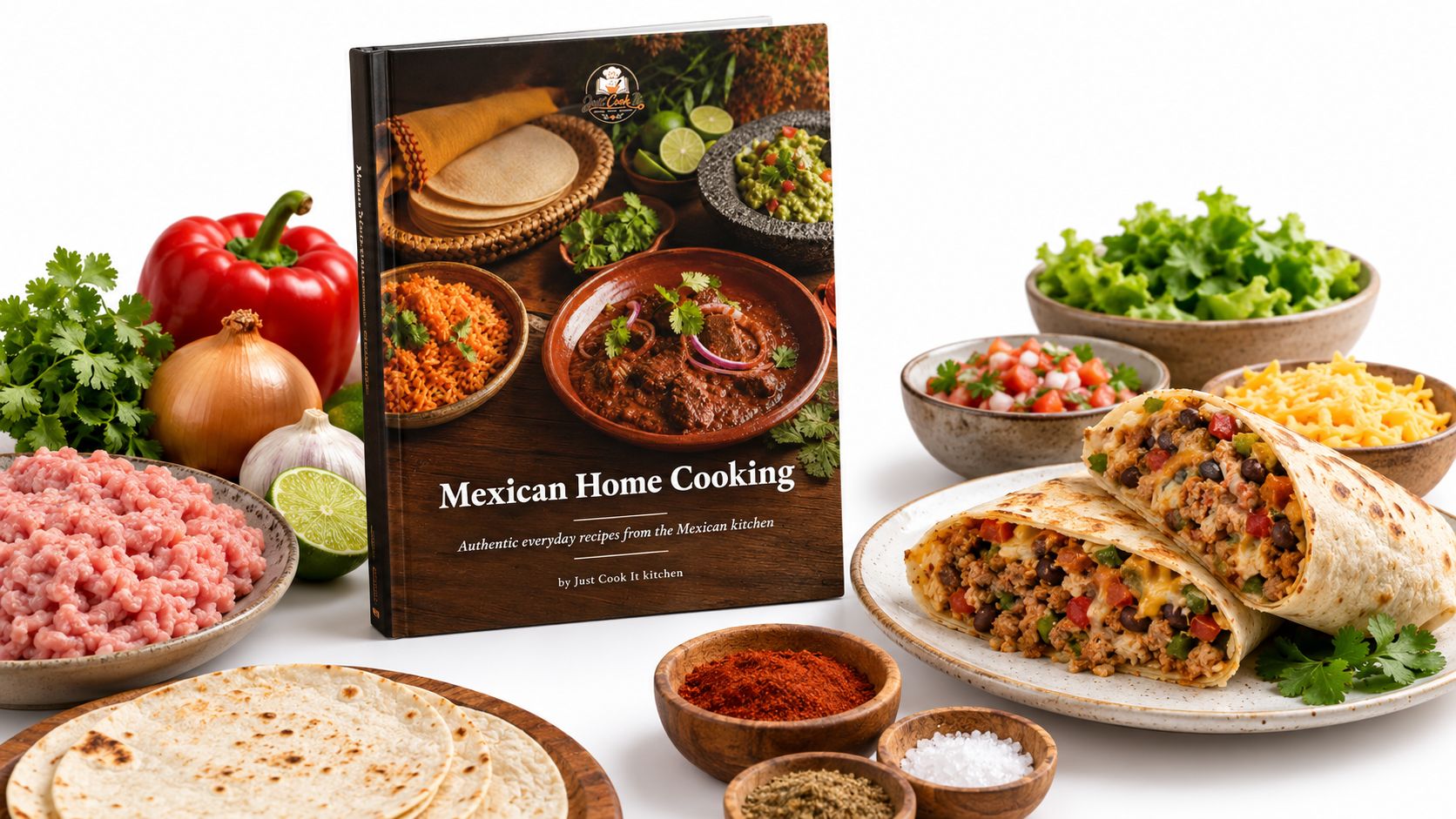
A dependable setup also includes a wide skillet, a flexible spatula, a cutting board, and a probe thermometer. If you're interested in sourcing poultry for other meals, discover pasture-raised farms on Shopifarm as a separate ingredient-shopping resource. For broader Mexican cooking ideas, Mexican Home Cooking | Digital PDF is presented as a collection of everyday recipes spanning beans, tortillas, salsas, main courses, breads, and desserts.
How to Cook Flavorful and Juicy Ground Turkey Filling
The filling should be moist enough to bind together, but not wet enough to leak through the tortilla. That balance comes from controlling the pan rather than pouring in a large amount of liquid at the end.
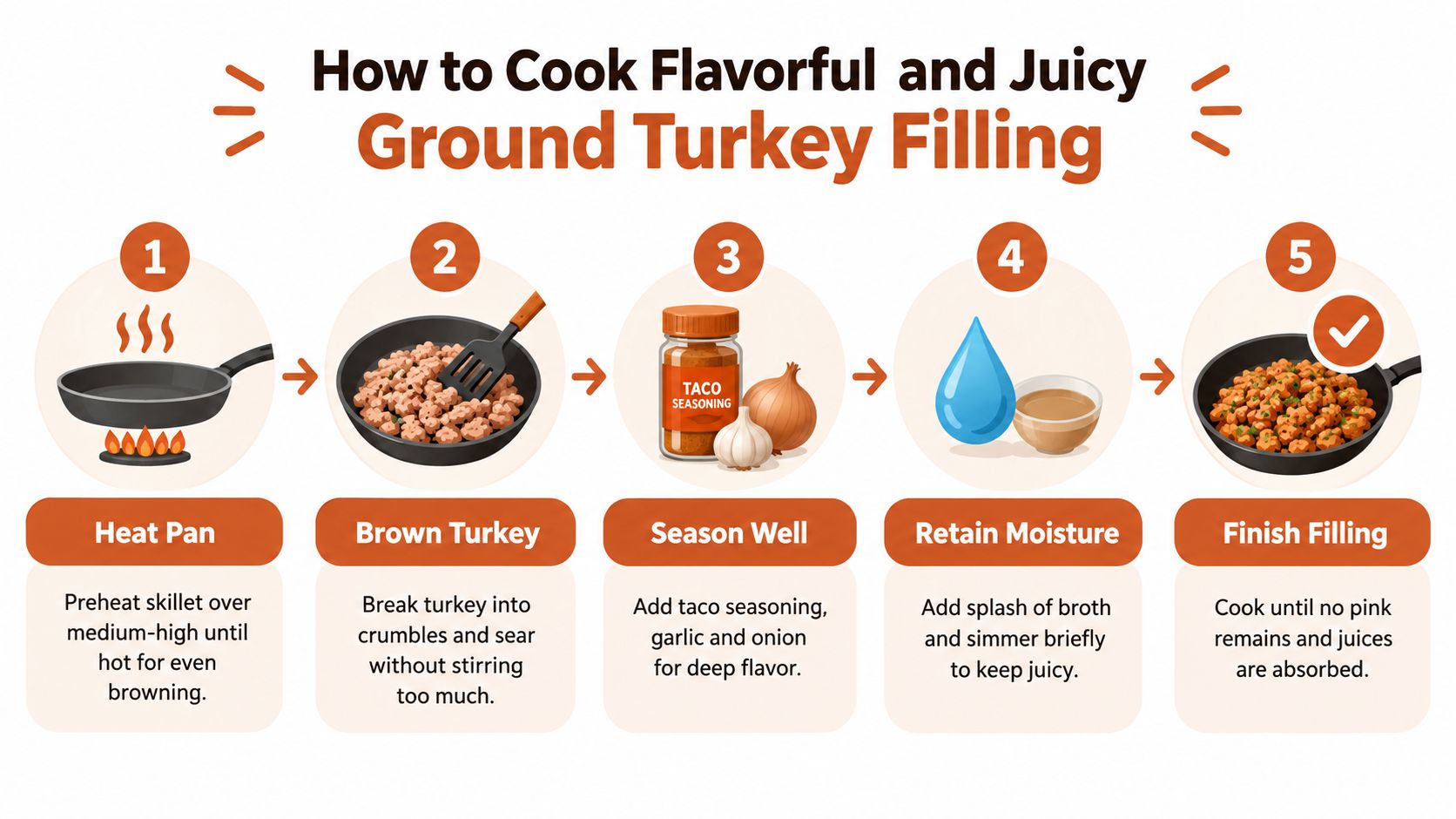
Start with a skillet over medium-high heat. Give it time to become hot before adding the turkey, then spread the meat into a loose layer. Break it into crumbles with a spatula, but don't stir constantly. A short period of contact with the pan develops browned edges and keeps the meat from steaming in its own moisture.
Once the turkey has separated and begun to brown, add the onion and garlic, or cook the aromatics first if your turkey is particularly lean. Sprinkle in chili powder, cumin, smoked paprika, oregano, black pepper, and any desired cayenne. Spices taste fuller when they briefly meet heat and the juices in the pan instead of being stirred into cold liquid.
Add moisture with purpose
Choose one main moisture source, then add it gradually. Salsa is the most convenient option because it contributes tomato, chile, acidity, and seasoning at the same time. Broth gives you more control over salt and flavor, while mashed beans can add creaminess and help the filling cling together.
Stir in a small splash of broth or a spoonful of salsa, scrape up the browned bits, and let the mixture simmer briefly. The liquid should coat the turkey instead of pooling around it. If the pan looks dry, add another small splash. If it looks soupy, keep it uncovered until the excess evaporates.
Beans can go directly into the pan, but don't crush all of them. A few mashed beans help bind the mixture, while whole beans provide texture. Finely chopped bell pepper, zucchini, or corn can also contribute moisture, though vegetables release water as they cook, so allow that liquid to reduce before assembling.
Practical rule: A juicy filling looks lightly glossy and holds its shape on a spoon. It shouldn't drip when you tilt the spoon.
Color isn't a safe doneness test for ground poultry. Food-safety guidance treats ground turkey as ground poultry and recommends a minimum internal temperature of 165°F, or 74°C, measured with a probe thermometer in the thickest part of the filling. Check the turkey before adding it to the tortilla, because browning alone can't confirm that the center has reached a safe temperature. This ground-turkey temperature guidance explains the key control point.
After the turkey reaches temperature, taste the filling. Add lime or extra salsa only after cooking if the mixture needs brightness. If you're planning to freeze or bake the burritos, leave the filling slightly saucier than you would for an immediate bowl, but not wet. Lean turkey loses moisture during reheating, so a modest sauce now protects the texture later.
For another way to use the same protein in weeknight cooking, keep these easy dinner ideas with ground turkey nearby.
How to Assemble and Fold a Burrito That Holds Together
A burrito fails structurally for two main reasons: the tortilla is cold and stiff, or the filling is spread too widely and carries too much moisture. Warm each tortilla briefly in a dry skillet or microwave it under a barely damp towel until flexible. Don't make it hot enough to steam heavily. You want pliability, not extra water.
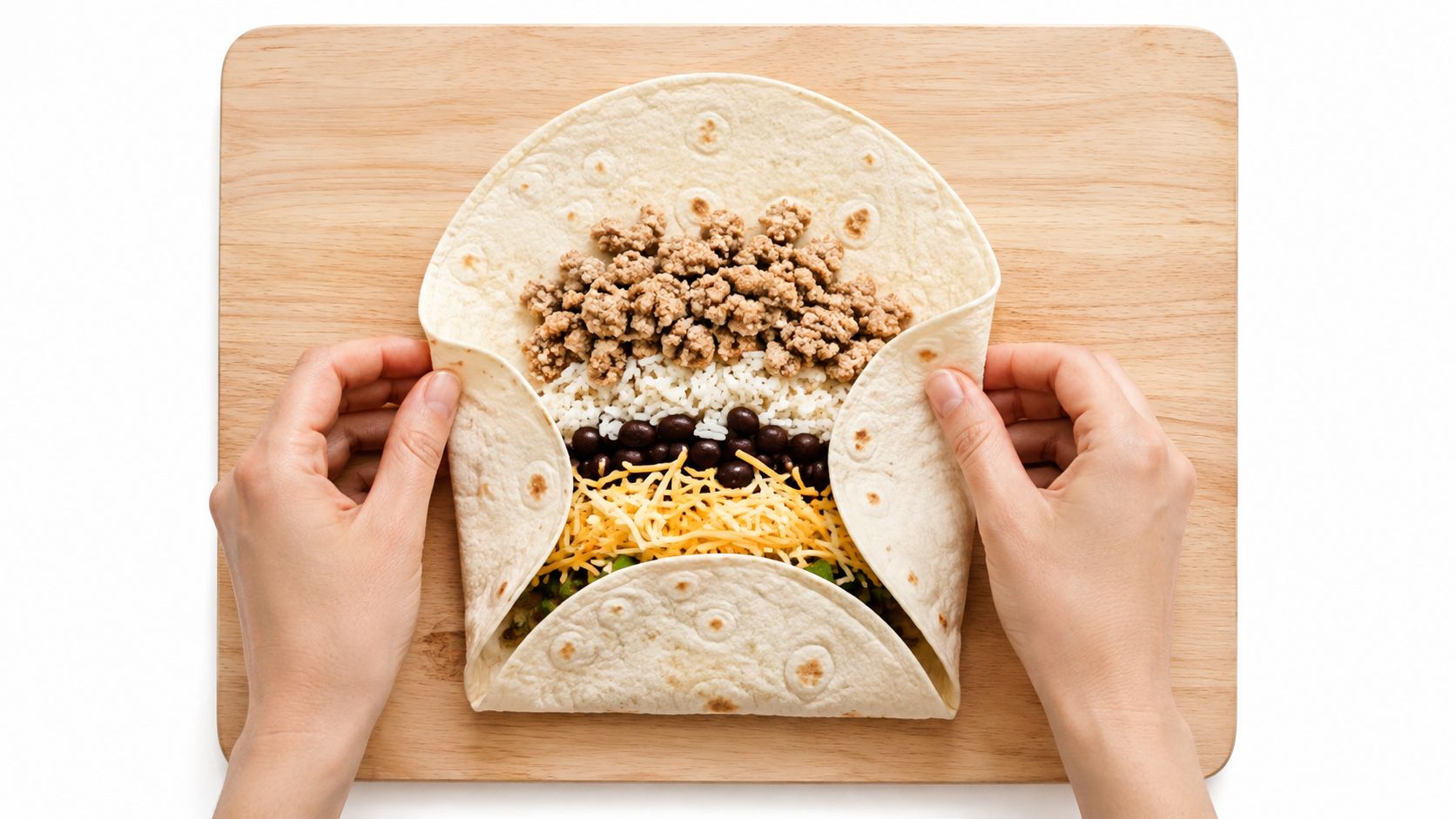
Set the tortilla on a board and place the filling in a horizontal mound slightly below the center. Leave a generous border around the sides and top. Start with rice or a thin layer of beans, add the turkey, then cheese. The rice and beans create a useful buffer between the wetter turkey mixture and the tortilla, while cheese melts into the filling and helps it hold together.
Fresh salsa, sour cream, and avocado are delicious but structurally risky inside a burrito meant for storage. Add them in a narrow amount for a fresh meal, or serve them on the side. If you're using tomatoes, drain them first. If you're using sour cream, place it in a small dish rather than burying it in the wrap.
Use the tuck and roll
Fold the left and right sides inward first. Pull the bottom edge up and over the filling, tucking it firmly beneath the mound. Keep your fingers on the tucked edge as you roll forward, using steady pressure to create a compact cylinder. Finish with the seam underneath.
Stop adding filling when the tortilla can close without stretching. An overstuffed burrito may look generous, but it splits during toasting and releases steam during reheating. For batch cooking, a slightly smaller burrito is usually the better design because it cools more evenly and is easier to wrap tightly.
The seam should be sealed by the weight of the burrito, not by a heroic amount of cheese.
Place the wrapped burrito seam-side down in a dry skillet over medium heat. Toast it until the seam firms, then turn it to brown another side. This step adds texture and makes a fresh burrito easier to handle, but skip aggressive heat if the filling is cold or frozen. High heat can scorch the tortilla before the center warms.
The same folding habits apply to a broader collection of taco night recipes, especially when you're deciding whether a filling belongs in a soft tortilla, a bowl, or a baked format. For a packaged reference point, organic burrito rolls 190g can also illustrate how a prepared burrito-style roll is portioned and presented.
If you learn better by watching the hand movement, this folding demonstration can help:
Serving Ideas Storage and Reheating That Keeps Burritos Tasty
Fresh burritos and make-ahead burritos need different filling decisions. A fresh wrap can carry a little more salsa, creamy topping, or crisp lettuce because you'll eat it before those ingredients soften the tortilla. A stored burrito needs drained beans, cooled rice, a controlled amount of sauce, and a tightly folded seam.
For meal prep, cool the cooked filling before wrapping. Hot ingredients create trapped steam, and trapped steam is one of the fastest routes to a gummy tortilla. Wrap each burrito individually, label the contents if you're making variations, and refrigerate or freeze promptly according to your normal food-storage practices. Cooked turkey filling should be handled as a perishable food, not left at room temperature while you assemble slowly.
| Method | Best For | Reheating Tip |
|---|---|---|
| Fresh and skillet-toasted | Immediate dinner with a crisp exterior | Toast seam-side down first, then turn gently |
| Refrigerated meal prep | Work lunches and next-day dinners | Warm covered, then finish uncovered in a skillet |
| Baked from assembled | Several burritos served together | Wrap or cover at first so the tortilla doesn't dry too quickly |
| Frozen individually | Batch cooking and longer storage | Thaw under refrigeration when practical, then heat gently before crisping |
Rice and beans generally make a more stable center than watery vegetables or fresh tomato. Cheese also performs well in the freezer, while lettuce, avocado, and sour cream are better added after reheating. Flour tortillas are usually easier to fold and reheat than corn tortillas for this particular format, especially when the burrito is large.
The safest reheating method depends on your priority. A microwave warms the center quickly but can soften the tortilla. An oven heats more evenly and supports batch cooking, though the outside can dry if uncovered for too long. A skillet gives the best surface texture, but it needs moderate heat and patient turning.
Storage insight: Optimize the filling for its second life. A burrito that is slightly saucy and tightly wrapped before chilling will often outperform one that tastes perfect fresh but contains loose liquid and fragile layers.
For more planning ideas that use the same make-ahead logic, browse these meal-prep dinners for the week. The central principle remains moisture management. Keep wet ingredients contained, cool the components before wrapping, and add crisp or fresh toppings after the tortilla has been reheated.
Bringing It All Together for Dependable Results
A dependable ground turkey burrito rests on three habits. Season in layers, starting with aromatics and dry spices before adding salsa or broth. Cook by internal temperature rather than color, using 165°F, or 74°C, as the doneness target for ground turkey. Manage moisture for the occasion, keeping a fresh burrito lively and a stored burrito compact, cooled, and only lightly sauced.
Once that foundation works, variations become easy. Change the beans, switch the salsa, add roasted peppers, or serve the same filling over rice when folding feels like too much effort. The technique transfers directly to bowls, skillet meals, and baked wraps.
Just Cook It offers downloadable digital cookbooks and practical blog resources for everyday cooking, including Mexican recipes, quick dinners, and meal-prep ideas. Visit Just Cook It to find a recipe collection that can help you build more dependable weeknight meals around the same clear, repeatable techniques.