Eating well on a busy day is a packing problem first. The healthy on the go meals below earn their place because they survive transport: dressing that stays put, greens that stay crisp, and grains that keep their bite after days in the fridge. Each one was picked for transport logic, with a packing structure, a storage window, and a reheat or no-reheat route.
The pattern shows up in how Americans eat. The USDA food consumption summary reports that the share of daily food energy supplied by fast-food establishments climbed from 5.9% in 1977 to 16.3% in 2018, while full-service restaurants rose from 3.3% to 7.8%. A growing share of calories now comes from whatever is fastest to buy, and food grabbed on the run tends to favor speed and shelf life over the vegetables, whole grains, and fiber you would portion out yourself.
You'll find three breakfasts, three lunches, and two all-day options below. Match the meal to the commute: a thermos for the desk without a microwave, a sealed jar or bento for the bag that rides the train floor, and a handheld option for mornings you eat while walking.
Table of Contents
- 1. Mason Jar Salads
- 2. Mediterranean Grain Bowls
- 3. Egg and Vegetable Muffin Cups
- 4. Onigiri
- 5. Bento Boxes
- 6. Chickpea and Veggie Wraps
- 7. Lentil and Vegetable Soup in a Thermos
- 8. Overnight Oats and Chia Pudding
- 8 Healthy on the Go Meals at a Glance
- Build Your Grab-and-Go System This Week
1. Mason Jar Salads
A mason jar salad only works if you layer it in the right order. Dressing goes in first and stays at the bottom. Tender greens go in last and stay dry on top. Everything in the middle acts as a barrier.
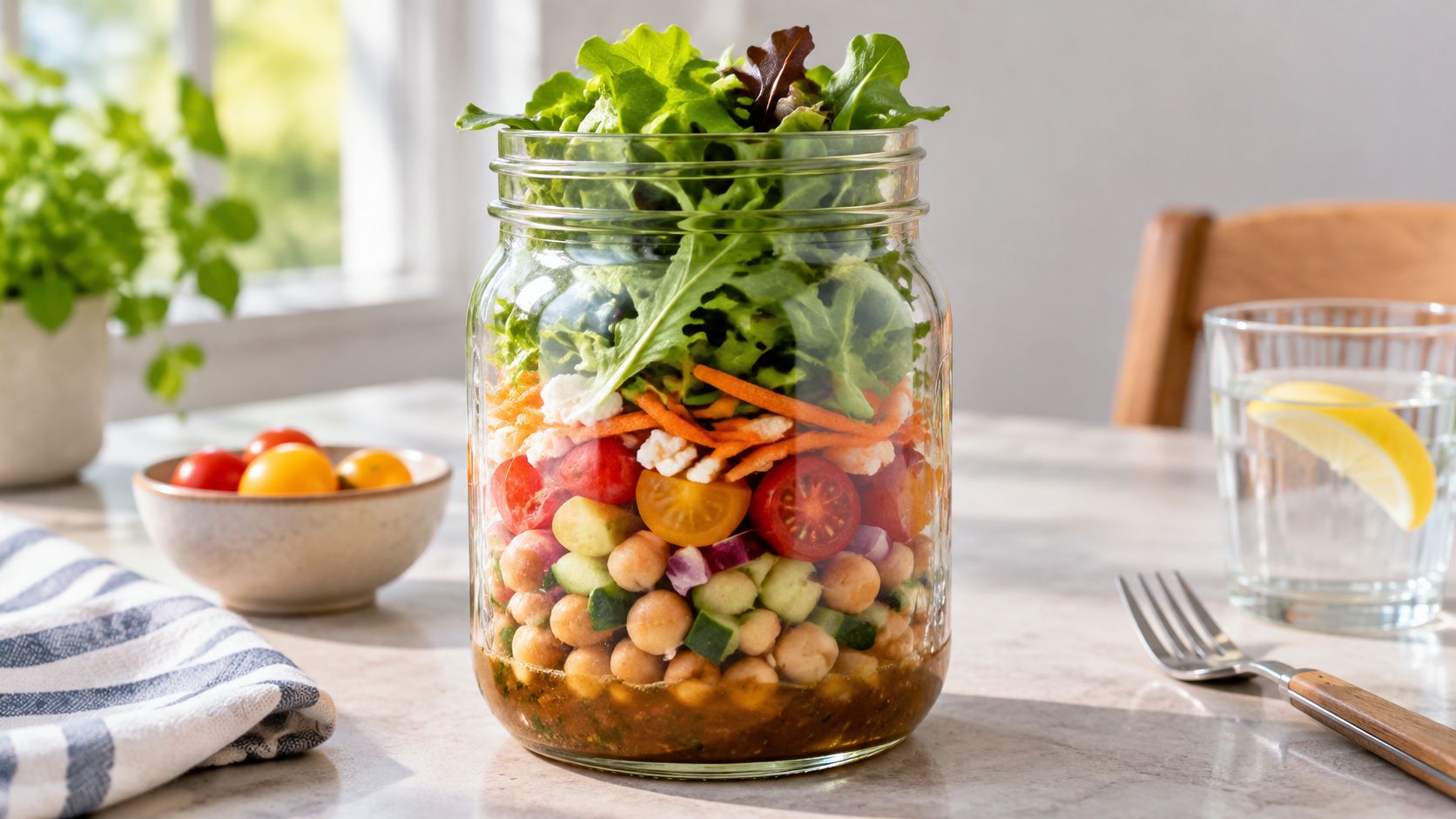
Use a wide-mouth jar, ideally about a quart for a main lunch. Pour in 2 to 3 tablespoons of vinaigrette or a yogurt based sauce. Add hard vegetables next, like carrots, bell peppers, cucumber, or red onion, because they can sit in dressing without going limp. Then add chickpeas, grains, cheese, or chicken, and finish with greens.
Two Jars That Hold Up
Try chickpeas, roasted sweet potato, cucumber, and tahini dressing under chopped romaine for a week of lunches. Or go higher protein with chicken, quinoa, black beans, corn, and lime vinaigrette, topped with spinach. Both give you several vegetable servings in one jar, which helps because the World Health Organization healthy diet guidance recommends adults and children over age 10 consume at least 400 g of fruit and vegetables daily and keep sodium below 2 g per day.
- Add a moisture trap: Tuck a folded paper towel above the greens before sealing.
- Store them upright: Keep jars upright in the refrigerator and eat within 3 to 5 days.
- Leave headspace: Don't pack to the rim or you can't shake it into a bowl cleanly.
Eat straight from the jar if you have to, but dumping it into a bowl coats everything better. That's the trade-off. The jar travels perfectly, but it isn't the best mixing bowl.
2. Mediterranean Grain Bowls
Farro doesn't care that it's been in your fridge since Sunday. That's why I use it, bulgur, or brown rice for grain bowls instead of delicate greens as the base. These bowls eat well cold or at room temperature, so you don't need a microwave queue at work.
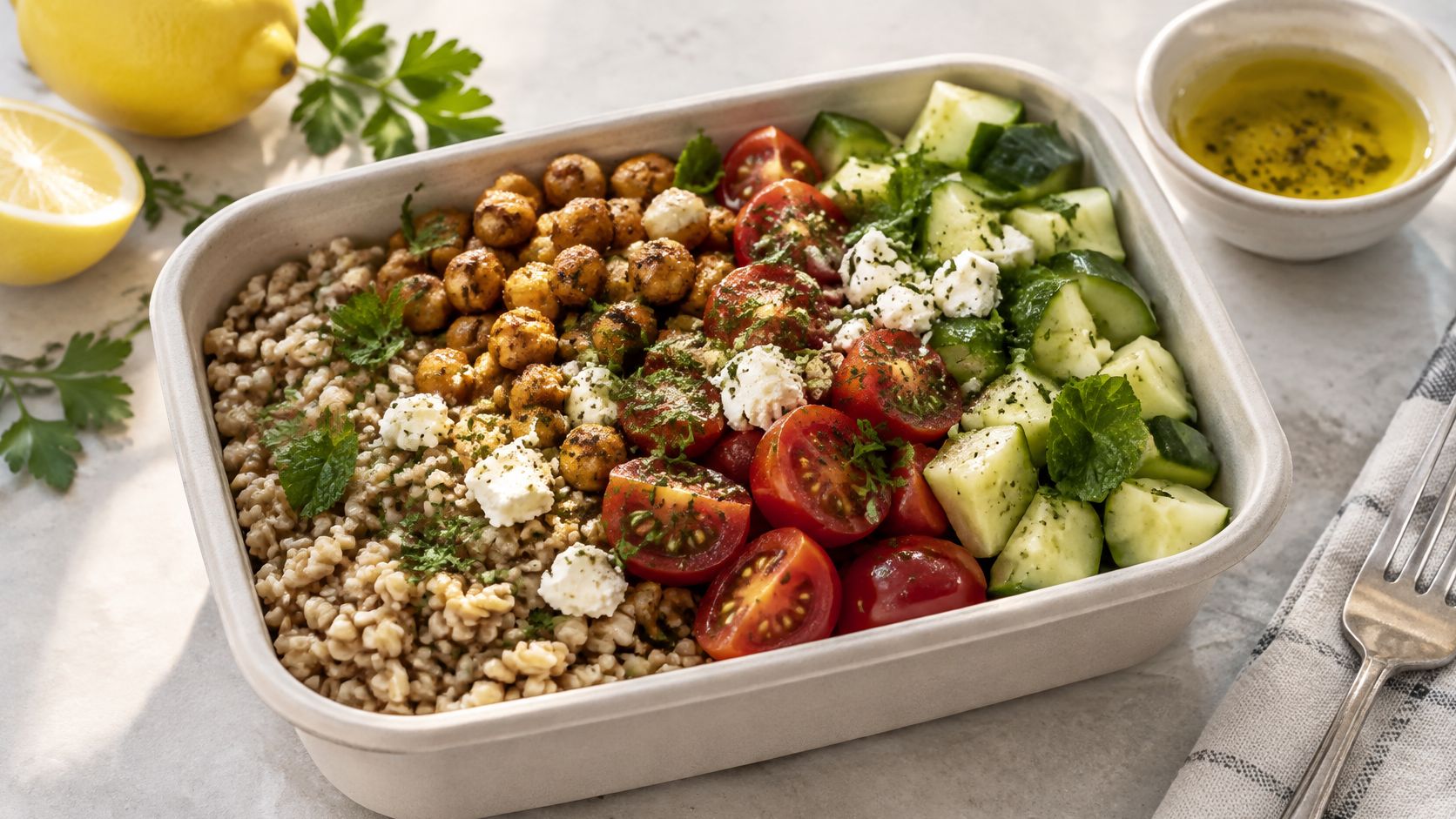
Build around 1 cup cooked grain, a legume or fish, raw or roasted vegetables, olive oil, herbs, and something sharp. A farro bowl with roasted chickpeas, cucumber, tomato, and lemon herb vinaigrette is sturdy and bright, and it survives a commute in a bag without wilting. A bulgur bowl with grilled salmon, arugula, and tzatziki is richer and more filling, but that one needs to stay properly cold, so pack it against an ice pack rather than loose in a tote.
If you want a tested base to riff on, our Mediterranean diet meal prep recipes covers the same whole grain, legume, vegetable, and olive oil pattern. For more variations, Mediterranean Home Kitchen | Digital PDF includes 69 everyday recipes, including salads such as Horiatiki and sauces such as tzatziki, which adapt well to packed bowls.
Packing Rules That Prevent Soggy Bowls
- Batch the grain: Cook 4 to 5 servings at once, season while it's cooking, and refrigerate for up to 4 days.
- Keep dressing separate: Add vinaigrette just before eating so cucumbers and tomatoes don't weep into the grain. A small screw-top jar or a corner of the container works.
- Seal it tight: Use a leakproof container and toss roasted vegetables with a little olive oil and salt before packing so they hold their texture.
Bland grain is almost impossible to fix after packing. Salt the cooking water and finish with lemon. You'll taste the difference on day three.
3. Egg and Vegetable Muffin Cups
Say you've got 10 eggs, a muffin tin, and half a bag of spinach starting to slump. That's Sunday breakfast prep handled. Whisk the eggs with a splash of milk, stir in finely chopped vegetables and cheese, and bake at 350 F (175 C) for 15 to 20 minutes.
Breakfast is where portable food earns its keep. The USDA analysis of meals eaten away from home found one additional meal away from home was associated with approximately 134 extra calories per day and a decline of about two points on the Healthy Eating Index 2005. It also linked breakfast eaten away from home with fewer whole grain and dairy servings per 1,000 calories. A packed egg cup with vegetables and cheese won't fix everything, but it's a deliberate swap.
What Actually Works in the Tin
Spinach, feta, and sun-dried tomato is my reliable weekday version. Sauté the spinach first or it'll release water in the oven and make the eggs spongy. Turkey sausage, bell pepper, and cheddar makes a heartier snack that eats fine cold from a lunch bag.
Practical rule: Fill each cup about three quarters full, let the muffins cool 5 minutes before lifting them out, and they'll release without tearing.
Store them refrigerated for up to 4 days or freeze them for longer storage. Two cups plus fruit is breakfast. One cup is a protein rich snack that doesn't need utensils, a plate, or reheating if you're in a hurry. The texture is best warm, though. Cold egg is fine, warm egg is better, and that's an honest trade-off to plan around.
4. Onigiri
Onigiri solves a problem sandwiches don't. It's compact, sealed in your hand, and built to be eaten without a fork, a table, or reheating. Short grain rice, a small salty filling, and a strip of nori is the whole design.
Wet your hands with water mixed with a pinch of salt so the rice doesn't stick. Cup about 1/2 cup warm cooked rice, press a teaspoon or two of filling into the center, cover it with a little more rice, and shape it into a triangle or ball with gentle pressure. Compress it like a snowball and it eats dense and gummy.
Watch the shaping once and it clicks faster than reading about it.
Classic fillings are salted salmon, pickled plum called umeboshi, tuna mayo, and kombu. Homemade tuna mayo with sesame packs well for office lunches, and the salmon and nori versions sold in Japanese convenience stores prove this format travels. To build a wider rotation around it, our Japanese home cooking recipes roundup pairs onigiri with simple sides.
Keep the Nori Crisp
- Wrap nori separately: Pack it in a small bag or its own compartment and attach it just before eating, or it turns chewy against damp rice.
- Use the right rice: Short grain or sushi rice holds its shape in a packed bag, and brown short grain adds fiber if you want it.
- Watch the salt: Choose lower sodium fillings when lunch is two or three pieces.
Onigiri is best the day you make it. It holds at room temperature for a few hours, but treat two hours as the working limit once it leaves the fridge, shorter in hot weather. Refrigerated rice firms up overnight, so if you're packing for tomorrow, take it out early enough to lose the chill and still eat it inside that window.
5. Bento Boxes
Portion control with dividers is what makes a bento work. Protein in one section, grain in another, vegetables and fruit kept separate so nothing steams, leaks, or flavors its neighbors.
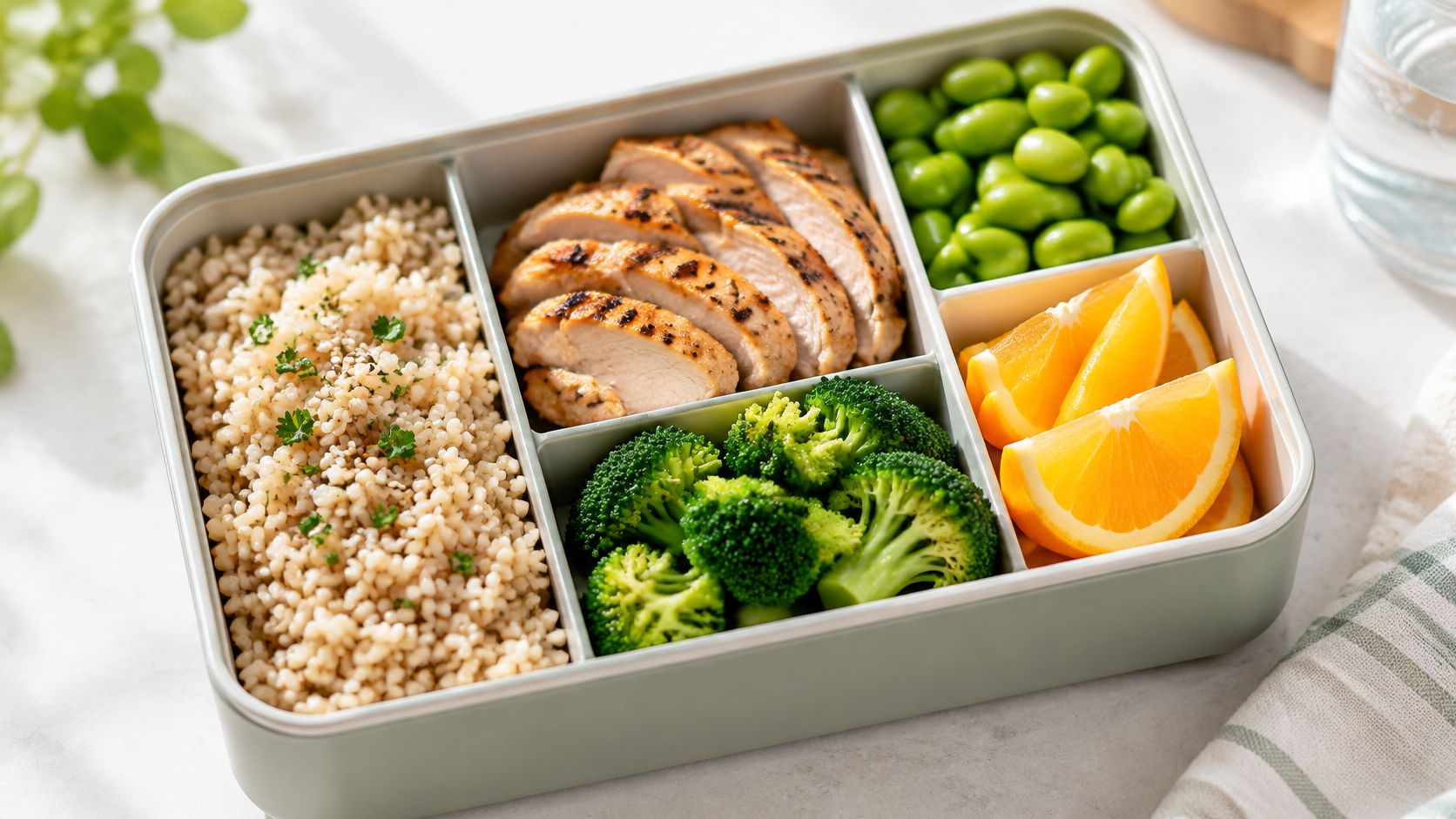
A reliable work lunch is chicken teriyaki, brown rice, steamed broccoli, edamame, and orange slices in a three compartment box. A no-cook version is hummus, whole wheat pita, cucumber, cherry tomatoes, and grapes. Small, varied portions read as a full meal without the weight of one big serving, and wet and dry items never touch, so each piece still tastes like itself at noon.
Temperature is the part people skip. The FDA guidance on handling food safely outdoors says cold foods should not remain unrefrigerated for more than two hours, reduced to one hour when temperatures exceed 32°C/90°F, with perishable foods generally at or below 4°C/40°F when cold. That rule sets the storage window. Assemble the bento the night before, refrigerate it overnight, and it holds fine until you leave. Once it comes out of the insulated bag or office fridge, you have two hours to eat. Pack cold boxes with ice packs, and put anything meant to be hot in a thermos instead of a flat compartment.
A small fermented side, pickled cabbage or kimchi in a silicone cup, adds sharpness without dressing the rest of the box. Choose a container with a silicone seal on the lid. If the lid doesn't seal, the compartments don't matter.
6. Chickpea and Veggie Wraps
This is the fastest lunch on the list. Drain a can of chickpeas, pat them dry, mash roughly with a fork, and season hard. Five to ten minutes later you have a filling that grips the tortilla instead of rolling out the way whole roasted chickpeas do.
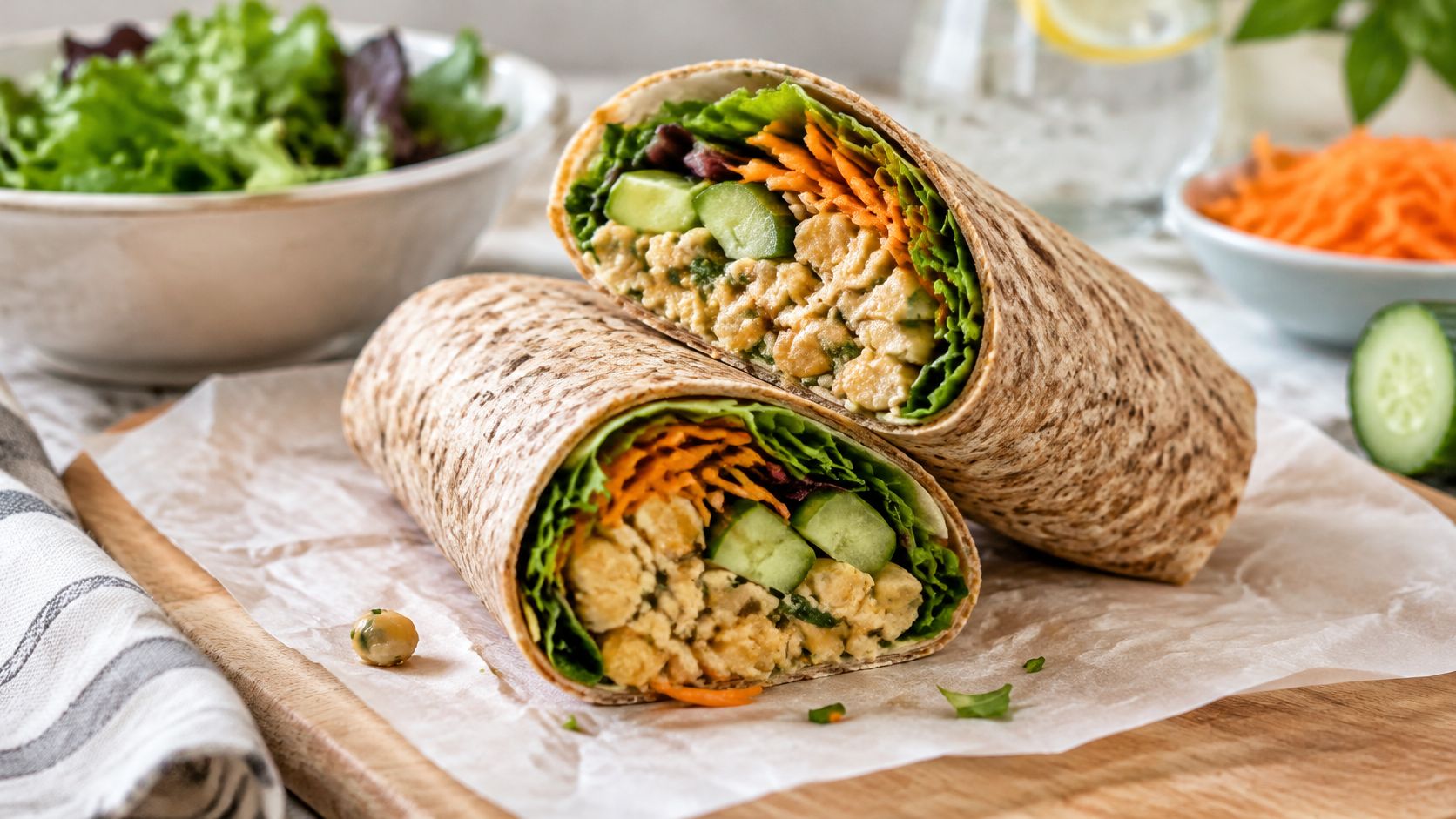
Spread hummus directly on a whole wheat tortilla first. That layer is your moisture barrier, and it decides whether the wrap survives the commute or turns to paste by noon. Add the smashed chickpeas, cucumber, shredded carrot, and herbs, then finish with tahini or a Greek yogurt sauce. Wrap tightly in parchment or foil and cut in half. For a warm version, use roasted chickpeas and roasted peppers, cooled fully before they touch the tortilla. Trapped steam softens the wrap within the hour.
If you cook dried legumes for a batch, our guide on how to cook beans from scratch covers the timing by variety. The mash itself keeps for days in a sealed container in the fridge without going watery, so one batch on Sunday covers several lunches. Store the filling on its own and assemble each wrap the night before or the morning you leave.
A wrap that sits for more than a few hours needs its sauce packed separately. A wrap eaten within two hours doesn't. Match the packing to the clock, not to a generic rule.
Drain pickled or marinated vegetables well, keep wet tomatoes out of make-ahead wraps, and don't overfill. A wrap you can hold in one hand beats a bigger wrap that splits in your bag.
7. Lentil and Vegetable Soup in a Thermos
Cold weather changes the calculation. A salad jar won't warm you up in January, and a wrap eaten on a windy platform isn't lunch, it's endurance. Lentil soup in a preheated thermos is the all-day option I trust most.
Lentils cook quickly, don't need soaking, and bring fiber, plant protein, and iron in one pot. A red lentil and tomato soup with cumin and lemon turns silky and packs easily. A green lentil and kale soup with carrot, celery, and onion stays chunkier and reheats well all week. If you need the base method, our page on how to cook lentils explains the differences by type.
The Thermos Routine
- Preheat first: Fill the food jar with boiling water for 5 minutes, empty it, then add hot soup.
- Fill to the top: Less air means the soup holds heat for four to six hours.
- Finish before sealing: Add lemon juice or herbs just before packing so the flavor stays bright.
The USDA guidance on keeping bag lunches safe recommends keeping packed food cold during travel by bus, bicycle, walking, car, or subway, and notes perishable foods transported without an ice source may not remain safe for long. For hot soup, the mirror rule applies. Start it properly hot, use a wide mouth insulated jar, and don't open it until you're ready to eat.
Cool leftover soup quickly before refrigerating it. That protects the rest of the batch for the next day's thermos.
8. Overnight Oats and Chia Pudding
No cooking, no reheating, no morning decision. You stir it at night, grab the jar in the morning, and eat it cold with a spoon. That's why overnight oats and chia pudding survive real weekdays when fancier breakfasts don't.
For thick, spoonable oats, use about 1/2 cup rolled oats to 1/2 cup milk or a dairy free alternative, plus yogurt if you want it tangier. For chia pudding, use 2 tablespoons chia seeds per 1/2 cup liquid and stir again after 10 minutes so the seeds don't clump into a solid lump at the bottom.
Two Jars to Start With
Blueberry and almond overnight oats covers several breakfasts at once, especially if you add the nuts in the morning so they stay crisp. Coconut milk and mango chia pudding works as a snack or dessert and feels richer than oats, which helps when you need something that keeps you full until lunch.
Packing Them for the Week
A half-pint (8-ounce) mason jar holds one serving with enough headroom to stir without spilling. Layer in this order: oats and liquid on the bottom, yogurt in the middle, fruit on top so it stays put instead of sinking. I keep granola and nuts in a separate small container, because anything sealed in the jar overnight turns soft by morning.
Refrigerate and eat within 3 to 4 days. Add fresh fruit and crunchy toppings the morning you eat them. Soggy granola on day three is a self-inflicted problem.
8 Healthy on the Go Meals at a Glance
The recipe is the easy part. What determines whether a packed meal gets eaten is whether it survives the trip and matches the setup waiting at the other end, so the table below sorts all eight meals by three constraints: refrigeration, reheating, and whether you need to remember a fork.
| Meal | Needs Refrigeration? | Needs Heating? | Eats by Hand? |
|---|---|---|---|
| Mason Jar Salads | Yes | No, eaten cold | No, pack a fork |
| Mediterranean Grain Bowls | Yes | No | No |
| Egg and Vegetable Muffin Cups | Yes | No, they eat well cold or at room temperature | Yes |
| Onigiri (Japanese Rice Balls) | Eat them the day they're made and keep them cool | No | Yes |
| Bento Boxes | Yes, or an ice pack in the bag | No | No |
| Chickpea and Veggie Wraps | Chill overnight; add an ice pack on warm days | No | Yes |
| Lentil and Vegetable Soup in a Thermos | No, the thermos holds the heat | Fill the jar already hot | No, pack a spoon |
| Overnight Oats and Chia Pudding | Yes | No, eaten cold | No, pack a spoon |
Read it as an elimination filter. Cross off whatever your bag, your office kitchen, or your morning routine can't support, and the shortlist writes itself.
Build Your Grab-and-Go System This Week
Don't prep all eight. You'll burn out by Wednesday and waste half of it. Pick two items with different storage windows, batch them on Sunday, and assign each one specific days so nothing drifts past its best point in the fridge.
Here's a simple first week. Make mason jar salads on Sunday and eat them Monday through Wednesday while the greens are still crisp. Make lentil soup the same day, refrigerate it in portions, and fill a thermos Thursday and Friday when you're tired of cold food. That's five lunches from two cooking sessions, with no daily assembly beyond grabbing a jar or reheating soup.
Next week, swap the pair. Egg muffin cups and overnight oats cover breakfasts while you learn the timing. Grain bowls and chickpea wraps cover lunches, with the wraps assembled the night before and the bowls packed for up to four days. Write the eat-by day on tape on each lid. It sounds fussy until it saves you from guessing on Friday.
Think about your actual constraints before you choose. No fridge at work means you need a thermos or a properly iced insulated bag. No microwave moves onigiri, wraps, grain bowls, and oats to the front of the list. A long commute in summer heat calls for shelf-stable backups like nuts and whole fruit alongside your main meal, because a lunch that gets warm or gets skipped does you no good. For more ways to pair containers and bags with real routines, see these fresh lunch ideas from Urban Totes.
If you'd rather start from tested recipes than build a rotation from scratch, Grab-and-Go Breakfasts Before School is a digital PDF with 64 easy recipes, each one made ahead and portable, eaten by hand or straight from a sealed jar with no bowl, plate, or cutlery. It downloads instantly after purchase, stays in your library with free updates, and reads on a phone, tablet, laptop, or e-reader.
Start with two recipes this Sunday. Pack them well, label the days, and pay attention to what still tastes good at the hour you eat it. That feedback, not a perfect meal plan, is what builds a system you'll repeat.
Browse portable, kitchen-tested cookbooks filtered by Quick Dinners, Baking & Desserts, or Healthy Eating, then download a rotation you can start this Sunday. Visit Just Cook It to explore instant-download PDFs, including the School Lunch Cookbook, the Make-Ahead Freezer Meal Cookbook, and The Healthy Lunch Box, each $5.99, down from $9.99.