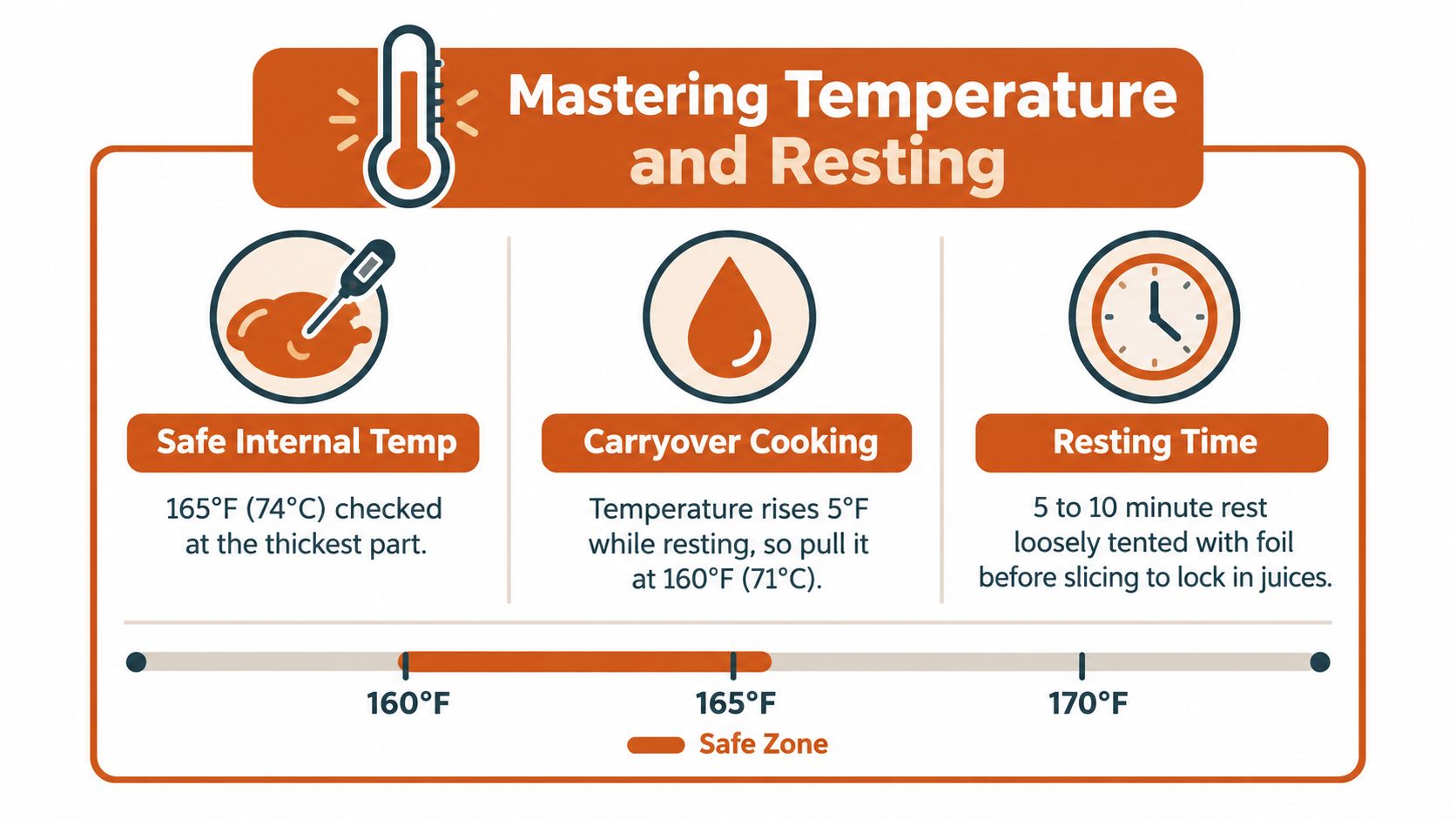
165°F (74°C) is the safe internal temperature for chicken breast, measured with a thermometer in the thickest part. The trick is to reach that temperature without cooking substantially beyond it, because excess heat is what turns a lean breast dry.
You know the disappointing sequence: the chicken looks beautifully seasoned, the outside has browned, and dinner seems ready. Then the knife reveals a chalky center and a cutting board covered in juice. Learning how to cook healthy chicken breast means solving two problems at once, food safety and moisture management, rather than treating one as more important than the other.
Chicken breast rewards a few deliberate habits. Even out its thickness, use a flavorful coating instead of heavy breading, choose a cooking method that suits the cut, and check the center with a reliable thermometer. Those steps matter more than memorizing a cooking time.
Table of Contents
- Why Healthy Chicken Breast Often Fails
- Preparing Chicken Breast for Cooking
- Best Cooking Methods for Healthy Results
- Mastering Temperature and Resting
- Building Complete Healthy Meals
- Common Mistakes to Avoid
Why Healthy Chicken Breast Often Fails
Chicken breast is naturally lean, which makes it useful for meals where you want substantial protein without frying or rich sauces. It also makes the cut unforgiving. With little intramuscular fat to buffer heat, the proteins tighten quickly as the center cooks, pushing moisture out when the breast stays over the heat too long.
That's why appearance isn't enough. A browned exterior can surround an undercooked center, while a completely white, firm-looking breast may already have lost much of its moisture. Thickness, starting temperature, cookware, and heat intensity all affect the timing, so a recipe's minutes are only a rough guide.
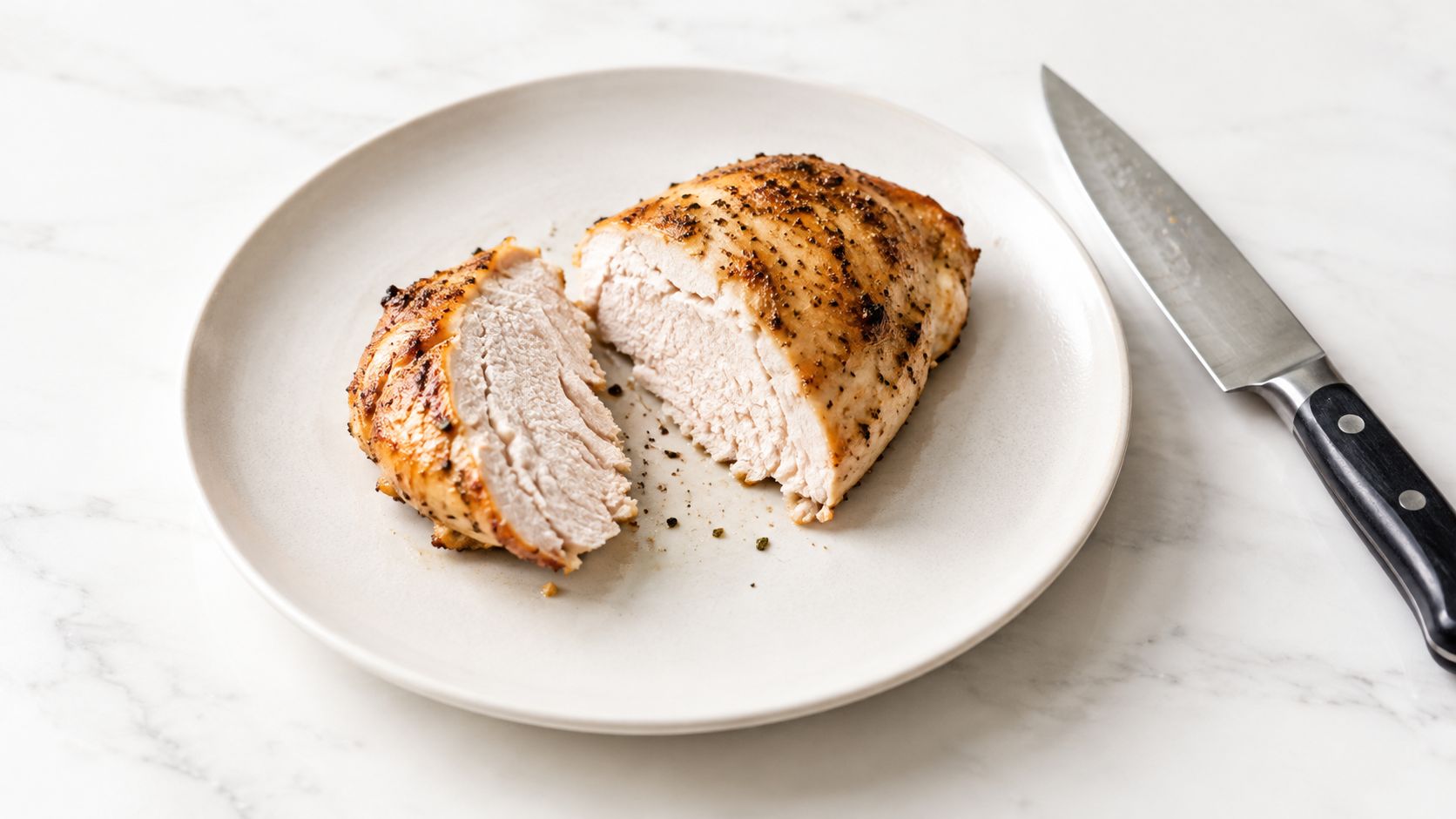
Practical rule: Use time to plan dinner, but use temperature to decide when chicken is done.
A healthy meal can also lose its balance through preparation. Thick breading, a large amount of oil, salty marinades, and cream-based sauces can turn lean chicken into a much heavier plate. The better approach is to use chicken as a flexible foundation, then add vegetables, beans, whole grains, or salad.
For flavor inspiration, a recipe such as this jerk chicken breast recipe shows how herbs and spices can carry a dish without depending on deep-frying. The aim isn't aggressively low-fat food. It's a breast that remains moist, tastes properly seasoned, and fits into a complete meal.
Preparing Chicken Breast for Cooking
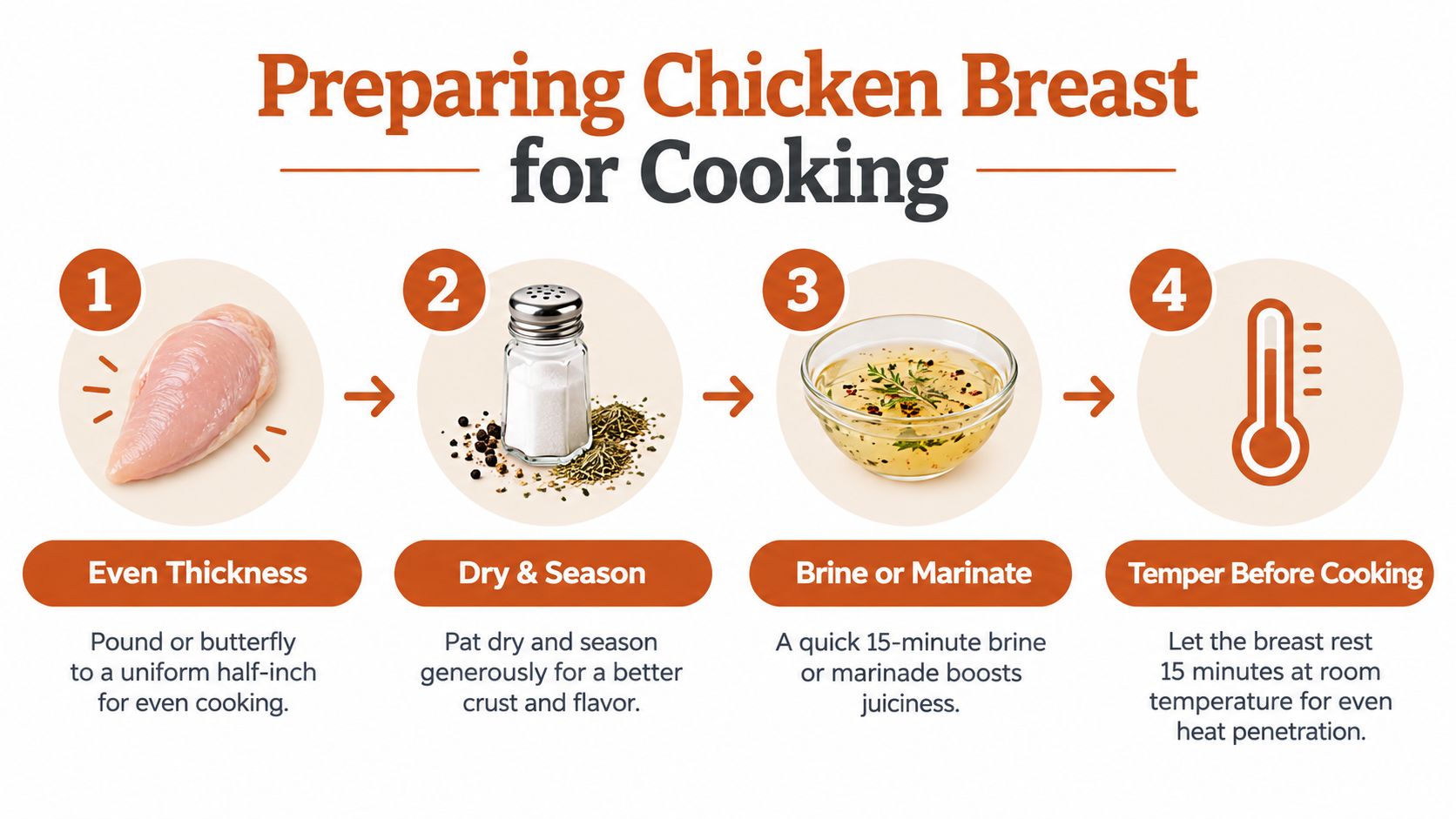
Preparation determines whether the breast cooks evenly. Start by trimming visible fat or ragged edges, then inspect the shape. Most boneless breasts are thick at one end and thin at the other, so the thin section can dry out while the thick section is still approaching a safe temperature.
Place the breast between sheets of parchment or inside a sealed bag. Pound the thickest section gently with a meat mallet, rolling pin, or the flat side of a small pan until the piece is reasonably uniform. You don't need laboratory precision. You need to remove the dramatic difference between a thin tip and a bulky center.
Build flavor without adding unnecessary weight
Pat the surface dry before seasoning. Moisture on the outside must evaporate before the chicken can brown, so a wet breast tends to steam and develop a pale surface. A paper towel also helps oil and spices cling evenly.
Good everyday combinations include:
- Herb and citrus: Dried oregano, black pepper, garlic, lemon zest, and a small amount of oil.
- Smoky spice: Smoked paprika, garlic powder, cumin, and a pinch of chili.
- Bright yogurt coating: Plain yogurt with citrus, garlic, and herbs, used as a thin marinade rather than a heavy sauce.
- Fresh finish: Dried spices during cooking, then chopped parsley, basil, or cilantro after slicing.
A short brine can help retain moisture, but check the packaging first. Chicken labeled as containing a salt solution, broth, or added sodium may already be treated, and brining it again can make the result excessively salty. For a lower-sodium approach, rely on aromatics, acid, spices, and herbs instead. If you're exploring savory flavor builders, this guide to what chicken bouillon is is useful, but bouillon should be treated as a salty ingredient, not a neutral seasoning.
The United States has made chicken an everyday protein. USDA Economic Research Service data report 68.1 pounds per person in 2021 on a boneless, edible basis, compared with 56.2 pounds for beef. That popularity makes a repeatable preparation method worthwhile, especially when skinless breast is appearing in weekly lunches and dinners.
Best Cooking Methods for Healthy Results
The best method depends on the breast's thickness, the texture you want, and how much attention you can give the pan. The safety checkpoint stays the same, but the route to it changes.
Pan-cooking for speed and browning
A skillet is ideal for an evenly pounded breast or a thin cutlet. Preheat the pan, add a small amount of oil, and place the dry, seasoned chicken in without crowding. Moderate to medium-high heat creates browning while giving the center time to cook, whereas maximum heat can scorch the spices before the middle is ready.
Pan-cooking works well for a single meal because you can adjust the heat immediately. If the surface darkens too quickly, reduce the heat or move the pan briefly off the burner. Add a splash of water or low-sodium stock near the end only if you're building a sauce, not as a substitute for checking the center.
Baking for hands-off consistency
Baking suits thicker breasts and multiple portions. Arrange the pieces with space between them on a sheet pan, use a light oil coating and seasonings, then check the thickest section rather than relying on the oven setting or a fixed time.
The oven's advantage is steady surrounding heat. Its weakness is that a very thin breast can pass from juicy to dry quickly, so start checking earlier than you think you need to. Baking also makes it easy to roast vegetables on the same pan, provided the tray isn't so crowded that everything steams.
Grilling and poaching for different textures
Grilling adds smoke and attractive browning, but thin pieces cook rapidly. Keep the breast evenly thick, use a clean, preheated grate, and watch the thermometer closely. Poaching is gentler and produces tender meat suited to salads, soups, and grain bowls, though it won't provide a seared crust.
The CDC guidance on chicken preparation and FDA recommendations both identify 165°F (74°C) as the poultry endpoint when checked with a food thermometer. They also make the important point that color and texture aren't dependable safety tests.
If you're comparing countertop equipment before choosing an appliance, this EcoLife cooking machine review may help you think through features and cooking styles. Whatever equipment you use, the thermometer remains the quality-control tool. For air-fryer ideas, browse these best air-fryer chicken recipes, then apply the same center-temperature check rather than trusting the appliance's preset alone.
Mastering Temperature and Resting
A thermometer changes chicken from guesswork into a controlled process. Insert a clean instant-read thermometer into the thickest part of the breast, approaching from the side if that gives you a better path through the center. Keep the tip away from bone, the pan, and any unusually thin edge.
The dependable endpoint is 165°F (74°C), as outlined by the FDA's meat and poultry safety guidance. Don't use pinkness, firmness, or clear juices as a replacement for the reading. Those cues vary with lighting, seasoning, muscle structure, and cooking method.
The safer way to manage juiciness
Chicken can continue heating after you remove it from a pan or oven, but the amount of carryover depends on thickness, cooking intensity, cookware, and how hot the piece was when removed. That variation is why a casual “pull it early and hope” method isn't equally reliable in every kitchen.
For ordinary home cooking, especially when serving children, older adults, pregnant people, or immunocompromised diners, use the conservative approach. Keep cooking until the thickest part reaches the applicable safe endpoint before serving. If you experiment with a lower-temperature technique, you need a calibrated thermometer and a validated time-temperature process, not visual confidence.
Resting still matters. After the safe reading, transfer the chicken to a plate and let it sit briefly before slicing. The heat and moisture inside the breast need time to settle, and cutting immediately can send more juice onto the board than into the meal. Resting won't rescue an overcooked breast, but it helps a properly cooked one stay more succulent.
Measure the center, not the crust. The outside tells you about browning. The thermometer tells you about safety.
Sous vide can offer excellent texture, but it requires more control than pan-cooking. Peer-reviewed research has tested chicken breast at combinations such as 55°C for 260 or 320 minutes, 58°C for 140 or 200 minutes, and 61°C for 90 or 150 minutes, with the 58°C and 200-minute treatment producing the most desirable sensory profile in that study (peer-reviewed sous-vide research). Those results don't make low-temperature cooking automatically safe. Use a calibrated bath, a sealed food-safe bag, a tested schedule, and prompt chilling if the chicken won't be eaten immediately.
Building Complete Healthy Meals
Perfect chicken is only one component of a healthy plate. The easiest way to keep the meal satisfying is to treat the breast as the protein anchor, then add produce, fiber-rich carbohydrates, and a flavorful finish.
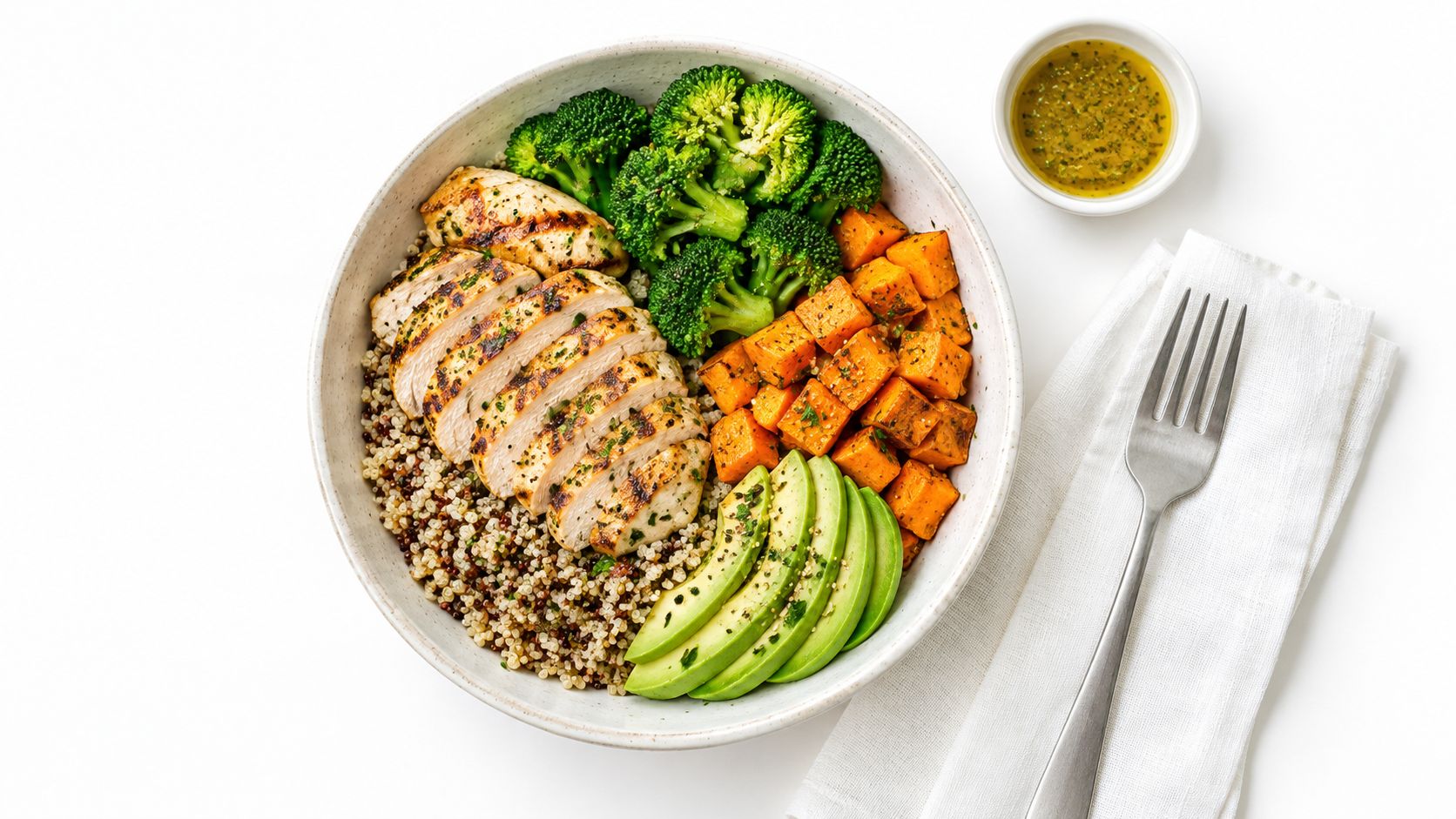
A grain bowl is a dependable format. Add sliced chicken to quinoa or brown rice with roasted peppers, zucchini, broccoli, or sweet potato, then use lemon juice, herbs, and a small amount of oil for brightness. Beans or lentils can stretch the meal and add a different texture without requiring a larger chicken portion.
Salad works better as dinner when it has substance. Start with sturdy greens, add warm sliced chicken, chickpeas or another legume, a whole grain if desired, and a sharp vinaigrette. The dressing should make the vegetables appealing, not bury the meal in a rich sauce.
Match the finish to the meal
- For lunch bowls: Use citrus, herbs, and a yogurt-based sauce in a modest amount.
- For wraps: Slice the chicken thinly and add crunchy vegetables, beans, or greens so the wrap isn't all meat.
- For a simple plate: Pair the breast with steamed vegetables and a whole-grain or starchy side.
- For leftovers: Keep the chicken whole until needed, then slice it across the grain and add it to soup, salad, or a warm grain dish.
The right portion depends on the rest of the meal and the diner's needs. A single oversized breast isn't a universal serving, and adding salty bottled sauce can undermine an otherwise lean preparation. Plan the sides before cooking so the chicken supports the meal instead of becoming the entire meal.
For readers managing a specific goal, a personalized meal strategy from Venus Health Co. can provide a useful example of how individual preferences and priorities may shape meal planning. For more practical combinations, these protein-packed dinner ideas can help turn cooked chicken into varied meals rather than repetitive plates.
This video offers another visual reference for building a balanced chicken-centered meal:
Common Mistakes to Avoid
The most common mistake is trusting appearance over measurement. Chicken can look done before its center is safe, and it can look perfectly acceptable after it has already become dry. Insert the thermometer into the thickest part, take the reading carefully, and adjust the heat or cooking time based on what the center tells you.
Crowding creates a different problem. When pieces sit tightly together, surface moisture has nowhere to go, so the chicken steams instead of browning. Leave space between breasts, cook in batches when needed, and dry the surface before it touches the pan.
Fix the habits that produce dry chicken
- Starting with uneven pieces: Pound or butterfly thick sections so the thin end doesn't finish far ahead of the center.
- Using too much heat: A scorching pan can burn spices and the exterior while the middle remains undercooked. Reduce the heat once browning develops.
- Adding wet chicken to the pan: Pat away surface moisture first. This improves contact and helps the seasoning form a more appealing crust.
- Relying on a fixed cooking time: Breast thickness and equipment vary. Use time as an estimate, then verify with temperature.
- Applying heavy sauces too early: Sugary or salty coatings can burn or dominate the meal. Add a bright finishing sauce after cooking, or use a thin marinade.
- Slicing immediately: Rest the chicken briefly before cutting so less juice escapes onto the board.
Rinsing raw chicken is another poor trade-off. It doesn't make the poultry safer and can spread contamination around the sink and nearby surfaces. Keep raw chicken separate from ready-to-eat ingredients, wash your hands and utensils after handling it, and reserve a cutting board for raw meat whenever possible.
The reliable sequence is simple: even thickness, dry surface, moderate heat, thermometer check, then a short rest.
Healthy cooking also means looking beyond the meat itself. A lean breast can become a high-calorie meal when it's breaded heavily, fried in substantial oil, or served with a rich cream sauce. Use the cooking method to protect moisture, then let vegetables, legumes, whole grains, herbs, and citrus provide the rest of the meal's structure and flavor.
Just Cook It offers downloadable cookbook e-books with kitchen-tested recipes, clear step-by-step instructions, and practical photography for everyday cooking on phones, tablets, laptops, and e-readers. Visit Just Cook It to find healthy meal collections and recipe ideas that make dependable chicken dinners easier to plan and cook.