Avocados have a habit of ripening on their own schedule. A batch that feels rock-solid at the start of the week can suddenly become ready to eat all at once, creating a narrow window before the fruit begins to deteriorate. Rather than scrambling to find ways to use several ripe avocados immediately, the more practical approach is to control that window. Choosing fruit at different stages of maturity, managing how quickly it ripens, refrigerating it at the right moment, and preserving any surplus can turn avocados from a race against spoilage into an ingredient you can use when you actually need it.
A reliable routine lets you assign each fruit a job. Some can be ready for toast, sandwiches, or breakfast bowls first. Others can ripen later, hold in the refrigerator, or move into smoothies and dressings when their texture is no longer suitable for neat slices. That's the practical foundation for learning how to use avocados without wasting them.
Table of Contents
- Selecting Avocados for Your Weekly Meal Plan
- Controlling the Ripening and Storage Timeline
- Safe Cutting and Oxidation Prevention Techniques
- Everyday Applications Beyond Standard Guacamole
- Troubleshooting Browning and Overripe Fruit
- Building a Reliable Weekly Avocado Routine
Selecting Avocados for Your Weekly Meal Plan
The produce aisle is where most avocado frustration begins. A fruit that feels like a stone belongs in a later meal, while one that yields heavily under pressure may need to be used immediately. Buying every avocado at the same stage creates a timing problem before you've even unpacked the groceries.
Match firmness to your schedule
Use your fingertips, not your whole hand, to test the fruit gently. Firm, unyielding avocados are useful when you're shopping ahead. They need time before they'll mash smoothly, so reserve them for later in the week. A fruit with slight give is closer to practical use, especially for slicing onto toast or sandwiches. If the skin feels very soft, check it carefully for sunken areas, leaking, or widespread darkening. Those signs suggest the fruit may already be past its best.
Skin appearance varies by variety, so color alone isn't a dependable maturity test. Hass avocados commonly darken as they mature, while green-skin varieties can remain green. The small stem area can offer another clue, but it shouldn't replace a gentle firmness check. If the stem cap lifts easily and the flesh underneath looks fresh, the fruit may be ready. If it's difficult to remove, leave the avocado to mature further rather than forcing it.
Build a staggered basket
Instead of buying a uniform batch, divide your purchase by intended use:
- Immediate meals: Choose fruit with noticeable but controlled give for tonight's dinner or tomorrow's breakfast.
- Midweek meals: Add avocados that yield slightly when pressed near the top but still feel structurally firm.
- Later meals: Select hard fruit without bruises, cuts, or soft patches.
- Rescue candidates: If several are already soft, plan to mash, blend, or freeze them rather than expecting them to slice cleanly.
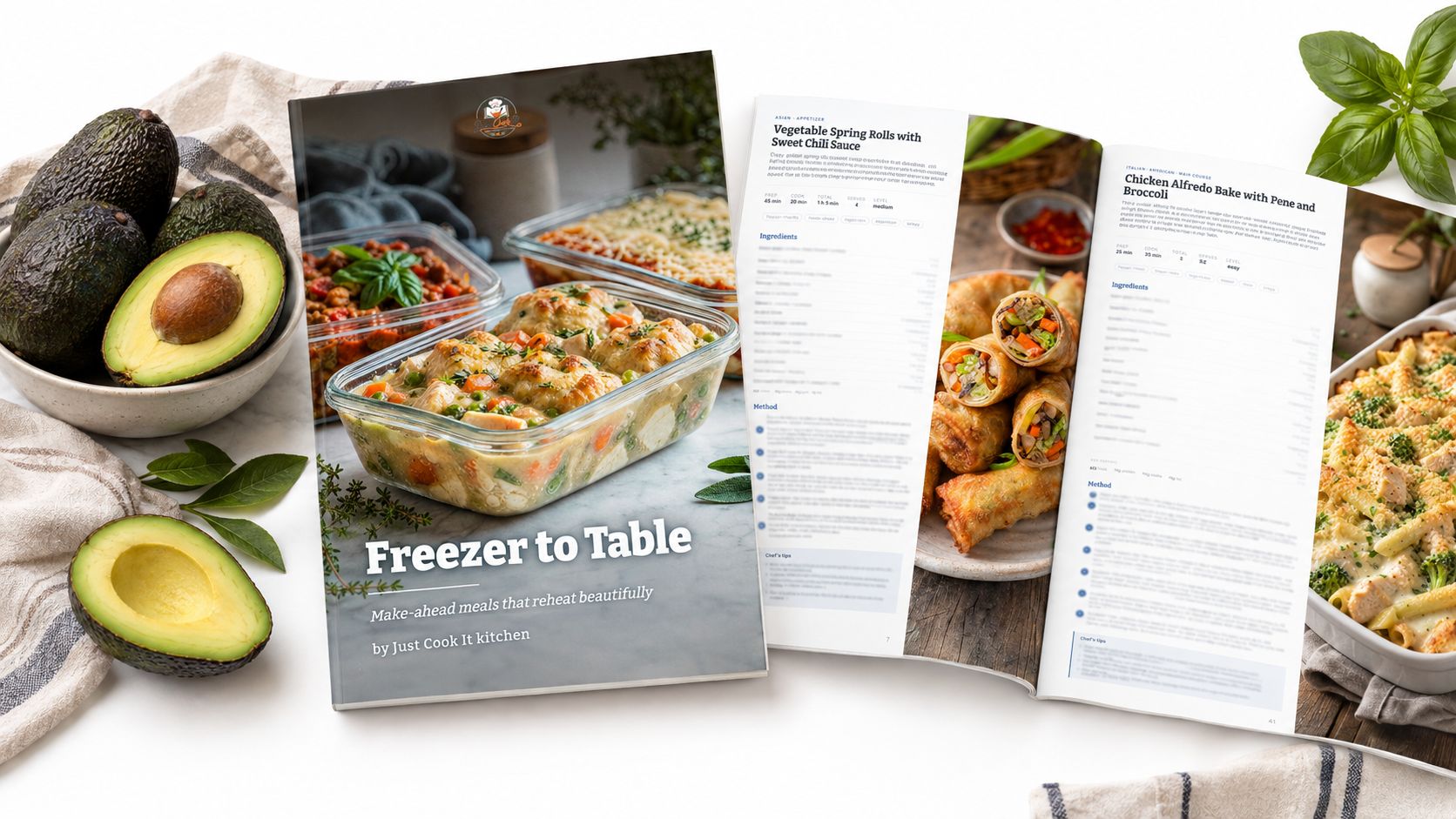
This approach works particularly well alongside batch cooking. The Make-Ahead Freezer Meal Cookbook | Digital PDF focuses on freezer-ready meals, so it can sit alongside an avocado plan when you're organizing a kitchen around advance preparation rather than last-minute cooking.
Shopping rule: Buy for different eating days, not just for the number of people at dinner.
Before placing the avocados in your basket, decide how many you'll eat fresh, how many can wait, and whether you have a smoothie, dressing, or baking use for fruit that ripens too quickly. That small decision prevents the classic pattern of hard fruit early in the week and mushy fruit at the end.
Controlling the Ripening and Storage Timeline
Temperature is the main household lever for avocado timing. Industry guidance recommends ripening early-season fruit at 18 to 20°C and mid-to-late-season fruit at 16 to 20°C, with guidance varying by maturity and cultivar. Green-skin varieties are stored around 7°C, while Hass avocados are stored around 5°C before and after ripening, according to the Avocado Ripening Manual.
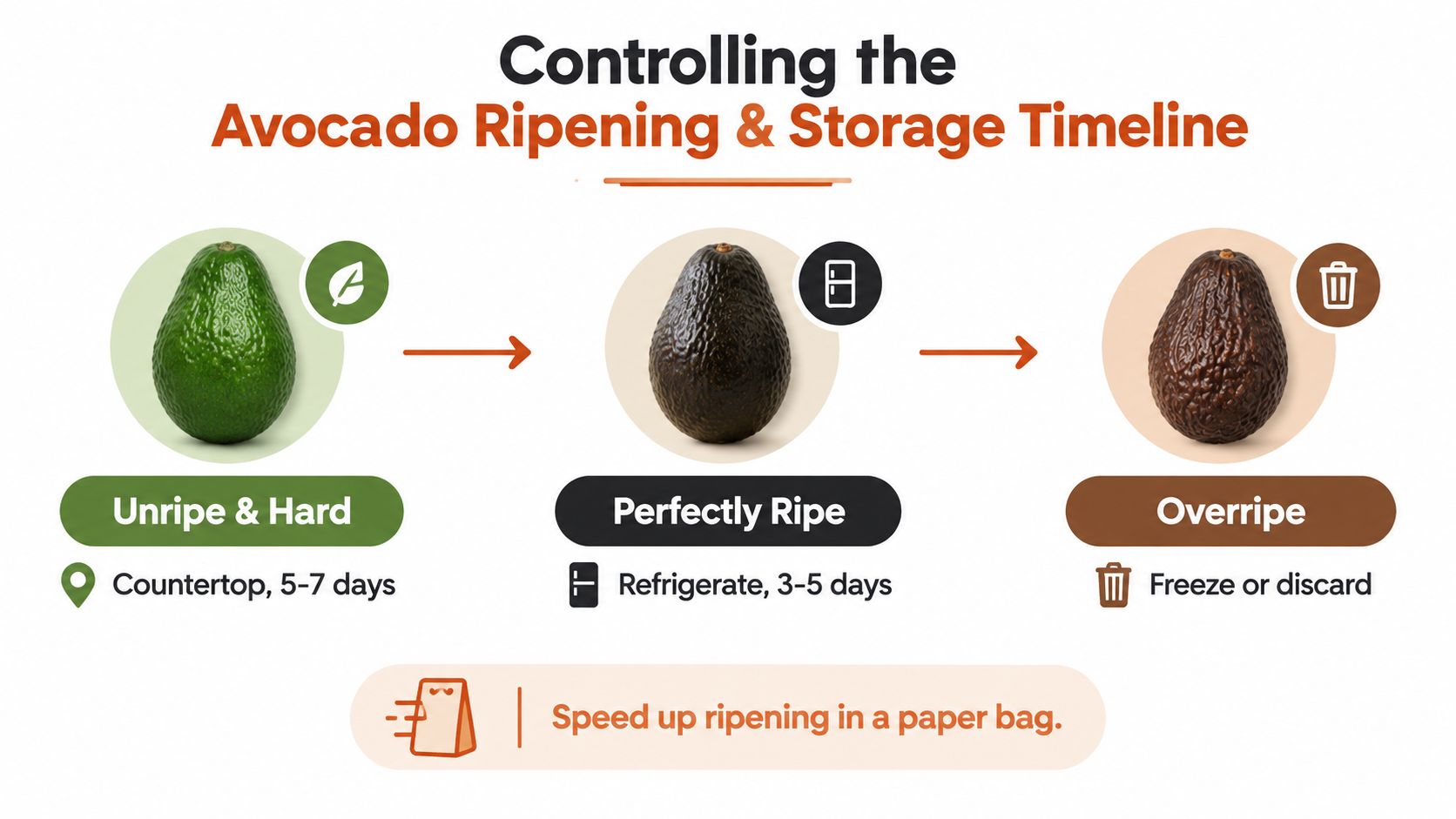
At home, the practical version is simple. Keep firm avocados at room temperature while they mature. A paper bag can speed the process by concentrating naturally released ethylene, and adding a banana or apple can accelerate it further. Check the fruit regularly rather than leaving it unattended, because several pieces in the same bag may soften at different rates.
Use cold storage as a pause button
Mature-green fruit can typically be held for up to 14 days before ripening. Once Hass is ripe, it may last about 7 days under suitable conditions, while Shepard may last about 5 days, as described in the same avocado storage guidance. Home refrigerators won't reproduce commercial storage perfectly, but moving ripe fruit into the refrigerator slows further softening and gives you more control.
Temperature abuse causes problems in both directions. Mature-green avocados are generally best held at 5 to 13°C with 85 to 95% relative humidity, while ripe avocados are best kept at 2 to 4°C. Commercial controlled-atmosphere storage can use 2 to 5% oxygen, 3 to 10% carbon dioxide, and 90 to 95% relative humidity at 5 to 7°C, extending mature-green storage beyond 8 weeks depending on cultivar and maturity. Those conditions aren't a home-kitchen target, but they explain why stable temperature and humidity matter.
For a practical home setup, keep ripe avocados in a refrigerator drawer and use an airtight container for cut fruit. Readers comparing reusable options can browse this guide to the best sustainable containers for kitchen, especially if they're replacing disposable storage with washable containers.
Meal planning makes the timing easier. A Mediterranean-style batch plan, such as the ideas collected in Mediterranean diet meal prep recipes, pairs naturally with avocado because the fruit can be added fresh at serving time instead of cooked into the whole batch. For a different pantry direction, The Nordic Table: Scandinavian Recipes | Digital PDF contains 100 recipes spanning Scandinavian breakfasts, soups, salads, main courses, breads, and desserts, offering plenty of meal-planning inspiration even when avocado is used as a modern accompaniment rather than a traditional staple.
Safe Cutting and Oxidation Prevention Techniques
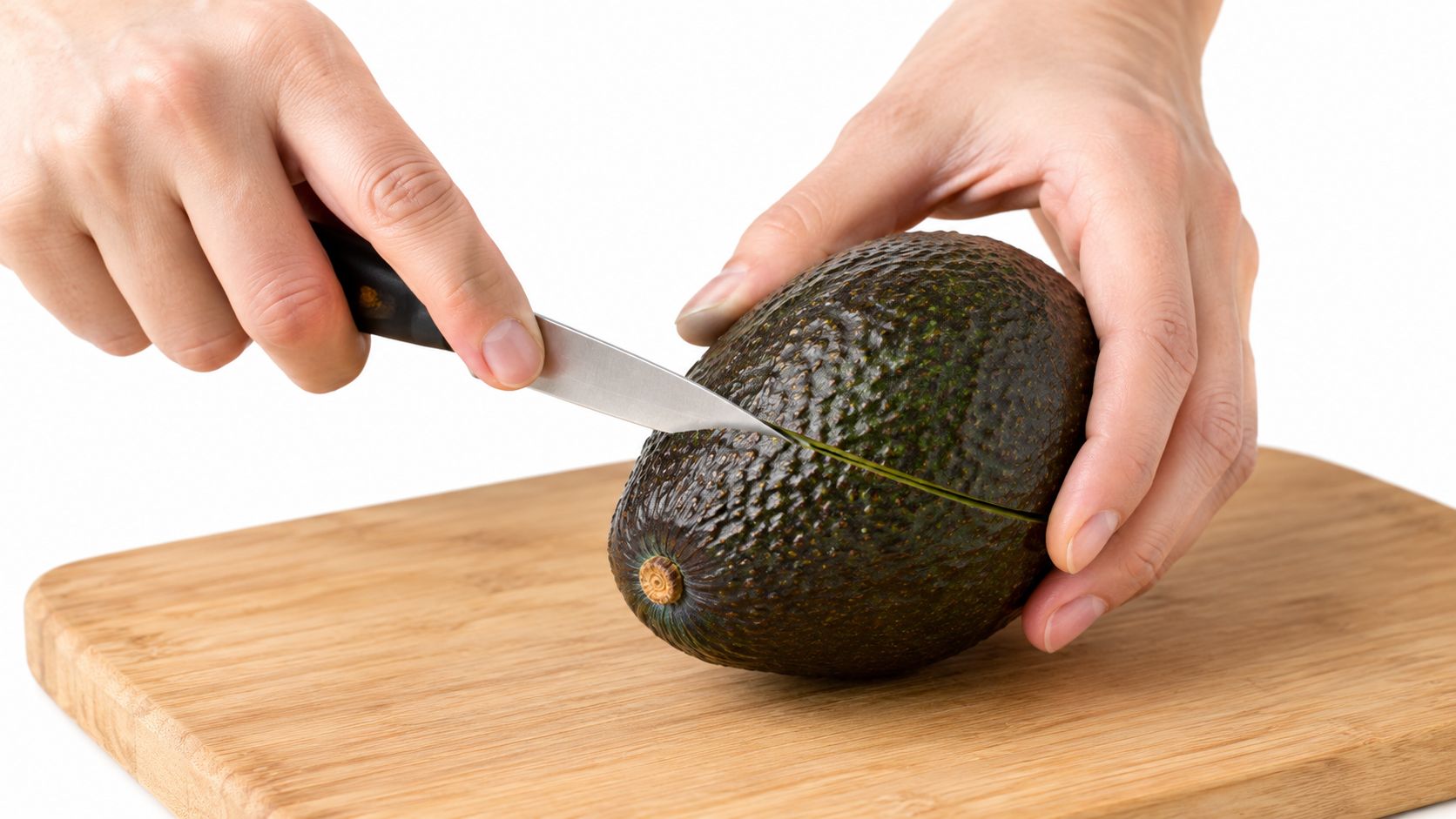
A ripe avocado is easy to cut safely when you keep the blade away from your supporting hand. Set the fruit on a stable cutting board, hold it on its side, and cut lengthwise around the pit. Rotate the avocado against the knife rather than driving the blade toward your palm, then twist the halves apart.
Remove the pit without the risky flourish
The familiar technique of striking the pit with a knife can work, but it also puts the blade close to your hand. A safer method is to slide a spoon between the pit and the flesh, then lift it out. For a very firm pit, use the knife only to make a controlled shallow cut around it, keeping the avocado flat on the board and your fingers clear.
For slices, score the flesh while it's still inside the skin, then scoop underneath with a large spoon. For cubes, make lengthwise and crosswise cuts without piercing the skin. This keeps the process controlled and reduces the temptation to cut toward your fingers.
Browning begins when the exposed flesh meets oxygen. The practical objective is oxygen exclusion, not covering the bowl. Brush or squeeze lemon or lime juice over every exposed surface, press plastic wrap directly against the flesh so there are no air pockets, and place the avocado in a sealed container in the refrigerator.
Practical rule: Cut only what you need when you need it. If you're holding extra, treat the exposed surface immediately.
Food-safety guidance summarized from the FDA recommends refrigerating cut avocado within 2 hours at room temperature. If the surrounding temperature exceeds 32°C, the room-temperature window shrinks to 1 hour. Avoid storing cut avocado submerged in water, since water-submersion methods can increase pathogen risk.
The flesh may begin browning within about 15 minutes, so finish it as soon as possible. This demonstration can help reinforce a controlled cutting motion, but the safest routine is still a stable board, a sharp knife used deliberately, and a spoon for pit removal.
Acid changes flavor as well as appearance, so use enough to coat the surface without turning the avocado sour. For mashed avocado, stir the citrus through the mixture, then cover it directly before chilling.
Everyday Applications Beyond Standard Guacamole
Guacamole is useful, but it shouldn't be the only destination for ripe avocados. The fruit's creamy texture makes it a flexible ingredient in meals that need richness, moisture, or a smooth dressing without requiring a separate sauce.
Start with the fastest application: mash avocado with salt, lemon or lime juice, and pepper, then spread it on toast, a sandwich, or a wrap. Add a fried egg, beans, smoked fish, roasted vegetables, or crisp seeds according to what's already in the refrigerator. Sliced avocado also works in burgers and grain bowls, where it contributes a soft contrast to toasted, crunchy, or spicy ingredients.
Blend it into useful sauces
Avocado can become a dairy-free dressing when blended with citrus, herbs, garlic, and enough water to reach a pourable texture. It works over lettuce, roasted vegetables, potatoes, or a warm grain bowl. For a Mediterranean direction, combine the dressing with chickpeas, cucumber, tomatoes, and herbs, then use the practical ideas in how to cook Mediterranean food to build a meal around accessible ingredients.
Olive oil can add a peppery, glossy finish to avocado toast and dressings. If you're interested in how that pantry staple is used, this guide to the health benefits of olive oil offers useful background without requiring you to change the basic avocado routine.
A high-protein breakfast is another strong use. Blend avocado with Greek yogurt, fruit, milk or a milk alternative, and a handful of leafy greens. The result is thick and creamy, so add liquid gradually. Frozen avocado is especially suited to blended applications because freezing changes its texture, making it more useful in smoothies, spreads, sauces, and dressings than as a substitute for fresh slices.
Give soft fruit a supporting role
For a quick lunch, make cucumber rounds topped with tuna mixed with sesame, citrus, and finely chopped scallions, then add a small piece of avocado beneath the tuna. The avocado provides a soft base while the cucumber supplies crunch. Keep the portions small, and assemble them close to serving so the cucumber stays firm.
Avocado can also replace part of the fat in some baked goods, especially dense brownies, muffins, or quick breads. Mash it until smooth and test the texture with a small batch, because it adds moisture and a mild vegetal note. It isn't a universal one-to-one replacement for butter, so recipes built around a tender, crisp texture may not respond well.
Other everyday uses include:
- Breakfast bowls: Add diced avocado to eggs, beans, grains, or yogurt with a sharp relish or toasted seeds.
- Sandwich spreads: Mash it with mustard, herbs, or roasted garlic and spread it under chicken, tuna, vegetables, or cheese.
- Soup finishing: Swirl blended avocado into a chilled vegetable soup, or serve it as a cool topping for a spicy soup.
- Dessert experiments: Use very ripe avocado in chocolate-based preparations where cocoa and sweetener can balance its flavor.
Consumer tracking identifies guacamole and dips, salads, and sandwiches, wraps, and burgers among the most common uses, while soups, smoothies, baby food, and desserts receive less mainstream attention in the Hass Avocado Board consumer market segment report. That gap is useful for home cooks. Think of avocado as a texture tool, not just a dip ingredient.
Troubleshooting Browning and Overripe Fruit
Brown avocado isn't automatically spoiled. Oxidation can darken the surface after cutting, while the flesh underneath may still smell fresh and taste normal. Scrape away a thin discolored layer and inspect what remains. If the interior has an off smell, sour flavor, extensive dark damage, or a slimy quality, discard it rather than trying to rescue it.
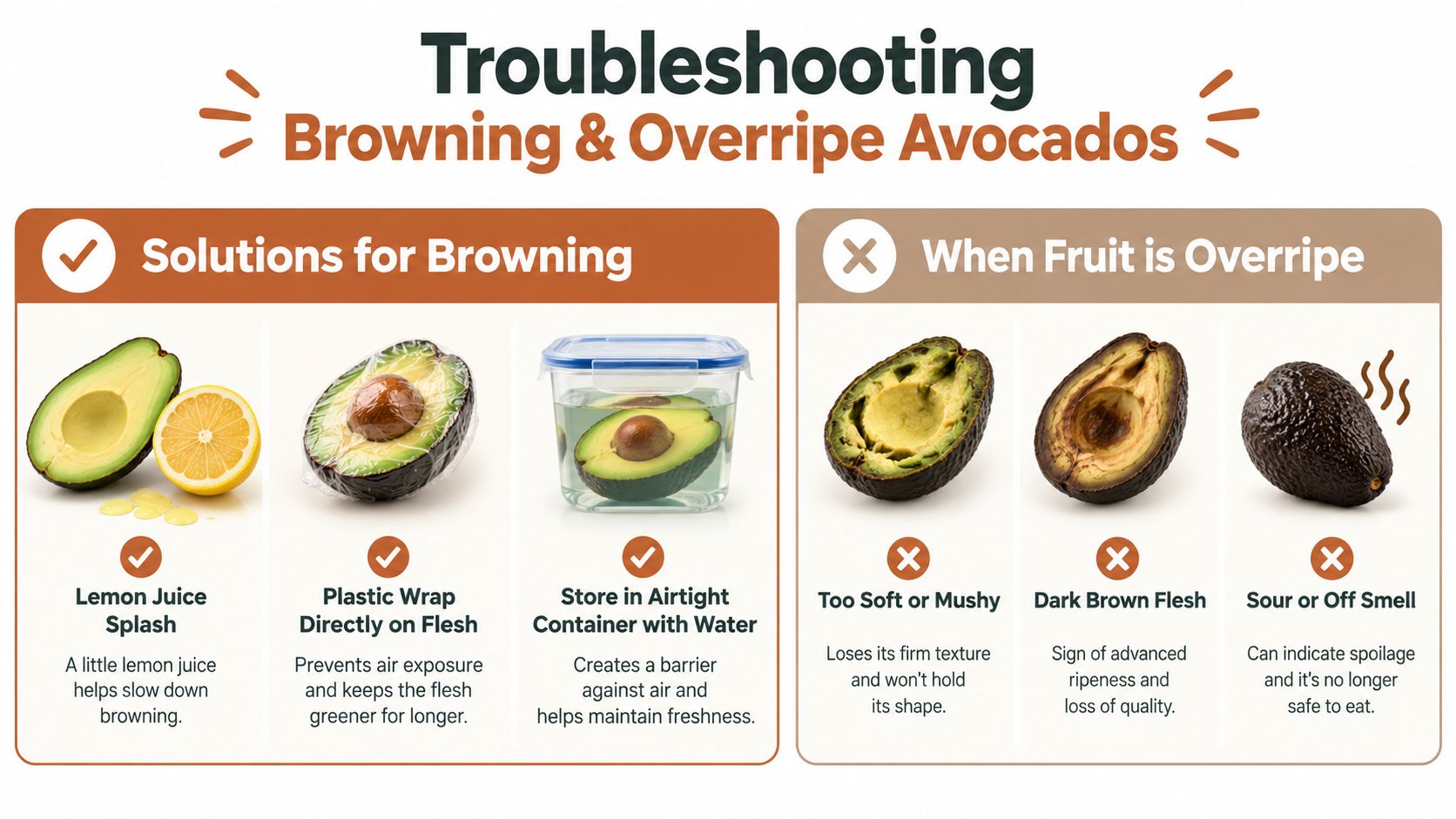
The viral water-storage trick deserves a clear rejection. Submerging cut avocado may appear to block air, but food-safety guidance warns that water-submersion methods can increase pathogen risk. Use citrus, direct-contact wrap, a sealed container, and prompt refrigeration instead, following the handling guidance summarized from the FDA and avocado industry recommendations.
Rescue texture, not appearance
Overripe avocados rarely recover their firm slicing texture. They can still work well in:
- Smoothies: Cut the usable flesh into portions and freeze it for blending later.
- Dressings: Blend with citrus, herbs, garlic, and water or oil.
- Spreads: Stir into beans, tuna, egg salad, or a sandwich sauce.
- Baking: Fold smooth mashed avocado into moist, cocoa-based or quick-bread mixtures.
Freeze only fruit that still smells and tastes fresh. Freezing changes avocado texture, so thawed pieces are better blended or mashed than arranged on toast as though they were fresh. Press air out of the freezer container or bag, label it with the date, and thaw in the refrigerator when possible.
Discard rule: A brown surface may be cosmetic. An off smell, sour taste, or visibly spoiled flesh isn't a storage problem to solve.
Building a Reliable Weekly Avocado Routine
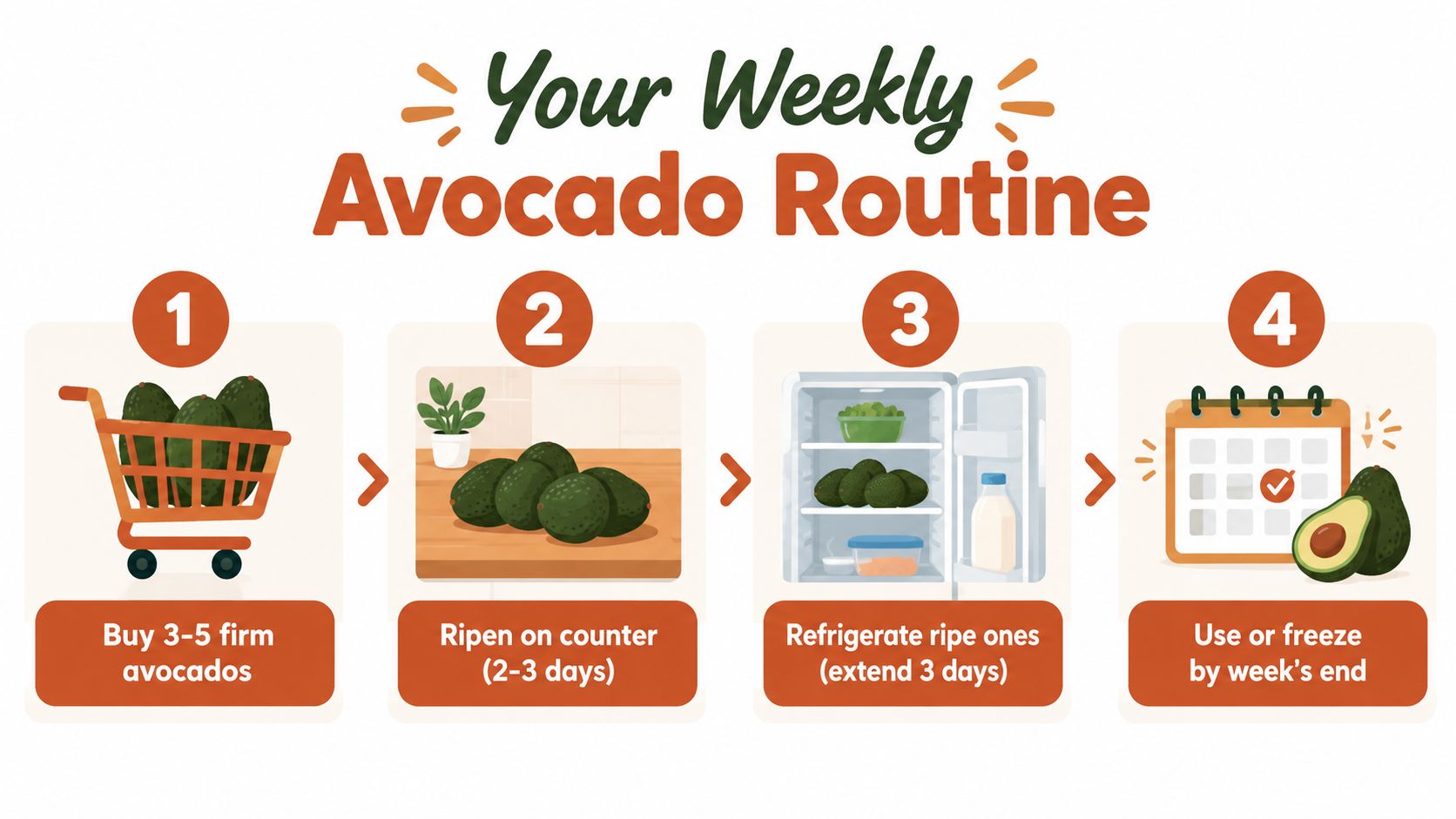
A useful avocado plan begins at the grocery store and ends with a deliberate final use. Buy a staggered mix of firm and ready-to-eat fruit, then mark each avocado mentally for a meal. This prevents the household habit of opening whichever one feels softest and discovering that every other avocado is at the same stage.
Assign each stage a job
On shopping day, choose firm fruit for later meals and one or two pieces with enough give for immediate use. Keep the firm ones on the counter, use a paper bag when you need to accelerate ripening, and move ripe fruit into the refrigerator once it reaches the texture you want.
A simple weekly rhythm looks like this:
- Early week: Use the ripest avocado in toast, sandwiches, wraps, or a fresh bowl.
- Middle of the week: Mash or slice the next fruit for dressings, eggs, salads, or a quick protein-centered lunch.
- Late week: Blend very soft fruit into a smoothie or sauce.
- Before waste becomes inevitable: Freeze usable flesh for a future blended preparation.
Fresh avocado is best added after reheating rather than cooked into a meal for several days. That preserves its texture and lets you adjust the amount at serving time. For broader dinner planning, meal prep dinners for the week can help you create the surrounding meals while keeping avocado as a fresh finishing ingredient.
Just Cook It offers downloadable cookbook e-books with kitchen-tested instructions, accessible ingredients, step-by-step guidance, and reading across phones, tablets, laptops, and e-readers. Visit Just Cook It to find practical global-cuisine recipes that can give each avocado in your weekly plan a clear, satisfying destination.