Hambagu is a Japanese hamburger steak served without a bun, usually with rice, vegetables, and a savory sauce. Unlike a typical burger patty, it's made with ground meat, panko, egg, and finely chopped onion, which give it a softer, more tender texture. It's a good way to use ground meat for something different from the usual burgers, without needing complicated ingredients or extra preparation.
These seven Japanese hamburger recipes use the same basic patty idea and change the plan around it. You can go sweet and tangy with a tonkatsu style sauce, rich with demi-glace, comforting with curry, or bright with grated daikon and ponzu. Each one gives you a difficulty level, a realistic total time, and one technique tip that prevents the usual failure, whether that's a patty that puffs up, splits, dries out, or leaks its cheese all over the pan. Pick by mood, pick by clock, and don't overthink the sides. Rice, miso soup, and a quick salad will carry almost every version here. If you can shape a meatball and watch a skillet, you can make all seven without special equipment.
Table of Contents
- 1. Classic Japanese Hambagu (Hamburg Steak with Tonkatsu-Style Sauce)
- 2. Teriyaki Hambagu with Grated Daikon
- 3. Demi-Glace Hambagu (Yoshoku-Style Red Wine Sauce)
- 4. Cheese-Stuffed Hambagu (Chīzu Hambagu)
- 5. Nikomi Hambagu (Simmered in Tomato-Based Sauce)
- 6. Japanese Curry Hambagu
- 7. Oroshi Ponzu Hambagu (Citrus-Daikon Hambagu)
- How the seven Japanese hamburger recipes compare at a glance
- Pick One Tonight and Make It Your Own
1. Classic Japanese Hambagu (Hamburg Steak with Tonkatsu-Style Sauce)
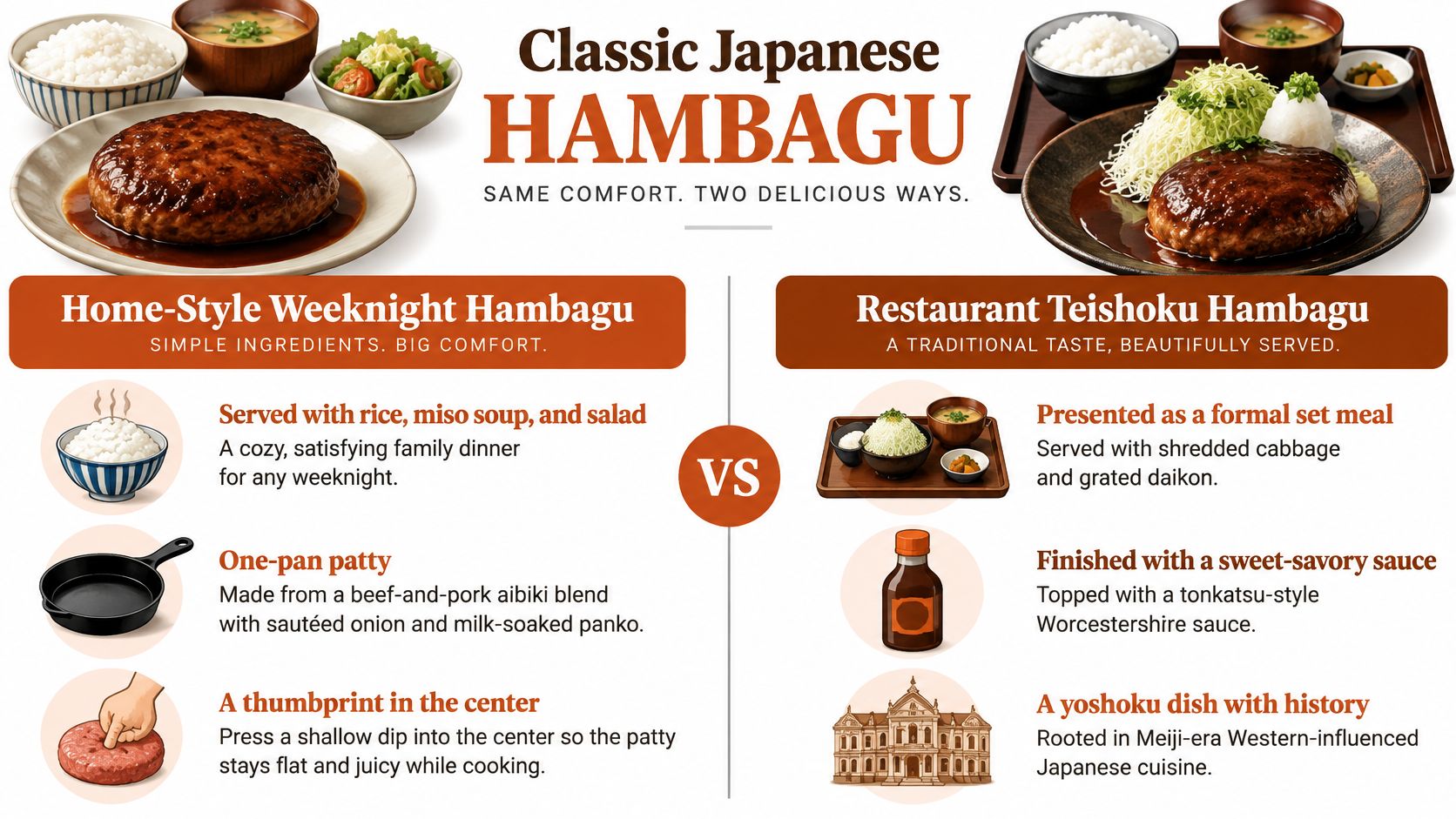
Difficulty: Easy. Plan on: About 35 minutes, plus a short chill if you have time. This is the starting point, the thick oval patty made from ground beef and pork, sautéed onion, and panko soaked in milk, then seared and finished covered in the pan.
Hambagu is a yoshoku dish, meaning Western influenced Japanese cooking. The Government of Japan material on hambagu reports that it appeared in Japan more than 140 years ago, roughly in the 1880s during the Meiji era. That history matters because this isn't a burger that lost its bun. It's a separate steak style dish, usually served with rice, vegetables, and sauce.
How I'd Serve It on a Tuesday
Put it with rice, miso soup, and shredded cabbage salad for a home style meal, or copy a family restaurant teishoku set with corn, broccoli, and a little potato salad. The sauce can be as simple as ketchup, Worcestershire, and a pinch of sugar whisked together. If you're still deciding on your meat blend, this guide to beef and pork burgers is a useful place to compare ratios before you mix.
- Cool the onion first: Sauté it, then let it cool so it doesn't warm and smear the meat fat.
- Chill the patties: A short rest in the fridge helps them hold their shape in a hot pan.
- Thumb dip the center: Press a shallow dent in the middle so the patty stays flat instead of doming.
Practical rule: Sear hard, then finish gently. A splash of water and a lid gives you steam, which cooks the center without burning the crust.
The two stage method in America's Test Kitchen's Japanese hamburger steak recipe uses approximately 2.5 minutes per side in a covered skillet, then 6 to 8 minutes covered with 1/2 cup sake. Use that rhythm, brown first, steam second, and check doneness rather than guessing.
Here's how the home version stacks up against a restaurant plate.
2. Teriyaki Hambagu with Grated Daikon
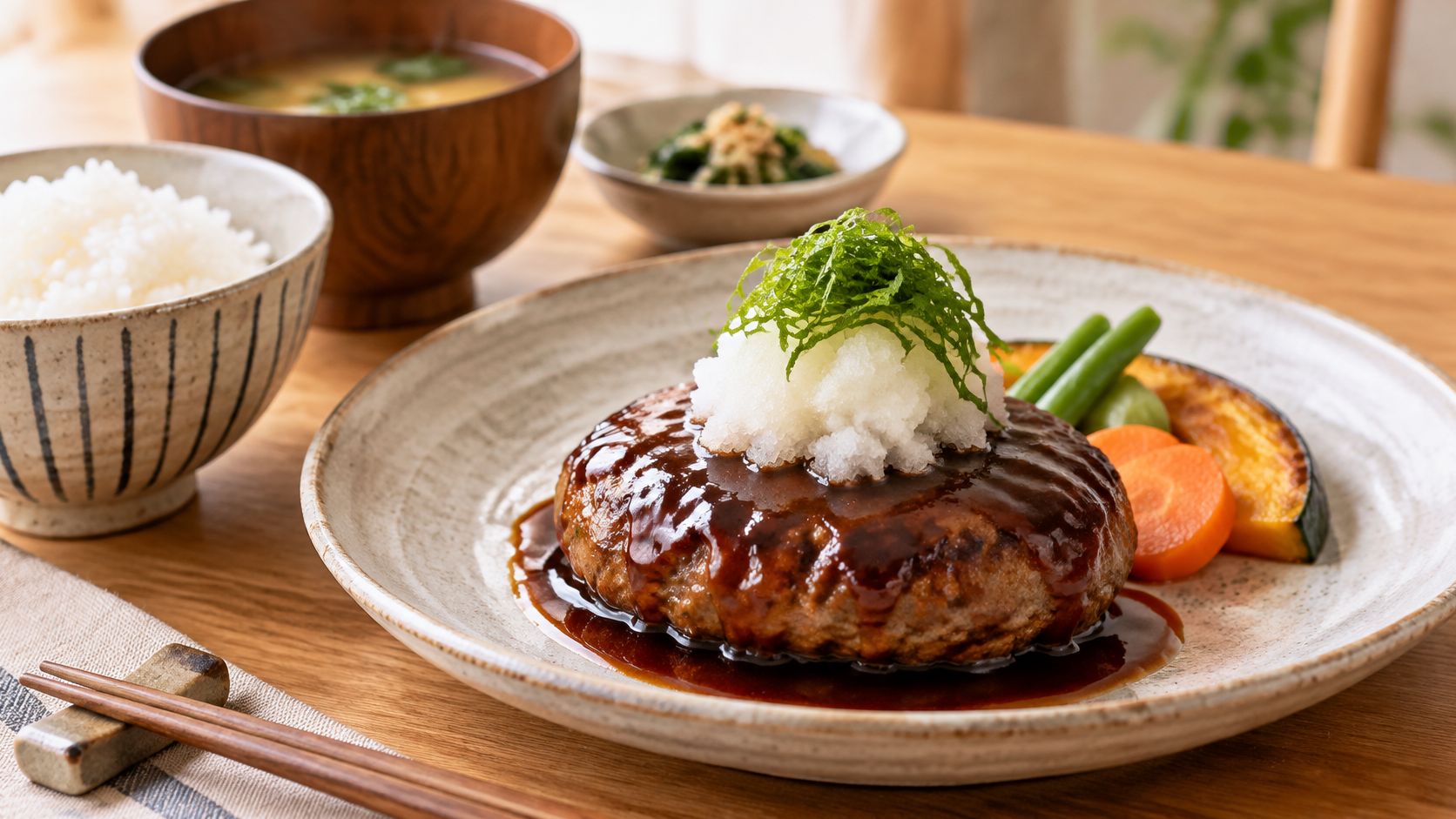
Difficulty: Easy. Plan on: About 30 minutes in one skillet. This version keeps the same juicy patty but swaps the tangy sauce for a glossy soy, mirin teriyaki glaze and a mound of oroshi, freshly grated daikon radish.
The daikon is the whole point. It's light, a little peppery, and it cuts through the sweet glaze so the plate doesn't feel heavy. I'd make this when you want hambagu flavor without the full comfort food weight, especially for a bento style plate with rice and blanched green beans or spinach.
Glaze It Late, Not Early
Teriyaki burns fast because of the sugar. Cook the patties most of the way through first, then pour the sauce in for the final minute and turn them until they shine. Keep the heat low while it reduces. If you add the glaze too soon, you'll get a dark, bitter pan and patties that still need time in the center.
Grate the daikon right before plating so it stays crisp and cool against the hot patty. A few drops of ponzu on top add tang if you want it brighter, though the radish is peppery enough to carry the dish on its own. For more meals built around this same pantry, browse these Japanese home cooking recipes and steal a side dish idea.
The spoon test: Drag a finger through the glaze on the back of a spoon. If the line holds clean, it's thick enough to coat the patty. If the glaze floods back over the line, give it another minute on low heat.
Technique tip that saves it: Glaze at the end, after the patties are nearly cooked. One minute of glossy coating beats ten minutes of scorched sugar.
3. Demi-Glace Hambagu (Yoshoku-Style Red Wine Sauce)
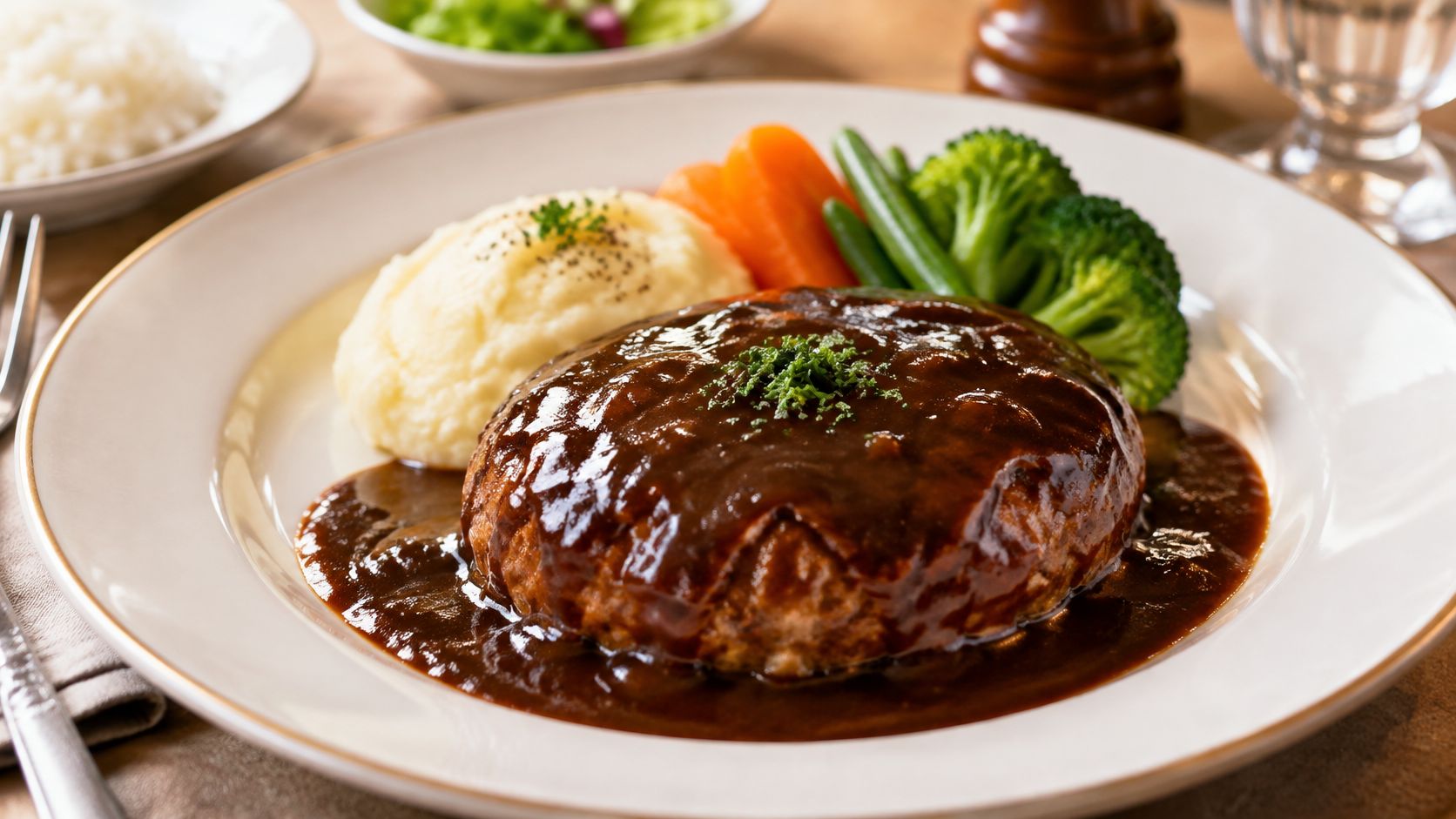
Difficulty: Medium. Plan on: About 45 minutes, mostly because the sauce deserves attention. This is the restaurant leaning version, a rich brown sauce built from demi-glace or beef stock, red wine or Worcestershire, and butter.
Think of this as your Friday night or dinner party hambagu. Serve it with mashed potatoes, glazed carrots, and broccoli, and suddenly a ground meat patty looks formal. The patty itself doesn't change much. The sauce does all the talking, so don't rush it into a thin gravy.
Build the Sauce in the Same Pan
Sear the patties, set them aside, then deglaze the pan with red wine and scrape up every browned bit. That's free flavor you'd otherwise wash down the sink. Add stock and reduce until it looks silky, then whisk in cold butter off the heat for shine.
- No demi-glace in the cupboard: Use good beef stock with a teaspoon of tomato paste for depth and color.
- Sauce too thin: Reduce it longer instead of adding flour at the end, which can turn it pasty.
- Sauce breaks or looks greasy: Take it off the heat before the butter goes in and whisk steadily.
Plate the patty first, then spoon warm sauce over just before serving. If the sauce sits on the meat too long, your crust softens and the whole plate turns one note. Technique tip that saves it: Keep sauce and patty separate until the last moment, so you get both a good sear and a glossy finish.
4. Cheese-Stuffed Hambagu (Chīzu Hambagu)
Difficulty: Medium, only because sealing matters. Plan on: About 40 minutes. A cube of mozzarella or cheddar hides inside the patty and melts into a molten center when you cut in.
Kids love this one, but adults aren't exactly complaining either. Make it for a weekend family meal with rice, corn, and a simple salad. The failure mode is obvious and annoying. Cheese finds a crack, leaks into the pan, burns, and you're left with a hollow patty and a smoky kitchen.
Seal It Like You Mean It
Chill the cheese cubes first so they don't go soft while you're shaping. Wrap the meat fully around the cube, pinch the seam closed, then smooth the surface with wet hands until you can't see a line. Cook over medium low heat with a lid so the center heats through without scorching the outside.
Don't trust juice color here. The recipe guidance on Japanese hamburger steak temperatures sets a minimum internal temperature of 160°F for the center of the patty. Slide an instant read thermometer in horizontally, avoid touching the pan, and check the thickest part.
Watch the sealing and covered cooking method in action before you try your first batch.
If your patties ever feel fragile without crumbs, the binding tricks in this easy meatball recipe without breadcrumbs translate well to hambagu. Technique tip that saves it: No visible cracks before the pan. If you can see a seam, the cheese can find it.
5. Nikomi Hambagu (Simmered in Tomato-Based Sauce)
Difficulty: Easy. Plan on: About 40 minutes, with the sauce doing most of the work. Nikomi means simmered, and here the seared patties finish in a tomato based sauce with onion, mushrooms, and stock.
This is the forgiving version. Simmering keeps the patties tender, covers a slightly uneven sear, and gives you extra sauce for rice or crusty bread. I'd pick it on a cold night when you want something hearty but don't want to stand over the stove flipping and checking every two minutes.
Sear First, Simmer Gently
Brown the patties before they meet the sauce. Skip that step and they'll taste boiled, no matter how good your tomatoes are. Once they're in, keep the heat low, set the lid slightly ajar, and spoon sauce over the tops now and then. Stirring is how patties break apart. Basting is how they stay whole.
The balance behind juicy, fully cooked patties is explained well in Food Republic's guide to juicier Japanese style hambagu, which notes a 160°F (71°C) internal temperature and that steaming with broth or wine can promote more even cooking without drying the patty. A simmer gives you that same humid, gentle heat, with sauce as a bonus.
- Add mushrooms and onion: They melt into the sauce and make it taste cooked longer than it was.
- Keep patties in one layer: Crowded, stacked patties cook unevenly and tear when moved.
Technique tip that saves it: Never boil. A lazy simmer keeps the meat tender, while a hard boil squeezes patties dry and tough.
6. Japanese Curry Hambagu
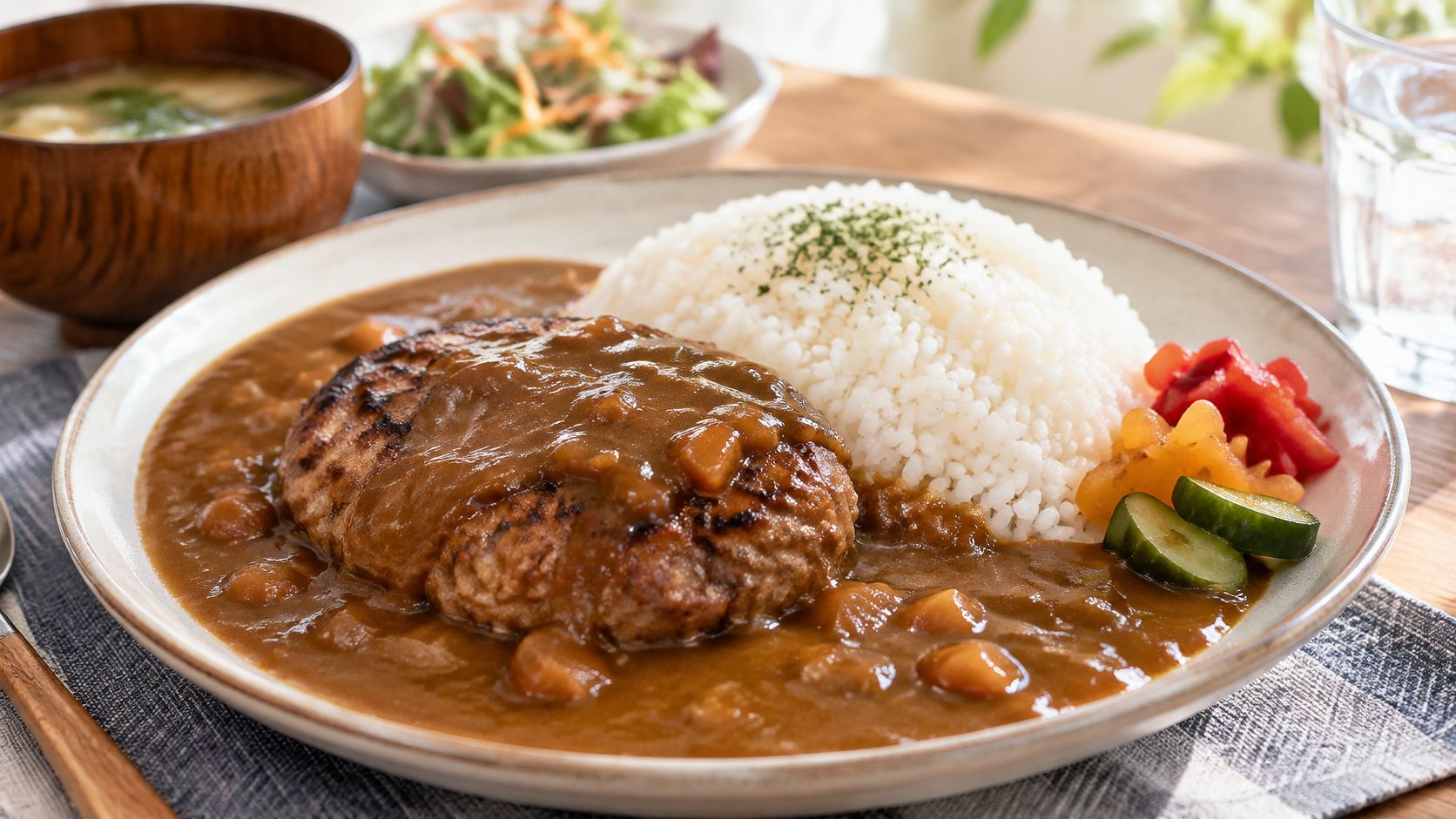
Difficulty: Easy if you use roux, and you should. Plan on: About 35 minutes, or less with leftover curry. This plates your patty in thick, mild Japanese style curry sauce, the kind that turns pan juices into gravy.
This is a weeknight plan: make a small pot of curry, sear the patties, then spoon sauce over so each bite stays rich. Serve it over rice with fukujinzuke or other pickled vegetables for crunch and acidity. A soft boiled egg on the side doesn't hurt either.
Let Store-Bought Roux Do Its Job
A boxed Japanese curry roux gives you the same glossy sauce every time, which is why it works on a Tuesday. Cook the curry first and keep it a little looser than you want; it will tighten once it hits the plate and meets the patty juices. Sear the patties separately, then give them only a short bath in the sauce so they pick up flavor while keeping their crust.
A little grated apple or honey rounds out the sauce if it tastes flat. Curry made a day ahead tastes deeper after resting, so cook extra and you get a second dinner mostly about reheating and searing. Freeze extra seared patties and warm them gently in fresh curry another night.
"Make the curry a day ahead if you can. It tastes better, and dinner becomes mostly reheating and searing."
Technique tip that saves it: Use curry as a finishing sauce. Heat the patty through, then pull it; sitting in salty roux too long dulls the sear and makes a tender hambagu dense.
7. Oroshi Ponzu Hambagu (Citrus-Daikon Hambagu)
Difficulty: Easy. Plan on: About 30 minutes. This is the lightest plate in the list, a seared patty topped generously with grated daikon and ponzu, the citrus soy sauce that brings brightness and acidity.
Make it in warm weather, or after a run of heavy dinners when you still want something satisfying. Rice, cucumber salad, blanched greens with sesame, and a clear soup finish the meal without adding work. The sharp citrus bites straight through the richness of the seared crust, and the cool daikon softens each mouthful.
Dress at the Table, Not in the Pan
Pile the drained oroshi over the hot patty, add shiso or scallion if you have it, and spoon ponzu over at the last second. Serving it this way keeps the topping fluffy instead of letting it stew on the meat.
- Add sesame oil sparingly: A little in the ponzu adds depth, too much makes a light dish taste oily.
- Brighten to taste: Yuzu juice is lovely, lemon juice works fine, and both beat adding more soy.
- Not sure about the sauce: Start with this explainer on what ponzu is before you buy a bottle.
This version also adapts well if you don't eat pork. The Satsuki hambagu recipe notes explain that ground chicken thigh can replace beef and pork, while chicken breast alone tends to produce a drier patty. Technique tip that saves it: Ponzu goes on just before serving. Early saucing turns crisp edges soggy and dulls the citrus.
How the seven Japanese hamburger recipes compare at a glance
Pick your row based on the night you're having: how much time is on the clock, how much sauce work you want, and what else is already on the stove. Times below cover mixing, shaping, cooking, and saucing from start to plate.
| Item | Main Sauce or Topping | Patty Style | Total Time | Side Dishes | Best For | Difficulty |
|---|---|---|---|---|---|---|
| Classic Japanese Hambagu | Tonkatsu-style Worcestershire sauce | Beef-and-pork patty with onion and milk-soaked panko | About 30 minutes | Steamed rice, shredded cabbage | Family dinners and beginners | Easy |
| Teriyaki Hambagu with Grated Daikon | Soy-mirin teriyaki glaze and grated daikon | Glazed hambagu patty | About 30 minutes | Rice, miso soup | A quick, lighter meal | Easy |
| Demi-Glace Hambagu (Yoshoku-Style Red Wine Sauce) | Rich demi-glace and red wine sauce | Pan-seared hambagu patty | About 45-60 minutes | Buttered rice, green beans | Restaurant-style dinners | Moderate |
| Cheese-Stuffed Hambagu (Chīzu Hambagu) | Melted cheese center; sauce of choice | Patty sealed around a cheese cube | About 35-40 minutes | Fries or a simple green salad | Family meals and cheese lovers | Medium |
| Nikomi Hambagu (Simmered in Tomato-Based Sauce) | Tomato-based sauce with optional mushrooms and onion | Seared patty simmered in sauce | About 45 minutes | Crusty bread or rice | Comforting, hearty meals | Moderate |
| Japanese Curry Hambagu | Mild Japanese curry sauce | Hambagu served in or over curry | About 40 minutes | Rice, pickled vegetables | Families and curry lovers | Easy |
| Oroshi Ponzu Hambagu (Citrus-Daikon Hambagu) | Grated daikon and citrus-soy ponzu | Hambagu topped after cooking | About 25-30 minutes | Chilled tofu, green salad | Lighter meals and warm weather | Easy |
The ratings track the sauce and the assembly, since all seven patties use the same mix-and-sear method. Curry stays at Easy because boxed roux does the seasoning for you, while the cheese version earns its Medium for one reason: a poorly sealed patty leaks its filling straight into the pan.
Pick One Tonight and Make It Your Own
Start with the version that fits your actual week, not the one that sounds most impressive. The classic is the safest first run for a family dinner because the sauce takes two minutes and everyone recognizes the flavor. The cheese stuffed version is your kid friendly Friday plan. The oroshi ponzu version is what I'd make when you want hambagu but not a heavy plate, and the curry version is the smartest use of leftovers in this whole list.
You're not guessing about whether people eat this at home in Japan. A 2025 nationwide Nichirei Foods survey reported by Nippon.com of 14,000 people found that approximately 64% selected Japanese hamburg steak as a favorite side dish. That's everyday food, not a special occasion project. Treat it that way. Don't stress about a perfect oval, and don't buy special equipment. A skillet, a lid, and a thermometer will handle everything here.
Here's my recommended next step. Make one double batch of classic patties this week, serve half with tonkatsu style sauce tonight, and freeze the rest seared and cooled. Next week, reheat them gently in curry or top them with ponzu and daikon, and you've learned two of these Japanese hamburger recipes for the price of one cooking session. Once the base patty feels easy, swap the meat blend, change the sauce, or stuff one with cheese and see which version your household argues about keeping.
If you want more tested Japanese home cooking beyond hambagu, Japanese Home Kitchen is an optional digital cookbook to browse for rice dishes, soups, sides, and mains built on the same pantry. And if dinner needs a sweet finish, a scoop of something green from this TOO MATCHA ice cream recipe pairs nicely after a savory ponzu or teriyaki plate.
If these patties made weeknight ground meat feel exciting again, Just Cook It has kitchen tested digital cookbooks, including Japanese home cooking collections you can download instantly and read on your phone, tablet, or laptop. Pick one recipe, cook it tonight, and build your next week of dinners from there.