This potato and ham bake earns a permanent spot in the dinner rotation because it solves three real problems at once. It stretches leftover ham, turns basic pantry staples into a full meal, and still feels like proper comfort food instead of a cleanup dish.
The difference between a great bake and a disappointing one usually comes down to technique, not ingredients. Even potato slices, a sauce with enough body to hold the layers, and a short rest after baking matter more than piling on extra cheese. Get those parts right and the casserole cuts cleanly, reheats well, and tastes just as good on a busy weeknight as it does on Sunday.
It also rewards planning. This is one of the few casseroles I trust for make-ahead prep because the components can be handled in stages without wrecking the texture. If you want a lighter version, a tighter grocery bill, or both, there are smart places to trim richness without losing the creamy, savory character that makes potato and ham bake worth making in the first place.
Table of Contents
Why This Potato and Ham Bake Is a Game Changer
Potato and ham bake feels old-fashioned, but the dish is built on a cooking method with deep roots. The modern casserole traces back to French gratin dauphinois, and scalloped potatoes were already appearing in American cookbooks by 1851, according to the historical overview in Food Faith Fitness’s scalloped potatoes and ham article. What changed over time wasn’t the core method. It was the practical home-cook adaptation: potatoes, a salty meat, a creamy binder, and a baking dish big enough to feed a table.
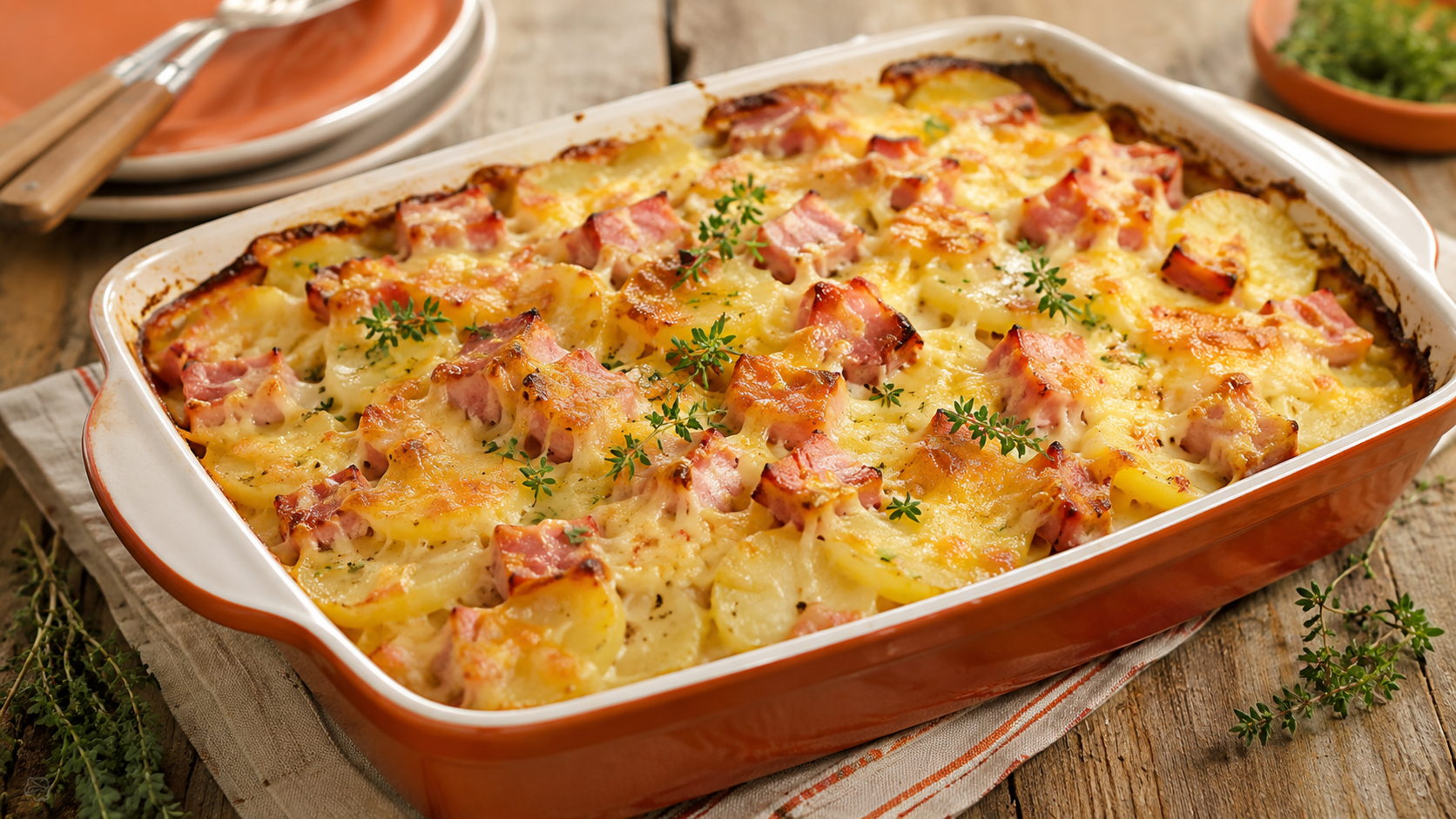
That’s why this version matters. It doesn’t treat the casserole as a dump-and-bake project where luck handles the details. It treats it as a layered bake with a few essential steps that control texture from the bottom up.
What makes this one different
Three things separate a dependable potato and ham bake from a disappointing one:
-
Potato prep: Even slices cook at the same rate, so the center doesn’t stay firm while the edges collapse.
-
Sauce structure: A cooked roux and gradual whisking keep the sauce creamy instead of grainy or thin.
-
Finish timing: Covered baking softens the potatoes first, and uncovered baking gives the top color without drying the interior.
A good casserole isn’t just rich. It should cut into neat portions, hold its layers, and still spoon softly at the edges.
Why it earns a regular spot
This dish also works harder than many casseroles. It can use leftover ham, stretch a small amount of meat across a full pan, and adapt to richer or lighter dairy without losing its identity. That combination of thrift, comfort, and repeatability is why the potato and ham bake has stayed relevant long after its gratin ancestors first showed up on the table.
Choosing Your Key Ingredients for Success
A potato and ham bake only has a handful of main ingredients, so each one pulls real weight. Small choices at the store decide whether the finished pan turns out silky, salty, loose, or balanced.
Pick the potatoes for the texture you want
For a thicker, more classic casserole feel, starchier potatoes are the safer choice. They release more starch as they cook, which helps the sauce tighten around the slices. For a slightly more structured bake with slices that keep their shape better, a waxier potato can work well.
A simple way to choose:
| Potato style | What it does in the bake | When to use it |
|---|---|---|
| High-starch potato | Thickens the sauce more readily | For a softer, creamier casserole |
| Waxy potato | Holds shape more firmly | For cleaner layers and less breakdown |
The key isn’t chasing a perfect variety name. It’s deciding whether the pan should lean creamy and spoonable or more sliceable.
Match the ham to the rest of the pan
Ham changes more than flavor. It changes seasoning, moisture, and how much richness the sauce can carry.
-
Leftover baked ham: Usually saltier and more assertive. This works well when the sauce is mild and the potatoes need a stronger savory note.
-
Ham steak or deli-style diced ham: Often milder and more even in texture. This gives more control over the final seasoning.
-
Large chunks: Better for a rustic bake, but they can create uneven bites if the pieces are too big.
Salty ham should push the seasoning plan. When the meat is already cured and assertive, the sauce needs restraint.
Build a sauce that can hold the layers
The classic base is simple: butter, flour, and dairy. Butter carries flavor, flour thickens, and the dairy decides how rich the casserole feels. Milk gives a lighter result. Cream gives a fuller one. A blend often lands in the middle and keeps the bake from feeling heavy.
A few practical rules matter more than fancy add-ins:
-
Cook the flour first: Raw flour taste doesn’t disappear in the oven.
-
Add liquid slowly: Fast pouring invites lumps.
-
Season after the ham is in mind: The meat may already bring enough salt.
Cheese is optional, but if it’s used, it should support the sauce rather than dominate it. Too much can make the top greasy before the potatoes are fully tender.
Building Your Bake Layer by Layer
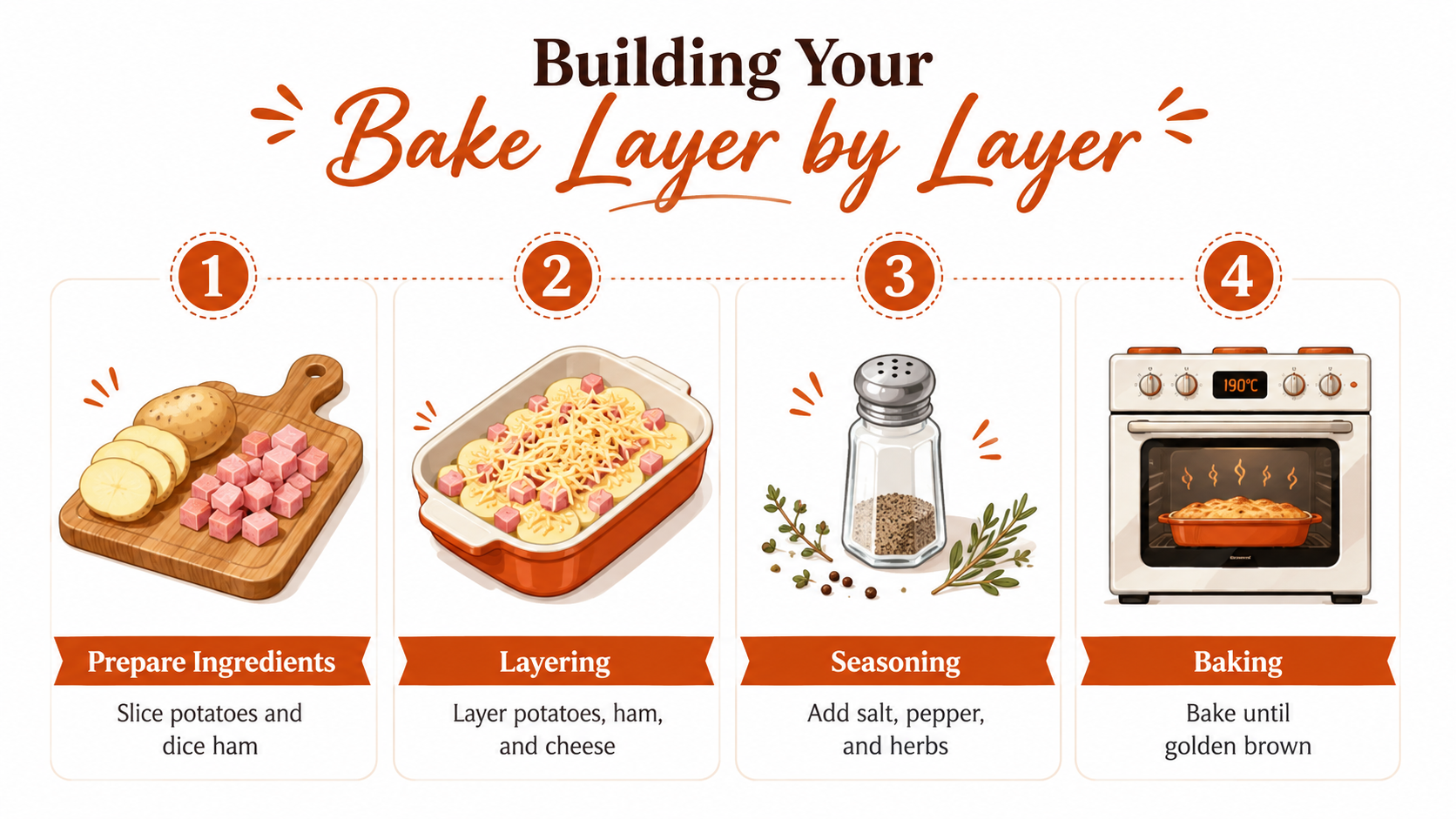
A good potato and ham bake is won before it goes in the oven. The assembly decides whether you get tender slices in a creamy sauce or a pan with a browned top and a stubborn, undercooked middle. The reliable method is simple. Give the potatoes a head start, build with a sauce that already has body, then bake covered before finishing uncovered for color.
Start with prep that makes the bake predictable
Slice the potatoes evenly. That sounds basic, but it is the difference between a casserole that bakes on schedule and one that needs another 20 minutes while the top keeps darkening. A mandoline gives the cleanest result, though a sharp knife works fine if you stay consistent.
Par-cooking is the step I would not skip, especially if the bake is being made ahead or stretched with a lighter milk-based sauce. A short simmer softens the centers just enough that the oven can finish the job without drying the edges. It also helps on a budget build, where you may be using less cheese and relying more on the potatoes and sauce for comfort and structure.
Make the sauce until it looks finished
The oven should not be asked to rescue a thin sauce. If the mixture is loose in the pan, it usually stays loose. Build it on the stove until it coats the back of a spoon and falls slowly from the whisk.
-
Melt the butter in a saucepan with enough room to whisk comfortably.
-
Stir in the flour and cook until it smells nutty, not pasty.
-
Add the dairy in a few pours, whisking smooth each time.
-
Stop and assess the texture before layering. Thick now means creamy later.
Layer with a light hand
Start with a thin swipe of sauce on the bottom of the dish. Then add potatoes, ham, and sauce in steady layers. The goal is coverage, not compression. If the slices are packed too tightly, the sauce sits on top instead of slipping between them.
Keep the ham pieces fairly even and scatter them rather than dropping them in clumps. That gives better distribution and helps every serving eat the same. If you are trying to keep the dish lighter or cheaper, resist the urge to bury every layer in cheese. A modest layer near the top gives plenty of color and flavor, and it leaves the casserole tasting like potatoes and ham instead of a cheese dip with starch.
Resting window: Let the casserole stand for about 10 minutes before serving. That short rest helps the sauce settle into the layers so it stays creamy instead of running across the plate.
Bake in two stages for the right finish
Cover the dish for the first part of baking so the potatoes steam and soften in the sauce. Once they are nearly tender, uncover the pan and let the top take on color. This two-step approach is more forgiving than baking uncovered from the start, especially for make-ahead casseroles coming straight from the fridge.
If the top is browning too fast and the center still feels firm, cover it again and keep going. If the potatoes are tender but the surface looks pale, uncover for a few more minutes. That is the trade-off with this dish. Color and tenderness do not always arrive at the same moment, so adjust for the pan in front of you, not the clock alone.
Customize Your Casserole Without Compromise
A potato and ham bake doesn’t have to be heavy to feel satisfying. The trick is knowing which parts can be trimmed and which parts carry the dish. Texture usually depends more on potato starch, sauce thickness, and bake timing than on loading the pan with extra cream and cheese.
Where to lighten it without losing structure
The easiest place to adjust is the dairy. A lighter milk-based sauce can still work well if it’s thickened properly before baking. The casserole may feel less lush than a cream-heavy version, but it won’t feel skimpy if the potatoes are cooked evenly and the sauce has enough body.
Vegetables can also stretch the pan in a useful way. Leeks, broccoli, or cauliflower fit the flavor profile and break up the richness. The goal is moderation. Too much added moisture can loosen the sauce.
Sodium is the first thing worth addressing
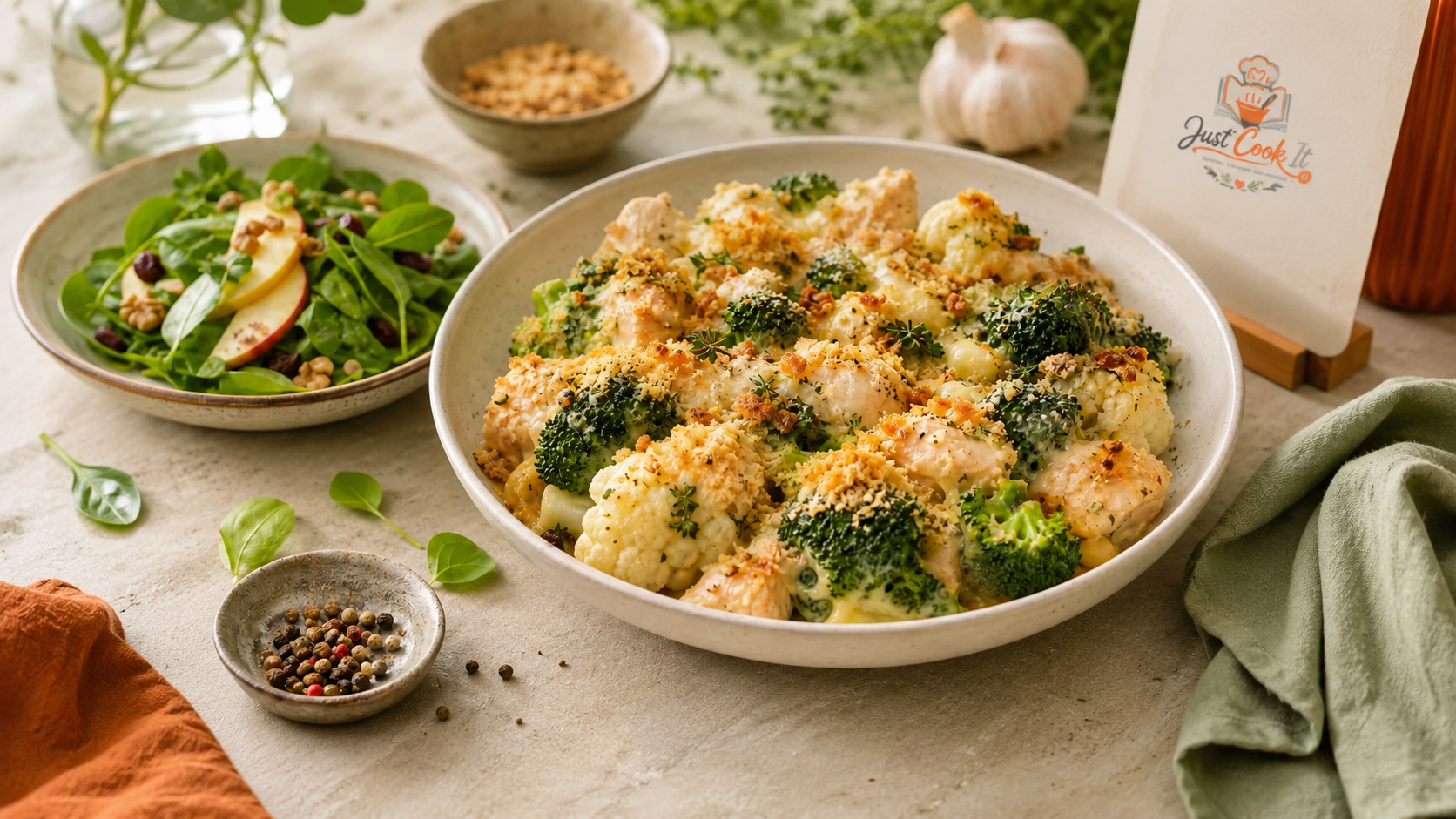
A standard commercial version from Betty Crocker’s creamy ham and potato casserole lists 1,300 mg sodium, which is 54% of the Daily Value. That’s not surprising in a dish built from cured ham, dairy, and often cheese, but it does mean sodium reduction has to be intentional.
A few changes help without flattening the flavor:
-
Ham choice: Use a milder ham and let it season the pan instead of adding extra salt early.
-
Cheese restraint: Use less cheese, or keep it mostly on top where a smaller amount still reads clearly.
-
Flavor support: Onion, garlic, black pepper, and herbs can make a lighter hand with salt feel less noticeable.
Budget-friendly changes that still eat well
Potatoes already do the heavy lifting on cost. To keep the dish affordable, the best move is usually to stretch the ham, not remove it entirely. Smaller diced pieces distribute more evenly, so each serving still gets some meat.
For cooks working on healthier comfort food adaptations, lighter takes on familiar classics fit the same practical mindset behind Comfort Food Reimagined | Digital PDF. For cleanup and consolidation, The One-Pan Kitchen | Digital PDF focuses on strategies that help keep a full meal in one vessel instead of turning dinner into a sink full of cookware.
Mastering Make-Ahead and Safe Storage
Make-ahead advice for potato and ham bake is often vague, even though this is one of the first questions cooks ask. The safe answer is to keep the process tight, keep the dish cold, and avoid long stretches at room temperature.
Assembling ahead without wrecking the texture
A fully assembled casserole can be prepared ahead, but it should be kept refrigerated and baked promptly rather than lingering on the counter. Potatoes and sauce both change as they sit. The longer the wait, the more likely the layers are to weep or discolor.
For the cleanest result:
-
Par-cook the potatoes first: This reduces the final bake stress and helps the dish stay predictable.
-
Cool hot components before assembly: Warm sauce poured over everything and then parked in the fridge can create excess condensation.
-
Cover for storage, then bake straight from cold: Expect the bake to need a little more time if it starts chilled.
Cooling and reheating safely
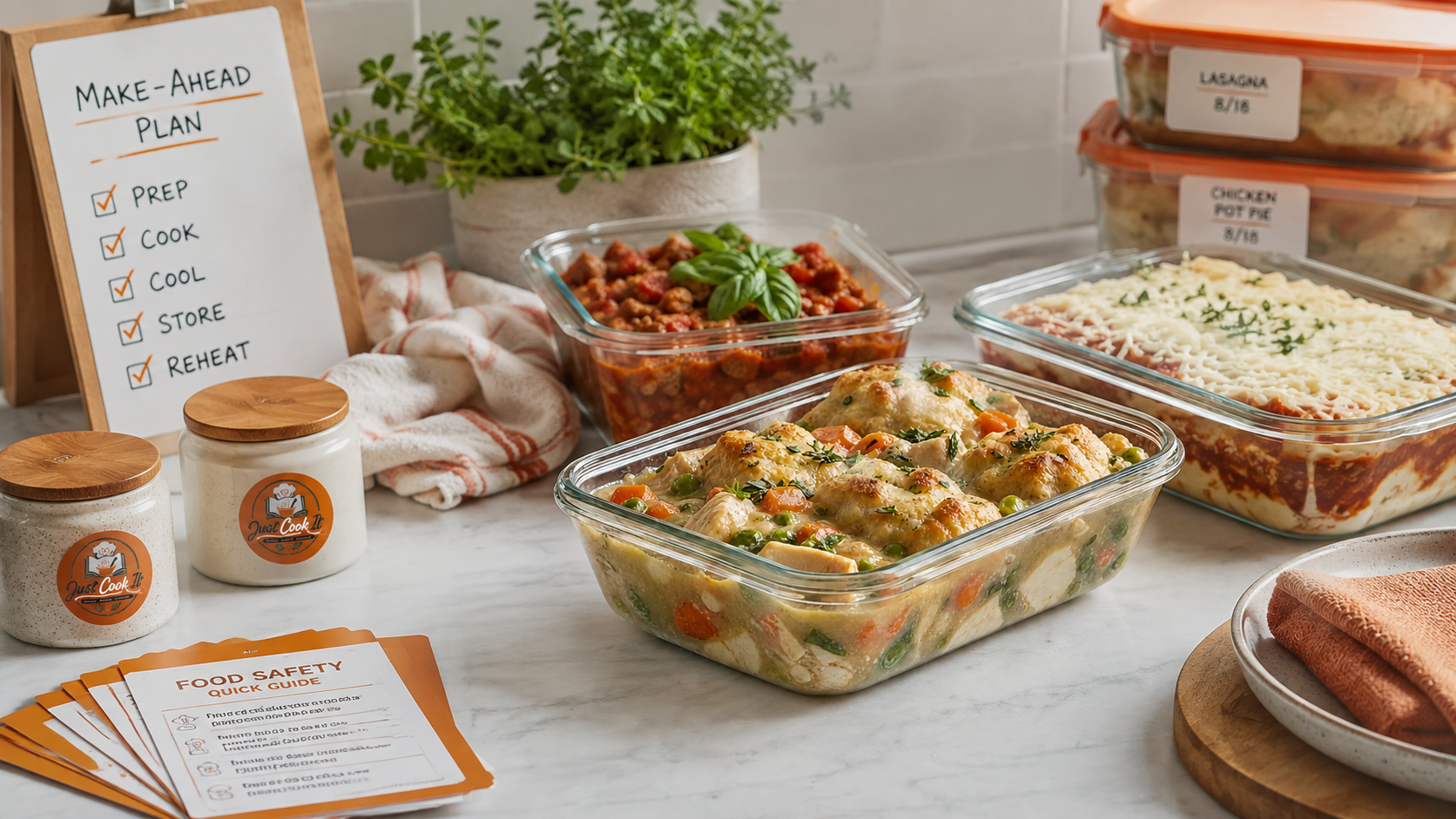
Food safety matters more with a dense casserole because the center cools slowly. The USDA safe temperature chart identifies 41 to 135°F as the danger zone and warns that trapped moisture under foil can slow cooling.
Remove the foil before refrigeration, portion the casserole if possible, and chill it promptly instead of letting a large pan cool slowly on its own.
That one habit solves a lot. Smaller portions lose heat faster, and less trapped steam means less moisture collecting back into the casserole.
Freezing and batch-cooking trade-offs
Freezing can work, but texture is always the trade-off to watch. Potatoes and dairy sauces don’t always come back exactly as they went in. A baked casserole often reheats more predictably than an unbaked one because the sauce has already set and the potatoes have already finished cooking.
For cooks who plan meals around freezer rotation, Make-Ahead Freezer Meal Cookbook | Digital PDF is built for freezing and reheating. The same batch-cooking approach shows up in its freezer meal recipe collection, where the focus stays on dishes designed to hold up after storage rather than recipes that only work fresh.
Solving Common Potato Bake Problems
When a potato and ham bake goes wrong, the fix usually starts with identifying whether the failure came from the potatoes, the sauce, or the bake timing.
Watery sauce
A loose casserole usually points back to an underbuilt sauce or excess moisture in the dish. If the roux never thickened properly on the stove, the oven won’t reliably rescue it. Resting matters too. Serving too soon can make a finished casserole look broken even when it would have set after a short wait.
Potatoes still hard
This is usually a slicing problem or a covered-bake problem. Uneven pieces cook at different speeds, so some slices turn tender while others stay firm. If the potatoes weren’t par-cooked and the dish didn’t spend enough time covered, the center often lags behind the edges.
-
Slice consistency: Use the same thickness throughout the pan.
-
Covered phase: Don’t rush the steaming portion of the bake.
-
Fork test: Check the center, not just the corners.
Burned top and raw middle
This is the classic sign that the surface got too much direct heat before the interior caught up. Foil is the control tool here. If the top is browning too fast, cover it again and keep baking until the potatoes are tender.
A browned top doesn’t prove doneness. The fork test does.
If this happens often, the oven itself may be running hot. In that case, a simple oven thermometer is more useful than guessing.
Your Potato and Ham Bake Questions Answered
Can sweet potatoes be used
Yes, but the bake changes. Sweet potatoes cook faster and carry more moisture, so the casserole tends to turn softer and a little sweeter. That flavor shift can work well with smoky ham or a sharper cheese. For cooks exploring more savory pairings, these sweet potato side dish ideas show how to keep the flavor profile from drifting too far into holiday-casserole territory.
How can it be made gluten-free
The usual gluten source is the flour in the sauce. A gluten-free flour blend can replace it in a standard roux-style method. Cornstarch can also thicken the sauce, but it behaves differently and is better handled as a slurry with cold liquid before being added.
What should go on the side
This bake is rich and filling, so the best sides are fresh and sharp. A green salad with vinaigrette, steamed green beans, roasted asparagus, or glazed carrots all balance the plate better than another heavy starch.
A well-made potato and ham bake should feel easy to repeat, not nerve-racking to troubleshoot. For more everyday meal ideas built around practical home cooking, browse the recipe collections at Just Cook It.