A healthy, kid-approved dinner can happen faster than takeout on many nights. That sounds backwards, but the time math supports it. In 2024, employed parents with children under 18 spent about 11.2 hours per day on work, childcare, household activities, and related responsibilities, according to the U.S. Bureau of Labor Statistics, which helps explain why quick meal ideas for kids often need to land in the 15 to 30 minute range.
That pressure is real, and it changes what “cooking” looks like. On tired evenings, parents usually don’t need a clever recipe. They need a repeatable system that answers one question fast: what can go on the plate right now that fills a child up and still feels balanced?
That’s where a simple formula helps. Start with a protein, add a carb, then include a veggie or fruit. It doesn’t need to be fancy, and it doesn’t need to look perfect.
A quick meal can still be a complete meal when the plate includes more than one food group.
The ideas below keep that formula front and center. Some are cooked, some are mostly assembled, and some are true no-cook backups for the nights when energy is gone.
Table of Contents
1. Create a Deconstructed Power Bowl
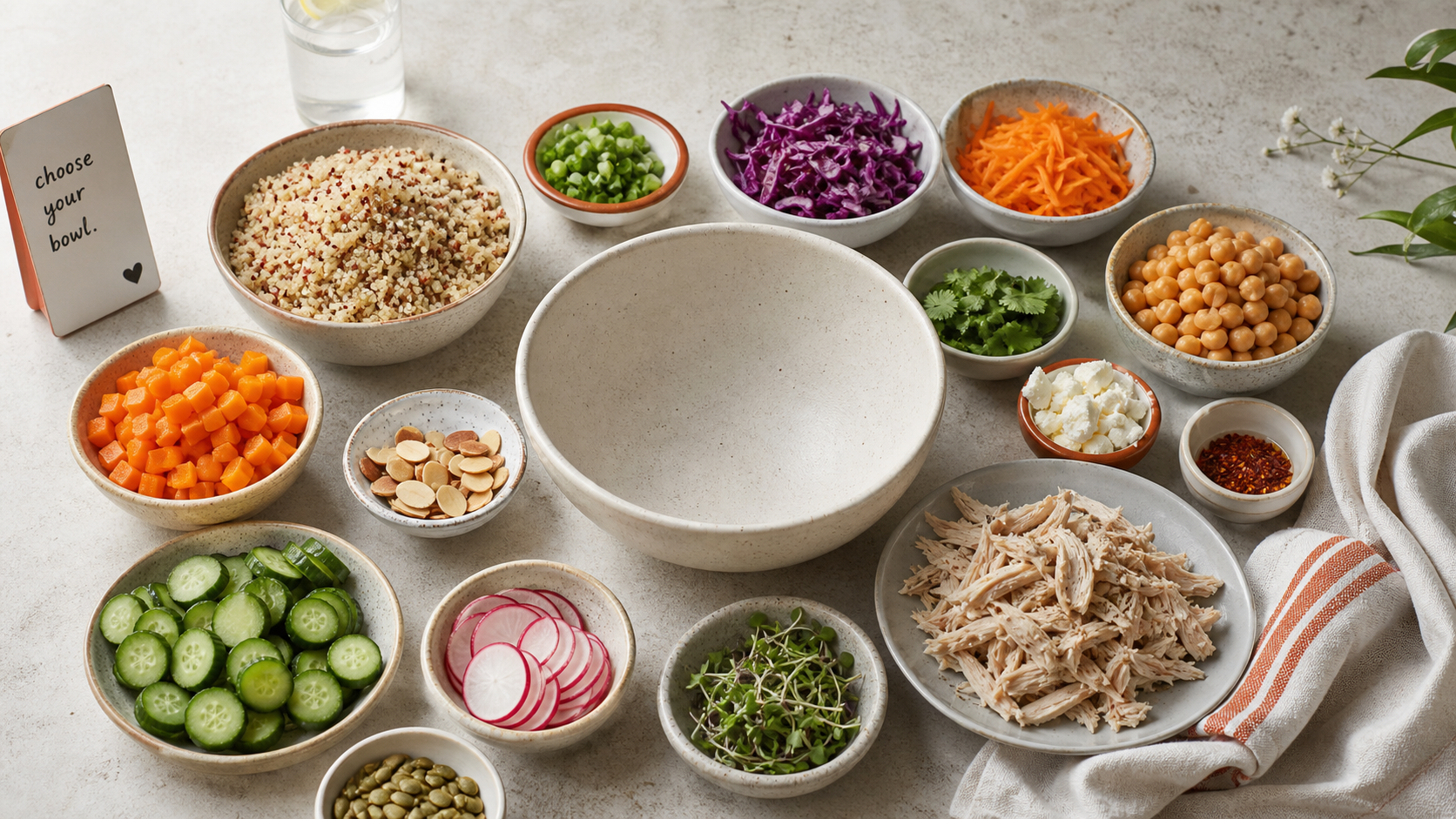
A deconstructed bowl works well because kids can see every part of the meal. That lowers the pressure around mixed textures and lets them choose what goes where. For many families, that alone cuts down on mealtime resistance.
This is also one of the easiest ways to use leftovers without making them feel repetitive. A scoop of rice, a spoonful of beans, a few chopped vegetables, and a simple sauce can become dinner in minutes.
How to build it fast
Base first. Use cooked rice, quinoa, couscous, or even leftover pasta.
Protein next. Add canned beans, shredded chicken, chopped egg, tofu cubes, or cheese.
Color last. Try corn, cucumber, shredded carrots, peas, tomatoes, or avocado.
A real-life version might look like this: plain rice for one child, black beans on the side, cucumber coins, corn, and a little salsa or yogurt dip. Another child might mix everything together. Both plates come from the same ingredients.
This format also fits a broader pattern in child feeding. The World Food Programme reports that school meal coverage reached 466 million children in 2022, up from 388 million in 2020, and many of those meals rely on adaptable formats such as grain bowls, pasta dishes, sandwiches, and soups. At home, the same idea works because assembly is often faster than cooking from scratch.
2. Master the 5-Minute Bagel Pizza
Some quick meal ideas for kids stay popular for a reason. Bagel pizza is one of them. It feels fun, it uses familiar flavors, and it can be made with ingredients many families already keep around.
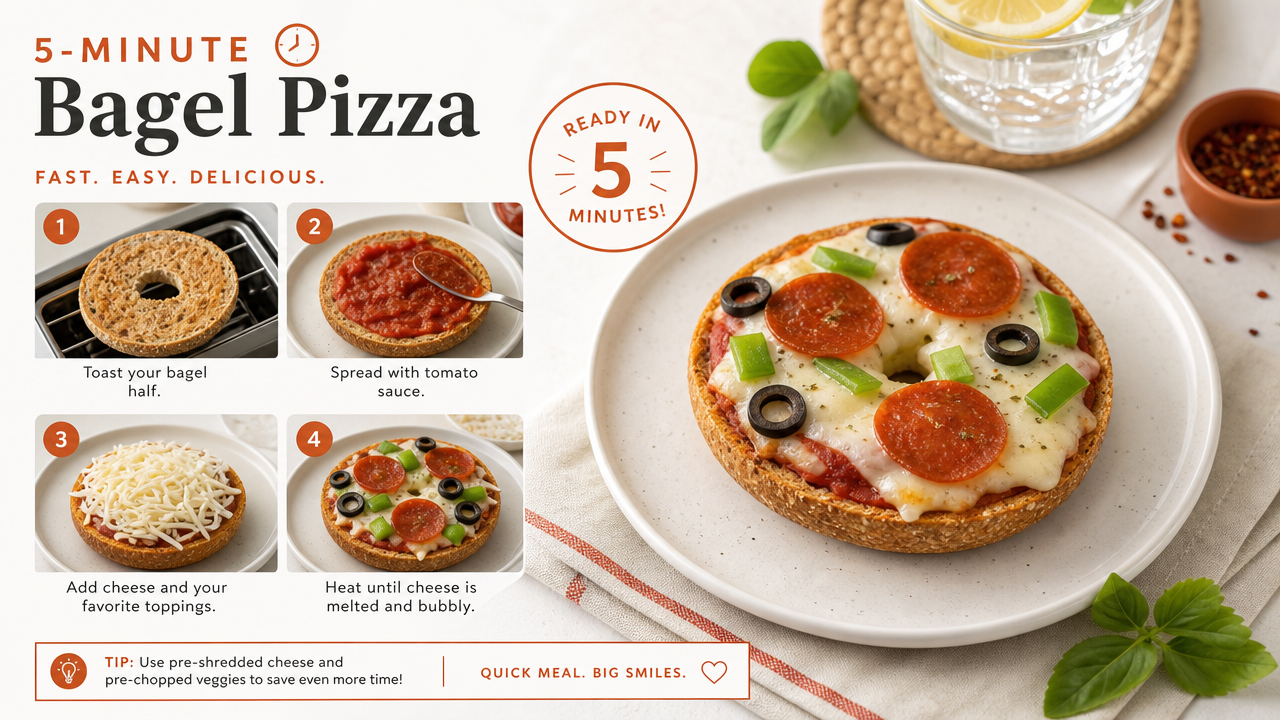
WebMD’s fast-meal examples include a bagel pizza that “takes five minutes”, which makes it a strong option for the nights when dinner needs to happen almost immediately.
Small upgrades that help
Start with a whole-grain bagel half. Spread on tomato sauce, add cheese, then tuck in a few extras if the child accepts them. Finely chopped spinach, tiny bell pepper pieces, or sliced mushrooms can disappear into the cheese without changing the meal too much.
A parent using a toaster oven can assemble two halves while a child sets out fruit on the table. In another home, an air fryer or regular oven may do the job just as well. The point is speed and predictability.
Sauce choice. A simple tomato sauce keeps prep easy.
Protein add-on. Beans, chicken, or turkey slices can make it more filling.
Easy side. Serve with apple slices, cucumber sticks, or frozen peas warmed quickly.
Bagel pizza works best when it stays simple. One main topping is usually enough. Too many toppings can slow the process and make the bagel soggy.
3. Fold Up Quick Quesadillas with a Veggie Boost
Quesadillas often show up on rushed nights because they’re fast and familiar. The problem is that they can turn into a cheese-only meal without much staying power. A small adjustment fixes that.
The easiest upgrade is to treat the tortilla as the carb, then make room for protein and vegetables inside. That keeps the comfort-food appeal while making the meal more balanced.
What goes inside
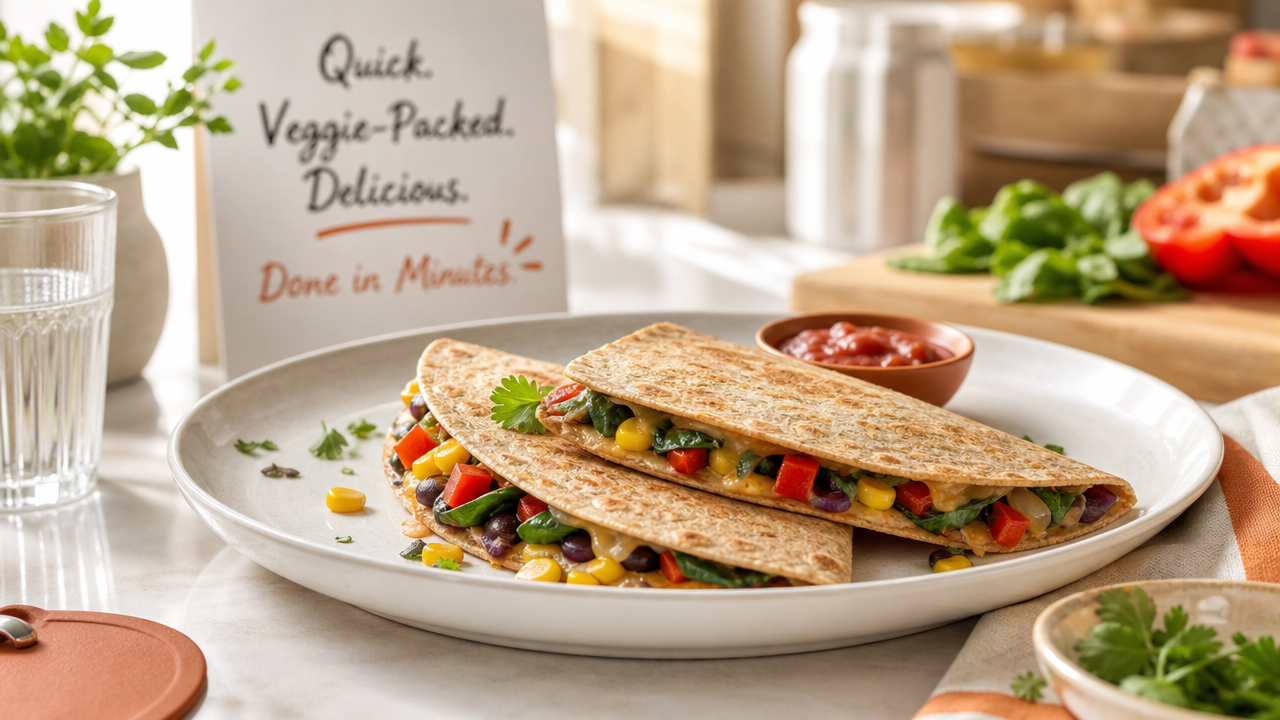
A whole-wheat tortilla gives a sturdy base. Cheese helps hold everything together, but it doesn’t have to do all the work.
Bean layer. Black beans or refried beans add protein and make the quesadilla more satisfying.
Vegetable layer. Corn, chopped spinach, or very small pepper pieces blend in easily.
Dip option. Salsa, plain yogurt, or mashed avocado can add moisture and flavor.
One practical version is half cheese, half beans, with a spoonful of corn and a handful of chopped spinach. Cook it in a skillet until crisp, then cut into triangles. A child who usually pushes vegetables aside may accept them more easily when they’re tucked into a familiar food.
When a fast meal starts with cheese and bread, adding beans or vegetables usually takes less effort than making a separate side dish.
Many quick roundups still lean heavily on grilled cheese, pizza toast, pasta, and similar comfort foods. A simple veggie boost turns a common fallback into a more complete dinner.
4. Assemble a No-Cook Snack Box Dinner
Some evenings don’t leave room for cooking at all. A no-cook snack box dinner is still a real meal when it includes a few food groups and enough substance to fill a child up.
This approach works especially well for hot days, late activity nights, or evenings when a child wants familiar foods in separate sections. It also helps with picky eating because nothing is hidden.
The 2 to 3 group rule
Yummy Toddler Food recommends that kid meals combine 2 to 3 food groups and start with small portions. That’s useful because it gives parents a clear target instead of a vague idea of “healthy.”
A snack box can follow that rule with almost no prep:
-
Cracker combo. Whole-grain crackers, cheese cubes, and apple slices
-
Pita plate. Pita wedges, hummus, and cucumber sticks
-
Toast board. Toast fingers, nut or seed butter, and berries
-
Wrap pieces. Tortilla roll-ups with beans or turkey, plus carrot sticks
A realistic example is a divided container with crackers, cheddar, cucumber rounds, grapes, and hummus. Nothing needs to be cooked. The only job is pulling items from the fridge and pantry.
Why this helps on hard nights
Small portions matter here. A packed plate can overwhelm a tired child, and it can waste food if appetite is low. Starting small makes it easier to offer seconds if the child is still hungry.
This is one of the most useful quick meal ideas for kids because it gives parents permission to stop chasing a traditional dinner shape every night.
5. Build Better Lunches with Make-Ahead Fillers
Packing lunch gets easier when the prep happens in pieces instead of full meals. A batch of cooked pasta, a container of cut vegetables, a simple dip, or a tray of mini muffins can save time all week.
That system matters because lunch packing often falls apart in the morning rush, not because parents lack ideas, but because every part has to be built from scratch. Make-ahead fillers remove that problem.
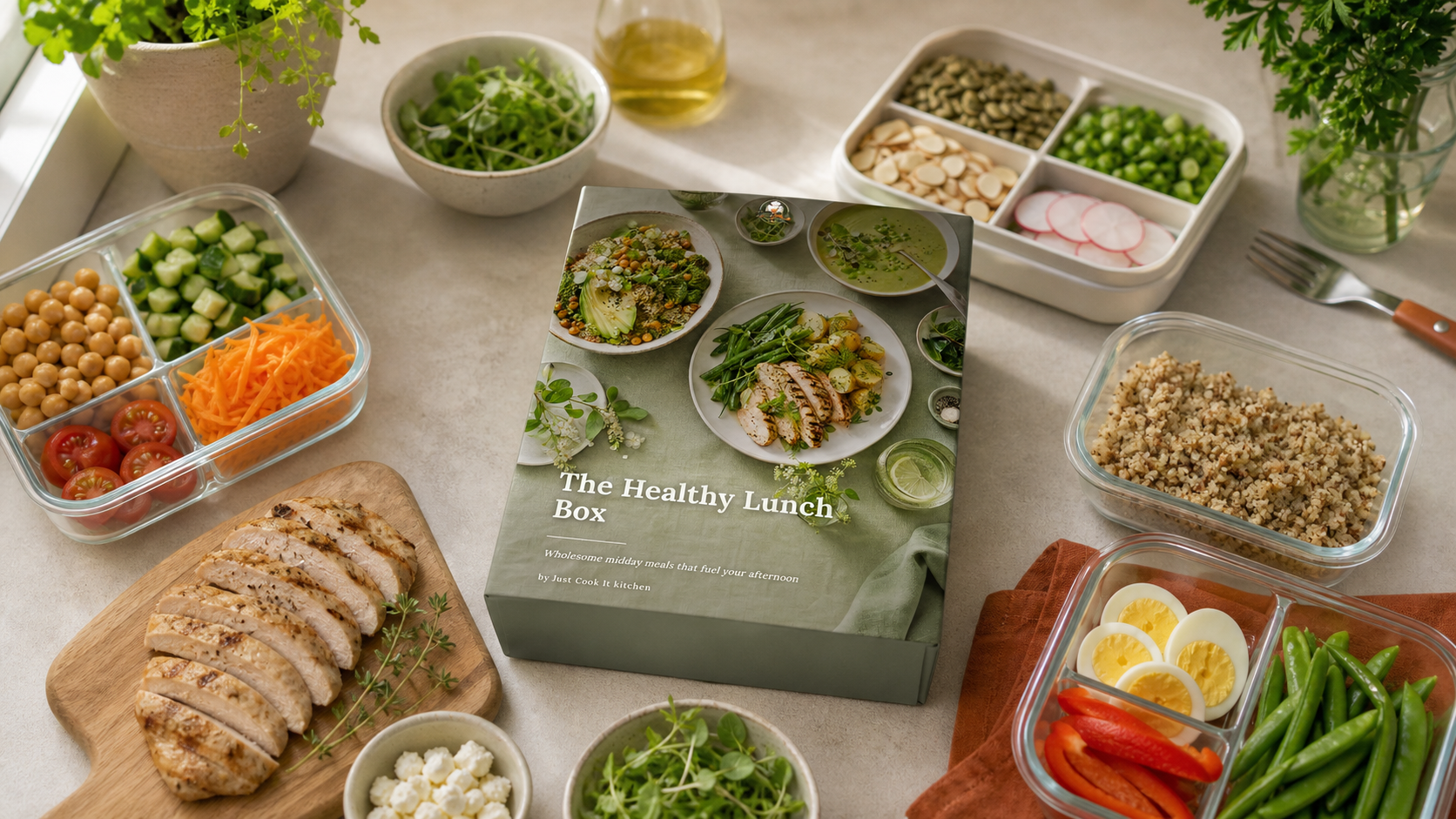
Prep parts, not perfection
A parent might cook pasta on Sunday, wash grapes, slice cucumbers, and portion hummus into small containers. By Tuesday, lunch can come together with almost no thinking.
Grain option. Cooked pasta, rice, or mini wraps
Protein option. Chicken pieces, beans, cheese, egg, or yogurt
Produce option. Fruit slices, carrot sticks, peas, or cherry tomatoes
Extra support. Muffins, dips, and small add-ons help fill gaps
That’s the same practical idea behind healthy lunch box meal planning in The Healthy Lunch Box – 50 Wholesome Midday Meals to Fuel Your Afternoon | Digital Cookbook. It suits families who want a repeatable way to pack balanced midday meals without relying on the same sandwich every day.
The goal isn’t to create a perfect lunch. The goal is to make the next lunch easier than the last one.
6. Enjoy 15-Minute Creamy Tomato Soup and Dippers
Soup is one of the most practical family meals because it’s warm, familiar, and easy to scale. A can of tomato soup can become dinner quickly with a few small additions.
For children, the dippers often matter as much as the soup itself. Toast strips, cheese crackers, or a half sandwich can turn soup from “just a side” into a full meal.
Make it more filling
Start by heating the soup. Stir in a splash of milk or cream if the family likes a softer, creamier texture. Then add the balancing pieces around it.
-
Bread side. Whole-grain toast strips are easy to dip and easy to hold.
-
Protein support. Add cheese on toast, white beans on the side, or a boiled egg.
-
Vegetable bonus. Serve with peas, cucumber slices, or a few carrot sticks.
A realistic weeknight version is tomato soup in one bowl, toast soldiers on a plate, and a few cubes of cheese or beans nearby. That setup works well for younger children who prefer foods separated.
Simple soups also fit what large meal systems already use because they’re affordable, familiar, and easy to adapt. At home, that same simplicity can be a strength instead of a compromise.
7. Elevate Simple Avocado and Egg Toast
Avocado toast can be a real kid meal when it gets the full formula right. The toast covers the carb, avocado adds fat and texture, and egg brings protein.
This one works especially well for breakfast-for-dinner nights because the ingredients are basic and the prep is short. It also gives parents a meal that feels fresh without requiring much chopping or cleanup.
Two easy versions
One child may prefer scrambled egg on the side. Another may like sliced hard-boiled egg on top. Both versions work.
Toast base. Whole-grain bread gives structure and makes the meal more filling.
Avocado layer. Mash with a fork and spread thinly so it’s easier for small eaters.
Egg finish. Use scrambled, fried, or hard-boiled, depending on what’s fastest that day.
A practical plate might include one slice of avocado toast cut into squares, half a hard-boiled egg, and strawberries or cucumber on the side. For a child who dislikes mixed textures, the egg can stay separate.
Serving note: Cutting toast into strips or squares often makes it easier for younger kids to handle than serving a full slice.
This is one of the strongest quick meal ideas for kids because it relies on a few ready-to-use foods and still feels complete.
8. Try One-Pot Pasta Magic
Pasta earns its place in family meal rotation because children usually accept it and adults can adapt it easily. The one-pot version saves even more time because the pasta, sauce, and vegetables cook together.
Cleanup matters on busy nights. A meal that uses one pot instead of three is easier to repeat, and repeatable meals are what most families need.
A simple formula that bends
Start with pasta, enough liquid to cook it, and a sauce base. Then add vegetables that soften quickly, such as peas, spinach, grated zucchini, or chopped tomatoes.
-
Pasta first. Small shapes often cook evenly and are easier for kids to eat.
-
Flavor next. Tomato sauce, broth, garlic, or a little butter can form the base.
-
Veggie add-in. Stir in spinach, peas, or grated vegetables near the end.
-
Protein finish. Add beans, shredded chicken, or cheese after cooking.
A parent might simmer pasta with broth and tomato sauce, then stir in frozen peas and white beans for the last few minutes. Dinner lands in one bowl, and the sink stays manageable. Families building a rotation of easy noodle dinners often use a few simple pasta meal ideas this way, changing only the vegetables or protein from week to week.
This method fits the article’s main idea well. The meal doesn’t need to be new. It needs to be easy to repeat.
9. Whip Up Speedy Savory Pancakes
Savory pancakes are useful when dinner ingredients feel random but a child still wants something familiar. A basic batter can carry cheese, corn, herbs, or finely chopped leftover vegetables without much effort.
They also cook quickly in small rounds, which helps on nights when children are already hungry and patience is low. Because pancakes feel playful, they can make a practical dinner seem more appealing.
What to mix in
Use a plain pancake batter, then keep the add-ins simple. Too many wet ingredients can make the batter heavy.
Cheese choice. A small handful adds flavor and protein.
Vegetable option. Corn, grated zucchini, or chopped spinach work well.
Side pairing. Yogurt dip, fruit, or sliced cucumbers round out the plate.
One realistic dinner is savory pancakes with cheese and corn, served with cucumber sticks and a yogurt dip. Another is a spinach version with apple slices on the side. The batter does the work, and the side items complete the meal.
This is also a good “bridge meal” for children who resist mixed dishes. The vegetables are present, but the final food still looks familiar and easy to eat.
Quick Meal Ideas for Kids
| Item | Prep Time | Main Components | Best For |
|---|---|---|---|
| Deconstructed Power Bowls | 5 minutes | Grain base, protein, colorful toppings | Fast, adaptable meals |
| 5-Minute Bagel Pizzas | 5-8 minutes | Whole-grain bagel, sauce, cheese, toppings | Quick kid meals |
| Quick Quesadillas with a Veggie Boost | 15 minutes | Whole-wheat tortilla, cheese, veggies | Balanced quick meals |
| No-Cook Snack Box Dinner | 0 minutes | Crackers, cheese, fruits/veggies | No-cook, healthy meals |
| Build Your Own Lunch Box Fillers | Varies | Prepped components like muffins, pasta, dips | Easy lunch packing |
| 15-Minute Creamy Tomato Soup & Dippers | 15 minutes | Canned soup, milk/cream, whole-grain dippers | Simple, comforting meals |
| Avocado & Egg Toast Creations | 5 minutes | Whole-grain toast, avocado, egg | Fast, nutrient-dense meals |
| One-Pot Pasta | 30 minutes | Pasta, sauce, veggies | Time-saving family meals |
| Speedy Savory Pancakes | 10 minutes | Pancake batter, cheese, veggies | Creative breakfast-for-dinner |
Making Quick Meals a Reality
Quick meals for kids get easier when parents stop treating every dinner as a separate problem. A simple formula solves most of the stress. Pick a starch or grain, add a protein, then include a vegetable or fruit. That can become a bowl, toast, soup plate, quesadilla, pasta dish, or snack box depending on the night.
That structure matters because speed alone doesn’t always help. Many fast meals drift toward cheese, bread, and little else. The better shortcut is not a more complicated recipe. It’s a more reliable pattern. Once a parent starts seeing meals in parts, the fridge becomes easier to use and leftovers become more useful.
There’s also room for flexibility. Some children want foods separated. Some will eat mixed bowls. Some need the same meal shape several times in one week before it feels safe. None of that means the meal has failed. It means the meal fits real family life.
Good enough counts for a lot here. A tortilla with beans and cheese plus cucumber slices is a solid meal. So is tomato soup with toast and fruit. So is a no-cook plate with crackers, hummus, cheese, and apple slices. The goal is consistency, not perfection.
Parents also don’t need a huge recipe library to make this work. A short list of repeat meals often does more good than a long list of ideas that are too tiring to use. Keeping a few dependable formats on hand can lower stress across the whole week.
For families who want more structure, curated recipe collections can help turn this formula into a routine. Just Cook It offers digital recipe collections built around practical home cooking, and The Healthy Lunch Box is one example of a tool that supports faster, more balanced midday meals. When the system is simple, quick meal ideas for kids stop feeling like emergency fixes and start becoming part of a manageable rhythm.
A small set of repeatable meals can make weeknights and lunch packing much easier. More family-friendly recipe collections are available through Just Cook It.