Weeknight meals ask more from us than a timer suggests. They compete with school pickup, work messages, tired brains, and the fact that cleanup happens at the exact moment everyone wants to sit down. The reason this is such a big deal is simple. Our time for cooking and our time for cleaning both come from the same small slice of the evening.
So a useful quick dinner is not only fast in the pan. It is also easy to start, low on dishes, and built from ingredients that do not create three extra steps before you even begin. The concept resembles reducing drag on a bike. Speed is certainly helpful, but the smoother ride results from removing resistance at every point.
That is the lens for this guide. We are looking at three different ways to lower weeknight dinner friction. One strategy shifts the work to an earlier day. One keeps the whole meal contained so cleanup stays manageable. One leans on speed when you need hot food fast. If your evenings feel chaotic, that difference matters. The best approach is often the one that solves the part of dinner that keeps tripping you up.
Table of Contents
1. Cook Once and Eat All Month with Freezer Meals
By 5:45 on a rough Wednesday, the most helpful version of dinner is often the one your past self already handled.
That is the core appeal of freezer meals. They do not just shorten cooking time. They remove several points of friction at once. The deciding, the chopping, the pan management, and a good share of the cleanup all happen earlier, on a day when you have more bandwidth. Instead of building a meal from zero in the middle of weeknight chaos, you are pulling one finished piece of work across the finish line.
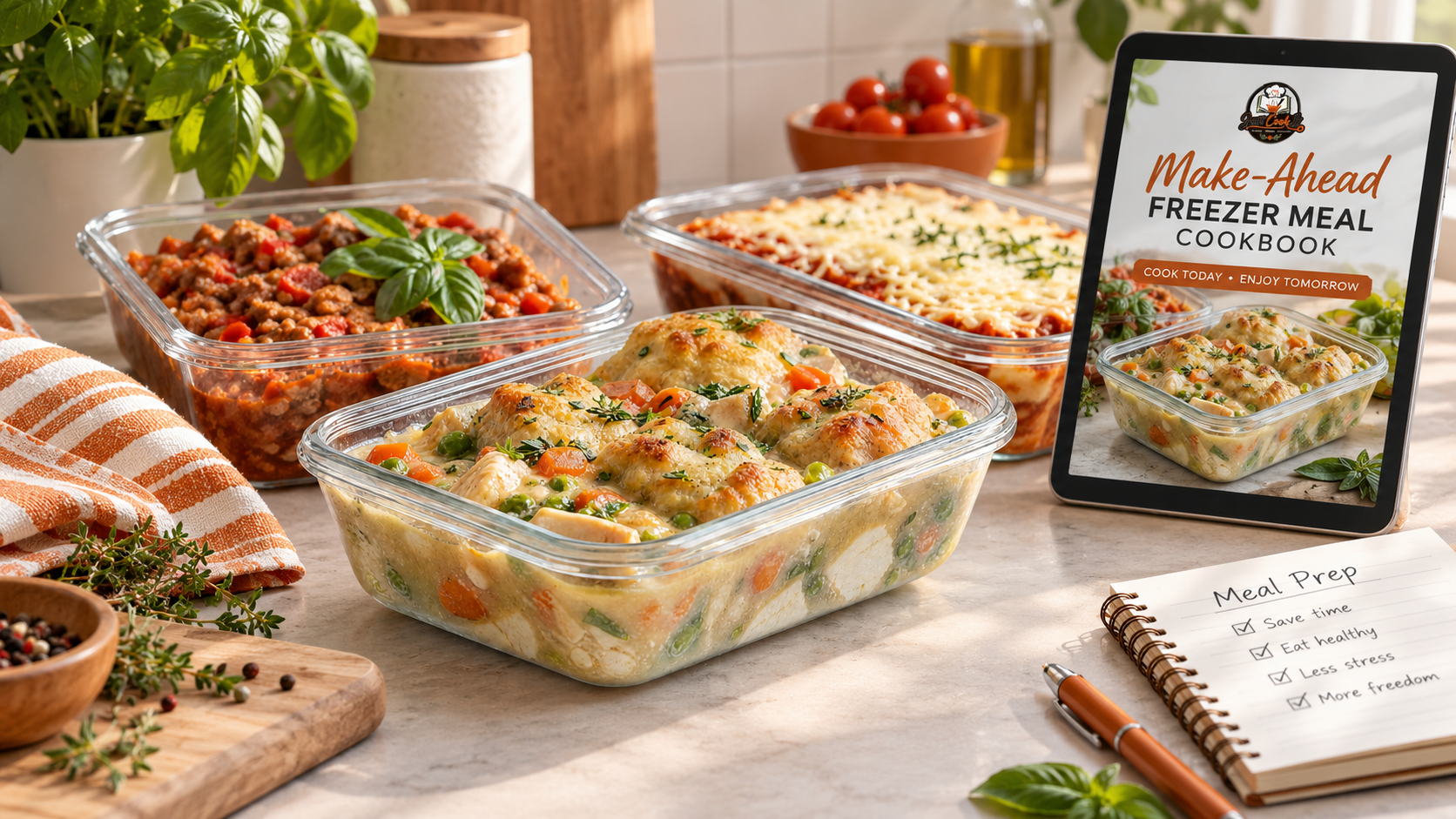
The Make-Ahead Freezer Meal Cookbook | Digital PDF is built around that idea. It focuses on meals designed specifically for freezing, so the goal is not just storing extra food. It is storing dinners that still work after thawing, reheating, and serving on a busy night.

Freezer to Table: 75 Make-Ahead Freezer Meal Recipes | Digital Cookbook PDF
View CookbookWhy this reduces the most friction
Freezer cooking offers a benefit similar to laying out tomorrow's clothes before bed. The task itself is small, but it removes a chain of tiny decisions at the exact moment you are least able to make them well.
With freezer meals, dinner has already been chosen, shopped for, cooked, and portioned. On nights when the schedule slips, that relief is as valuable as the meal. You are not asking, "What can we make fast?" You are asking, "Which prepared meal do we want?"
This strategy also solves a problem that "30-minute recipes" often miss. A meal can cook quickly and still be annoying to start. Freezer meals cut the startup cost. That is why they can feel faster than recipes with a short official cook time.
A freezer meal is not only food in storage. It is a future weeknight with fewer moving parts.
A baked pasta, chili, soup, or casserole works well here because those foods tolerate freezing and reheating without much fuss. They are sturdy. They do not depend on a crisp texture or split-second timing. That makes them useful for households where people walk in at different times and dinner needs to bend a little without falling apart.
Who tends to love this method
Freezer meals usually click with a few specific kinds of households.
-
People who get tired of deciding. If the hardest part of dinner is mental, not technical, a stocked freezer lowers that burden fast.
-
Schedules with uneven timing. Shift work, practices, late meetings, and staggered arrivals are easier to manage when dinner can be reheated in portions.
-
Anyone trying to interrupt the takeout reflex. A ready meal in the freezer gives you a practical alternative before hunger turns into a spending decision.
The tradeoff is upfront effort. You need a prep session, containers, labels, and enough freezer space to make the system usable. But that trade can be worth it because the work is concentrated. We do more once so we can do much less on the nights that are already crowded.
Where this method can get stuck
Freezer cooking is not magic, and it helps to be honest about that. A tiny freezer can make the whole plan feel like a game of container Tetris. Some people also dislike committing to meals ahead of time, especially if they like choosing dinner based on mood or whatever produce looks good that day.
That is why starting small works better than trying to become a "freezer meal person" overnight. Two or three dependable options are enough to change your week. A small rotation often beats an ambitious prep marathon that leaves you with food you are tired of by week two. If you want a practical starting point, a freezer meal recipe collection is most useful when it helps you repeat a few reliable wins.
What to watch on reheating night
The goal is low friction, not careless reheating. Food quality and food safety both improve when the system is simple and consistent.
A few habits help:
-
Label every container clearly. Write the name and date so you are not guessing later.
-
Freeze in the sizes you need. Family portions are helpful, but smaller containers are often better for mixed schedules.
-
Choose freezer-friendly meals on purpose. Soups, stews, pasta bakes, meatballs, and casseroles usually reheat more smoothly than delicate foods.
-
Reheat thoroughly and cool leftovers promptly. Large-batch meals need a little attention so they stay safe and still taste good.
For households whose hardest weeknights leave almost no energy for prep, this is often the strategy with the lowest total friction. The cooking happened earlier. The decisions happened earlier. Even the cleanup happened earlier. And on a chaotic night, that is what makes dinner feel quick.
2. The One-Pan Method for Minimal Cleanup
You know the kind of night. Dinner itself sounds manageable, but the thought of a skillet on the stove, a pot in the sink, a cutting board on the counter, and two sticky prep bowls makes takeout feel strangely logical.
That is why one-pan cooking earns its place in quick weeknight dinners. The primary benefit isn't only speed. It is lower friction from start to finish. Fewer dishes to wash. Fewer moving parts to track. Fewer chances for dinner to sprawl across the kitchen right when your energy is running out.
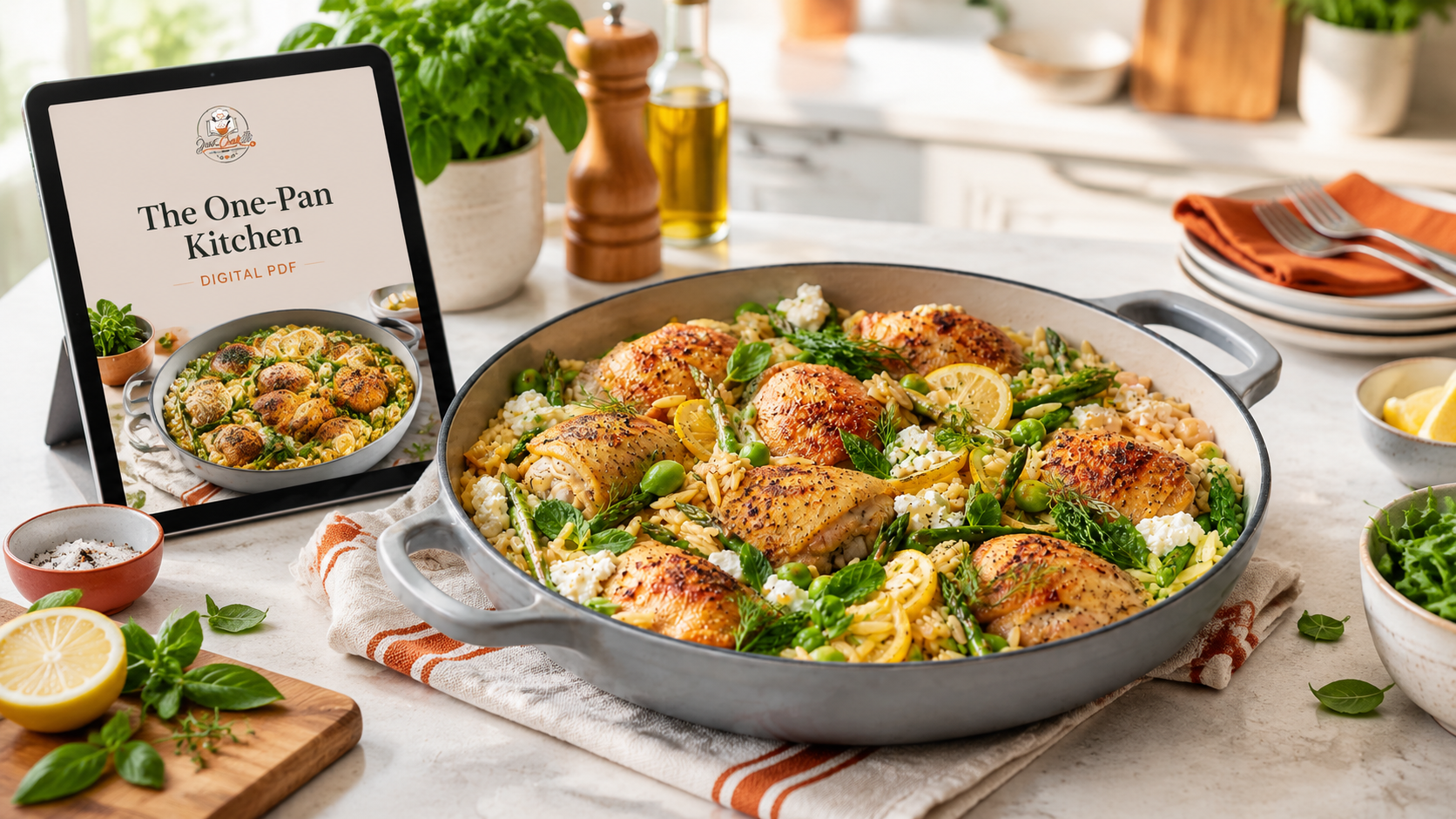
The One-Pan Kitchen | Digital PDF focuses on that low-mess approach. Its recipes use sheet-pan and one-pot formats so ingredients cook in a single vessel instead of turning dinner into a chain reaction of extra pans and bowls.

The One-Pan Kitchen | Digital Cookbook (PDF)
View CookbookFresh cooking, with less kitchen drag
This method sits in a useful middle lane. You are still cooking fresh that night, which matters to a lot of households. But you are removing the parts that often make weeknight cooking feel heavier than it should.
The reason this works is simple. Cook time is only one part of the job. Setup, sequencing, serving, and cleanup all count too. A meal can be fairly quick on paper and still feel exhausting if it uses half the kitchen.
The Posha weeknight cooking playbook points to a practical target for busy evenings: short active prep and a total dinner window that stays realistic for real households. One-pan meals fit that rhythm well because they keep the work concentrated instead of scattered across the stove and sink.
A sheet-pan chicken dinner shows the idea clearly. Put seasoned chicken, sturdy vegetables, and oil on one tray, then roast them together. You are not managing a skillet for the protein, a saucepan for rice, and a second pan for vegetables. You are building one system instead of three separate tasks.
What actually makes one-pan dinners easier
One-pan cooking is less about magic and more about design. It's similar to packing one bag for a short trip. If everything has a place and a purpose, the whole process feels lighter.
A few details do most of the work:
-
Cut size changes cooking speed. Smaller pieces help dense vegetables catch up to faster-cooking ingredients.
-
Ingredient order keeps the pan balanced. Long-cooking items start first. Quick items join later.
-
Shared seasoning reduces extra steps. One sauce, one spice mix, or one finishing element can carry the whole meal.
-
Cleanup stays contained. One pot, one skillet, or one tray puts a boundary around the mess.
Cleanup math matters. A 35-minute dinner with one pan often feels easier than a 20-minute dinner that leaves a skillet, saucepan, colander, cutting board, and mixing bowls behind.
That is the friction piece many recipe roundups skip. People are not only looking for meals that cook fast. They are looking for meals that do not create a second job after dinner.
Where this strategy fits best
One-pan meals work especially well for people who do want to cook, but do not want dinner to become a project. They also help in small kitchens, where limited counter space can turn even a simple recipe into clutter.
They are useful for staggered evenings too. If one person eats at 6:15 and another at 7:00, a skillet meal or one-pot pasta usually handles that better than a dinner made of separate components. One pan can stay warm briefly and serve in stages without much fuss.
There are limits. Some meals really do need separate cooking zones for the best texture. And if your top priority is pure speed, the next strategy may fit better. But for many weeknights, fresh food plus minimal cleanup is the better trade.
If you want examples built around that idea, this sheet-pan and one-pot dinner collection is useful because it organizes meals around lower cleanup, not just shorter cook times.
One habit that prevents frustration
The easiest one-pan dinners are strategic about ingredients. Pair foods that cook at a similar pace, or choose recipes that add ingredients in stages. That one choice prevents the classic problem where the chicken is ready, the broccoli is too soft, and the potatoes still need ten more minutes.
The goal is not perfection. It is reducing friction. When the pan, the timing, and the cleanup all work together, dinner feels easier in the way that matters on a weeknight.
3. Get Dinner on the Table in Under 30 Minutes
At 6:07, this is what weeknight chaos often looks like. Someone is hungry now, the fridge has a few usable ingredients, and your patience for a long recipe is already gone. On nights like that, the primary goal is not just a short cook time. It is lowering friction from start to finish so dinner happens before the evening fully unravels.
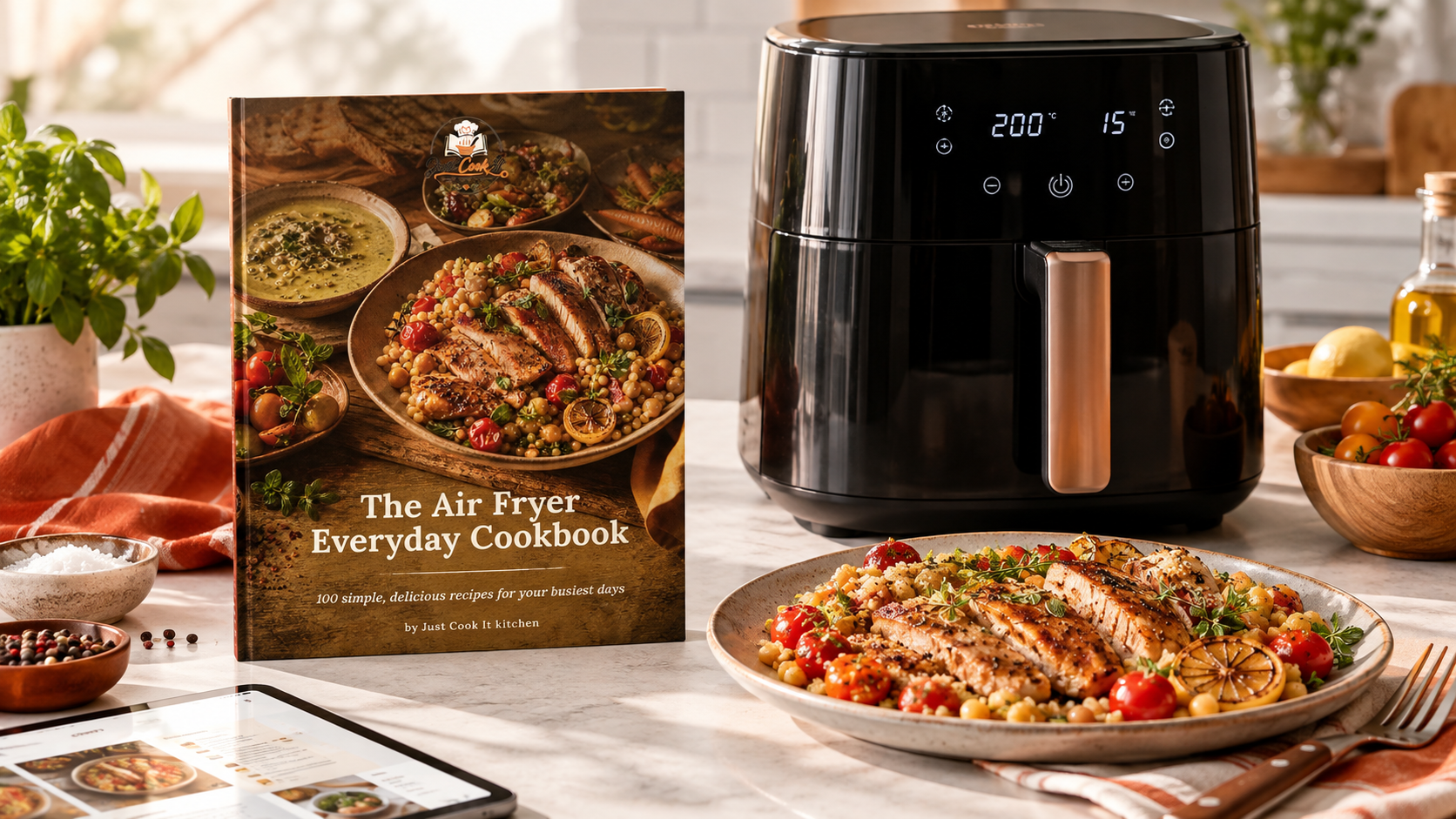
The Air Fryer Everyday Cookbook | Digital PDF fits that kind of evening. It centers on meals that move quickly because the air fryer uses concentrated high heat in a small space, so you are not waiting on a full oven to preheat or juggling several pans at once.

The Air Fryer Everyday Cookbook | Digital PDF
View CookbookWhy this strategy works
Speed matters on weekdays, but speed alone is not enough. A dinner can technically cook in 20 minutes and still feel exhausting if it needs a long ingredient list, constant attention, and a pile of dishes afterward.
That is why the air fryer helps with a specific kind of weeknight problem. It shortens the distance between "what can we make?" and "let's eat," much like taking a side street instead of driving across town. The route is shorter, there are fewer stops, and you get to the same destination with less mental drag.
As noted earlier, weekday cooking habits shift across the week. Energy tends to be higher on some nights and lower on others. The air fryer is useful on those lower-energy evenings because it reduces waiting, keeps the process visible, and usually limits cleanup to one main cooking piece.
Where the air fryer shines
This approach works especially well for one or two people, smaller kitchens, and nights when crisp texture matters. It is strong at cooking foods that benefit from dry heat and quick circulation, such as salmon fillets, chicken pieces, broccoli, green beans, or chopped potatoes.
A simple way to think about it is this. The air fryer is not a replacement for every dinner style. It is a tool for meals with a short runway. If freezer meals remove the cooking step and one-pan dinners reduce dishwashing, air fryer meals reduce waiting.
A few patterns tend to work reliably:
-
Fast-cooking proteins. Fish, shrimp, chicken tenders, and cut-up sausage cook quickly because smaller pieces heat through faster.
-
Vegetables that brown well. Broccoli, Brussels sprouts, green beans, and potatoes benefit from the hot circulating air.
-
Meals with built-in portion control. Small batches cook more evenly because air needs room to move around the food.
If that is the kind of friction you are trying to cut, this air fryer meal guide is aligned with the strategy.
What trips people up
The biggest mistake is treating the air fryer like a magic shortcut. It is fast, but it still follows basic cooking logic. If the basket is overcrowded, food steams instead of browns. If pieces are wildly different in size, some finish early while others lag behind.
Much "quick dinner" advice often proves problematic. The recipe may have a short timer, but the meal still creates friction because the ingredients are mismatched or the method asks too much of you at once. A better weeknight setup uses ingredients that cook on a similar timeline, or it staggers them in a way that feels manageable.
Saucy dishes can also be awkward here. If you are making something brothy, heavily layered, or meant to simmer together, a skillet or pot will usually make more sense.
Recent reporting on popular dinner trends in 2025 highlighted meals with strong, familiar flavors, including noodles, lemon-pepper chicken, shrimp, and salmon bowls. The useful takeaway is not that we should chase trends. It is that fast dinners work better when the flavors already fit what your household likes and the ingredients overlap with what you buy anyway.
A 25-minute dinner only feels quick if the shopping, cooking, and cleanup all stay simple.
A few limits to respect
Air fryers are not ideal for every household. Large families can run into batch-cooking frustration fast, which can erase the time savings. Very wet batters, stews, and casseroles usually belong somewhere else.
They also reward a little realism. You may need to shake the basket, flip food, or cook in rounds. That is still often easier than heating a full oven and washing multiple pans, but it helps to expect a fast system, not a perfect one.
For the right night, though, this strategy solves a clear problem. It gets a hot meal on the table quickly while cutting some of the hidden friction that makes weeknight cooking feel harder than the clock suggests.
Quick Weeknight Dinner Solutions
| Product | Best For | What It Does Well | When to Choose Another |
|---|---|---|---|
| Make-Ahead Freezer Meal Cookbook | Meticulous planners, busy households | Eliminates weeknight cooking time, great taste and texture | Limited freezer space, dislike meal planning |
| The One-Pan Kitchen | Cooks who dread cleanup | Reduces washing up, delivers flavorful dishes | Need faster meals or no weeknight cooking |
| The Air Fryer Everyday Cookbook | Impatient cooks, small households | Offers speed, crispy results, easy cleanup | Cooking for large families, not suited for saucy dishes |
How to Choose Your Weeknight Dinner Strategy
The useful question isn't which method sounds most impressive. It's which kind of friction causes the most trouble on actual weeknights.
Some households don't mind cooking, but they hate the dishes. Others don't mind cleanup, but they hit a wall at decision time. Others require food fast because the evening window is short. Quick weeknight dinners work better when the strategy matches the underlying problem.
A simple framework helps:
-
If your biggest pain point is having zero time or energy after work, start with the "Cook Once" freezer meal strategy. It shifts the labor away from the hardest nights and turns dinner into reheating and serving.
-
If you enjoy cooking but hate the messy cleanup, the "One-Pan Method" is your ideal solution. It keeps dinner fresh while containing the mess to one main cooking vessel.
-
If your primary need is getting a meal on the table as fast as possible, the "Under 30 Minutes" air fryer strategy is for you. It shortens the path from ingredients to dinner and usually keeps cleanup light.
It is also fine to mix methods. Many households do best with a freezer meal or two for emergencies, a few one-pan dinners for ordinary nights, and an air fryer option for the evenings when hunger arrives before energy does.
That mix matters because weeknights are not all the same. Monday may allow a little prep. Wednesday may need a one-pan reset. Friday may call for the fastest possible route to a hot meal. The best quick dinner is the one that fits the shape of the night, not the one with the flashiest promise in the headline.
When dinner gets easier, it usually isn't because someone suddenly became more organized or more ambitious. It is because the meal asked less of the cook. Less cleanup. Less waiting. Less decision-making. Less friction.
The Fast Weeknight Dinners collection is a useful next stop for comparing which low-friction approach fits best, whether the need is freezer-ready meals, one-pan cleanup, or faster same-night cooking.