Ever stare into a full pantry and feel like there’s nothing to make?
That feeling usually isn’t about having too little food. It’s about having too many disconnected options, plus too many recipes that ask for one special sauce, one fresh herb, and one tool that never leaves the back cabinet. Simple ingredient recipes solve that problem, but not only because they use fewer items. The key benefit is that they lower friction. They make dinner easier to start, easier to adjust, and easier to finish.
That matters more than ever in a cooking culture built around convenience and flexibility. A major recipe collection has curated 92 recipes with five ingredients or fewer, excluding water, salt, pepper, and oil. The same source also cites a survey of 1,500 British cooks in which only 7 percent said it was necessary to follow a recipe exactly. The message is clear. Home cooks want guidance, not rigid rules.
The secret is to stop treating simple cooking as a numbers contest. Five ingredients can still be annoying if none of them are swappable. On the other hand, a short list plus a smart method can carry a whole week of meals. The ideas below focus on that real-life version of simple ingredient recipes. They’re flexible, balanced, and built for kitchens where substitutions happen. You’ve got this.
Table of Contents
1. Master the Five-Ingredient Pasta Sauce
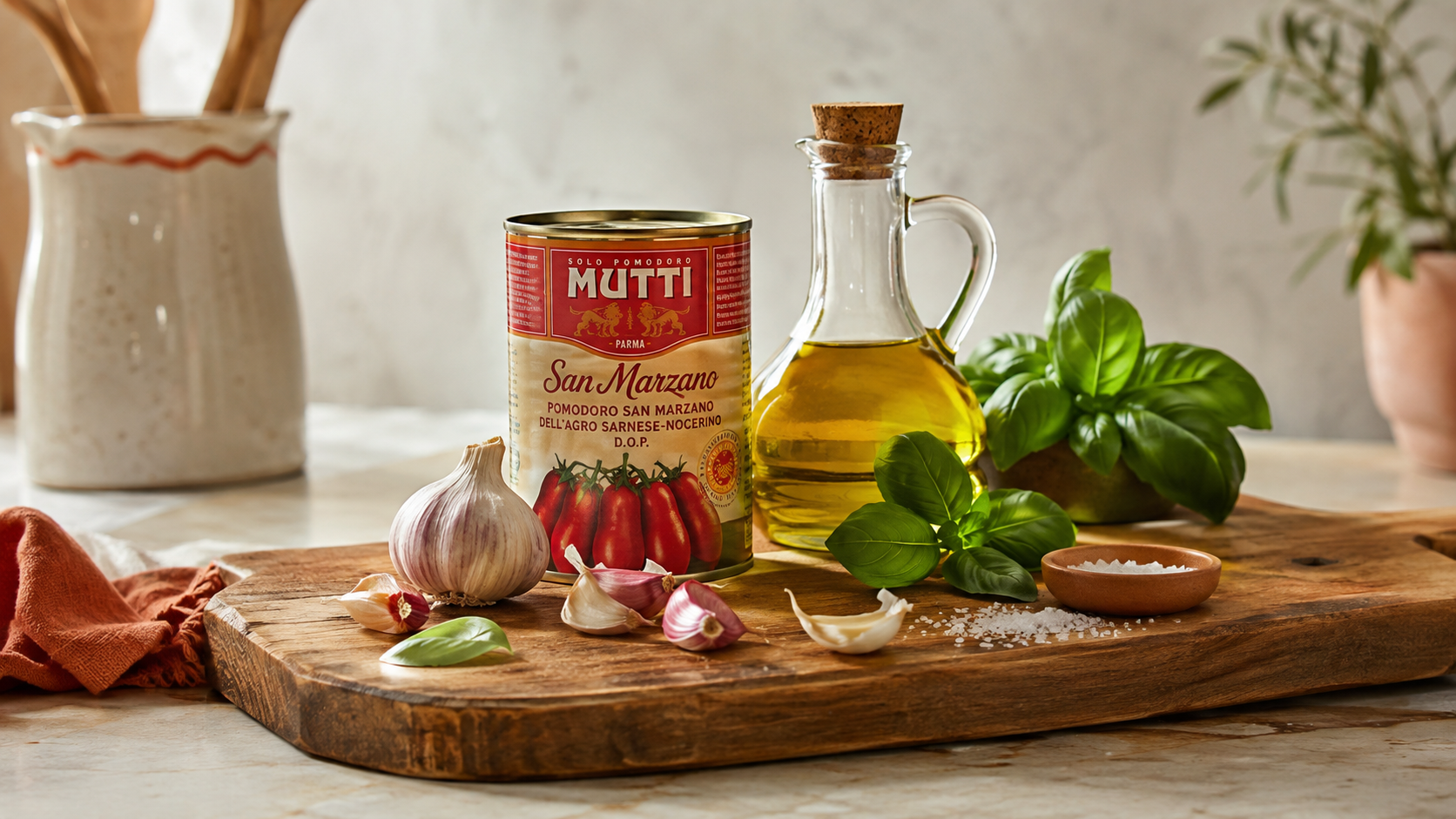
A good tomato sauce doesn’t need a long ingredient list. It needs a clear structure. Canned tomatoes, garlic, olive oil, basil, and salt are enough to build a sauce that tastes complete.
Start with the order, not just the ingredients
First, warm the olive oil and cook sliced or chopped garlic gently. This step matters because garlic releases flavor into the oil before the tomatoes go in. If the garlic browns too fast, the whole sauce can turn bitter, so low to medium heat is the safer move.
Next come the tomatoes and salt. Let the sauce simmer until it thickens slightly and the sharp canned flavor softens. Basil goes in near the end so it stays fresh and fragrant.
A weeknight example makes this easier to picture. A cook gets home with pasta, one can of tomatoes, and half a head of garlic. That’s still dinner, not a compromise.
Smart swaps that keep the sauce working
Simple ingredient recipes work best when they bend a little.
-
Fresh herb missing. Dried basil or dried oregano can stand in. Use a smaller amount and add it earlier so it has time to soften.
-
Tomatoes taste sharp. A pinch of sugar can round out acidity if needed.
-
Heat sounds good. Chili flakes can add warmth without changing the basic formula.
The goal isn’t perfection. The goal is a sauce that can be repeated without stress.
This kind of recipe has deep roots, too. Historical recipe research across 33,416 recipes found that cookbook ingredient counts stayed relatively stable over time, even as some later newspaper recipes became more complex, which helps show that brevity has long been a normal part of home cooking tradition in many contexts, as described in this study on recipe complexity from 1910 to 1995.
2. One-Pan Dinners That Save Your Weeknights
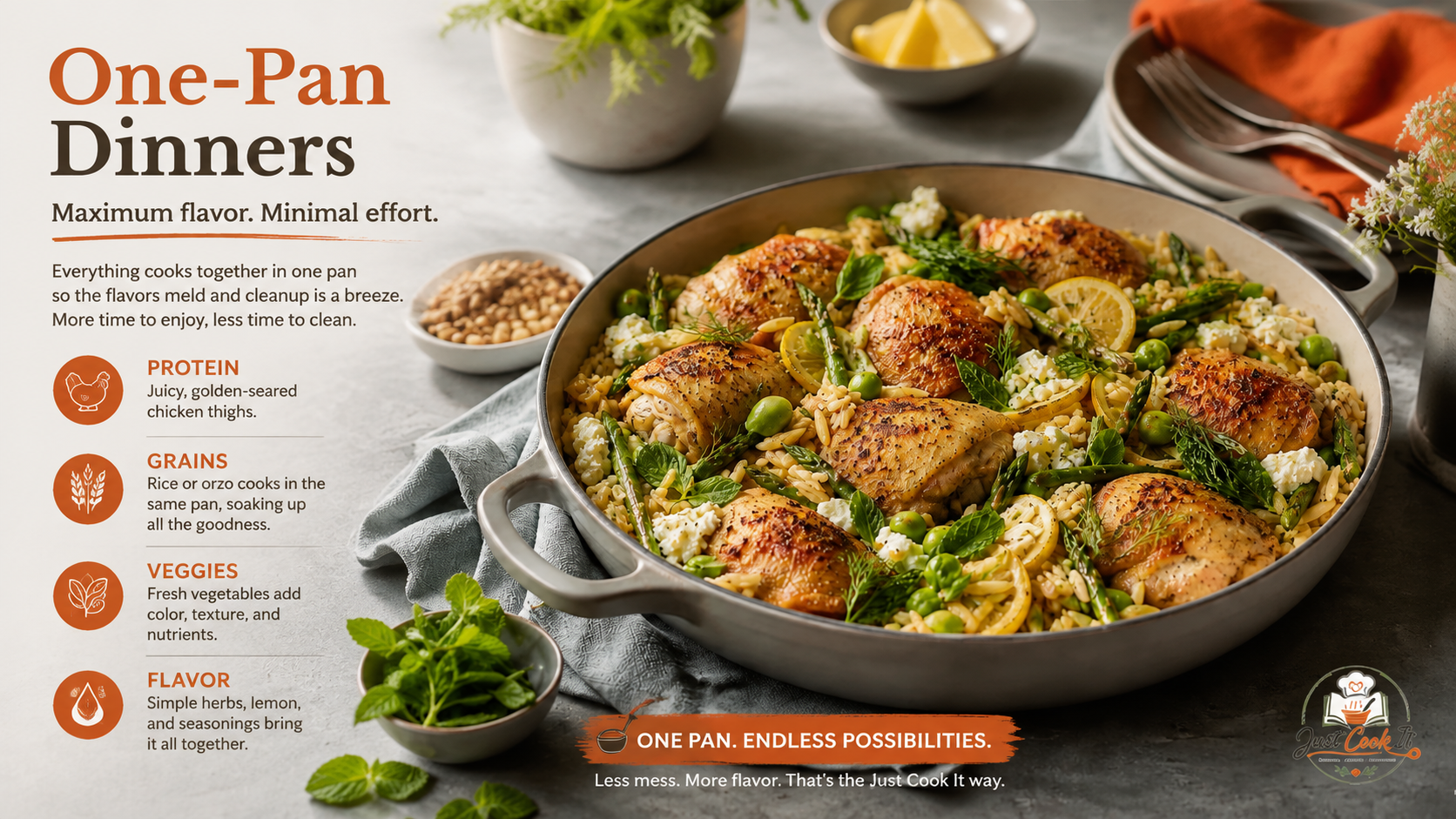
One-pan cooking is less about a specific recipe and more about a reliable system. Put a protein and vegetables on the same pan, season them well, and let the oven do the heavy lifting.
The sheet-pan method that prevents uneven cooking
The most common problem is timing. Potatoes need longer than bell peppers. Chicken thighs cook differently from tofu cubes. The fix is simple. Cut ingredients with cooking time in mind and place them strategically.
-
Dense vegetables first. Potatoes, carrots, and winter squash should be cut smaller or started earlier.
-
Quick-cooking pieces later. Broccoli florets, sliced peppers, and zucchini can go on midway if needed.
-
Protein placement matters. Chicken thighs and sausage can sit in the hottest zone. Tofu benefits from space so it roasts instead of steams.
A practical example helps. A busy household might roast chicken thighs with chopped potatoes and broccoli. The potatoes go on first for a short head start. Then the chicken and broccoli join the pan. One tray, one dinner, fewer dishes.
Where a curated collection helps
Tested combinations readily save mental energy. The One-Pan Kitchen | Digital Cookbook (PDF) gathers this style of cooking into one place, and a focused one-pan cookbook collection can help cooks stop guessing which ingredients belong together on the same tray.
That’s especially relevant because digital recipe use is already mainstream. One market report says 53% of U.S. adults used a recipe app or website at least monthly, and North America accounted for more than 35.7% of global recipe app revenue. In plain terms, cooks are already looking for fast, mobile-friendly dinner ideas. One-pan meals fit that habit well.
3. Beyond Avocado. Creative Toasts for Any Meal
Toast doesn’t need to be a backup plan. With the right topping, it becomes breakfast, lunch, or a light dinner that feels intentional.
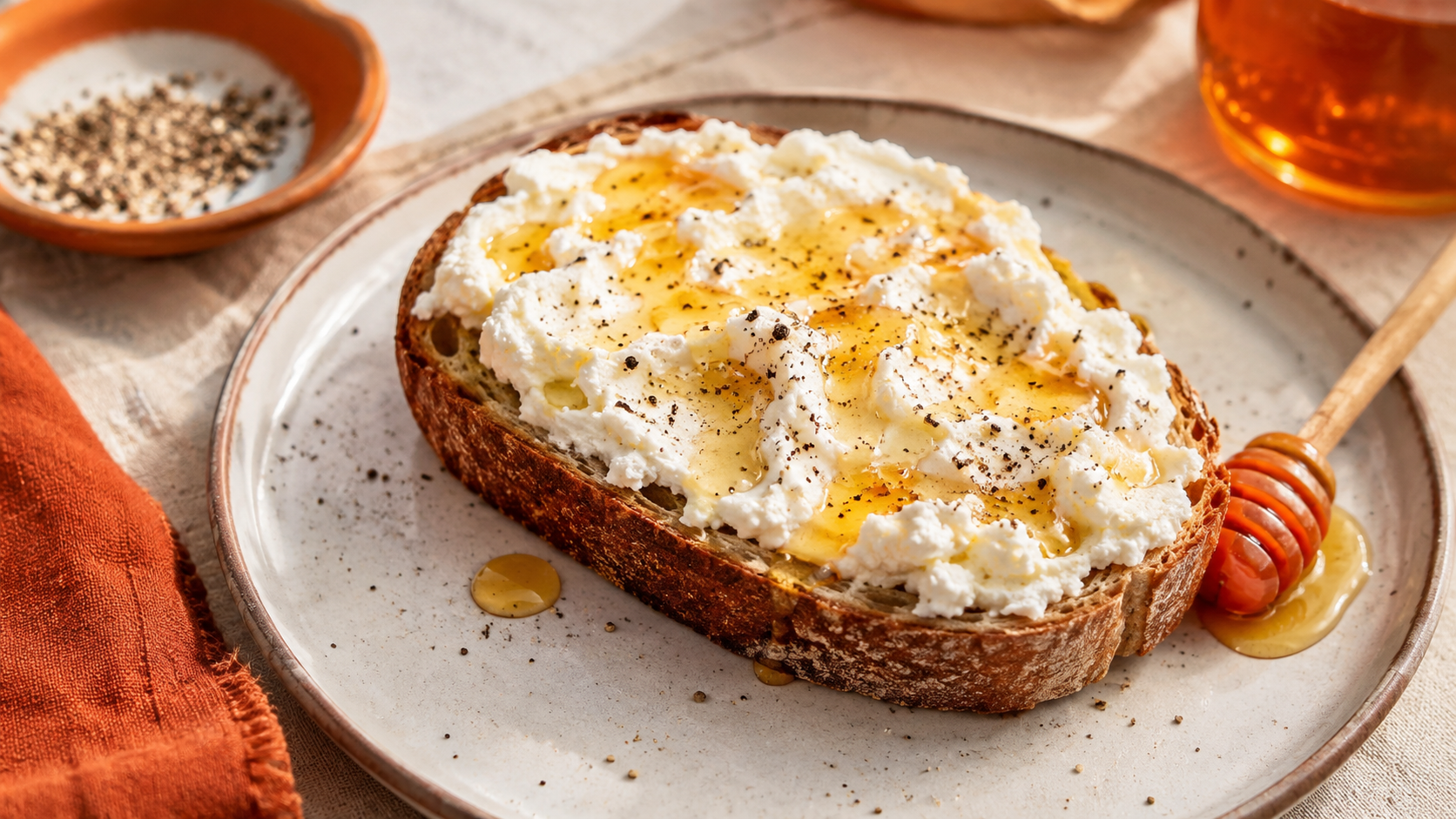
Three combinations that prove the point
A plain slice of bread becomes much more useful when toppings are built around contrast. Creamy plus crisp. Rich plus bright. Soft plus salty.
-
Ricotta route. Ricotta, honey, and black pepper make a sweet-savory toast that works for breakfast or an afternoon snack.
-
Bean option. Mashed white beans with lemon juice and rosemary create a filling lunch with pantry ingredients.
-
Tomato version. Sliced tomato, olive oil, and flaky salt turn good bread into a simple summer meal.
The secret is to stop waiting for a formal recipe. A person with sturdy bread, one spread, and one finishing ingredient already has a plan.
Make toast feel like a meal
Many simple ingredient recipes often fall short. They’re easy, but not always satisfying for long. Adding protein or healthy fat helps. Ricotta, beans, nut butter, eggs, hummus, sardines, or cheese can all do that job.
Balance check. If toast is the whole meal, it usually needs more than a vegetable topping alone.
That matters because easy recipes are often framed as healthy when they’re really just convenient. Recent trend coverage discussed in a review of gaps in simple recipe content points out that many popular easy recipes still lean toward sweets or comfort foods. A more useful standard is whether the meal is satisfying enough to carry someone through the next few hours.
4. Get Crispy, Delicious Results with Your Air Fryer
Some tools earn their counter space by making simple food more appealing. The air fryer is one of them. It handles small batches well, cooks quickly, and gives leftovers a second life.
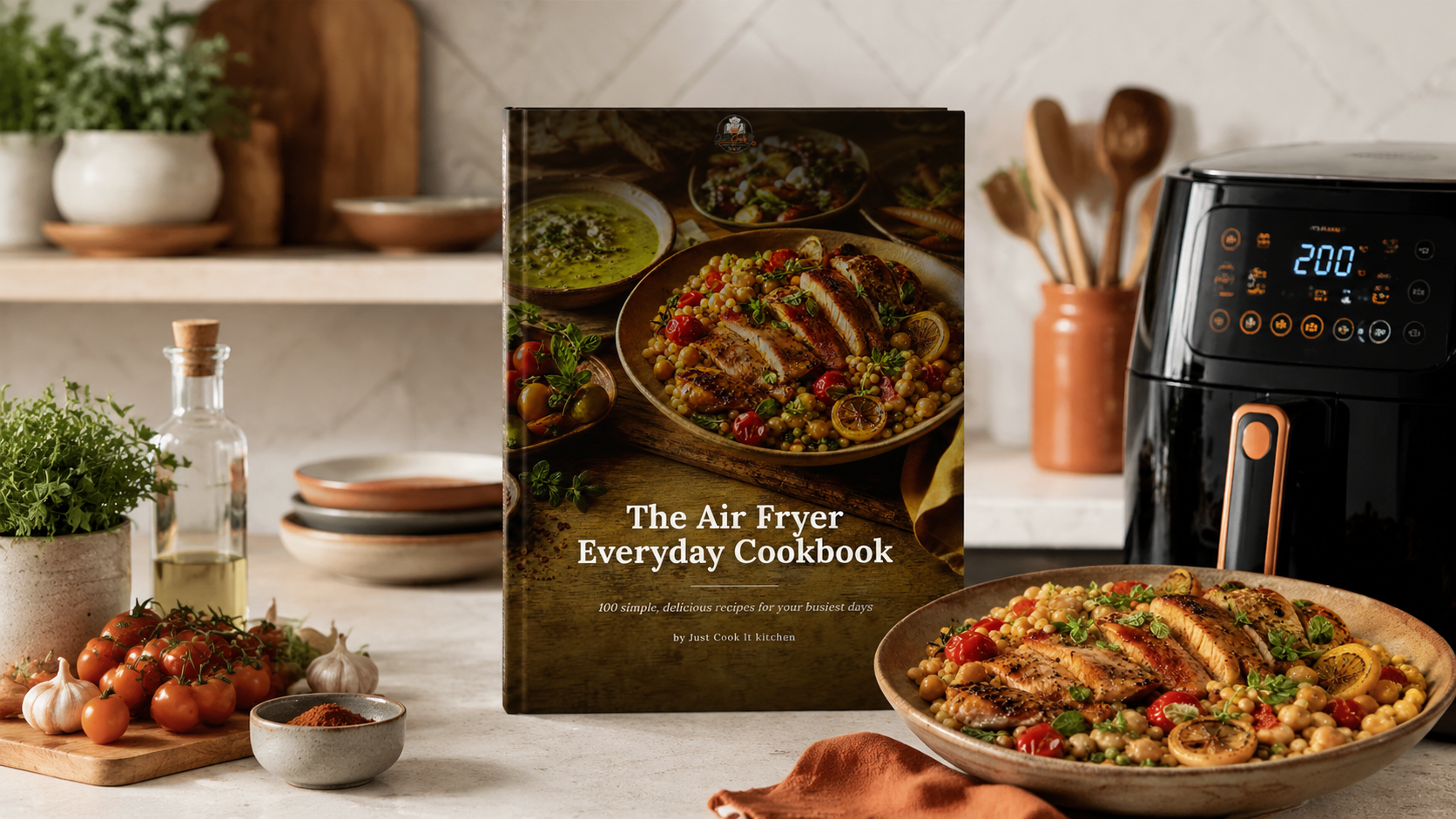
Three easy wins for everyday cooking
An air fryer shines with ingredients that benefit from crisp edges and short cook times.
-
Leftover potatoes. Toss cooked potatoes with a little oil and seasoning, then air fry until the outside turns crisp.
-
Broccoli florets. A quick coat of oil and salt can produce tender stems and browned tips.
-
Chickpeas for crunch. Drained chickpeas become a crisp topping for soups, bowls, or salads.
A common real-life use is the late-evening side dish. Dinner is nearly done, but the vegetables still need attention. Broccoli in the air fryer solves that in a low-stress way.
More than a reheating machine
The Air Fryer Everyday Cookbook | Digital Cookbook (PDF) is built around this kind of practical cooking, and a focused set of air fryer meal ideas helps show how the appliance can move from snack duty into regular meal planning.
That fits a larger shift in digital cooking habits. The global recipe app market is projected to grow from USD 1.41 billion in 2025 to USD 2.63 billion in 2030 at a 13.1% CAGR, according to this global recipe app market report. For home cooks, that trend points to a simple reality. People want recipe formats that support quick decisions and everyday convenience.
5. The Ultimate Clean-Out-the-Fridge Frittata
A frittata is one of the most forgiving meals in the kitchen. It turns leftovers into something that feels planned, even when it started as a rescue mission.
The base formula that unlocks endless versions
The core is simple. Eggs, a splash of milk or cream, a little cheese, and whatever cooked vegetables or bits of protein need using up. Wilted spinach, roasted peppers, mushrooms, cooked potatoes, bacon pieces, or herbs can all fit.
A basic home pattern works well here. Cook the vegetables first if they’re watery or still raw. Pour in beaten eggs, let the edges set on the stovetop, then finish in the oven until the center is just firm.
Think of it this way, the frittata is less a strict recipe and more a framework. Once the base is understood, the fridge starts to look full of options instead of scraps.
Use what’s there, not what a recipe demands
Many cooks get stuck because they assume they need the exact ingredient list. They don’t. This is one of the clearest examples of flexible cooking.
-
Cheese can vary. Cheddar, feta, goat cheese, or a small handful of parmesan all work.
-
Greens can rotate. Spinach, kale, herbs, or chopped scallions each bring a different flavor.
-
Protein can be optional. Leftover sausage is useful, but beans or no extra protein at all can still make a good frittata.
This flexibility matches how many people already cook. The survey cited by Taste of Home found that only 7 percent of British cooks said a recipe had to be followed exactly. A frittata rewards that mindset because it turns improvisation into dinner instead of a mistake.
6. Create Hearty Soups with Just a Few Staples
Soup often sounds more complicated than it is. In practice, many simple ingredient recipes for soup follow the same pattern every time.
A repeatable soup formula
Start with onion and garlic in a pot. Add the main ingredient. Then add liquid and simmer until everything tastes connected. That’s the structure behind tomato soup, lentil soup, carrot soup, and plenty of others.
Two examples show how flexible this is. For tomato soup, sauté onion and garlic, add canned tomatoes and broth or water, simmer, then blend if a smooth texture is wanted. For lentil soup, use onion and garlic again, add lentils and liquid, and let time do the work.
A cook with a bag of lentils and one onion may not feel stocked for dinner. Soup proves otherwise.
Broth, water, and flavor building
Broth adds depth, but water can still work when the other ingredients are solid. Bouillon is often the bridge between the two, and understanding how chicken bouillon works in everyday cooking can make simple soups easier to season without keeping cartons of stock on hand.
Soup gets better when salt is adjusted at the end, not dumped in all at once at the start.
Another overlooked point is equipment flexibility. Some cooks have an immersion blender. Others have only a pot and spoon. Both can still make soup. A discussion of gaps in simple recipe content at Naturi Medica’s article on easy recipes and substitutions highlights a real need for recipes that explain what to do when the exact tool or ingredient is missing. Soup is a good place to practice that kind of adaptable cooking.
7. A Simple Vinaigrette to Transform Your Salads
Bottled dressing is convenient, but a basic vinaigrette is faster than many people expect. Once the ratio is learned, salads and roasted vegetables become much easier to finish well.
The 3 to 1 rule
Use roughly three parts oil to one part vinegar. Add salt and pepper. Shake or whisk. That’s the base.
A small spoonful of mustard helps the dressing hold together and adds flavor. A little honey or maple syrup can soften sharp vinegar if needed. Balsamic gives sweetness, red wine vinegar gives bite, and apple cider vinegar lands somewhere in between.
Why this skill matters more than one recipe
This isn’t only about salad. A vinaigrette can wake up canned beans, grain bowls, steamed vegetables, or sliced tomatoes. It gives simple food contrast and brightness.
-
Mustard first. It helps emulsify and gives body.
-
Sweetness second. A small amount can balance acidity without making the dressing sugary.
-
Seasoning last. Taste after whisking, then adjust salt or vinegar.
A real-world example is the half-used container of greens in the fridge. Without dressing, it often gets ignored. With oil, vinegar, mustard, and salt, it becomes lunch in minutes. The secret is that this is a kitchen skill, not a special occasion recipe.
8. The Formula for a Perfect Pantry Bowl
The pantry bowl is one of the most practical meal formats around because it doesn’t ask for a perfect shopping trip. It asks for a few categories.
Build the bowl in four parts
Start with a base, then add protein, vegetables, and a finishing flavor.
-
Base choice. Rice, quinoa, couscous, noodles, or even leftover roasted potatoes can anchor the bowl.
-
Protein piece. Canned beans, leftover chicken, tofu, tuna, or a fried egg make it filling.
-
Vegetable layer. Raw cucumber, roasted broccoli, shredded carrots, corn, spinach, or sautéed peppers all fit.
-
Finisher move. Lemon juice, soy sauce, hot sauce, herbs, or vinaigrette tie everything together.
A weekday example makes the formula clear. Leftover rice, black beans, frozen corn, and a fried egg become dinner with a squeeze of lime and a spoonful of salsa. Nothing fancy happened. The structure did the work.
Simplicity that still feels balanced
Simple ingredient recipes become especially useful. Instead of chasing novelty, they help cooks combine what they already have into meals that feel complete.
The strongest bowls usually include at least one item from each of these groups: something starchy, something protein-rich, something fresh or colorful, and something sharp or savory to finish. That balance keeps the meal from tasting flat.
For beginners, bowls also reduce pressure. There’s no single correct version. A pantry bowl can be warm or cold, vegetarian or not, built from leftovers or from scratch. You’ve got this.
Quick and Easy Recipe Ideas
| Item | Main Idea | Key Ingredients | Best For |
|---|---|---|---|
| Five-Ingredient Pasta Sauce | Classic tomato sauce with minimal ingredients | Canned tomatoes, garlic, olive oil, basil, salt | Foundational recipe for home cooks |
| One-Pan Dinners | Minimal effort and cleanup | Protein (chicken, sausage, tofu), vegetables | Efficient cooking with easy cleanup |
| Creative Toasts | Elevate bread with simple toppings | Bread, ricotta, honey, beans, tomatoes | Quick breakfast, lunch, or snack |
| Air Fryer Staples | Transform ingredients with minimal oil | Potatoes, broccoli, chickpeas | Quick, convenient meals |
| Fridge-Clearing Frittata | Use leftovers creatively | Eggs, milk, cheese, assorted leftovers | Reducing food waste |
| Simple Pantry Soups | Flexible, nutritious soup formula | Aromatics, primary ingredient, broth | Budget-friendly meals |
| Homemade Vinaigrette | Basic dressing skill | Oil, vinegar, mustard, salt, pepper | Elevating simple salads |
| Pantry Bowl Formula | Assembly method for balanced meals | Grain, protein, vegetable, finisher | Flexible, simple-ingredient cooking |
Cooking Simply Starts Now
What makes a simple recipe useful on a busy night?
Think of it this way. A short ingredient list is only the starting point. What really helps is a recipe that can bend a little without falling apart. If you are out of one herb, using a different pan, or working with the last few things in the fridge, dinner should still come together. That is where simple cooking becomes powerful.
The secret is to focus on a few repeatable building blocks instead of chasing perfect ingredients. A basic sauce teaches how flavor develops. A soup teaches how to adjust texture and seasoning. A grain bowl teaches balance. These are not just recipes. They are kitchen skills you can reuse in dozens of ways.
That matters on real weeknights. Cooking gets easier when you know how to swap greens, stretch broth with water, or turn a small amount of protein into a satisfying meal with beans, grains, or eggs. Simple recipes work best when they support real-life kitchens, not ideal ones.
Balanced meals are part of that picture too. Fast is helpful, but fast and filling is better. A good simple meal usually has a few jobs to do at once. It should taste good, keep you full, and leave room for flexibility. Once you start looking for that mix, choosing what to cook feels much less stressful.
Just Cook It focuses on that practical side of home cooking. Its digital cookbook collections are organized around everyday methods and approachable meal ideas, with an emphasis on recipes that are easy to repeat and adapt.
Start with one idea you can make again without overthinking it. Then make it your own. Change the vegetable. Swap the seasoning. Use what you have. Confidence grows through repetition, not perfection. You've got this.