The best wheat bran substitute depends on the result you want, because wheat bran contributes more than rough texture. It's a concentrated fiber ingredient used for bulk, water binding, satiety, and the characteristic bran taste. One major review reports about 53% dietary fiber on a dry-matter basis, with more than 90% of that fiber insoluble, so a replacement must be judged by how it hydrates and handles in the recipe, not only by its fiber label (International Journal of Food Science & Technology review). Start with the ratios below, hydrate gelling ingredients deliberately, and don't assume every substitute works cup for cup.
Table of Contents
- 1. Oat Bran
- 2. Ground Flaxseed
- 3. Psyllium Husk
- 4. Ground Chia Seeds
- 5. Almond Flour
- 6. Coconut Flour
- 7. Ground Flaxseed and Psyllium Husk Blend
- 7 Wheat Bran Substitutes Compared
- Match the Substitute to the Recipe
1. Oat Bran
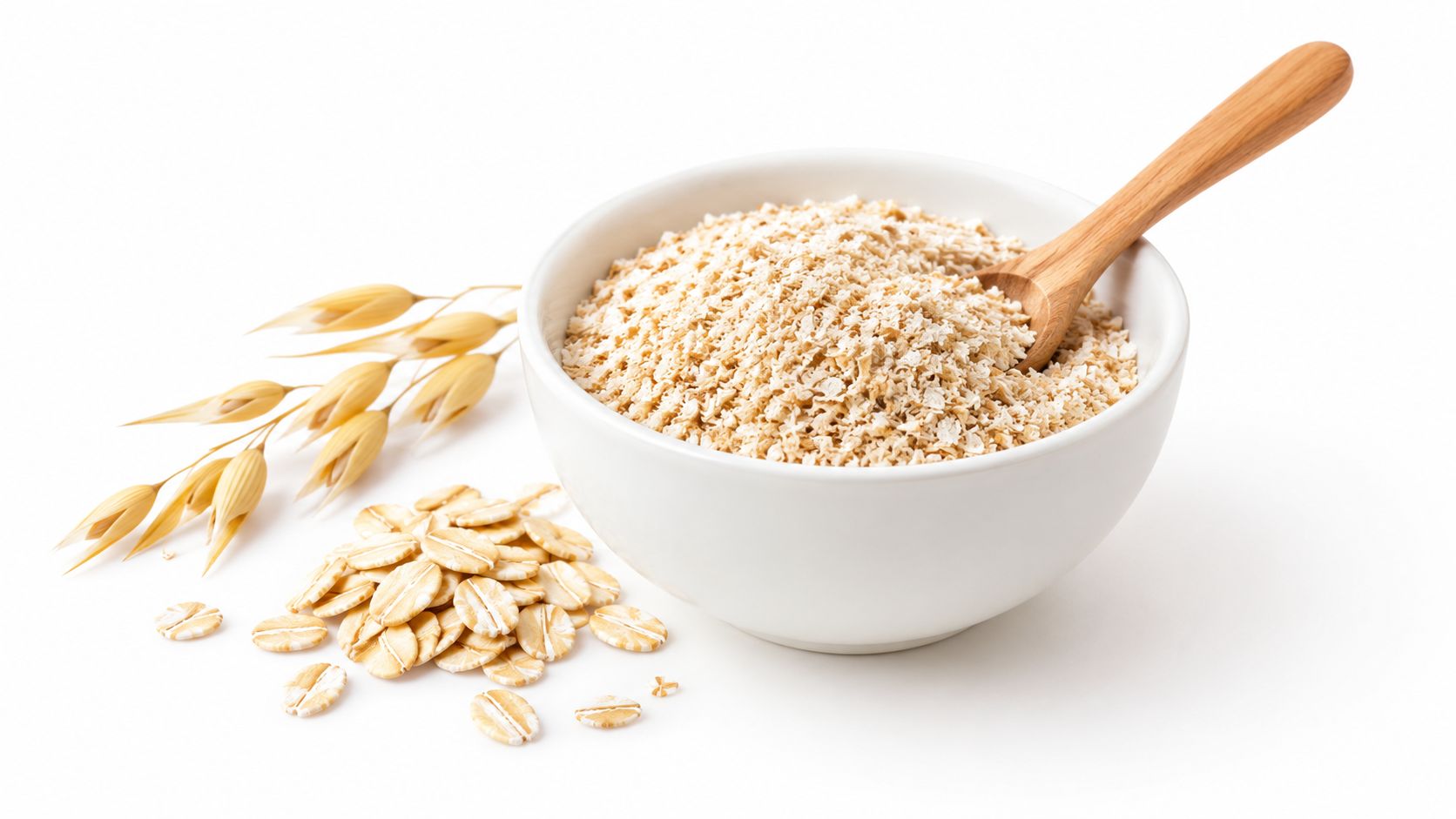
Oat bran is usually the easiest everyday swap when you want a mild flavor, soft texture, and a familiar breakfast-baking result. It works well in muffins, quick breads, porridge, overnight oats, and smoothie bowls. Compared with wheat bran, it generally gives baked goods a more tender impression and a less assertive bran flavor, but it doesn't reproduce wheat bran's coarse, insoluble texture exactly.
For a recipe that calls for 1 cup wheat bran, begin with 3/4 cup oat bran. That smaller starting quantity helps prevent an overly dense or pasty batter, especially in muffins. Stir the oat bran into the recipe's milk or water and let it stand for 5 to 10 minutes before combining it with the remaining ingredients. This short soak gives the bran time to hydrate gradually and makes the final mixture easier to judge.
Best uses for oat bran
- Muffins and quick breads: Expect a softer crumb, particularly when paired with whole wheat flour.
- Breakfast bowls: Use it in porridge, overnight oats, yogurt, or smoothies when texture matters more than loaf structure.
- Savory coatings: Toasted oat bran can replace a crumb coating in some dishes, but it won't deliver the same crisp, coarse bite as traditional bran.
Lightly toasting oat bran brings out a gentle nutty note. For a family-friendly baking project, the oat-based muffin ideas in Lunchbox Heroes: School Lunch Recipes for Kids show how oats can fit naturally into portable baked goods. You can also use oat bran in an adapted cookie such as this oatmeal butterscotch cookie recipe, where its mild character won't compete with warm, caramel-like flavors.
Practical rule: Oat bran is the closest starting point for ordinary muffins, but judge the batter after soaking rather than adding extra liquid automatically.
2. Ground Flaxseed
Ground flaxseed is a better choice when the recipe needs binding, moisture, and a slightly nutty flavor rather than a direct replacement for wheat bran's coarse fiber. Once hydrated, flax forms a mucilaginous gel that helps hold together vegan cookies, breakfast bars, pancakes, muffins, and softer quick breads. It can make the crumb denser and more moist, so it's useful in recipes that tend to crumble but less suitable when you're chasing a light, open loaf.
For a flax “egg,” combine 1 tablespoon ground flaxseed with 3 tablespoons water, then let it stand for 5 minutes. That ratio is particularly useful in vegan baking, but you can also hydrate a smaller amount of flax in the recipe's existing liquid when using it as a bran-style ingredient. Begin conservatively, especially in a batter that already includes banana, applesauce, yogurt, or another moisture-rich ingredient.
How to use it without a gummy crumb
Grind whole flaxseed shortly before mixing if possible. Freshly ground flax has a more pronounced nutty aroma and blends more smoothly into oatmeal, yogurt, smoothies, and cookie dough. Store unused ground flaxseed in the freezer because its natural oils can deteriorate more quickly after grinding.
- For binding: Hydrate it first, then mix the gel into wet ingredients.
- For muffins: Use a small amount alongside flour or oat bran rather than replacing all the bran.
- For flavor: Pair it with chocolate, cinnamon, walnuts, or ripe banana.
- For breakfast: Add it to oatmeal, yogurt parfaits, or a blended breakfast bowl.
The clean eating breakfast recipes collection is a natural place to use this approach, especially in recipes built around oats, fruit, nuts, and seeds. Flaxseed isn't the best wheat bran substitute for a crisp, bran-forward cereal, but it's one of the most practical options when the finished food needs to hold together.
3. Psyllium Husk
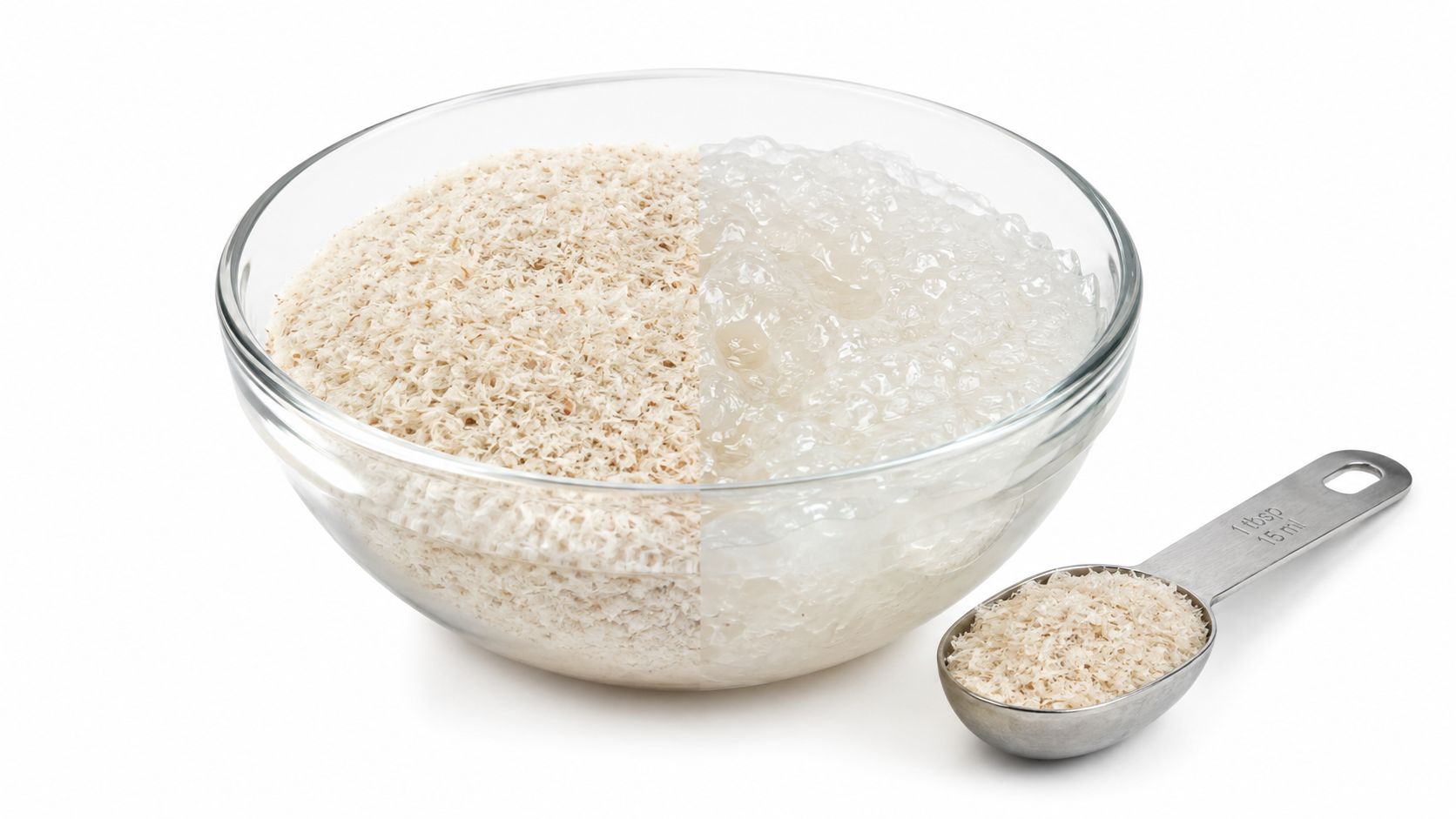
Psyllium husk solves a different problem. It's valuable when you need soluble fiber, water management, and structure, particularly in gluten-free bread and quick breads. Wheat bran is dominated by insoluble fiber, while psyllium behaves more like a hydrocolloid, forming a gel that can hold water and give dough greater cohesion. That difference makes psyllium powerful, but it also means it's one of the easiest substitutes to overuse.
Start with 1 to 2 tablespoons psyllium husk per cup of flour in a baking formula that needs additional structure. If you're replacing wheat bran specifically, don't pour it straight into the dry ingredients and hope the recipe behaves normally. Mix it with water first, allow it to bloom for 2 to 3 minutes, then incorporate the gel.
Where psyllium works best
- Gluten-free sandwich bread: It helps replace some of the cohesion normally supplied by gluten.
- Gluten-free muffins: It can reduce crumbling when used sparingly.
- Smoothies: A small amount adds fiber without the coarse mouthfeel of bran.
- Soups and sauces: It thickens quickly, so add it gradually and whisk thoroughly.
Psyllium is flavorless and nearly odorless, which makes it useful when you don't want the replacement to change the taste. It won't recreate wheat bran's toasted cereal character, and it can make a bake rubbery or gummy if the formula lacks enough flour, starch, or baking structure.
Psyllium should be treated as a functional ingredient, not as ordinary flour. Hydrate it first, mix thoroughly, and give the batter a moment to reveal its final thickness before baking.
4. Ground Chia Seeds
Ground chia seeds fit recipes where gel formation and moisture retention matter more than a bran-like bite. They're especially useful in chia puddings, overnight oats, smoothies, yogurt bowls, no-bake energy balls, and soft breakfast bars. Their flavor is usually mild, so they're easier to combine with fruit, citrus, cocoa, coconut, or warm spices than a strongly flavored flour.
For chia pudding, use 1/4 cup chia seeds per 1 cup liquid, then let the mixture sit overnight. That formula is designed for a spoonable gel, not a wheat bran muffin, so don't transfer it directly into a baked recipe. In baking, start with a modest amount of ground chia and add liquid only as needed. Chia thickens while it rests, which means a batter that looks loose immediately after mixing may become substantially firmer before it reaches the oven.
Chia for breakfast and no-bake recipes
A breakfast bowl is where chia behaves most predictably. Stir it into milk or plant milk, fold in fruit, and allow the mixture to hydrate fully. For a smoothie, blend the seeds with the liquid rather than sprinkling them over the finished drink. Blending creates a smoother texture and distributes the gel-forming fiber more evenly.
- Puddings: Use whole or ground chia, depending on whether you want visible seeds.
- Overnight oats: Add a spoonful to thicken the mixture and improve body.
- Energy balls: Combine it with dates, nut butter, oats, or coconut, then rest the mixture before shaping.
- Baking: Toast lightly if you want less immediate gel formation and a more pronounced seed flavor.
Chia isn't a convincing one-to-one wheat bran substitute in yeast bread. It can add moisture and binding, but excessive use may produce a heavy interior. Choose it for a gelled breakfast or no-bake snack first, and use it in baked goods as a supporting ingredient rather than the entire fiber replacement.
5. Almond Flour
Almond flour is not a close nutritional or functional duplicate of wheat bran, but it's useful when the goal is grain-free, low-carbohydrate, tender baking. Finely ground blanched almonds bring fat, protein, and a naturally sweet, nutty flavor. They create moist cookies, cakes, cheesecake crusts, and snack bars, but they don't provide wheat bran's coarse insoluble texture or its same water-binding behavior.
Use almond flour in a recipe designed for it whenever possible. If adapting a bran-based bake, begin with less liquid rather than assuming the original amount will work. A practical starting adjustment is to reduce liquid by 1/4 cup when substituting for wheat bran in baking, then reassess the batter before adding anything else. The correct amount depends heavily on the other ingredients, so this is a starting point, not a universal conversion.
Why almond flour needs a different formula
Almond flour contains no gluten, and its fat content tenderizes the crumb. That's helpful in cookies and cakes but can leave yeast breads weak or fragile. For grain-free recipes that need more elasticity, pair almond flour with a small amount of psyllium husk or another approved structural ingredient.
- Cookies: Excellent when you want tenderness and a nutty finish.
- Cakes: Works best with eggs or another reliable binder.
- Crusts: Useful for cheesecake and pie bases.
- Energy bites: Adds richness without requiring an oven.
Blanched almond flour gives a lighter color and more delicate flavor than almond meal made with the skins. Toasting it lightly can deepen the flavor, but watch it closely because the natural oils brown quickly. For more dependable gluten-free morning baking, use a formula built around the ingredient, such as the recipes collected in these gluten-free breakfast recipes.
6. Coconut Flour
Coconut flour is the most absorbent option on this list, so it's a poor choice for an automatic wheat bran swap. It works when you want high-fiber, gluten-free, grain-free baking and the recipe can accommodate a small quantity of a highly thirsty flour. Coconut flour also contributes a noticeable tropical flavor, which suits chocolate, berries, coconut, and other fruit-forward recipes but can clash with a delicate wheat-style loaf.
For recipes specifically designed around coconut flour, a common starting point is 1/4 cup coconut flour for every 1 cup wheat flour, not every 1 cup wheat bran. When adapting another formula, increase the liquid carefully. One supplied baking guideline uses 1 egg plus 1/4 cup liquid per 1/4 cup coconut flour, but that adjustment belongs to coconut-flour formulations and shouldn't be imposed blindly on a bran recipe.
Let coconut flour hydrate
Sift coconut flour before measuring because it clumps easily. Mix the batter thoroughly, then let it rest for 5 minutes so the flour can absorb liquid before you decide whether it needs more. If you add extra liquid too early, the mixture may look thin at first and then turn stiff after resting.
Coconut flour is a strong fit for brownies, snack bars, tropical muffins, paleo-style cakes, and low-carbohydrate wraps. It's less successful in conventional bread recipes because it lacks gluten and changes the formula's hydration dramatically. Pair it with eggs and a structural ingredient when the recipe needs flexibility or lift.
Kitchen test: Bake a small portion first. Coconut flour can turn a soft batter dry after resting, while a wet-looking mixture may become workable with patience rather than more flour.
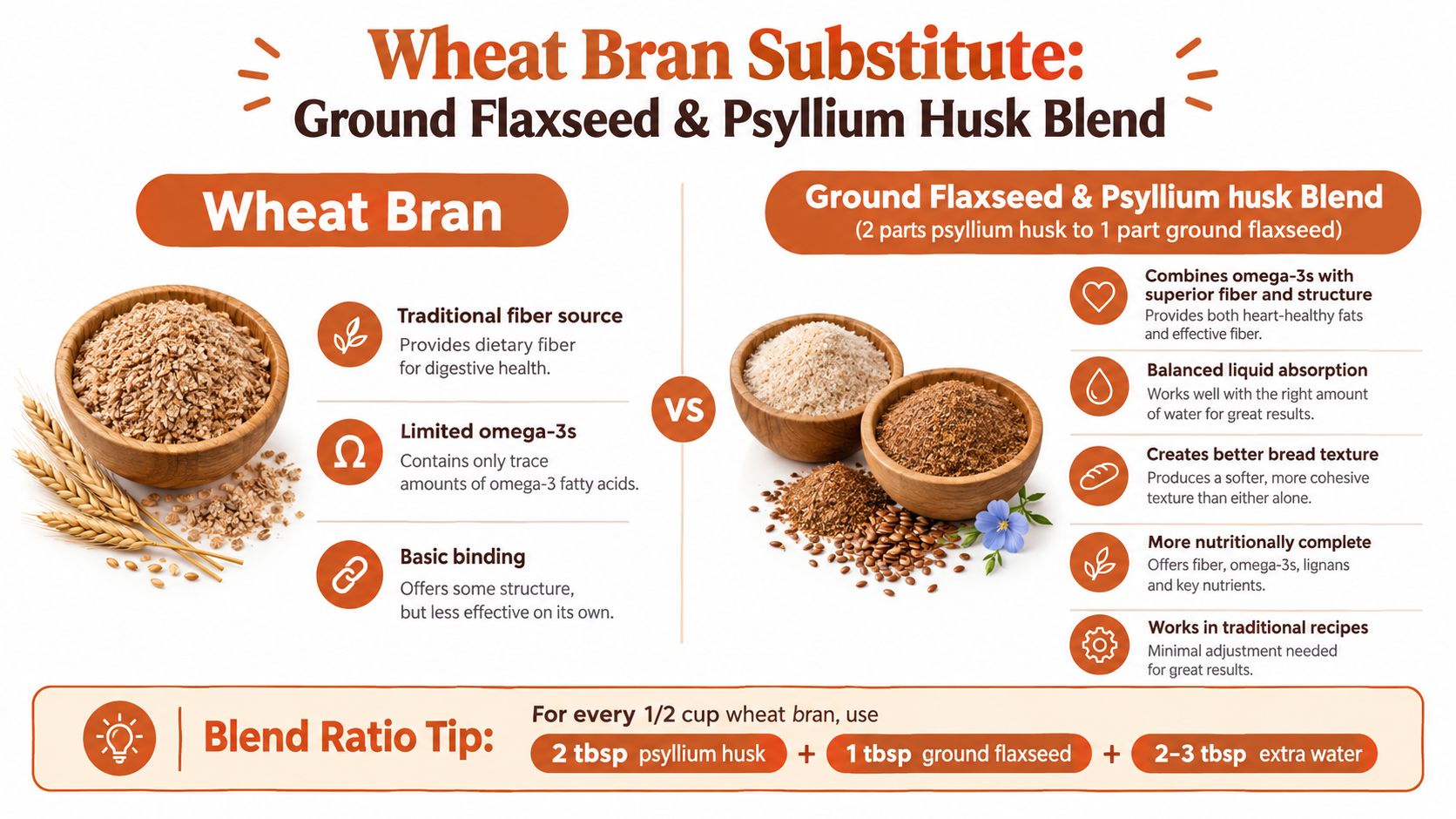
7. Ground Flaxseed and Psyllium Husk Blend
A flax and psyllium blend is the most useful option when you need to combine binding, elasticity, moisture control, and added fiber. Flax contributes a nutty flavor and gel-forming binding, while psyllium supplies a more neutral structural network. Together, they can come closer to the functional role of wheat bran in bread and substantial baked goods than either ingredient alone, although the texture will still be different.
Use a starting ratio of 2 parts psyllium husk to 1 part ground flaxseed by weight. For every 1/2 cup wheat bran, begin with 2 tablespoons psyllium husk plus 1 tablespoon ground flaxseed, then add 2 to 3 tablespoons extra water to account for absorption. Hydrate the psyllium separately with a 1:1 water ratio and the flax with a 1:3 water ratio before combining them with the rest of the formula.
Use the blend for structure, not just fiber
This blend makes sense in gluten-free sandwich loaves, dense whole-grain muffins, granola bars, and doughs that need to hold together. It's less appropriate for a delicate cake where the characteristic bran texture isn't wanted and extra gel could weigh down the crumb. Mix the hydrated ingredients thoroughly, then let the dough or batter rest briefly before judging its consistency.
Freshly grind the flax immediately before mixing, and keep extra ground flax cold to protect its quality. The blend's main advantage is control: psyllium gives structure without much flavor, while flax adds body and a recognizable seed note.
7 Wheat Bran Substitutes Compared
| Item | Implementation complexity | Resource requirements | Expected outcomes | Ideal use cases | Key advantages | Key disadvantages |
|---|---|---|---|---|---|---|
| Oat Bran | Low, minor liquid adjustments | Widely available, low cost, no special tools | Softer, tender crumb; moderate soluble fiber (beta‑glucan) | Muffins, quick breads, porridges, gluten‑free baking | Mild flavor, good moisture retention, heart‑healthy | Absorbs more liquid, slightly oat‑forward taste, less fiber per volume |
| Ground Flaxseed | Low–Medium, grind fresh, manage oxidation | Requires grinder; store cold/freezer; affordable in bulk | Denser, moister texture; strong binding; adds ALA omega‑3s | Vegan baking (egg replacer), smoothies, energy bars, granola | High omega‑3s and lignans; excellent binder | Oxidizes quickly after grinding; earthy taste; can over‑absorb moisture |
| Psyllium Husk | Medium–High, precise hydration ratios needed | Specialty ingredient, higher cost per ounce | Bread‑like crumb and elasticity; powerful water binding | Gluten‑free/keto breads, structure improvement, thickeners | Very high absorption; neutral flavor; small quantities effective | Steep learning curve; can become gummy; less widely available |
| Ground Chia Seeds | Low, simple gel step; whole seeds usable | Moderately available; more costly than bran; no grinder required | Gel‑forming, creamy textures; higher protein and minerals | Chia pudding, overnight oats, smoothies, no‑bake snacks | Complete protein; stable shelf life (whole); mild flavor | Can get slimy if overhydrated; limited baking use; seeds may stick to teeth |
| Almond Flour | Medium, requires recipe reformulation | More expensive; allergen concern; no special equipment | Moist, tender, denser baked goods; low‑carb profile | Keto/gluten‑free cookies, cakes, crusts, Mediterranean desserts | Protein‑rich, flavorful, grain‑free | Costly; not 1:1 substitute; denser results; nut allergy risk |
| Coconut Flour | High, precision hydration and ratio adjustments | Moderate availability; pricier; often needs extra eggs/liquid | Very high fiber; risk of dense/heavy texture if mishydrated; coconut flavor | Paleo/keto baking, tropical recipes, low‑carb tortillas | Extremely high fiber; naturally sweet; suits paleo/keto | Extremely absorbent; strong coconut flavor; poor direct substitution |
| Ground Flaxseed + Psyllium Blend | Medium, needs correct ratios and prep | Requires both ingredients; grind flax fresh; slightly higher cost | Closest wheat‑bran replacement; improved bread texture and nutrition | Artisan breads, muffins, granola bars, wheat‑bran substitution | Best texture balance; omega‑3s + prebiotic fiber; versatile | Requires experimentation and prep; less convenient than single options |
Match the Substitute to the Recipe
Choose oat bran when you want the closest mild, everyday baking experience. It's the most natural starting point for muffins, quick breads, porridge, and breakfast bowls, especially when you want a soft texture without a strong new flavor. Begin with the supplied reduced ratio, soak it briefly, and adjust only after the batter has hydrated.
Choose ground flaxseed when the recipe needs binding, moisture, and a nutty finish. It's particularly practical for vegan cookies, breakfast bars, banana-based bakes, and recipes that tend to crumble. Use psyllium when the priority is gluten-free structure. Its gel gives dough cohesion, but it demands careful hydration and restraint because it doesn't behave like coarse bran.
Chia belongs in gelled breakfasts, smoothies, overnight oats, and no-bake foods. It can support soft baked goods, but it isn't a dependable direct replacement for wheat bran in yeast bread. Almond flour and coconut flour should be reserved for recipes designed around their distinct absorption, fat, flavor, and structure. Almond flour makes tender grain-free bakes, while coconut flour requires especially careful liquid management.
The flax and psyllium blend is the best choice when bread texture and nutrition both matter. It combines a neutral structural ingredient with a flavorful binder, but it still needs a small-batch test before you commit to a large bake. Wheat bran's functional complexity explains why substitutions fail when cooks match volume alone. Reviews describe wheat bran as a concentrated fiber ingredient with substantial insoluble fiber, protein, and water-binding behavior, so every replacement should be evaluated by its effect on batter thickness, dough strength, crumb, and moisture (review of wheat bran composition and functionality).
For bread systems, finely milled bran substitutions around 5% to 10% have performed more favorably than higher additions in a major review, while 15% or higher was associated with volume loss and a firmer crumb (review of bran-substituted breads). Particle size and pretreatment also change hydration, rheology, porosity, and moisture retention, so a substitute isn't "drop-in" even when the cup measure looks similar (research on processed bran fiber and bakery functionality). Start with the stated ratio, hydrate absorbent ingredients deliberately, and test one small batch before scaling.
Just Cook It can also help when you want dependable digital recipe collections with clear, kitchen-tested instructions for everyday cooking, baking, and specialty-diet meals. Its downloadable books and recipe resources are designed for reading on phones, tablets, laptops, and e-readers, so you can keep practical guidance beside the mixing bowl.
If you're replacing wheat bran today, choose one option based on the result you need, then test the smallest practical batch before changing the whole recipe. For more kitchen-tested digital cookbooks, baking ideas, and everyday cooking guidance, visit Just Cook It and browse the collections that fit your pantry and dietary needs.