One kid wants a snack right now, another needs to leave for practice in 25 minutes, and you are standing in front of the fridge hoping dinner will somehow make itself. This is the hour when good intentions often collide with real life.
Many parents feel that squeeze. As noted earlier, family meals have become harder to protect, even though they still matter for connection, routine, and how kids feel at the end of a long day. Shared dinners do not have to be long or fancy to help. A simple meal eaten together for 15 to 30 minutes can still create a pause in a rushed evening.
The challenge is not only speed. It is quality. Fast dinners often fall into one of two traps. They are quick but not very balanced, or they are easy but built from the same familiar rotation of pasta, nuggets, and takeout-style comfort food. That is where many parents get stuck, and it makes sense. When time is tight, we reach for what we know.
This guide takes a different approach. Instead of collecting random recipes, the focus is on learning a few reliable building blocks. Once you understand the pattern, dinner gets easier to repeat. You can put a meal together faster, make it feel complete, and bring in flavors from more than one food tradition without turning Wednesday night into a major project.
We are going to focus on two questions that matter on busy weeknights. How do you make a 30-minute meal that actually covers the basics, like protein, produce, and enough staying power to keep everyone full? How do you keep quick dinners from becoming a loop of the same Western staples every week?
The strategies ahead answer both. Some help you balance a plate almost automatically. Others make it easier to borrow ideas from stir-fries, tacos, grain bowls, soups, and breakfast-for-dinner in ways that feel flexible, family-friendly, and realistic. The goal is not perfection. The goal is to help you build a dinner routine that is fast, nourishing, and varied enough that your family does not get bored by Thursday.
Table of Contents
1. Master the Art of the Sheet Pan Miracle
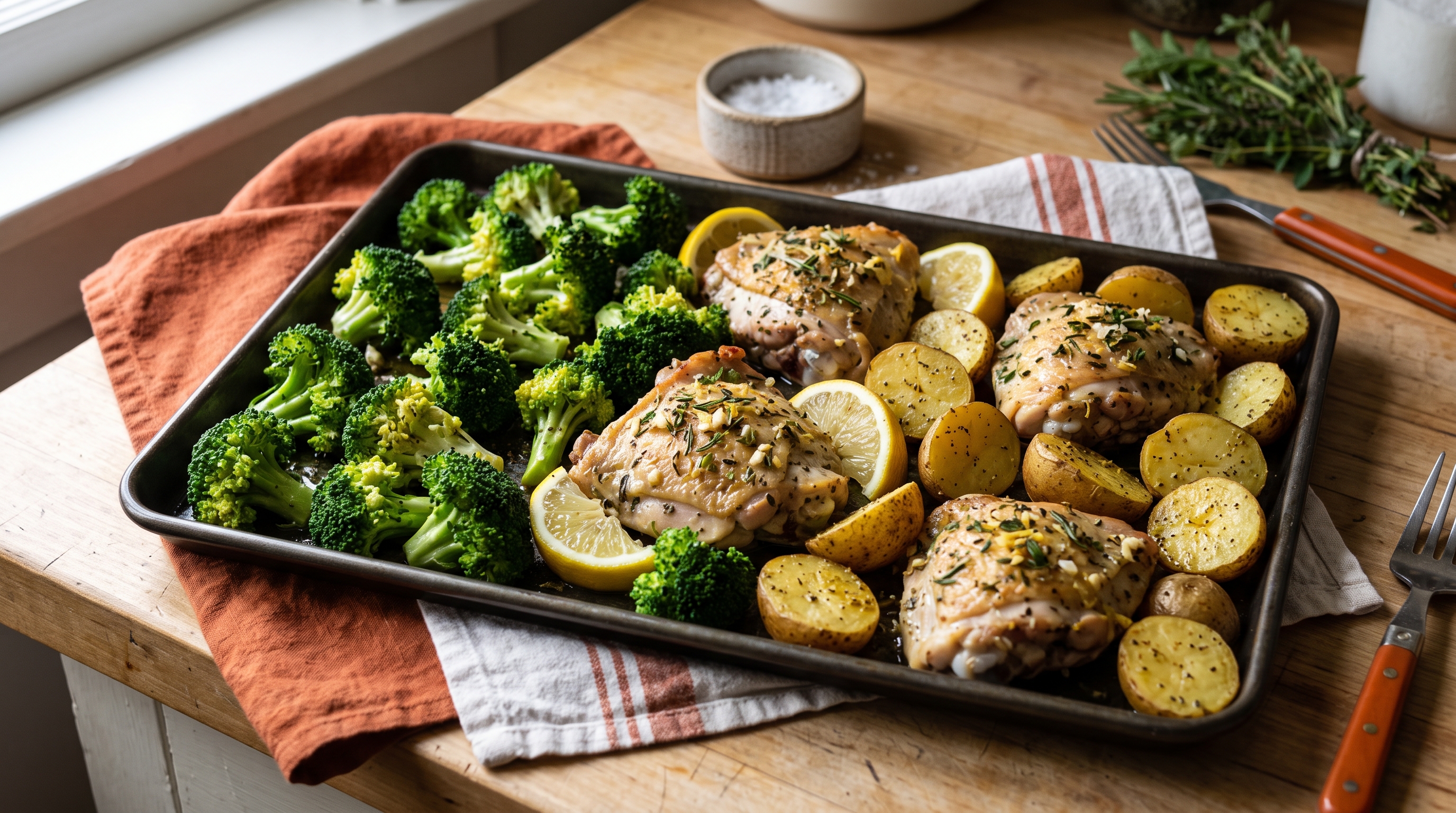
A sheet pan dinner works because it removes decisions. Instead of hunting for a recipe every night, the family can follow one simple pattern. Pick a protein, add a vegetable, add a starch, season everything, and roast.
A simple formula that keeps dinner balanced
A parent can build dozens of meals from one framework:
-
Protein choice. Chicken thighs, salmon, tofu, or sausage all roast well.
-
Vegetable choice. Broccoli, cauliflower, bell peppers, carrots, onions, or green beans hold up nicely in the oven.
-
Starch choice. Baby potatoes, sweet potatoes, or chickpeas make the meal feel complete.
Lemon herb chicken with broccoli and potatoes is a classic starting point. Sausage with peppers, onions, and cubed sweet potatoes is another easy option when the fridge is nearly empty.
This style fits the rhythm many families already use. Mordor Intelligence's North America ready meals market report notes that 74% of families can prepare meals in under one hour, and 30% can do it in under 30 minutes. A sheet pan method helps push dinner toward that faster end without making it feel rushed.
Practical classroom-style tip: when vegetables cook faster than the starch, cutting potatoes smaller usually fixes the timing better than raising the oven temperature.
A small nutrition upgrade that matters
Quick meals often get criticized for being too beige or too repetitive. That concern is fair. A simple fix is to think in layers. Roasted vegetables bring color, the protein adds staying power, and the starch helps everyone leave the table satisfied.
For a nutrient boost, a parent can sprinkle flax seeds or nutritional yeast over the tray in the last few minutes of roasting. It is a small habit, but it helps address the common worry that fast meals may miss fiber or key nutrients.
2. Simplify with One-Pot Pastas and Grains
You know the kind of night. One child is hungry now, another does not want "mixed-together food," and the sink is already half full before dinner even starts. One-pot meals are ideal for such demanding evenings. They lower the number of moving parts, which makes dinner feel more manageable for real families, not just for recipe videos.
Why one pot works so well on busy nights
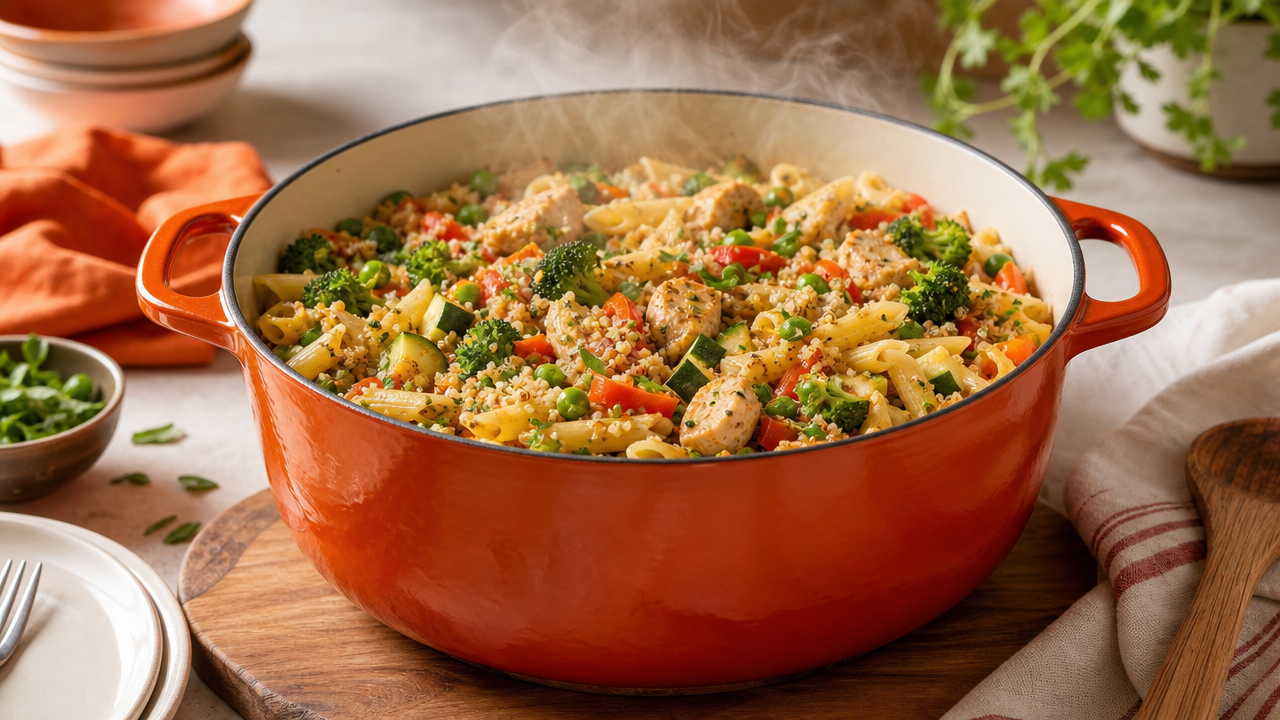
Think of a one-pot meal like a shortcut with structure. Instead of cooking pasta, sauce, vegetables, and protein in separate pans, you build them in layers in the same pot. The starch from pasta or grains helps thicken the liquid as it cooks, so the meal comes together with less draining, less juggling, and less cleanup.
That simplicity matters when family dinners are already under pressure. Many parents want to sit down together more often, but busy schedules make that hard. A one-pot approach helps because it removes friction. You are not just saving time. You are making it easier to repeat the habit.
A simple example is one-pot tomato basil pasta. Dry pasta, broth, tomatoes, garlic, and seasoning simmer together until the liquid turns into sauce. Add spinach and white beans near the end, and the meal becomes more complete without much extra work.
The easy formula to keep meals balanced
Fast dinners often fall into one of two traps. They fill everyone up but do not offer much variety, or they try to do too much and stop feeling fast. A helpful middle ground is to use a four-part formula:
-
Base. Pasta, rice, couscous, or quinoa.
-
Protein. Beans, lentils, chicken, tofu, or eggs.
-
Produce. Frozen peas, spinach, chopped peppers, zucchini, or corn.
-
Flavor. Pesto, curry paste, salsa, garlic and herbs, coconut milk, or tomato sauce.
If you keep those four parts in mind, you can build dozens of dinners without starting from scratch each time. It is a little like packing a school lunch. Once you know the compartments, the choices get easier.
Pasta is familiar. Grains often give you more range
Pasta is a great starting point, especially for younger kids. Grains can stretch your options further, especially if you want meals that feel nourishing and less repetitive through the week.
Quinoa with black beans, corn, and mild spices can become a bowl topped with avocado or yogurt. Rice simmered with lentils and onions can lean Middle Eastern or South Asian depending on the spices. Couscous cooks quickly and works well with chickpeas, tomatoes, and herbs for a North African-inspired dinner. If your family is ready to branch out, these kinds of globally inspired pantry meals pair nicely with flavors from this collection of quick Asian dinner ideas.
This is one place where cultural variety becomes practical, not complicated. You are not learning a brand-new technique every night. You are changing the seasoning, the grain, or the topping while keeping the method steady.
Three reliable combinations to try
-
Tomato basil pasta with spinach and white beans. Familiar, soft-textured, and easy to accept.
-
Creamy chicken and greens pasta. Use leftover chicken to make the meal faster.
-
Quinoa with black beans, corn, and cumin. Top each bowl differently so kids get some choice without turning dinner into a separate-order situation.
One small tip helps a lot. If the pot looks too dry, add a splash of broth or water. If it looks too loose, give it another minute or two uncovered. One-pot cooking is forgiving, which is exactly what many weeknights need.
3. Go Global with 30-Minute Stir-Fries
Stir-fry is one of the best answers to the question many parents ask. How can dinner be fast without tasting the same every week? The method is quick by design, and the flavor can shift dramatically with one sauce change.
The three-part stir-fry template
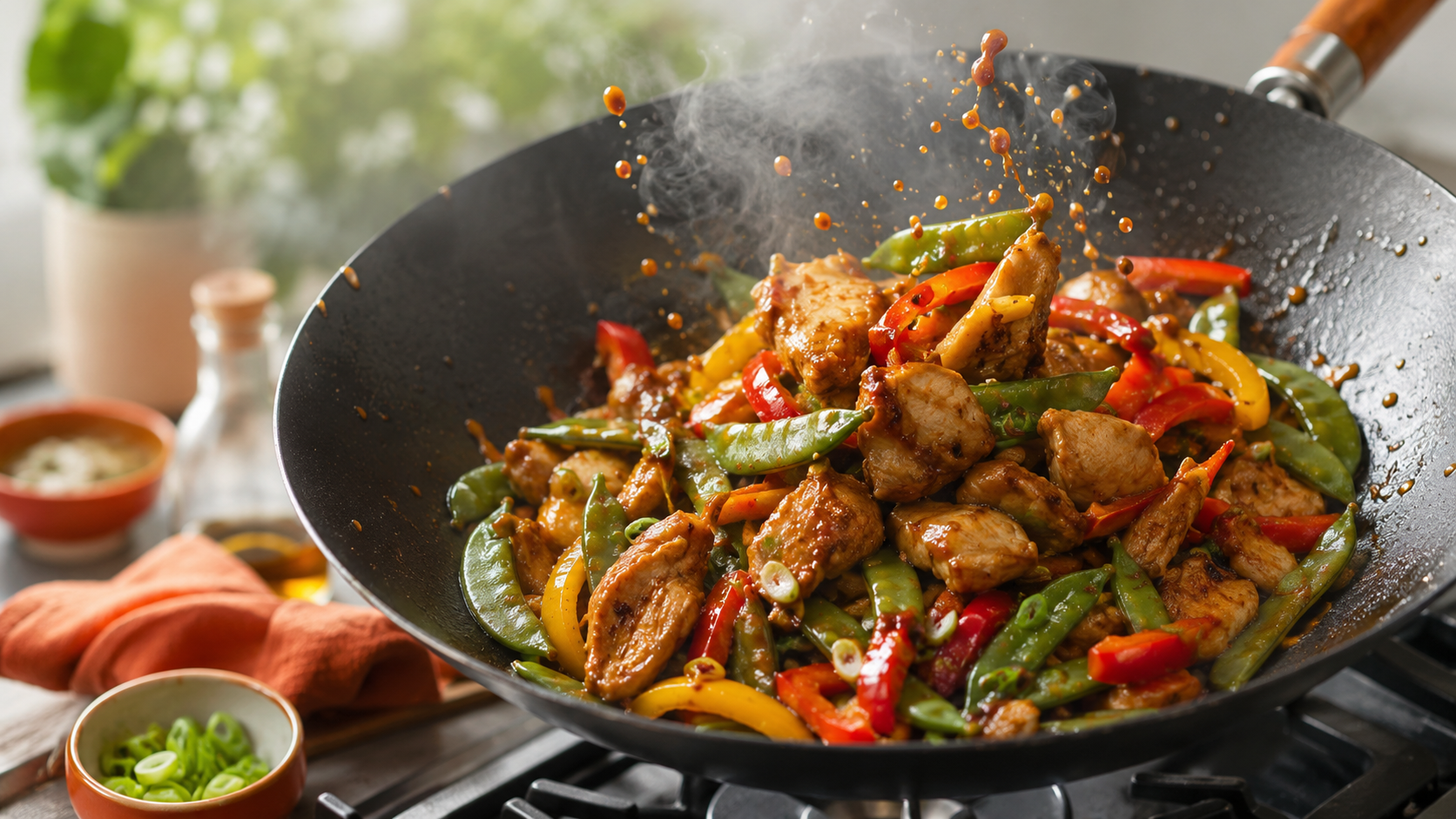
A parent only needs three moving parts:
-
Protein. Chicken, beef, shrimp, tofu, or edamame.
-
Quick vegetables. Snap peas, mushrooms, shredded cabbage, peppers, or zucchini.
-
Sauce. Teriyaki, garlic-ginger, soy-sesame, or basil-chili.
A Japanese-inspired teriyaki chicken stir-fry can be served over rice. A Thai-style basil beef version can go with noodles or lettuce cups. The cooking method stays nearly the same, which makes the meal easier to learn and repeat.
Demand for variety is real. The 2025 Global Food Trends Report referenced in a YouTube discussion of 30-minute global dinners says 57% of households in major markets are seeking culturally diverse quick meals. Yet many fast-dinner roundups still stay close to the same comfort-food lane.
Keeping flavor authentic enough for busy nights
Parents sometimes get stuck here. They assume "global" means complicated or that authentic flavor requires a long ingredient list. Usually, it just means choosing one or two defining ingredients and using them on purpose.
A family looking for more weeknight inspiration can browse quick ideas built around Asian dinner flavors and then simplify from there. A bottled sauce, a fresh herb, or one spice blend can be enough to move dinner in a new direction without adding stress.
A helpful rule for beginners: if the pan is crowded, the food steams instead of stir-fries. Cooking in two quick batches often gives better texture than trying to do everything at once.
4. Reimagine Taco Night for Any Cuisine
Taco night survives busy seasons for a reason. It is flexible, forgiving, and easy to customize for different appetites. The smartest move is to stop treating tacos as one cuisine and start using them as a format.
Think wraps, pitas, and flatbreads
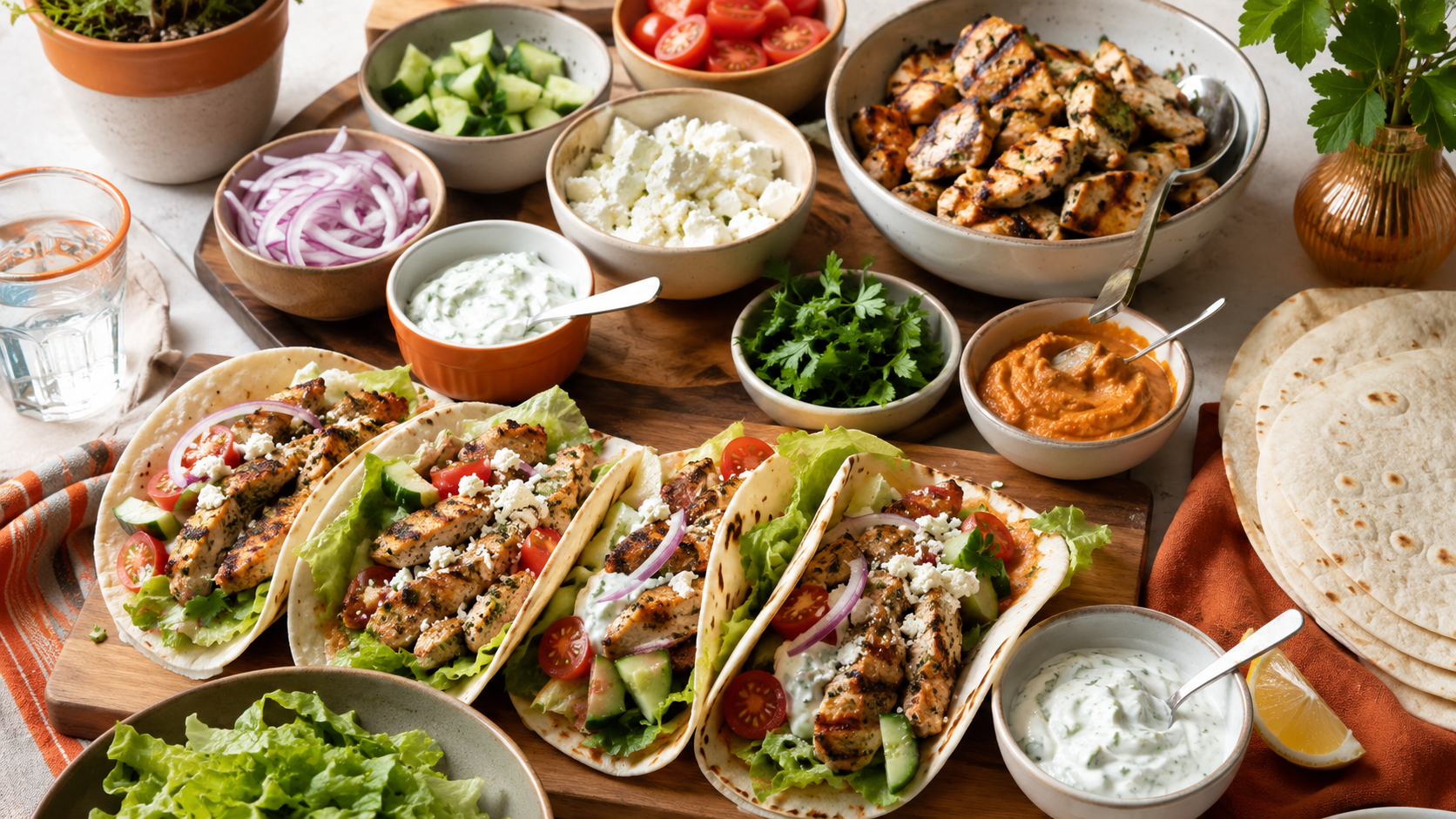
A tortilla can hold far more than standard taco filling. So can pita, naan, or lettuce leaves. That opens the door to meals that feel fresh without requiring a completely new cooking skill.
A few easy examples:
-
Mediterranean wrap. Chicken, cucumber, tomato, and tzatziki in warm pita.
-
Indian-inspired taco. Spiced chickpeas, shredded cabbage, and yogurt drizzle.
-
Rice-paper style wrap plate. Cooked protein, herbs, and crunchy vegetables for a lighter option.
This approach also helps with family participation. Children can build their own plates, skip ingredients they dislike, and still sit down to the same meal.
A better way to handle different tastes
Custom meals can reduce friction at the table. One child may want plain chicken and cucumbers. Another may pile on sauce and herbs. The adults can add stronger flavors without cooking a second dinner.
For families wanting more ideas from Mediterranean and other regional traditions, a collection of weeknight-friendly dishes from across Europe can spark easy wrap and pita combinations. The key lesson is simple. The shell is just the vehicle. The flavor direction can change every week.
5. Build-Your-Own Deconstructed Power Bowls
Bowls are helpful for parents who want structure without a strict recipe. They make it easier to see whether dinner includes the pieces a child needs. That visual clarity matters on rushed nights.
The bowl formula that answers the nutrition question
A balanced bowl usually comes together with four parts:
-
Base. Rice, quinoa, couscous, greens, or roasted potatoes.
-
Protein. Chicken, beans, lentils, eggs, tofu, or fish.
-
Color. Raw or cooked vegetables in at least two colors.
-
Finish. Avocado, seeds, cheese, olive oil, or a yogurt-based sauce.
This framework is useful because many parents worry that quick meals are not complete enough. A 2025 study cited in Epicurious's 30-minute meals page found that 68% of parents in major markets worry their quick meals lack essential nutrients, while only 12% of 30-minute recipe collections include nutritional breakdowns or balanced meal frameworks.
A burrito bowl might use cilantro-lime rice, black beans, chicken, corn, peppers, and avocado. A Greek-style bowl might use quinoa, cucumbers, tomatoes, chickpeas, feta, and olive oil.
Why deconstructed meals help picky eaters
Mixed dishes can overwhelm children who like foods separated. Bowls solve that by keeping ingredients visible. A parent can place each component in its own section or let everyone assemble dinner at the table.
Teacher-style reminder: "balanced" does not mean perfect. It usually means a meal includes enough protein, produce, and energy to carry the family through the evening without a sugar crash or a second dinner request.
6. Embrace the Fun of Brinner
At 6:12 p.m., dinner can feel like a test you did not study for. The fridge has eggs, maybe some yogurt, half a pepper, a few tortillas, and not much else that looks like a plan. Brinner offers a simple solution. It turns familiar breakfast ingredients into a real meal, fast, with less decision fatigue.
That matters because many families are already feeling the squeeze around weeknight dinners, as noted earlier. Brinner works well on those nights because it lowers the barrier to getting a meal on the table without lowering your standards. The goal is not toast and luck. The goal is a dinner that is quick, filling, and flexible enough to reflect more than one food tradition.
Think of brinner like a flashlight drawer. You may not have a full pantry masterpiece in front of you, but you probably have enough to solve the problem if you know what pieces to look for.
The brinner formula that keeps everyone full
Breakfast foods get a bad reputation at dinner when the plate leans too hard on quick carbs. Pancakes alone often fade fast. Sugary cereal rarely carries a child through homework, baths, and bedtime.
A stronger brinner follows a simple build:
-
Anchor. Eggs, tofu scramble, Greek yogurt, cottage cheese, or beans.
-
Fuel. Potatoes, oats, whole-grain toast, rice, or tortillas.
-
Color. Fruit, sautéed greens, tomatoes, peppers, or cucumbers.
-
Finish. Avocado, cheese, seeds, olive oil, or nut butter.
If you are tired, remember it this way. Start with protein. Add one produce item. Add one sturdy carb. Then ask, "What will help this stick?" That last step is often healthy fat or an extra spoonful of protein.
Brinner can travel far beyond diner food
Brinner evolves beyond being just a backup plan. Many quick dinner lists stay stuck in a narrow lane of waffles, scrambled eggs, and toast. You do not have to.
The same fast format can carry very different flavors. Egg tacos with black beans and salsa work on a busy Tuesday. Shakshuka turns canned tomatoes and eggs into something warm and very satisfying. Savory oatmeal with greens and a soft-boiled egg feels cozy and practical. Fried rice with egg and leftover vegetables gives breakfast ingredients a completely different identity.
That variety matters. Families get bored when speed always tastes the same. Cultural range also helps children see that "easy dinner" does not have to mean one style of food over and over.
Easy combinations that feel like dinner
Here are a few brinner ideas that come together quickly and still feel complete:
-
Scrambled eggs, roasted potatoes, fruit, and yogurt
-
Bean and egg tacos with salsa and sliced cucumbers
-
Savory oats with spinach, cheese, and a boiled egg
-
Shakshuka with toast and orange slices
-
Veggie fried rice with egg and edamame
If your kids are skeptical, start with the most familiar version and change one piece at a time. Keep the eggs, swap toast for tortillas. Keep the oatmeal, make it savory instead of sweet. Small shifts are often easier than a full dinner reinvention.
Brinner is not a gimmick. It is a useful weeknight strategy. On low-energy evenings, familiar foods can calm the room, and a thoughtful plate can still carry your family through the night.
7. Get Cozy with Speedy Soups and Upgraded Sandwiches
It is 6:10 p.m. Someone is asking for a snack, someone else is tired, and you need dinner to feel comforting fast. Soup and sandwiches can do that job well, but they work best when we stop treating them like a backup meal and start using them like a formula.
Think of this dinner pair like a winter coat with good pockets. The cozy part matters, but its main advantage is what it carries. A soup can hold vegetables, beans, lentils, chicken, or tofu. A sandwich can bring whole grains, protein, healthy fat, and flavors that stretch beyond the usual quick grilled cheese routine. That is how this kind of meal stays filling and useful, instead of turning into bread plus cheese plus hope.
A simple tomato soup is a good example. Start with canned tomatoes, onion, garlic, broth, and a splash of milk or cream. Pair it with grilled cheese, then strengthen one piece at a time. Stir white beans into the soup. Add spinach, pesto, or sliced tomato to the sandwich. Those small upgrades are often enough to make a familiar meal feel more complete without making the cooking feel harder.
This is also a smart place to bring in more cultural range, which many fast-dinner lists skip. The format stays familiar. The flavors can travel.
Red lentil soup with cumin and lemon cooks quickly and pairs well with toasted pita sandwiches. Black bean soup with lime works with a quesadilla or an avocado sandwich. A mild curried vegetable soup can sit next to naan toast with cheese or chickpeas. If your family likes noodle soups, a quick broth with greens, shredded chicken, and soft noodles can be paired with a crisp vegetable sandwich. Same 30-minute structure. More variety across the week.
If you want these meals to become part of a repeatable rhythm, a simple family meal planning system can help you rotate soups, breads, and fillings without having to reinvent dinner every night.
How to keep it from getting boring
Use the meal like building blocks. Keep one part familiar, then let the other part do the stretching.
-
Repeat one safe favorite. Keep grilled cheese or a turkey sandwich the same, then rotate the soup between tomato, lentil, black bean, or blended vegetable.
-
Change the bread or spread. The same soup feels different with whole grain toast, pita, tortillas, or a hummus-based sandwich.
-
Add one bright side. Cucumber slices, orange wedges, slaw, or a quick salad can balance the cozy textures and make the plate feel fresher.
-
Let kids test new flavors in small portions. A half sandwich and a small cup of soup is often easier than asking them to commit to a full bowl of something unfamiliar.
If your kids are cautious eaters, this format gives you a gentle way to expand their range. You do not have to change everything at once. Keep the sandwich they know. Offer the new soup in a small serving. Or keep tomato soup and try a sandwich filling from a different food tradition. That slower approach usually feels safer for everyone at the table.
Soup and sandwiches are not a lazy dinner. They are a practical one. On a packed weeknight, a warm bowl and a well-built sandwich can give you comfort, nutrition, and more variety than many so-called quick meals.
8. Create Your Own Cook and Eat Kit Experience
It is 5:42 p.m. One child wants noodles. Another says they are not in the mood for rice. You are standing in the kitchen doing the most challenging part of dinner, which is not always cooking. It is making decisions while everyone gets hungrier by the minute.
A cook and eat kit can rescue the night.
Laying out school supplies before homework starts provides a good parallel: the work still happens, but the friction drops. Instead of starting from zero, you give yourself a small set of ready-to-go options that make dinner faster, more balanced, and easier to vary from week to week.
That matters because many families are already feeling the squeeze. Family dinners have become harder to protect in busy schedules, so the goal cannot just be speed. We also need meals that hold up nutritionally and help kids get comfortable with more than the same few default foods. A home kit system helps with both. You can keep the convenience people like about meal kits, while choosing the ingredients, the budget, and the flavor direction yourself.
A good kit is not a fully cooked dinner in a box. It is a grouped set of parts with a clear purpose. You might pack one container with rice, cooked chicken or tofu, cucumbers, carrots, and a sauce for bowls. Another could hold tortillas, beans, slaw, and seasoning for wraps. A third might have noodles, frozen vegetables, and a stir-fry sauce. The point is simple. Future-you should be able to open the fridge and see dinner taking shape right away.
A simple framework that keeps kits useful
-
Start with three repeatable formats. Bowls, wraps, flatbreads, noodle skillets, and grain salads work better than three unrelated recipes because they create a routine your family can learn.
-
Use the 3-part balance check. Each kit should include a protein, produce, and a starch or grain. That is the easiest way to keep a 30-minute meal from turning into crackers and cheese with a side of stress.
-
Change the flavor map, not the whole system. Keep the format familiar, then rotate the seasoning or sauce. One week your bowl can lean Mediterranean, the next week it can use soy, ginger, and sesame, and another night it can pull from Mexican or Indian-inspired flavors.
-
Write one tiny instruction. A note like "start rice first" or "cook vegetables while protein heats" saves mental energy, especially on nights when your brain feels done before dinner even begins.
If you want to make this easier to repeat, a simple meal planning routine for busy families can help you decide which kits to prep and how to rotate them without getting stuck in a rut.
The best part is that this approach grows with your family. Cautious eaters get familiar formats. Curious eaters get new flavors. You get a system that makes weeknights feel less reactive. After a couple of rounds, dinner stops feeling like a nightly emergency and starts feeling like something you already know how to handle.
Quick Comparison of 8 Family Meal Strategies
A good 30-minute dinner strategy should do two jobs at once. It should save your time tonight and make it easier to serve meals that feel balanced and varied over the course of a week. That is where many quick-dinner lists fall short. They help with speed, but not always with nutrition or flavor range.
This comparison gives you a clearer way to choose. Think of each meal format like a different tool in a toolbox. Some are best for low-cleanup nights. Some help picky eaters feel more in control. Some make it easier to bring in flavors from different cultures without starting from scratch.
| Strategy | Core Features/Characteristics | Best For | What Makes It Useful | Watch-Out |
|---|---|---|---|---|
| The Sheet Pan Miracle | Uses a simple protein, vegetable, and starch setup on one tray | Nights when cleanup needs to stay minimal | Easy to scale, easy to roast everything at once, easy to keep the meal complete | Foods cook at different speeds, so cut ingredients with timing in mind |
| One-Pot Pastas and Grains | Cooks the base and mix-ins in one pot | Evenings when you need comfort food fast | Great for rice, pasta, couscous, and grains that can carry vegetables and protein | These meals can turn starch-heavy if you forget produce or protein |
| Go Global with 30-Minute Stir-Fries | Fast, high-heat cooking with a protein, vegetables, and sauce | Families who want variety without a long cook time | One format can flex into many flavor directions, including Asian-inspired combinations | Prep matters. If ingredients are not chopped first, the pan moves faster than you do |
| Reimagine Taco Night for Any Cuisine | Wraps or handheld meals built from flexible fillings | Families with mixed preferences at the table | The format is familiar, so you can branch into different flavor profiles more easily | It is easy to lean on cheese and tortillas alone, so add beans, vegetables, or another protein |
| Build-Your-Own Deconstructed Power Bowls | Layered bowls with grains, protein, vegetables, and sauce | Parents who want a visual shortcut for balance | Helps you see the meal parts clearly and adjust for different appetites | Bowls can feel repetitive if the sauces and textures stay the same every week |
| Embrace the Fun of Brinner | Breakfast foods served at dinner speed | Hard nights when energy is low and everyone is hungry now | Usually budget-friendly, kid-friendly, and quick to pull together | Some brinner meals need a boost from fruit, vegetables, or a more filling protein |
| Get Cozy with Speedy Soups and Upgraded Sandwiches | Fast soups paired with a more substantial sandwich or side | Cold nights or low-effort comfort meals | Works well with pantry staples and leftovers | Soup alone may not be filling enough, especially for older kids and teens |
| Create Your Own Cook and Eat Kit Experience | Pre-grouped ingredients for a meal format you can assemble quickly | Families who want less decision fatigue during the week | Brings the convenience of a meal kit without locking you into one style of food | It takes a little planning upfront, so it works best when you prep once and reuse the system |
If you are unsure where to start, use this shortcut. Pick the strategy that solves your biggest weeknight problem first. If cleanup is the issue, choose sheet pan or one-pot meals. If boredom is the issue, stir-fries, taco-style meals, and bowls usually give you more room for cultural variety. If decision fatigue is the issue, DIY kits often help the most because they reduce the nightly scramble before cooking even starts.
The bigger win is repeatability. A meal strategy is stronger than a single recipe because you can use it again with different ingredients, different flavors, and different nutrition goals. That is how 30-minute family meals become something you can sustain, not just something you try once on a chaotic Tuesday.
Your Journey to Stress-Free Family Dinners Starts Now
It is 5:42 p.m. You are tired, someone is hungry now, and the question lands again. What is for dinner? This is the moment when takeout, cereal, or plain pasta can feel like the only realistic options.
You are not failing. You are living the same weeknight pressure many parents face, and as noted earlier, family dinners have become harder to protect. The good news is that a 30-minute meal does not have to be a backup plan. It can be a real family system. One that helps you feed your kids well, bring more variety to the table, and make dinner feel less like a daily test.
That is the shift that matters most. We are not chasing perfect meals. We are building repeatable ones.
Think of these eight strategies like tools in a small kitchen drawer. You do not need every tool every night. You need the right one for the job in front of you. Some nights call for the low-mess ease of a sheet pan. Some need the comfort of soup and sandwiches. Some are a chance to stretch beyond the usual rotation and bring in flavors from other cultures through stir-fries, bowls, or taco-style meals that can hold far more than the standard fillings.
That broader mix is important. Fast family meals often get stuck in a narrow lane of familiar comfort foods, which can make dinner feel repetitive and limit the range of ingredients kids learn to enjoy. A better 30-minute routine makes room for both nutrition and cultural variety. It helps you put protein, fiber, color, and flavor on the table without turning dinner into a second job.
Start smaller than you think. Pick one format that matches your hardest problem this week, then use it twice. That is how a strategy becomes a habit. A bowl night can teach balance. A stir-fry can teach flexibility. A DIY kit can teach your future self a little mercy on busy evenings.
Just Cook It can help turn that habit into something easier to maintain. Explore the store's digital recipe collections for fresh ideas that make 30 minute family meals easier to plan, easier to cook, and more enjoyable to share. The goal is simple. Less scrambling, more confidence, and a dinner routine your family can consistently follow.