When dinner needs to happen fast, salmon and basil are a smart combination. This basil salmon recipe keeps the process simple while still delivering tender fillets, fresh flavor, and a finish that feels a little more special than the effort suggests. It also works well in real kitchens, where one piece may be thick, another thin, and everything still needs to come out properly cooked.
The method below focuses on the decisions that change the result: match cooking time to thickness, check temperature instead of guessing, and add basil according to the type you're using. Fresh leaves belong at the end, while pesto and basil butter can handle carefully controlled heat. For more practical dinner ideas built around accessible ingredients, you can also browse these simple ingredient recipes for tonight.
Table of Contents
- Why This Basil Salmon Recipe Works on a Weeknight
- Ingredients and What Each One Does
- Before You Cook, Timing, Temperature, and the Basil Decision
- How to Cook Basil Salmon Step by Step
- Fresh Basil vs Pesto vs Basil Butter
- Common Mistakes and How to Fix Them
- Serving, Plating, and What to Do With Leftovers
Why This Basil Salmon Recipe Works on a Weeknight
A weeknight fish dinner succeeds when each step earns its place. Salmon cooks quickly, olive oil helps seasoning cling, lemon cuts through the fish's richness, and basil supplies the fresh aroma that makes the plate feel finished. You don't need a separate reduction or a long marinade.
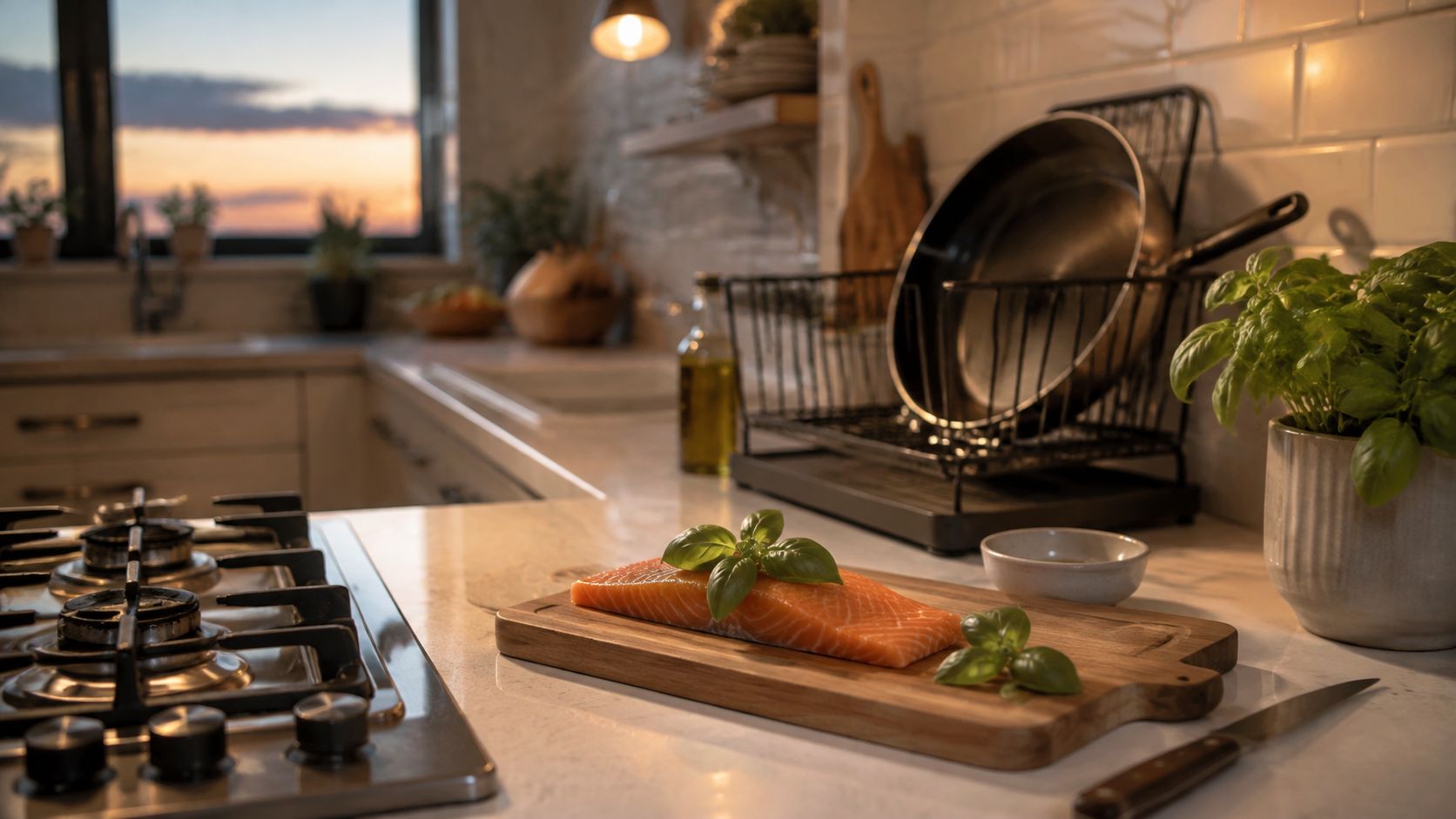
The common failure is overcooking. Salmon can look beautifully opaque on the outside while the center has already lost its tenderness. Thin pieces are especially unforgiving because they heat through before the cook has time to notice. A thermometer removes that guesswork, and a short rest lets the fish finish gently rather than staying in a hot oven until it dries.
The three choices that protect the fish
- Dry surface: Pat the fillets thoroughly before seasoning. Moisture on the surface creates steam and weakens browning.
- Thickness-based timing: A narrow tail piece needs less oven time than a thick center cut, even when both weigh about the same.
- Late basil finish: Fresh basil is aromatic and delicate. It tastes greener when it meets the warm fish after cooking instead of sitting under intense heat.
The recipe is designed for a sheet pan or an oven-safe skillet, so cleanup stays simple. If you use a skillet, searing the skin first gives you a crisp base and lets the fish release naturally before it finishes in the oven. If you use a sheet pan, you can skip the flip and keep the process easier.
Salmon's broad availability also makes this pairing practical rather than seasonal or obscure. Hawaii's 2024 basil report recorded 18.1 million pounds of fresh basil production, valued at $42.9 million, with 99.5% shipped to export markets, including the mainland United States and Canada (Hawaii Department of Agriculture basil statistics). That commercial supply helps explain why sweet basil, pesto, and related herb preparations are realistic choices for home kitchens.
Ingredients and What Each One Does
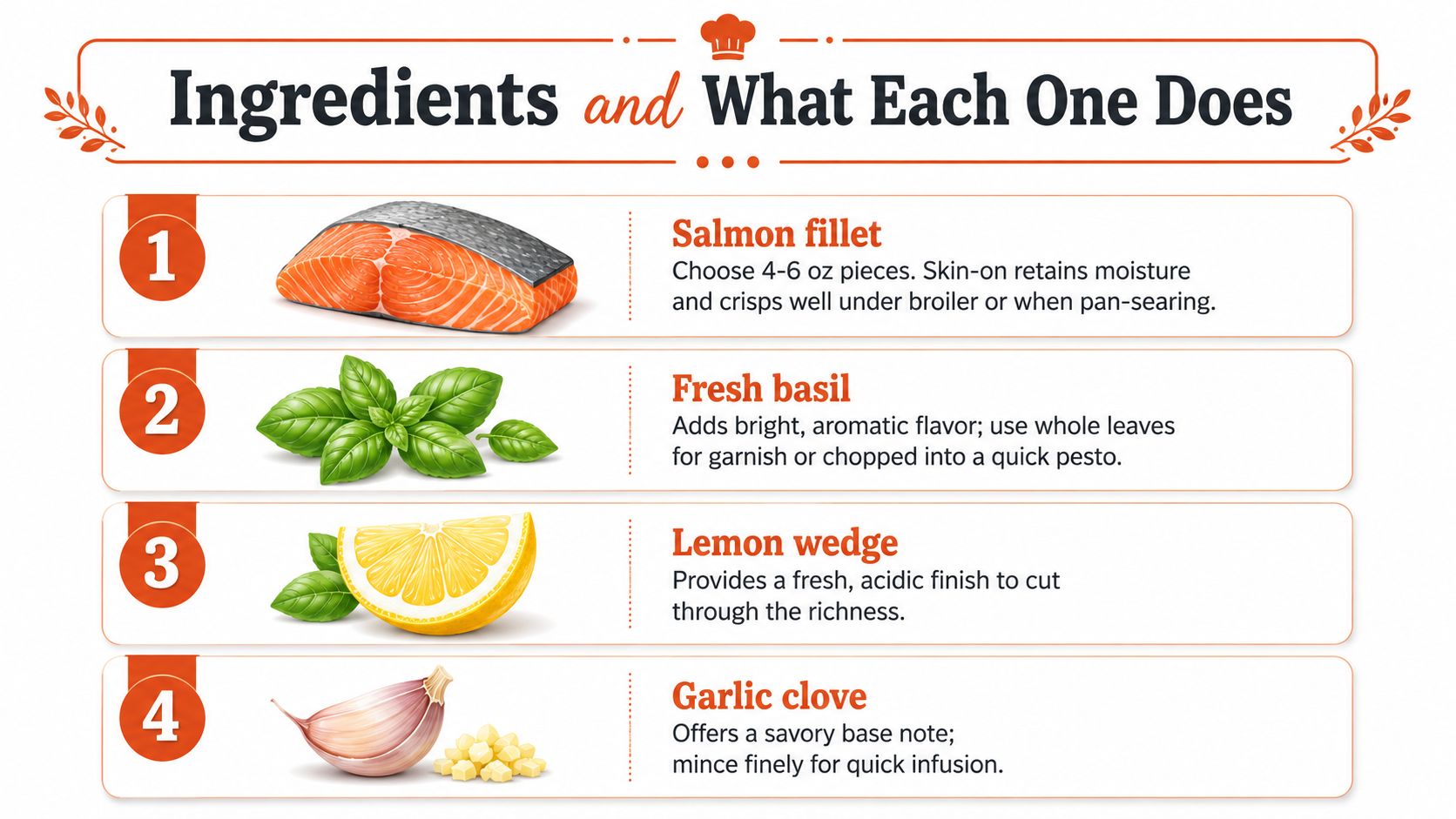
The ingredient list is short, but each component has a job. Use four salmon fillets weighing 4 to 6 ounces each, with or without skin. Skin-on fillets offer extra protection against moisture loss and can crisp nicely in a skillet or beneath a broiler. Skinless pieces are simpler for a sheet pan and easier to serve to children.
Farmed salmon usually has a richer, fattier texture, which makes it forgiving when you're learning temperature control. Wild salmon has a more distinct, clean flavor but can dry faster, so check it early. Either works well in this basil salmon recipe.
- Fresh basil: Use about 1 cup loosely packed. Tear the leaves rather than chopping them aggressively, then add them after cooking. For a convenient substitute, stir 2 tablespoons of jarred pesto into the warm pan juices off the heat, or use a thin layer of basil compound butter.
- Olive oil: Use 2 tablespoons to carry seasoning, reduce sticking, and help the surface brown. Avocado oil works when you want a higher-heat finish.
- Lemon: Zest 1 whole lemon before cooking and reserve the juice for serving. The zest keeps its fragrance through heat, while the juice is most vibrant when added at the end.
- Garlic: Mince 2 cloves and warm them briefly in oil if you're making a quick sauce. Raw garlic placed directly on hot salmon can burn before the fish is ready.
- Salt and black pepper: Season the flesh directly, not just the top. Kosher salt spreads more evenly, and freshly cracked pepper adds a sharper aroma.
Cherry tomatoes, red pepper flakes, or a small splash of white wine are useful extras, but none is essential. For meal planning beyond this fish, Mediterranean Home Kitchen | Digital PDF contains everyday recipes organized across appetizers, soups, salads, main courses, sides, breads, desserts, and sauces.
If you're choosing a restaurant-style version for inspiration, browsing seafood restaurant locations and menu can help you compare how seafood kitchens pair fish with herbs, citrus, and rich sauces. At home, keep the balance lighter so basil stays noticeable.
Before You Cook, Timing, Temperature, and the Basil Decision
A thick center and a thin tail do not finish together. Thickness, internal temperature, and basil timing determine whether this salmon stays moist or turns dry, so check all three before cooking.
The food-safety endpoint for fish is 145°F (62.8°C) at the thickest part. Recipes sometimes remove salmon earlier for a softer texture, but that requires a thermometer and a short rest, because residual heat continues cooking the center.
A 1-inch fillet generally needs roughly 7 to 9 minutes at 425°F or 15 to 20 minutes at 350°F. At 400°F, use the timing below only as a starting point, then let the thermometer decide.
| Fillet Thickness | Approximate Cook Time at 400°F | Pull Temp for Medium |
|---|---|---|
| Thin tail piece | About 7 minutes | 120 to 125°F |
| 1 inch | About 9 to 11 minutes | 120 to 125°F |
| 1.25 inches | About 11 to 14 minutes | 120 to 125°F |
| 1.5 inches | About 13 to 16 minutes | 120 to 125°F |
Start checking the thickest part early, particularly with wild salmon or a narrow tail piece. Insert the thermometer from the side so the tip reaches the center. If the fillet is thin, pull it as soon as it reaches your chosen temperature. A thick fillet can tolerate the listed timing more closely, but the thermometer still outranks the clock.
Decide how basil will meet the heat
Fresh basil has the brightest flavor, but its leaves lose fragrance and darken with prolonged heat. Add torn leaves after removing the pan from the burner or after the salmon leaves the oven. For gently wilted basil, stir it through the warm juices off the heat.
Pesto carries basil in oil, so it handles heat better and coats the fish evenly. Its cheese and salt require lighter seasoning on the salmon. Basil butter tolerates the most heat among these finishes, making it a practical choice for a seared or broiled fillet.
For more herb-forward methods and simple preparations, explore this guide to cooking Mediterranean food at home.
How to Cook Basil Salmon Step by Step
This skillet-to-oven method gives the salmon browned skin and controlled cooking. For fewer steps, transfer the seasoned fillets straight to a lined sheet pan. Keep an instant-read thermometer ready before the fish reaches the heat.
1. Dry and season the fillets
Pat both sides dry with paper towels. Rub the flesh with olive oil, then season with salt, pepper, and lemon zest. Leave the skin intact, if present, and season the flesh more generously than the skin.
Let the salmon stand for about 10 minutes while the oven heats. The short rest takes some chill off the surface and helps the center cook more evenly.
2. Heat the oven and skillet
Set the oven to 400°F. Heat an oven-safe skillet over medium-high heat and add enough olive oil to coat the base.
Wait for the oil to shimmer without smoking. The salmon should produce a gentle sizzle as soon as it touches the pan.
3. Sear skin-side down
Set skin-on fillets skin-side down. Press them lightly for the first few seconds so the skin makes full contact with the skillet, then leave the fish alone for about 4 minutes.
Look for darker, firmer skin that begins to release from the pan. If it still sticks firmly, give it another moment. Pulling too soon tears the skin and leaves the crisp layer in the skillet.
4. Flip and add the basil-rich layer
Turn the fillets carefully. If using pesto or basil butter, spread a thin layer over the flesh. A heavy coating can brown before the salmon's center is ready.
Hold back the fresh basil. Its fragrance is better after cooking than after spending time in the oven.
5. Finish in the oven
Return the skillet to the oven, or move the fillets to a lined sheet pan. A 1-inch piece may finish in about 9 to 11 minutes. A thicker 1.25-inch fillet needs longer, while a thin tail piece can finish sooner. Start checking before the high end of the estimate, especially with narrow pieces.
Insert the thermometer from the side into the thickest part. Thickness changes the schedule more reliably than the clock alone.
6. Pull the salmon before it dries
For moist medium salmon, remove it when the center reaches around 120 to 125°F. Slight translucence in the middle is acceptable at this point. Waiting for every part to turn opaque often produces chalky, dry flesh.
For the USDA endpoint, cook the thickest part to 145°F (62.8°C), as noted in the temperature guidance above. Choose the endpoint that fits your food-safety needs, and judge doneness with temperature rather than color alone.
7. Rest for 3 minutes
Move the salmon to a plate and leave it undisturbed for 3 minutes. Carryover heat continues cooking the center, so keeping the fillets in the hot skillet can push them past your target.
8. Add fresh basil and lemon
Tear basil leaves over the rested salmon. Spoon the skillet juices around or over the fillets, then add lemon juice immediately before serving.
The flesh should separate into moist flakes when nudged with a fork, rather than crumble into dry fragments. Keep the skin facing upward if crispness matters.
Fresh Basil vs Pesto vs Basil Butter
The right basil format depends less on the recipe title than on the finish you want. Fresh leaves provide aroma without adding richness, pesto gives you a ready-made sauce, and basil butter creates the roundest texture.
| Style | Best Use | Heat Tolerance | Prep Time |
|---|---|---|---|
| Fresh basil | Bright, delicate finish | Low, add after cooking | Minimal |
| Pesto | Fast weeknight sauce | Moderate, add near the end | Minimal |
| Basil butter | Rich seared or broiled salmon | Higher than fresh leaves | Short |
Fresh basil
Choose fresh leaves when basil should taste unmistakably green. Tear them with your hands and scatter them over the fish after cooking. Chopping them too far in advance bruises the leaves and can make them darken before they reach the plate.
This finish is ideal for a lighter presentation with lemon, tomatoes, rice, or a crisp salad. It won't create a thick sauce, so spoon pan juices over the salmon separately.
Pesto
Pesto is the practical choice for a rushed dinner. The oil helps distribute basil flavor across the surface, while the nuts and cheese give the salmon a fuller sauce. Because pesto already contains salt, start with restrained seasoning and adjust after cooking.
Spread it on during the last part of cooking or stir it into warm juices off the heat. High heat can darken the herbs and scorch the solids, so pesto shouldn't sit under intense heat for the entire bake.
Basil butter
Basil butter works when you want a glossy, rich finish that can tolerate direct heat better than loose leaves. Add a thin slice to the flipped fish or melt it into the skillet just before serving.
It pairs especially well with crisp skin and roasted vegetables. The trade-off is richness, so use lemon and a sharp salad to keep the plate from feeling heavy.
Common Mistakes and How to Fix Them
Most disappointing salmon isn't ruined by the ingredient list. It fails because the cook misses one physical cue.
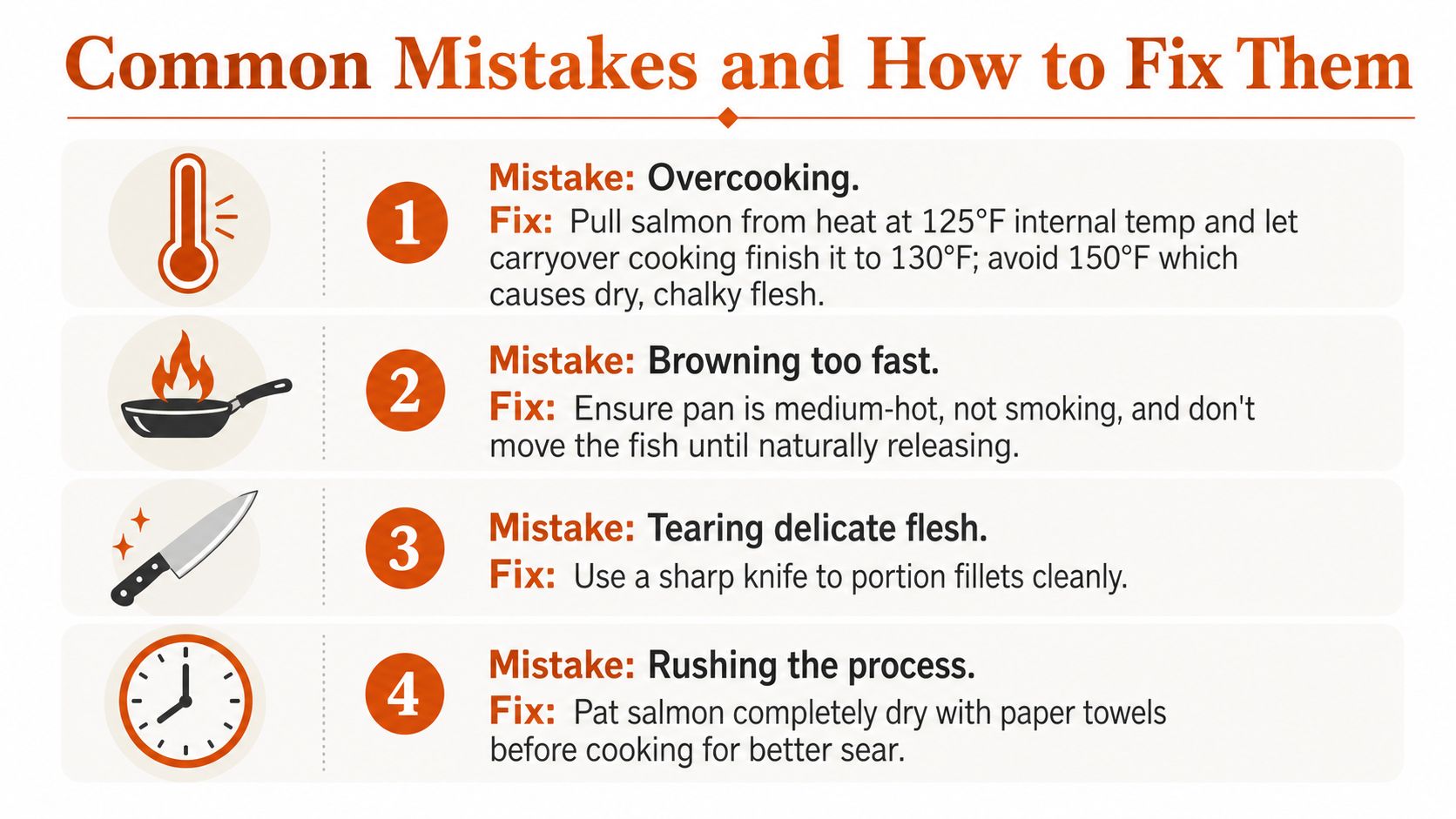
- Overcooking: A firm, dry center and pale liquid on the plate mean the fish stayed hot too long. Pull it earlier, verify the internal temperature at the thickest point, and let the resting heat complete the cook.
- Browning the basil: Black leaves or bitter flecks indicate excessive direct heat. Add fresh basil after cooking, and keep pesto away from the hottest part of the pan until the final stage.
- Starting with a wet surface: Pale skin, weak browning, and a steamed texture usually mean the fillet wasn't dried. Press paper towels firmly against both sides before seasoning.
- Underseasoning: Salmon can taste flat when salt only lands on the top. Season the flesh directly and give it enough time to draw flavor into the surface.
Don't use a fork to repeatedly test the fish. Each poke releases juices and tells you less than a thermometer. A single temperature check, followed by a proper rest, protects the texture far better than cutting into the center several times.
Serving, Plating, and What to Do With Leftovers
The finished basil salmon should have a seasoned, browned surface, a moist center, and fresh basil added after the strongest heat has passed. Let the fish rest briefly, then finish it with lemon and pan juices rather than burying the salmon under a heavy sauce.
For plating, keep the arrangement simple:
- Protect the crust: Rest the fillet skin-side up for about a minute so the crisp surface doesn't soften against a pool of liquid.
- Use juices carefully: Spoon pan juices over the fish, not underneath it. This keeps the top aromatic while preventing the skin from turning soggy.
- Add contrast: Serve with smashed potatoes, rice, roasted vegetables, or a shaved fennel salad. A crisp or starchy side gives the tender fish a more satisfying bite.
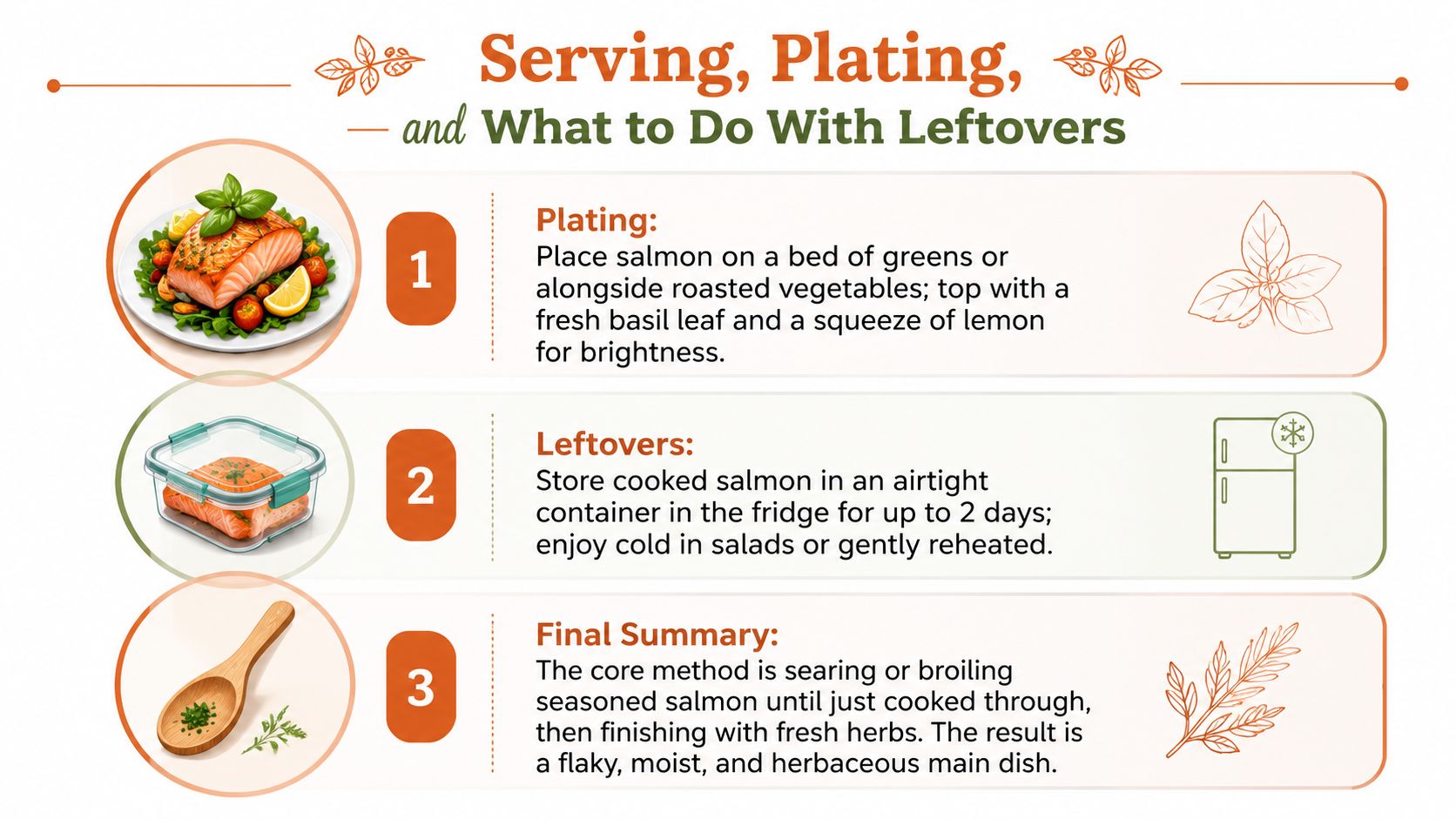
Cool leftovers to room temperature within one hour, then place them in a sealed container and refrigerate for up to two days. Reheat only once, covered, in a low oven at 275°F for about 10 minutes. Gentle heat matters because salmon dries quickly after its first cook.
Flake leftovers into pasta with extra pesto, or layer them onto toast with lemon and yogurt. For more approachable meal ideas built around vegetables, herbs, grains, and seafood, explore these easy Mediterranean diet recipes.
If you want more dependable everyday meals with clear, kitchen-tested instructions, visit Just Cook It and browse its downloadable cookbook collections. The recipes are designed for ordinary home kitchens and can be read on a phone, tablet, laptop, or e-reader, making them useful when you're planning the next quick dinner.