The difference between a well-decorated sugar cookie and a messy one often comes down to the frosting. A filling that's too soft can slide off the tops, run over the edges, and make the cookies soggy. A good vanilla buttercream should be smooth, easy to spread, and firm enough to hold its shape without overpowering the cookie's buttery flavour.
That's the lesson behind good cookie filling recipes. They're rarely complicated, but they do punish a bad match. A wet curd on a delicate shortbread, a runny jam inside a thin dough, or a heavy ganache between soft cakes will undo careful baking fast. Pair the filling to the base, control the portion, and cool everything before assembly, and even a plain cookie tastes finished.
The eight fillings below cover the pairings you'll use most, from vanilla buttercream and chocolate ganache to dulce de leche, lemon curd, raspberry jam, peanut butter buttercream, cream cheese, and fig paste. Each one gives you the base it belongs with, the texture to aim for, and the small prep details that keep it from leaking, sliding, or soaking through.
Table of Contents
- 1. Classic Vanilla Buttercream Filling
- 2. Chocolate Ganache Filling
- 3. Dulce de Leche Filling
- 4. Lemon Curd Filling
- 5. Raspberry Jam Filling
- 6. Peanut Butter Buttercream Filling
- 7. Cream Cheese Filling
- 8. Fig Filling
- Cookie Fillings at a Glance
- Pick a Filling, Pair It Well, and Start Baking
1. Classic Vanilla Buttercream Filling
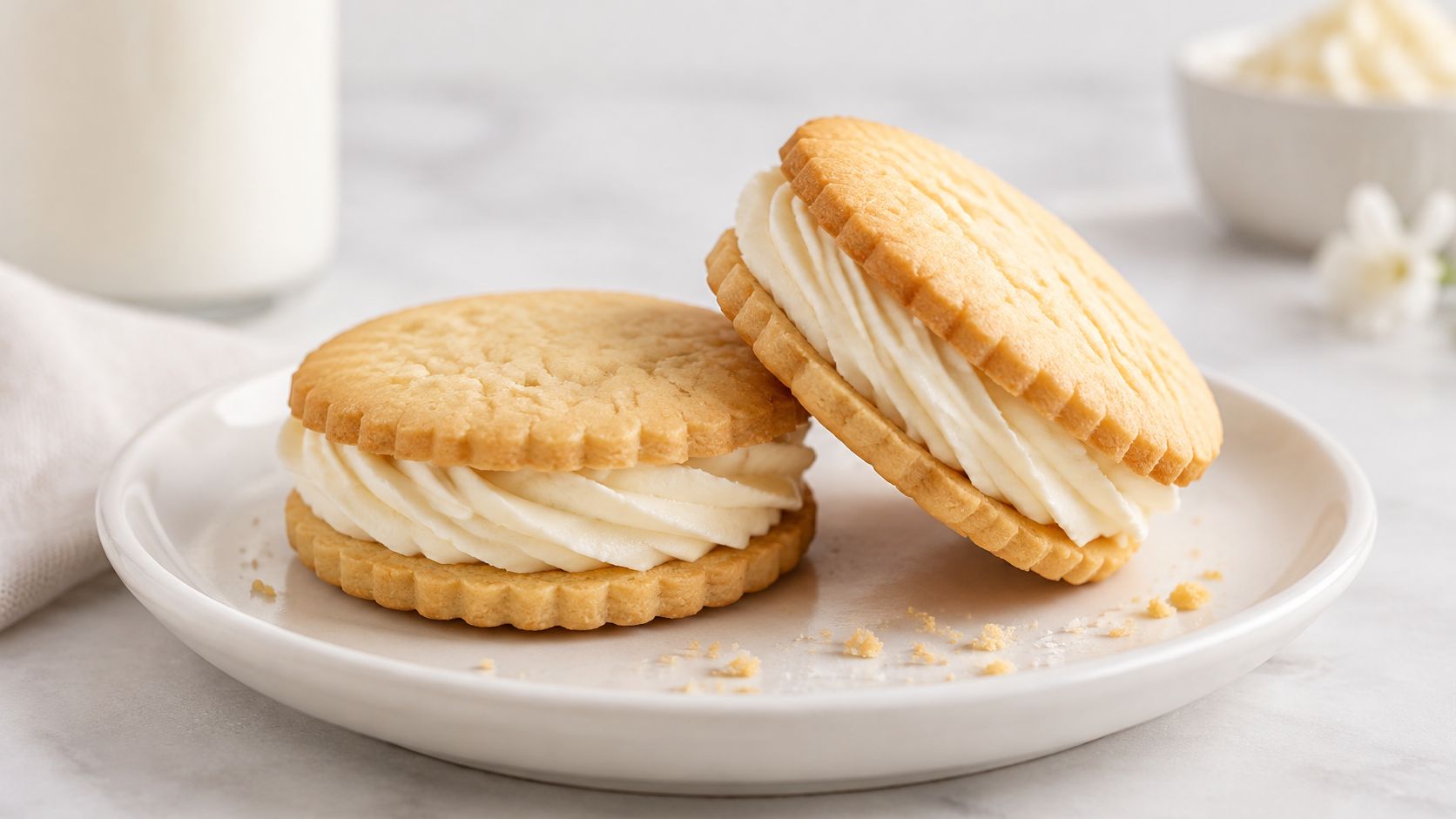
Start here if you've never sandwiched a cookie. Beat softened butter with sifted powdered sugar, vanilla, and a tiny splash of milk or cream until it's pale and holds a soft peak. It needs no cooking, uses pantry staples, and forgives small mistakes better than almost any other filling.
Best Pairings
Use it between sugar cookies, sturdy shortbread, or crisp chocolate wafers. The cookie needs enough structure to bite through cleanly without squeezing the cream out the sides. Holiday sugar cookies sandwiched with tinted buttercream work because the base is firm and not too sweet. Put the same filling between very soft drop cookies and you'll get sliding tops, so save those for a firmer ganache.
Formulation research backs up that balance between solids, fat, and structure, as a Springer study on sandwich cookie filling identified 23.16% corn starch, 46.84% powdered sugar, 0.87% gelatin solution, and 29.13% cocoa butter as an optimized benchmark. You're not copying that at home, but the principle holds. Add liquid slowly and keep enough powdered sugar for body.
- Use room temperature butter: Melted butter makes a greasy, flat filling that won't whip.
- Sift the sugar: Lumps stay gritty no matter how long you beat them.
- Add milk by the teaspoon: You want spreadable and firm, not pourable.
- Chill after assembly: Give filled cookies 15 to 20 minutes in the fridge so the layer sets.
If you like richer frostings, compare the technique with this easy German chocolate icing guide, then come back to plain vanilla for clean sandwich work. For more late night sandwich and ganache ideas in one place, Dessert After Dark: 75 Viral Dessert Recipes | Digital PDF collects 75 dessert and drink recipes, including gooey centers and glossy ganache, in a digital PDF you can read on any device or print from.
2. Chocolate Ganache Filling
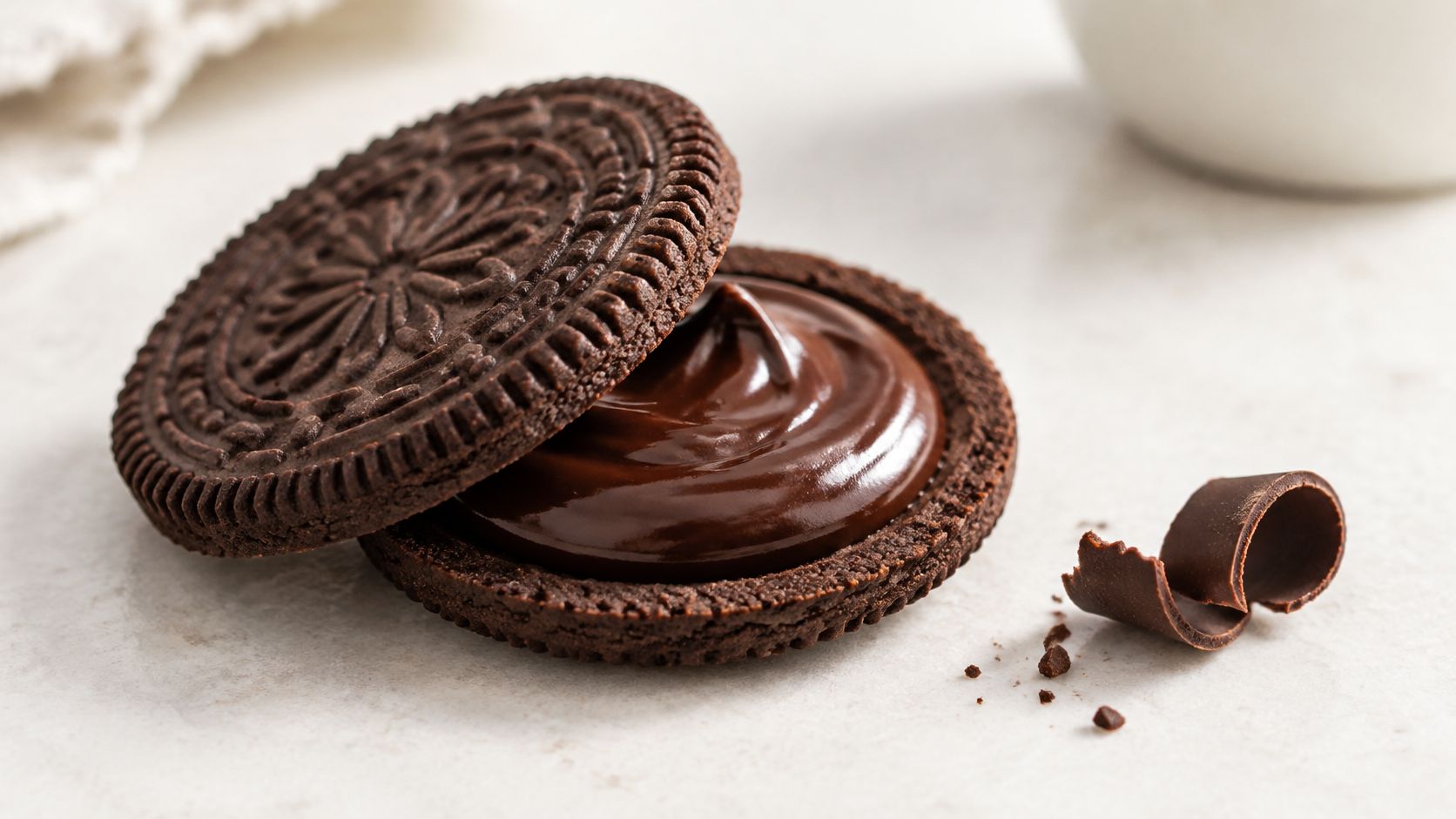
Ganache is what I reach for when buttercream tastes too sweet and not chocolatey enough. Pour hot cream over finely chopped chocolate, let it sit, then stir from the center until it's glossy. Cooled to a thick, fudge like spread, it gives you intensity without a long ingredient list.
Best Pairings
Pair it with chocolate sandwich cookies, chocolate whoopie style rounds, or plain shortbread you'll dip afterward. Dark chocolate ganache loves a vanilla or lightly salted base because the contrast keeps it from tasting flat. Milk chocolate works better with a deeper cocoa wafer. White chocolate ganache is softer, so keep the layer thin and serve those cookies the same day.
The ratio decides whether you can pipe it, spread it, or watch it slump. More chocolate than cream sets firmer for sandwiching. Equal parts stays softer and suits a thumbprint well where the cookie walls hold it in place. This roundup of the best chocolate recipes is a useful place to see how the same chocolate behaves across cakes, cookies, and glazes.
Ganache should look like soft peanut butter before you sandwich with it. If it pours, wait. If it tears the cookie, warm the bowl briefly and stir again.
Chop the chocolate fine so it melts evenly, and heat the cream just to a simmer rather than a hard boil. Let the mixture sit for 2 minutes before stirring, then chill it for 20 to 30 minutes and whip briefly if you want a lighter, mousse like bite. A pinch of espresso deepens the flavor without making it taste like coffee, which is why baking with instant coffee is such a handy trick for chocolate bakers. Use chocolate you'd happily eat plain, since there's nowhere for waxy flavor to hide.
3. Dulce de Leche Filling
Dulce de leche brings the caramel note without the anxiety of a dry caramel pan. It's sweetened milk cooked slowly until thick, golden, and toasty, and a good jar from the store is the smart move on a weeknight. Homemade is lovely, but it needs time and attention you could spend on the cookies themselves.
Best Pairings
Its home is the alfajor, the South American shortbread sandwich where a crumbly, cornstarch tender cookie meets a thick caramel center. That pairing works because the cookie is dry and delicate in a good way, so it drinks in a little richness without collapsing. Butter cookies also work well. Avoid very crisp, thin wafers, since dulce de leche is dense and will crack them when you press the sandwich together.
Warm the filling just slightly before spreading, only until a knife moves through it easily. Too warm and it runs to the edges and keeps going. Spread it thicker in the center and thinner at the rim, because pressing the top cookie on will push it outward.
- Choose thick and spreadable: A pourable sauce style dulce de leche is for drizzling, not sandwiching.
- Roll the edges: Press assembled cookies in toasted coconut or dust them with powdered sugar for grip and texture.
- Rest before serving: A short rest lets the crumb soften just enough so the bite is tender, not shattering.
Say you're making alfajores for a gift box. Fill them a day ahead, keep them in a single layer until the edges feel set, then stack with parchment between layers. The flavor improves overnight, but don't fill a crisp butter cookie that far ahead if you want snap. With dulce de leche, a little softening is part of the charm, just plan for it instead of fighting it.
4. Lemon Curd Filling
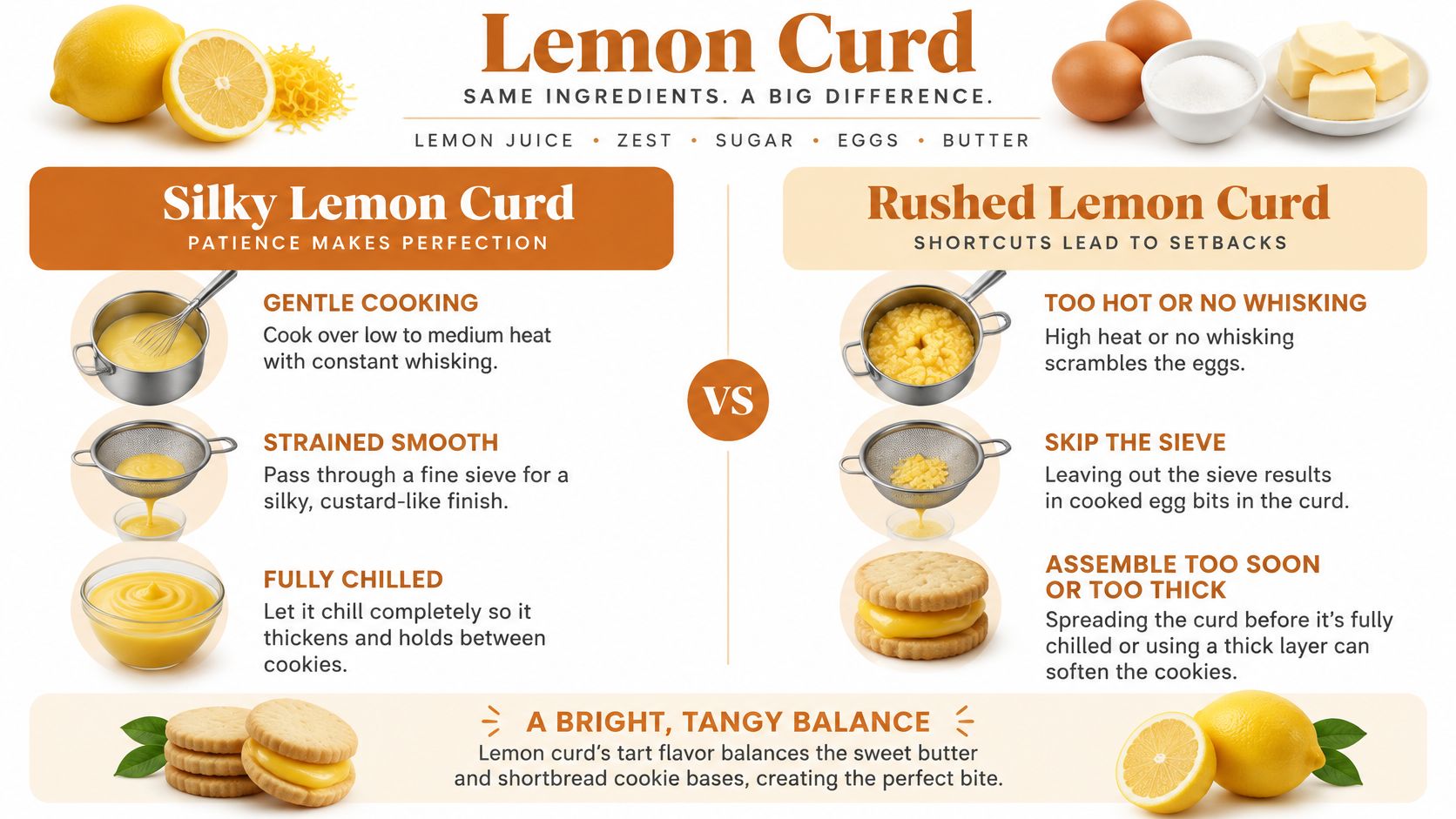
Cook lemon juice and zest with sugar, eggs, and butter over gentle heat, whisking constantly, until it coats a spoon thickly. Strain it, chill it completely, and you have a bright, clean filling whose acidity cuts through rich dough where sweeter fillings would only add more of the same.
This comparison is a handy reference when you're choosing between a baked-in filling and one you add after baking.
Best Pairings
Use curd with butter cookies, shortbread sandwiches, or thumbprints where the well protects the filling. The cookie should be plain enough to let the acidity lead. A spiced or chocolate base muddies that fresh finish. If you love this flavor direction, a no bake lemon cheesecake uses the same sweet tart balance in a completely different format.
Moisture is the trade-off. The American Society of Baking guide to fillings recommends keeping filling water activity below 0.68 for microbiological quality, shelf life, and reduced migration risk. Curd is a moist filling, so it will soften a crisp cookie over time as water moves toward the drier crumb. If you want a snappy sandwich, fill it the day you serve it.
Watch the curd come together once and you'll recognize the moment it turns glossy and holds a clean line on a spoon.
Cook over low to medium heat and don't walk away, since eggs scramble fast at the edges. Strain through a fine sieve to catch any cooked bits and zest that turned stringy. Chill the curd fully before spreading, because it thickens further as it cools. Refrigerate leftovers instead of leaving a perishable egg-based filling in a cookie tin.
5. Raspberry Jam Filling
A tray of thumbprints comes out of the oven with half the wells flooded. The jam ran thin, bubbled over the edges, and welded itself to the pan in a scorched pink ring. That failure comes down to one decision: the jam itself. Pick a thick, seedless raspberry jam and the filling is nearly foolproof, with only one choice left, whether it goes in before the bake or after.
Best Pairings
Thumbprints and linzer cookies are the classic matches for a reason. A nutty, buttery linzer dough needs fruit sharpness to cut through the richness, and the cutout window turns that red center into the design. A plain shortbread thumbprint lets the jam be the whole point. Sweet, heavily spiced doughs are the wrong match here, since they compete with the berry's tartness instead of framing it, and a shallow well filled with loose preserve will overflow no matter how good the dough is.
Jam filled cookies go back a long way. The Wikipedia history of cookies traces cookies to 7th century Persia, with filled thumbprints and sandwich cookies developing from several longstanding traditions. That history has a practical side, too. Jam baked into the center sets duller and firmer, while jam added after baking stays glossy and fresh tasting.
- Pick thick, seedless jam: Seeds catch in your teeth and thin jam spreads where it shouldn't.
- Make an even well: The back of a measuring spoon gives you the same depth every time.
- Chill the dough first: Cold dough holds its shape when you press the center.
- Repair cracks quickly: Pinch small splits closed before filling so jam doesn't leak through.
If you bake preserves into other desserts, this cake with strawberry jam resource shows the same sweet tart layering idea at cake scale. For thumbprints you're serving today, I prefer adding jam after baking and returning the tray to a warm, turned off oven just long enough to help it settle. You keep the shine and skip the risk of a dry, leathery center.
6. Peanut Butter Buttercream Filling
Beat the peanut butter into the butter first, before any sugar goes in. The fat needs to be fully smooth or you'll chase lumps through a bowl of powdered sugar for ten minutes. Then add the sugar, a splash of cream, and a pinch of salt so the filling tastes like roasted peanuts instead of candy coating. It comes together fast and pipes beautifully.
Best Pairings
Chocolate is the obvious partner. Fill chocolate wafers for a candy inspired sandwich, or pair it with peanut butter cookies if you want a double hit and a softer bite. A vanilla sugar cookie works too, but the filling dominates, so keep the layer moderate. Delicate, lacy cookies are a poor match because this filling is heavy and will crack them during assembly. Give it a sturdy, flat base that can take real pressure when you press the top cookie down.
Texture is your main choice. Smooth peanut butter gives you a silky filling that pipes into clean swirls. Crunchy peanut butter adds little pops that are fun in a rustic sandwich but messy in a neat gift box cookie. Natural peanut butter that separates can make the filling oily, so stir the jar thoroughly and expect a softer set.
Practical rule: If the filling looks shiny and loose in the bowl, beat in powdered sugar a spoonful at a time until it holds a peak. Chilling only makes a loose filling look firmer; the softness comes right back at room temperature.
Add cream one teaspoon at a time, since peanut butter brands vary a lot in oil content. Pipe a ring around the edge and fill the center if your cookies are slightly domed, which keeps the layer even. Label these clearly when you're serving guests, because a chocolate sandwich doesn't announce peanuts the way a peanut topped cookie does. That one small card on the platter saves an awkward conversation later.
7. Cream Cheese Filling
Pumpkin cookies taste heavy under buttercream; cream cheese fixes that. Beat softened cream cheese and butter until completely smooth, then add powdered sugar and vanilla. You get tang, a softer set, and a filling that makes spiced cookies taste balanced instead of cloying.
Best Pairings
Pair it with pumpkin cookies, spiced sandwich rounds, red velvet style cookies, or lemon cookies where you want tang on tang. Soft, cakey bases suit it best because the filling itself is soft. A very crisp cookie will squeeze it out with the first bite, so if you need a crisp base, pipe a thinner layer and chill the sandwiches well before serving.
Use full-fat block cream cheese. Spreadable tub styles carry extra moisture and rarely set firm enough to hold a sandwich together. Beat the cream cheese and butter smooth before the sugar goes in, because lumps are harder to chase down once the bowl turns stiff. Chill the finished filling for about 20 minutes before piping so your edges stay tidy.
Storage decides whether these sandwiches reach the table in good shape. Guidance on storing homemade cookies so they stay fresh reflects the gap many recipes leave around perishable fillings like cream cheese, custard, and fresh fruit. Keep them refrigerated in an airtight container, let them sit out briefly before serving so the crumb isn't fridge-hard, and skip shipping them during a warm week. For a make-ahead party tray, bake the cookies and make the filling separately, then assemble the morning you need them.
8. Fig Filling
Seal too much fig paste inside soft dough and the seam leaks before the fruit has time to set. Cook dried figs with water and a little sugar until they slump, blend to a thick paste, then brighten it with lemon zest or cinnamon. You want chewy and jammy, with a deeper natural sweetness than berry jam.
Best Pairings
This filling earns its place inside dough: fig bars in the style of fig Newtons, or a spoonful tucked into shortbread or oat cookies and baked until golden. The enclosure protects the paste and gives the fruit time to meld with the crumb. Between two crisp cookies it behaves badly, because fig paste is dense and sticky rather than creamy; the first bite shoves it sideways instead of giving a clean sandwich.
Portioning decides whether the seams hold. Bakery Info guidance on producing filled cookies puts a practical ratio at roughly 15 to 20 grams of filling inside 50 to 60 grams of dough, enough for a clear center without pressure on the join. At home, use a modest strip or spoonful of fully cooled fig paste and pinch the dough firmly closed.
- Trim the stems: Tough fig stems stay bitter and woody even after blending.
- Simmer until fully soft: Undercooked figs blend into a grainy paste that tears dough.
- Cool completely: Warm filling softens dough and makes sealing frustrating.
- Rest before slicing: Fig bars cut cleaner after the crumb and filling settle.
A useful comparison of stuffed cookies versus cookie sandwiches separates baked-in fillings from post-bake ones: anything that goes into the oven has to tolerate heat without releasing excess water. Fig paste passes when it is thick. Keep the layer centered, leave dough covering every edge, and bake until the outside is golden and the seams feel dry and firm before slicing.
Cookie Fillings at a Glance
Each filling has a cookie base it belongs with and a predictable way of failing when the match is wrong. Use the last column to catch problems before you bake.
| Filling | Flavor Profile | Best Cookie Pairing | If the Match Fails |
|---|---|---|---|
| Classic Vanilla Buttercream | Sweet, smooth, vanilla-forward | Sugar cookies or shortbread | Soft filling squeezes out when sandwiches are pressed |
| Chocolate Ganache | Rich, fudgy chocolate | Chocolate cookies or shortbread | Runs off the cookie when spread warm |
| Dulce de Leche | Deep, toasty caramel | Alfajores or butter cookies | Melds crisp bases soft by day two |
| Lemon Curd | Bright, tart, citrusy | Butter cookies or shortbread | The curd's moisture softens crisp bases fast |
| Raspberry Jam | Sweet-tart and fruity | Thumbprint or Linzer cookies | Loose jam seeps into the base and softens it |
| Peanut Butter Buttercream | Rich, salty-sweet | Chocolate cookies or wafers | Thick filling can crack thin wafers during pressing |
| Cream Cheese Filling | Creamy, lightly tangy | Spiced or pumpkin cookies | Too soft and perishable to sit at room temperature |
| Fig Filling | Chewy, mildly sweet | Oat or shortbread cookies | Dense paste slips between two crisp cookies |
Read those failures as one pattern: soft, moist fillings need a base that can absorb or contain them, while stiff fillings need a base sturdy enough to press against. Once the match is right, the rest is portioning.
Pick a Filling, Pair It Well, and Start Baking
If you're new to filled cookies, start with classic vanilla buttercream between sugar cookies. You'll learn portioning, pressing, and chilling without cooking a filling or racing a perishable one. Once that feels easy, move to raspberry thumbprints, where the dough does most of the work of holding the filling in place.
Chocolate lovers should go straight to ganache. It's the biggest step up in flavor for the least extra technique, and it teaches you how temperature controls texture. Warm ganache spreads, cool ganache pipes, and whipped ganache gives a lighter bite from the same bowl. Peanut butter buttercream is the other low effort, high payoff option, especially against chocolate wafers on a busy weekend.
Fruit forward bakers get two different paths. Raspberry jam and lemon curd bring brightness and color but soften crisp bases, so build those close to serving. Fig paste is the make-ahead fruit filling: it bakes in, travels well, and keeps its chewy center. Dulce de leche sits between those worlds, rich and giftable, as long as you accept a tender, melded bite by day two.
One pairing fails in practice no matter how good the filling is: a soft filling on a thin, snappy wafer. The first bite squeezes buttercream or curd out the sides, and the wafer snaps before the filling yields. Give soft fillings a base with some chew or a shape that holds them, like thumbprint wells or an alfajor's tender crumb. Storage follows the filling rather than the tin, so freezing components separately and assembling after thawing beats freezing finished cookies.
Dependable results come from tested recipes, clear portions, and knowing what a filling should look like before it touches a cookie. That's the standard at Just Cook It, with kitchen-tested digital cookbooks, instant PDF access on any device, and lifetime updates. When the season turns, even playful bakes like witch finger cookies for Halloween follow the same rule you've used here. Match the filling to the dough, respect the moisture, and the cookie does the rest.
Ready to keep baking beyond these eight fillings, from glossy ganache for sandwich cookies to caramel and molten centered desserts for your next batch? Visit Just Cook It to browse kitchen-tested digital cookbooks you can download instantly, read on any device, and keep with lifetime access, including Dessert After Dark for bakers who want more of these flavors. Start with the free starter recipe pack, then pick your next filled cookie and bake it tonight.