Cooking for one usually isn't a skill problem. It's a shopping and portioning problem. You need enough food to feel satisfied, without committing to the same dinner until you're tired of it. And you shouldn't have to wash a roasting pan, saucepan, and colander for a single plate.
You're hardly alone in this situation. According to the U.S. Census Bureau, one-person households accounted for 27.6% of occupied U.S. households in 2020.
A good solo recipe tells you what goes on tonight's plate and what happens to the ingredients you don't use.
These healthy easy dinner recipes for one start with that idea. Each makes a deliberate single serving, with measured ingredients, a realistic timing allowance, and a plan for stretching the meal or using the remaining groceries.
Frozen vegetables, canned beans, and cooked rice are welcome. Healthy doesn't have to mean fresh-only, and dinner doesn't have to be tiny. Choose the meal that fits your appetite and the ingredients you already have.
Table of Contents
- 1. Sheet-Pan Lemon-Herb Chicken Thighs with Vegetables (Single Portion)
- 2. One-Pan Chickpea and Spinach Skillet
- 3. Salmon en Papillote with Vegetables
- 4. Quick Chicken and Broccoli Stir-Fry
- 5. Black Bean and Sweet Potato Burrito Bowl
- 6. Red Lentil Dal for One
- 7. Turkey and Rice Stuffed Bell Peppers for One
- 8. Japanese-Style Chicken and Vegetable Donburi
- Cook Time, Difficulty, and Main Trade-Off for Each Solo Dinner
- Pick One Recipe Tonight and Save the Rest for Later
1. Sheet-Pan Lemon-Herb Chicken Thighs with Vegetables (Single Portion)
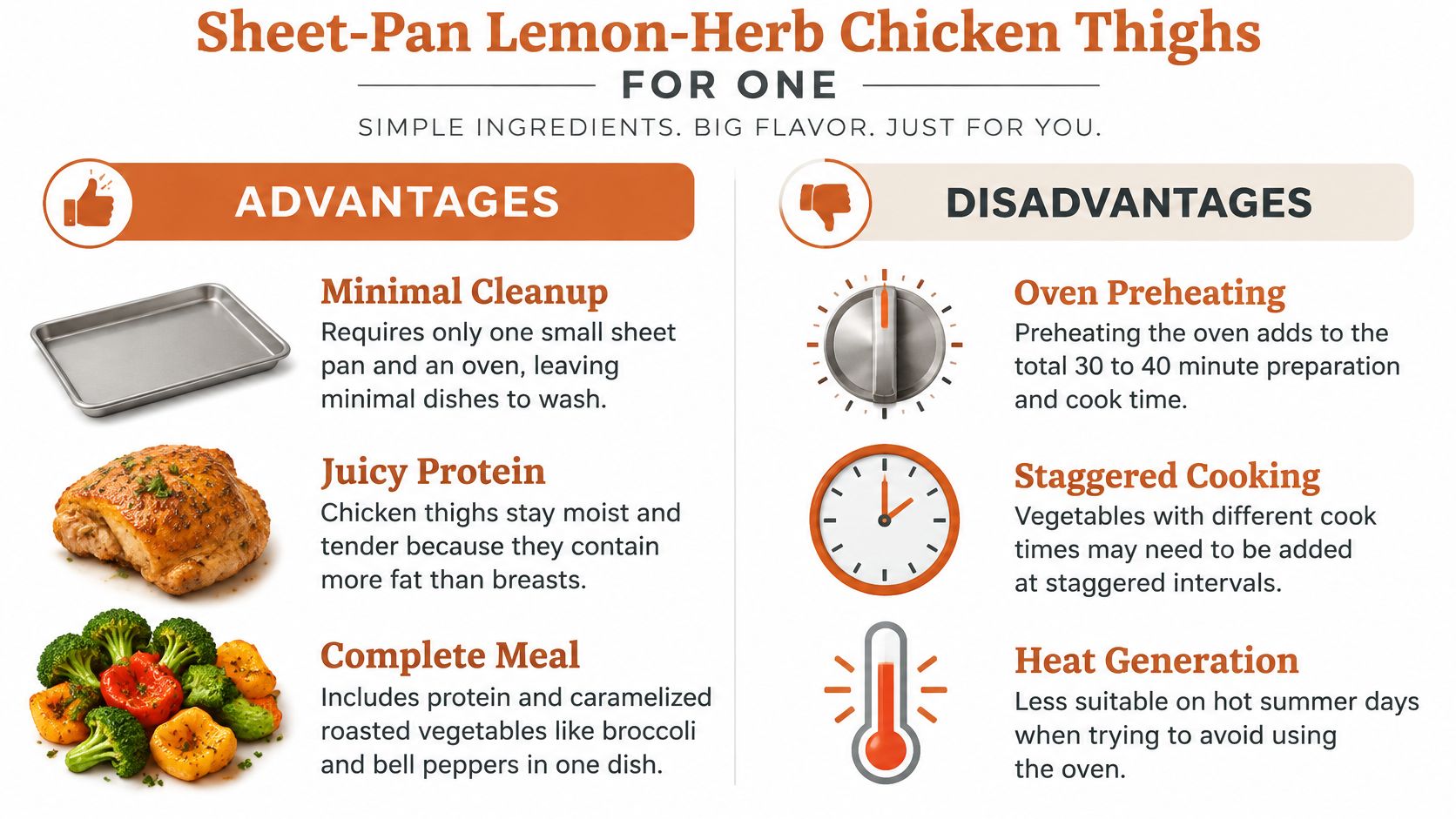
This is the dinner for an evening when you can wait for the oven but don't want to stand over the stove. Use small boneless thighs here. Large bone-in thighs need longer, and the vegetables can overcook while you wait.
Build Your Single Portion
- Chicken: Use two small boneless, skinless thighs, about 5–6 ounces total.
- Vegetables: Measure 1 cup broccoli florets and ½ cup sliced bell pepper.
- Seasoning: Mix 2 teaspoons olive oil, 1 teaspoon lemon juice, one minced garlic clove, and ¼ teaspoon dried oregano. Add black pepper and a small pinch of salt.
- Timing: Allow about 35 minutes overall, including preparation and oven heating.
Heat the oven to 425°F. Pat the chicken dry, then coat it and the vegetables with the seasoning mixture on a small rimmed sheet pan. Spread everything out rather than piling the vegetables beneath the meat.
Roast for about 25 minutes, turning the vegetables when their edges begin to brown. Check the thickest part of the chicken with a meat thermometer; don't judge doneness by browning alone. Finish with another squeeze of lemon.
Portion math: All the chicken and vegetables make tonight's plate. Add a slice of whole-grain bread if you want a more substantial dinner rather than automatically increasing the meat.
Stretch-it plan: Freeze unused raw thighs in meal-size packages. Save the remaining pepper for the stir-fry below.
For another flavor option, our guide to what chicken bouillon is explains the ingredient. If you use it as seasoning, skip the initial salt.
Prep tip: Dry broccoli browns better than wet broccoli. Shake off rinse water thoroughly before adding the oil.
2. One-Pan Chickpea and Spinach Skillet
When the fridge looks sparse, canned chickpeas can still become a proper dinner. Tomatoes provide the sauce, spinach folds into almost nothing, and yogurt adds creaminess without needing a separate dressing.
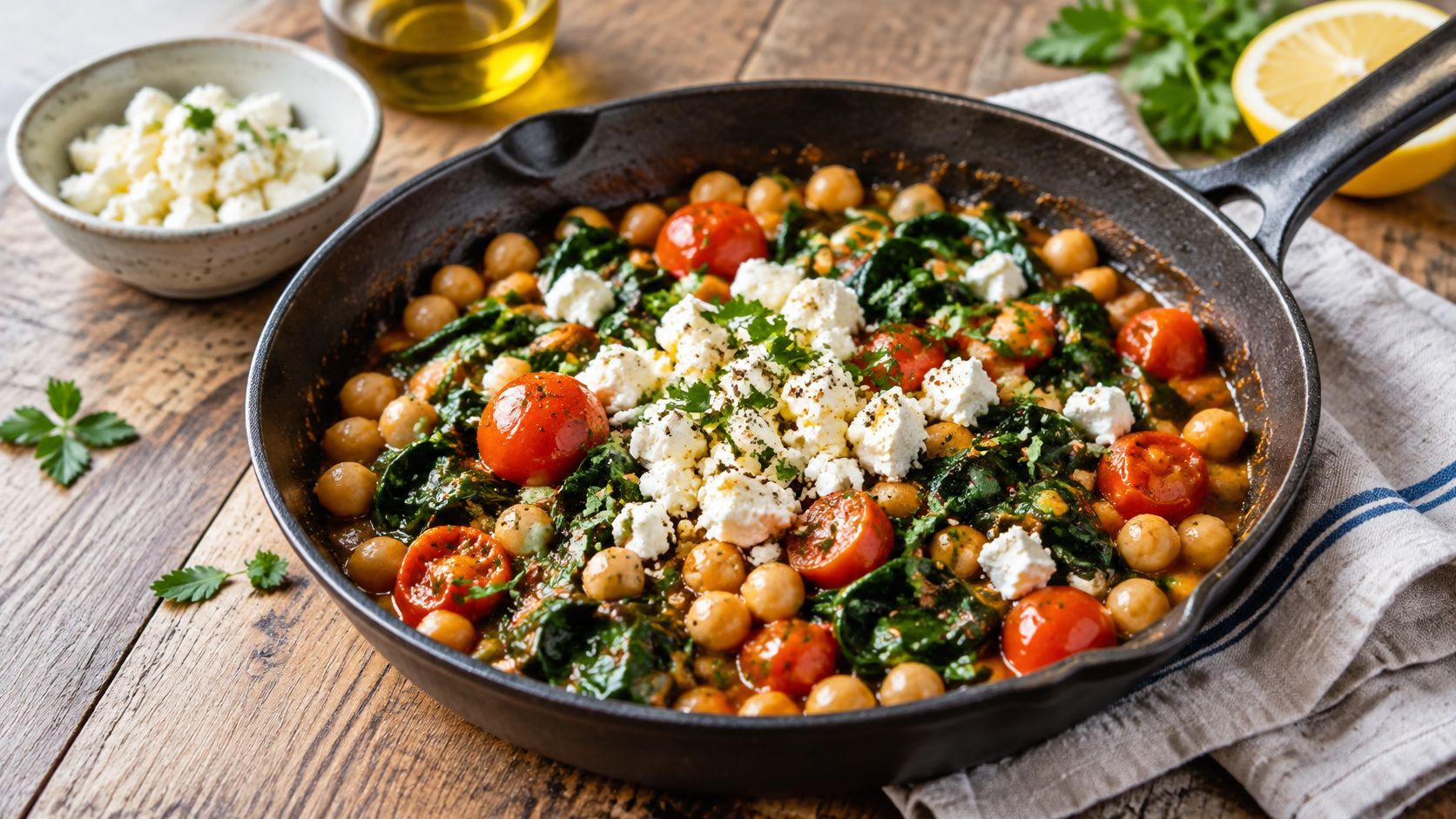
For a single skillet, measure ¾ cup drained, rinsed chickpeas, 1 cup cherry tomatoes, 2 loosely packed cups spinach, 1 teaspoon olive oil, one minced garlic clove, and ¼ teaspoon smoked paprika. Finish with 2 tablespoons plain yogurt and serve with one slice of whole-grain toast.
Allow about 15 minutes from cupboard to plate. Warm the oil over medium heat, soften the garlic briefly, then add the tomatoes and paprika. Cook until the tomatoes split, pressing them with a wooden spoon to release their juices.
Make It Saucy, Not Watery
Add the chickpeas and a splash of water, then simmer until they're hot and coated in tomato juices. Fold in the spinach and let the excess moisture evaporate before taking the skillet off the heat. Spoon on the yogurt afterward so it stays creamy.
Portion math: The chickpeas, vegetables, yogurt, and toast make the complete serving. If you're particularly hungry, add an egg rather than doubling the entire skillet.
Practical rule: Frozen spinach works well, but squeeze out excess water before adding it. Otherwise, you'll spend dinner time boiling away a puddle.
Leftover plan: Freeze the unused chickpeas in a small container. Use the remaining yogurt on the burrito bowl, and put extra spinach in the dal.
Reheating tip: Reheat the chickpea mixture with a splash of water. Add fresh yogurt afterward, not before.
3. Salmon en Papillote with Vegetables
A parchment packet is useful when you want fish without a spattered stovetop. The salmon steams in its own enclosed space, so the result is tender rather than crisp. If you want browned skin, use a skillet instead.
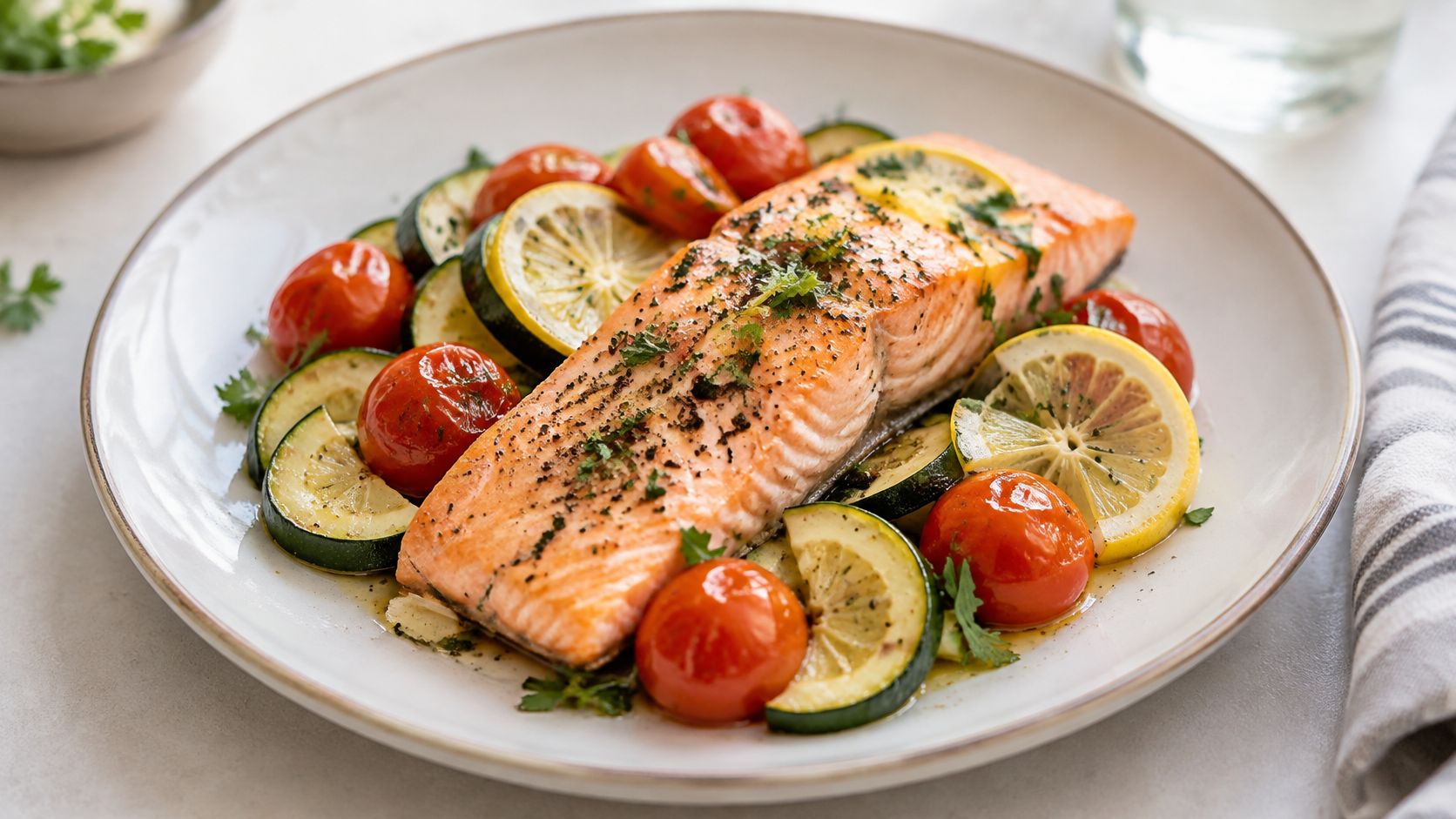
The image shows a plated serving idea; the packet method below produces a gentler finish.
Assemble a Complete Packet
Use one 5-ounce salmon fillet, ½ cup thinly sliced zucchini, ½ cup halved cherry tomatoes, and ¼ cup carrot ribbons. Add 1 teaspoon olive oil, lemon slices, dried dill, black pepper, and a small pinch of salt.
Heat the oven to 400°F and allow about 25 minutes overall. Put the vegetables on a large sheet of parchment, place the salmon on top, and add the oil and seasonings. Fold the parchment over and crimp the edges tightly, leaving room around the fish for steam.
Bake on a sheet pan for about 15 minutes, allowing longer for a thick fillet. Open the packet carefully because hot steam escapes immediately, then check the center before serving. If it needs more cooking, fold the packet closed and return it to the oven.
- Portion math: The whole packet serves one. Add ½ cup cooked brown rice to catch the lemony juices.
- Shopping plan: Individually frozen fillets let you thaw only what you need. Thaw the fish in the refrigerator before cooking.
- Stretch-it option: Use extra zucchini and tomatoes in the chickpea skillet rather than cooking another fish portion.
- Prep tip: Cut carrots into ribbons with a vegetable peeler. Thick carrot coins won't soften as quickly as the salmon cooks.
This works especially well when you want a contained meal with very little washing up.
4. Quick Chicken and Broccoli Stir-Fry
The speed comes from preparation, not frantic stirring. Slice the chicken, mix the sauce, and have your rice ready before you heat the pan. Starting with dry rice changes this from a quick stir-fry into a longer dinner.
Allow about 25 minutes overall with cooked rice available. Your single portion uses 4 ounces thinly sliced chicken, 1 cup small broccoli florets, ½ cup sliced bell pepper, 1 teaspoon neutral oil, and ½ cup cooked brown rice.
Mix the Sauce First
Stir together 2 teaspoons reduced-sodium soy sauce, 1 teaspoon rice vinegar, ½ teaspoon honey, ½ teaspoon cornstarch, and 3 tablespoons water. Add one minced garlic clove.
Heat a wide skillet over medium-high heat. Add the oil and chicken, spread it out, and let the underside brown before turning. Transfer the chicken to a clean plate once cooked through.
Add the broccoli, pepper, and a splash of water to the pan. Cover briefly to soften the broccoli, then uncover and let the water evaporate. Return the chicken, stir the sauce again, and pour it in; toss until glossy and bubbling.
For a visual cooking reference, use the video below.
Portion math: All the stir-fry plus the measured rice makes one bowl. A crowded pan won't make a better dinner, so cook extra chicken separately if you're deliberately preparing another meal.
Ingredient plan: Freeze unused raw chicken in thin, meal-size portions. Use the remaining broccoli with sheet-pan chicken.
Prep tip: Stir cornstarch sauce immediately before pouring. It settles while you cook, leaving thin liquid above a stubborn layer of starch.
5. Black Bean and Sweet Potato Burrito Bowl
Sweet potato, beans, and rice can make a satisfying bowl, but generous scoops of everything quickly produce more than a solo dinner. Measure the base, then add plenty of crunchy cabbage and a bright topping.
Vegetables deserve that space. The Dietary Guidelines for Americans 2020–2025 report that almost 90% of the U.S. population doesn't meet vegetable recommendations.
Keep the Bowl Balanced
- Warm base: Use ½ cup cooked brown rice, ½ cup drained black beans, and ½ cup peeled sweet potato cut into small cubes.
- Vegetables: Add 1 cup shredded cabbage and ¼ cup corn.
- Seasoning: Use 1 teaspoon olive oil, ¼ teaspoon cumin, a pinch of garlic powder, and lime juice.
- Topping: Finish with 2 tablespoons salsa and 2 tablespoons plain Greek yogurt.
Allow about 35 minutes overall if the rice is already cooked. Heat the oven to 425°F, toss the sweet potato with the oil and cumin, and spread it across a small baking sheet. Roast for about 25 minutes, turning when the undersides brown.
Warm the beans and corn with garlic powder and a splash of water. Add lime juice, then arrange everything over the rice with the cabbage, salsa, and yogurt.
Portion math: The measured ingredients make a complete bowl. For a bigger appetite, increase the beans or add avocado; you don't need to double every component.
Leftover plan: Freeze unused beans and corn separately. Keep the remaining sweet potato raw for another meal, or roast it intentionally for tomorrow's lunch.
Keep cabbage and yogurt out of the reheating container. Warm the rice, beans, and sweet potato first, then add the cold toppings.
For a no-oven variation, microwave the sweet potato until tender and cube it afterward. You'll lose the browned edges, but dinner will still work.
6. Red Lentil Dal for One
Red lentils are useful when you want something warm and spoonable without opening a large package of meat. They soften into the sauce, so this is a creamy dal rather than a bowl of separate, firm lentils.
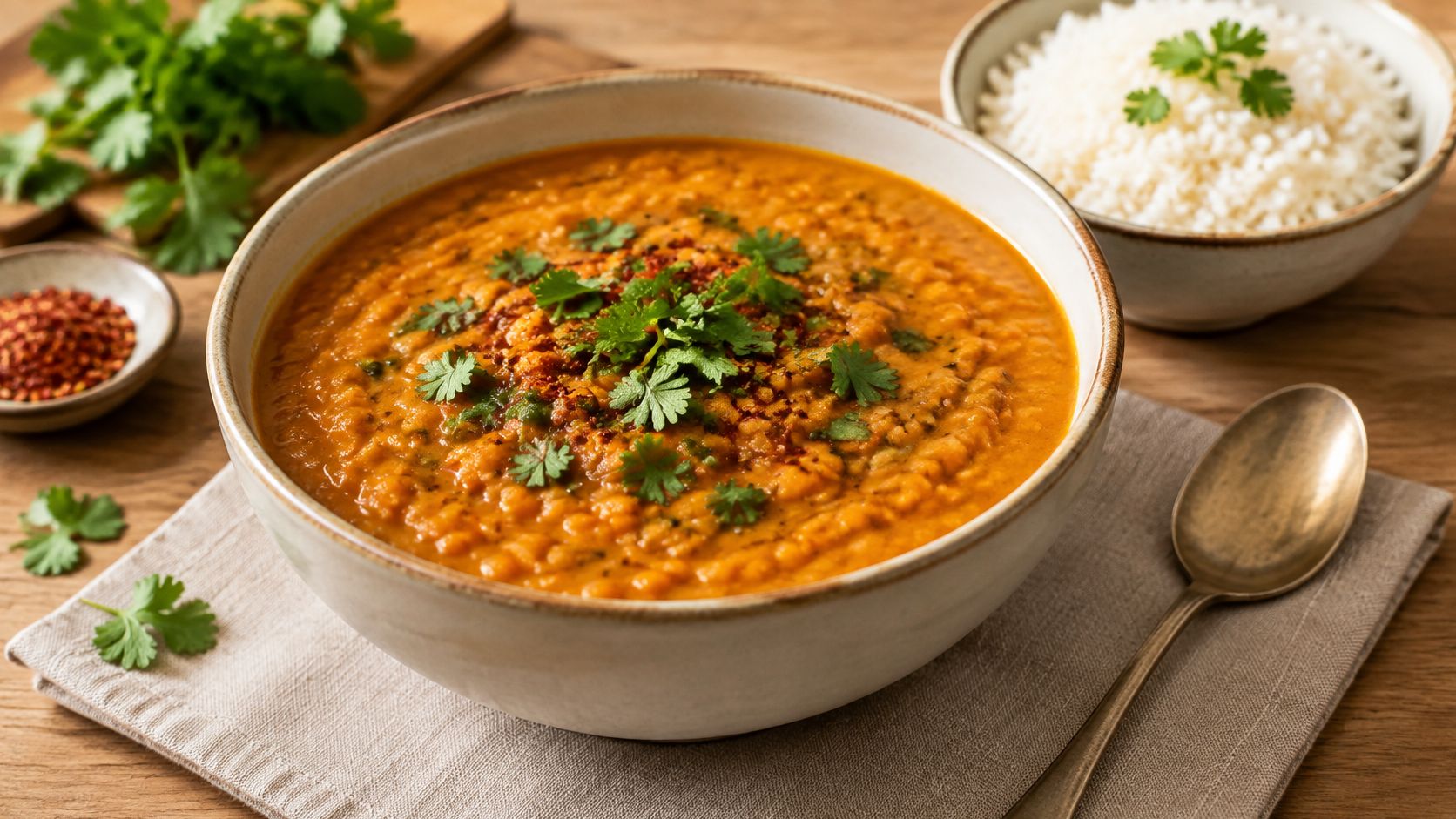
Start with a Small Saucepan
Measure ⅓ cup dried red lentils, 1 cup water, ¼ cup finely chopped onion, one minced garlic clove, and ½ teaspoon grated ginger. You'll also need 1 teaspoon oil, ¼ teaspoon cumin, ⅛ teaspoon turmeric, 1 cup spinach, and lemon juice.
Allow about 30 minutes overall. Rinse the lentils, then soften the onion in the oil over medium heat. Add the garlic, ginger, cumin, and turmeric, stirring briefly until fragrant rather than browned.
Add the lentils and water. Bring to a simmer, partially cover, and cook gently for about 20 minutes, stirring occasionally and adding water if the bottom begins to catch. Fold in the spinach, let it wilt, then finish with lemon and salt to taste.
Portion math: The full saucepan plus ½ cup cooked rice makes a single dinner. For a lighter appetite, serve it with a small flatbread instead.
Stretch-it plan: Extra onion and spinach can go into the chickpea skillet. Store dried lentils in a sealed container, so you can measure another serving without creating perishable leftovers.
Our guide to how to cook lentils explains the differences between lentil types. Don't swap in whole green lentils and expect the same timing or texture.
Reheating tip: Dal thickens as it stands. Add water gradually while warming and stir from the bottom.
7. Turkey and Rice Stuffed Bell Peppers for One
Stuffed peppers look like a project, but a single pepper is manageable. The trade-off is oven time. This is a good choice when you have cooked rice ready and want dinner to bake while you clear the kitchen.
Make the Filling Before Stuffing
Use one large bell pepper, 4 ounces lean ground turkey, ½ cup cooked rice, ¼ cup drained diced tomatoes, 2 tablespoons finely chopped onion, 1 teaspoon olive oil, and ¼ teaspoon dried oregano. Allow about 45 minutes overall.
Heat the oven to 400°F. Halve the pepper lengthwise, remove the seeds, and place both halves cut-side up in a small baking dish. Add a splash of water to the dish, cover, and bake while you prepare the filling.
Soften the onion in the oil, then add the turkey. Break it into small pieces and cook it thoroughly before stirring in the rice, tomatoes, oregano, and black pepper. Divide the filling evenly between the softened pepper halves.
Cover and bake for about 20 minutes, then uncover until the pepper is tender enough for your liking. If you prefer a very soft pepper, give it longer rather than adding more liquid to the filling.
- Portion math: Both filled halves are one dinner. You're dividing the filling between pepper halves, not making separate servings.
- Rice check: The rice must already be cooked. Our guide to how to tell when rice is done helps you avoid a crunchy filling.
- Leftover plan: Freeze unused raw turkey in a flattened meal-size package. Freeze excess canned tomatoes separately for dal or a skillet sauce.
- Reheating tip: Cover a cooked pepper when reheating so the rice doesn't dry out before the center is hot.
8. Japanese-Style Chicken and Vegetable Donburi
This bowl is inspired by chicken-and-egg donburi, with extra vegetables for a complete solo dinner. Unlike the stir-fry, you're gently simmering the chicken rather than browning it. The sauce should moisten the rice, not turn the bowl into soup.
Use 3 ounces thinly sliced boneless chicken, one egg, ¼ cup thinly sliced onion, ½ cup sliced mushrooms, 1 cup spinach, and ½ cup cooked rice. For the sauce, combine ¼ cup water or unsalted dashi, 2 teaspoons reduced-sodium soy sauce, and 1 teaspoon mirin.
Keep the Simmer Gentle
Allow about 20 minutes with cooked rice ready. Put the sauce and onion in a small skillet and simmer until the onion begins to soften. Add the chicken and mushrooms, keeping the chicken slices separated so they cook evenly.
Once the chicken is cooked through, fold in the spinach. Beat the egg lightly, pour in half, and let it begin to set before adding the rest. Cover and cook until the egg is set to your preference and appropriate for anyone you're serving.
Portion math: The chicken, egg, vegetables, sauce, and measured rice make one bowl. You don't need a full chicken breast alongside the egg.
Ingredient plan: Use chicken reserved from the stir-fry and spinach left from the chickpea skillet. Freeze spare raw chicken rather than keeping it around without a definite meal planned.
Prep shortcut: A small skillet makes this easier. In a wide pan, the shallow sauce can evaporate before the chicken finishes cooking.
Our guide to Japanese home-cooking recipes offers more ideas for this style of meal.
Reheating tip: Cook the egg fresh when possible. If preparing ahead, keep the chicken mixture and rice separate, then reheat them thoroughly before adding the egg.
Cook Time, Difficulty, and Main Trade-Off for Each Solo Dinner
| Item | Total Time | Difficulty | Main Trade-Off |
|---|---|---|---|
| Sheet-Pan Lemon-Herb Chicken Thighs with Vegetables (Single Portion) | 30 to 40 minutes | Easy | Minimal cleanup, but oven preheating adds time |
| One-Pan Chickpea and Spinach Skillet | 15 to 20 minutes | Easy | Quick and inexpensive, but may need added protein |
| Salmon en Papillote with Vegetables | 25 to 30 minutes | Easy | Moist fish and easy cleanup, but less browning and higher cost |
| Quick Chicken and Broccoli Stir-Fry | 20 minutes | Easy | Fast and balanced, but requires prep and careful sauce choices |
| Black Bean and Sweet Potato Burrito Bowl | 30 minutes | Easy | Filling and flexible, but involves several components |
| Red Lentil Dal for One | 25 minutes | Easy | Affordable and protein-rich, but needs occasional attention to avoid thickening |
| Turkey and Rice Stuffed Bell Peppers for One | 45 minutes | Moderate | Protein-rich and make-ahead friendly, but takes longer to bake |
| Japanese-Style Chicken and Vegetable Donburi | 15 minutes | Easy | Fast and adaptable, but specialty ingredients and soy sauce can add sodium |
Pick One Recipe Tonight and Save the Rest for Later
You don't need to reorganize your entire kitchen to cook better solo dinners. Pick a recipe that matches what's already there. Chickpeas and spinach suit a low-energy evening; sheet-pan chicken suits a night when you can let the oven do most of the work.
Then choose your next meal around the ingredients you'll open. That's more useful than selecting unrelated recipes and hoping the remaining groceries somehow get used. A deliberate second meal prevents the familiar discovery of a forgotten pepper or wilted bag of spinach.
Connect Your Dinners
- Chicken and peppers: Make the sheet-pan dinner, then reserve uncooked chicken and pepper for a stir-fry.
- Spinach and yogurt: Cook the chickpea skillet, use spinach in dal, and spoon yogurt over the burrito bowl.
- Cooked rice: Portion it for stuffed peppers or donburi rather than leaving a large container with no plan.
- Canned tomatoes and beans: Freeze unused amounts separately so you can take out what a future dinner needs.
Be honest about your appetite, too. A single serving isn't a fixed amount that suits everyone. Start with the recipe's portion, then add bread, rice, beans, or another vegetable according to how hungry you are and what else you've eaten.
The same honesty helps with timing. A stir-fry is quick when the rice is ready and the vegetables are cut. Stuffed peppers take longer even though the hands-on work is straightforward. Choose by the evening you have, not the cooking time you wish you had.
Make Tomorrow Easier Without Cooking Twice as Much
There's a difference between preparing ingredients and making unwanted leftovers. Washing spinach, chopping cabbage, or freezing raw chicken in meal-size portions saves effort without forcing you to repeat dinner. If you intentionally cook extra, decide where it's going before you start.
Cool cooked food promptly, refrigerate it in shallow containers, and label anything you freeze. Don't leave rice on the counter while you decide whether to save it. When reheating, warm the food thoroughly and add crunchy vegetables or cold yogurt afterward.
For more ideas, our Weeknight Dinners collection offers fast, family-friendly recipes ready in 30 minutes or less. All our recipes are 100% kitchen-tested, with clear instructions to help you get dependable results. When choosing a recipe for solo cooking, check the yield and plan the unused ingredients before shopping.
Start with a dinner you want to eat. A balanced meal you'll happily make again is more useful than an elaborate plan you abandon when you're hungry.
We offer downloadable cookbooks and free, step-by-step cooking guides for everyday meals across global cuisines. Visit Just Cook It to find your next weeknight dinner, then choose a second meal that uses the ingredients you already have.