In 2024, a high-protein vegetable soup recipe from The Big Man's World provided 35 grams of protein per serving, with each serving measuring 3¼ cups. That's a very large bowl, and it's exactly why per-bowl math matters more than a headline.
This high protein vegetable soup recipe shows its workings. You'll see what each ingredient contributes, where the estimate can shift by brand, and how to lift a solid lunch toward a fuller meal without turning the pot into bean paste.
Table of Contents
- Ingredients and Protein Per Bowl
- Swaps for Dairy-Free, Vegan and Gluten-Free Bowls
- How to Cook the Soup in One Pot
- Fixing Thin, Bland or Mushy Soup
- Cooling, Storing and Reheating Your Batch
- Pick Your Protein Plan and Cook Tonight
Ingredients and Protein Per Bowl
The base recipe provides about 13 g of protein per bowl, based on four equal servings. For the pot, combine 1 cup cooked lentils, ½ cup cooked chickpeas, 1 cup shelled edamame, and ½ cup plain Greek yogurt, stirred in at the end. Add 6 cups low-sodium vegetable broth, 1 chopped onion, 2 carrots, 2 celery stalks, 3 garlic cloves, and 1 tablespoon oil. Season with 1 teaspoon each of cumin and smoked paprika. Finish with 2 cups spinach, 1 cup frozen peas, and 1 zucchini.
Lentils anchor the protein tally. The U.S. Dietary Guidelines for Americans 2020–2025 count ¼ cup cooked beans or tofu as a 1-ounce-equivalent serving in the Protein Foods Group. One cup of cooked lentils therefore provides four ounce-equivalents. The guidelines also place beans, peas, and lentils in both the Vegetable Group and Protein Foods Group, though you count them in only one group when tracking targets.
Protein Sources in the Four-Bowl Recipe
| Ingredient | Amount for four servings | Protein for the pot | Protein per bowl |
|---|---|---|---|
| Cooked lentils | 1 cup, about 18 g per cup | about 18 g | about 4.5 g |
| Cooked chickpeas | ½ cup, about 7 g per cup | about 3.5 g | about 1 g |
| Shelled edamame | 1 cup, about 17 g per cup | about 17 g | about 4 g |
| Plain Greek yogurt, stirred in | ½ cup, about 20 g per cup | about 10 g | about 2.5 g |
| Whole recipe without tofu | 4 bowls | about 49 g | about 12 g |
| Optional firm tofu, cubed | 200 g, about 10 g per 100 g | about 20 g | about 5 g |
| Recipe with tofu | 4 bowls | about 69 g | about 17 g |
The ingredient estimates use typical values; check package labels for the amounts in your lentils, edamame, yogurt, and tofu. The chickpeas contribute about 3.5 g because the recipe uses half a cup, not a full cup. Dividing the pot's estimated protein by four gives roughly 12 g per bowl without tofu, or 17 g with it. Ladle size and ingredient brands can shift those figures.
At about 12 g, the base works as a solid lunch with bread, while adding 200 g cubed firm tofu brings each bowl to roughly 17 g. Lentils and edamame provide the largest shares; chickpeas contribute less, while vegetables and broth add volume, fiber, and flavor. For lentil timing and texture, follow this guide on how to cook lentils until tender. For concentrated broth options, a guide to concentrated bone broth offers relevant background, though bone broth makes the soup non-vegetarian.
Practical rule: Add the protein from each major ingredient, divide by the number of bowls you serve, and record the result with the recipe.
That calculation keeps the pot total distinct from the amount in each serving and shows how a swap changes the bowl.
Swaps for Dairy-Free, Vegan and Gluten-Free Bowls
Before you commit to a swap, check what it does to protein, timing, and texture. Some changes are neutral. Others turn a filling bowl into a light starter.
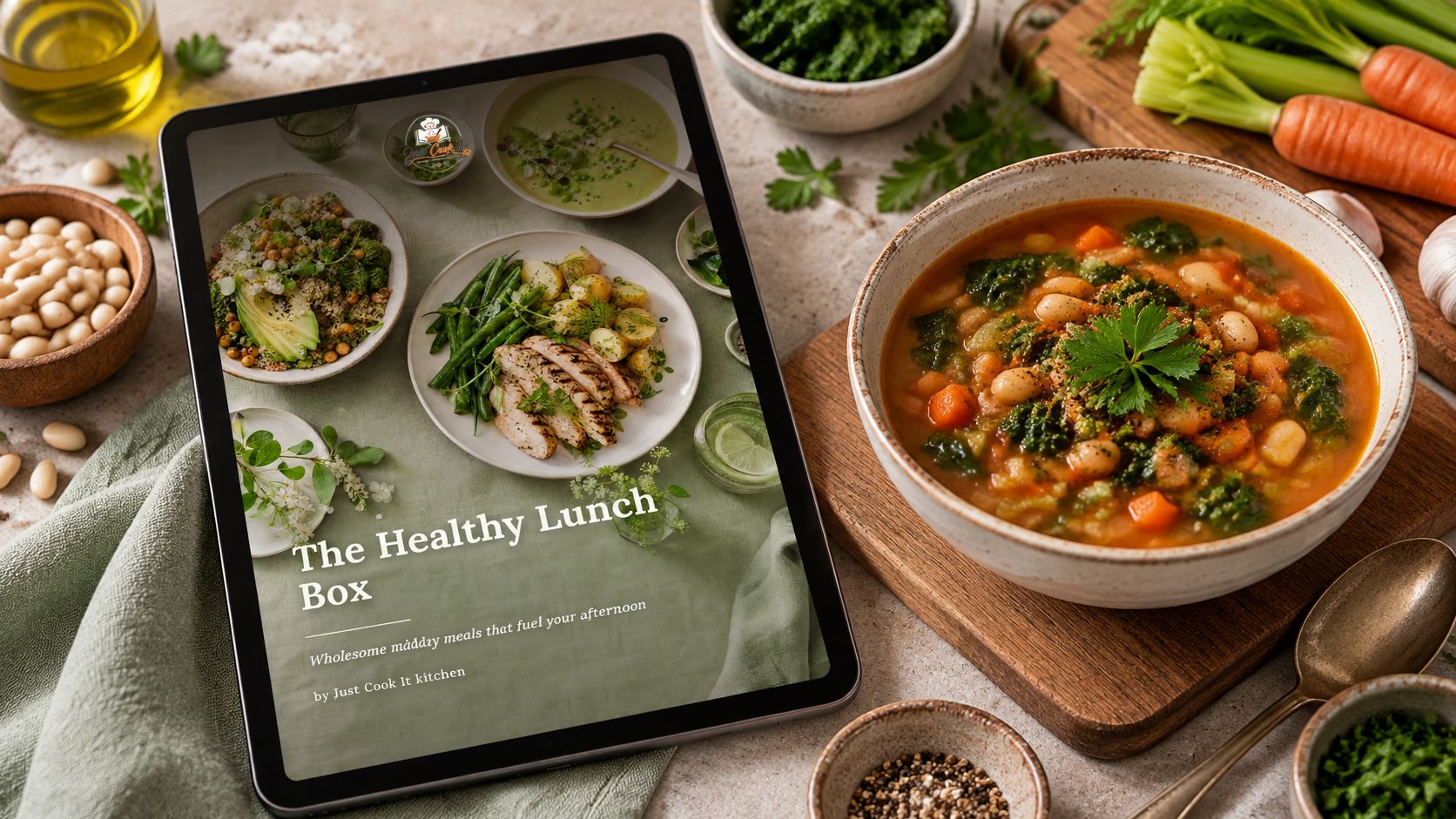
If you're packing lunches ahead, The Healthy Lunch Box | Digital PDF includes soups designed to pack and reheat among its 50 midday meals built around whole grains, vegetables, and lean proteins.
Swaps That Keep the Bowl Balanced
- Dairy-free or vegan: Leave out the Greek yogurt or use unsweetened soy yogurt. Removing the yogurt takes away about 2.5 g protein per bowl, so add the 200 g tofu if you want to stay near 18 g per bowl. Stir soy yogurt in off the heat so it doesn't split.
- No edamame: Replace 1 cup shelled edamame with an extra 1 cup cooked lentils. That keeps roughly 4 g protein per bowl from that slot and preserves the soup's fiber, though the texture becomes softer and less varied.
- Gluten-free serving: Skip barley or whole-grain bread on the side and serve the soup with brown rice instead. You still get a grain alongside the legumes without bringing gluten into the meal.
- Lower sodium: Use no-salt-added broth and hold back on the salt you'd normally add up front. Low-sodium broth is easy to under-salt, so the same end-of-cooking taste check that fixes a bland pot applies here.
- Vegetable changes: Swap spinach for kale and stir it in at the same late stage, giving tougher leaves an extra minute if needed. Swap zucchini for diced potato if you want a heartier bowl, but simmer the potato with the lentils and add about 10 minutes so it cooks through.
Check every packaged swap's label before you assume the math held. Soy yogurts, tofu brands, and broth powders don't all carry the same protein, and a sweetened yogurt can change both flavor and nutrition.
I would keep at least two concentrated protein ingredients in any version. Lentils plus tofu, or lentils plus edamame, gives you a margin when one label runs lower than expected.
How to Cook the Soup in One Pot
Firm ingredients need time; delicate ones need a late entrance. Lentils carry the protein base, need no soaking, and turn tender in about 20 minutes, then keep softening after the heat is off. Chickpeas, edamame, tofu, and yogurt are the flexible protein slots: add them late enough to protect texture while keeping their share of the bowl intact.
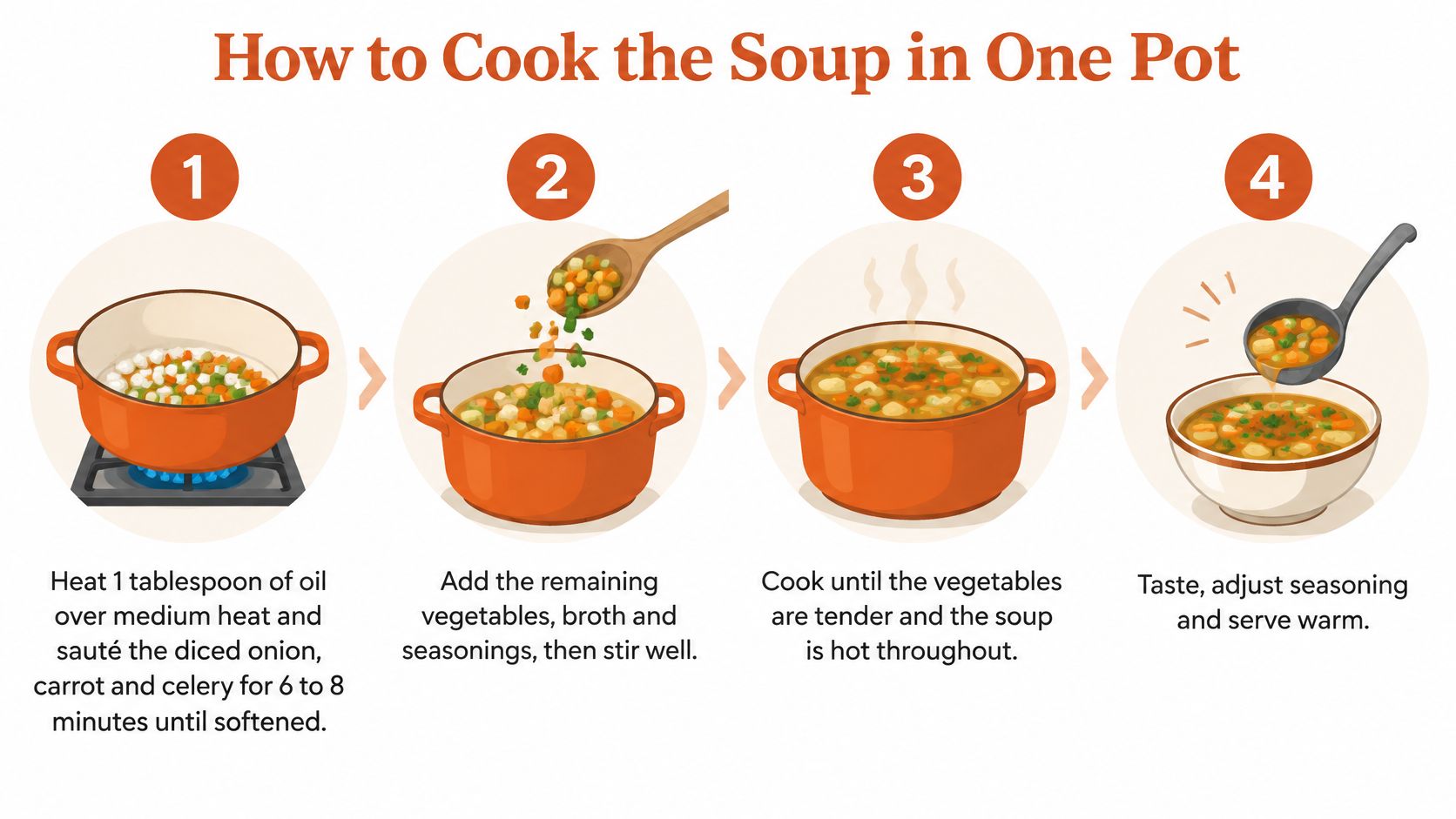
Use this four-step sequence before chopping:
Choose a heavy pot wide enough to stir comfortably. A narrow pot makes it harder to mash a few chickpeas later if you want more body.
The One-Pot Method
- Soften the base for 6 to 8 minutes. Heat 1 tablespoon oil over medium heat and sauté the diced onion, carrot, and celery until softened, because this builds sweetness before liquid goes in.
- Bloom garlic and spices for 30 seconds. Add the garlic, cumin, and smoked paprika just long enough to wake them up, since garlic scorches quickly and turns bitter.
- Add lentils, chickpeas, and broth. Stir in the rinsed lentils, chickpeas, and 6 cups low-sodium broth, then bring everything to a gentle simmer rather than a hard boil.
- Simmer for about 20 minutes. Cook until the lentils are tender but still hold their shape, because they will keep softening slightly off the heat.
- Add zucchini for 5 minutes. Stir it in after the lentils are nearly done so it becomes tender without collapsing into the broth.
- Finish greens and peas for the last 3 minutes. Add edamame, peas, and spinach near the end so they stay bright and keep some structure. If you're using tofu, add the cubes here to heat through without breaking apart.
- Take the pot off the heat. Stir in Greek yogurt and a squeeze of lemon, then taste for salt, because acid added earlier can slow legume softening and yogurt can split over direct heat.
- Serve with a grain if you like. Ladle into bowls with barley or whole-grain bread, since legumes are relatively low in methionine and grains help fill that amino-acid gap.
For a hands-off night, use these healthy slow cooker soup timing notes and still add delicate greens late.
Check the simmer against this short clip before serving:
Done looks specific. Lentils should be soft but intact, spinach and peas bright green, and the broth thick enough to coat a spoon lightly. If the lentils have burst everywhere and the zucchini has vanished, the soup can still taste good, but you've crossed from brothy soup into stew territory.
Don't chase tenderness with a violent boil. A steady simmer gets lentils done while leaving you something to chew.
Fixing Thin, Bland or Mushy Soup
The bland batches in cookbook test kitchens usually trace back to salt added once at the start and never revisited. The most common cause is under-salted low-sodium broth, tasted too early and never corrected after the lentils and vegetables release their own moisture. Seasoning is also where the protein math matters: lentils and chickpeas carry most of the bowl's protein, and both go dull in a broth that was salted once and abandoned.
Salt in stages. Add a little with the onion mixture, taste after the lentils soften, then finish with lemon off the heat. Acid at the end lifts the spices you already paid for, while salt makes the carrots taste sweet and the lentils taste earthy instead of dusty. If you're considering bouillon as a shortcut, this explainer on what chicken bouillon is and how cooks use it helps you judge concentrated flavor bases, though it won't keep the soup vegetarian.
Soup Symptoms, Causes and Fixes
| Symptom | Likely cause | Fix |
|---|---|---|
| Flat, dull taste | Under-salted low-sodium broth | Salt in stages and finish with lemon off the heat |
| Vegetables gone mushy | Boiled hard or added too early | Simmer gently and add spinach, peas or zucchini near the end |
| Lentils still firm | Acid added before the lentils softened | Simmer 5 to 10 more minutes and add acid last |
| Thin, watery bowl | Too much broth for the protein | Mash some beans or simmer uncovered for 10 minutes |
| Sharp or metallic taste | Acid cooked for too long | Add lemon off the heat and balance with a pinch of salt |
Mushy vegetables need a different diagnosis. If spinach went in with the lentils, no seasoning trick will restore it. Eat this batch as a softer soup, then hold spinach, peas, and zucchini back until the lentils are nearly tender next time. A gentle simmer matters too, because a rolling boil knocks vegetables around and breaks lentils apart.
Firm lentils are usually fixable in the same pot. Simmer 5 to 10 more minutes, taste again, and keep lemon or yogurt out until the texture is right. Old lentils can take longer, so judge by bite rather than the clock alone.
For a thin bowl, mash some chickpeas or lentils against the side of the pot and stir them back in instead of adding flour or cream. The starch and protein already in the pot do the thickening, so body goes up without changing the per-bowl count. Simmering uncovered for 10 minutes also concentrates flavor, but watch the level if you've already added greens.
At the stove or next batch: Salt, lemon, mashing, and brief simmering fix today's pot. Mushy greens and broken vegetables are next-batch lessons.
Sharp or metallic flavor often comes from acid cooked too long, especially lemon simmered until it turns harsh. Add it off the heat, stir, wait a minute, then balance with a pinch of salt before adding more. Taste from a spoon that has cooled slightly, because piping-hot soup hides salt and exaggerates bitterness.
Cooling, Storing and Reheating Your Batch
Treat cooling as a safety step with a clock attached. The FDA guidance on cooling cooked foods recommends cooling from 135°F to 70°F within 2 hours, then from 70°F to 41°F or below within the following 4 hours, and it names shallow pans, smaller portions, efficient containers, and stirring food in an ice-water bath as the methods that get you there.
A large, deep pot of steaming soup works against that clock. The edges chill while the center stays warm for hours, holding the batch in the temperature range where pathogens grow. Divide the soup into shallow containers, stir it in an ice-water bath if the pot was full, and refrigerate promptly while it is still warm.
Cooling, Storage and Reheating Benchmarks
| Stage | Target | How to do it |
|---|---|---|
| Cool from 135°F to 70°F | Within 2 hours | Shallow containers and an ice-water bath, stirring often |
| Cool from 70°F to 41°F | Within the next 4 hours | Refrigerate promptly in shallow portions |
| Refrigerated storage | 3 to 4 days | Label every container with the date |
| Reheat each portion | 165°F | Bring soup to a rolling boil before serving |
| Freezer storage | Freeze after cooling | Portion single servings before freezing |
Texture is the other reason to plan storage before you ladle anything out. The lentil and vegetable base holds up well across several days, but the finishing ingredients do not. Spinach and other leafy greens discolor, yogurt can separate, and peas and herbs keep softening with every reheat. Store the base on its own and stir those ingredients in while the portion warms, so a day-four bowl tastes freshly finished instead of repeatedly cooked.
A single-portion setup like this one makes weekday reheating straightforward.
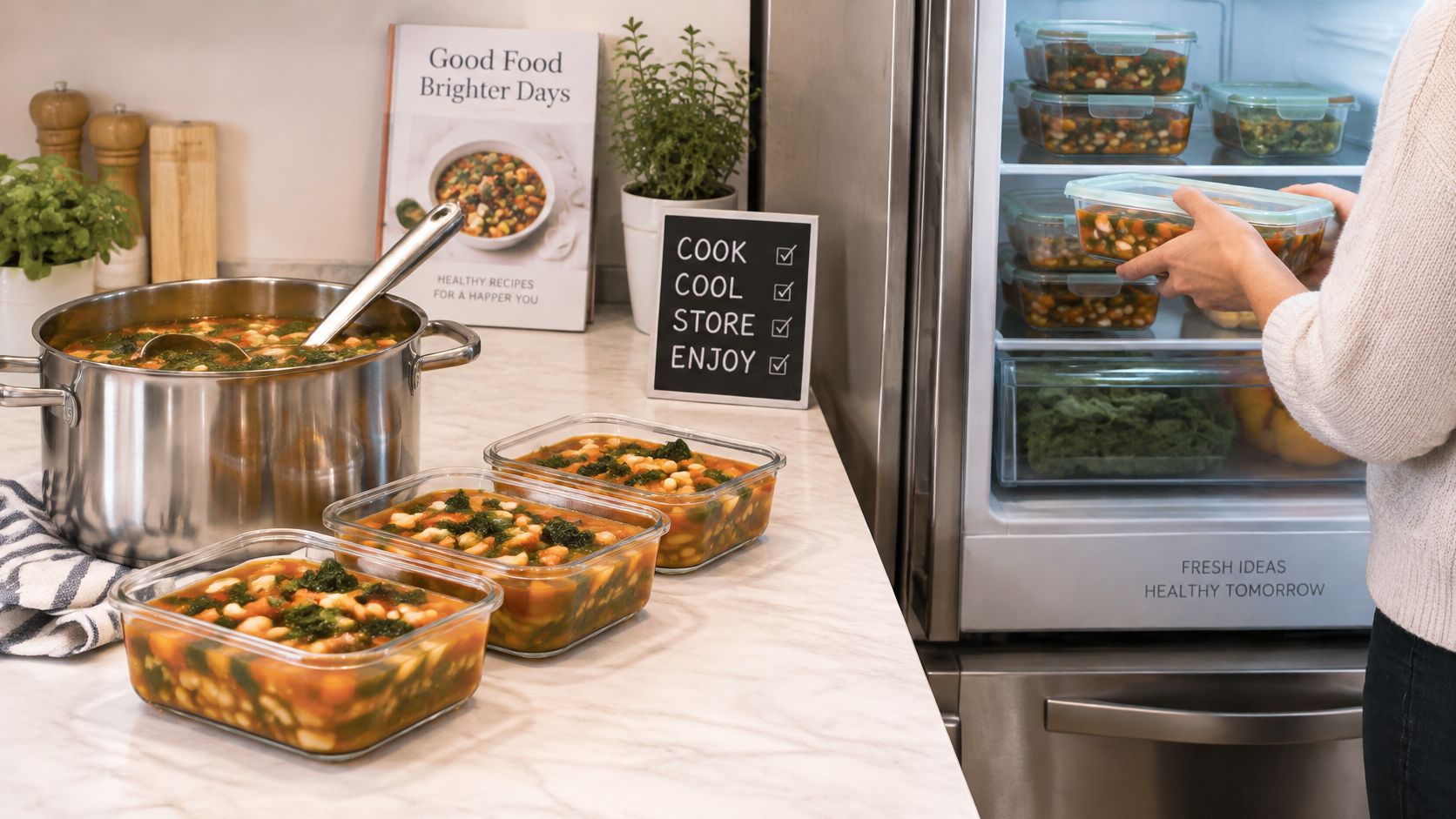
Leave a little headspace in each container because the liquid expands as it freezes. Thaw one portion at a time in the fridge overnight, or warm it gently from frozen with a splash of water, rather than reheating the whole batch again and again.
Bring each portion to 165°F and let the soup reach a rolling boil before serving. If it has thickened in the fridge, thin that single bowl with a splash of hot broth instead of diluting the full batch. The remaining portions stay concentrated, and each person can choose a brothier or thicker bowl.
Cooked once and portioned this way, the soup works as a sturdy base for several different meals, with greens, lemon, and yogurt restored at the last minute. If you are planning the rest of the week around it, these meal prep dinners for the week give you other make-ahead options to rotate in.
Pick Your Protein Plan and Cook Tonight
Choose the version that matches the meal you need. Don't cook a light lunch and then wonder why you're hunting for snacks an hour later.
Three Ways to Serve It
- Light lunch: the base as written, served with a slice of whole-grain bread.
- Full meal: add 200 g cubed firm tofu and an extra 1/2 cup shelled edamame, which lifts a bowl to roughly 20 g protein.
- Batch for the week: cook the sturdy base once, then vary the finish so each reheated bowl feels like a different dinner.
The tofu does most of the work in that second option. The edamame only adds about 2 g per bowl, but it brings texture too, so the extra half cup earns its place even where the protein is already covered. Stir the cubes in near the end of cooking and keep the simmer gentle, since a hard boil breaks them apart and clouds the broth.
For the batch version, split the pot the day you cook it. Keep enough portions chilled for the days ahead and freeze the rest, then rotate the finishes: lemon and yogurt one night, extra peas and herbs another. One base, several distinct bowls.
I would start with the tofu version if this soup is dinner. The concrete test for this week: cube 200 g of firm tofu, measure the half cup of edamame, and see whether that bowl keeps you full until breakfast. If it does, you have a high protein vegetable soup recipe worth repeating.
For more kitchen-tested recipes that show amounts, timing, and practical swaps without guesswork, visit Just Cook It and browse the digital cookbook collections built for everyday home cooking. Pick one dependable recipe for this week, cook it once, and write your own notes on the card for next time.