Kimchi soup recipes often start from the same basic idea: fermented kimchi, broth, and a few supporting ingredients that shape the final bowl. This concept acts as a template, not a rulebook. Change the protein, and the soup shifts from rich to light. Change the broth, and the whole mood changes with it. Use older kimchi, and you get more tang and depth. Use fresher kimchi, and you may need a little help from seasoning to make the flavor feel complete.
That flexibility is what makes kimchi soup so useful for home cooks. You can build a hearty pork version for a cold night, a quick tuna version for a busy weeknight, a vegan pot that still tastes full and savory, or a lighter bowl that keeps salt in check without tasting flat. The key is understanding balance. Sourness gives the soup its spark. Spice adds warmth. Salt makes everything taste clearer. If one note pushes too hard, the bowl feels off. If they support each other, the soup tastes alive.
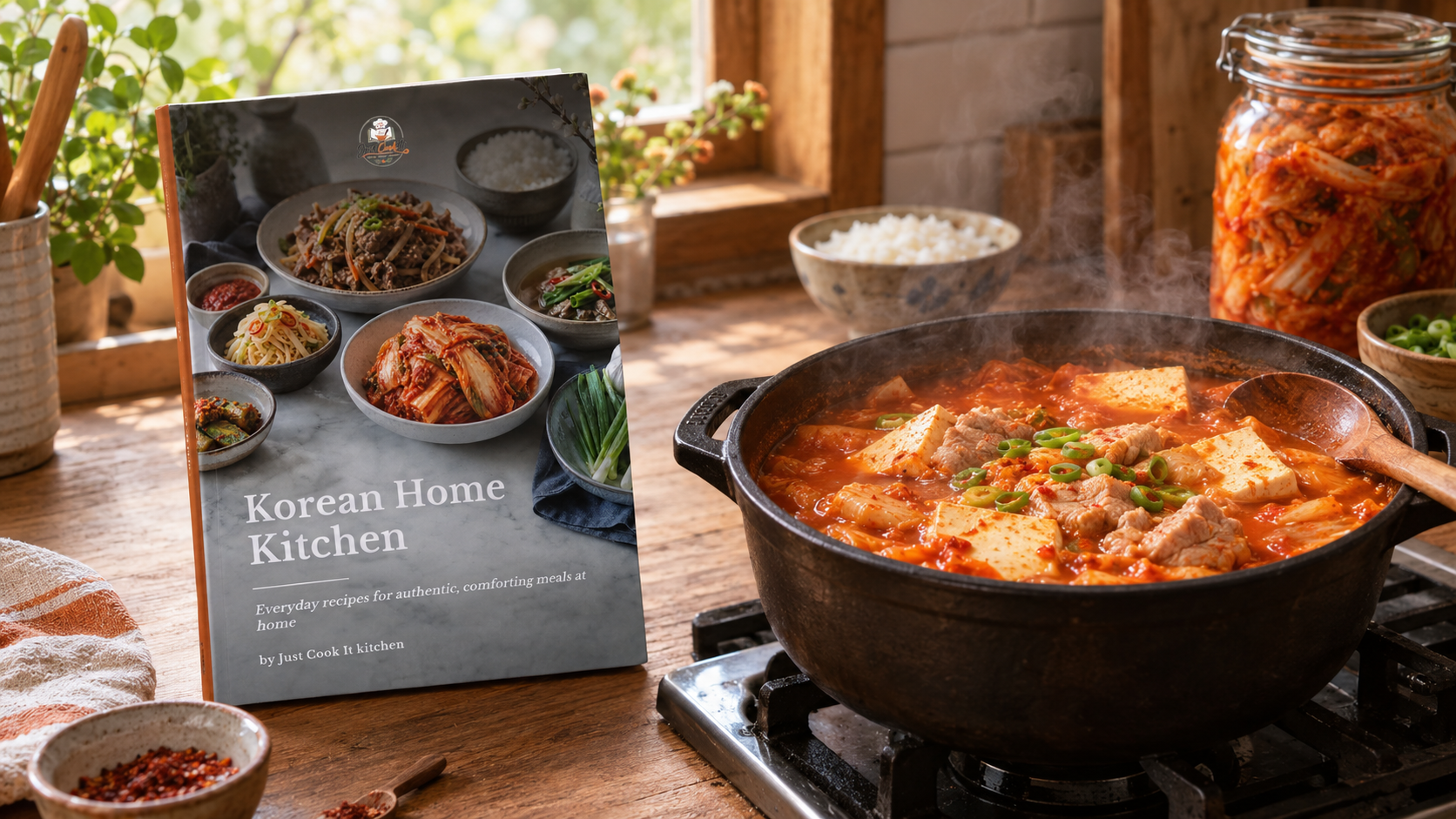
We are not just collecting versions here. We are looking at why each one works, where substitutions make sense if you do not shop at a Korean market every week, and how to adjust the soup for the way you cook and eat. For cooks who want more everyday Korean meal ideas, Korean Home Kitchen | Digital PDF, a digital cookbook of 100 everyday recipes for authentic, comforting meals at home sold by the publisher, takes a similarly practical approach.
Table of Contents
1. Master the Classic Pork and Tofu Kimchi Jjigae
For many home cooks, this is the bowl that makes kimchi soup click. You set a pot on the stove, the pork starts to sizzle, the kimchi hits the heat, and the whole kitchen smells deeper within minutes. That moment teaches the core lesson of jjigae. Flavor is built in layers, not dumped in all at once.
Classic pork and tofu kimchi jjigae works because each ingredient has a job. Pork belly brings richness. Tofu softens the sharper edges of the broth. Mushrooms add savoriness. Kimchi and some of its juice give the soup its backbone. If your kimchi is well aged, the broth usually tastes more complete from the start. A sensory-testing framework described in the kimchi-jjigae formulation patent also notes that more mature, more acidic kimchi tends to produce a sharper broth, while fresher kimchi often needs extra help to taste rounded.
The method to learn first
Start with the pork. Let it cook until some fat renders into the pot. That fat becomes your flavor base, almost like the first coat of paint on a wall. Then add the kimchi and gochugaru and cook them together for a short time. This step matters more than many recipes explain. Frying the kimchi first deepens its flavor, softens its raw edge, and helps the broth taste integrated instead of separate.
After that, add your stock, then tofu and mushrooms, and let everything simmer until the broth tastes settled. You are not chasing a long, slow stew here. You are looking for the point where the pork, kimchi, and broth stop tasting like individual parts and start tasting like one soup.
For a home cook learning Korean staples, Korean Home Kitchen | Digital PDF, a digital cookbook of 100 everyday recipes for authentic, comforting meals at home sold by the publisher, suits readers who want bubbling jjigae, crisp pancakes, and a table full of banchan made the way families cook.

Korean Home Kitchen – Authentic Korean Cookbook | Digital Cookbook
Get ItA simple cooking order helps keep the pot balanced:
-
Cook the pork first: This gives you rendered fat for the base.
-
Fry the kimchi next: The broth gains depth and loses that raw, sharp taste.
-
Add stock, tofu, and mushrooms: Tofu absorbs flavor while cooling the broth's intensity.
-
Simmer until unified: The soup is ready when it tastes round and blended.
One common mistake is trying to fix an overly sour pot with more soy sauce or more chili. That usually makes the soup saltier or harsher. A better fix is dilution and contrast. Add a little more stock, then a bit more tofu. It absorbs seasoning and makes each bite feel calmer.
If pork belly is hard to find, use another fatty cut of pork. If you do not keep vegetable stock around, water can still work if your kimchi is flavorful and your pork has enough richness. The point of the classic version is not strict perfection. It is learning how sour, spicy, salty, and rich support each other in one pot.
2. Whip Up a 20-Minute Tuna Kimchi Soup
You get home late, open the fridge, and realize dinner needs to come from what is already there. Tuna kimchi soup certainly earns its place. A can of tuna, some kimchi, and a pot of hot broth can turn into something that tastes planned, even when the night was not.
This version works because tuna brings instant savory depth. Tuna offers a shortcut to the rich, rounded flavor typically achieved through longer cooking. You do not need time to brown meat or simmer for ages. You just need to help the kimchi and tuna meet in the right order.
Fast method, balanced flavor
Start by sautéing the kimchi for a few minutes. That step matters. Frying the kimchi first softens its sharp edge and gives the broth a deeper, more cooked flavor. Then add water or unsalted stock, followed by the tuna, and simmer briefly. Tuna is already cooked, so a long boil only makes it firmer and less pleasant.
This is one of those easy dinner options for busy nights that teaches a useful lesson. Fast food at home does not have to mean flat flavor. It means choosing ingredients that do some of the work for you.
A few choices make a big difference:
-
Oil-packed tuna: It usually gives the soup a rounder, richer taste.
-
Water-packed tuna: It works too, especially if you want a lighter bowl. You may want a small drizzle of sesame oil at the end.
-
Small tofu cubes: They heat quickly and mellow out a broth that tastes too intense.
-
Scallions or garlic chives: Add them at the end for freshness and color.
The main thing to watch is salt. Canned tuna can be salty. Kimchi often is too. That is why plain water or unsalted stock is often the smarter base here. If the soup tastes too sour, add more tofu or a little extra liquid before you reach for more seasoning. If it tastes flat, a small spoonful of kimchi brine usually wakes it up faster than soy sauce.
This bowl is especially helpful if you cook for different needs. Want it heartier? Add noodles or serve it with rice. Need a lower-sodium version? Use low-sodium tuna, rinse the kimchi lightly, and dilute with more water. Want it pescatarian but not heavy? Skip extra oil and let the tuna carry the broth. Once you understand the balance, you can adjust the soup to fit your night instead of following one rigid formula.
3. Try a Rich and Hearty Beef Kimchi Soup
Beef changes the mood of the dish. Pork gives fat and sweetness, but beef gives depth and chew, especially when thin slices of chuck or brisket are seared first.
Building a darker broth
The first goal is browning. Let the beef pick up color in the pot before the kimchi goes in. Then add mushrooms, especially shiitake, so the broth gains another savory layer before the liquid is added.
This version suits the cook who wants something more substantial than tuna and less fatty than pork belly. It also works well for cold evenings when dinner needs to feel like the whole meal, not just the first course.
A useful pattern is:
-
Choose sliced beef: Thin pieces cook faster and stay tender.
-
Add mushrooms early: They season the broth while it simmers.
-
Give it time: Beef benefits from a longer simmer than tuna does.
For readers trying to keep the bowl filling, a broader set of high-protein meal ideas can help frame kimchi soup as one part of a protein-focused dinner routine.
One place cooks get confused is tenderness. If the beef is cut too thick and simmered too briefly, the soup can taste strong but the meat stays chewy. Thin slicing solves most of that problem. If the kimchi is very sour, mushrooms help round the broth without making it sweeter.
4. Make a Flavor-Packed Vegan Kimchi Soup
A vegan kimchi soup starts with one question before the stove even turns on. Is the kimchi vegan?
The vegetarian kimchi jjigae guide at Cooking with Ramsay warns that packaged kimchi may contain hidden seafood ingredients, which can undo a vegan version. That is why label reading matters as much as broth building.
The label check comes first
A careful shopper checks for these ingredients on the jar:
-
Fish sauce: Common in many traditional kimchi products.
-
Salted shrimp: Often used in fermentation.
-
Oyster extract: Another hidden non-vegan ingredient.
-
Bonito or stock additives: These can appear in seasoning blends.
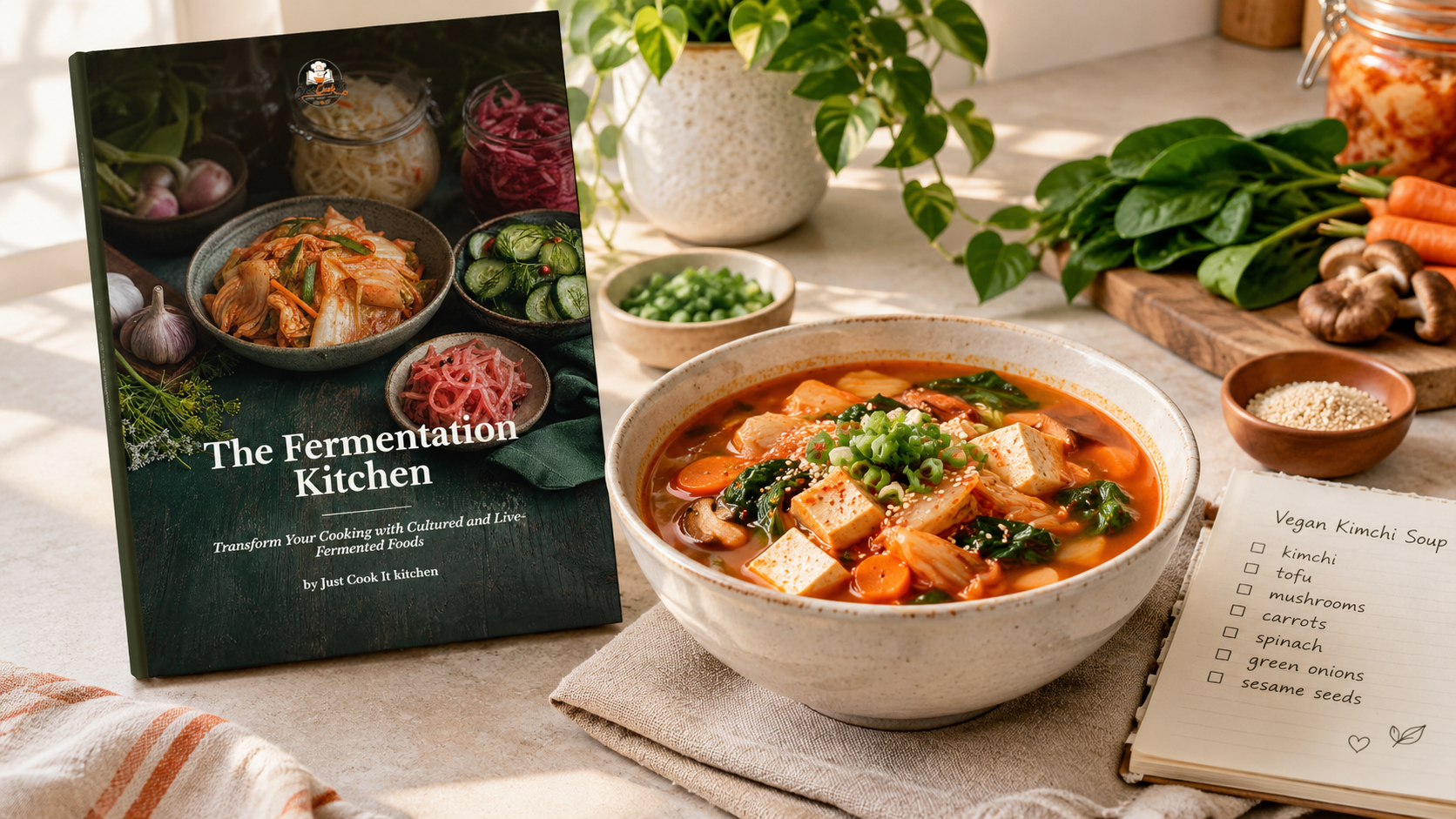
For cooks who want to control the ingredient list from the start, The Fermentation Kitchen | Digital PDF, a digital cookbook of 75 recipes to transform cooking with cultured and live-fermented foods sold by the publisher, suits readers who want to build a living pantry without special equipment.

The Fermentation Kitchen – 53 Cultured & Live-Fermented Recipes | Digital Cookbook
Get ItHow to replace the missing anchovy depth
Use kombu, dried shiitake mushrooms, and a little miso for the broth. Then add tofu and more mushrooms for body. This won't taste identical to an anchovy-based stew, and it doesn't need to. The goal is a broth with enough savoriness to support the kimchi.
Vegan kimchi check: If the soup tastes thin, the problem is often the broth, not the tofu. More mushroom depth usually helps more than extra chili.
A practical example is a cook shopping at a regular supermarket in North America or Europe. If Korean tofu or anchovy stock isn't available, firm tofu, vegetable or mushroom stock, chili flakes, and miso can still produce a satisfying bowl. The substitutions are workable, even if they aren't identical to the traditional pantry.
5. Go for a Briny and Refreshing Seafood Kimchi Soup
Seafood kimchi soup moves in a different direction from pork or beef. The broth feels cleaner, the finish is brinier, and the kimchi's sourness stands out more clearly.
This is a good version for cooks who want the soup to stay lively rather than heavy. Clams, mussels, shrimp, and chunks of firm white fish all work, but they need different timing than meat.
Timing matters more than anything
Build the broth first with kimchi and stock. Then add the seafood near the end. Shrimp and fish can turn tough if they simmer too long, and shellfish can lose their sweetness when overcooked.
A simple order helps:
-
Start with broth: Cook the kimchi first so the liquid already tastes finished.
-
Add shellfish late: They should open or cook through, not boil endlessly.
-
Drop in fish last: Firm chunks need only enough time to become opaque.
This bowl makes sense for a lighter dinner with rice and a vegetable side. It also helps when someone in the household likes kimchi soup but doesn't want a fatty broth. The seafood brings its own salinity, so extra soy sauce often isn't necessary.
Another point worth remembering is balance. If the kimchi is very mature and sour, delicate fish can disappear under it. In that case, more broth and a gentler hand with kimchi juice keep the seafood noticeable.
6. Combine Two Favorites in One Bowl with Kimchi Ramen
Kimchi ramen is the version for maximum comfort with minimum ceremony. It takes the basic soup idea and turns it into a complete bowl by adding noodles and toppings.
Turning stew into noodle soup
Start with a kimchi soup base, then loosen it slightly so the noodles have enough liquid. Add instant or fresh ramen near the end, and top with scallions, nori, and a soft-boiled egg if that fits the cook's diet.
This works because the noodles absorb some of the broth's sharp, spicy flavor and make the whole dish feel fuller. A student, a night-shift worker, or anyone cooking for one can turn a small amount of kimchi and broth into dinner without much planning.
A few choices change the result fast:
-
Instant noodles: Fastest option for a late dinner.
-
Fresh noodles: Better chew if there's a little more time.
-
Soft tofu: Good when the bowl needs more body.
-
Egg topping: Adds richness and softens the heat.
The common mistake is letting the noodles sit too long in the pot. They keep absorbing liquid and can turn the soup too thick. For the best texture, cook only what will be eaten right away. If leftovers matter, store the broth and noodles separately.
7. Cook a Lighter, Low-Sodium Kimchi Soup
A lot of home cooks hit the same problem with kimchi soup. You taste the broth, add a little soy sauce, then a splash of kimchi juice, and suddenly the bowl tastes heavy instead of bright. Kimchi soup is supposed to feel lively. If the salt takes over, you lose the sour, spicy edge that makes it satisfying.
The fix starts with understanding where the salt comes from. Kimchi already brings brine. Stock can add more. Soy sauce, fish sauce, and kimchi juice can pile on fast. This is similar to seasoning rice with salted butter, soy sauce, and cheese all at once. Each ingredient may taste fine alone, but together they can crowd the dish.
Cutting salt without losing the point
Build this version with more control from the start. Use unsalted broth first. Then let the kimchi carry most of the seasoning, and add other salty ingredients only after you taste; a soup that becomes too salty often requires dilution, which weakens the whole pot.
A few smart adjustments help a lot:
-
Unsalted broth: Lets you decide the final salt level instead of inheriting it from the carton.
-
Less kimchi juice: Keeps the soup sharp and tangy without making it briny.
-
Extra vegetables: Zucchini, onion, cabbage, and mushrooms add body and natural sweetness.
-
Lean protein or tofu: Makes the bowl feel lighter while still filling.
-
A partial rinse of the kimchi: Useful if your kimchi is especially salty. You keep the flavor, but wash off some surface brine.
If you cut salt and the soup tastes dull, the answer usually is not more sodium. It often needs balance. More mushrooms can add savoriness. A pinch of gochugaru can bring back energy. Fresh scallions or a small squeeze of the kimchi itself can wake up the bowl the way a squeeze of lemon wakes up a simple chicken soup.
For cooks who want this same approach in other meals, lighter comfort food ideas follow the same logic of keeping the dish satisfying while trimming excess heaviness.
This version works well for weeknights, for anyone cooking for a family member watching sodium, or for you if you want kimchi soup more often without making every bowl feel intense. The goal is not to make it bland. The goal is to keep the soup vivid, balanced, and easy to come back to.
8. Batch and Freeze Kimchi Soup for Later
Kimchi soup is well suited to meal prep because the base holds flavor well. The trick is freezing the right part of the dish, not the whole finished bowl.
Freeze the base, not every ingredient
Cook the soup base with the main protein first. Pork or beef works especially well here. Leave out delicate ingredients such as tofu and fresh vegetables, then freeze the base in portions. Later, thaw, reheat, and add fresh tofu, mushrooms, or scallions.
This method protects texture. Tofu and quick-cooking vegetables are much better when added after reheating instead of spending the whole freeze-thaw cycle in the broth.
For cooks who want more of this style of planning, Make-Ahead Freezer Meal Cookbook | Digital PDF, a digital cookbook of 75 make-ahead freezer meal recipes that reheat beautifully sold by the publisher, suits households that want home-cooked dinners waiting in the freezer.

Freezer to Table: 75 Make-Ahead Freezer Meal Recipes | Digital Cookbook PDF
Get ItA practical freezer routine looks like this:
-
Portion first: Freeze in single or family-size containers based on how the household eats.
-
Label clearly: Note the protein and whether tofu still needs to be added.
-
Finish fresh: Add tofu, mushrooms, or scallions after reheating.
A busy parent, a shift worker, or anyone trying to avoid takeout on tired nights can get a lot from this method. The soup still tastes homemade, but the hardest part is already done.

Kimchi Soup Recipe Showdown
| Recipe Name | Main Ingredients | Cooking Time | Best For | Special Tips |
|---|---|---|---|---|
| Classic Pork and Tofu Kimchi Jjigae | Pork belly, aged kimchi, soft tofu | 30-40 mins | Authentic Korean cooking | Use older kimchi for better flavor |
| Quick Weeknight Tuna Kimchi Soup | Canned tuna, kimchi, stock | 10-15 mins | Busy weeknights | Lower in calories, use oil-packed tuna |
| Hearty Beef and Mushroom Kimchi Soup | Beef chuck, shiitake mushrooms, kimchi | 45-60 mins | Rich, substantial meals | Sear beef for umami, longer simmering needed |
| Flavor-Packed Vegan Kimchi Soup | Vegan kimchi, kombu, tofu | 30-40 mins | Vegan-friendly, controlled ingredients | Use miso for broth, check kimchi labels |
| Spicy Seafood Kimchi Soup | Clams, mussels, shrimp, white fish | 20-30 mins | Lighter, briny flavors | Add seafood at the end to avoid toughness |
| Kimchi Ramen Comfort Bowl | Ramen noodles, kimchi, egg | 20-25 mins | Comfort food fusion | Add toppings like scallions and nori |
| Lighter, Low-Sodium Kimchi Soup | Low-sodium stock, extra vegetables | 25-35 mins | Health-conscious cooking | Rinse kimchi, use unsalted stock |
| Batch-Prep, Freezer-Friendly Method | Pork or beef, kimchi, stock | Varies | Meal prep and convenience | Freeze base, add fresh ingredients later |
Your Kimchi Soup Adventure Starts Now
One pot often changes how you see kimchi soup. You start with a jar in the fridge and a few odds and ends, and somehow dinner tastes layered, warming, and much more intentional than the ingredient list suggests. That is its main appeal here. Kimchi soup teaches you a small set of skills you can keep using.
Across all these versions, the pattern stays simple. Good kimchi gives you the backbone. A thoughtful broth carries it. Then you choose ingredients based on how you live, not based on some fixed rule. If your week is packed, the fast tuna version makes sense. If you want something plant-based, a vegan broth can still taste full when you build in umami. If sodium matters, you can lighten the soup without stripping out character.
Kimchi soup is a basic framework, not a strict script. The sourness is one dial. Heat is another. Salt is a third. Turning one affects the others, which is why small adjustments work better than dumping in extra soy sauce or chili all at once. If a pot tastes flat, it may need more acid from the kimchi, not more salt. If it tastes harsh, tofu, mushrooms, or a little more broth can round the edges.
There is room to cook with your goals in mind, too. Some people care about gut-friendly foods and want to keep kimchi in their routine. Soup is still a practical choice, but if you want more fresh kimchi character, add a little on top at the end instead of cooking all of it in the pot. That gives you a brighter finish and a nice contrast between simmered and fresh flavors.
The main takeaway is reassuring. Kimchi soup is learnable. Once you understand why we sauté kimchi for depth, why delicate seafood goes in late, or why freezer batches work best without the final garnishes, you can adapt the dish to your kitchen, your budget, and your schedule.
Pick the version that fits your life this week, then make it once without overthinking it. The next pot will already be better.
A deeper Korean home-cooking guide can make these kimchi soup recipes easier to repeat and expand into full meals. Korean Home Kitchen | Digital PDF gives home cooks 100 everyday recipes for authentic, comforting meals at home, so shop it if the goal is to keep building from jjigae into a fuller Korean kitchen routine.