Sausage, kale, and cannellini beans make a hearty soup with little prep and just one pot to wash. The sausage adds flavor to the broth, the beans make it filling, and the kale holds its shape as it cooks. This sausage kale cannellini bean soup recipe also works with different types of sausage, other leafy greens, or whatever white beans you have in the cupboard.
Table of Contents
- Why This Sausage Kale Cannellini Bean Soup Works
- Ingredients That Hold Up in the Pot
- Cooking the Soup from Browning to Simmer
- Flavor and Texture Checks While It Cooks
- Bean and Sausage Swaps That Still Work
- Leftovers That Stay Thick Not Greasy
- Your Next Kitchen-Tested Soup Night
Why This Sausage Kale Cannellini Bean Soup Works
On a weeknight, the best soups aren't fussy. They're built from things that can simmer without falling apart while you set the table, answer a message, or find where you left the ladle. Cannellini beans and sturdy kale do that work here. The beans give the broth body, the kale keeps some chew, and sausage turns what could be a side dish into a main course.
That combination isn't random. The formula belongs to the Italian rustic bean-and-greens tradition closest to ribollita, a Tuscan soup whose name means reboiled. Ribollita developed as economical peasant food, often traced to the Middle Ages, combining leftover bread, vegetables, and beans rather than relying on expensive meat. Its exact origin is uncertain, which matters more than it sounds.
A Template, Not a Museum Piece
There's no single inventor and no fixed canonical recipe to get wrong. Modern versions typically use cannellini beans with kale or cabbage, carrots, celery, onions, garlic, and tomatoes. Sausage is a later, practical adaptation. It brings concentrated savory flavor and fat to a vegetable-centered base, which is why a small amount can season a whole pot.
That history is useful permission. If your kale is curly instead of flat, if you've got celery but no carrot, or if bread on the side replaces bread in the pot, you're still cooking inside the tradition. The principle was always stretching inexpensive, available ingredients into something filling.
Treat sausage, kale, and cannellini as the frame. The vegetables and seasonings around them can move with what's in your kitchen.
It also explains why this soup sits comfortably next to other one-pot weeknight favorites. On nights when you want something creamy instead of brothy, you might try this Marry Me chicken soup from Jolitee. On nights when beans and greens are what you've got, this pot is the more pantry-friendly answer, no specialty tools required and no long ingredient hunt before dinner.
Ingredients That Hold Up in the Pot
Before the burner goes on, make one decision that changes everything else. Are your cannellini beans canned or dried? They end up in the same soup, but they are not the same job, and pretending they are is how you get chalky beans in an otherwise good broth.
Here's the prep moment before heat enters the picture.
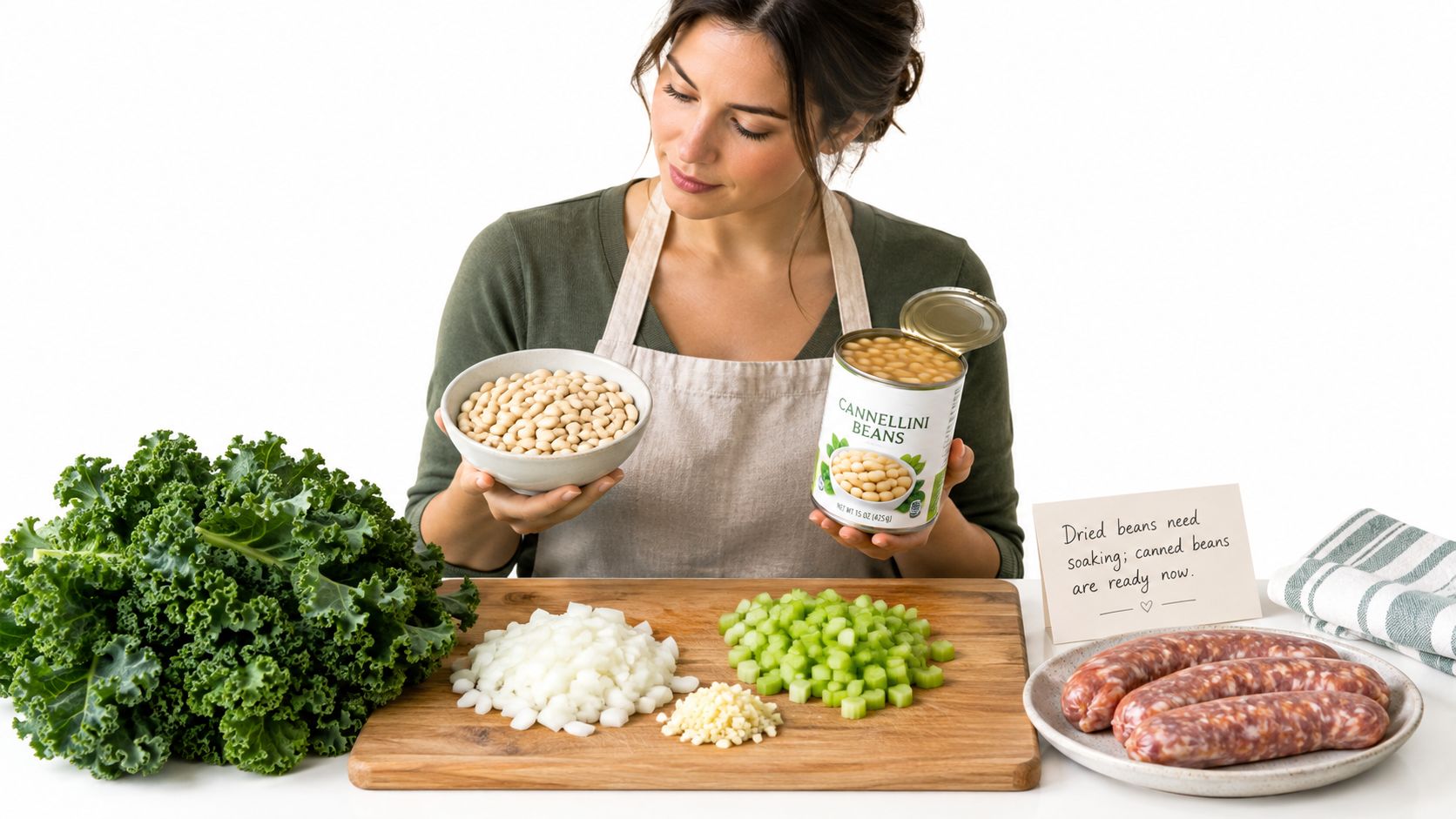
Canned beans are already cooked. Rinse and drain them, set them aside, and you're done. Dried beans need planning. USDA guidance for dried beans calls for an overnight soak of at least 8 hours using about 10 cups of water per pound, roughly 2 cups, of dried beans.
Canned Versus Dried, Honestly
- Dried, overnight soak: Drain and rinse after soaking, then cook in fresh water until fully tender before they meet the soup.
- Dried, quick soak: Boil for 2 to 3 minutes, cover, and let stand for at least 1 hour, then drain, rinse, and cook in fresh water.
- Canned: No soak, no separate cook. They mainly need heating, so they belong late in the pot.
Don't drop unsoaked or undercooked beans straight into an acidic, salty broth. Cooking gets prolonged and uneven, and you'll be waiting on the beans while everything else overcooks. Judge dried beans by texture, not just the clock. Each bean should crush easily between thumb and finger while keeping its skin, with no chalky center.
For the greens, choose sturdy kale with the thick stems removed and leaves chopped into bite-size pieces. If kale is new to your kitchen, get familiar with this leafy green from Shopifarm before you shop, since different types vary in toughness. Set out onion, garlic, and chili flakes alongside it.
Sausage choice sets your safety target later, so decide now. Pork, beef, chicken, and turkey sausage all work in this sausage kale cannellini bean soup recipe, but they don't finish at the same temperature. Keep a food thermometer within reach if you're using raw sausage. It's the control for the whole pot.
Stock is the last prep call. Chicken stock is the usual base, and if you're reaching for a concentrated option instead, it's worth understanding what chicken bouillon adds to a broth before you salt anything. Have everything chopped and measured before browning starts, because once the sausage hits the pan, your hands should stay on the pot.
Cooking the Soup from Browning to Simmer
Start with a heavy pot over medium-high heat and add the sausage out of its casing, breaking it into small crumbles as it cooks. Small pieces matter. They brown more evenly, they distribute through every spoonful, and they're far easier to check for doneness than big chunks or whole links rolling around in broth.
The visual flow below maps the whole cook in the order you'll do it.
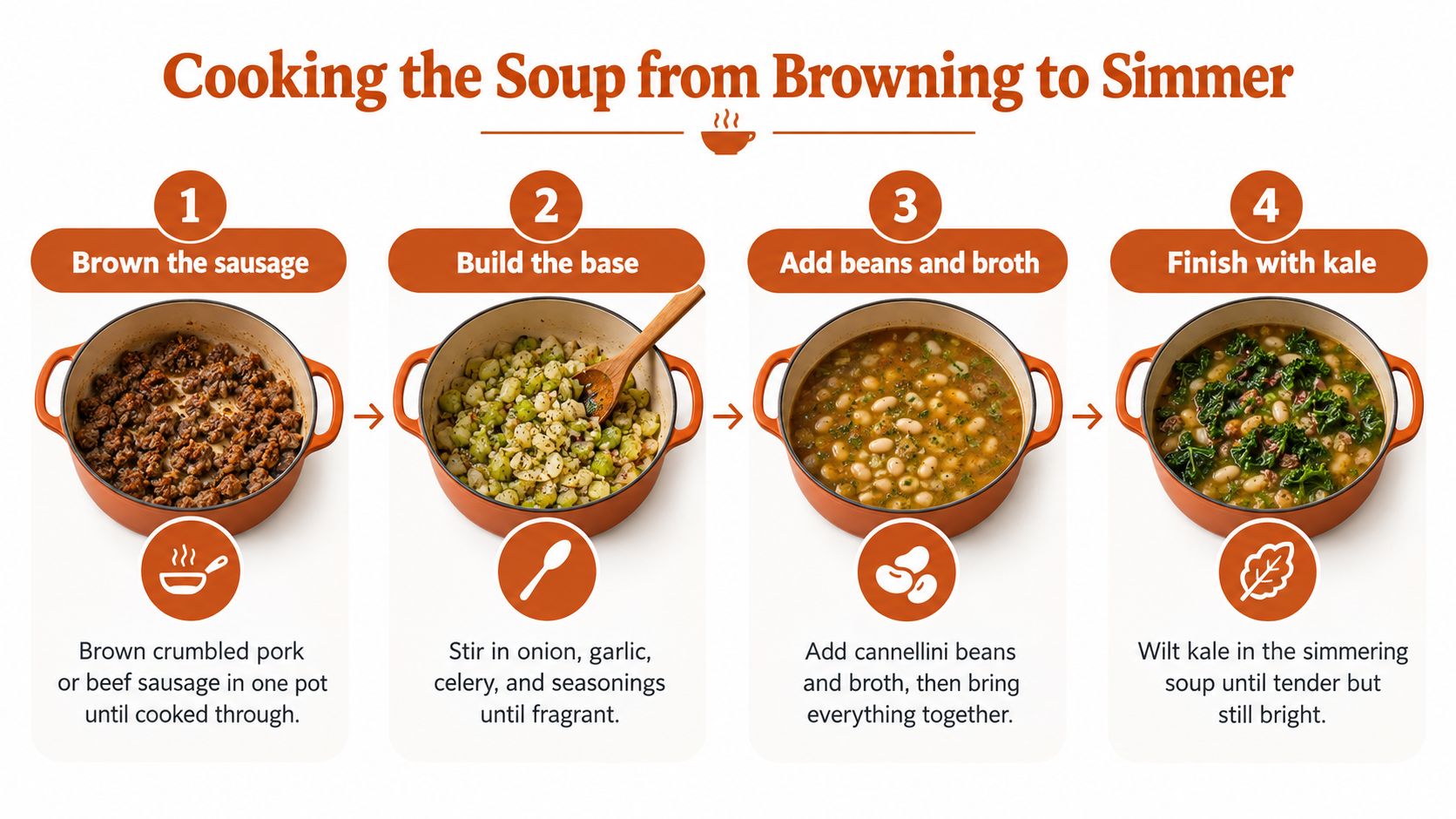
Let the sausage get real color before you stir too much. Pale, steamed crumbles won't give you the browned bits, the fond, that season the rest of the soup. You'll hear a steady sizzle and smell the spices blooming in the fat. That's the base you're building, not just meat getting cooked.
Check the Temperature the Right Way
Brown crumbled pork or beef sausage until the thickest pieces reach 160°F (71°C), while poultry sausage needs 165°F (74°C) and correct thermometer placement in the side or center of a piece. That placement detail isn't nitpicking. USDA testing found that 92 percent of consumers who checked sausage placed the thermometer incorrectly, which can give you a false reading and false confidence.
Check before you move on: Pick the thickest crumble you can find, insert the thermometer into its center, and don't drain the fat until browning is finished.
Once the sausage is cooked through, drain excess fat if there's a visible pool, but leave the fond stuck to the pot. Lower the heat a bit and use that fond to sauté the onion until it softens and picks up the browned flavor. Stir in garlic and chili flakes near the end of that stage. They should smell fragrant and sharp, not scorched. Garlic that goes in too early over high heat turns bitter fast.
Now pour in the stock and scrape the bottom of the pot as it comes up to temperature. Everything browned should lift into the liquid. Add the cannellini beans and let the soup simmer briefly so the flavors meet. If your beans are canned, this is a heat-through, not a long boil. They've already been cooked once, and an extended simmer will split their skins and turn the broth cloudy in the wrong way.
Watching the sequence once helps the timing click, especially the shift from browning to simmering.
Kale goes in last. Stir in the chopped leaves near the end, typically for 3 to 6 minutes, just until they wilt and turn a deeper green. Pull the pot while the kale still has some structure. Left too long, it goes dull and stringy, and no amount of seasoning fixes tired greens.
By the end, the broth should look savory and lightly thickened, the sausage should be in small browned pieces throughout, and the kale should still read as a vegetable, not a garnish that gave up. Taste a bean, a piece of kale, and a spoonful of broth together. That's the bite you're serving.
Flavor and Texture Checks While It Cooks
A simmering pot looks reassuring, but bubbling liquid doesn't prove every piece of sausage reached a safe temperature at the same time. That's especially true with links or large chunks, where the outside can look done while the center lags behind. Judge each ingredient by its own cue instead of judging the whole pot by one glance.
FoodSafety.gov sets a minimum internal temperature of 160°F (71°C) for ground meat and sausage, and color and texture aren't reliable safety signs on their own. The FDA position is the same in practice. A food thermometer is the dependable check, and a visual cue like no raw center only supports that number.
Browned is a flavor cue. Temperature is the safety cue. Don't ask one to do the other's job.
Three Different Doneness Cues in One Pot
- Sausage: Measured, not eyeballed. Check the thickest piece.
- Cannellini beans: Canned beans are already cooked and mainly need heating. You're warming them and letting them take on broth flavor.
- Kale: Ready when it's tender and wilted but still holds its shape when you lift it with a spoon.
Body is the next check, and you don't need a blender for it. Rinse and drain canned beans, keep most of them whole for texture, and lightly crush a portion against the side of the pot with the back of a spoon. The crushed beans release starch into the broth and thicken it just enough that it coats the back of the spoon instead of running like water. Crush a little, stir, then look again. You can always crush more, but you can't uncrush a pot that's gone past soup into stew territory.
Salt comes last, and that's not a suggestion to be dramatic about seasoning. Sausage carries salt, canned beans can carry salt even after rinsing, and stock varies a lot by brand. If you salt early and confidently, you'll spend the rest of the cook trying to dilute a mistake. Taste after the broth and beans are in, then adjust in small additions.
That same variability is why you shouldn't trust a precise nutrition panel someone attached to a generic version of this soup. Exact totals depend on brand, drained weight, portion size, and sodium, all of which change from kitchen to kitchen. If you're building out your greens repertoire beyond soup, a simple garlic kale recipe for a quick stovetop side uses the same judge-by-tenderness approach in a pan instead of a pot.
Finally, check balance in one spoonful. If it tastes flat, it usually needs salt added carefully or another minute for the flavors to settle. If it tastes heavy, the fat wasn't drained enough or the broth reduced too far. A splash of extra stock loosens it without washing out the sausage flavor you've built.
Bean and Sausage Swaps That Still Work
Changing beans or sausage changes the soup's timing, salt, and texture. Dried cannellini need advance planning: one published method soaks them overnight and simmers them about 25 minutes before adding kale. Canned beans are already tender, so add them near the end. Treat the two options as different routes, not as direct substitutes with identical cook times.
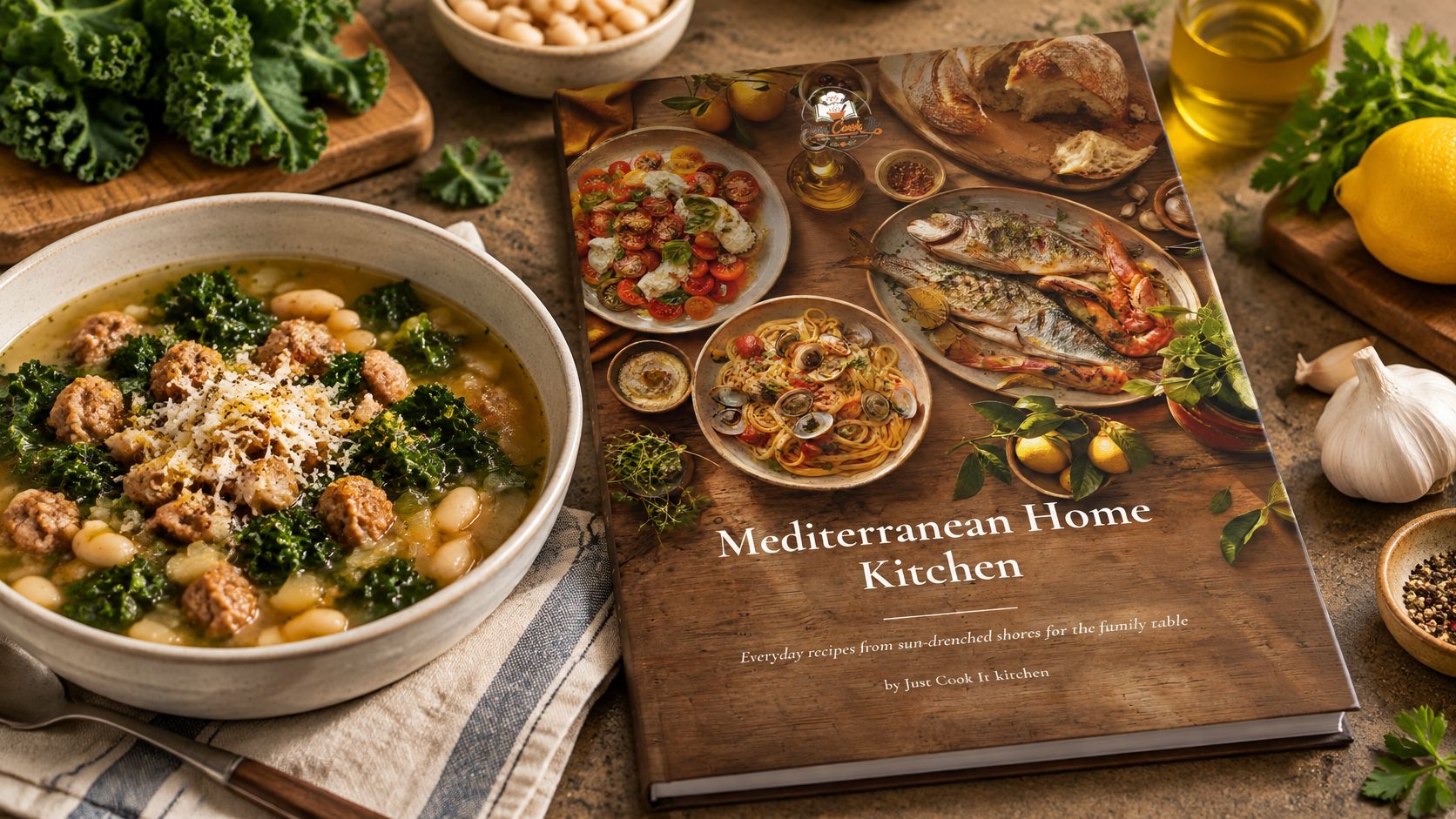
For more ideas built around market ingredients and simple techniques, Mediterranean Home Kitchen gathers 69 everyday recipes in a digital PDF.
What Each Swap Changes
| Choice | What changes | What to keep |
|---|---|---|
| Dried beans for canned | More total time and advance planning. Cook until tender before adding greens or acidic ingredients. | Cook separately in fresh water first. |
| Canned beans for dried | A shorter simmer. Add them in the final 10 to 15 minutes to warm through while keeping their shape. | Rinse and drain; salt after tasting. |
| Chicken or turkey sausage | Less rendered fat and a leaner broth. Cook to 165°F (74°C). | Remove the casing and brown thoroughly for flavor. |
| Plant-based sausage | Browning and fat vary by product, and salt may be high. | Brown well and season the broth after adding it. |
| Frozen kale for fresh | It softens faster and releases more liquid. | Add late and check texture early. |
| Low-sodium stock | Leaves more control over the final salt level. | Taste once the beans and sausage are combined. |
Kale also needs a timing adjustment. Fresh kale benefits from stem removal and a few minutes in the pot to soften. Frozen kale has already been blanched, so it loses structure sooner. Add it later than fresh kale, and expect extra moisture to make the broth slightly thinner.
Sausage changes the broth as well as the flavor. Pork sausage often leaves more fat and browned bits in the pot; drain excess fat if needed, but keep enough to cook the aromatics. Poultry sausage usually renders less, so leaving its small amount of fat can help the aromatics cook. Plant-based sausage does not follow meat cooking-temperature rules. Brown it well for a more savory result, then check the broth's salt before adding more.
When choosing dried beans, factor in the time to soak and cook them before they go into the soup. This guide to cooking beans from scratch can help you plan that step. If you make the soup ahead, cook the beans until tender but intact, and keep the broth a little looser than you want in the bowl, since beans absorb liquid as the soup sits. For freezing, hold the kale back and add it when reheating so it stays brighter and firmer. Across these variations, the guiding order is simple: tender beans, browned sausage, greens added near the end, and final seasoning after tasting.
Leftovers That Stay Thick Not Greasy
Day-two soup is not day-one soup in a different container. Three things happen in the fridge, and if you plan for them, leftovers taste good. If you don't, you'll reheat a thick, greasy bowl and wonder what went wrong with a recipe that tasted great last night.
This checklist sums up what's happening while the soup sits.
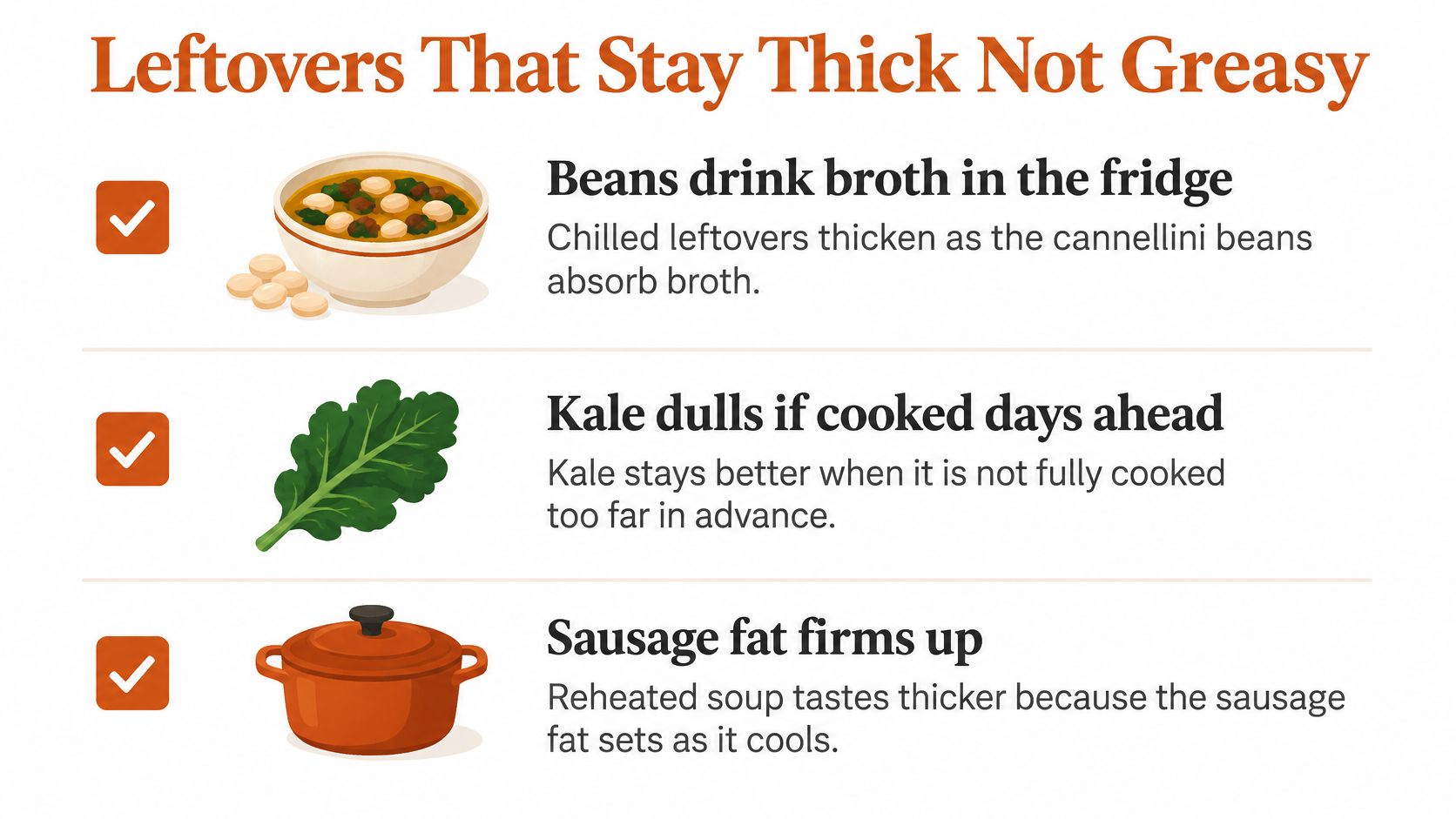
Cannellini beans keep drinking broth as they chill, so the soup thickens even though you didn't reduce it. Sausage fat firms up when cold, which makes reheated portions taste heavier than the fresh bowl. Kale that was fully cooked days ahead turns dull and soft, losing the bite that made it work in the first place.
Build the Batch for Reheating
- Reserve extra broth: Keep some aside when you cook, then stir it in during reheating to loosen what the beans absorbed.
- Hold back some kale: If you're cooking for the week, add kale to each portion as you reheat it instead of cooking all of it on day one.
- Use shallow containers: Portions cool faster and reheat more evenly than one deep tub of soup.
USDA guidance on leftovers says perishable leftovers should be refrigerated within two hours, used within three to four days, or frozen. Reheated leftovers should reach 165°F, and soups should be brought to a rolling boil. That reheat target is separate from the temperature you cooked the sausage to on the first night. Cooking something safely once doesn't make the cooled leftovers safe indefinitely.
Be honest about freezing, too. Frozen portions won't match the fresh texture. Beans soften further, kale gives up more of its structure, and the broth can come back thinner in some spots and thicker in others. The correction is simple. Thaw, bring it to a rolling boil, loosen it with reserved broth, and add a fresh handful of kale at the end so at least part of the greens tastes alive.
If make-ahead soup is your weeknight strategy in general, the same hold-the-greens logic applies to a healthy slow cooker soup built for batch cooking. For this pot specifically, one small habit fixes most leftover complaints. Skim or stir the fat back in deliberately after reheating, rather than letting the first serving get all of it and the last serving get none.
Your Next Kitchen-Tested Soup Night
You now have a sausage kale cannellini bean soup recipe that doesn't depend on luck. The sausage gets verified instead of guessed at, the beans get treated according to whether they're canned or dried, and the kale goes in when it can stay bright. That combination of clear steps and ordinary ingredients is exactly what makes a soup repeatable on a tired Tuesday.
Cook this pot once with the thermometer and the short kale window, and pay attention to which swap path fits your kitchen. Maybe canned beans and pork sausage become your default. Maybe dried beans on a Sunday set you up for the week. Either way, you'll know why your version works, and you'll know how to fix it when the broth thickens overnight.
From there, keep cooking the same way. Our recipes are 100% kitchen-tested, our library includes 200+ kitchen-tested recipes, and our blog offers fresh recipes with step-by-step guides, free to read, with new ideas every week. You can read on a phone, tablet, laptop, or e-reader while the pot simmers, and a free starter recipe pack is available by email if you want a few dependable options ready before your next grocery run.
Pick your next bean or greens soup before this week's leftovers run out. That's how one good pot turns into a rotation you trust, instead of another recipe you made once and forgot.
Make your next soup night this reliable, with clear temperatures, honest swap paths, and steps tested in a normal home kitchen. Browse the free weekly guides, grab the starter recipe pack by email, and find your next weeknight pot at Just Cook It.