This garlic kale recipe focuses on those visual signals. You'll know when to add the greens, when to lower or raise the heat, and when to pull the pan from the burner. The ingredients matter, but heat control, timing, and moisture determine the texture.
Table of Contents
- Why This Garlic Kale Recipe Works Every Time
- Choosing the Right Kale and Prepping Your Ingredients
- The Stovetop Method for Perfectly Tender Garlic Kale
- Oven and Air Fryer Alternatives for Different Textures
- Common Mistakes That Ruin Garlic Kale and How to Fix Them
- Flavor Variations and Serving Ideas for Any Meal
Why This Garlic Kale Recipe Works Every Time
At the stove, the difference between sweet garlic and bitter garlic can be less than a minute. Kale creates a similar timing problem: the leaves should become tender and glossy, while still holding a fresh green color instead of turning limp and gray. This garlic kale recipe works because it treats those two ingredients according to their different cooking speeds.
Garlic kale also suits a weeknight side. The greens cook quickly, and garlic adds a strong savory flavor without making the dish heavy. USDA SNAP-Ed lists raw kale at 7 calories per serving, with 1 gram of carbohydrate, 1 gram of fiber, 1 gram of protein, 22 milligrams of vitamin C, and 2 milligrams of iron in the referenced serving data (USDA SNAP-Ed nutrition data). The same source lists garlic at 4 calories per serving, with 1 gram of carbohydrate, 0 grams of protein, and 1 milligram of sodium. In the pan, its main contribution is aroma and flavor.
Vague cues cause most failures. “Cook until fragrant” does not tell you that the garlic should remain ivory to pale gold, with no brown edges. “Cook until wilted” is equally incomplete. Properly cooked kale looks glossy, bends easily, and still has color. A dull, watery heap has stayed in the pan too long or received too much liquid.
The two decisions that control the result
Warm the garlic in oil over moderate heat, watching rather than relying on the clock. When it smells sweet and savory and the edges turn pale gold, add the kale. Do not wait for a deeper brown. The leaves cool the skillet and stop the garlic from continuing to darken.
Kale needs direct heat, but resistant leaves benefit from a small amount of moisture. Use this sequence:
- Build the garlic oil first: Heat gently until the aroma rounds out and the edges are pale gold.
- Add kale at the pale-gold stage: Earlier keeps the garlic mild; later risks bitterness.
- Steam briefly with limited moisture: A splash of water or broth softens the leaves, while excess liquid makes them watery.
- Season off the heat: Lemon juice, vinegar, and final salt taste brighter after the burner is off.
Kale shrinks substantially as it cooks. Cooked, drained chopped kale is listed at about 130 grams per cup, so a large raw pile becomes a compact side dish. The referenced preparation data also helps explain why measured raw and cooked volumes should not be treated as interchangeable.
Practical rule: Sharp aroma, darkening edges, or fast browning means the garlic is already late in its safe window. Add the kale immediately or move the skillet off the burner.
Fresh garlic gives this method its clearest visual control, though cooks exploring other preparations can compare the flavor profile discussed in black garlic health benefits.
Choosing the Right Kale and Prepping Your Ingredients
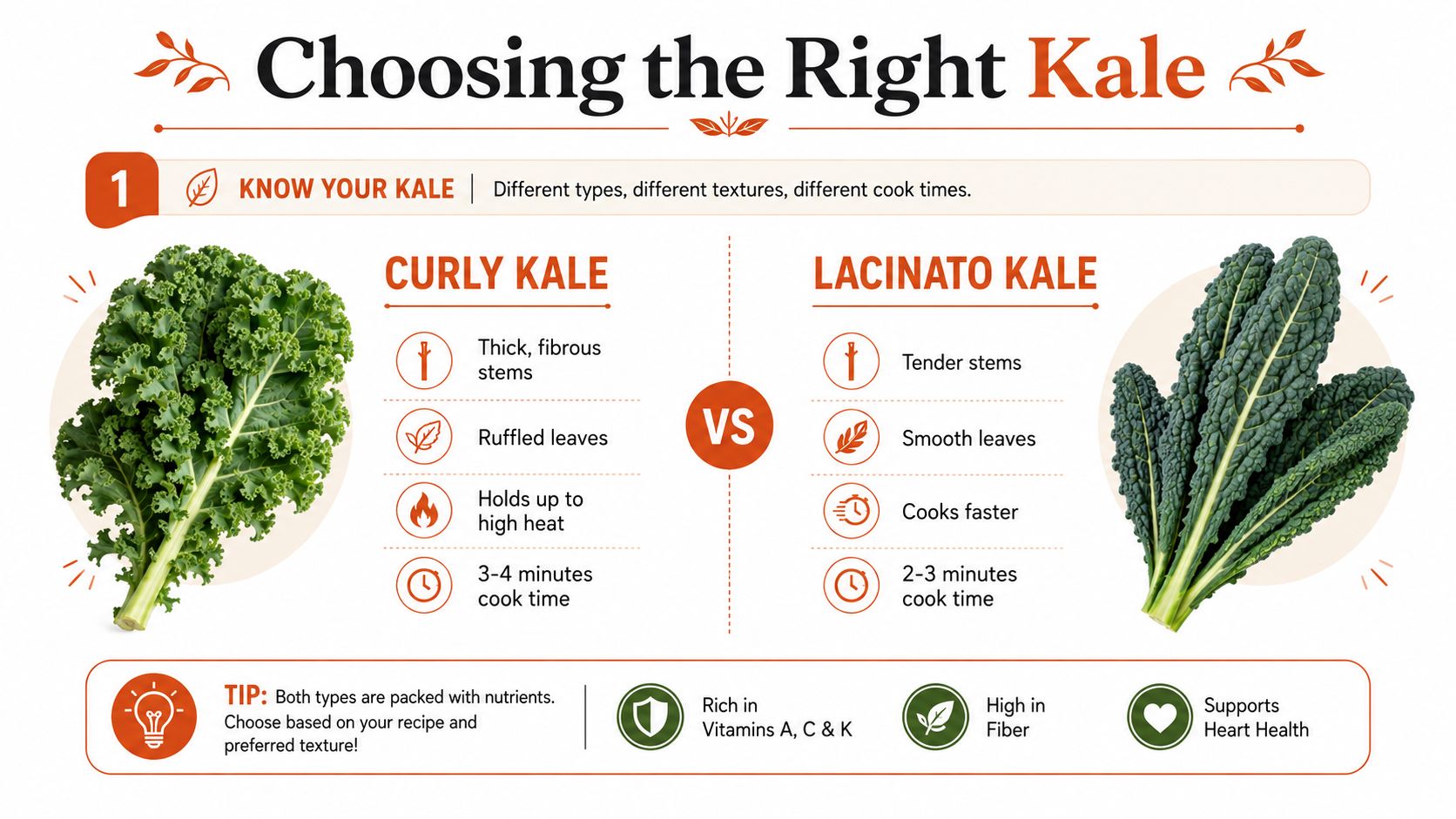
Kale variety changes the cooking behavior more than many cooks expect. Curly kale has ruffled leaves and sturdier stems, so it tends to hold its shape and needs more attention during the tenderizing stage. Lacinato kale, also called Tuscan or dinosaur kale, has flatter leaves that sit more evenly against the skillet and generally soften more readily.
Baby kale belongs in a different category. Its delicate leaves collapse quickly and can become wet before the garlic has a chance to flavor the pan. It works better in salads, quick soups, or as a late addition to a dish rather than as the main green in this sauté.
Prepare the leaves for even cooking
Strip thick stems from curly kale before cutting the leaves. With lacinato kale, tender upper stems can stay if you slice them thinly, but woody lower sections should come out. Stack the leaves, roll them loosely, and cut them into ribbons about 2 inches wide. Large irregular pieces cook unevenly, leaving some bites tender and others fibrous.
Wash the cut kale thoroughly, then dry it well. A salad spinner is useful, but a clean kitchen towel also works. A little residual water can help create steam once the leaves hit the pan, while heavily wet kale cools the skillet and encourages steaming instead of sautéing.
Fresh garlic gives the cleanest flavor and the widest margin for error. Mince it consistently, or slice it thinly if you prefer distinct golden pieces. Uneven pieces brown at different speeds, so a few small fragments may burn while larger ones remain pale.
Before heating the skillet, set out the oil, garlic, kale, optional red pepper flakes, salt, and finishing acid. If you're building more packable vegetable meals around this side, The Healthy Lunch Box | Digital PDF includes whole-grain bowls, soups, salads, wraps, and other lunch recipes designed for packing and reheating.
The Stovetop Method for Perfectly Tender Garlic Kale
A wide skillet or Dutch oven gives the leaves enough contact with the hot surface to soften evenly. A crowded pan traps moisture, slowing the cooking and leaving the kale bulky while the garlic continues to brown. This method keeps both under control, so you can stop the greens when they are tender without pushing the garlic into bitterness.
Build the flavor base
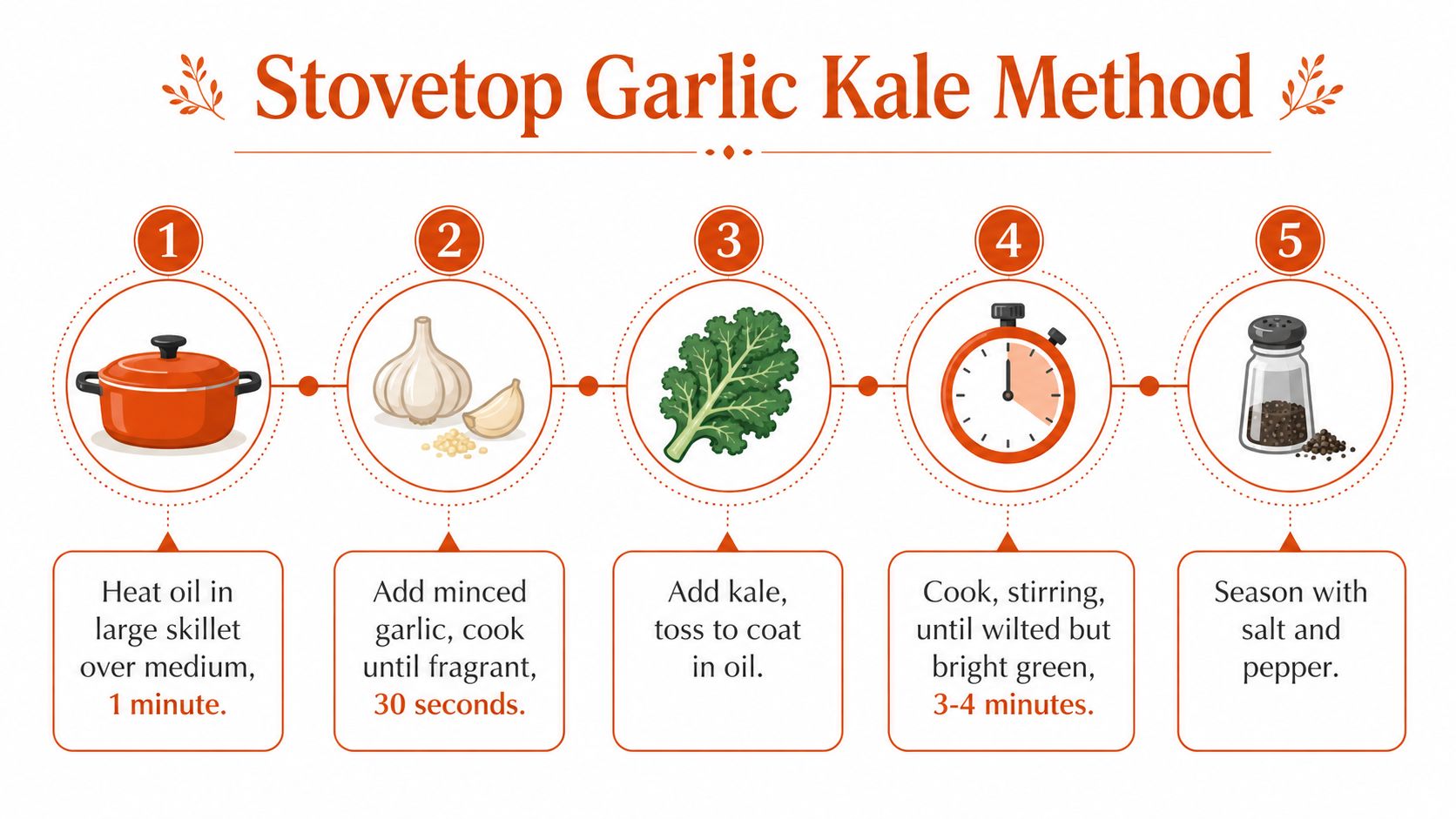
Put the olive oil and minced garlic in a cold skillet. Set the burner to medium-low and let the pan warm gradually. A tested sautéed kale method uses a short garlic cook and a total wilt period of roughly 3 to 8 minutes, depending on leaf thickness and pan load.
Use the garlic's appearance and aroma rather than the clock. It will begin pale and still, then develop tiny bubbles around the pieces. As the aroma turns sweeter and the edges reach pale gold, add the kale. Medium-brown garlic has already gone too far and may taste bitter.
Add red pepper flakes at the pale-gold stage, if using. Stir briefly, then add the kale by handfuls, tossing each addition through the oil before adding more. The raw pile may look excessive, but the bottom leaves will collapse quickly and make room for the rest.
Finish the leaves without overcooking them
Raise the heat to medium once the kale is in the pan. Use tongs to bring softened leaves from the bottom over the firmer pieces, coating them with the hot oil. If the pan looks dry before the leaves start collapsing, add a small splash of water or broth. It should vanish as steam, not collect beneath the greens.
A pre-wetting or covered-steam approach can soften kale in 1 to 2 minutes, followed by an uncovered finish of 2 to 3 minutes to evaporate moisture and concentrate flavor (garlicky kale technique). Thick mature leaves may need longer, so judge the pan by the leaves rather than following a fixed endpoint.
Check three signals:
- Volume: The raw pile has reduced noticeably.
- Color: The leaves are glossy and vivid green, rather than dull olive.
- Texture: A stem or thick rib yields easily when pressed with a fork.
Turn off the burner as soon as all three cues appear. Add lemon juice or a small splash of vinegar, toss once, and taste for salt. Residual heat continues softening the kale, so serve promptly.
For another approach to moisture control and vegetable timing, use this guide to Asian steamed vegetables.
The video below provides a visual reference for the skillet process.
Oven and Air Fryer Alternatives for Different Textures
The stovetop method gives kale a tender, glossy finish. Oven roasting and air frying produce browned edges and a firmer center, so choose them for the texture the meal needs rather than treating them as direct substitutes.
For oven roasting, tear or cut the leaves into similar-sized pieces, coat them lightly with oil, and spread them in one layer. Roast at 375°F for 8 to 12 minutes, turning halfway. Watch the edges, not only the clock. Remove the tray as soon as they brown, before the leaves become brittle. Minced garlic can roast with the kale, but small pieces may darken before the leaves are ready. Add larger slices, or stir minced garlic in near the end.
Air frying dries the leaves faster and pushes them toward chip-like crispness. Cook at 350°F for 5 to 7 minutes, checking early because the airflow can scorch garlic while the kale still looks underdone. Add minced garlic during the final 90 seconds, or use garlic powder for a more forgiving result.
| Method | Temp / Setting | Cook Time | Texture Result | Best For |
|---|---|---|---|---|
| Stovetop | Medium heat in a wide skillet | About 3 to 8 minutes, depending on the leaves and pan load | Tender, glossy, and lightly wilted | Grain bowls, proteins, pasta, and everyday sides |
| Oven | 375°F | 8 to 12 minutes | Crisp edges with chewy centers | Roasted meals, toppings, and larger trays |
| Air fryer | 350°F | 5 to 7 minutes | Dry, crisp, and chip-like | Snacks and salad toppers |
Both dry-heat methods have a narrow finishing window. Pull the kale when the edges are browned and the centers still bend slightly. If you are preparing several air-fryer batches, the guidance in these air-fryer meal prep recipes can help you separate crisp foods from soft sides that need reheating. Let roasted kale cool briefly on the tray so steam does not immediately soften the browned edges.
Common Mistakes That Ruin Garlic Kale and How to Fix Them
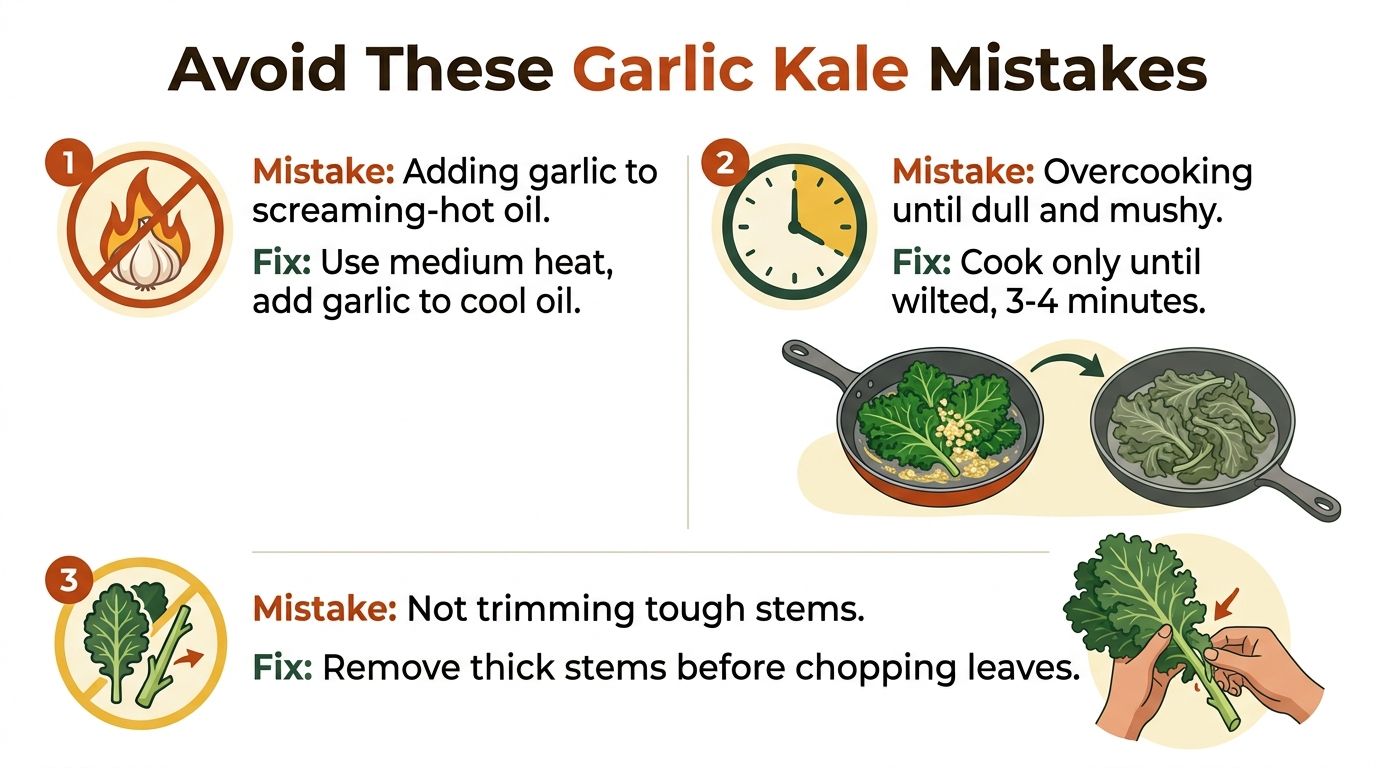
Garlic kale usually goes wrong in the few seconds between pale gold and brown. Start with moderate heat, watch the garlic's color and texture, and add the greens while the pieces are still lightly golden. Pale-gold garlic looks yellow at the edges, remains soft, and smells sweet. Medium-brown garlic has darker centers, firmer edges, and a sharp, acrid smell.
Read the pan before correcting it
- Garlic has burned: Remove the kale and oil from the pan, discard the garlic, wipe out any black residue, and restart with fresh oil. Burned bits will spread bitterness through the greens, even if the kale itself is cooked well.
- Kale turns watery: Too many leaves or excess moisture are usually responsible. Cook uncovered, toss more often, and add later handfuls only after the earlier batch begins to collapse.
- Leaves stay chewy: Trim thick stems more carefully, then add a small amount of water or broth to create steam. More heat alone can brown the outside while the stems remain tough.
- Color turns dull olive: Long covered cooking or excess liquid has softened the color. Uncover the pan and finish over stronger heat until the moisture evaporates.
Salt is easier to judge near the end, after the kale has reduced. Early seasoning is workable, but it can make a wet, crowded pan harder to control.
Pre-minced garlic adds another variable because small, uneven pieces brown at different speeds. Freshly minced or thinly sliced cloves give clearer visual cues. Keep the pieces similar in size, keep the pan within reach, and stay beside it during the garlic stage. The right stopping point is pale gold, before the centers turn brown and the aroma becomes harsh.
Flavor Variations and Serving Ideas for Any Meal
Once the base method is dependable, the dish can move in several directions without changing its core timing. For a bright Italian-style version, add red pepper flakes with the garlic and finish with lemon. The combination works beside grilled chicken, pasta, roasted fish, or white beans.
For a deeper, sesame-forward variation, use sesame oil and finish with sesame seeds and rice vinegar. Keep the garlic timing unchanged. The oil and acid alter the flavor, but they don't make burnt garlic less bitter.
Butter and Parmesan create a richer finish. Stir in butter during the last moments off the heat, then add grated Parmesan while the kale is still warm enough to coat the leaves. Bacon or pancetta can provide smoky depth when cooked before the greens, allowing the rendered fat to become part of the seasoning base.
Flavor balance: Acid doesn't hide poor cooking. It sharpens properly tender kale and cuts through richness, but it can't rescue garlic that has already burned.
Serve the finished greens with roasted meat, spoon them into a grain bowl, or pile them onto crostini with ricotta. Warm farro, toasted pine nuts, and a final splash of vinegar turn the side into a more substantial plate. For broader ideas about using what you have and helping reduce holiday waste this Thanksgiving, practical planning matters as much as the recipe itself.
The same balance of vegetables, herbs, grains, and acid appears throughout Mediterranean cooking guidance, where simple ingredients depend on careful sequencing rather than elaborate equipment.
Just Cook It offers downloadable cookbook e-books with kitchen-tested instructions for everyday cooking, including collections organized around quick dinners, healthy eating, and global cuisines. Visit Just Cook It to find practical recipes you can read on a phone, tablet, laptop, or e-reader, then use this garlic timing method at your next weeknight meal.