Feeding a picky eater can make healthy eating feel like a daily struggle. You may buy fresh foods, plan balanced meals, and still end up watching your child eat only the bread or the one food they already know they like. After a while, it’s tempting to give up and serve whatever they will actually eat.
But picky eating is common, and it usually doesn’t change overnight. The aim isn’t to make your child eat everything on the plate. It’s to keep offering a good variety of foods, make mealtimes less stressful, and give children time to become comfortable with foods they don’t know yet. Small changes can add up, especially when there’s no pressure to finish a bite.
Table of Contents
- Understanding Dinner-Time Reality
- Why Picky Eating Matters for Nutrition
- Gentle Exposure and Meal Structure That Holds Up on Weeknights
- Ingredient Swaps and Format Tweaks
- Weeknight Meal Plans and Packing Logic
- Common Barriers and When to Rethink the Approach
- Building Sustainable Healthy Habits Over Time
Understanding Dinner-Time Reality
A typical weeknight rarely offers ideal conditions for food exploration. Children may be tired from school, adults may be hungry and distracted, and the meal may contain one texture that immediately triggers refusal. Even a well-prepared dish can fail if it arrives at the wrong moment, in an unfamiliar shape, or beside a preferred food that requires no effort to eat.
The same principle applies to adults. Someone who says they “don't like vegetables” may happily eat roasted carrots blended into soup, thinly sliced cucumber in a sandwich, or peppers charred until sweet. The obstacle may be texture, bitterness, preparation, or just the expectation that the food will be unpleasant. Calling the person difficult doesn't solve any of those problems.
Practical rule: Make the next meal easier to approach, not more impressive to describe.
A useful dinner might be plain rice, chicken strips, and a small serving of roasted zucchini. The child can eat the rice and chicken without a confrontation, while the zucchini remains available for looking at, touching, smelling, or tasting. An adult can use the same components with lemon, herbs, or a sauce at the table. One base meal can serve different preferences without requiring separate cooking.
Small progress is still progress
Success doesn't have to mean a child suddenly eating an entire serving of broccoli. It might mean accepting a new sauce beside pasta, allowing a bean to remain on the plate, or choosing a whole-grain version of a familiar wrap. For an adult, progress might be replacing one takeout meal with a simple grain bowl or adding a vegetable to a dish already in rotation.
Food preferences can remain narrow for a while. A longitudinal study found that 13% to 22% of children were reported as picky eaters at any given age, 39% were picky at some point, and 40% of cases lasted more than two years (longitudinal research on picky eating). Those findings support patience, but they don't support passivity. A calm routine gives repeated exposure a chance to work.
Start with one manageable adjustment. Keep a familiar carbohydrate, change the cooking method for one vegetable, or serve a new protein in the same format as a preferred one. The aim is a meal people can repeat when everyone is tired.
Why Picky Eating Matters for Nutrition
A person can eat enough to stay energetic and still have a narrow nutritional pattern. A short menu may rely heavily on refined carbohydrates, familiar packaged foods, or one preferred protein while leaving little room for fruit, vegetables, varied textures, and other nutrient-dense choices. The issue is often the food environment, including what is served, how it is prepared, and how much effort a new food requires, rather than a personal flaw.
Food neophobia, the reluctance to try unfamiliar foods, is closely related to picky eating. Research with young children linked greater neophobia with lower consumption of fruit and vegetables, protein foods, and total calories. Among 24-month-old children, it was also associated with lower fruit variety, β = -0.16, lower vegetable variety, β = -0.29, and a greater share of daily energy from discretionary foods, β = 0.11 (research on food neophobia and diet). A child may therefore eat a sufficient amount while getting less dietary variety.
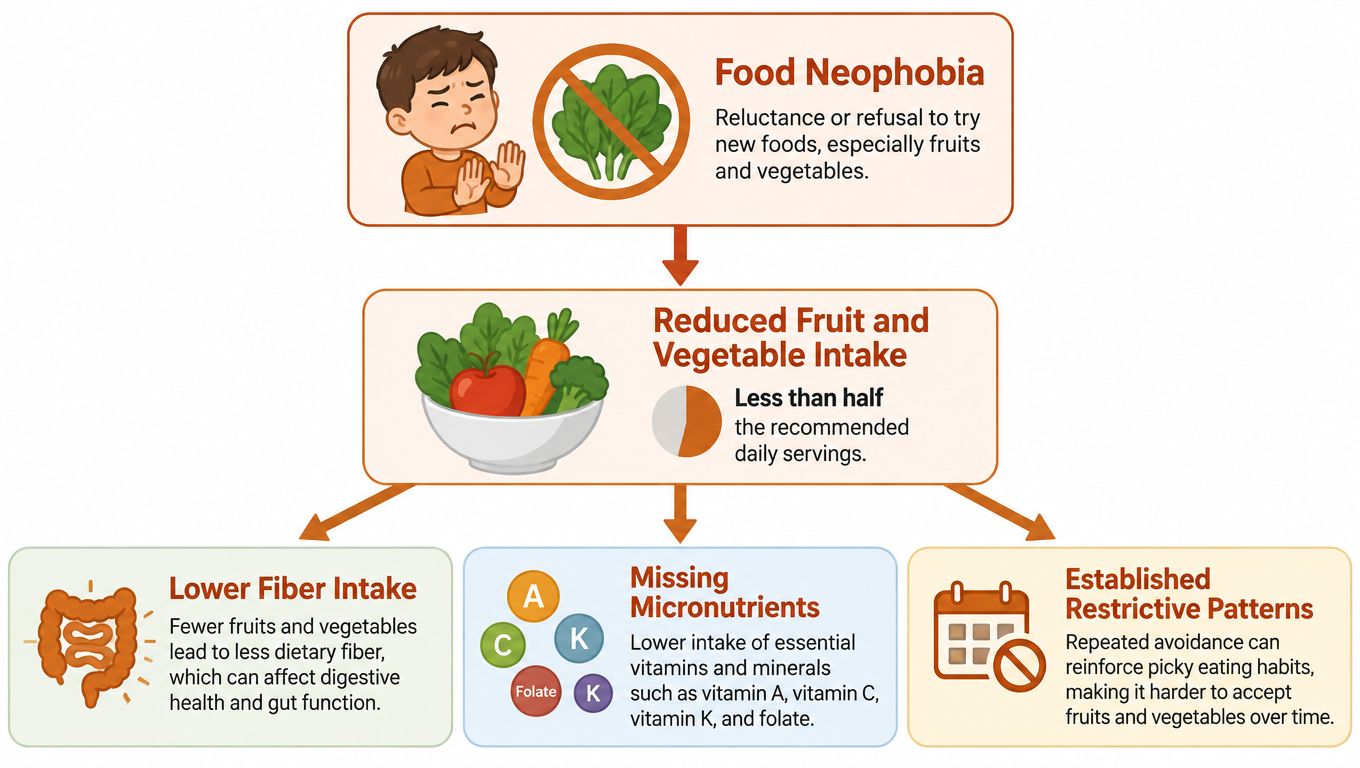
Look beyond the empty plate
Picky eating commonly changes with age. One population study reported rates of 26.5% at 1.5 years, 27.6% at 3 years, and 13.2% at 6 years. Across 14 studies, a narrative review found estimates ranging from 6.6% to 59.3%, depending on the definition used, while stricter definitions of “very picky” were often around 15% or less (population research on picky eating). Those differences matter at the dinner table. A label that fits one family or age may not describe another, so practical adjustments work better than a rigid standard.
Diet quality can improve before variety changes substantially. Familiar foods can carry more beans, eggs, yogurt, vegetables, fruit, or whole grains, provided the texture and format remain acceptable. In a randomized dietary intervention, 92% of participants completed the trial, and diet quality improved even though picky-eating behavior and dietary variety did not meaningfully change (dietary intervention in picky eaters).
Use tolerated foods as the starting point. Stir vegetables into a familiar sauce, serve fruit beside a preferred breakfast, or offer a new protein in a known shape. For cooks adapting grilled meals, Fire & Smoke: 75 BBQ & Grilling Recipes | Digital PDF offers recipes featuring fruit, vegetables, breads, and familiar proteins.
Gentle Exposure and Meal Structure That Holds Up on Weeknights
A child refuses the vegetables, an adult is answering work messages, and dinner is already cooling. In that moment, a workable plan needs more than good intentions. It needs enough structure to reduce bargaining while leaving room for appetite, sensory preferences, and an imperfect evening.
Start by setting predictable meals and snacks, with 2 to 3 hours between eating opportunities (feeding guidance for picky eating). The gap gives hunger time to build and reduces constant grazing, without turning hunger into an emergency. Keep each meal within a defined 20 to 30 minute window. When the endpoint is clear, the table is less likely to become a long negotiation.
Serve one or two reliable foods alongside a small portion of something less familiar. The new food might be one carrot stick, a spoonful of lentils, or a piece of another fruit. Keep the portion small enough that refusal does not waste a full serving or derail the meal. This arrangement also works for adults who are cautious about an ingredient, since everyone can share the same meal without needing a separate recipe.
Refusal is information about the current food environment, not proof of defiance. Reoffer the food after several days or weeks, perhaps with a different temperature, shape, or preparation. Avoid presenting its return as a test. Exposure can begin with seeing, smelling, touching, or leaving the item on the plate. “You don't have to eat it” usually creates more room for learning than “Just try one bite.”
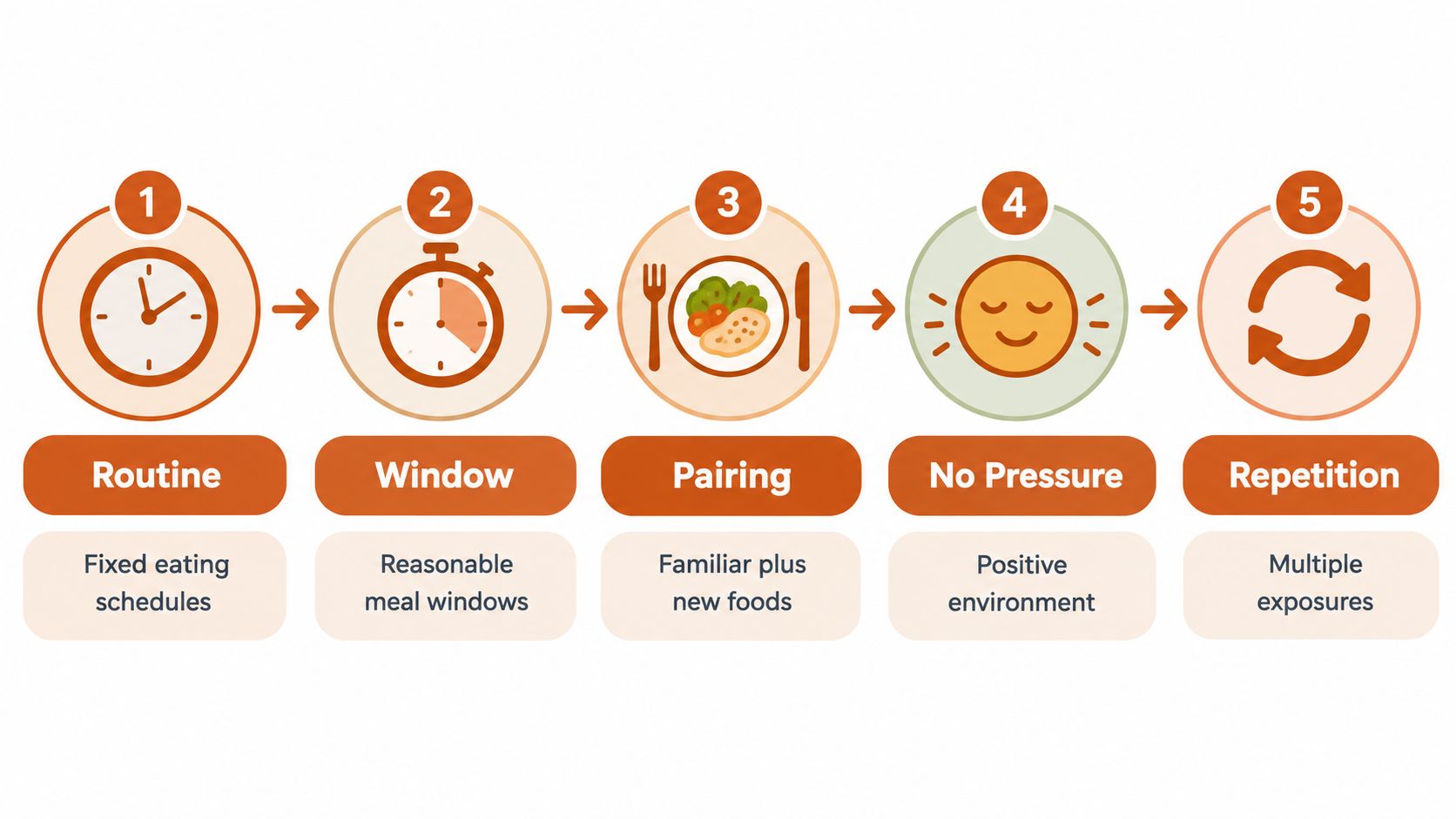
What usually backfires
Bribes can make the new food feel like a chore before the reward. Hiding ingredients may add nutrients in the short term, but it does not help the eater recognize or tolerate that food when it appears openly. Forcing bites, requiring a clean plate, and extending dinner far beyond the meal window can make the table feel unsafe.
The cook decides what, when, and where food is served. The eater decides whether to eat and how much. This boundary supports children and adults alike. It removes pressure to perform while preventing the household from turning into a short-order kitchen.
Sensory differences and autism may require slower changes and closer attention to texture, smell, temperature, and predictability. Guidance on expanding an autistic child's diet can help caregivers introduce foods gradually without treating refusal as defiance.
For tonight, choose one familiar anchor, add one small variation, set a clear endpoint, and avoid comments about how much was eaten. These quick meal ideas for kids can also help turn the same structure into a manageable weeknight dinner.
Ingredient Swaps and Format Tweaks
The easiest improvement often comes from changing the format, not the food. A person who rejects a chunk of roasted carrot may accept a smooth carrot dip. Someone who refuses a chicken breast may eat the same meat cut into thin strips and served with a familiar sauce. Texture, temperature, shape, and moisture can matter as much as flavor.
Start with substitutions that preserve the meal's identity:
- Keep pasta familiar while adding nourishment. Use a whole-grain version if the texture is acceptable, or mix a small amount with regular pasta. Blend beans or cooked vegetables into tomato sauce, but also serve visible pieces occasionally so the hidden version isn't the only exposure.
- Stretch ground meat dishes. Finely chop mushrooms or greens and combine them with ground beef or turkey in tacos, meatballs, or a pasta sauce. Use a small amount first so the texture stays close to the original.
- Build on bread and wraps. A preferred sandwich can carry hummus, shredded chicken, cheese, cucumber, or a thin layer of mashed beans. Change one component at a time rather than rebuilding the whole meal.
- Use dips as a bridge. Yogurt, hummus, guacamole, or a simple bean dip can make vegetables less exposed and give the eater control over each bite.
- Adjust the cooking method. Steaming creates a soft texture, roasting concentrates sweetness, and grilling adds char. The same vegetable can become three different foods from the eater's perspective.
Match the sensory experience
Texture consistency can make a meal easier to accept. Pair crunchy crackers with crisp vegetables, or soft rice with tender protein, rather than placing several unpredictable textures together. Serve sauces on the side when mixed food is a problem. Cut food into strips, rounds, or small pieces according to what the person already handles comfortably.
Flavor boosters should be gentle and optional. Lemon, olive oil, mild herbs, garlic, cinnamon, or a small amount of cheese can make a plain staple more appealing without covering every flavor. Keep the base recognizable, then let each person season their own portion.
Blending and boosting are useful tools, but they shouldn't replace visible food forever. A soup with blended lentils can improve nutrient density today, while a few lentils placed beside the soup create a separate, low-stakes opportunity to learn.
Weeknight Meal Plans and Packing Logic
At 6 p.m., a hungry child, a tired adult, and an empty lunch container can turn dinner into a negotiation. A workable plan reduces those decisions without requiring a new recipe every night. Prepare a few components that can appear in different formats, then let familiar food provide a reliable starting point.
A flexible weeknight pattern
Monday can be a bowl night. Serve a grain with chicken or beans, cucumber or roasted vegetables, and sauce on the side. A child may choose rice and chicken, while an adult combines the full meal.
Tuesday can reuse those ingredients in wraps. Add cheese, hummus, or shredded meat to a tortilla, with fruit or a familiar crunchy side. Keep fillings separate when mixed textures create resistance.
Wednesday can be soup or pasta night. Tomato sauce can carry blended vegetables or beans, while visible toppings stay optional. Pack leftover soup in a thermos the next day if its texture travels well.
Thursday can be a sheet-pan meal. Roast potatoes, chicken, and one vegetable with space between them, so their textures remain distinct. Use leftover chicken in a sandwich or serve the potatoes with eggs.
Friday can be a build-your-own meal. Tacos, flatbreads, or rice plates let everyone choose from the same prepared ingredients. One shared setup is often easier than cooking separate dinners.
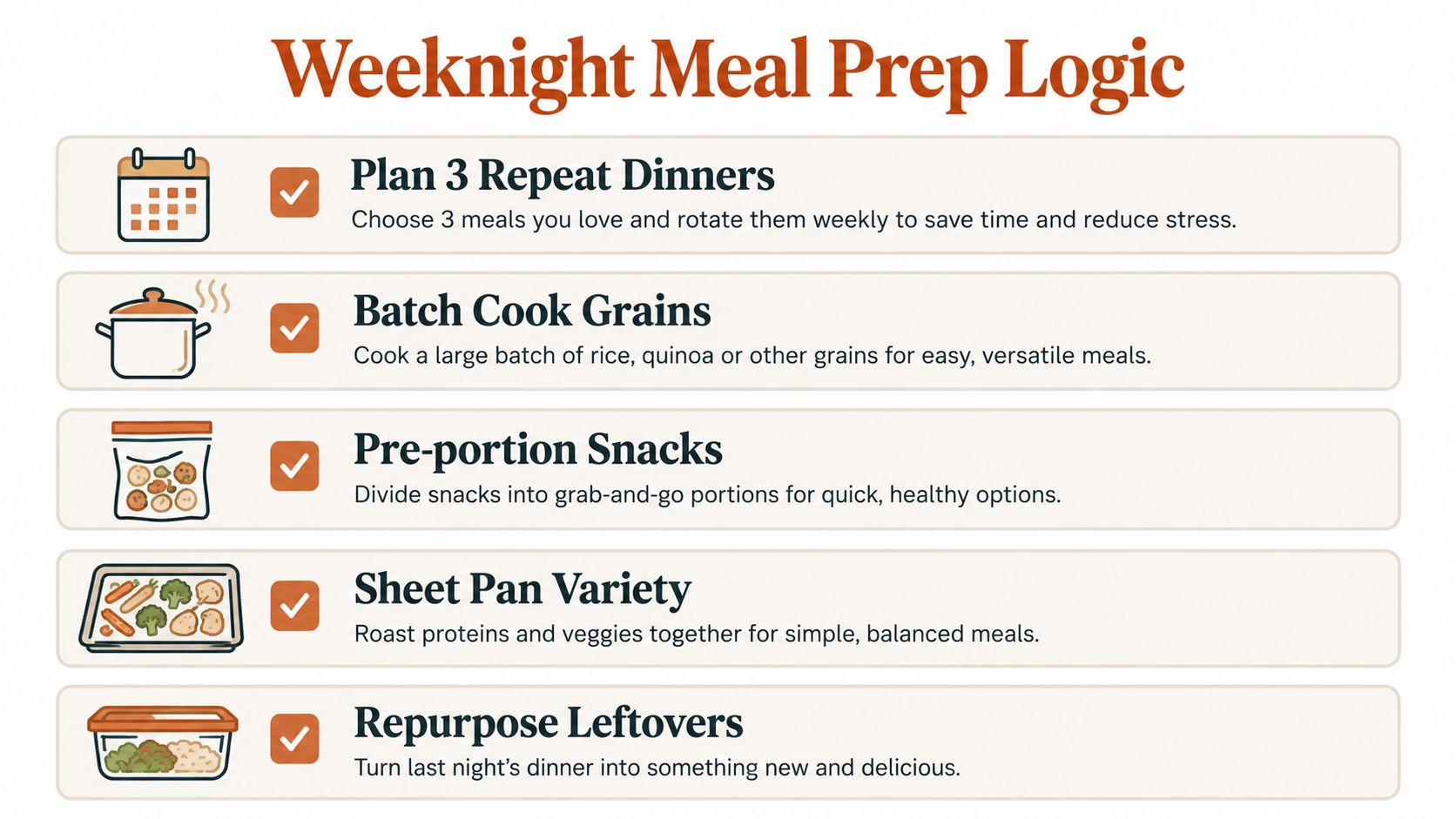
Shop by components, not recipes
Build the shopping list around a grain, two proteins, two fruits, two vegetables, a familiar bread or wrap, and ingredients for one sauce or dip. Batch-cook rice, quinoa, or potatoes when time allows. Wash fruit, portion crackers or nuts where appropriate, and keep some vegetables plainly prepared so seasoning does not become another barrier.
Packing follows the same logic. Put one familiar item in the lunch container, add one dependable protein, include a fruit or vegetable in an accepted format, and use a small dip or sauce when it helps. For practical lunch ideas for picky eaters, use combinations that preserve recognizable parts rather than forcing a new recipe. For school-lunch formats built around the same approach, see Lunchbox Heroes: school lunch recipes for kids.
Collections like The Healthy Lunch Box organize packable soups, salads, bowls, wraps, snacks, whole grains, vegetables, and lean proteins. Use that structure as a planning aid. Choose foods that can travel, reheat, or assemble quickly when the morning routine is already crowded.
Common Barriers and When to Rethink the Approach
A child who prefers packaged snacks isn't displaying a personal flaw. Food availability, household routines, peer habits, sensory expectations, and repeated exposure all shape what feels normal to eat. A person may reach for a highly processed snack because it is predictable, convenient, strongly flavored, and always available, while the vegetable requires preparation and carries a risk of disappointment.
A 2026 paper in Health Promotion International describes a pattern of fussiness that can emerge in the early school years as a persistent preference for ultra-processed foods. Interviews with 34 parents suggested that this pattern may follow a different timeline from the classic toddler phase and may have longer-term health implications (research on ultra-processed food preferences and fussiness). The practical response isn't to remove every packaged food overnight. It is to change the environment gradually, keep satisfying alternatives ready, and avoid allowing convenience to become the only reliable option.
Troubleshoot the household first
If snacks are constant, set predictable snack times. If dinner is too late, move part of the meal earlier or offer a planned bridge snack rather than an endless stream of food. If the family cooks one safe meal under stress, prepare a double batch so tomorrow's safe component is already available.
Persistent selectivity deserves closer attention when the diet remains very narrow, meals create substantial distress, or nutritional concerns continue despite a supportive routine. A 2026 tertiary-center study found food selectivity in 70.3% of referred children and adolescents, and the finding was independent of BMI, meaning a child can have clinically important selectivity even when their weight appears typical or high (review and clinical evidence on food selectivity). Ask a pediatrician or qualified feeding professional about screening for nutritional risk, ARFID, or pediatric feeding disorder rather than assuming the issue will resolve on its own.
Budget pressure can reinforce safe, repetitive meals too. Practical budget meal planning helps families make the most of shared ingredients, leftovers, and low-cost staples while keeping variety possible.
Building Sustainable Healthy Habits Over Time
Healthy eating for picky eaters works best as a household rhythm. Keep the meal schedule predictable, offer familiar foods alongside small variations, improve the nutrient density of accepted dishes, and return to refused foods without turning them into tests.
Measure progress broadly. A calmer dinner counts. A new texture tolerated on the plate counts. A familiar pasta carrying beans or vegetables counts, even if the visible vegetable is still declined. Dietary quality can move forward before preference changes become obvious.
Setbacks are part of the process. Travel, illness, school changes, fatigue, and family stress can narrow choices again. Return to the structure that worked, keep portions modest, and make the next meal manageable rather than trying to recover everything at once.
Just Cook It offers downloadable digital cookbooks with kitchen-tested, step-by-step recipes for everyday cooking, including quick meals and packable dishes that can support a flexible family menu. Visit Just Cook It to browse recipe collections you can read on a phone, tablet, laptop, or e-reader and use for your next low-pressure weeknight meal.