When the rice comes out sticky, the problem usually started before the tomatoes, olives, or lemon ever reached the pan. Basmati needs controlled hydration, and Mediterranean ingredients make that control harder because they bring their own moisture, acidity, and salt. This Mediterranean rice recipe with basmati is built around separate grains first, then bold additions that won't turn the pot into a soft, starchy mass.
Basmati has deep roots in the Himalayan foothills and the Indo-Gangetic Plains, especially across India and Pakistan, where long-grain aromatic rice has been cultivated for centuries. Its place-based history helps explain why cooks value it for dishes where fragrance and distinct grains matter, including Mediterranean-style pilafs and herb-flecked sides. (Historical review of basmati rice)
Table of Contents
- The Foundation of Fluffy Mediterranean Basmati
- Executing the Stovetop Absorption Method
- Managing Moisture with Mediterranean Add-Ins
- Choosing Between White and Brown Basmati
- Troubleshooting Texture and Repurposing Leftovers
The Foundation of Fluffy Mediterranean Basmati
A pilaf can look perfectly measured at the start and still finish gummy. The usual causes are starch left on the grains or more liquid than the rice can absorb. Measure the rice and water separately, then rinse the basmati in a bowl or fine-mesh sieve until the runoff becomes noticeably clearer. It does not need to be perfectly transparent, but thick, cloudy water should fade before you stop.
For unsoaked white basmati, use 1 cup rice to 1.5 cups water. After soaking and thoroughly draining the rice, reduce the liquid to about 1.25 to 1.33 cups per cup of rice, following this basmati cooking ratio guide and this basmati cooking ratios guide. Soaked grains have already taken on moisture, so adding the unsoaked amount can leave the finished rice soft.
Practical rule: Drain soaked rice properly. Water clinging to the grains still counts toward the final liquid.
A short soak helps produce especially long, delicate grains, but it is optional for a weeknight pilaf. If you skip it, rinse well and use the higher baseline ratio. Measure the broth or water, chop the aromatics, and prepare the tomatoes, olives, herbs, or other additions before heating the pan. Wet Mediterranean ingredients can alter the final moisture, so having them ready lets you adjust their timing instead of leaving rice in hot oil while you work.
Warm olive oil in a heavy saucepan or lidded skillet. Add the dry, rinsed rice and stir until each grain is lightly coated. Toasting develops a nutty aroma and firms the grain's surface before liquid enters. Garlic, shallot, onion, oregano, or cumin can cook in the oil. Hold back fresh herbs and lemon juice, since they are better added after the rice has absorbed its measured liquid.
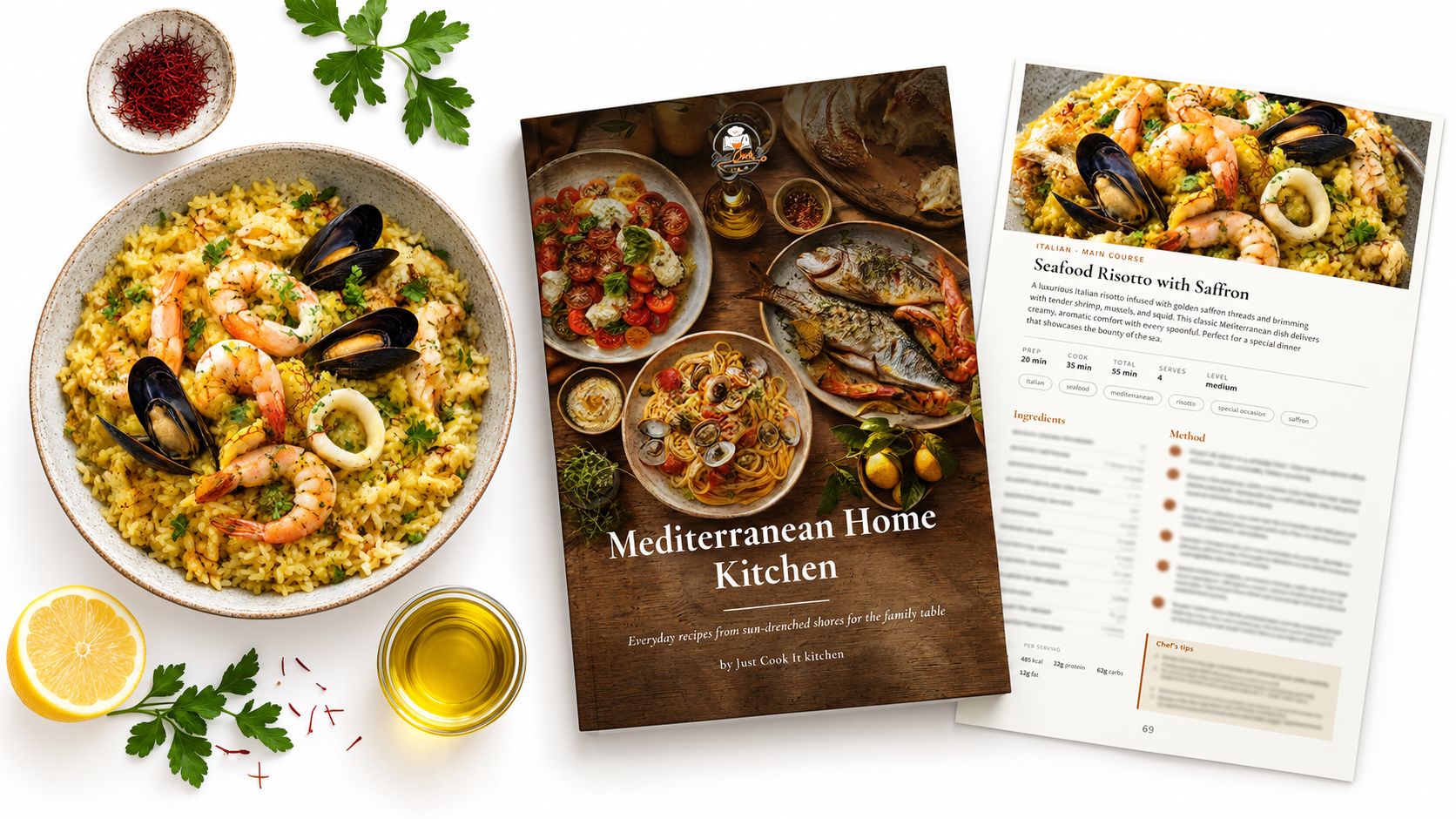
For cooks who want more meals in this style, Mediterranean Home Kitchen | Digital PDF gathers everyday recipes from Greece, Italy, Spain, Turkey, and Morocco, including vegetable dishes, soups, salads, mains, breads, desserts, and sauces.
The toasted rice should sound faintly dry and slide freely around the pan. Stop before it browns aggressively. Dark grains cook unevenly, while a light toast gives the rice fragrance without creating hard spots.
A visual reference can help you judge the change from toasting to simmering while learning the method.
Executing the Stovetop Absorption Method
Pour the measured water or broth into the toasted rice carefully. It will hiss, and the liquid may foam briefly around the grains. Scrape the bottom once to release anything that caught during toasting, then bring the pot to a proper boil before covering it.
A proper boil has active bubbles across the surface, not just a few lazy bubbles at the edges. As soon as it reaches that point, reduce the heat to low and cover tightly. The rice needs a quiet simmer, not violent movement. Expert guidance commonly places the covered cooking window for white basmati at about 10 to 12 minutes, followed by a covered rest, while another absorption method uses the same simmer range and a 3 to 5 minute rest before fluffing. (Stovetop basmati technique)
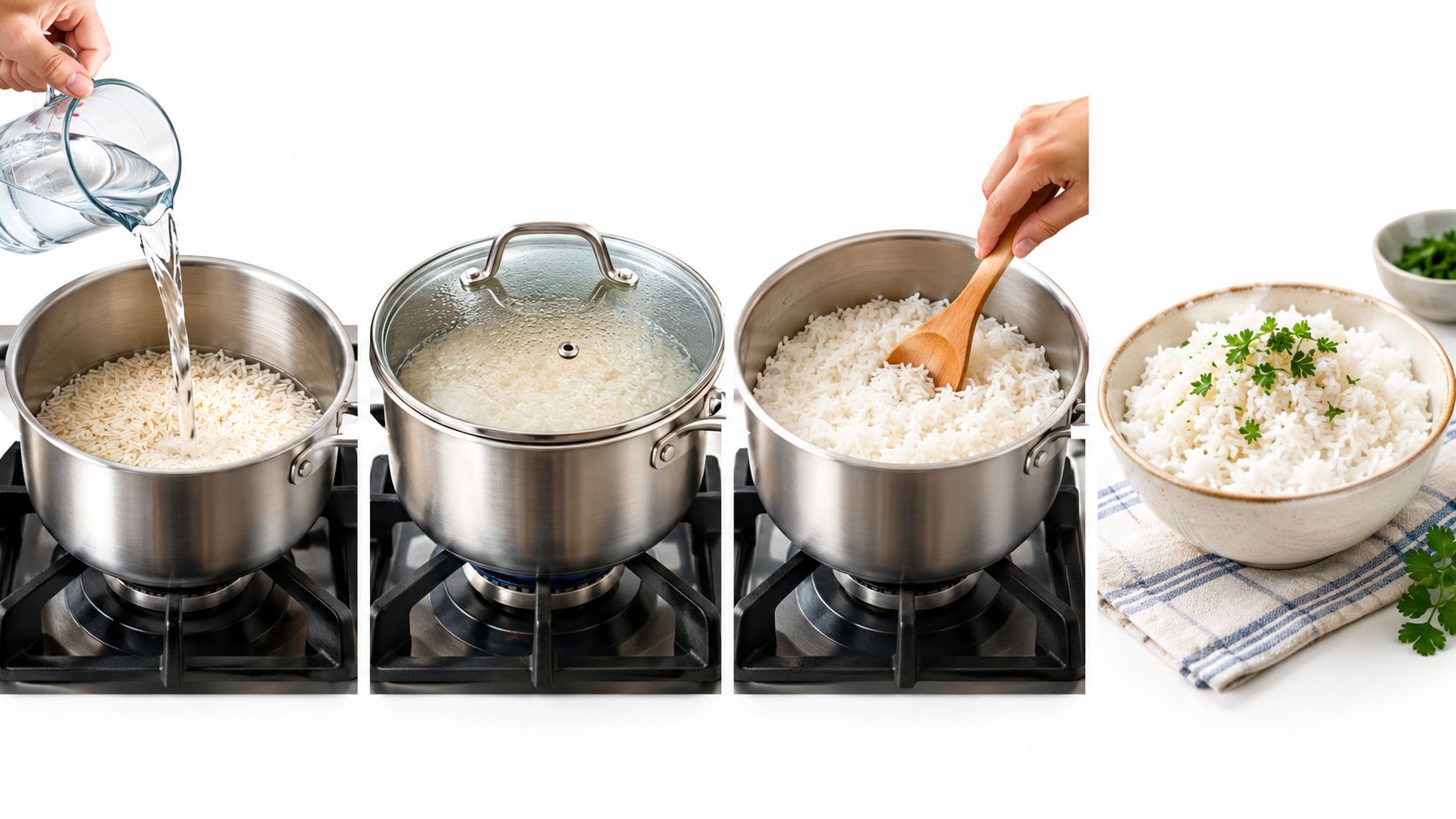
The lid matters more than most cooks expect. Steam trapped inside finishes the center of each grain, while lifting the lid releases heat and moisture before the rice is ready. If your lid leaks heavily, place a clean kitchen towel over the pot before setting the lid on top, keeping the towel well away from the flame or heating element.
Read the pot instead of relying only on the clock
Near the end of cooking, the surface should look mostly dry. You may see small steam holes forming between the grains, and the sound will change from a wet bubbling to a faint, dry hiss. Those cues indicate that the liquid has been absorbed, but they don't mean the rice should be stirred immediately.
Turn off the heat and leave the lid in place for the rest. During this pause, trapped steam moves through the rice and softens the center without adding water. Fluff with a fork, rice paddle, or wide wooden spoon, lifting from the bottom rather than stirring in circles.
A gentle hand protects the grains. If you need more practical technique references, keep this guide to cooking Thai black sticky rice separate from the basmati method, since sticky rice follows a different hydration logic.
Managing Moisture with Mediterranean Add-Ins
Tomatoes, olives, artichoke hearts, pesto, and lemon can all improve a Mediterranean rice dish, but they don't behave the same way. Fresh tomatoes release water as they heat. Olives contribute little free liquid when drained, but bring salt and brine. Lemon juice is mostly a finishing ingredient, while zest adds fragrance without significantly loosening the rice.
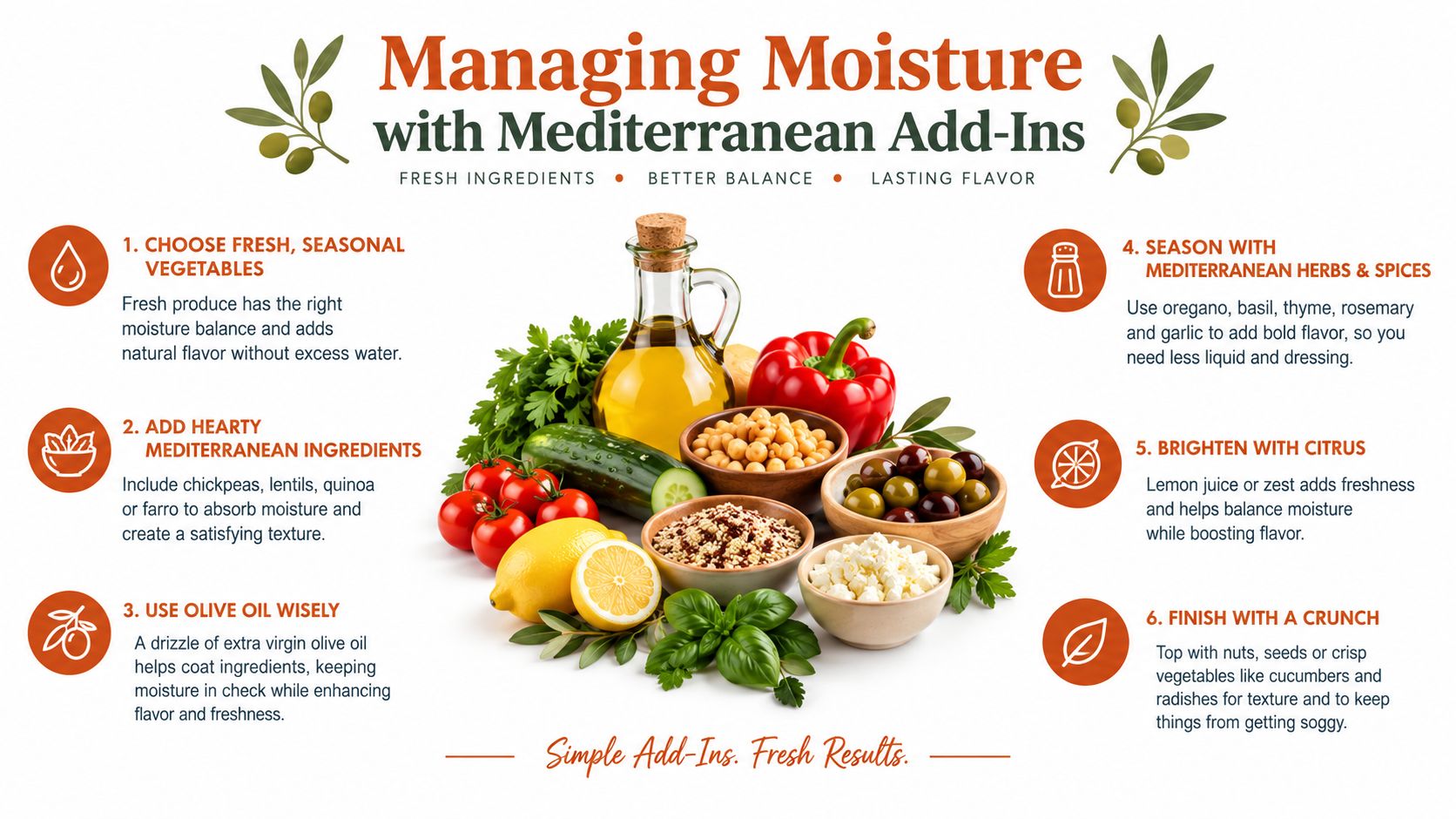
The safest approach is to keep the rice's baseline liquid predictable and control wet ingredients separately. Drain canned tomatoes and artichokes well. Pat olives dry if they're packed in brine. Cook fresh tomatoes briefly with the aromatics so some of their water evaporates before the rice and measured liquid go in.
Match the ingredient to the cooking stage
Sturdy ingredients can enter early. Garlic, softened onion, drained sun-dried tomatoes, roasted peppers, and dried oregano can cook in the oil or broth because they tolerate heat and season the liquid gradually. Add them before the rice absorbs the cooking liquid, but avoid piling in watery vegetables unless you've accounted for their release.
Fresh herbs belong at the end. Dill, parsley, mint, basil, and cilantro lose their brightness when simmered for the entire cooking time. Fold them into rested rice with a light hand. This also keeps their moisture from entering the pot while the grains are still vulnerable.
Lemon juice should usually finish the dish rather than boil with the rice. Acidic liquid can make the final texture feel tighter, and a heavy pour at the end can make the surface wet before the grains have a chance to absorb it evenly. Add a small amount, fluff, taste, and only then decide whether more brightness is needed.
For a pilaf, use drained vegetables and let the measured broth remain the main cooking liquid. For a one-pan bake, expect a softer result because vegetables release liquid gradually and the rice may cook in a more enclosed environment. For a grain salad, cook the basmati plain, cool it, and add tomatoes, olives, herbs, and lemon afterward. This separation gives you the greatest control.
Recipe variations demonstrate why technique needs to change with the format. Some Mediterranean rice preparations use 650 ml of boiling water for 300 g of rice, while others cook the rice covered for 12 minutes, leave it undisturbed for 20 minutes, or use a drain method lasting 35 to 40 minutes for brown basmati. These differing approaches are summarized in Mediterranean yellow rice technique notes, and they shouldn't be treated as interchangeable.
Wet add-ins are not free flavor. They are part of the liquid calculation.
A useful test is to lift a spoonful after resting. The grains should separate when nudged, while the vegetables should look distinct rather than dissolved into the starch. If the rice is already tender, don't correct a dry-looking pan with a large splash of lemon juice or broth. Add moisture in small increments after cooking instead.
For broader ingredient and timing ideas, this practical guide to Mediterranean cooking is most useful when you adapt its flavors to the rice method rather than copying a wet vegetable mixture directly into the pot.
Choosing Between White and Brown Basmati
White basmati is the dependable choice for a fluffy Mediterranean side. Brown basmati has a nuttier flavor and a chewier bite, but the bran layer changes how quickly water reaches the center of the grain. It can work well with roasted vegetables, mushrooms, lentils, and stronger sauces, though it won't produce exactly the same delicate texture as white rice.
| Feature | White Basmati | Brown Basmati |
|---|---|---|
| Texture | Light, tender, and separate when carefully cooked | Firmer, chewier, and more pronounced |
| Weeknight use | Better suited to quick pilafs and herb rice | Requires more planning and attention |
| Cooking approach | Absorption method works well | Drain method can be more forgiving |
| Add-in compatibility | Handles fresh herbs, olives, and lemon easily | Works with robust vegetables and earthy seasonings |
| Main trade-off | Less chew and a milder grain flavor | Longer cooking and a less delicate finish |
White basmati is especially practical when the rice will support a saucy main dish. Its separated grains catch olive oil, herbs, and roasted vegetable juices without competing with them. It also gives you more room to correct the dish at the finish because the texture is relatively quick to assess.
Brown basmati needs patience. One recipe approach uses a 35 to 40 minute cooking period followed by draining, rather than treating brown rice like white basmati. (Brown basmati Mediterranean recipe comparison) That method can prevent a waterlogged result, but it produces a different grain and requires a separate decision about when the rice is tender enough.
Choose white rice when your priority is a soft, fragrant pilaf with distinct grains and minimal active management. Choose brown when you specifically want its firmer bite and deeper flavor, and when the rest of the dish can support that texture. Don't switch varieties while keeping the same timing and liquid assumptions. The grain's structure changes the whole cooking schedule.
Brown basmati also benefits from drier add-ins. Roasted peppers, sautéed mushrooms, toasted nuts, and well-drained olives are easier to manage than a large quantity of fresh tomato. Finish with herbs and lemon only after the rice has rested, then taste for salt because olives and broth can already bring plenty.
Troubleshooting Texture and Repurposing Leftovers
A basmati pot can fail even with sound ratios. A thin saucepan loses heat quickly, a powerful burner keeps the simmer too aggressive, and a loose lid lets steam escape. Diagnose the texture before adding anything.
Rice is crunchy and the pot is dry. Sprinkle in a small amount of hot water or broth, cover immediately, and return the pot to low heat. Don't stir the grains through the bottom, since that can break partly cooked rice and release more starch.
Rice is wet but the grains are intact. Leave the lid off briefly over very low heat, or spread the rice in a wide dish so excess steam can escape. Don't keep boiling it hard. High heat can scorch the base while the upper layer remains damp.
Rice is mushy. Stop cooking at once. Spread it thinly on a tray, let steam escape, and use it as a base for a saucier meal rather than trying to restore separate grains. The next batch needs less added liquid, better-drained vegetables, or a shorter covered cook.
The bottom is scorched. Transfer the unburned upper rice to a clean bowl without scraping. A little olive oil, herbs, lemon zest, or toasted nuts can make the rescued portion useful, but burnt flavors spread quickly if you mix from the bottom.
The grains clump after resting. Fluff with a fork while the rice is still warm, then fold in additions gradually. Stirring aggressively turns surface starch into paste. For a deeper explanation of visual doneness cues, use this guide to telling when rice is done.
Leftover basmati is often easier to season than freshly cooked rice. Chill it promptly in a shallow container, then use the firm grains in a skillet with olive oil, garlic, roasted peppers, chickpeas, and herbs. Add lemon after the pan comes off the heat so the acidity stays bright.
You can also stuff the rice into peppers with feta and chopped parsley, fold it into a grain salad with cucumber and olives, or serve it beneath reheated grilled vegetables. Keep wet toppings separate until serving. That preserves the texture you worked to create and lets each person adjust lemon, herbs, and olive oil to taste.
The best rescue is often a change of format, not a battle against the original texture.
Just Cook It offers downloadable cookbook e-books with clear, kitchen-tested instructions for everyday cooking, including Mediterranean recipes that complement this basmati technique. Visit Just Cook It to browse practical recipe collections and find your next dependable weeknight dish.