Major food publishers have kept releasing vegetarian and vegan sheet-pan recipe roundups from 2021 through 2026, which points to steady interest in this style of cooking, as noted in The Vegan Atlas roundup on easy vegan sheet pan dinners. The reason is simple. One pan cuts cleanup, keeps prep straightforward, and makes it easy to mix vegetables, beans, tofu, and seasonings in flexible ways.
This approach also fits more than one kind of eater. A meal-kit industry report says plant-based plans made up 29.3% of active meal-kit subscriptions globally in 2025, up from 17.8% in 2021, and says 38% of vegetarian meal-kit subscribers are flexitarians, according to Dataintelo’s meal-kit delivery market report. So these dinners aren’t just for strict vegetarians. They work for anyone trying to cook more meat-free meals at home.
Table of Contents
1. Mediterranean Halloumi with Cherry Tomatoes and Zucchini
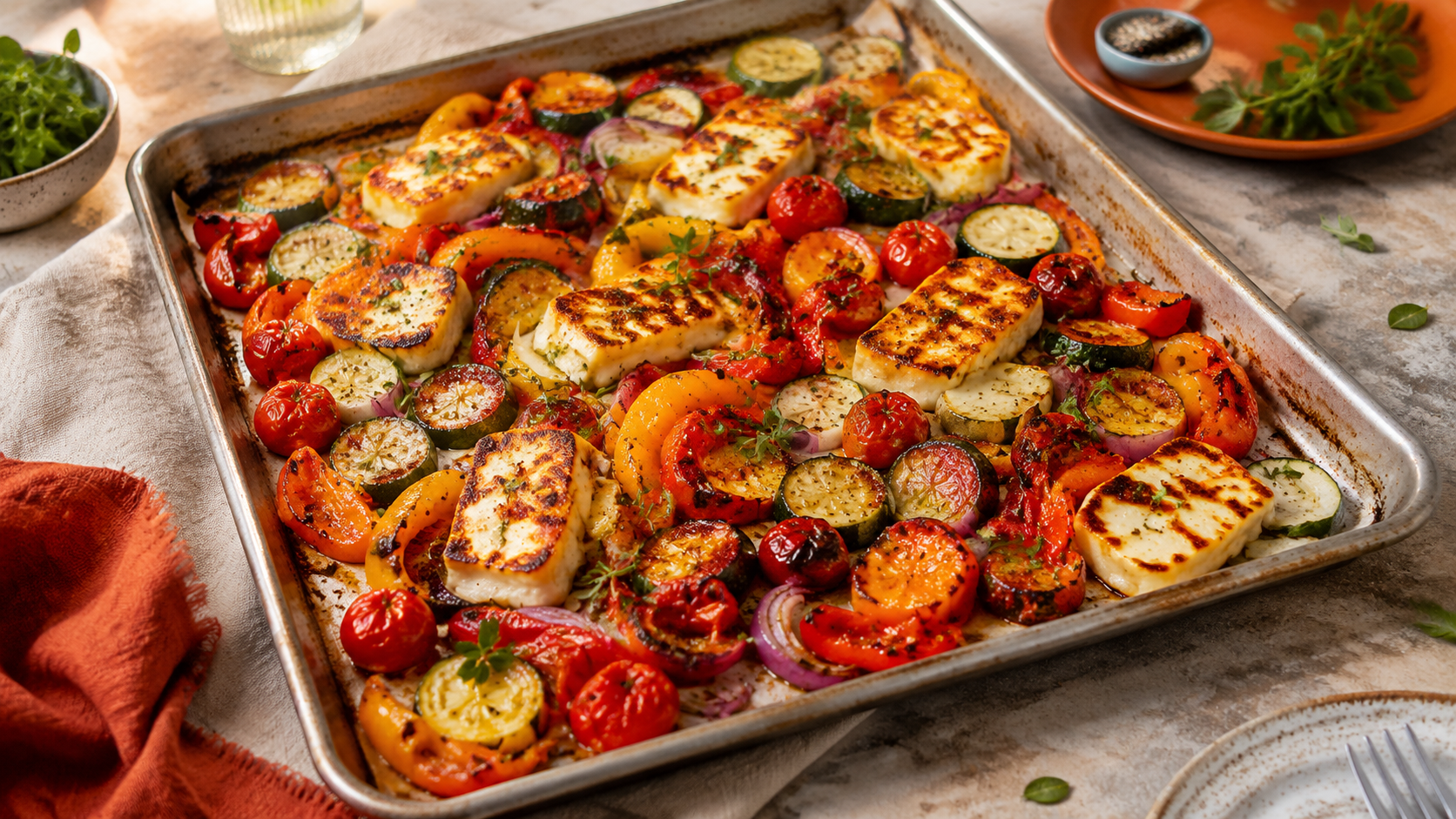
Halloumi is one of those rare cheeses that behaves beautifully in the oven. Instead of melting into a puddle, it browns on the edges and turns soft in the middle. That makes it a smart choice for vegetarian sheet pan meals when dinner needs a satisfying center, not just a pile of roasted vegetables.
Zucchini, bell peppers, red onion, and cherry tomatoes are a strong match because they roast at a similar pace and create their own quick pan sauce. The tomatoes burst, the onion sweetens, and the zucchini softens just enough without falling apart. A little olive oil, oregano, salt, and pepper is often all this pan needs.
Why this pairing works
The strategy here is contrast. Halloumi brings salt and chew. The vegetables bring sweetness and moisture. That balance keeps the meal from feeling flat.
For a real weeknight version, a cook can cut the vegetables into thick, even pieces, spread them out, then tuck in slices of halloumi for the last part of roasting so the cheese browns without drying out.
-
For texture: Keep the halloumi in slabs or thick sticks so it crisps outside and stays tender inside.
-
For balance: Let the tomatoes and onions do the sweet work instead of adding sugar or heavy sauces.
-
For serving: Spoon everything over couscous or pile it into pita for a dinner that feels complete fast.
A crowded pan steams vegetables. A little space is what gives halloumi color and keeps zucchini from going limp.
2. Whip Up Spicy Black Bean and Sweet Potato Fajitas
Some sheet pan dinners are all about timing. This one is about contrast. Sweet potatoes roast into caramelized cubes, black beans turn warm and hearty, and peppers and onions pick up those classic fajita edges that taste just a little smoky.
The smart move is to cut the sweet potatoes smaller than the peppers and onions. That helps them soften in time without overcooking the rest. A simple mix of chili powder, cumin, paprika, and garlic powder gives the whole tray a familiar fajita flavor without much measuring stress.
The reason the flavors click
Sweet potatoes naturally mellow spice. Black beans bring body and protein. Peppers and onions add that savory fajita note people expect. Together, the pan tastes full even before toppings go on.
A practical home-cook version might roast the sweet potatoes first for a short head start, then add the peppers, onions, and beans so everything finishes together. Warm tortillas, sliced avocado, and lime at the table turn the tray into dinner with almost no extra work. The same flavor logic shows up across many everyday dishes in Mexican kitchen cooking collections, where beans, chiles, and roasted vegetables build depth from simple ingredients.
-
One shortcut: Use canned black beans, drained and dried well, so they roast instead of turning watery.
-
Another shortcut: Toss the vegetables directly on the pan to save a mixing bowl.
-
Final touch: Add lime after roasting, not before, so the vegetables brown properly.
3. Master Roasting Root Vegetables with Crispy Tofu
This is the meal that teaches the biggest sheet-pan lesson. Not every ingredient belongs on the pan at the same time. Once that clicks, vegetarian sheet pan meals get much easier to improvise.
Dense vegetables need a head start. Softer vegetables need less time. Tofu needs help if a cook wants crisp edges instead of pale cubes. According to Worldmetrics’ vegetarian statistics report, 68% of vegetarians prepare meals at home at least 5 times per week, which helps explain why timing-friendly formats like this matter so much in real kitchens.
The timing trick that changes everything
Root vegetables such as potatoes and carrots usually need longer roasting. Softer vegetables can roast in roughly 15 to 20 minutes, while denser roots often need 30 to 45 minutes depending on size and temperature. That means a cook can start potatoes and carrots first, then add tofu and quicker vegetables such as broccoli later.
Tofu gets better results when it’s pressed, cubed, and dusted lightly with cornstarch before roasting. That dry coating helps the surface crisp instead of staying soft.
Tofu note: Marinade adds flavor, but too much liquid can slow browning. A thin soy-ginger or maple-mustard coating works better than a heavy soak.
A common weeknight setup is simple. Potatoes and carrots go in first. Halfway through, tofu and broccoli join the pan. By the end, the tray has crisp corners, tender centers, and enough variety to feel like a full meal instead of a compromise.
4. A Weeknight Twist on Italian Sausage and Peppers
You get home hungry, you want something cozy, and you do not want to juggle three pans. A vegetarian sausage and peppers tray makes meal preparation much simpler. It gives you that classic, savory-sweet comfort with a super simple setup.
The brilliance is in the pairing strategy. Plant-based Italian sausage brings built-in seasoning, richness, and a firm bite. Bell peppers and onions do a different job. They soften, sweeten, and soak up all that flavor on the pan. This creates a balanced team. One ingredient brings depth, the others bring lift.
That is why this combination works so well on a sheet pan. You are not relying on a separate sauce to make dinner interesting. As the vegetables roast, their edges char a little and their natural sugars come forward. The sausage seasons the whole tray. You end up with a meal that tastes fuller than the ingredient list suggests.
Why this formula is so useful
This is also a smart lesson in building your own vegetarian sheet pan meals. Start with one strongly seasoned protein. Add vegetables that turn sweet and tender in the oven. Then make sure their cooking times line up. Peppers and onions roast at a similar pace, so you can cook them together without much babysitting. You've got this.
A few small choices make a big difference. Cut the peppers into strips, not tiny pieces, so they stay silky instead of disappearing. Slice the onions thick enough to keep some texture. If your sausage browns faster than the vegetables, just nudge it to a cooler corner of the pan for the last few minutes. That little timing trick is a shared secret that makes the whole dinner feel easier.
Serve it straight from the pan, pile it into a roll, or spoon it over polenta or rice if you want the meal to stretch.
-
Main flavor job: Let the sausage act like the seasoning base. The peppers and onions catch that flavor as they roast.
-
Texture move: Keep the vegetables fairly large so they caramelize at the edges but stay tender inside.
-
Easy formula to reuse: Swap in mushrooms, fennel, or even cabbage if you keep the same idea of seasoned protein plus sweet roasting vegetables.
5. The 20-Minute Garlic Parmesan Gnocchi Bake
Shelf-stable gnocchi has a secret. It doesn’t need to be boiled first for this kind of dinner. On a hot sheet pan, it turns crisp outside and chewy inside, which is exactly why this meal feels more interesting than its short ingredient list suggests.
Broccoli is a smart partner because it roasts quickly and catches the garlic and cheese in all its little edges. Olive oil helps both ingredients brown, and parmesan adds salt, nuttiness, and a little crust where it hits the pan.
Small effort, big payoff
This meal works because every ingredient earns its place. Gnocchi brings starch. Broccoli brings freshness and bite. Garlic and parmesan do the heavy lifting on flavor.
A realistic version for a busy household might use one package of gnocchi, one head of broccoli cut into florets, a few cloves of garlic, oil, and grated cheese. Toss, spread, roast, and dinner is nearly done. A squeeze of lemon at the end can wake everything up if the pan tastes rich.
-
Fastest prep: Buy pre-cut broccoli if chopping is the step that usually stops dinner from happening.
-
Better browning: Give the gnocchi cut side contact with the pan when possible.
-
Easy variation: Swap parmesan for a vegan hard cheese alternative and keep the same method.
6. Enjoy Curried Chickpeas and Cauliflower
Some nights, dinner needs to come from what is already in the pantry. That is where this pan shines. Chickpeas and cauliflower are humble on their own, but together they make a meal that tastes layered, cozy, and far more planned than it really was.
The strategy is a key advantage. Cauliflower acts like a sponge for warm spices because its flavor starts mild, then turns sweeter and nuttier as it roasts. Chickpeas bring protein, texture, and enough heft to make the tray feel like dinner instead of a side. Put those two together, and you get balance without much effort. You've got this.
The flavor logic behind the pan
Curry powder provides the main flavor profile, giving the pan its initial clear direction. Turmeric deepens the color and adds an earthy note underneath. Then a cool finish, like yogurt or tahini, does something important. It softens the edges of the spice and keeps the whole pan from tasting flat or dry. This contrast significantly enhances the overall dish.
Timing matters here too, and this is one of those shared secrets that makes sheet pan cooking feel super simple. Cauliflower usually needs a head start, especially if the florets are large. Chickpeas can go on later once the cauliflower has begun to soften and brown. That way, the cauliflower gets tender inside, and the chickpeas stay a little crisp instead of turning hard.
A practical version might use one head of cauliflower, one can of chickpeas, oil, curry powder, turmeric, salt, and a spoonable sauce for finishing. Fresh cilantro or a squeeze of lemon at the end can wake everything up. If you love this kind of warm spice layering, the same idea shows up in Indian comfort food classics, where simple staples become immensely satisfying with the right seasoning order.
Roasted chickpeas are best when they are very dry before seasoning and spread in a single layer.
7. Create Your Own Custom Sheet Pan Meal
It is 5:30, the fridge looks a little chaotic, and you still want dinner to feel real. Sheet pan cooking provides an exceptional solution for such moments. You stop asking, "What recipe do I have?" and start asking, "What pieces do I have, and how do they fit together?" That shift makes weeknights feel much easier.
The secret is to approach the pan as a simple formula, not a fixed script. You need a base, something hearty, something that cooks faster, and one clear flavor direction. Once you see that pattern, you can build dinner from almost anything.
A formula you can use on repeat
Start with one protein, one starchy vegetable, and two or three quicker vegetables. Then add a fat and a seasoning profile that ties everything together. For example, tofu plus potatoes plus broccoli and peppers works because each part does a different job. The potatoes make it filling. The tofu brings protein. The vegetables add contrast, color, and faster-cooking texture.
Here is the super simple version:
-
Protein: tofu, tempeh, chickpeas, or halloumi
-
Starch: potatoes, sweet potatoes, squash, or gnocchi
-
Quick vegetables: broccoli, zucchini, peppers, asparagus, onions, or tomatoes
-
Fat: olive oil, avocado oil, or melted butter
-
Flavor direction: garlic and Parmesan, curry spices, fajita seasoning, lemon herbs, or smoked paprika
That last part matters more than it seems. A pan tastes better when it has one main idea. Seasoning acts as the thread that pulls the whole meal together. Without it, the ingredients can taste like roommates. With it, they taste like a team.
Why some combinations work better than others
This is the skill-building part. Pair ingredients by cooking speed and by personality.
Sweet potatoes and black beans work because the sweet, soft base balances smoky spice. Halloumi and tomatoes make sense because salty cheese loves juicy, acidic vegetables. Tofu and root vegetables are great together because both roast well and hold onto bold seasonings. Once you understand that kind of logic, you can make swaps without guessing.
A helpful rule is to pair one mellow ingredient with one stronger one. Creamy potatoes like punchy sauces. Mild zucchini likes salty cheese or herbs. Cauliflower handles warm spices beautifully. These little matches are shared secrets that make a low-effort dinner taste planned.
Timing made super simple
Timing is usually the part that trips people up, but you've got this. Just give the dense ingredients a head start. Quick-cooking vegetables join later.
In oven preparation, ingredients are added in stages. Potatoes, sweet potatoes, and squash go in first. Tofu, broccoli, peppers, and onions come in after that. Tender finishes like herbs, lemon juice, pesto, yogurt sauce, or grated cheese go on at the end, once roasting is done or nearly done.
A practical example helps. Start cubed potatoes first. When they begin to soften and pick up color, add tofu and broccoli. Finish with a sauce or fresh herbs after roasting so the pan keeps its crisp edges and deep flavor.
That is the ultimate win here. You are not just making one dinner. You are learning a method you can reuse again and again, with less waste, less stress, and a meal that still feels satisfying.
8. Go Beyond the Sheet Pan with a Complete One-Pan Library
Some cooks fall in love with the method before they even realize it. One pan, smart timing, less cleanup, and a meal that still feels generous. At that point, the next useful step isn’t a single new recipe. It’s a bigger system for cooking this way more often.
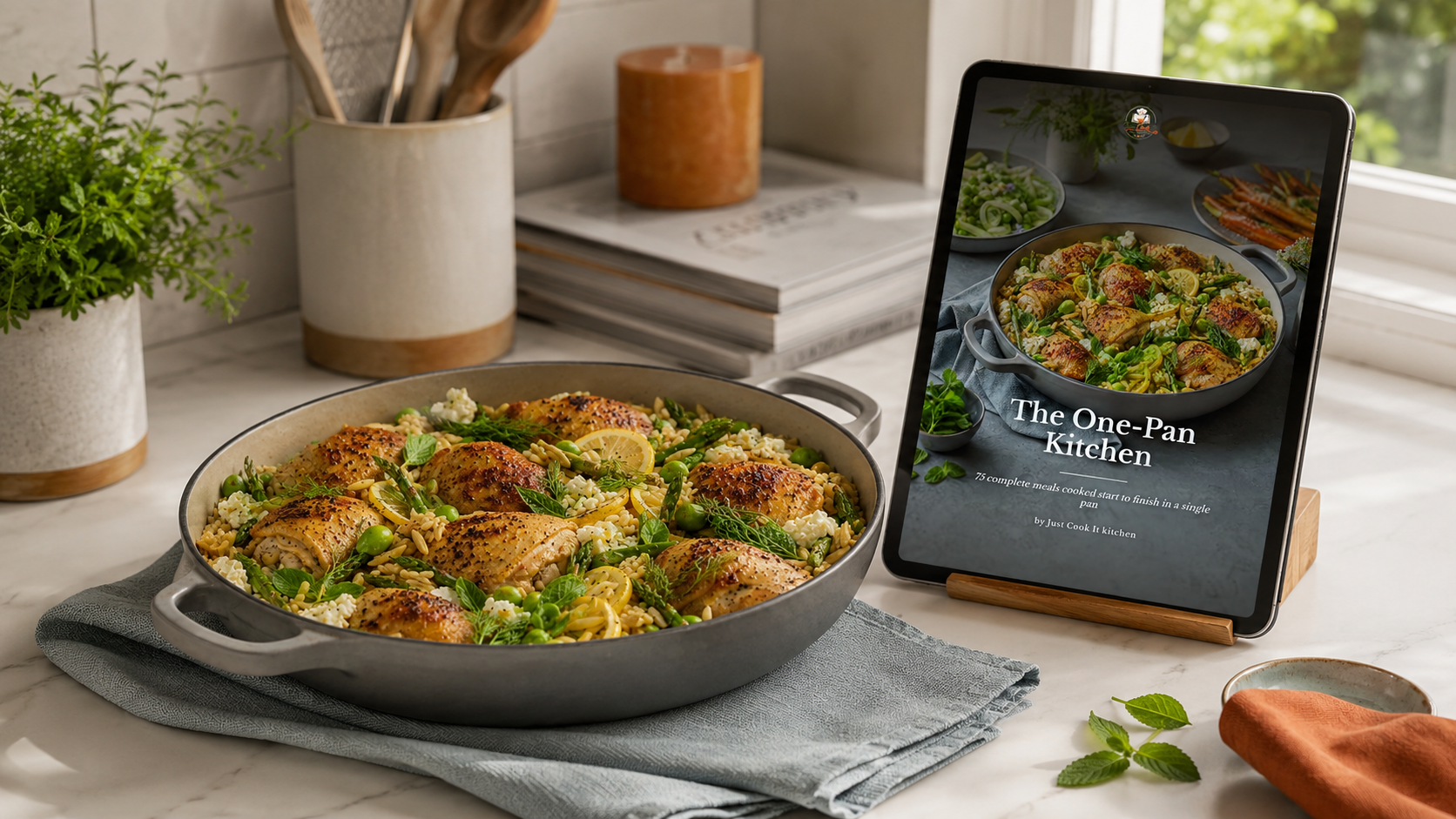
That’s where The One-Pan Kitchen | Digital PDF fits. It’s a digital recipe collection built around complete one-pan meals, including sheet-pan, skillet, and pot recipes. For someone who already likes the logic of vegetarian sheet pan meals, that wider format can make weeknight planning much easier.
Who this kind of collection helps
This suits cooks who want more than isolated dinner ideas. The value is in seeing how layering and timing repeat across different one-pan formats. Many recipes can also be adapted in a vegetarian direction by swapping proteins, changing broths, or leaning more heavily on beans, tofu, cheese, or vegetables.
A home cook who already knows how to stagger potatoes before broccoli on a sheet pan will recognize the same logic in skillet and pot meals. That makes a one-pan recipe library useful not because it promises magic, but because it gives more chances to practice a method that already works.
-
For planners: It helps people who want a larger bank of low-mess dinner ideas.
-
For learners: It supports cooks who like understanding timing, not just copying steps.
-
For flexible eaters: It suits households mixing vegetarian meals with other one-pan dinners.
Exploring Vegetarian Sheet Pan Dinners
| Recipe/Item | Main Feature | Best Served With | Cooking Technique |
|---|---|---|---|
| Mediterranean Halloumi with Veggies | Crispy halloumi with Mediterranean veggies | Couscous or pita bread | Roasting |
| Spicy Black Bean & Sweet Potato Fajitas | Sweet potatoes balanced with spice | Warm tortillas, avocado, lime | Roasting |
| Roasted Root Vegetables with Crispy Tofu | Crispy tofu with hearty root veggies | Soy-ginger or maple-mustard marinade | Staggered roasting |
| Plant-Based Italian Sausage and Peppers | Sweet, tender veggies with browned sausage | Hoagie roll or on its own | Browning and roasting |
| Garlic Parmesan Gnocchi with Roasted Broccoli | Crisp gnocchi with cheesy broccoli | Minimal-ingredient meal | Roasting |
| Curried Chickpeas and Cauliflower | Nutty cauliflower with crunchy chickpeas | Yogurt or tahini sauce, cilantro | Roasting |
| The Sheet Pan Formula | Customizable meal framework | Reduces food waste | Guide to roasting times |
| The One-Pan Kitchen | Digital PDF | 75 complete meals with smart layering | Vegetarian adaptable recipes |
Dinner Is Solved
Vegetarian sheet pan meals earn their place by making dinner simpler without making it dull. One tray can hold protein, vegetables, seasoning, and enough texture contrast to feel satisfying. That matters for busy households, but it also matters for anyone trying to cook at home more often with less friction.
The method is flexible in a very practical way. Halloumi can stand in for tofu. Chickpeas can replace sausage on one night and support cauliflower on another. Potatoes, broccoli, peppers, onions, and zucchini can move in and out of the plan depending on what needs to be used up. Once the timing pattern makes sense, the meal stops feeling rigid.
There’s also a bigger reason this style sticks. It supports habits that are easier to repeat. The Future Market Insights report on the plant-based meal-kit market says the broader meal-kit category has around 6% global consumer penetration and notes that plant-based meal adoption is strongest in urban households. For a digital recipe business and for home cooks, that points to a clear preference for meals that are efficient, familiar, and easy to fit into real life.
That same report also forecasts the global plant-based meal-kit market at USD 1,495 million in 2025 and USD 6,875.8 million by 2035, implying 16.5% CAGR. The takeaway for everyday cooking is not that anyone needs a subscription box. It’s that low-friction plant-based meal formats are moving further into the mainstream, and sheet pan dinners fit that shift naturally.
For cooks who want to eat well at home, this is a habit worth keeping. It reduces cleanup, helps with meal planning, and makes vegetables feel like the center of dinner instead of an afterthought. It also works for strict vegetarians, flexitarians, and families where not everyone eats the same way every night.
Just Cook It offers digital recipe collections built for that kind of cooking. A larger library of one-pan, regional, and comfort-focused recipes can make it easier to keep the rotation fresh while holding onto the same low-effort structure that makes sheet pan dinners so satisfying.
More easy vegetarian dinner ideas, one-pan formats, and flexible recipe collections are available in the Just Cook It shop. It’s a simple next step for cooks who want to keep weeknight meals low-mess, flavorful, and repeatable.