A good beginner vegetarian cookbook should help you judge ingredients, understand methods, and assemble meals without starting from zero every evening. It should also work in a real kitchen, whether you're reading a paperback with flour on the cover or using a downloadable e-book on your phone. The checklist below focuses on the skills, pantry categories, recipe formats, and digital habits that make a cookbook useful beyond its individual recipes.
Table of Contents
- Starting Out as a New Vegetarian Cook
- What a Beginner Vegetarian Cookbook Is Really For
- Core Techniques a Beginner Vegetarian Cookbook Should Teach
- Pantry Staples That Power a Beginner Vegetarian Cookbook
- Recipe Types You Will Find Inside a Beginner Vegetarian Cookbook
- Using a Downloadable Cookbook E-Book in a Real Kitchen
- Putting It All Together With Any Beginner Vegetarian Cookbook
Starting Out as a New Vegetarian Cook
A new vegetarian cook often begins with a practical problem rather than a philosophical one. You have vegetables that need using, a few grains in the cupboard, perhaps canned beans, and no clear idea how to turn them into dinner. A recipe collection helps only when it reduces that uncertainty instead of replacing it with a longer list of unfamiliar decisions.
Start by looking for a repeatable cooking rhythm. The cookbook should make it easy to choose a meal, identify the ingredients you need, and understand the order of work. If every recipe requires a different specialty sauce, unusual vegetable, or piece of equipment, the book may be vegetarian but not beginner-friendly.
A useful starter book should also build variety across the day. Plant proteins from legumes, lentils, nuts, seeds, soy foods, and whole grains can contribute enough protein when eaten in combination over the course of the day, as explained by the Mayo Clinic's guidance on vegetarian diets. That principle matters when you assess the recipes. Look for meals that use different protein sources rather than relying on one substitute in every dish.
Practical rule: Choose a cookbook that teaches you how to build meals, not one that only gives you more meals to copy.
Before buying or downloading, scan the contents and a few sample pages. Ask whether the instructions explain unfamiliar terms, offer substitutions, and show how a dish fits into a normal week. The strongest books give you meal templates, such as grain plus beans plus vegetables plus sauce, so you can adapt them when your cilantro wilts or your preferred grain is unavailable.
The goal isn't to cook a completely new recipe every night. It's to learn a handful of combinations you can trust, then change the vegetables, seasoning, or protein as your confidence grows.
What a Beginner Vegetarian Cookbook Is Really For
You open a new cookbook after work, find an unfamiliar ingredient, and wonder whether dinner will be manageable. A useful beginner vegetarian cookbook answers that question before you start. It explains ingredients, shows why key steps matter, and gives you ways to recover when a dish does not go exactly to plan.
A general vegetarian cookbook may assume you can adjust seasoning, coordinate several pans, or recognize when a grain is cooked. A vegan book may concentrate on replacing dairy, eggs, or meat. Both can be useful, yet a starter book should also explain what tofu does in a hot pan, how lentils change as they cook, and how acid can give a bean stew a finished taste.
Three promises worth checking
A capable starter book should provide:
- Plain-language skill building: Terms such as sauté, simmer, drain, reduce, and roast should be demonstrated or explained.
- Gradual ingredient discovery: Beans, whole grains, vegetables, soy foods, nuts, and seeds should appear in approachable combinations, not as a parade of specialty products.
- Forgiving execution: Recipes should include cues for doneness, suggest sensible swaps, and prevent one missing ingredient from ruining the meal.
Recipe design also affects how confidently you can eat. Guidance from the NHS on a vegetarian diet identifies pulses such as beans, peas, and lentils as low-fat protein sources that provide fiber and micronutrients, and recommends making whole grains a substantial part of starch choices. A cookbook that pairs pulses with grains or soy foods gives beginners a practical route to satisfying meals without relying on hard-to-find products.
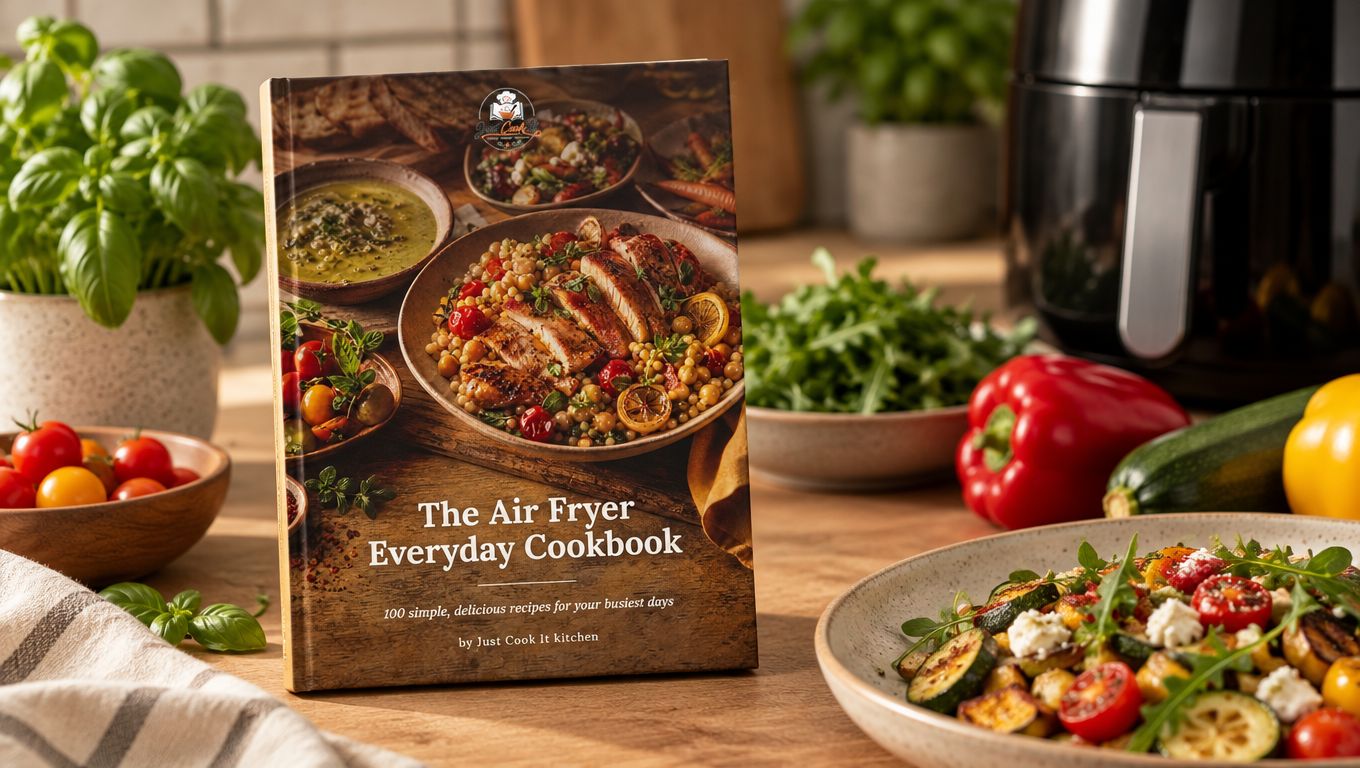
A digital cookbook can meet the same standard as a printed one when its recipes use accessible ingredients, clear cooking times, and a device-friendly layout. The Air Fryer Everyday Cookbook | Digital PDF illustrates the format point: a downloadable book should remain readable on a screen and practical to print. The file type does not make a cookbook beginner-friendly. Its instructions, layout, ingredient choices, and teaching value do.
For a wider comparison of kitchen reference books, browse this guide to the best cookbooks for home cooks. Treat any roundup as a starting point, then test sample recipes against the checklist above.
Core Techniques a Beginner Vegetarian Cookbook Should Teach
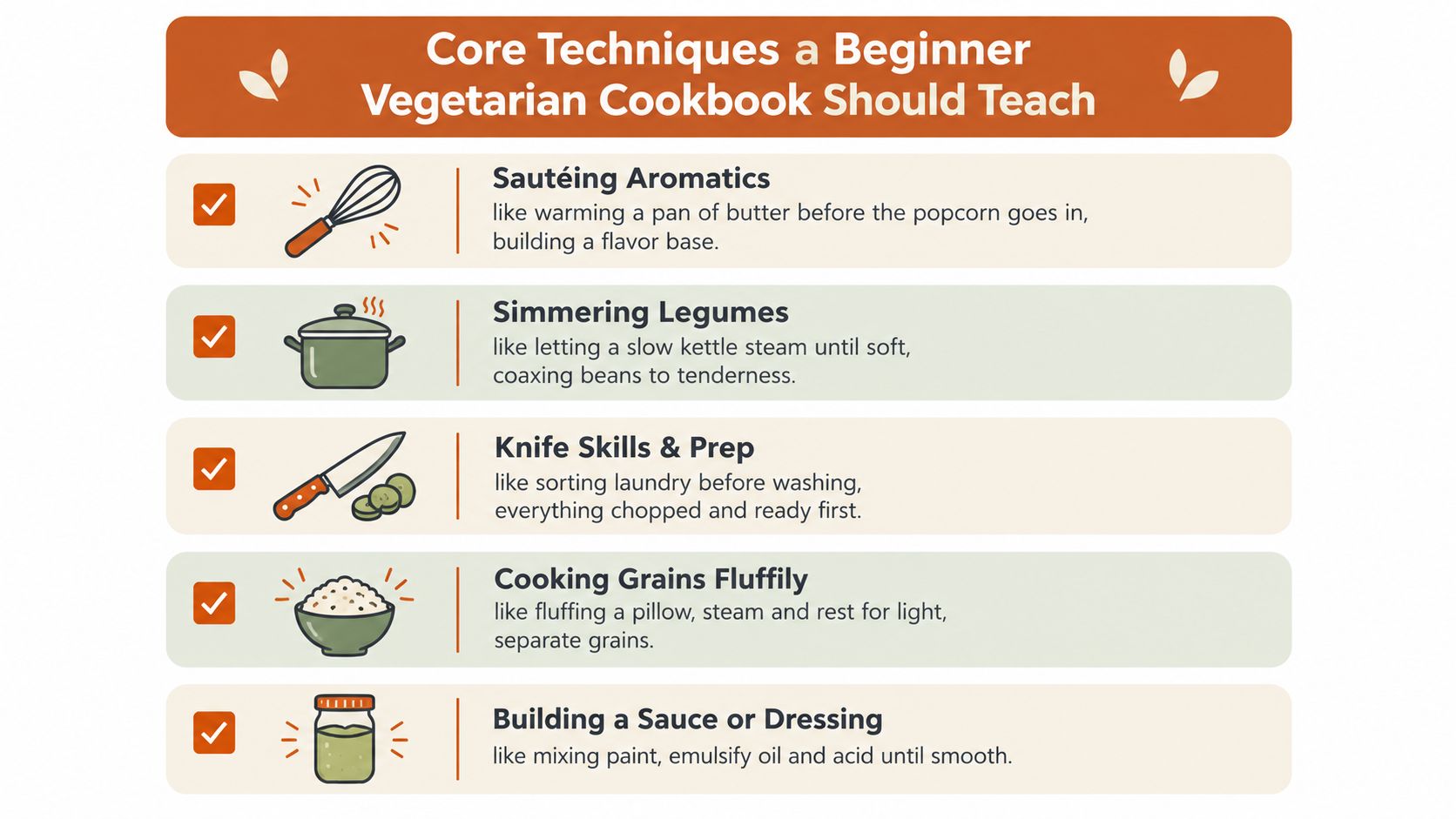
A recipe can tell you to cook onions until soft. A teaching cookbook explains what soft means, what the pan should look like, and how that step prepares the rest of the dish. Beginners learn faster when each technique connects to a familiar action.
Build flavor before adding the main ingredients
Sautéing aromatics is the opening chord of a song. Warm oil in a pan, add onion, garlic, ginger, or another aromatic, and give those ingredients time to soften and release fragrance before adding liquid. The process creates a base that makes lentils, vegetables, rice, and tofu taste more developed.
Roasting vegetables teaches heat control without requiring constant stirring. A good cookbook should show how to cut vegetables into similar sizes, coat them lightly, leave space on the tray, and check for browning. Caramelized edges add sweetness and texture, while the oven gives you time to prepare a grain or sauce.
Cooking grains is similar to brewing tea. You need the right amount of water, a covered pot, and patience while the grain absorbs liquid. Rice, quinoa, oats, and other grains each behave differently, so the book should provide visual cues and resting instructions rather than only a timer.
Learn how proteins respond to heat
Beans and lentils can come from a can or be cooked from dried. The important lesson is texture. A simmer should soften legumes without violently breaking them apart, and seasoning the cooking liquid helps the finished ingredient taste good throughout rather than only on the surface.
Tofu, tempeh, and halloumi teach a different skill. A beginner needs to know when tofu benefits from pressing, when a marinade will help, and how to recognize a browned surface before turning it. Pan-frying is less about following an exact minute count than learning to watch moisture, sound, and color.
Finish with sauce building. Soy sauce, citrus, tahini, miso, vinegar, oil, and spices can become many different dressings and pan sauces. Think of the method as mixing paint. Combine salty, sour, rich, sweet, and aromatic elements, then taste and adjust. Once you understand that pattern, recipes become flexible templates instead of scripts.
Pantry Staples That Power a Beginner Vegetarian Cookbook
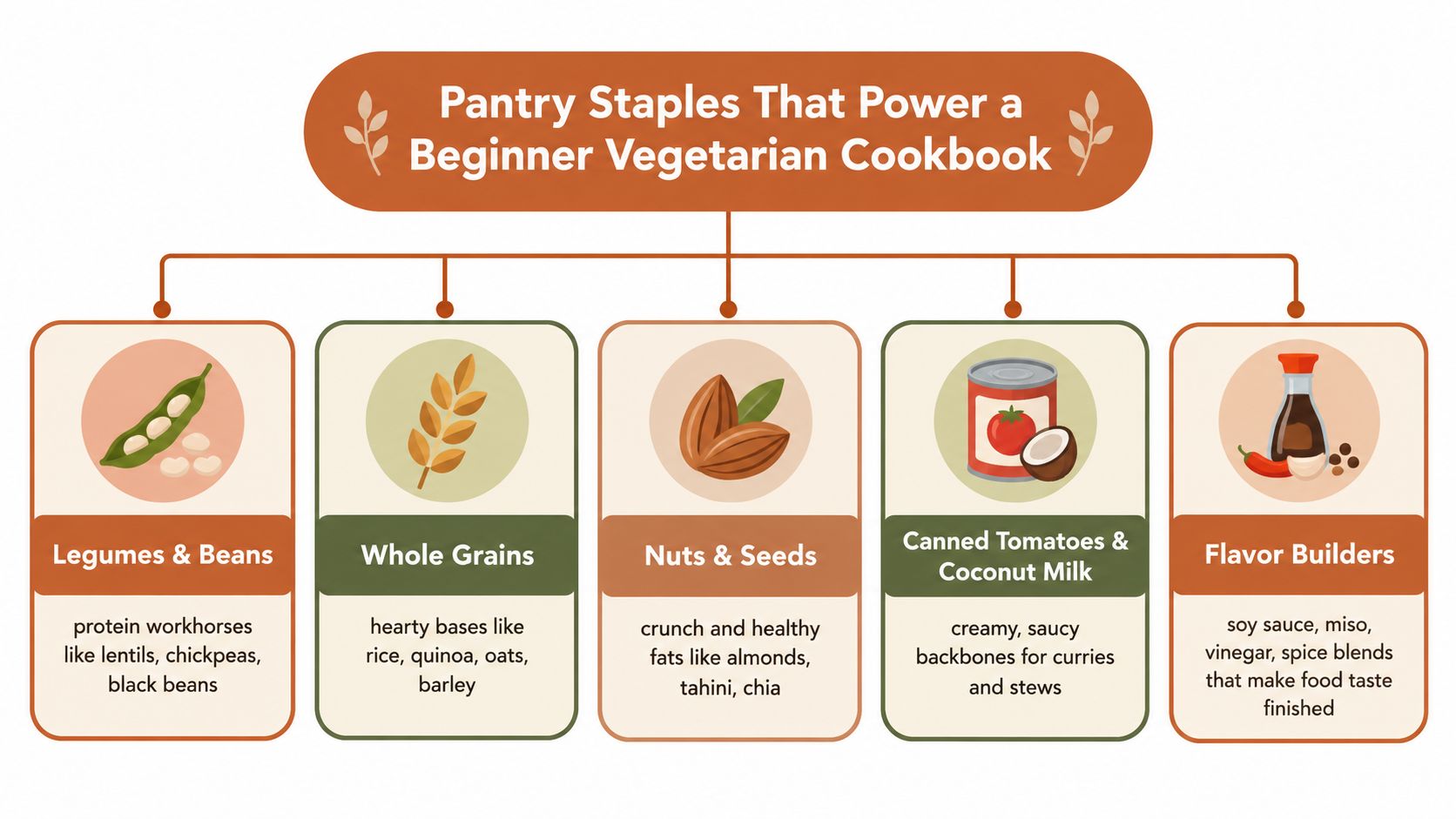
A new cook opens the cupboard after work and finds lentils, rice, tomatoes, and a few spices. A useful beginner vegetarian cookbook turns those ordinary ingredients into several meals. Judge the book by whether it builds a repeatable pantry system, not by the length of its ingredient list.
The five pantry buckets
| Pantry bucket | Useful examples | What it contributes |
|---|---|---|
| Legumes and beans | Lentils, chickpeas, black beans | Protein, fiber, texture, and hearty volume |
| Whole grains | Rice, quinoa, oats, barley | Satisfying bases and flexible meal structure |
| Nuts and seeds | Almonds, chia, pumpkin seeds, tahini | Crunch, richness, and useful fats |
| Canned tomatoes and coconut milk | Crushed tomatoes, tomato paste, coconut milk | Stew, curry, soup, and sauce foundations |
| Flavor builders | Soy sauce, miso, vinegar, spices | Salt, acidity, umami, aroma, and contrast |
A small, familiar selection from each bucket is enough. Chickpeas can accompany rice in a bowl, lentils can thicken a pasta sauce, and tofu can pair with quinoa and roasted vegetables. A strong cookbook rotates these ingredients through different meals, so the same staples produce varied flavors and textures rather than repeating one dish.
Make the pantry easy to use
Flavor builders give simple meals character. Nutritional yeast adds savory depth, tahini makes a creamy dressing, and tomato paste strengthens soups, stews, and sauces. The cookbook should explain when each ingredient enters the recipe and what it changes, rather than listing ingredients without instruction.
Shelf arrangement also affects whether cooking feels manageable. Group beans, grains, spices, and sauces by function, and keep frequently used items visible. The guide to the best way to organize a pantry offers practical ideas for making staples easier to find.
Dried legumes reward a little planning. A beginner can keep the cookbook beside this reference on how to cook beans from scratch, then prepare a batch for more than one meal. When evaluating an e-book, check whether its recipes return to the five pantry buckets in useful combinations. Repetition should build confidence, while changing sauces, vegetables, and textures keeps the week interesting.
Recipe Types You Will Find Inside a Beginner Vegetarian Cookbook
A beginner cookbook earns its place through useful patterns, not a long title list. A good index helps you shop once and reuse ingredients in several meal formats, so the same book supports both a rushed evening and a slower cooking session. Use that pattern as a checklist when comparing any cookbook.
Match the format to your energy
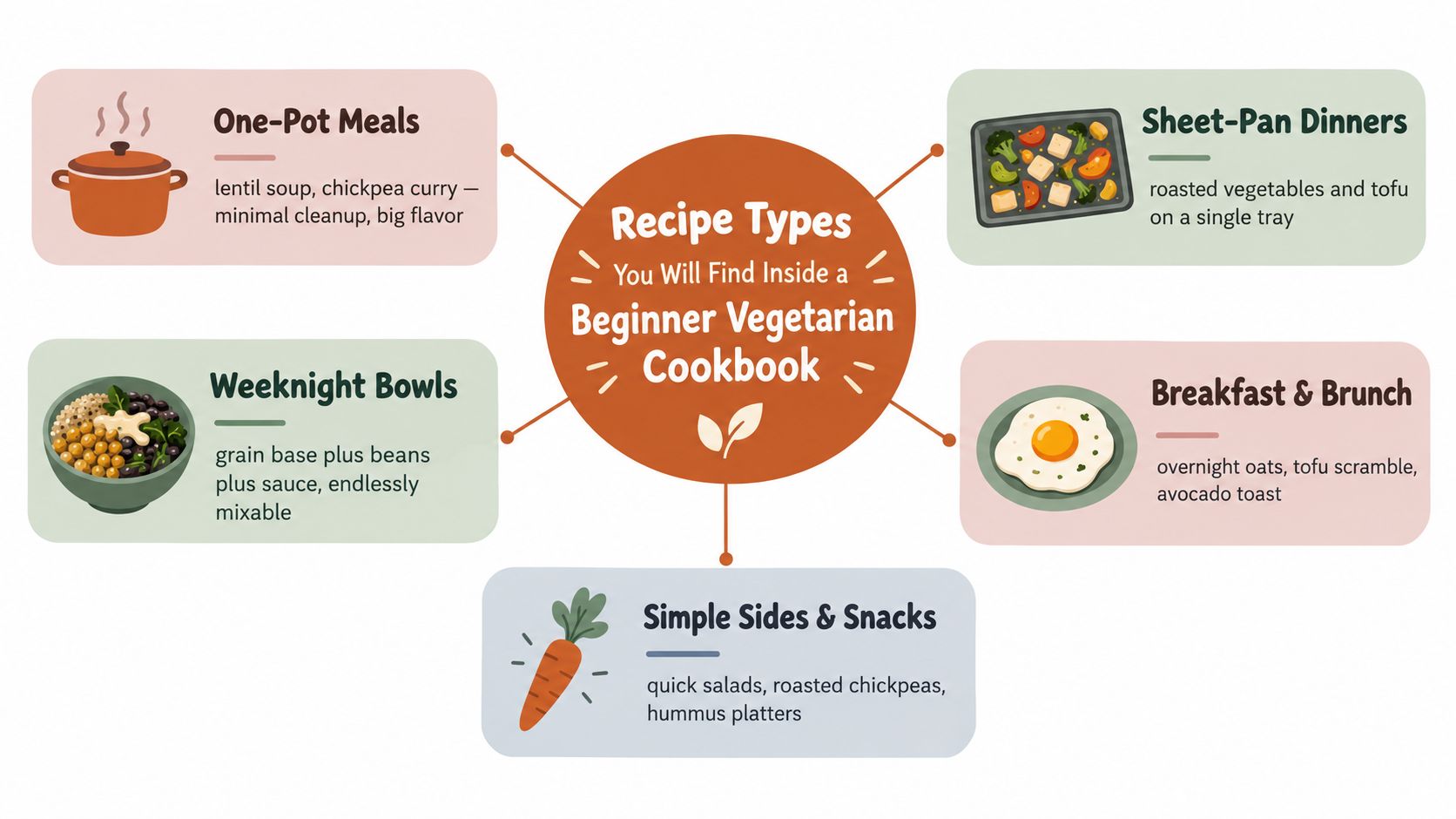
One-pot meals suit nights when you want limited cleanup. Lentil soup, chickpea curry, and vegetable stew introduce layering, simmering, and seasoning in one contained workflow. Clear instructions should explain when delicate greens and herbs enter the pot, because they need less cooking than beans or root vegetables.
Sheet-pan dinners teach arrangement and oven timing. A tray may hold vegetables and tofu, yet the recipe should say whether pieces need different sizes or staggered cooking times. Those directions help both ingredients finish with a suitable texture instead of leaving soft vegetables beside dry protein.
Weeknight pasta and grain bowls teach a repeatable formula. Begin with pasta or a grain, add beans, lentils, tofu, or tempeh, include a vegetable, and finish with sauce. A grain bowl works because each component can be prepared ahead and assembled in minutes, so strong beginner books present it as a flexible template rather than one fixed dish. Look for enough variations to teach the structure, not just one combination.
Look beyond dinner
Breakfast and lighter meals keep a cookbook useful throughout the day. Oatmeal, overnight oats, tofu scrambles, avocado toast, simple salads, hummus, roasted chickpeas, and snack plates provide options when dinner feels too elaborate. A short dessert section can teach familiar methods without turning the book into a specialist baking guide.
Recipe balance matters more than the headline count. Look for quick meals for low-energy nights and a few longer projects that teach dough handling, layered sauces, roasting, or careful simmering. Coverage from The Spruce Eats explains that vegetarian cookbooks may serve complete beginners or more experienced cooks, while fast meals and weekend projects meet different needs. A strong beginner book labels those differences clearly and shows the techniques that connect them.
Using a Downloadable Cookbook E-Book in a Real Kitchen
A downloadable cookbook becomes useful when you assign each device a job. Your phone is convenient beside the cutting board, a tablet gives you a larger hands-free page on the counter, and an e-reader works well for planning away from the heat and steam.
Start by saving the file somewhere you can find it without searching through old messages. If the e-book arrives by email or through a private library page, download it to your preferred reading app and keep a backup in a familiar folder. A PDF that opens on your phone, tablet, laptop, or e-reader gives you flexibility, but only if you know where the file lives.
Turn reading tools into cooking habits
Before shopping, use the search function to find recipes containing chickpeas, tofu, lentils, rice, or another ingredient you already have. Bookmark recipes that match your available time, and use the notes feature to record substitutions or changes to serving quantities. If the book includes technique pages, screenshot the relevant page before cooking so you don't have to leave a hot pan to find it again.
Digital access also supports gradual improvement. After cooking, reopen the recipe on a larger screen and note whether the tofu needed more drying, the sauce needed more acid, or the grain required additional resting. Updates or bonus recipe packs, when a publisher provides them through email or a private library, can be saved into the same folder or reading workflow.
Use a simple weekly rhythm:
- Plan on the e-reader: Mark a few recipes and make a short ingredient list.
- Cook from the phone: Keep the instructions visible and protect the screen from splashes.
- Review on the tablet: Record what you'd change while the result is still fresh.
For another digital reference focused on practical evening meals, you can browse this easy weeknight dinner cookbook. The best device is the one you'll place in the kitchen and open when you're tired.
Putting It All Together With Any Beginner Vegetarian Cookbook
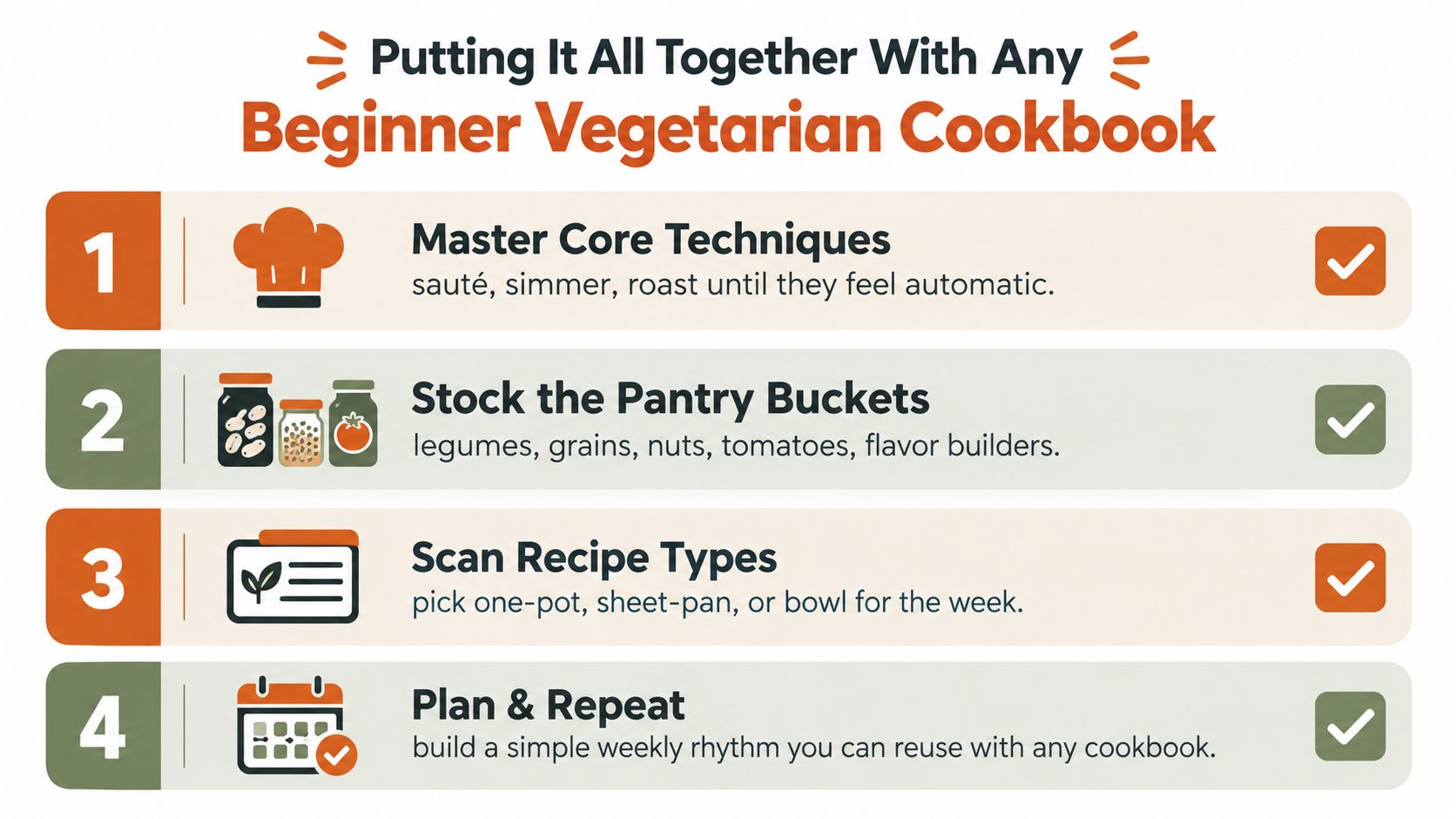
Use four checks whenever you open a new cookbook.
First, skim for techniques. Find the pages on sautéing, roasting, grains, legumes, tofu, and sauces. If the book never explains the method behind its recipes, expect to learn by trial and error.
Second, audit the pantry. Group the ingredients into legumes, whole grains, nuts and seeds, canned foundations, and flavor builders. A cookbook becomes more practical when several recipes share ingredients without producing repetitive meals.
Third, tag recipe formats. Mark one-pot meals, sheet-pan dinners, bowls, stir-fries, breakfasts, and salads. This lets you choose based on energy and cleanup rather than scrolling until something looks attractive.
Fourth, bookmark the device you use most. If you cook beside your phone, save the recipes there. If you plan meals from an e-reader, keep your planning marks in that version and use the tablet for reviewing results.
The value of a beginner vegetarian cookbook isn't recipe collecting. It's building a vocabulary of techniques, ingredients, and meal structures you can carry into family favorites, blogs, and improvised dinners. Cook three or four dishes during your first two weeks, repeat the ones that felt manageable, and expand only after the routine feels comfortable.
Just Cook It offers downloadable cookbook e-books for everyday home cooking, with step-by-step recipes designed for phones, tablets, laptops, and e-readers, plus lifetime access and updates. Visit Just Cook It to find a digital collection that can support your vegetarian cooking routine and give you dependable formats to practice.