Healthy ingredients are rarely the main challenge when it comes to preparing dinner. The bigger issue is finding a meal format that fits within the limited time, energy, and attention available at the end of the day. Simple, well-structured dinner options can make it easier to prepare a nutritious meal without adding unnecessary complexity. Globally, the 2026 IKEA Cooking & Eating Report surveyed over 31,000 people across 31 markets and found that most respondents finish dinner in under 30 minutes, with the average dinner time at 6:44 PM. That makes quick healthy meals for dinner a practical need, not a niche preference.
The eight formats below match cooking method to the kind of evening you're having. Each one uses accessible combinations of vegetables, protein, grains, or legumes, with shortcuts that reduce effort without pretending every shortcut produces the same texture or flavor. For each idea, you'll find a realistic time frame, dietary adaptations, ingredient swaps, and one technique that protects the final result.
Table of Contents
- 1. Sheet Pan Roasted Vegetables with Protein
- 2. Stir-Fry with Quick-Cooking Proteins
- 3. Mediterranean Grain Bowls
- 4. Slow Cooker or Instant Pot Braises
- 5. Quick Pan-Seared Fish with Vegetable Sides
- 6. Mexican-Inspired Taco and Burrito Bowls
- 7. Minestrone and Hearty Vegetable Soups
- 8. Sheet Pan Baked Grain and Vegetable Medleys
- 8 Quick Healthy Dinners Compared
- Build Your Weeknight Rotation
1. Sheet Pan Roasted Vegetables with Protein
Realistic timing: 25 to 30 minutes, including active preparation.
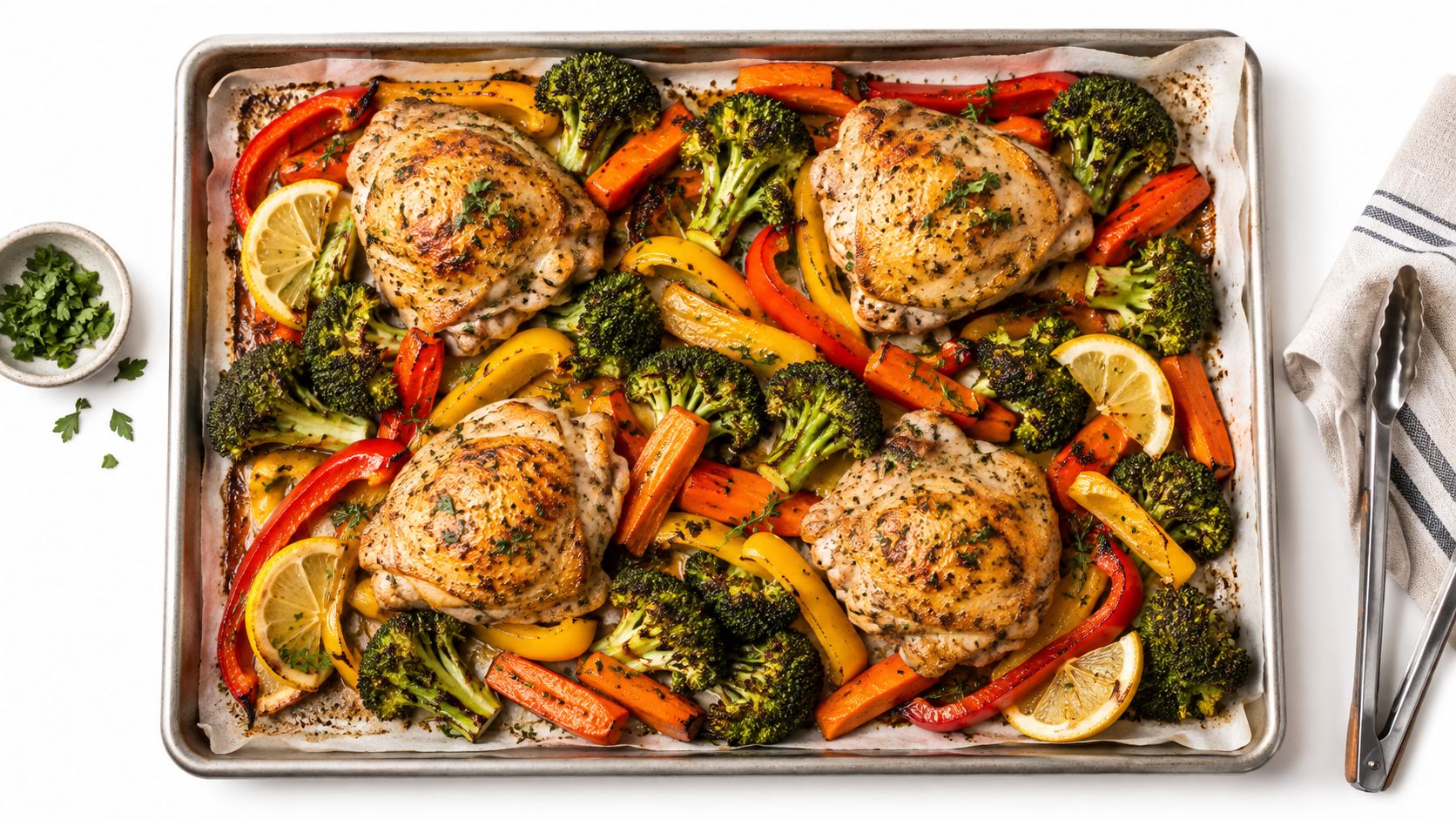
Sheet pan dinners solve the weeknight problem by moving most of the cooking into the oven. Pair chicken thighs, salmon, or tofu with vegetables that can withstand high heat, then let browning create flavor while you handle the rest of the evening. Lemon herb chicken with broccoli and bell peppers, salmon with Brussels sprouts and carrots, and tofu with zucchini, cherry tomatoes, and onions all work from the same basic workflow.
Cut vegetables into similar-sized pieces so they finish together. Broccoli florets can take more heat than cherry tomatoes, while carrots need smaller cuts or an earlier start. If the protein is thick, place the slower-cooking vegetables on the pan first, then add the protein after they've begun to soften.
Browning rule: Pat chicken, fish, or tofu dry before seasoning. Surface moisture creates steam, and steam works against the crisp edges this format is meant to deliver.
Use parchment for easier cleanup, but don't cover the pan so heavily that air can't circulate. Toss the vegetables halfway through roasting, especially if one side is browning faster. For tofu, press out excess moisture and use a little cornstarch with the seasoning if you want firmer edges. For a dairy-free finish, use lemon, herbs, or tahini instead of yogurt or feta.
If you want more single-vessel ideas beyond this basic combination, The One-Pan Kitchen | Digital PDF includes 75 complete meals made in a skillet, sheet pan, or pot, with recipes spanning mains, soups, salads, sides, desserts, and snacks.
2. Stir-Fry with Quick-Cooking Proteins
Stir-fry is the answer when you need dinner quickly and can stay near the stove for a short, focused burst. Bite-sized chicken, shrimp, tofu, or thinly sliced beef can cook with broccoli, snap peas, peppers, cabbage, or mushrooms in about 15 to 20 minutes. The trade-off is attention. Unlike a sheet pan meal, stir-fry won't forgive a cook who walks away.
Prepare everything before heating the pan. Mix soy sauce, rice vinegar, garlic, ginger, and a little sesame oil in a bowl, and keep the protein, vegetables, aromatics, and sauce within reach. A large skillet works if you don't have a wok, but avoid crowding it. Too many ingredients lower the heat and leave vegetables soft rather than tender-crisp.
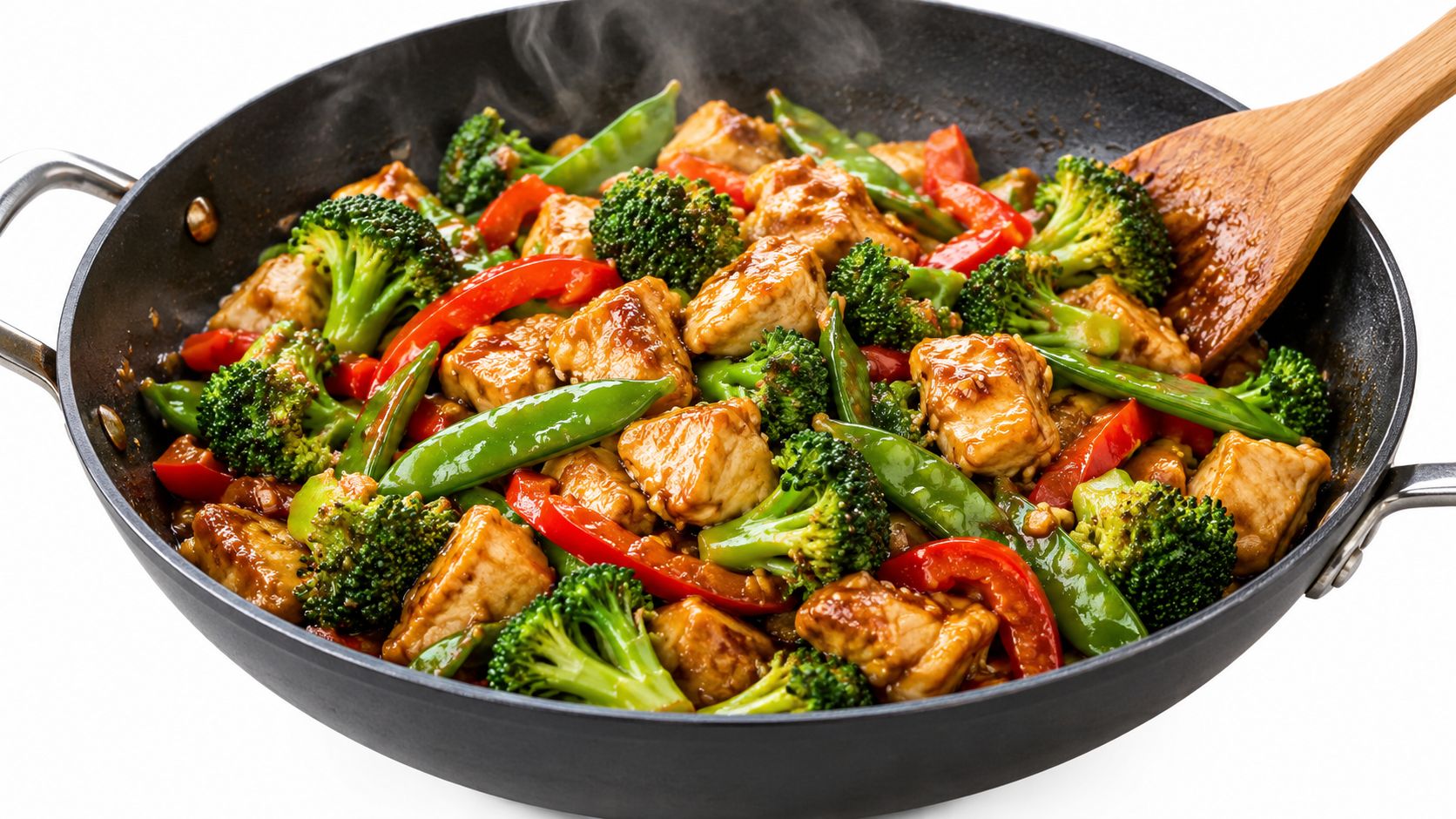
Cook the protein first, remove it, then stir-fry the vegetables before returning everything to the pan with the sauce. This protects the protein from overcooking and gives the vegetables direct contact with the hot surface. Shrimp needs only brief cooking, while chicken requires small, even pieces to finish safely without becoming dry.
For a Japanese-inspired version, use chicken, broccoli, garlic, and ginger. Snap peas, shrimp, soy, and sesame create a Southeast Asian-leaning combination. Tofu with mixed vegetables and a coconut-based sauce offers a plant-based option. Use tamari for a gluten-free adaptation, coconut aminos for a milder soy-free alternative, or rice noodles instead of rice when you want a softer base.
The finished dish is best served immediately. If you need leftovers, keep the sauce restrained and reheat gently, because aggressive reheating turns crisp vegetables limp.
This short stir-fry cooking demonstration shows the value of having ingredients ready before the pan gets hot.
3. Mediterranean Grain Bowls
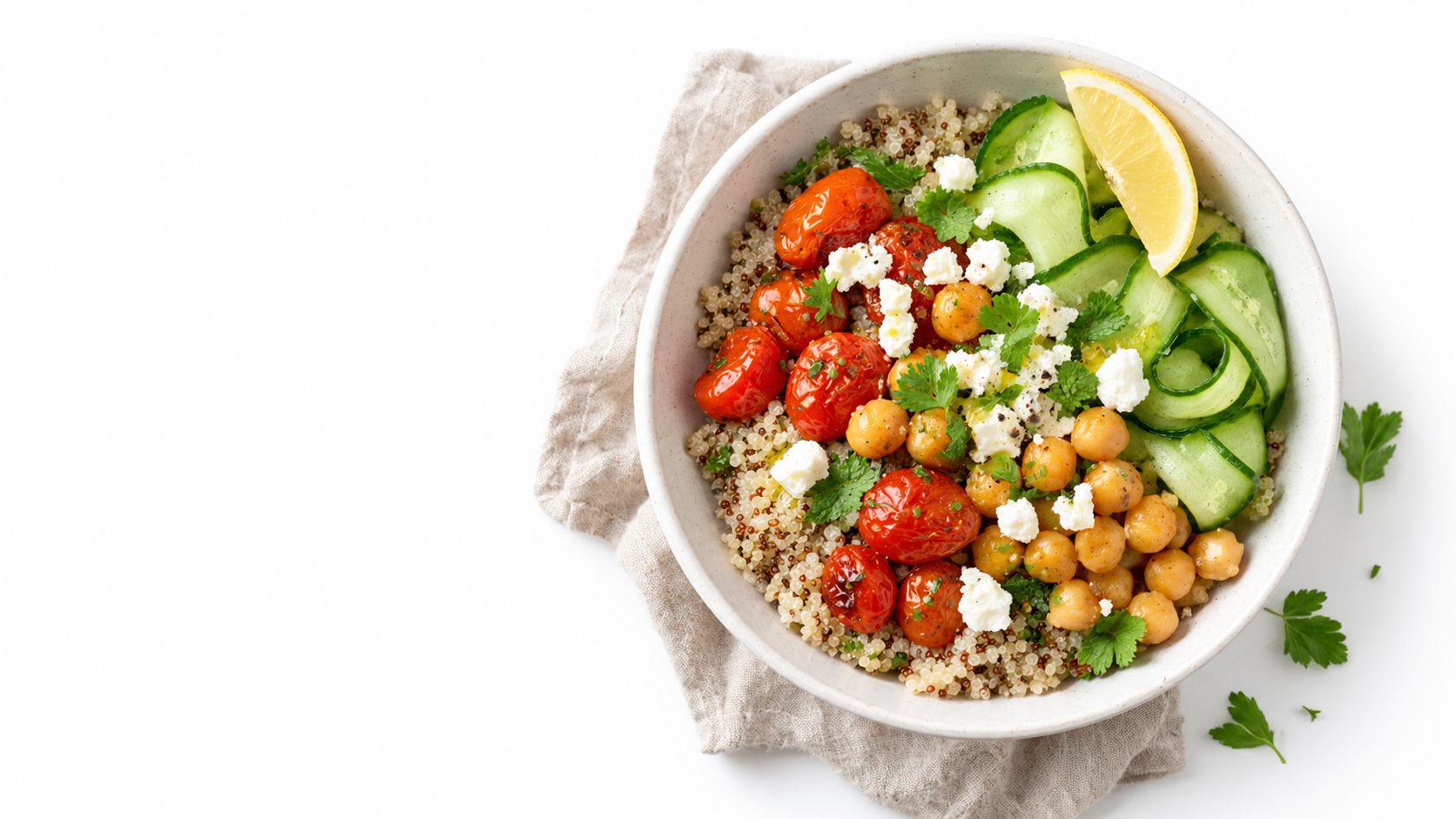
Grain bowls are useful when the cooking has already happened, or when you can separate preparation from assembly. Start with cooked quinoa, farro, brown rice, or millet, then add chickpeas or chicken, cucumber, tomatoes, roasted vegetables, herbs, and a sharp olive oil and lemon dressing. The result feels composed without requiring every component to be hot.
Cook grains in bulk when you have a quieter part of the week. Store the grain, vegetables, protein, dressing, and crunchy toppings separately. That extra storage step matters because dressing makes grains heavy and soft vegetables watery. Toasted almonds, pumpkin seeds, or sunflower seeds should also stay apart until serving.
Build contrast into the bowl
A dependable bowl has contrasting textures and flavors. Pair a chewy grain with crisp cucumber, creamy chickpeas or feta, something acidic, and a fresh herb. Farro with roasted vegetables, feta, and herb vinaigrette is substantial. Quinoa with chickpeas, tomato, cucumber, parsley, and lemon works when you want a no-cook assembly. Brown rice with chicken, artichokes, and sun-dried tomatoes brings more savory depth.
For a vegan bowl, replace feta or goat cheese with olives, hummus, or a tahini dressing. Use lentils instead of chickpeas when you want a firmer legume, or substitute rice for farro and quinoa if gluten is a concern. Canned beans are convenient, but rinse them well and season them directly so the bowl doesn't taste flat.
A useful guide to the ingredients and techniques behind this style of cooking appears in this Mediterranean food guide. Keep the dressing bright rather than heavy. Lemon juice, olive oil, garlic, and herbs can transform plain grains, but too much liquid will erase the textural contrast that makes bowls satisfying.
4. Slow Cooker or Instant Pot Braises
A braise takes little attention while it cooks, which makes it a strong choice for a day when dinner planning can happen in the morning. Slow cooker versions typically need 4 to 8 hours, while active preparation can stay around 10 to 15 minutes. An Instant Pot can shorten the cooking stage to roughly 30 to 45 minutes, although it still needs time to build and release pressure.
Chicken in tomato sauce with herbs, beef and root vegetables, spiced pork carnitas, and lamb with chickpeas all benefit from moist cooking. Tougher cuts become tender because the liquid and steady heat have time to break them down. Lean chicken breast can work, but it may dry out if left in a slow cooker too long, so chicken thighs are often more forgiving.
Brown the protein and aromatics first if you have the time. This creates deeper flavor than placing everything raw into the cooker, but skipping that step is reasonable when convenience matters more. Put dense vegetables such as carrots and potatoes closer to the heat source, and add delicate greens, peas, or fresh herbs near the end.
Liquid matters: Add enough broth, stock, tomato, or another cooking liquid to keep the braise from drying, but don't flood it. Excess liquid can leave the finished sauce thin and dilute the seasonings.
For a slow cooker workflow, these easy slow cooker meals offer additional ideas for preparing dinner ahead. Use beans or chickpeas in place of meat for a plant-based braise, and use vegetable or mushroom broth when adapting the dish. Coconut milk can replace part of the broth in a curry-style version, but add acidic ingredients such as lime at the end so the flavor stays clear.
The main limitation is timing. A braise is not the format for an unexpected late dinner unless it was cooked earlier. It is best when advance planning can remove the pressure from the evening.
5. Quick Pan-Seared Fish with Vegetable Sides
Thin fish fillets turn dinner into a short stove-top project. Salmon, cod, mackerel, or halibut can cook in about 8 to 12 minutes, depending on thickness, while asparagus, green beans, mushrooms, or a chopped salad provide a fast side. The meal depends more on heat control than elaborate seasoning.
Dry the fish completely with paper towels, season it just before it enters the pan, and use enough oil to help the surface brown. Place the fillet in a hot skillet and leave it undisturbed for roughly 3 to 4 minutes before checking the underside. Moving it too early can tear the flesh and prevent a proper crust.
A salmon fillet with asparagus and lemon is a reliable starting point. Cod works with garlic green beans and parsley, while mackerel pairs well with roasted cherry tomatoes or a sharp cucumber salad. Halibut is mild and firm, so mushrooms, thyme, and a squeeze of lemon give it a useful savory base.
Protect the fish from overcooking
Flip the fish once and finish it gently. If the fillet is thick, lower the heat after browning so the center cooks before the exterior becomes dry. Add lemon juice, fresh herbs, or a spoonful of yogurt sauce after cooking, not at the beginning. Acid can make the fish seem firmer, and delicate herbs lose their freshness under prolonged heat.
For a dairy-free finish, use olive oil, lemon, capers, and parsley. For a vegetarian adaptation, apply the same pan-searing method to thick slices of tofu or halloumi, then serve them with the vegetables. Canned beans can fill out the side without adding another cooking vessel.
This basil salmon recipe is a useful reference for pairing fish with a fresh herb finish. The format works particularly well when dinner has to be fast, but it requires active cooking and is less forgiving than roasting.
6. Mexican-Inspired Taco and Burrito Bowls
A bowl built from seasoned beans or meat, rice, vegetables, and fresh toppings gives you the flexibility of tacos without needing to warm and fill individual tortillas. Start with brown rice, white rice, quinoa, or leftover grains. Add black beans, seasoned ground beef, grilled chicken, carnitas, or a combination of beans and corn, then finish with cabbage, avocado, onion, cilantro, lime, salsa, or cheese.
Toast cumin, smoked paprika, chili powder, or oregano briefly in the pan before adding the protein. The heat wakes up the spices and distributes their flavor through the cooking fat. If using ground meat, season it directly as it browns rather than relying entirely on a packaged spice mixture. Canned beans are a practical shortcut, but rinse them, warm them with onion and spices, and taste before serving.
Texture is the difference between a bowl and a pile: Keep hot rice and protein separate from cold cabbage, avocado, herbs, and lime until the last moment.
For a vegetarian bowl, use black beans, pinto beans, lentils, or crumbled tofu. For a dairy-free version, skip cotija and add avocado, toasted pumpkin seeds, or a cashew-lime sauce. Ground turkey can replace beef, while shredded cabbage can replace lettuce because it holds up better under hot toppings. Frozen corn is useful when fresh corn isn't available, and jarred salsa can supply acidity without extra chopping.
Prepare the toppings while the protein cooks, but don't dice avocado too early if the meal won't be served soon. Store the components separately for leftovers. Rice and beans reheat well, while slaw, herbs, and avocado should be added cold after reheating.
The method also handles different appetites cleanly. One person can choose extra beans, another can add chicken, and a third can use more vegetables without requiring separate dinners.
7. Minestrone and Hearty Vegetable Soups
Minestrone turns a collection of ordinary vegetables into a complete one-pot dinner. Onion, garlic, celery, carrots, tomatoes, broth, beans, and greens form the base, while pasta, rice, barley, or another grain adds body. The exact vegetables can change with the season, which makes soup practical when the refrigerator contains small quantities of several ingredients.
Start by sautéing the onion, celery, and garlic. This step takes only a few minutes, but it gives the broth a more developed base than adding everything to cold liquid. Add firm vegetables first, followed by softer produce such as zucchini, peas, spinach, or kale. White beans make an Italian-style minestrone hearty, while chickpeas and warming spices can take the soup in a North African direction.
Add pasta or quick-cooking grains during the final 10 to 15 minutes so they don't become mushy. If you expect leftovers, cook the pasta separately and add it to each bowl. This small adjustment protects the texture when the soup is reheated.
Keep the broth balanced
Use a broth you like, because it becomes the main flavor of the dish. Canned tomatoes, a Parmesan rind, dried herbs, or a spoonful of tomato paste can deepen the base, but taste before adding more salt. Finish with fresh parsley, basil, lemon, or good olive oil to lift the flavors.
For a vegan soup, use vegetable broth and beans, then finish with olive oil or herb sauce instead of cheese. Gluten-free pasta or rice can replace wheat pasta, while frozen vegetables can stand in for fresh ones. Lentils are especially useful when you want a soup that thickens naturally, but they need enough liquid and cooking time to soften.
Soup is also a good advance-cooking format because its flavor often becomes more integrated after resting. The trade-off is that delicate greens and pasta lose freshness over time, so add them later when possible.
8. Sheet Pan Baked Grain and Vegetable Medleys
This format combines the low-attention workflow of roasting with the substance of a grain dish. Farro, barley, millet, or another suitable grain bakes with broth and vegetables in one pan, absorbing the cooking liquid as the vegetables brown. It can produce a complete dinner without boiling grains in a separate pot, though it requires more careful liquid and timing than a standard sheet pan meal.
Use about 2.5 to 3 parts liquid to 1 part grain as a baseline, then adjust according to the grain and the instructions for your specific package. Vegetable, chicken, or mushroom broth gives the grains more character than water. Farro with root vegetables and herb broth creates a hearty combination, while barley with mushrooms and aromatics leans earthy. Millet with cauliflower, garlic, and turmeric gives you a softer, more delicate result.
Toss the vegetables with oil and seasoning before arranging them over or beside the grains. Cut them evenly, but don't make pieces so small that they collapse before the grain is tender. Cover the pan when the grain needs steaming, then uncover near the end to encourage browning.
Resting is part of cooking: Let the finished pan sit for about 5 minutes before serving. The grains absorb remaining moisture, and the dish becomes easier to portion.
Use vegetable broth and beans for a vegan meal, chicken broth and shredded chicken for a more substantial version, or mushroom broth with lentils for extra savoriness. If a grain doesn't cook well in your pan or requires a different liquid ratio, cook it separately and use the same roasted vegetable and seasoning profile over the top. That isn't a failure of the format. It's a practical adaptation that protects the final texture.
8 Quick Healthy Dinners Compared
| Item | Implementation complexity | Resource requirements | Expected outcomes | Ideal use cases | Key advantages |
|---|---|---|---|---|---|
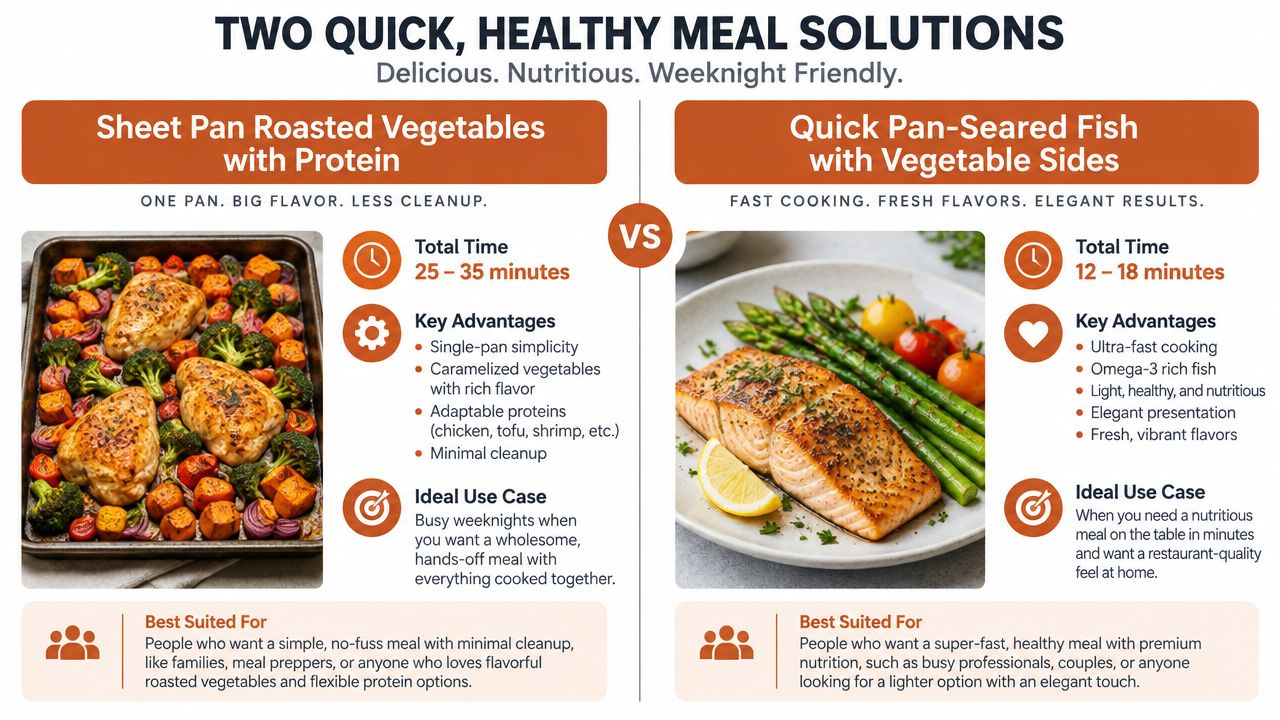
| Sheet Pan Roasted Vegetables with Protein | Low, simple prep, basic timing adjustments | Oven, sheet pan, basic knives, parchment | Balanced one-pan meal with caramelized vegetables and cooked protein (25–35 min) | Busy weeknights, minimal cleanup, seasonal produce | One-pan cleanup, customizable, healthy and portion-controlled |
| Stir-Fry with Quick-Cooking Proteins | Medium, fast, attentive cooking and knife skills required | Wok or large skillet, high heat source, sauces, mise en place | Tender-crisp vegetables and moist proteins with concentrated sauce (15–20 min) | Very quick dinners, using leftovers, preserving texture | Extremely fast, preserves nutrients and texture, versatile flavors |
| Mediterranean Grain Bowls | Low, mostly assembly; grains may require advance cooking | Bowl, cooked grains (or quick-cook), pantry staples, basic produce | Nutrient-dense, modular bowls with healthy fats and fiber (10–15 min assembly) | Meal prep, health-focused lunches/dinners, dietary flexibility | Highly customizable, minimal equipment, excellent for prep |
| Slow Cooker or Instant Pot Braises | Low active complexity but requires planning | Slow cooker or Instant Pot, inexpensive cuts, liquid and aromatics | Deeply flavored, tender proteins; large batch results (4–8 hr slow or 30–45 min Instant Pot) | Set-and-forget meals, batch cooking, economical feeding | Economical, hands-off, forgiving technique, great for leftovers |
| Quick Pan-Seared Fish with Vegetable Sides | Medium, precise timing and heat control | Skillet, fresh fish, quick-cooking vegetables | Fast, elegant meals with delicate crust and flaky interior (12–18 min) | Weeknight healthy dinners, quick special meals | Ultra-fast, nutritious (omega‑3s), minimal equipment |
| Mexican-Inspired Taco and Burrito Bowls | Low–Medium, multiple components but simple methods | Stovetop, pantry staples (beans, rice), fresh toppings | Flavorful, customizable bowl-format meals (20–25 min) | Budget family meals, customizable dinners, meal prep | Budget-friendly, crowd-pleasing, easily scalable |
| Minestrone and Hearty Vegetable Soups | Low–Medium, one-pot technique with attention to timing | Stockpot, quality broth, seasonal vegetables, legumes/pasta | Filling, fiber-rich soups that improve with resting (30–45 min) | Meal prep, stretching produce, cold-weather comfort meals | Nutritious, freezer-friendly, economical and adaptable |
| Sheet Pan Baked Grain and Vegetable Medleys | Medium, requires correct liquid-to-grain ratios and timing | Oven, baking sheet, whole grains, flavored broth | Tender whole grains infused with roasted vegetables (25–45 min) | Hands-off vegetarian dinners, reheatable leftovers | Whole-grain nutrition, single-pan cooking, minimal monitoring |
Build Your Weeknight Rotation
The best dinner format depends on the evening, not on a fixed idea of what healthy cooking should look like. Choose stir-fries or pan-seared fish when you need food on the table quickly and can give the stove your full attention. Choose sheet pan meals when cleanup matters and you can spare time for the oven to work. Choose grain bowls or taco bowls when cooked components are already waiting in the refrigerator. Choose braises when you can prepare dinner before the busiest part of the day begins.
A small pantry makes these formats much easier to repeat. Keep a few grains, canned beans, broth, frozen vegetables, lemons or limes, garlic, onions, and adaptable seasonings available. Add proteins that match your routine, such as eggs, tofu, chicken, fish, or ground meat. These ingredients don't lock you into one cuisine. They let you move from a lemon-herb sheet pan dinner to a chili-lime bowl or a ginger-garlic stir-fry without starting from a completely different shopping list.
Time pressure is a real part of dinner planning. Americans spend about 37 minutes per day on food preparation, serving, and cleanup combined, according to 2024 Bureau of Labor Statistics American Time Use Survey figures summarized in this research. The same source reports that only 49% of Americans always cook dinner at home, while 43% sometimes do and 8% never do. The useful conclusion isn't that one group is cooking correctly. It's that recipes need to account for limited time, inconsistent routines, and different levels of energy.
Match the format to the constraint
If you're tired, reduce active decisions. A sheet pan or soup can handle more of the work after preparation. If you're short on ingredients, use bowls because substitutions are built into the format. If texture matters most, cook stir-fries and fish immediately before eating. If tomorrow's schedule is crowded, make a braise or a pot of soup while you still have control of the day.
Function also matters. Current food trend data reports consumer interest in meals designed around energy or muscular performance, mental clarity or focus, and gut or digestive health, while recipe searches have leaned toward protein-packed comfort food, affordable meals, and quick bowls, according to Tastewise trend analysis. That doesn't mean every dinner needs a specialized nutritional label. It means you can choose a format deliberately. Use beans, grains, vegetables, and a dependable protein when satiety matters. Use a lighter fish and vegetable plate when a late dinner needs to feel less heavy. Use familiar ingredients and stronger seasonings when affordability and repeatability matter more than novelty.
Meal kits point to the same practical lesson. In Statista's 2022 Global Consumer Survey, 9% of U.S. adults reported ordering a meal kit online in the previous 12 months, compared with 19% in South Korea and 5% in Italy. The appeal is the removal of planning friction through clear instructions and pre-portioned ingredients, as shown in Statista's meal-kit usage comparison. You can recreate much of that convenience at home by keeping a short rotation, portioning ingredients ahead, and writing down the combinations that consistently work.
Just Cook It is another optional resource for cooks who prefer downloadable, kitchen-tested collections. Its catalog includes browsing categories for Quick Dinners, Healthy Eating, Mediterranean, Mexican, and Japanese, along with digital cookbooks designed for reading on phones, tablets, laptops, and e-readers. Use those collections when you want more structured ideas than a loose list of ingredients, but keep the same standard: clear timing, accessible substitutions, and instructions that protect texture.
Choose one format for the next busy evening, not all eight. Roast vegetables with tofu, assemble a bowl from cooked grains, or make a quick skillet of fish and green beans. Once you know which workflow matches your schedule, healthy dinner stops depending on motivation and starts depending on a repeatable system.
Just Cook It offers downloadable cookbook e-books for everyday home cooking across global cuisines, including collections organized around quick dinners, healthy eating, Mediterranean, Mexican, and Japanese recipes. Visit Just Cook It to browse digital recipe collections and find a practical format for your next weeknight dinner.