One ripe avocado can become the right dip for very different moments. You might need a five-minute bowl for tortilla chips, a creamy make-ahead spread for guests, a chunky mixture that adds volume, or a bold option with herbs, smoke, or heat. The best choice depends on more than flavor. Speed, texture, intensity, dietary fit, and serving context all matter.
These easy avocado dip recipes use everyday tools such as a fork, knife, bowl, and blender when needed. Each recipe is organized around a practical choice, so you can quickly match the dip to the occasion. Start with the classic, then choose a brighter, creamier, chunkier, spicier, smokier, more herb-forward, or more Mediterranean-inspired variation.
Table of Contents
- 1. Classic Guacamole
- 2. Cilantro Lime Avocado Dip
- 3. Creamy Avocado Dip with Greek Yogurt
- 4. Chunky Pico de Gallo Avocado Dip
- 5. Spicy Jalapeño Avocado Dip
- 6. Smoky Roasted Garlic Avocado Dip
- 7. Herb-Forward Avocado Dip with Chives and Dill
- 8. Creamy Avocado-Tahini Dip
- Side-by-Side: 8 Easy Avocado Dips
- Serve It Fresh and Make It Yours
1. Classic Guacamole
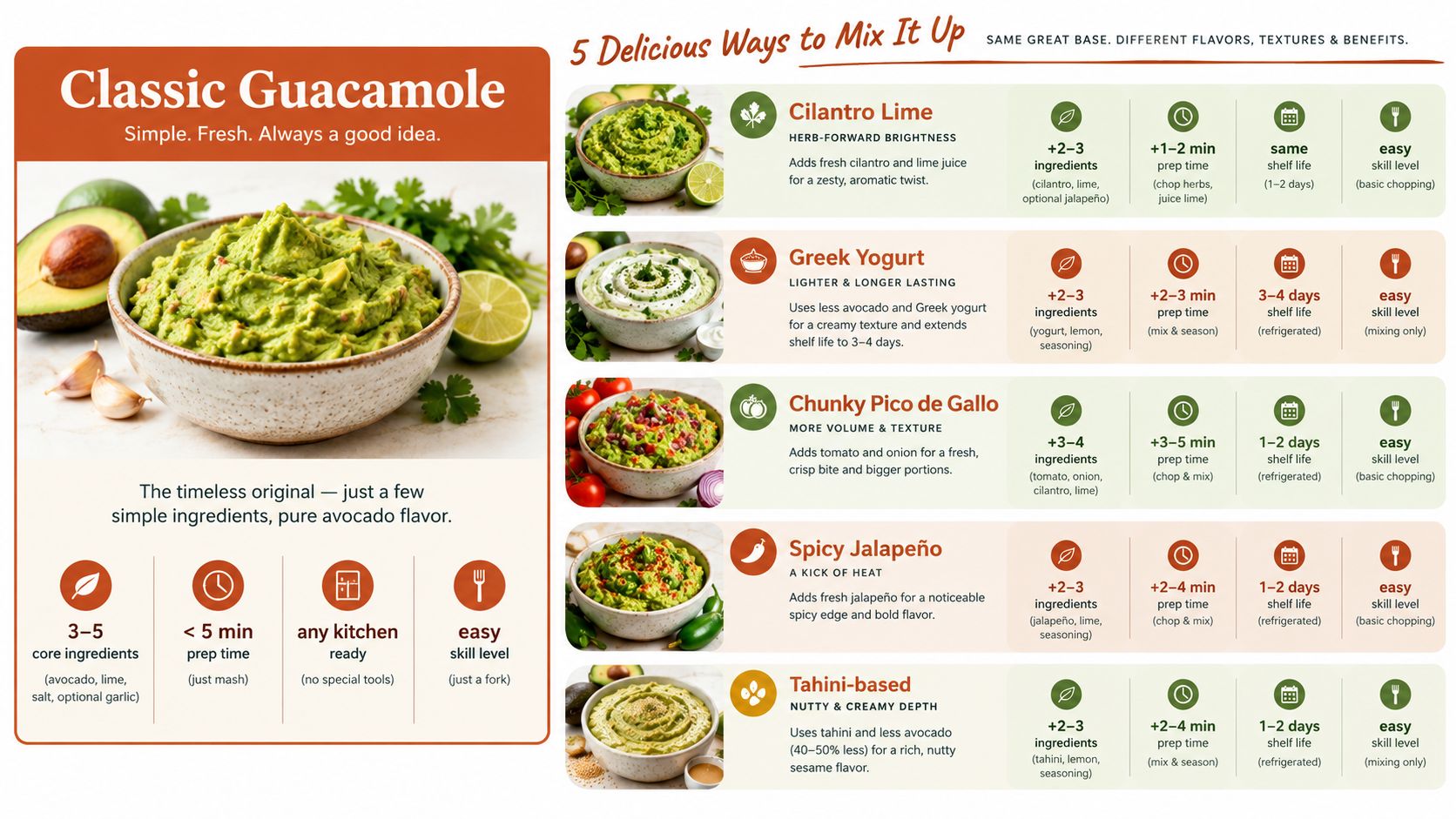
Classic guacamole is the best starting point when you want the avocado itself to lead. Ripe avocado, lime juice, salt, and cilantro create a fresh dip for tortilla chips, tacos, grilled vegetables, or sandwiches. The texture is yours to choose. Mash lightly for visible pieces, or continue until smooth for spreading.
Avocado availability has expanded alongside global production. The Food and Agriculture Organization's avocado overview reports that worldwide production grew more than fourfold over roughly four decades, reaching an annual average of about 3.6 million tonnes in recent years. That broad supply helps explain why avocado dip now fits everyday home cooking in many markets, even though varieties, prices, and preferred seasonings differ.
Choose fruit that gives slightly under gentle pressure. Rock-hard avocado won't mash smoothly, while mushy fruit may have dark, watery, or stringy flesh. Cut each avocado lengthwise, remove the pit, scoop the flesh into a bowl, and add lime juice immediately.
Build the texture you want
Mash with a fork rather than a food processor if you want control. Add salt gradually, fold in chopped cilantro, and taste before serving. You can also use lemon instead of lime, onion instead of scallion, or a little chile for warmth.
Practical rule: Add acid early, but add it gradually. Too little leaves the dip flat, while too much can overpower mild avocado and make the texture seem loose.
For storage, transfer the guacamole to a clean, sealed container and press plastic wrap directly onto the surface to reduce air exposure. Refrigerate promptly. Browning is a quality issue, not a safety test, so don't rely on a green surface alone when deciding whether leftovers are suitable.
For cooks who want more Mexican dishes built around cilantro, lime, onion, tomato, and chile, Mexican Home Cooking | Digital PDF includes guacamole with lime and cilantro alongside sauces and everyday recipes.
For additional ideas for using ripe fruit beyond dip, see this guide to ways to use avocados.
2. Cilantro Lime Avocado Dip
Choose this dip when classic guacamole feels too restrained. Here, cilantro and lime are the main flavor, so the result tastes sharper, greener, and more aromatic than a basic avocado mash. It works especially well beside grilled fish, fish tacos, ceviche-inspired dishes, or cold tortilla chips.
Start by pulsing the cilantro with lime juice before adding the avocado. This helps distribute the herb and releases its oils into the acid. If you have a microplane, add a little lime zest for stronger citrus character without pouring in more liquid.
Mash the avocado separately, then stir it into the cilantro-lime mixture. Keep some cilantro leaves whole and fold them in at the end. They add a small contrast between the smooth avocado and the fresh herb.
Adjust the brightness
A small amount of minced garlic can give the dip more depth. Use about half a small clove if you want complexity without allowing garlic to dominate. If the dip tastes harsh, add a little more mashed avocado. If it tastes dull, adjust with lime and salt rather than adding a large amount of juice at once.
This variation is best prepared close to serving. Fresh herbs lose their lively character as they sit, and the dip's green color will gradually change when exposed to air. Serve it chilled with chips, spoon it over grilled fish, or use it as a sauce for roasted vegetables.
Cilantro has a distinctive flavor, so it's useful to offer a substitute for guests who don't enjoy it. Fresh parsley or a small amount of dill can create a different dip, but don't expect the same citrus-herbal profile. Use less of a strongly flavored herb, taste, and adjust.
The recipe also suits a simple coastal-style meal. Pair it with grilled fish, warm corn tortillas, and a crisp salad. That combination lets the lime cut through the richness of the avocado without requiring a heavy garnish.
3. Creamy Avocado Dip with Greek Yogurt
When you want a smooth dip that stretches the avocado and adds tang, use Greek yogurt. The yogurt softens avocado's richness and gives the dip a spoonable consistency that works as a spread for tacos, wraps, sandwiches, or vegetables. It also makes a useful weeknight option when you have only one avocado but want more dip.
Begin by stirring the yogurt with lime juice and salt. Add garlic powder, cumin, or paprika to this base before folding in mashed avocado. Starting with the seasoned yogurt prevents uneven pockets of salt or spice.
Use full-fat or 2% Greek yogurt for the smoothest result. Very lean yogurt can make the dip seem grainy or overly sharp. A useful starting balance is a quarter cup of yogurt for two avocados, then more or less depending on whether you want a thick spread or a softer dip.
Make it smooth without making it thin
Mash the avocado until nearly smooth, then fold it through the yogurt mixture. Avoid adding several watery ingredients at once. If the result becomes loose, add more avocado or allow it to chill briefly before serving.
This is the most practical choice when you need a creamy texture with minimal chopping. You can serve it with crudités, crackers, pita, or chips, and it also works as a cool topping for grilled chicken or roasted potatoes.
Refrigerate leftovers promptly in an airtight container with covering pressed directly onto the surface. The laboratory study of guacamole storage and sensory quality found that freshly prepared guacamole had a measured pH of about 6.0, compared with approximately 6.7 for fresh avocado pulp, and that sensory quality at 5 °C was maintained for an average of six days, although vitamin C declined during storage. Home cooks shouldn't treat those findings as a guarantee for every homemade batch. Clean handling, prompt refrigeration, and careful judgment still matter.
For a related cool yogurt preparation with cucumber and herbs, explore this mast-o-khiar recipe. The flavor is different, but the same yogurt-first approach can help you think about tang, texture, and fresh herbs.
4. Chunky Pico de Gallo Avocado Dip
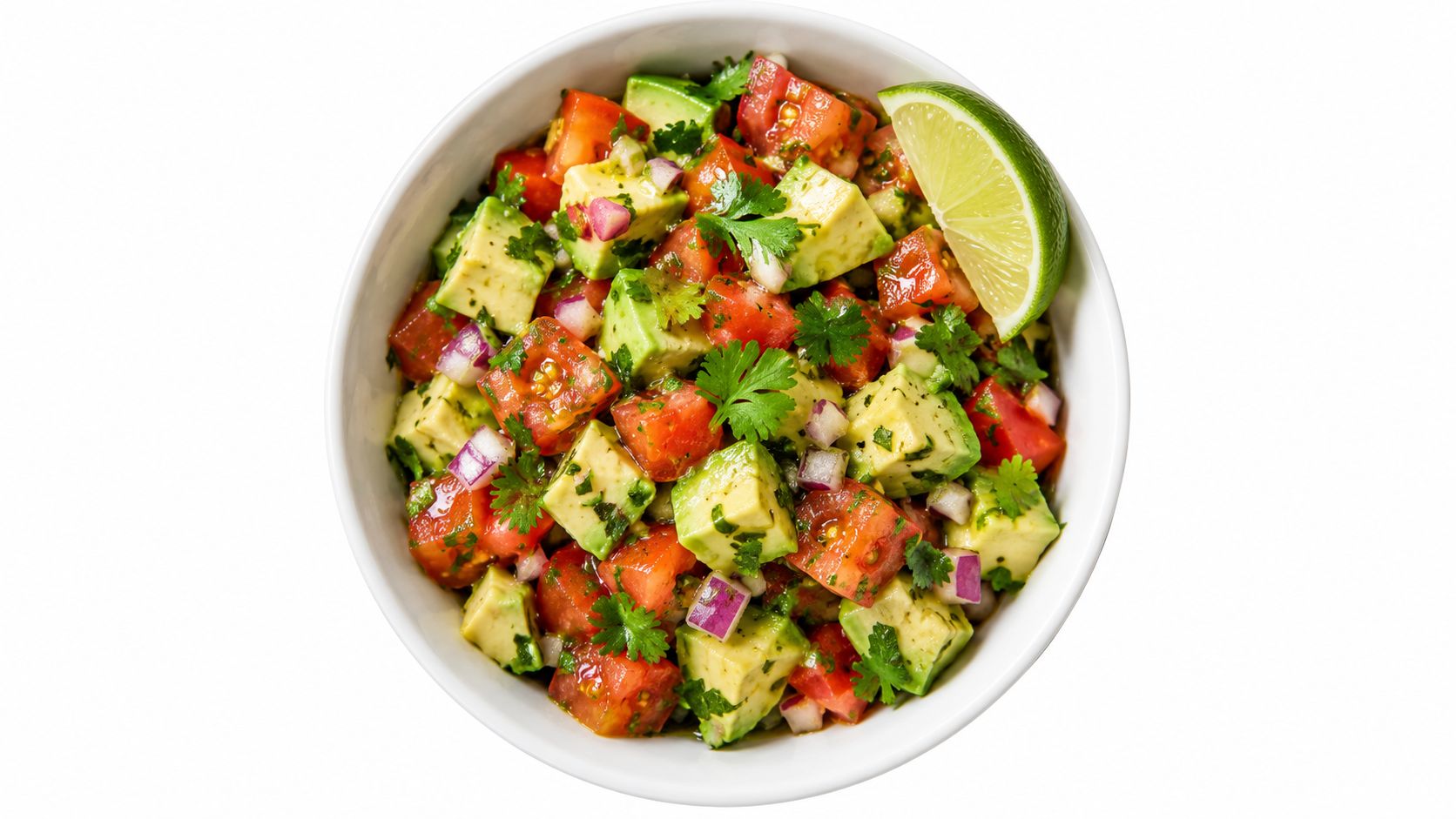
Pick this recipe when texture matters more than creaminess. Diced avocado joins tomato, onion, cilantro, and lime in a dip that sits between guacamole and salsa. It has distinct pieces, fresh acidity, and enough structure for scooping with sturdy chips or spooning over grilled meat.
Prepare the pico de gallo base first. Dice the tomato and onion, add cilantro and lime, then season lightly. Drain excess tomato liquid before combining. Roma or plum tomatoes are a better choice than very watery varieties because they help the finished dip stay chunky.
Add avocado last. Cut it into pieces rather than mashing it, then fold gently with a spoon. Stirring too forcefully bruises the avocado and turns the mixture muddy. If the onion tastes too sharp, soak it briefly in ice water, drain it well, and pat it dry.
Keep the contrast crisp
Salt conservatively at first. Tomato and lime already provide strong flavor, and you can add more seasoning at the table. This dip is at its best immediately after mixing, when the tomato remains firm and the avocado pieces still hold their shape.
A practical serving scenario is a casual gathering where several people want something fresh but not completely smooth. Put it beside a creamy dip, grilled corn, or warm tortillas. It also makes a useful topping for tacos and baked potatoes.
The mixture is less suitable for long holding because tomato releases liquid and the avocado softens. If you need to prepare ahead, chop and drain the tomato, onion, and herbs separately, refrigerate them, and cut the avocado close to serving.
Watch the preparation technique in this chunky avocado dip video for a visual example of combining the ingredients without destroying the texture.
5. Spicy Jalapeño Avocado Dip
Choose this version for game-day snacks, grilled meats, or guests who want clear chile heat. Jalapeño gives the avocado a fresh pepper flavor, while charring adds a smoky edge. Because peppers vary, build the heat gradually instead of committing the whole batch at once.
Start with one jalapeño. Remove the seeds and white membrane for a milder dip, or leave some in when you want stronger heat. For a more complex flavor, char the pepper directly over a stovetop flame until the skin darkens, then let it cool before mincing. If you don't have a gas flame, use a dry skillet and turn the pepper as it blisters.
Mix the minced jalapeño with lime juice before adding the avocado. This spreads the pepper through the acid and reduces the chance of a concentrated hot bite. Add cumin and garlic powder in small amounts to support the chile without masking the avocado.
Taste before you serve
Heat can seem stronger as the dip sits, so don't make the first bite extremely hot. Mix in half the pepper, taste, and add more if needed. If the dip goes too far, increase the avocado base or fold in a little plain yogurt.
This variation has a flexible texture. Leave it chunky for a substantial chip dip, or mash it smooth for tacos and grilled sandwiches. It also pairs well with grilled chicken, steak, roasted corn, and crisp vegetables.
Fresh jalapeño gives a bright, grassy heat. Roasted jalapeño tastes deeper and less sharp. You can offer both by charring part of the pepper and keeping the rest raw, but keep the quantities controlled so the final dip doesn't become watery or aggressively hot.
Serve it soon after mixing, especially if you've added a generous amount of lime. Cover and refrigerate leftovers promptly, and use clean utensils each time rather than returning a used chip to the container.
6. Smoky Roasted Garlic Avocado Dip
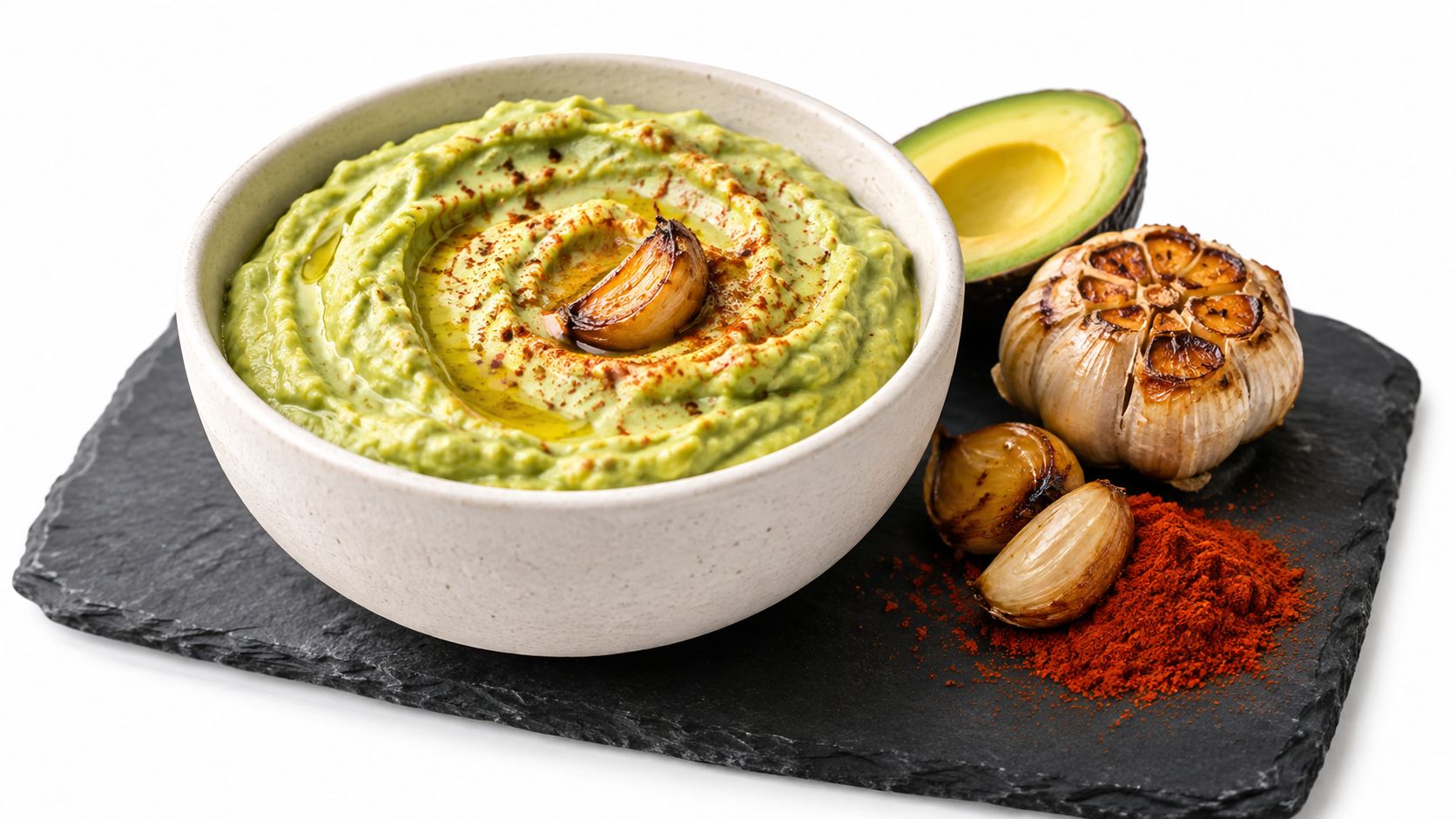
Roasted garlic changes the character of avocado dip from bright and raw to mellow and savory. Choose it when you're planning a dinner, assembling a grazing board, or serving the dip with warm bread, roasted vegetables, or grilled meats. The garlic becomes soft and sweet during roasting, so it doesn't have the sharp bite of freshly minced cloves.
Wrap a garlic head in foil with olive oil, salt, and pepper, then roast at 400°F for 40 to 45 minutes. Those cooking details come from the recipe specification in the brief. The cloves are ready when they're soft enough to squeeze from their skins. Let the head cool enough to handle, then press the cloves directly into a bowl.
Combine the roasted garlic with lemon juice and smoked paprika before adding the avocado. Lemon suits the mellow garlic better than lime, while smoked paprika reinforces the roasted flavor. A small pinch of cayenne adds warmth without turning the dip into a chile-forward recipe.
Plan the components separately
You can roast the garlic ahead and refrigerate the cooked head for up to five days, as specified in the recipe guidance. Mash the dip closer to serving so the avocado tastes fresh. If you must chill the finished dip, seal it well and press covering directly against the surface.
Serve this dip at a cool room temperature if the timing allows, because very cold food can mute garlic and smoked paprika. Don't leave it out for an extended serving period, though. The research summary on guacamole's water activity and microbial growth describes guacamole as a high-moisture food with water activity near 0.99 and a relatively mild pH. Refrigeration and clean handling remain essential, even when lemon juice is included.
Use this dip with toasted bread, pita, crackers, crudités, grilled mushrooms, or potatoes. Its deeper flavor makes it a better match for a planned meal than for a last-minute bowl of plain chips.
7. Herb-Forward Avocado Dip with Chives and Dill
This is the choice for a quieter, more refined dip. Dill and chives bring a fresh, lightly savory profile that works with grilled fish, boiled potatoes, cucumber, radishes, and vegetable crudités. Cilantro can remain in the mix, but it shouldn't dominate.
For a balanced herb blend, use equal parts cilantro and dill, along with fresh chives and parsley. Mince the chives finely, and handle the dill gently so the leaves don't become bruised. Stir the herbs with lime juice before adding the avocado, which helps distribute their aroma through the dip.
Keep the herbs distinct
Add a small amount of white miso for savory depth. It won't turn the dip into a miso sauce, but it can make the avocado taste fuller without adding heat. Taste before adding extra salt because miso already contributes seasoning.
This variation suits a dinner party where tortilla chips aren't the only serving option. Spoon it beside boiled potatoes, spread it on rye-style crackers, or serve it with grilled fish. It also makes a fresh dip for a platter of carrots, cucumbers, celery, and radishes.
Fresh herbs are most expressive soon after purchase, so prepare the dip close to the meal when possible. If you need to hold it, use a sealed container and press covering onto the surface before refrigerating. The herbs may darken over time even when the dip remains properly chilled.
For more ideas that use this mild allium in everyday dishes, see cooking with chives. You can also replace chives with finely sliced scallions, but the flavor will be sharper and more onion-forward.
The main advantage here is balance. Unlike the jalapeño version, this dip doesn't rely on heat. Unlike pico de gallo, it doesn't add watery vegetables. It stays creamy, aromatic, and flexible enough to accompany both fish and vegetables.
8. Creamy Avocado-Tahini Dip
Avocado and tahini create a nutty, silky dip for pita, crackers, roasted vegetables, and grilled meats. Choose it when you want a flavor that moves away from Mexican-style lime and cilantro while keeping avocado's creamy body. Tahini adds earthy sesame depth, so the dip feels substantial even when the avocado isn't the only rich ingredient.
Stir the tahini thoroughly before measuring. Use a creamy tahini rather than a very dark, heavily roasted one, which can taste bitter. Whisk it with lemon juice and water until smooth, then add mashed avocado. Begin with about two to three tablespoons of water to loosen the mixture, adding it slowly because tahini can change texture quickly when acid meets the paste.
A practical starting balance is two avocados with a quarter cup of tahini. Adjust for taste rather than treating that ratio as fixed. More tahini brings stronger sesame flavor and a denser mouthfeel, while more avocado makes the dip milder and softer.
Finish it for the table
Cumin and smoked paprika add warmth. For presentation, drizzle with olive oil and scatter sumac, sesame seeds, parsley, or pomegranate seeds over the top. Those garnishes make this a natural centerpiece for a mezze-style spread with pita, olives, vegetables, and grilled foods.
Store the dip in an airtight container and stir before serving because tahini may separate. Refrigerate promptly, and don't assume that lemon makes the dip shelf-stable. The FDA-related guidance summarized by Cleveland Clinic's avocado storage advice warns against storing avocados submerged in water because Listeria monocytogenes can move from the skin into the flesh. Wash intact fruit before cutting, refrigerate cut produce promptly, and protect the dip from air and contamination.
For broader context on ingredients and techniques used in this flavor family, explore how to cook Mediterranean food. The dip itself is quick, but its serving options make it suitable for a more composed meal.
Side-by-Side: 8 Easy Avocado Dips
| Variant | Implementation complexity | Resource requirements | Expected outcomes | Ideal use cases | Key advantages |
|---|---|---|---|---|---|
| Classic Guacamole | Very low, simple mashing, no special tools | Ripe avocados, lime, salt, cilantro (optional); moderate cost | Fresh, creamy dip; serves 4–6; short shelf life (1–2 hrs) | Table dip, spreads, quick appetizers, Mexican/Latin cuisine | Highlights avocado flavor; fast and universally familiar |
| Cilantro Lime Avocado Dip | Low, minor extra prep for herbs | Fresh cilantro, extra lime, avocado; minimal cost | Bright, herb-forward flavor; short shelf life (1–2 hrs) | Fish/seafood pairings, fish tacos, herb-forward dishes | Intensely fresh citrus-herb profile; pairs well with seafood |
| Creamy Avocado Dip with Greek Yogurt | Low–medium, gentle folding and ratio control | Greek yogurt, avocados, lime/salt; low-cost stretch | Tangy, higher-protein dip; creamier texture; fridge life 3–4 days | Meal prep, health-focused meals, light spreads | Extends avocado, adds protein, longer shelf life |
| Chunky Pico de Gallo Avocado Dip | Medium, chopping and draining vegetables | Tomatoes, onion, cilantro, lime + avocados; more ingredients | Textural, volume-boosted dip; lower calorie density; shelf life 2–3 hrs | Entertaining, potlucks, visually appealing presentations | Uses fewer avocados, adds veggie nutrition and texture |
| Spicy Jalapeño Avocado Dip | Low–medium, optional charring and careful dosing | Jalapeños (fresh/roasted), avocados, lime; inexpensive | Heat-adjustable dip; masks some oxidation; best fresh (≈2 hrs) | Grilled meats, game-day snacks, spice-focused menus | Easily tunable heat; inexpensive and bold flavor |
| Smoky Roasted Garlic Avocado Dip | High, requires roasting (40–45 min) and planning | Whole garlic heads, oven, avocados, smoked paprika (optional) | Umami-rich, savory dip with roasted complexity; longer prep | Dinner-party appetizers, upscale entertaining, composed dishes | Deep savory profile; elevated, sophisticated presentation |
| Herb-Forward Avocado Dip (Chives & Dill) | Medium, multiple fresh herbs, delicate handling | Cilantro, dill, chives, parsley, avocados; seasonal herbs needed | Layered, subtle herb profile; best fresh (≈2–3 hrs) | Scandinavian/Nordic menus, smoked fish, refined entertaining | Sophisticated herb complexity; pairs well with proteins |
| Creamy Avocado‑Tahini Dip | Low–medium, blending and consistency tuning | Tahini, lemon, water, avocados; specialty ingredient | Nutty, creamy dip with added protein; fridge life 3–4 days | Mediterranean fusion, sandwiches, meal prep, dips | Reduces avocado use significantly; stable and protein-rich |
Serve It Fresh and Make It Yours
Choose the dip by the moment, not only by the ingredient list. Classic guacamole and cilantro lime avocado dip are the fastest choices for immediate tortilla-chip serving. The classic lets the avocado lead, while the cilantro-lime version gives you a brighter, more assertive herb and citrus profile.
Pick chunky pico de gallo avocado dip when you want visible vegetables, volume, and contrast. It belongs on a casual snack table, beside tacos, or over grilled food, but it should be assembled close to serving so tomato liquid doesn't soften the avocado. Spicy jalapeño avocado dip is the better match for heat seekers, especially with grilled meats, corn, or game-day snacks. Add the pepper in stages because jalapeño intensity varies and can build as the dip rests.
For planned entertaining, smoky roasted garlic avocado dip offers deeper flavor and rewards advance preparation of the garlic. The herb-forward dip with chives and dill is more restrained and works especially well with fish, potatoes, and vegetable crudités. If you need a creamy dip with a tangy finish, choose Greek yogurt avocado dip. If you want sesame richness and a Mediterranean-inspired profile, choose avocado-tahini dip.
Storage requires the same discipline across all eight recipes. Add lemon or lime for flavor and to help slow browning, but don't confuse color control with food safety. Keep avocado dip refrigerated in a clean, airtight container, press covering directly onto the surface to limit air exposure, and use separate clean utensils for serving. High-moisture dips need prompt chilling and shouldn't sit at room temperature during a long gathering.
Make chunky mixtures near serving time. For make-ahead work, prepare components separately, drain watery vegetables, refrigerate them, and combine the avocado shortly before guests arrive. Yogurt and tahini dips can be mixed earlier than pico de gallo, but they still need sealed storage and prompt refrigeration.
Serve these dips with more than chips. Try crudités, crackers, pita, toasted bread, grilled fish, grilled meats, sandwiches, tacos, wraps, roasted vegetables, and potatoes. A dip can be a snack, a spread, a sauce, or a side dish depending on texture and seasoning.
If you want dependable everyday recipes beyond avocado, Just Cook It's digital cookbook collections include kitchen-tested dishes across global cuisines, including the Mexican Home Cooking collection with guacamole and sauce recipes. Use these eight dips as a starting point, then adjust acid, salt, herbs, chile, and texture to suit the ingredients in your kitchen.
Just Cook It offers downloadable digital cookbooks with step-by-step recipes for everyday home cooking across global cuisines. If you want more dependable Mexican dishes and sauce ideas to serve alongside these dips, visit Just Cook It and explore its recipe collections.