When dinner is almost ready and you still need a quick vegetable side, a few carrots can become something far more flavorful than the usual steamed option. Easy honey glazed carrots pair tender carrots with a glossy coating that balances buttery richness, gentle sweetness, and a touch of savory flavor. They come together quickly with everyday ingredients, but timing matters. Adding and reducing the honey at the right stage allows it to cling to the carrots and develop a light caramelized finish without scorching in the pan.
The method below is designed for about four servings and takes roughly 20 minutes from preparation to serving. You'll get carrots that are tender but still hold their shape, with a light glaze that highlights their natural sweetness instead of burying it.
Table of Contents
- Why Easy Honey Glazed Carrots Work Every Time
- Ingredients and Smart Substitutions for Honey Glazed Carrots
- How to Make Honey Glazed Carrots on the Stovetop
- Choosing Your Cooking Method Without Burning the Honey
- Serving Ideas Storage and Make Ahead Tips
- Final Tips for Perfect Glossy Carrots Every Time
Why Easy Honey Glazed Carrots Work Every Time
A good carrot side dish has to do several jobs at once. It needs to cook quickly, fit beside a weeknight protein, and taste polished enough for a holiday plate. Honey glazed carrots manage that balance because the vegetable brings its own sweetness, while butter, honey, salt, and herbs add contrast and shine.
Carrots are also a practical ingredient to keep on hand. An agricultural review records annual global carrot production at 41,393,537.66 metric tons, with 1,127,948 hectares harvested and an average global yield of 36,681.1 kilograms per hectare. The same review lists China, Uzbekistan, the United States, the Russian Federation, and the United Kingdom among the leading producers, which helps explain why carrots are widely available across different markets. You can read the production figures in the agricultural review's carrot table.
The texture target
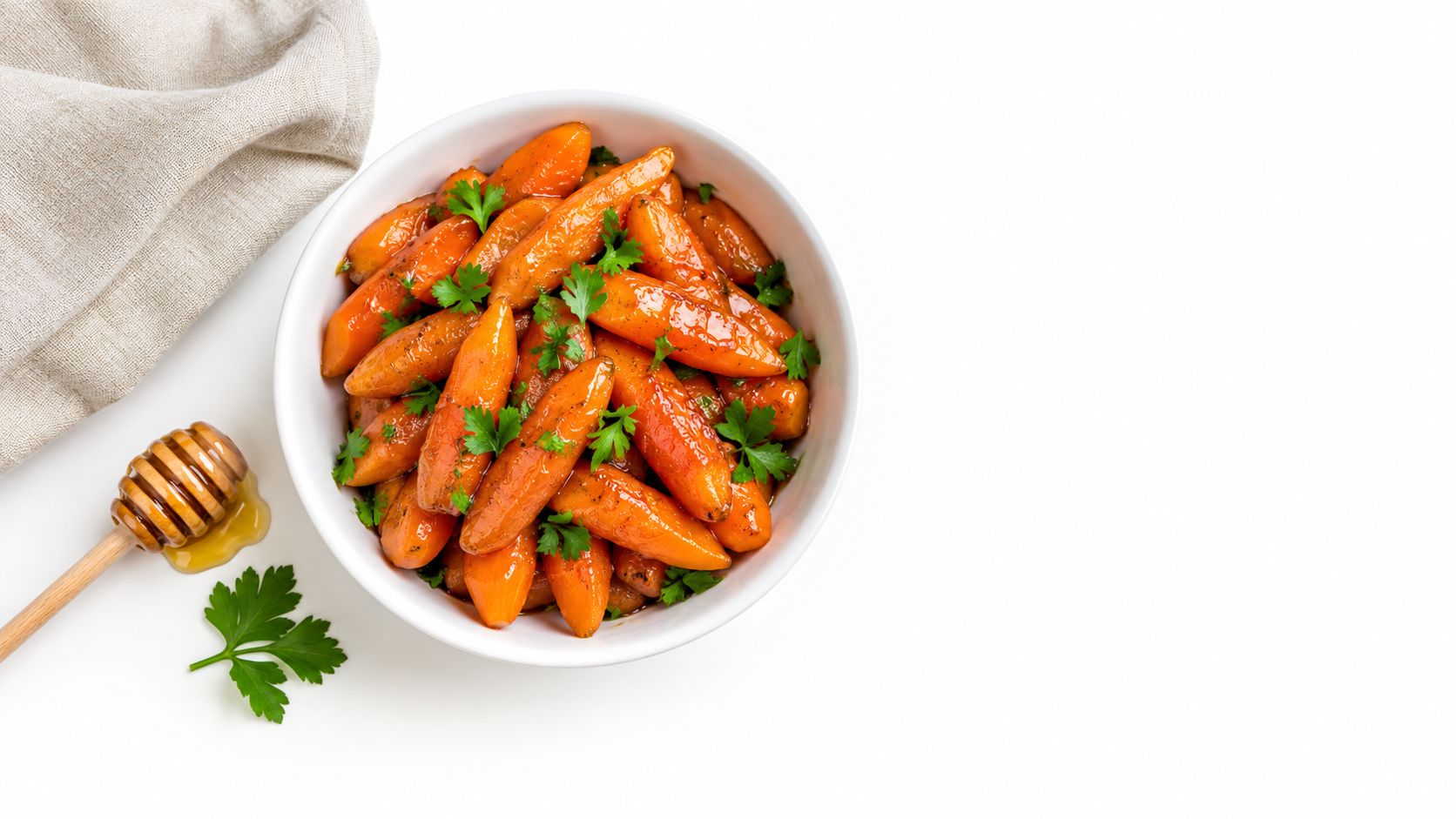
The best result isn't a carrot that collapses when you lift it with a fork. Aim for crisp-tender, meaning the fork enters easily but meets a little resistance in the center. That texture gives the glaze something to cling to and prevents the finished dish from turning watery or mash-like.
Raw carrots are about 88% water and contain roughly 41 calories per 100 grams, along with about 9.6 grams of carbohydrate, 2.8 grams of fiber, and 0.24 grams of fat. Those figures are listed in nutrition information for carrots. In cooking terms, the water helps the carrots soften quickly, while their natural sweetness gives honey a flavor base to build on.
Practical rule: Cook the carrots until they're just tender before concentrating the glaze. If they're already soft, the final reduction can make them fall apart.
The recipe doesn't need a special pan, air fryer, or complicated sauce. A saucepan, a lid, a spoon, and moderate heat are enough. The control comes from watching the carrots and the liquid, not from blindly following one setting.
Ingredients and Smart Substitutions for Honey Glazed Carrots
For about four servings, gather:
- Carrots: 1 pound, peeled if needed and cut into evenly sized diagonal pieces.
- Butter: 2 tablespoons, for richness and a smooth glaze.
- Honey: 1 tablespoon, enough to add shine and sweetness without making the side taste like dessert.
- Water: A small amount for the covered cooking stage.
- Kosher salt: About ¾ teaspoon, divided to season the carrots and balance the honey.
- Black pepper: ¼ teaspoon, or enough to add gentle warmth.
- Dried thyme: ¼ teaspoon, optional but useful for a savory edge.
- Fresh parsley: 2 tablespoons, chopped, for a fresh finish.
- Lemon zest or juice: Optional, added at the end if the glaze tastes too rich.
Cut the carrots so the pieces are similar in thickness. A diagonal cut gives you attractive surfaces and helps thicker pieces cook at a pace closer to the thinner ends. Baby carrots can remain whole if they're already fairly uniform, but split especially thick ones lengthwise so the batch finishes together.
Butter gives the glaze a rounded, silky quality. For a dairy-free version, use plant-based butter or a neutral oil. Oil produces a lighter coating but won't taste as creamy. Maple syrup can replace honey, although it brings a different flavor and may make the finished glaze less distinctly honey-like.
If you're reducing sweetness, start by using less honey rather than removing the salt or acid. The carrots still need contrast. A pinch more finishing salt, black pepper, thyme, lemon, or fresh parsley can make a restrained glaze taste complete without relying on extra sugar. Nutrition guidance for glazed carrots emphasizes that the main change from plain carrots comes from additions such as honey, butter, or brown sugar, rather than from the vegetable itself. The substitution discussion is covered in this glazed-carrot nutrition guide.
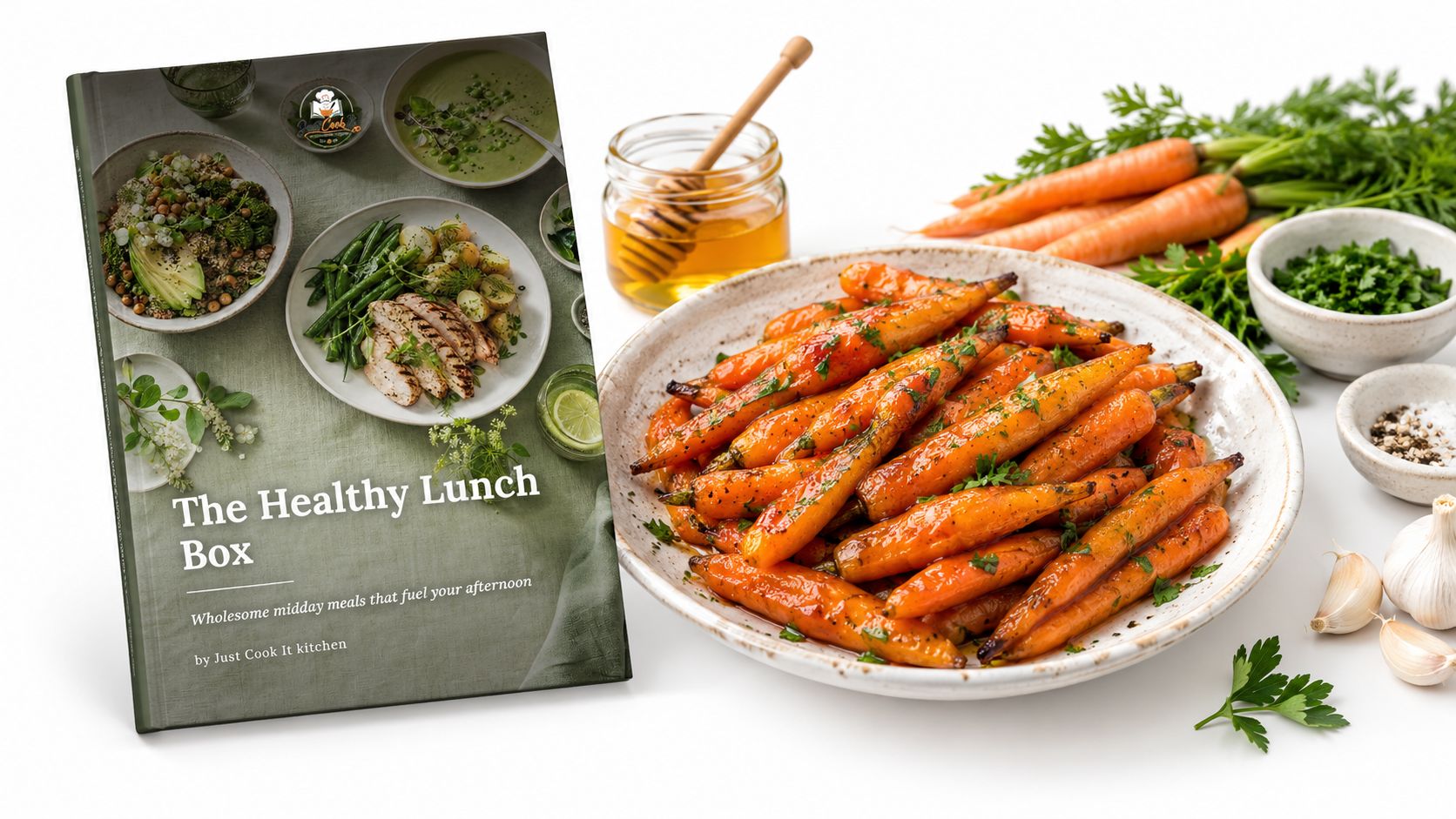
For cooks planning packed meals as well as dinner sides, The Healthy Lunch Box | Digital PDF is a digital collection built around whole grains, vegetables, lean proteins, herbs, and spices, with recipes intended for packing, reheating, or eating at room temperature.
How to Make Honey Glazed Carrots on the Stovetop
The stovetop is my default choice when I want control. You can test a carrot before the glaze is finished, adjust the heat immediately, and stop the reduction as soon as the coating looks glossy.
Prep the carrots evenly
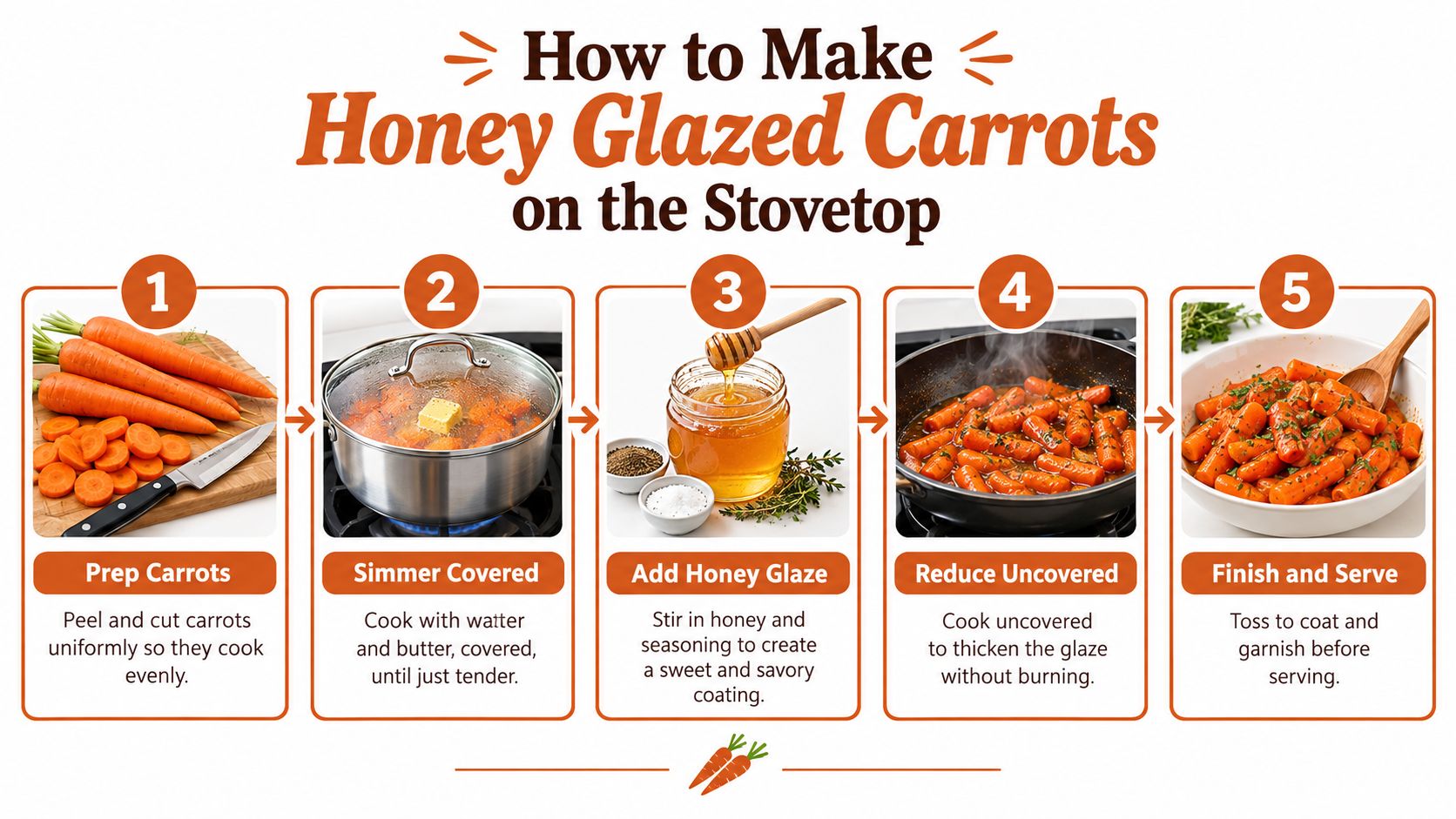
Peel the carrots if the skins look dry or rough, then cut them into pieces with similar thickness. Add the carrots to a wide saucepan with the butter, water, and part of the salt. The water should support gentle steaming and simmering, not flood the pan.
Keep the heat around medium until the liquid begins to simmer. Then lower it enough to maintain steady heat without an aggressive boil. A hard boil can make the outside of the carrots soften before the centers catch up.
Simmer covered until crisp-tender
Cover the pan and cook until the carrots are just tender. A dependable range is roughly 4 to 10 minutes, depending on the cut size and the pan. This covered stage uses moisture to soften the carrots without exposing the honey to direct heat.
Start checking early with a fork. You want the fork to enter the thickest piece with slight resistance. If the carrot feels completely soft in the center, stop cooking immediately and move to the glaze stage. The reliable timing pattern of covered cooking followed by uncovered reduction is also described in this stovetop honey-glazed carrot method.
Key takeaway: Crisp-tender carrots are the last safe stopping point before the glaze. They'll soften a little more while the sauce thickens.
Add and reduce the glaze
Once the carrots are nearly tender, uncover the pan. Add the honey, pepper, thyme, and remaining salt, then stir gently so the butter and honey distribute across the pieces.
Let the liquid bubble over moderate heat for roughly 2 to 5 minutes. Stay nearby. The glaze is ready when it looks thicker, clings to the carrots, and turns glossy rather than watery. You should see small bubbles, but you shouldn't see dark smoke, blackened spots, or a sharp burnt smell.
If the pan dries before the carrots are tender, add a small splash of water and lower the heat. If the glaze darkens too quickly, move the pan off the burner briefly, add a little water, and return it to lower heat. Honey continues cooking in a hot pan even after the burner is turned down, so early intervention works better than trying to rescue a fully scorched coating.
Toss the carrots in the pan until every piece shines. Finish with parsley and, if needed, a touch of lemon zest or juice. The carrots should look lacquered, not submerged in sauce.
For another vegetable side built around controlled steaming, see the fresh peas cooking guide. If you're interested in how cooks combine techniques and flavors in restaurant menus, you can also find fusion dining in Manchester.
Choosing Your Cooking Method Without Burning the Honey
Honey browns quickly, but it doesn't behave identically in every appliance. A stovetop pan lets you dilute and reduce the glaze gradually. An oven gives the carrots more exposed surface area for roasting. An air fryer concentrates heat in a small circulating chamber, which can brown the edges quickly but may punish a sugary coating.
That's why one universal time and temperature can be misleading. Independent air fryer recipes range from about 320°F/160°C for 25 minutes followed by a finish at 400°F/200°C, to 375°F/190°C for 10 to 12 minutes, and 400°F/205°C for 10 to 12 minutes. The variation is documented in air fryer honey-roasted carrot guidance, and it reflects differences in carrot size, basket design, liner material, crowding, and when the glaze is added.
| Method | Best For | Honey Timing Tip | Burn Risk |
|---|---|---|---|
| Stovetop | Precise texture and a visibly glossy coating | Add honey near the end, then reduce while watching closely | Lowest, because heat is easy to adjust |
| Oven | Roasted edges and a larger batch | Roast the carrots first when possible, then add or refresh the glaze late | Moderate, especially on a hot sheet pan |
| Air fryer | Fast browning and smaller batches | Use a lower setting for the final glazing stage and check early | Highest, because circulating heat can darken honey quickly |
Choose by the result, not the appliance
Use the stovetop when you're serving dinner soon and want the most predictable texture. It's also the best option for beginners because the carrots can be tested during cooking.
Choose the oven when browned edges matter more than a uniformly smooth coating. Spread the pieces apart on the pan. Crowding traps moisture and delays browning, while a thin layer exposes more carrot surface to heat.
The air fryer is useful when you want concentrated browning, but glaze timing matters most. Coat the carrots lightly at first or roast them before adding the honey mixture. Lower the temperature for the final stage if the coating begins to darken before the centers are tender.
For a lighter vegetable preparation that relies on steam rather than concentrated roasting, compare the approach with Asian steamed vegetables. The same principle applies here: method choice should follow the texture and finish you want.
Serving Ideas Storage and Make Ahead Tips
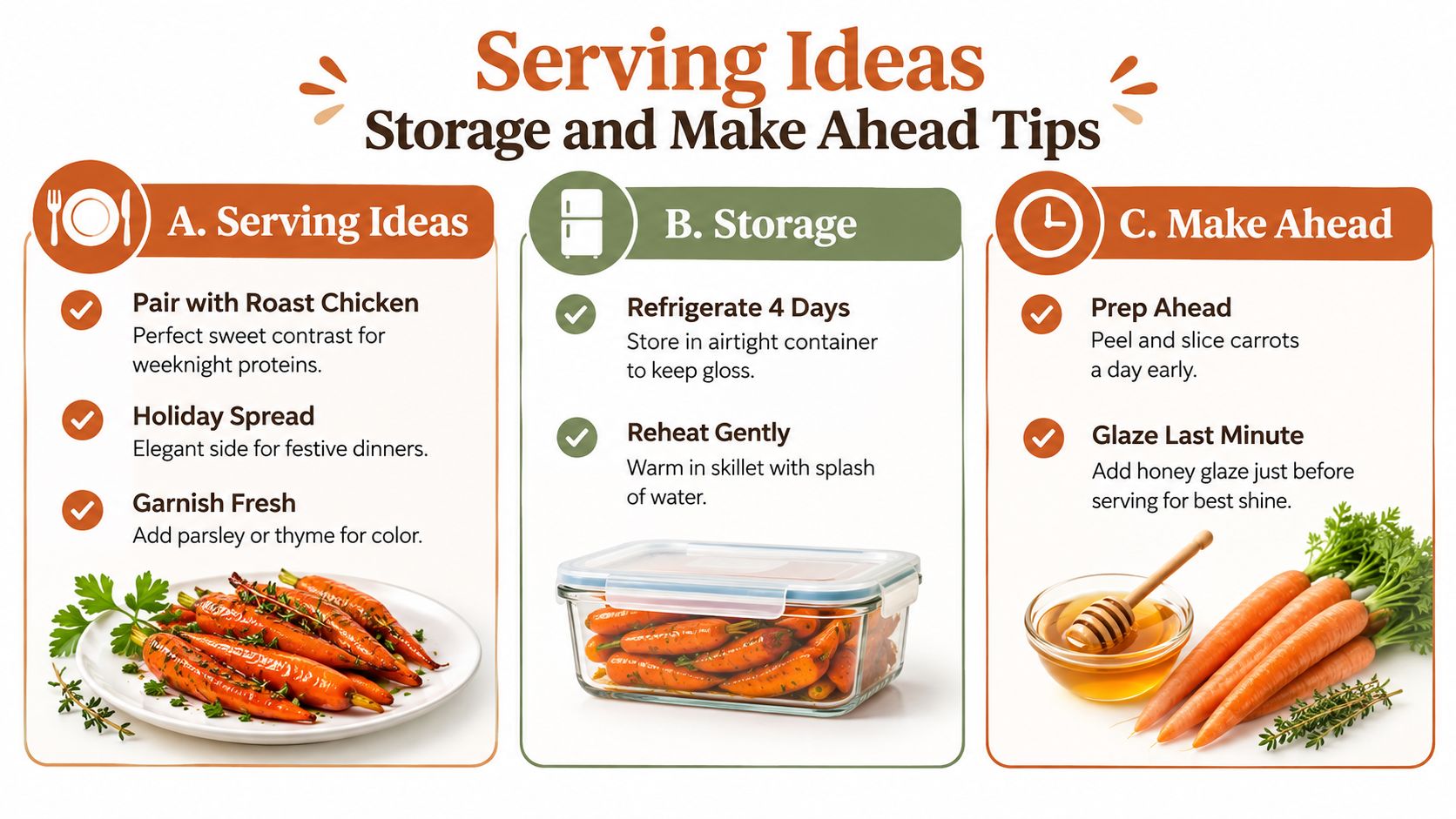
Honey glazed carrots are sweet enough to complement savory food but restrained enough to work beyond a holiday plate. Serve them beside roast chicken, pork, baked fish, lentils, or a simple grain bowl. The glaze also gives a plain dinner a finished look without requiring a separate sauce.
Fresh parsley keeps the dish bright. Thyme adds a woodsy note, lemon zest sharpens the sweetness, and toasted nuts provide crunch if you want more contrast. Add garnishes after cooking so their flavor stays fresh and their texture doesn't soften in the pan.
Store the finished carrots carefully
Transfer leftovers to an airtight container and refrigerate them. The glaze may thicken and lose some of its shine when cold, but gentle reheating brings it back.
Warm the carrots in a skillet over low to moderate heat with a small splash of water. Stir occasionally until heated through, then stop. High heat can make the honey sticky and dark before the carrots are warm in the center. A microwave also works if you use moderate power and short intervals, stirring between them.
Prep ahead, glaze later
For guests, peel and cut the carrots ahead of time and keep them chilled. You can cook them through the covered stage earlier, then refrigerate them and finish with butter, honey, and seasoning just before serving.
That approach protects the texture because the glaze doesn't sit on the carrots while they cool and reheat. It also gives you a chance to adjust the final seasoning at the table. If the dish tastes heavy, use lemon. If it tastes flat, add salt. If the carrots are firm, give them a little more covered cooking before reducing.
The same practical planning works for packed meals. Recipes in this roasted cherry tomatoes guide can help build a vegetable-focused spread where each component has a different texture and cooking method.
Final Tips for Perfect Glossy Carrots Every Time
The recipe succeeds or fails on three decisions. Cut the carrots evenly. Stop the covered cooking at crisp-tender. Reduce the glaze only until it clings. Those choices matter more than whether you use a particular honey or a decorative garnish.
Avoid adding honey at the beginning over high heat. The carrots need moisture and time to soften, while honey needs a short, watched finish. Combining both jobs too early encourages the outside to darken before the vegetable reaches the right texture.
Keep these checks in mind:
- Test the thickest piece: Don't judge the batch by a thin end. The center should yield to a fork while retaining structure.
- Watch the bubbles: A glossy, gently bubbling coating is ready. Dark spots or smoke mean the heat is too high.
- Use acid for balance: Lemon zest or juice can make a reduced-sugar glaze taste livelier without adding more sweetness.
- Finish off the heat: Parsley, thyme, and pepper are fresher when stirred in after the pan leaves the burner.
- Choose the method deliberately: Use stovetop control for reliable tenderness, oven heat for roasted edges, and the air fryer only with close attention to the final glaze.
Easy honey glazed carrots don't need complicated ingredients. They need a uniform cut, staged cooking, and a cook who stops the heat at the right moment. Make them tonight beside whatever is already on your menu, and judge doneness by the fork and the shine rather than by the clock alone.
Just Cook It offers downloadable digital cookbooks and practical recipe resources for everyday home cooking, including clear instructions designed for ordinary kitchens. Visit Just Cook It to find more dependable vegetable sides, weeknight recipes, and global cooking ideas for your next meal.