Healthy chicken dinners often fail in the same ways. The meat comes out dry, the vegetables feel like an afterthought, or the recipe takes more attention than a weeknight can spare. Chicken breast has a useful nutritional profile, but it needs the right technique and enough flavor variety to stay appealing.
This roundup turns it into eight globally inspired healthy meals with chicken breast, each built around a different cooking method and weeknight need. You'll find grilled, stir-fried, baked, pan-seared, poached, and marinated options, plus practical guidance for moisture, prep, calories, and leftovers. Use the calorie information supplied with each recipe as a planning guide rather than a rigid prescription, since oil, sauces, sides, and portion sizes can change the final meal.
The most useful recipe is the one you'll repeat. Every dish below includes a way to keep the chicken tender and a realistic idea for using leftovers.
Table of Contents
- 1. Lemon Herb Grilled Chicken Breast with Mediterranean Vegetables
- 2. Asian-Inspired Soy-Ginger Chicken Breast Stir-Fry
- 3. Italian Herb-Crusted Baked Chicken Breast with Garlic
- 4. Spiced Mexican Lime-Cilantro Chicken Breast
- 5. Garlic and White Wine Poached Chicken Breast
- 6. Spiced Yogurt-Marinated Tandoori Chicken Breast
- 7. Mustard and Herb Crusted Pan-Seared Chicken Breast
- 8. Teriyaki-Glazed Baked Chicken Breast with Sesame
- 8 Healthy Chicken Breast Meals Comparison
- Build Your Weeknight Chicken Rotation
1. Lemon Herb Grilled Chicken Breast with Mediterranean Vegetables
Lemon, garlic, oregano, thyme, and rosemary give grilled chicken breast a bright Mediterranean character without requiring a heavy sauce. Serve it with roasted zucchini, bell peppers, and tomatoes, then finish with a little olive oil and fresh lemon. The vegetables bring color and moisture to a plate that can otherwise feel too lean.
For even cooking, pound the chicken to an even thickness before marinating. A thinner, uniform breast cooks more predictably and is less likely to dry out at the tapered end. Marinating in a sealed bag keeps cleanup simple and helps the lemon, garlic, and herbs coat every surface.
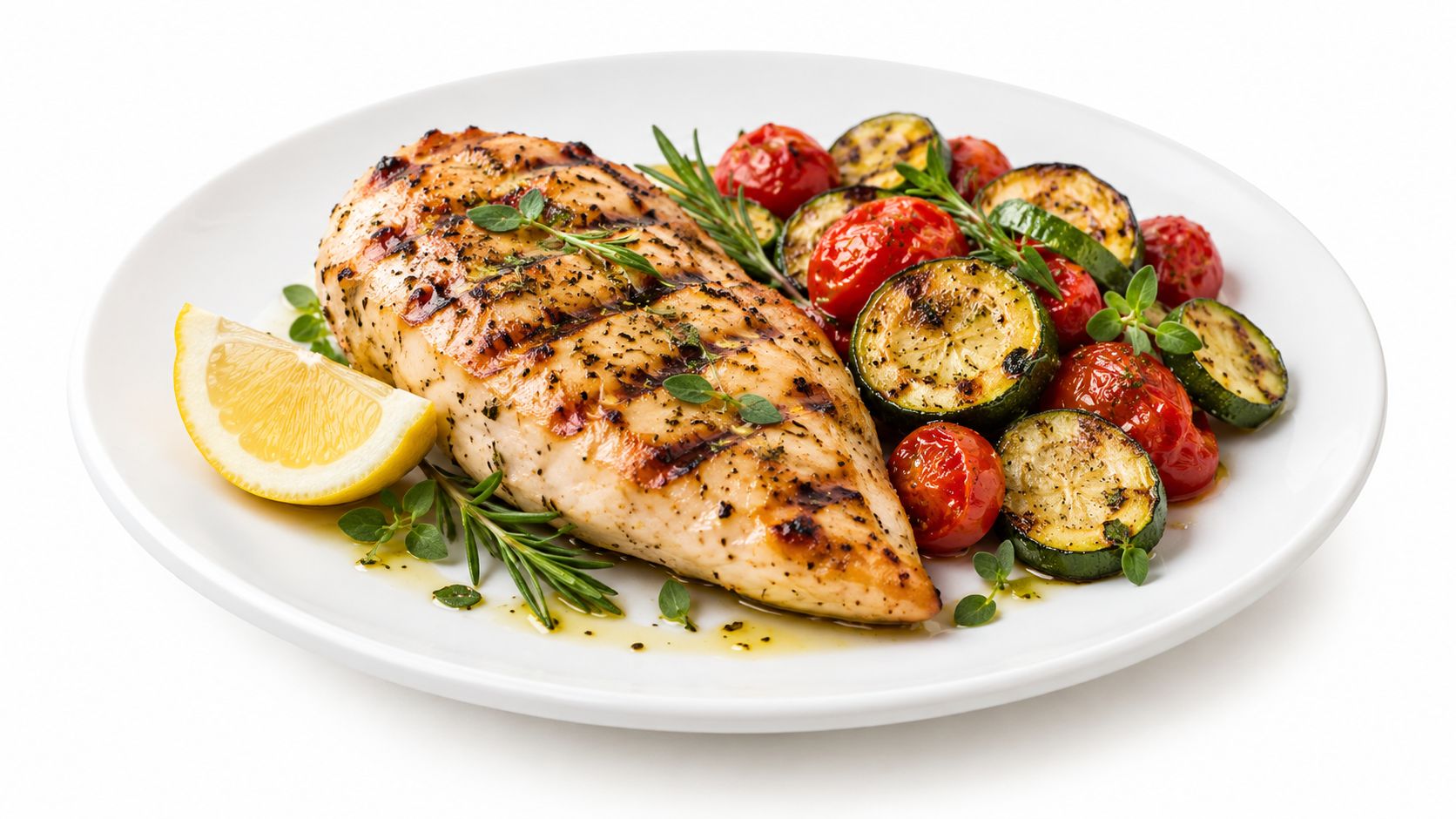
Practical rule: Use a thermometer rather than color to judge doneness, and let the chicken rest before slicing so the juices stay in the meat.
A small amount of olive oil in the marinade helps the herbs cling and prevents the surface from sticking. Don't leave the chicken in an intensely acidic marinade longer than needed, because lemon can make the exterior feel firm rather than tender. Grill over steady heat, then rest the cooked chicken before cutting.
The recipe works particularly well for meal prep. Slice leftover chicken over greens, fold it into a whole-grain wrap, or serve it cold with roasted vegetables and a spoonful of yogurt sauce. For more vegetable-forward Mediterranean ideas, see these Mediterranean diet meal-prep recipes. Readers who want a broader collection of similar dishes can also explore Mediterranean Home Kitchen | Digital PDF, which includes vegetable-rich recipes from across the Mediterranean.
2. Asian-Inspired Soy-Ginger Chicken Breast Stir-Fry
Stir-frying is the best choice when dinner needs to move quickly and the refrigerator contains a mixture of vegetables. Slice chicken breast against the grain into thin strips, then cook it with ginger, garlic, low-sodium soy sauce, broccoli, snap peas, carrots, and bell peppers. The vegetables provide crunch and color while the sauce adds enough umami to make a lean protein feel substantial.
Pat the chicken dry before it enters the pan. Surface moisture creates steam, which prevents browning and can leave the meat pale and rubbery. A hot pan matters just as much. Add the chicken in a single layer, cook it briefly, and remove it if the vegetables need more time. Returning it at the end keeps the strips from sitting over heat while you finish the sauce.
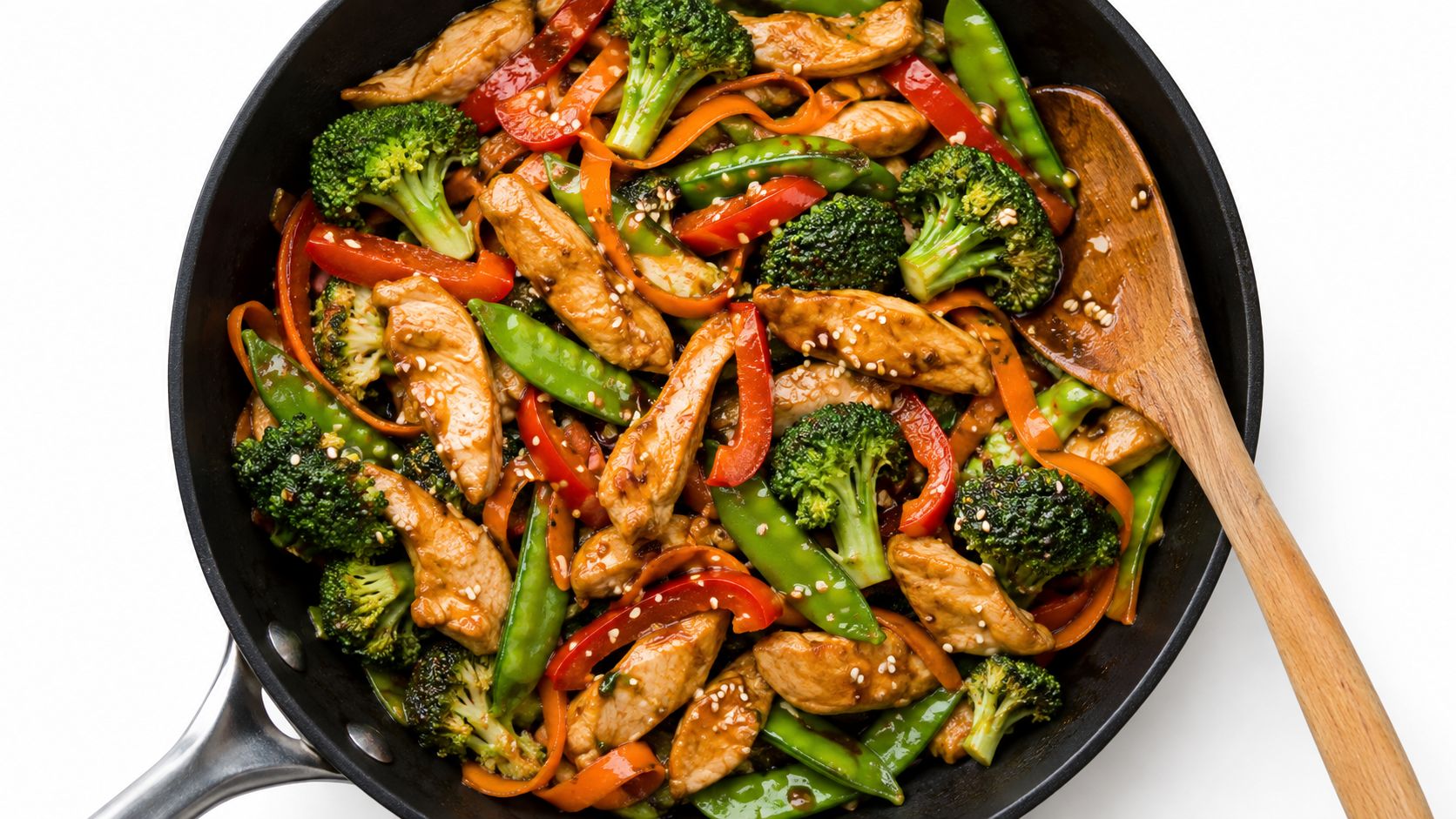
Choose low-sodium soy sauce if you're watching the salt in the rest of the meal. You can also stretch the sauce with ginger, garlic, rice vinegar, or a little water instead of adding more soy sauce. Serve the stir-fry over brown rice for a more filling bowl, or use cauliflower rice when you want the vegetables and chicken to dominate.
A ponzu-style citrus sauce can brighten the finished dish without making it heavy. This guide to what ponzu is can help you decide whether to use it as a finishing sauce or a flavor reference.
Leftovers reheat best when you add a small splash of water before warming them. You can also chop the cold chicken and vegetables into a grain bowl, stuff them into lettuce cups, or toss them with noodles for a second meal.
3. Italian Herb-Crusted Baked Chicken Breast with Garlic
A crisp coating makes baked chicken breast more satisfying without deep-frying it. Combine panko breadcrumbs with Italian herbs, grated Parmesan, garlic powder, and black pepper, then press the mixture firmly onto lightly oiled chicken. Baking on a wire rack allows hot air to reach the underside, which gives the crust a better chance of staying crisp.
The chicken must be dry before coating. Moisture causes the breadcrumbs to slide off and creates a soft layer between the meat and the crust. Brush the breast lightly with olive oil or egg wash, apply the crumb mixture, and press rather than just sprinkling it over the surface.
The trade-off: A breadcrumb crust improves texture, but it adds more energy than plain baked chicken. Keep the coating light and serve the chicken with vegetables or a simple salad rather than another rich side.
Bake until the thickest part reaches 165°F, the internal temperature specified in the supplied nutrition guidance for cooked chicken. Rest the breast briefly before slicing. If you want extra flavor without covering the crust, serve warm marinara on the side instead of spooning it over the top.
This is a useful choice when you need an oven-based dinner and don't want to stand over a pan. It also holds its texture better than a saucy preparation when packed separately from sides. Slice leftovers into a salad, layer them into a sandwich with greens, or chop them over pasta with a small amount of marinara. For more related ideas, browse these Mediterranean diet easy recipes.
4. Spiced Mexican Lime-Cilantro Chicken Breast
Cumin, chili powder, garlic, and lime turn a plain chicken breast into a fast, flexible dinner. Pan-searing creates a browned exterior, while black beans, lime rice, and fresh salsa make the meal more complete. The same chicken can also become taco filling, a burrito bowl topping, or a salad component, so it earns its place in a busy household.
Mix the dry spices with salt before applying them. This distributes the seasoning more evenly than adding each spice separately to the meat. Let the seasoned chicken sit briefly while you prepare the sides, then cook it over medium-high heat. Excessive heat can scorch the chili and cumin before the center is ready.
Fresh lime belongs at the end, not in the pan for the entire cooking process. Squeeze it over the cooked chicken just before serving, and add chopped cilantro at the same point so it stays green and aromatic. Offer extra lime wedges and cilantro at the table, allowing each person to adjust the sharpness and herbal flavor.
For different households: Keep the base seasoning mild, then add heat with sliced jalapeños, hot salsa, or chili sauce at the table. That's easier than making the whole batch too spicy.
This meal has a useful moisture strategy built in. Black beans, salsa, and lime rice add softer textures around the chicken, so even a slightly leaner slice doesn't make the plate feel dry. Store the chicken separately from salsa and rice, then reheat it gently before assembling bowls or tacos. For more ideas in this flavor family, see these healthy Mexican dinner recipes.
5. Garlic and White Wine Poached Chicken Breast
Poaching is the most forgiving method in this collection. The chicken cooks gently in a light broth made with white wine, chicken stock, garlic, onion, bay leaf, and thyme. Instead of building a crust, the method focuses on tender meat and a flavorful liquid that can become a sauce, soup base, or dressing ingredient.
Bring the liquid to a boil first, then lower it to a gentle simmer before adding the chicken. A rolling boil can make the exterior tough, while small bubbles cook the breast more gradually. Check the thickest part with a thermometer, and remove the pan from direct heat when the chicken is nearly done. Carryover heat will finish the cooking.
Make the cooking liquid useful
Don't discard the poaching liquid automatically. Strain it and use it to loosen a pan sauce, moisten shredded chicken, or start a soup. If you're preparing the liquid in advance, cool and refrigerate it promptly, then use it within the safe storage period recommended for your kitchen and local food-safety guidance.
Poached chicken is particularly good for leftovers because it can be shredded rather than sliced. Shredded meat absorbs vinaigrette, yogurt dressing, broth, or salsa more readily than a thick piece of reheated breast. Add it to a white-bean salad, a vegetable soup, a grain bowl, or a wrap with crunchy greens.
The trade-off is texture. Poached chicken won't provide the browned surface that grilling or searing delivers, so it benefits from a bright finishing sauce, herbs, pickled vegetables, or a crisp side salad. It's the right method when tenderness and versatility matter more than crust.
6. Spiced Yogurt-Marinated Tandoori Chicken Breast
Greek yogurt, garam masala, cumin, coriander, paprika, turmeric, ginger, and garlic create a well-seasoned coating for tandoori-style chicken breast. The yogurt adds richness and helps tenderize the meat, while the spice mixture gives the surface its characteristic color and aromatic depth. Bake the chicken when you want more consistent heat, or grill it when you want a lightly smoky exterior.
Mix the spices before stirring them into the yogurt. That prevents pockets of turmeric or cumin and gives the marinade a more even flavor. Coat the chicken thoroughly, then plan the marinating time around your schedule. A short rest can work, but advance marination gives the flavors more time to develop and helps the chicken stay tender.
Pat the chicken lightly before cooking. You want a thin coating, not a thick layer of wet yogurt, because excess marinade can stick to the pan and darken before the chicken reaches a safe temperature. The surface may look browned early, so rely on a thermometer and cook until the thickest part reaches 165°F.
Moisture-preserving move: Serve the chicken with cucumber-yogurt raita. The cool, creamy side balances the spices and gives each bite a fresh contrast without requiring a heavy sauce.
The dish pairs naturally with roasted cauliflower, cucumber salad, lentils, or a modest portion of rice. Leftover chicken can be sliced into a flatbread with lettuce and raita, or chopped into a salad with cucumber, herbs, and chickpeas. If you're short on time later in the week, prepare the marinade and chicken ahead, then cook only what you need.
7. Mustard and Herb Crusted Pan-Seared Chicken Breast
Dijon mustard gives this chicken breast a sharp base that helps breadcrumbs and herbs adhere. Add tarragon, thyme, parsley, and Parmesan to the crumb mixture, then sear the coated chicken until golden. The result has the crisp texture of a fried cutlet, but the cooking process uses a shallow layer of oil rather than deep-frying.
Start with completely dry chicken. Spread the mustard in a thin, even layer, because a thick coating makes the crumbs slide instead of bond. Mix the breadcrumbs, herbs, and Parmesan before coating the chicken so the flavor is distributed throughout rather than concentrated in a few patches.
Medium-high heat is the useful middle ground here. Low heat leaves the crust pale and absorbs more oil, while excessive heat can brown the breadcrumbs before the center is cooked. Turn the chicken carefully, and resist pressing down with a spatula. Pressing squeezes out moisture and can loosen the crust.
Make the crust work for leftovers
This is best served immediately, when the coating is crisp. If you're saving portions, store the chicken apart from wet sauces and reheat it uncovered so steam doesn't soften the crust. Cold slices still work well in a mustardy salad, a lunch wrap, or a sandwich with arugula and tomato.
The recipe is more calorie-dense than plain poached or grilled chicken because of the crumbs, Parmesan, mustard, and cooking oil. Balance it with lemon-dressed greens, steamed vegetables, or roasted mushrooms. A small amount of sauce on the side preserves the crust better than coating the chicken before serving.
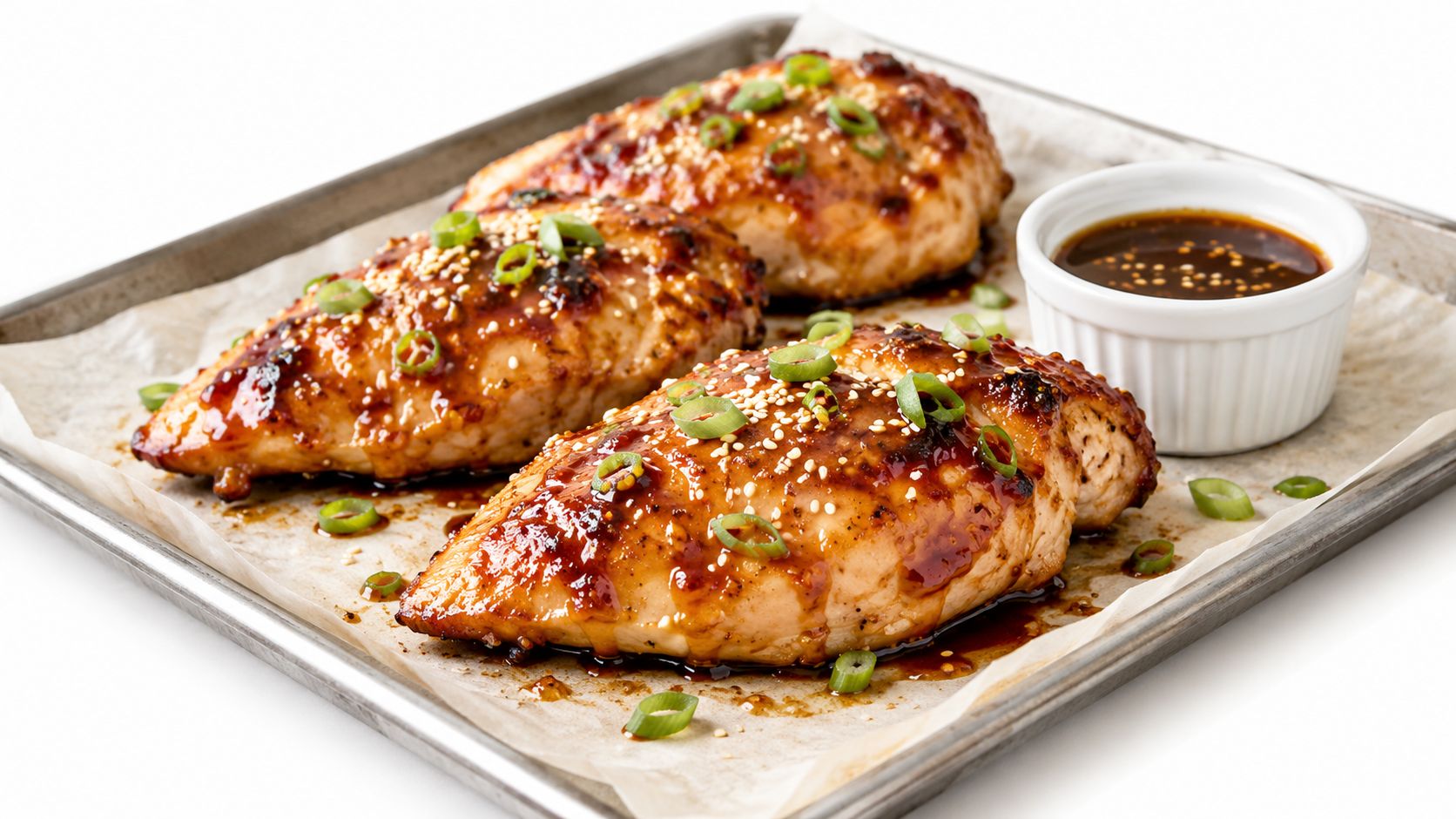
8. Teriyaki-Glazed Baked Chicken Breast with Sesame
Teriyaki-style glaze brings sweet, salty, and aromatic flavors to an oven-baked chicken breast. Simmer soy sauce, mirin, ginger, and garlic briefly before using it, then let the mixture cool so it clings instead of running off the chicken. Sesame seeds and sliced scallions add nutty flavor and freshness at the end.
Reserve part of the glaze before it touches the raw chicken. Use that clean portion for serving, while the rest coats the meat during cooking. Brush the chicken again partway through baking to build a glossy surface, but watch the oven closely because sugars can darken quickly.
Place the baking sheet where drips won't fall onto the oven floor, and use a thermometer to confirm that the thickest section reaches 165°F. The glaze can look finished before the chicken is fully cooked. This is one reason visual cues alone aren't reliable for glazed poultry.
Texture adjustment: Slice the cooked chicken across the grain and spoon a small amount of reserved glaze over it at the table. The thinner slices take on more flavor without requiring a thick coating during baking.
Serve with steamed broccoli, edamame, cabbage, or rice. If you're using rice, keep the glaze measured because the sauce can become the dominant source of sweetness and salt in the bowl. Leftover slices make an easy rice bowl, noodle topping, or lettuce wrap. Toast sesame seeds in a dry skillet shortly before serving, and add the green parts of scallions at the last moment for the freshest finish.
8 Healthy Chicken Breast Meals Comparison
| Recipe | Implementation complexity | Resource requirements | Expected outcomes | Ideal use cases | Key advantages |
|---|---|---|---|---|---|
| Lemon Herb Grilled Chicken Breast with Mediterranean Vegetables | Low–Moderate, simple marinade; some grilling skill to avoid overcooking | Grill or grill pan (or oven), fresh herbs, lemon, olive oil, basic tools | Lean, flavorful, heart-healthy plate with roasted vegetables; ~280–320 kcal | Weeknight dinners, summer grilling, meal prep | Quick prep, adaptable, naturally gluten-free, minimal cleanup |
| Asian-Inspired Soy-Ginger Chicken Breast Stir-Fry | Low, fast high-heat technique with attentive timing | Wok/skillet, fresh ginger/garlic, low-sodium soy, assorted vegetables | Umami-forward, high-vegetable balanced meal; ~310–350 kcal | Busy weeknights, use-up vegetables, one-pan meals | Extremely quick, economical, highly customizable |
| Italian Herb-Crusted Baked Chicken Breast with Garlic | Low, oven-baked, forgiving timing | Oven, baking sheet, panko, Parmesan, Italian herbs | Crispy herb crust and golden exterior; ~310–340 kcal | Beginner cooks, batch cooking, family dinners | Crispy texture without frying, pantry-friendly, beginner-friendly |
| Spiced Mexican Lime-Cilantro Chicken Breast | Low, dry rub and pan-sear; heat control important | Skillet, spice pantry (cumin, chili), fresh lime and cilantro | Bold, bright flavor with low calories; ~220–260 kcal | Quick weeknights, tacos/bowls, family meals | No marinating required, versatile leftovers, budget-friendly |
| Garlic and White Wine Poached Chicken Breast | Low, gentle poaching (temperature control) | Pot, white wine or extra stock, aromatics (garlic, herbs) | Exceptionally moist, tender chicken; usable cooking liquid/stock; ~280–320 kcal | Beginners, meal prep, making sauces or soups | Hard to overcook, yields homemade stock, very forgiving |
| Spiced Yogurt-Marinated Tandoori Chicken Breast | Moderate, requires advance marinating and spice blending | Greek yogurt, tandoori spice blend, time for marinating (2–24 hr), oven/grill | Deeply flavored, tender, colorful result; ~290–330 kcal | Entertaining, flavorful meal prep, weekend cooking | Yogurt tenderizes, rich spice complexity, impressive results |
| Mustard and Herb Crusted Pan-Seared Chicken Breast | Moderate, requires good searing and crust adhesion | Skillet, Dijon mustard, fresh herbs, breadcrumbs, Parmesan | Golden, crispy crust and elegant presentation; ~340–370 kcal | Weeknight entertaining, special dinners | Sophisticated flavor, quick gourmet look, versatile sides |
| Teriyaki-Glazed Baked Chicken Breast with Sesame | Moderate, glaze reduction and timing to prevent burning | Oven, soy/mirin/ginger/garlic, sesame, baking sheet | Glossy caramelized glaze with tender interior; ~320–350 kcal | Family dinners, Asian-inspired menus, meal prep | Impressive glaze with minimal effort, batch-friendly, visually appealing |
Build Your Weeknight Chicken Rotation
Chicken breast works best as a flexible base rather than a complete meal by itself. A standard 100 g serving of cooked, skinless chicken breast provides about 165 calories and 31 g of protein, with roughly 3.6 g of fat and no carbohydrates, according to the USDA-linked nutrition reference compiled by Healthline's chicken calorie guide. Those figures apply to the chicken itself, not the oil, breadcrumbs, marinades, sauces, rice, or other ingredients added during cooking.
That distinction explains why preparation method matters. Simple grilled, baked, and poached chicken keeps the protein relatively lean, while added oil, breading, or a sweet glaze changes the energy and texture of the finished plate. Independent nutrition guidance also identifies skinless chicken breast as a low-saturated-fat protein and lists nutrients including potassium, phosphorus, selenium, niacin, and vitamin B6 in this chicken nutrition reference.
Choose the method according to the night you're planning:
- Grilling suits meal prep because the chicken pairs with roasted vegetables, salads, wraps, and grain bowls.
- Stir-frying is the fastest route when you have fresh vegetables and want everything cooked in one pan.
- Baking is useful when you want hands-off cooking, especially with a breadcrumb crust or a glaze.
- Pan-searing gives you the best browned surface, but it needs more attention and careful heat control.
- Poaching produces tender chicken for shredding, soups, salads, and sandwiches, though it won't create a crust.
- Yogurt marinating rewards advance planning with strong flavor and a tender texture.
- Glazing makes plain chicken more appealing, but sauces need portion awareness because sweetness and sodium can accumulate.
- Crusting adds a satisfying contrast, but the coating and oil make it less minimal than plain poultry.
Food Facts reporting also places chicken within a larger global poultry shift, with poultry supply rising from under 3 kg per person in 1961 to about 17 kg per person in 2022. You can read that historical context in this report on global chicken consumption. For everyday cooking, the practical lesson is simpler. Chicken breast is familiar and adaptable, but repeating the same dry preparation will eventually make even a useful staple feel boring.
Use the supplied calorie ranges for these recipes as estimates at the recipe level. Recalculate when you change the amount of oil, breadcrumbs, yogurt, glaze, cheese, or side dishes. Verify that chicken reaches 165°F internally before serving, particularly when the breast is thick, coated, stuffed, or covered with a dark marinade.
Plan the week with two contrasting methods. Pick one make-ahead option, such as grilled, poached, or yogurt-marinated chicken, and one quick option, such as stir-fried or pan-seared chicken. Prepare flexible sides that can move between meals, then repurpose leftovers in salads, bowls, wraps, or tacos. For more cookout planning ideas, use this unique cookout menu inspiration, and explore Just Cook It's Healthy Eating and Quick Dinners collections if you want more globally inspired digital recipes with clear home-kitchen instructions.
Just Cook It offers downloadable digital cookbooks and recipe collections built around everyday home cooking across global cuisines, including practical options for healthy chicken dinners and quick weeknight meals. Visit Just Cook It to browse recipes designed for reading on a phone, tablet, laptop, or e-reader and choose a collection that fits the way you cook.