Lentil soup is an easy way to combine legumes and vegetables in one filling meal. Lentils, beans, split peas, and whole grains provide most of the fiber, while vegetables add flavor, texture, and extra nutrients. With the right combination of ingredients, a simple pot of soup can make a satisfying lunch or dinner without needing much on the side.
The World Health Organization healthy diet fact sheet recommends adults get at least 25 grams of naturally occurring dietary fiber per day and eat at least 400 grams of fruits and vegetables daily. A legume-based soup can contribute to both goals in one meal. If digestion is also on your mind, explore protein and fiber meals for gut comfort.
The eight soups below are compared by the same practical measures: fiber per bowl, realistic weeknight timing, and the trick that helps keep each one flavorful and pleasant to eat. Choose based on your schedule and how much fiber you want from the bowl.
Table of Contents
- 1. Lentil and Vegetable Soup
- 2. Black Bean Soup
- 3. Split Pea Soup
- 4. Minestrone
- 5. Ribollita (Tuscan Bean and Bread Soup)
- 6. Harira (Moroccan Lentil and Chickpea Soup)
- 7. Mushroom and Barley Soup
- 8. Roasted Butternut Squash and White Bean Soup
- Fiber, Cook Time, and Best Use for Each High Fiber Soup
- Pick One Pot and Start Your High Fiber Soup Routine
1. Lentil and Vegetable Soup
A few carrots, an onion, and a bag of lentils are enough to start dinner. Brown or green lentils need no soaking and hold their shape in a chunky soup. Simmer them with celery, garlic, and tomato, then serve with whole-grain bread for a filling meal.
The Weeknight Math
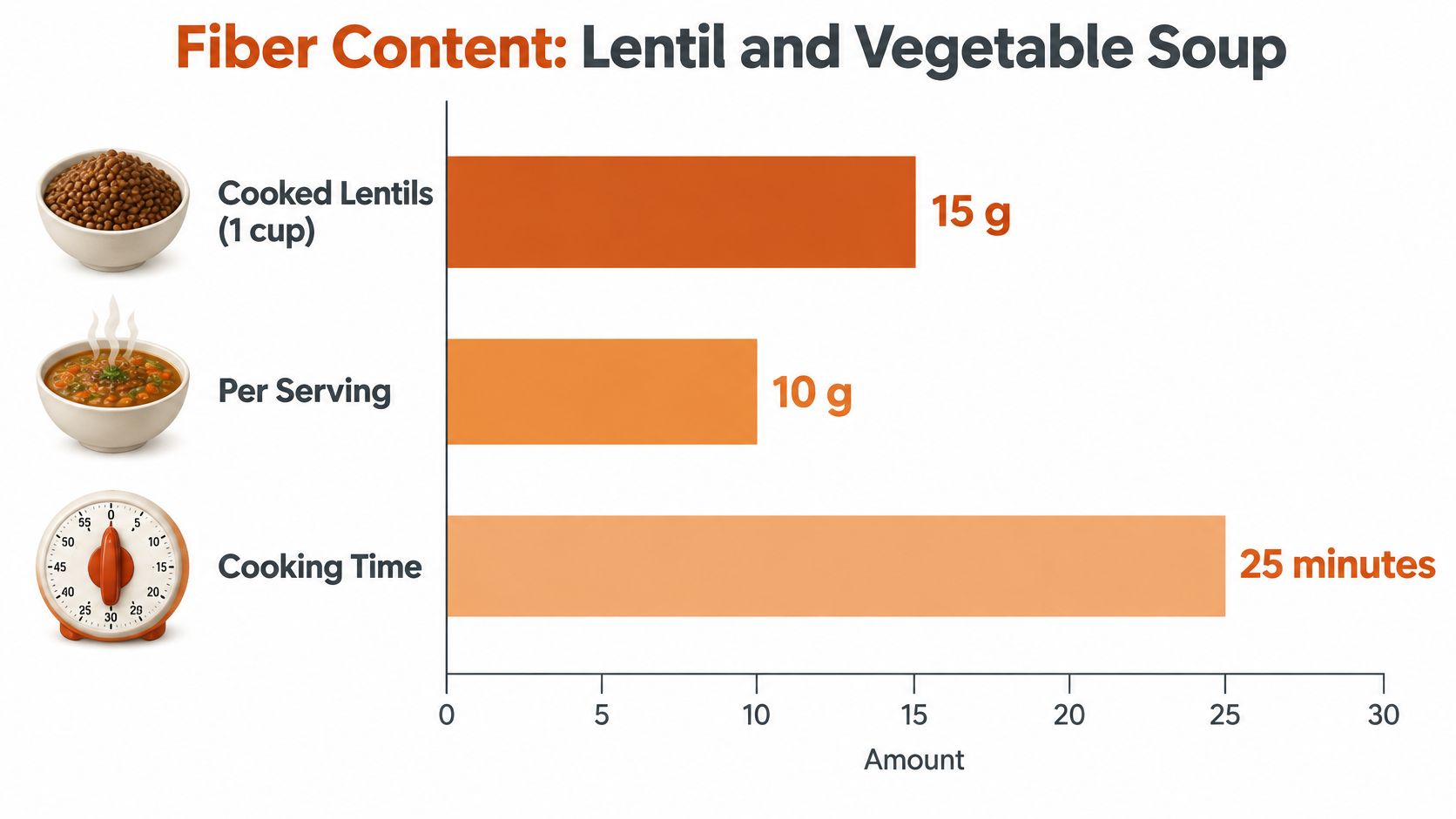
Allow 20 to 30 minutes of simmering after the aromatics soften. Chopping while the onion cooks keeps the timing realistic on a weeknight. A bowl made with lentils and vegetables provides an estimated 10 to 15 grams of fiber, depending on the serving size and how much lentil goes into each bowl.
Red lentils cook faster and break down into the broth. That softer texture suits Turkish mercimek çorbası with lemon and mint, or an Indian dal-style soup with turmeric. For rinse, liquid-ratio, and doneness tips, use this guide to cook lentils without turning them to mush.
- Sauté first: Cook onion, carrot, and celery in olive oil for 5 to 7 minutes to build flavor.
- Rinse the lentils: A quick pass in a sieve removes dust and stray debris.
- Add greens late: Stir in spinach or chard near the end so it wilts without turning dull.
- Thicken smartly: Blend about one cup of soup and stir it back in for body without flour.
Practical rule: Add lemon juice or vinegar at the end. The acidity brightens the lentils, while long simmering can dull that flavor.
Use any greens left in the fridge, but add them only in the final minutes. The soup reheats well for lunch, though it thickens as it sits; loosen leftovers with a splash of water or broth.
2. Black Bean Soup
Black bean soup suits a weeknight when you want a hearty bowl without a long simmer. Build smoke and warmth first, then blend only part of the pot. The result is a thick base with whole beans for texture.
Cuban-style sopa de frijoles negros often uses cumin and a little sherry vinegar; a Tex-Mex version can bring more chipotle and tortilla strips. Either way, black beans do the fiber-heavy lifting. A PMC review on dietary fiber guidance reports at least 4.5 grams of fiber per half cup of cooked legumes. Two cans of beans make a substantial contribution to a pot.
Canned Weeknight Version or Dried Weekend Batch
Canned beans keep this soup practical for a busy evening. Dried beans take more planning, but their cooking liquid adds body. For the dried route, follow this guide to cooking beans from scratch, and reserve some of the cooking liquid for the soup.
Bloom cumin and smoked paprika in hot oil for about 30 seconds before adding liquid. Rinse and drain canned beans to reduce surface sodium, then choose low-sodium stock so you can control the seasoning. Blend roughly half the soup and stir it back in. Finish with lime off the heat to keep its brightness.
Serve with rice, avocado, and a spoonful of yogurt for a filling meal. Leftovers thicken in the fridge and work well as a burrito filling.
3. Split Pea Soup
Split pea soup is not fast, and I won't pretend otherwise. It's a slow simmer, a stir every now and then, and a pot that gradually thickens itself. In return, you get one of the heartiest bowls on this list with almost no active work.
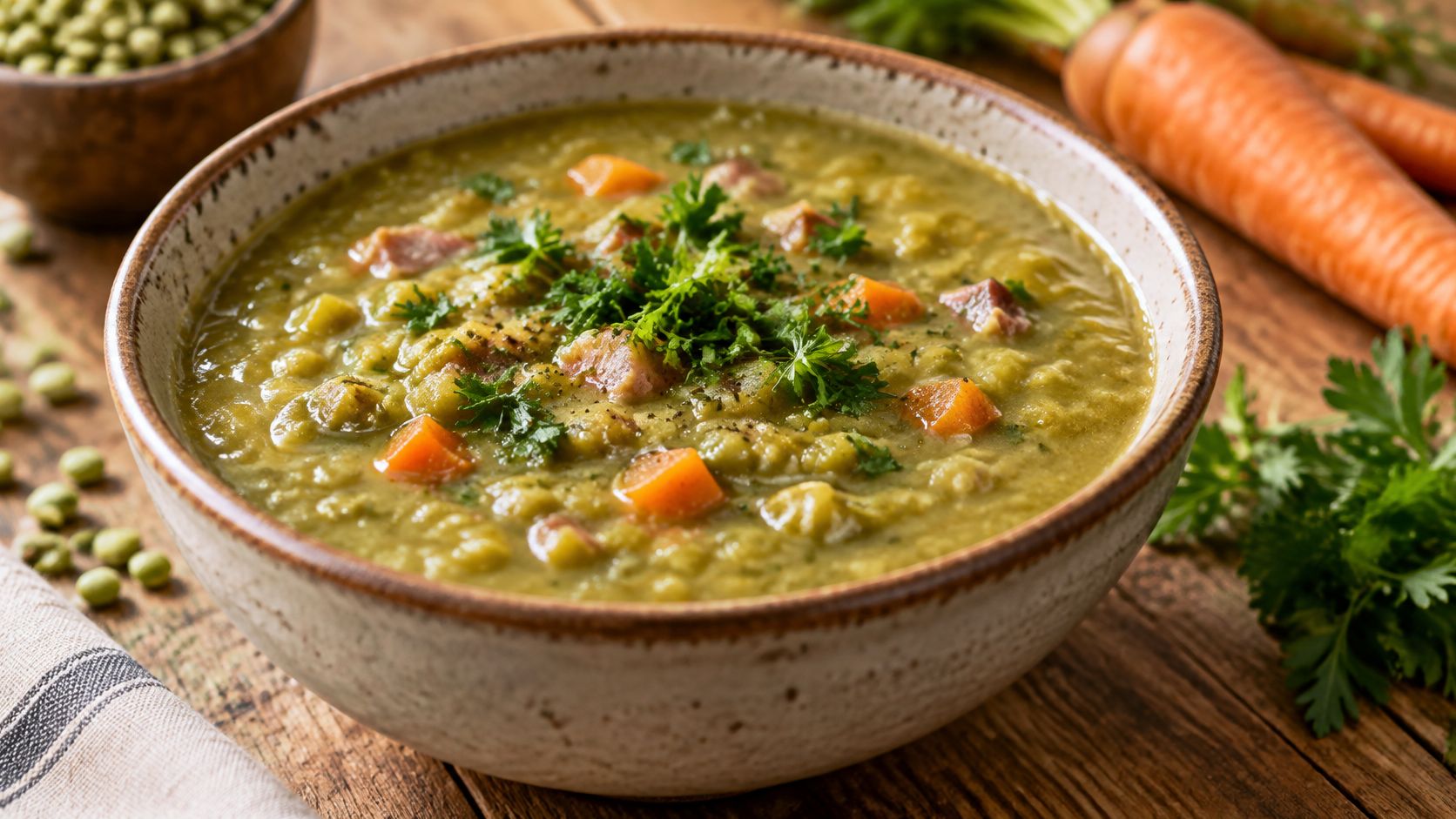
Dried green or yellow split peas break down as they cook, so the starch thickens the broth naturally. You don't need cream or flour. The classic American version uses a smoked ham hock, Dutch snert goes even thicker and often lands with sausage, and a vegetarian version can lean on smoked paprika plus lemon to replace that smoky depth.
Keep It From Catching on the Bottom
Sort and rinse the peas first. Small stones do show up in dried legumes, and finding one with your teeth ruins dinner. Once the pot is simmering, stir every 10 to 15 minutes, especially toward the end when it gets thick.
- Use the hock properly: Simmer it whole, pull it out, shred the meat, and return just the meat to the pot.
- Watch the salt: Smoked meat and stock both bring sodium, so season properly only at the end.
- Balance the sweetness: Peas and carrots turn sweet, so a splash of vinegar or lemon before serving matters.
- Choose your texture: Leave it chunky, or run an immersion blender through part of the pot for a smoother finish.
This is your Sunday pot while laundry runs. Make it once, eat it twice, and freeze the rest in flat containers. It reheats thicker than it started, so keep extra water nearby.
4. Minestrone
Minestrone is a flexible choice when you want beans and vegetables in the same bowl. Its fiber comes mainly from the beans, with vegetables adding more. Hard vegetables like carrots need a head start; zucchini and other tender vegetables go in later.
Milanese-style minestrone can include rice, cabbage, and beans. A summer version might use zucchini, green beans, and basil. Choose vegetables that suit the season or what you have on hand.
The Pasta Trick That Saves Leftovers
Cook pasta separately and add it to each bowl. It takes an extra pot, but keeps the noodles from soaking up the broth in storage. Whole-wheat small pasta adds fiber; for a simpler, pasta-free version, add more rinsed beans. A Parmesan rind adds savory flavor, so you can adjust the salt after the broth simmers.
Add carrots early and zucchini near the end, so the zucchini stays distinct. For more ideas on using produce in everyday meals, browse these high fiber vegetable recipes.
For a weeknight, make the bean and vegetable base ahead, then cook pasta fresh when you serve it. That keeps the soup hearty without leaving you with swollen noodles and too little broth.
5. Ribollita (Tuscan Bean and Bread Soup)
Ribollita means reboiled. The soup is designed to rest and warm up again, which gives the bread time to thicken the broth and the flavors time to settle. Cannellini beans, kale or cavolo nero, cabbage, carrot, and stale bread make a hearty, stew-like bowl.
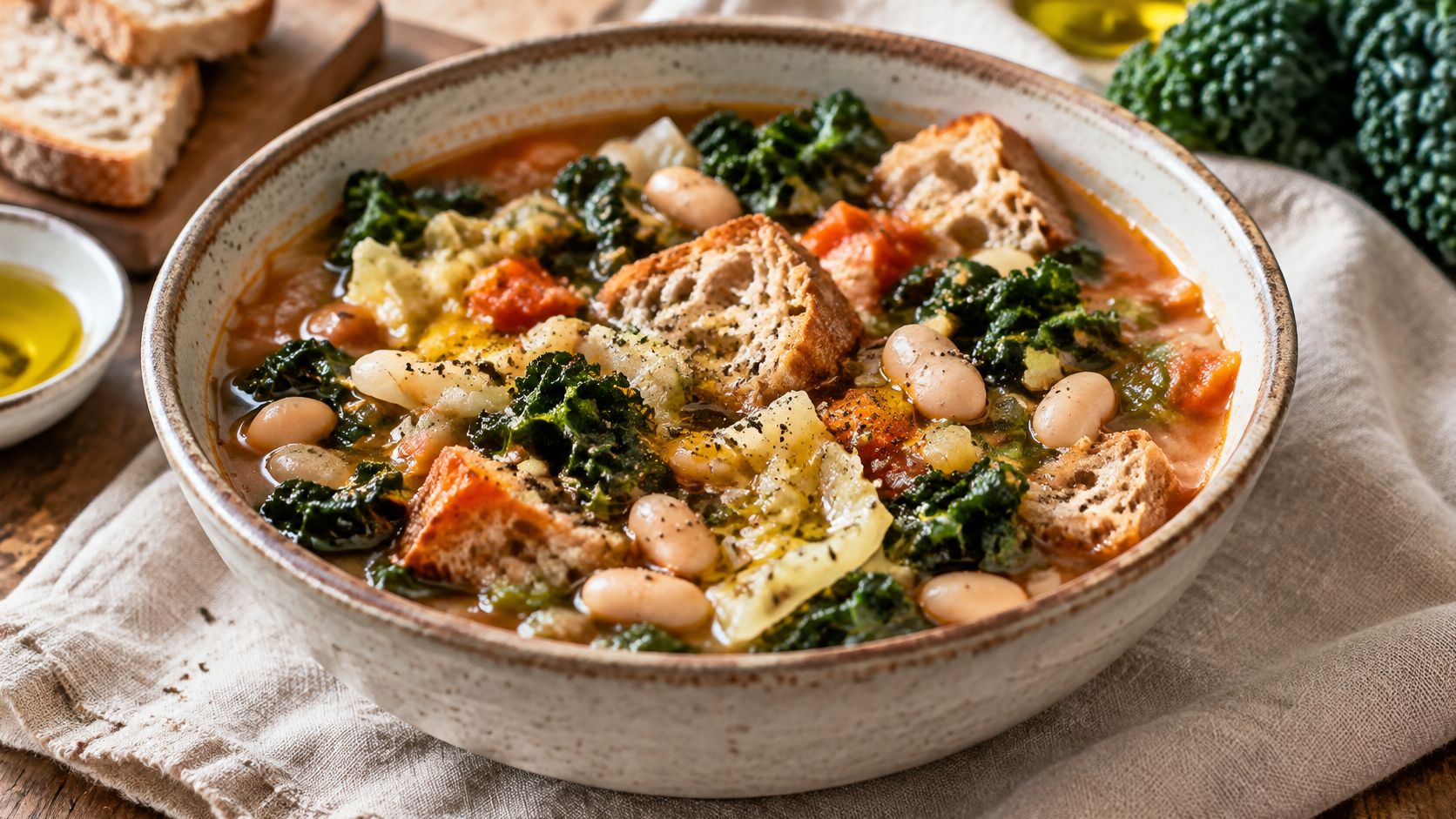
For a high-fiber bowl, the beans and greens do most of the work. Whole-grain country bread adds some fiber, too. Choose day-old country bread rather than soft sandwich bread: sturdy slices absorb broth and thicken the soup, while soft bread can dissolve into paste.
Build Flavor Slowly at the Start
Sauté onion, carrot, and celery slowly in olive oil before adding the other ingredients. That gives the base savory depth; rushing it can leave the soup tasting thin. Rinsed canned cannellini beans keep the cooking time manageable on a weeknight. Dried beans work well when you have more time.
Finish each bowl with fresh olive oil and black pepper. That last drizzle lifts the flavor without adding more salt.
A traditional Florentine bowl is thick enough for a spoon to nearly stand in it. For a less dense texture, add broth gradually as you reheat leftovers, stirring gently so the bread loosens without scorching. Cheese under the broiler is an optional finish.
Stale bread and kale are exactly what this soup is built for. Reheat it slowly the next day, adding a splash of broth if it has thickened too much.
6. Harira (Moroccan Lentil and Chickpea Soup)
Harira gives you two legumes in one pot, lentils and chickpeas, in a tomato broth warmed with ginger, turmeric, and cinnamon. It's commonly served to break the fast during Ramadan, often with dates and bread. That pairing makes sense the first time you taste it. The soup is savory and spiced, and it satisfies.
The fiber case is strong because you're not relying on one ingredient. Lentils thicken the broth as they soften, while chickpeas stay intact and give you something to bite. Celery, onion, tomatoes, and a big handful of fresh herbs keep it from feeling heavy.
Make It Weeknight Realistic
Use canned chickpeas. That single swap cuts the timeline dramatically and nobody at the table will mind. Red lentils cook quickly and melt in, while brown lentils keep more shape, so pick based on the texture you want.
- Add herbs late: Cilantro and parsley go in near the end so they taste fresh, not stewed.
- Use lemon at the table: A squeeze per bowl balances the warm spices better than lemon cooked into the pot.
- Try the egg finish: A beaten egg stirred into hot soup at the end makes it silky, if you like that texture.
- Serve with bread: Whole-grain bread for dipping turns a good bowl into a full meal.
One caution applies to every soup here, but harira makes it obvious. If you aren't used to eating many legumes, start with a smaller bowl. A sudden jump can leave you uncomfortable, and a smaller first serving lets you enjoy the leftovers the next day instead of swearing off chickpeas.
7. Mushroom and Barley Soup
Barley is the grain to pick when you want chew. It doesn't disappear like rice and it doesn't go soft like small pasta. Paired with browned mushrooms, thyme, carrot, and celery, it makes a soup that feels meaty even when the pot is vegetarian.
Hulled barley has more fiber than pearled, but it takes longer to cook. Pearled barley is the practical weeknight choice and still brings real fiber to the bowl. Barley also contains beta-glucan, a soluble fiber, which is one reason whole grains show up so often in fiber-focused cooking. The WHO guideline on carbohydrate intake hosted by NCBI describes the evidence-based benefit range as especially pronounced around 25 to 29 grams per day, with evidence extending toward 40 grams per day.
Polish krupnik and Scottish barley broth show how flexible this base is. Lamb, chicken, or no meat at all, the method stays the same.
Brown the Mushrooms or Don't Bother
Cook mushrooms in batches in a hot pan. Crowd them and they'll steam, pale and squeaky, instead of browning. That browning is your flavor base, so give them space and leave them alone until they color.
Toast the barley briefly in oil before adding broth for a nuttier taste. Finish with parsley, black pepper, and a splash of sherry vinegar if the pot tastes too earthy. When you reheat leftovers, add water or broth without debating it. Barley keeps absorbing liquid in the fridge, and yesterday's soup can look like porridge by morning. It loosens right back up on the stove.
8. Roasted Butternut Squash and White Bean Soup
Blended squash soup on its own tastes sweet and a little thin. White beans fix both problems. They add fiber and body, they blend smooth, and nobody picks them out, which makes this the easiest bowl on the list for picky eaters.
Roast the squash at high heat until it's golden at the edges. That caramelization is flavor you can't get from simmering raw cubes in broth. Pre-cut squash from the store shortens prep a lot, and it's the version I'd choose on a workday without any guilt.
Blend It Smooth, Then Fix the Sweetness
Simmer the roasted squash with navy or cannellini beans, onion, garlic, and sage, then blend. An immersion blender in the pot is fastest. If you use a countertop blender, work in batches and vent the lid so steam escapes safely.
- Add acid: Lemon juice or apple cider vinegar balances the squash's sweetness.
- Use the bean liquid carefully: A little adds body, too much can taste tinny, so start with rinsed beans and broth.
- Finish with heat: Smoked paprika or a pinch of chili flakes keeps it from tasting like baby food.
If white beans in soup are your thing, this sausage, kale, and cannellini bean soup recipe takes the same beans in a chunkier, heartier direction. On a cold Sunday, I'd roast a double tray of squash, blend one batch now, and freeze the rest of the squash for a faster pot later.
Fiber, Cook Time, and Best Use for Each High Fiber Soup
Fiber estimates below are based on typical quantities of beans, lentils, vegetables, and grains per serving. Actual amounts vary with the recipe and serving size. Use the cook times to choose a soup that fits your evening, then adjust seasoning and texture as it cooks.
| Soup | Estimated Fiber per Serving, Based on Typical Ingredient Quantities | Cook Time | Best For |
|---|---|---|---|
| Lentil and Vegetable Soup | Approximately 8–12 g | 20–30 minutes | Quick, budget-friendly weeknight meals |
| Black Bean Soup | About 7–10 g | About 30 minutes with canned beans | Smoky, filling meals with pantry staples |
| Split Pea Soup | About 8–10 g | 45–60 minutes | Thick, hearty comfort food |
| Minestrone | About 8–12 g | About 45 minutes | Flexible one-pot meals using seasonal vegetables |
| Ribollita (Tuscan Bean and Bread Soup) | About 9–12 g | 60–90 minutes | Hearty meal prep and using day-old bread |
| Harira (Moroccan Lentil and Chickpea Soup) | About 8–11 g | 60–90 minutes with dried legumes; about 40–50 minutes with canned | Warming, spiced meals and make-ahead cooking |
| Mushroom and Barley Soup | About 6–9 g | 45–60 minutes | Comforting, whole-grain meals |
| Roasted Butternut Squash and White Bean Soup | About 7–10 g | 45–60 minutes, including roasting and blending | Creamy, dairy-free autumn meals |
For the quickest high-fiber bowl, choose lentil soup or black bean soup made with canned beans. Split peas, ribollita, and Harira need more time for their ingredients to soften and their flavors to come together. For a smooth soup, blend only part of the pot; for a thicker bean or lentil soup, simmer uncovered and stir often so the bottom does not catch.
Pick One Pot and Start Your High Fiber Soup Routine
Don't try to cook all eight. That's how good intentions die by Thursday. Pick one fast pot and one make-ahead pot for the week, and let leftovers do the rest of the work.
For the fast option, lentil and vegetable soup is hard to beat. Split pea takes longer on the stove, but most of that time is hands off, so it suits a slow evening when you're home anyway. For the make-ahead option, choose ribollita if you want something that improves after a night in the fridge, or minestrone if your fridge is full of odds and ends. Freeze the minestrone base without pasta and cook the pasta fresh when you serve it.
A Small Routine You Can Actually Keep
Pair each bowl with whole-grain bread or a handful of greens dressed with lemon and olive oil. That small addition rounds out the meal and adds a bit more fiber without another recipe. Keep canned beans, dried lentils, split peas, and barley in the pantry, and you'll always be one onion away from soup.
Ramp up gradually if legumes are new to your routine. The NCBI Bookshelf guidance on fiber intake recommends increasing fiber gradually over several weeks, targeting roughly 20 to 30 grams per day with adequate fluid. Start with smaller bowls, use rinsed canned legumes, and keep the broth generous. Fully softened beans and lentils are also easier to enjoy than ones that are still firm in the middle.
There's a real gap to close, by the way. A USDA Agricultural Research Service analysis of national dietary data found average fiber intake among people aged 2 and older was only 16 grams per day. You don't fix that with one perfect meal. You fix it with a pot you like enough to make again next week.
Start with the soup your household already almost likes, then swap in one higher fiber ingredient. Beans into minestrone, barley into mushroom soup, greens into lentils. Small swaps stick.
If you want more soup ideas alongside fermented foods in one place, our Nourish Your Gut digital cookbook includes a soups chapter among its 10 chapters, with 75 recipes spanning beverages, appetizers, salads, mains, sides, desserts, snacks, and sauces. It includes recipes such as Chicken Bone Broth with Ginger and Scallions and Homemade Sauerkraut with Caraway.
Pick your pot tonight. Lentils if you're tired, ribollita if the bread is stale, harira if you want something spiced. Cook it once, eat well twice, and let the routine build itself.
If these high fiber soup recipes sound like your kind of weeknight cooking, you'll find more of it at Just Cook It, where we publish instant-download digital cookbooks with kitchen-tested, everyday recipes you can read on any device. Browse the collections, grab a soup-friendly title, and start cooking tonight at Just Cook It.