Pasta has become a mainstream global staple inside a large and growing category. One market summary estimated 8.8 million tons of worldwide pasta-products consumption in 2024, with the market valued at $17.6 billion (IndexBox's 2024 pasta market overview). The recipes below move from fast, simple emulsions to tomato sauces, cured-meat dishes, and filling bean-based meals. Choose according to the time you have, what's available, how hungry you are, and which technique you're ready to practise.
A useful core pantry includes:
- Pasta: Spaghetti, bucatini, penne, or small soup shapes.
- Flavor builders: Olive oil, garlic, dried chili, and black pepper.
- Canned goods: Whole tomatoes, crushed tomatoes, tuna, and beans.
- Richness: Eggs, Pecorino Romano, or Parmesan.
- Finishing ingredients: Extra olive oil, dried oregano, capers, olives, or anchovies if you keep them.
Table of Contents
- 1. Cacio e Pepe Solves the Emulsion Challenge
- 2. Aglio e Olio Teaches Gentle Heat
- 3. Pasta al Tonno Adds Protein Without Extra Preparation
- 4. Pasta Pomodoro Builds Flavor Through Reduction
- 5. Pasta all'Arrabbiata Makes Dried Chili Taste Layered
- 6. Pasta Carbonara Develops Heat Control
- 7. Pasta all'Amatriciana Layers Cured Meat and Tomato
- 8. Pasta e Fagioli Creates a Batch-Friendly Meal
- Pantry Pasta: 8-Recipe Comparison
- Build Your Pantry Pasta Rotation
1. Cacio e Pepe Solves the Emulsion Challenge
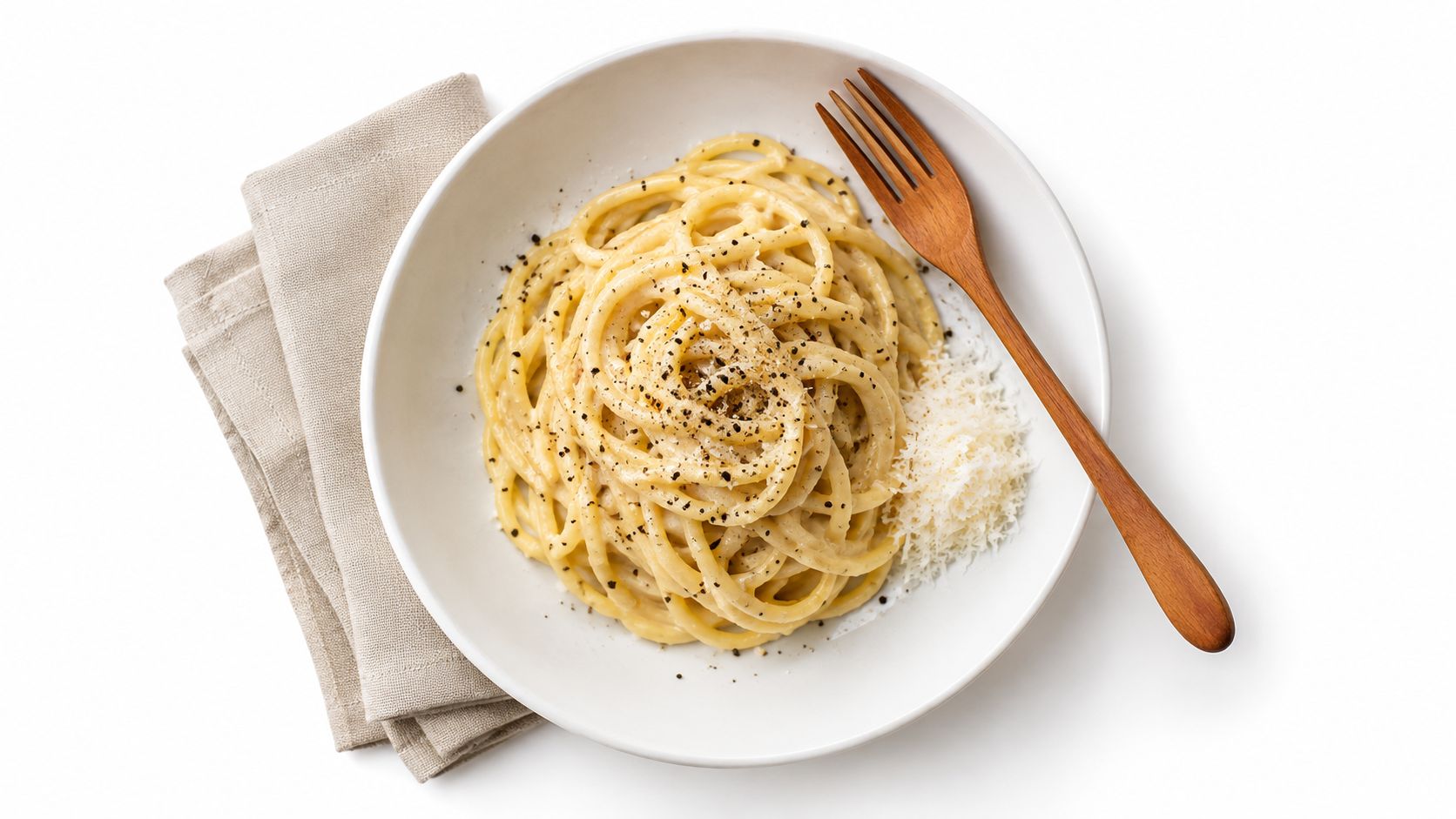
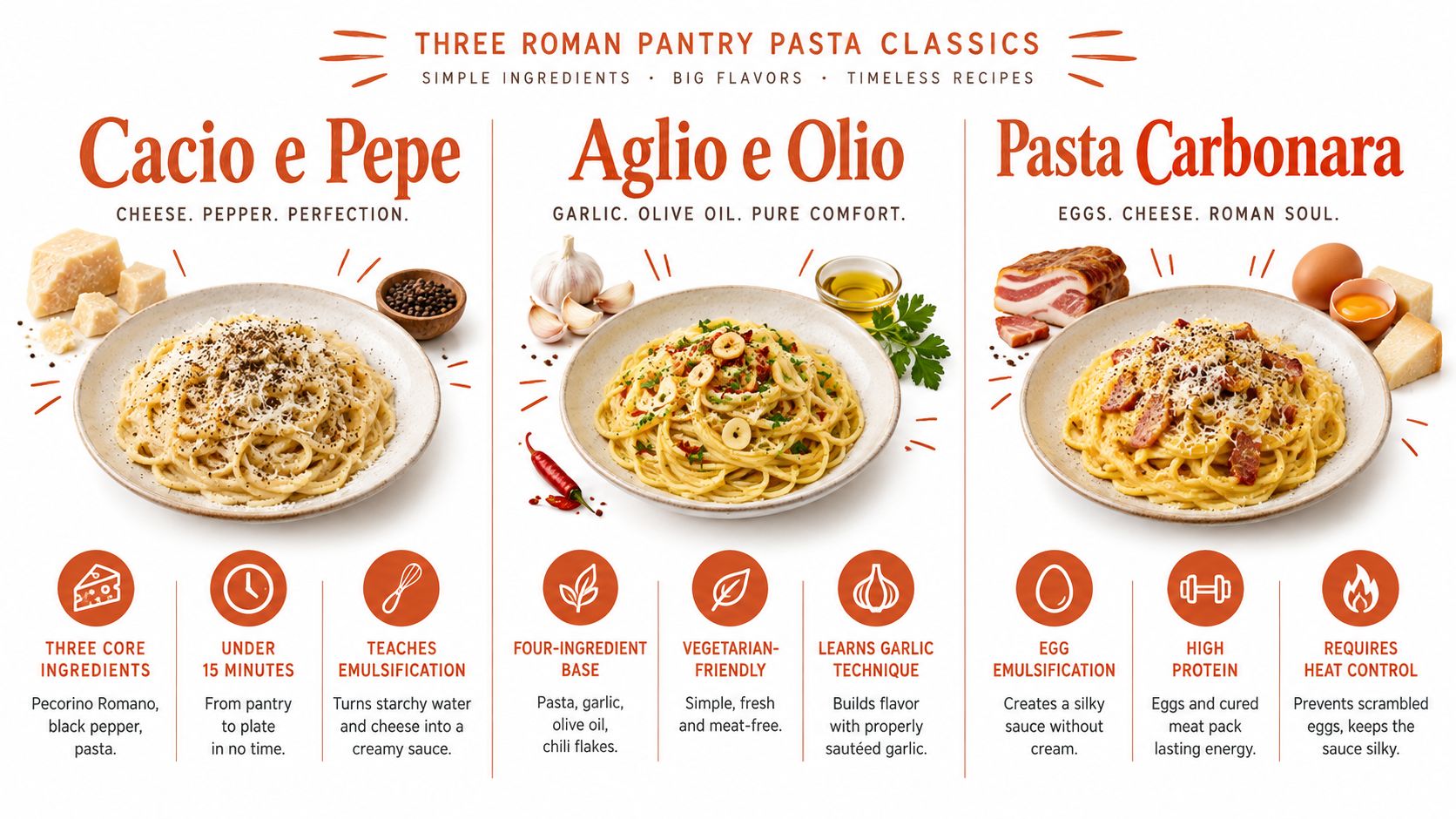
Cacio e pepe is the pantry pasta recipe to make when the cupboard looks nearly empty but you still have Pecorino Romano and black pepper. The ingredient list is short, yet the result depends on timing. You're not melting cheese directly over a hot burner. You're combining grated cheese, pepper, and starchy water into a smooth emulsion that coats the pasta.
The pasta water matters because cooking releases starch into it. That starch helps bind water and fat while giving the sauce enough body to cling to each strand. Expert pantry-pasta formulas use reserved cooking liquid to build a glossy sauce rather than relying on cream or a ready-made jar (Bon Appétit's pantry pasta recipe).
Practical rule: Keep the cheese mixture away from direct heat. Excessive heat can make Pecorino seize into clumps instead of turning creamy.
How to control the texture
Use freshly cracked black pepper, not stale pre-ground pepper. Toast it in a dry pan for about 30 seconds, just until it smells fragrant. Cook the pasta until it's 1 to 3 minutes short of the package instruction, then reserve at least 1 cup of pasta water before draining. Those quantities are useful working benchmarks for a starch-led finish, not rigid laws.
Put the drained pasta into the pepper pan off the heat. Add finely grated Pecorino gradually, tossing constantly and loosening with small splashes of water. The sauce should look fluid at first, then tighten as the starch and cheese combine. Serve immediately in warm bowls, because the emulsion thickens as it cools.
If Pecorino tastes too assertive, replace part of it with Parmesan. The sauce will be milder and slightly less salty, so taste before adding more cheese. For another kind of pantry inspiration, Fire & Smoke: 75 BBQ & Grilling Recipes | Digital PDF focuses on grill and smoker recipes, including breads, sauces, sides, and desserts.
For more ideas built around a small ingredient list, see these simple ingredient recipes.
2. Aglio e Olio Teaches Gentle Heat
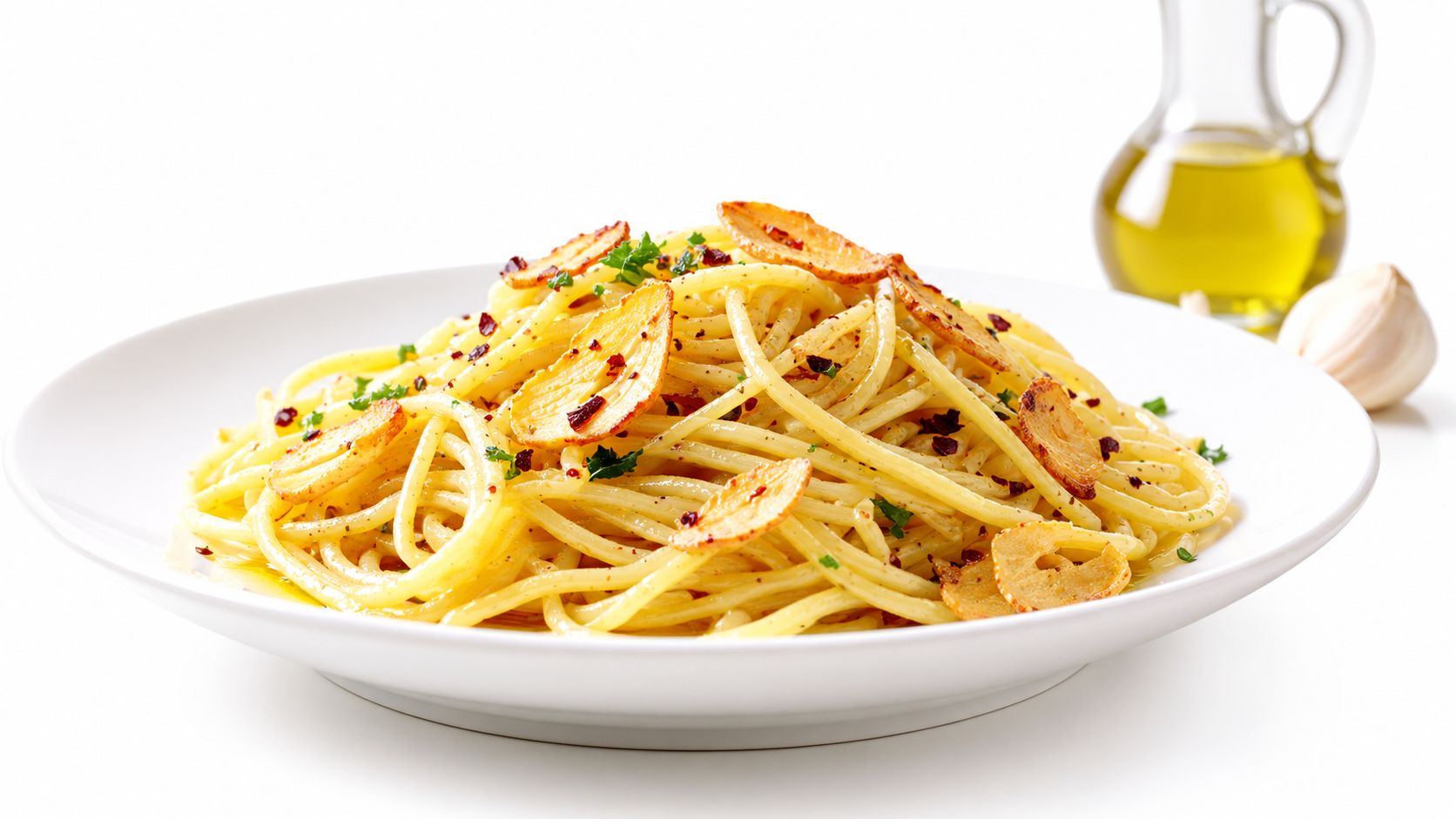
Aglio e olio is a good first choice when you want dinner quickly and have little more than garlic, oil, dried chili, and pasta. Its simplicity leaves no place for careless heat. Garlic that cooks too aggressively turns bitter, while garlic warmed slowly in olive oil perfumes the fat and creates the dish's main sauce.
Slice the garlic evenly so thin pieces cook at the same pace. Start the oil in a cool skillet or over low heat, then add the garlic before it develops color. The target is fragrant and pale golden, not dark brown. Pantry pasta recipes often rely on this kind of infused fat, where a small amount of garlic carries flavor through the entire dish.
The kitchen steps
- Cook the pasta: Boil it until it remains slightly firm, stopping 1 to 3 minutes before the package timing and reserving about 1 cup of the water.
- Infuse the oil: Warm olive oil gently with thinly sliced garlic for about 3 to 4 minutes. Remove the pan from the heat as the garlic turns golden.
- Add the heat: Stir in dried chili flakes during the final 30 seconds so they release flavor without scorching.
- Build the sauce: Toss the hot pasta with the garlic oil off the heat. Add pasta water a little at a time until the strands look glossy rather than greasy.
If you want a fuller flavor, add anchovies while the oil is warm and let them dissolve. Capers bring acidity and salt, while a spoonful of tomato paste gives the oil a deeper, sweeter character. Parmesan can add body, but it changes the clean, oil-based profile and should be added only after the sauce has emulsified.
The main trade-off is richness. Aglio e olio is fast and economical, but it doesn't contain a substantial protein source. Add drained white beans, chickpeas, or tuna when you need a more filling bowl. A little pasta water helps those additions become part of the sauce instead of sitting separately on top.
3. Pasta al Tonno Adds Protein Without Extra Preparation
Canned tuna turns a simple pasta into a more substantial meal without thawing meat or preparing a separate protein. Use tuna packed in olive oil when you have it, or use water-packed tuna and provide the missing richness with olive oil. Lemon, garlic, black pepper, and dried oregano keep the mixture bright rather than heavy.
The best texture comes from separating the tuna into large flakes instead of mashing it into a paste. Warm the oil with finely minced garlic, then combine it with the tuna and hot pasta. The pasta's heat softens the garlic and helps the oil, fish, and cooking water form a light coating.
Build a balanced tuna sauce
Start with olive oil, garlic, and optional anchovies. If you use anchovies, mince 1 or 2 fillets and let them dissolve into the oil. They won't make the finished pasta taste aggressively fishy. Instead, they deepen the savory base, especially when the tuna itself is mild.
Add lemon juice gradually. 2 to 3 tablespoons can brighten a full batch, but the right amount depends on how salty and oily the tuna is. Stir in the juice after the pan has cooled slightly, because a sharp boil can flatten its fresh flavor.
- For more salt and acidity: Add capers or chopped olives.
- For a softer sauce: Add extra olive oil and a splash of pasta water.
- For more substance: Fold in drained white beans or chickpeas.
- For a greener finish: Use fresh parsley, or dried oregano when fresh herbs aren't available.
Cook the pasta until just underdone, reserve the cooking liquid, and drain. Toss it with the warm oil mixture while it's still hot, then add the tuna so the flakes stay distinct. Loosen the sauce with water only as needed. Too much liquid can make canned tuna taste diluted, while too little leaves the pasta dry.
This is also a practical recipe for a limited-shopping weeknight. Fresh lemon is helpful but not essential. A small splash of vinegar can provide acidity, or you can use capers and their brine for a sharper pantry-only finish.
4. Pasta Pomodoro Builds Flavor Through Reduction
Pasta pomodoro gives canned tomatoes a fresh, focused taste through controlled cooking. Whole peeled tomatoes work especially well because you can break them down gradually, leaving some texture instead of starting with a completely smooth sauce. Garlic and olive oil create the base, while basil and Parmesan provide the finishing lift.
The sauce needs time to lose excess water. Keep it at a bare simmer in an uncovered pan and stir occasionally. A vigorous boil can make the tomato sauce splatter and cook unevenly, while a quiet simmer concentrates it without scorching the garlic.
Make the tomato base
Warm olive oil with garlic until fragrant, then add the tomatoes. Crush whole tomatoes by hand as they enter the pan or break them apart with a wooden spoon. Season early, within the first few minutes, so the tomatoes begin to soften and release their juices. Simmer uncovered for about 20 to 30 minutes, until the sauce thickens slightly.
Cook the pasta in a separate pot and stop before it reaches full tenderness. Transfer it to the tomato sauce with a splash of reserved pasta water. Finish cooking the pasta in the sauce, tossing until the liquid coats the noodles instead of collecting at the bottom of the pan.
Taste before salting again. Canned tomatoes vary in saltiness, and Parmesan adds more seasoning at the end.
Add basil during the final minute if you have fresh leaves. Dried basil can go into the sauce earlier, though it produces a warmer, less vibrant flavor. A final spoonful of olive oil rounds out the acidity. If the tomatoes taste sharp, longer gentle cooking usually helps more than adding sugar.
Penne, rigatoni, and spaghetti all work, but the sauce should determine the shape. Use long pasta for a silky, light coating. Choose a short shape when you want tomato pieces and thicker sauce to collect in the ridges. For another tomato-focused approach, compare these roasted cherry tomato techniques.
5. Pasta all'Arrabbiata Makes Dried Chili Taste Layered
The same dried chili can taste fragrant and rounded or sharp and aggressive. Arrabbiata depends on the oil carrying that flavor through the tomato sauce. Gently heating the chili first works like steeping tea: the fat extracts its aroma, then the tomatoes spread the heat across every bite.
Whole dried red chilies give you more control. Slice them into rings and remove some seeds for a milder sauce. Crushed flakes are faster and distribute heat evenly, although they can create hotter pockets. Use the form already in your cupboard, then adjust the quantity rather than chasing a precise variety.
Build the sauce in stages
Warm olive oil over medium heat. Add the chili and cook for 2 to 3 minutes, until the oil turns reddish and the pepper smells fragrant. Lower the heat if the chili darkens quickly. Add minced garlic and cook for about 30 seconds, just until aromatic. Garlic that browns at this point can make the sauce bitter.
Stir in crushed canned tomatoes and bring the mixture to a steady simmer. Cook uncovered for roughly 15 minutes, giving the tomatoes time to lose their raw edge while the chili oil blends into the sauce. The sauce should look cohesive, not watery. Taste near the end, since concentration can make the heat seem stronger.
Cook the pasta until firm in the center. Add it to the sauce off the heat, then toss with a small splash of pasta water until the sauce moves smoothly around the noodles. Add salt carefully if the canned tomatoes are already seasoned.
For a softer heat, remove the seeds and use less chili. Tomato paste added with the garlic gives the sauce a darker, fuller tomato flavor. Olives, capers, or a small anchovy add savory depth when the pantry allows. More pasta water and vigorous tossing create a silkier texture without cream, though too much water will dilute the chili.
Arrabbiata suits shelf-stable cooking because garlic, oil, tomatoes, and dried pepper provide a complete base. Fresh basil, parsley, or lemon can brighten it, but none is required for a satisfying bowl.
6. Pasta Carbonara Develops Heat Control
Carbonara is the recipe to choose when eggs, aged cheese, black pepper, and pancetta or guanciale are available. It looks luxurious because the sauce is glossy and rich, but it contains no cream. Egg yolks, rendered pork fat, grated cheese, and starchy pasta water create the texture.
The main challenge is temperature. The pasta must be hot enough to gently cook the egg mixture, but the pan must be off the burner so the eggs don't scramble. A large bowl gives you room to toss constantly and distribute heat evenly.
Prevent scrambled eggs
Dice the pancetta or guanciale and cook it over medium heat until the fat renders and the edges crisp. This can take about 10 minutes, depending on the size of the pieces. Turn off the heat while the pasta cooks, and whisk the egg yolks with finely grated Pecorino and plenty of black pepper.
Reserve around 1½ cups of pasta water before draining. Combine the hot pasta with the rendered pork fat in a large bowl, then add the egg-and-cheese mixture slowly while tossing. Loosen it with 2 to 3 tablespoons of water at a time until the sauce becomes silky.
The pan should be hot enough to carry the eggs through, not hot enough to fry them.
Don't return the pasta to direct heat after adding the eggs. If the sauce looks loose, keep tossing for a moment before adding more cheese. If it looks tight, add another small splash of water. The finished sauce should cling to the pasta and leave a smooth sheen, not form visible curds.
Guanciale brings a deeper, more pronounced pork flavor, while pancetta is an accessible substitute. Bacon can work in an emergency, but its smoke and salt change the character of the dish. Taste before adding salt because both the cured meat and Pecorino contribute plenty.
7. Pasta all'Amatriciana Layers Cured Meat and Tomato
A nearly empty cupboard can still produce a sauce with two distinct layers: cured pork for richness and tomato for brightness. Amatriciana builds depth through the pan rather than a long ingredient list. The pork fat carries the tomato flavor, while Pecorino gives the finished pasta a sharp, salty edge.
Cut guanciale into small cubes. Smaller pieces crisp more evenly as the fat renders, and chilling very soft meat first makes clean cutting easier. Cook it over medium heat for 8 to 10 minutes, stirring occasionally, until the fat has pooled and the edges are crisp. Moderate heat matters. High heat can darken the pork before enough fat has rendered.
Add whole canned tomatoes and crush them by hand, or choose crushed tomatoes for a smoother sauce. Simmer for 10 minutes. This brief reduction concentrates the sauce while keeping the tomato's fresh acidity. Taste before salting, since the cured meat and cheese may already provide enough seasoning.
Cook the pasta separately until slightly underdone. Transfer it to the tomato sauce and toss off the heat, using reserved pasta water to loosen the mixture if it feels thick. The liquid works like a small adjustment dial: add a splash at a time until the sauce coats the pasta and still moves easily. Stir in Pecorino just before serving, because direct heat can cause it to clump.
Choose the cured meat according to the flavor you want. Guanciale gives the richest texture and most pronounced pork flavor. Pancetta is a practical substitute with a cleaner, milder profile. Bacon works when necessary, though its smoke can dominate the tomato. Pecorino is sharper and saltier than Parmesan, while Parmesan creates a gentler, nuttier finish.
Bucatini, spaghetti, and rigatoni all hold this sauce well. If the guanciale is especially salty, delay seasoning until after the cheese is mixed in.
8. Pasta e Fagioli Creates a Batch-Friendly Meal
When a small bowl of pasta will not carry dinner, pasta e fagioli turns pantry staples into a substantial one-pot meal. Beans provide body and protein, while broth places the dish between soup and pasta. Canned beans suit a weeknight; dried beans make sense when you are planning ahead and have time to cook them separately.
Begin with olive oil, garlic, and whatever onion or dried herbs you have. Pancetta can add a savory, meaty base, though the soup has enough structure without it. Add canned tomatoes and broth, then stir in drained, rinsed beans. Rinsing removes loose canning liquid, so the broth's salt and flavor stay easier to control.
The ratio sets the character of the dish. For a soup-like bowl, start with about 2 parts broth to 1 part pasta, then adjust for the pasta shape and your preferred thickness. Small pasta absorbs liquid quickly, much like a sponge, so keep extra broth or water nearby. Add the pasta during the final 10 minutes, rather than at the beginning. Stir occasionally to prevent sticking, but handle the beans gently. Some should stay whole, while others break down naturally and thicken the broth.
Finish with olive oil and grated Parmesan once the pasta is tender. For a vegan version, use vegetable broth and rely on olive oil for richness. Extra beans or chickpeas increase the protein and change the texture. Dried chili added with the garlic brings heat, while mashing a few beans against the pot creates a thicker, creamier broth. For a lighter result, add broth just before serving instead of reducing the soup aggressively.
Bean choice gives you another practical adjustment. Cannellini beans soften into a creamy texture, chickpeas remain firmer and more distinct, and red kidney beans contribute a stronger earthy flavor. Combine what is available, then adjust the broth because different beans and pasta shapes absorb liquid at different rates. For more practical bean combinations, explore these easy recipes with beans.
This dish also suits planned leftovers. Pasta and beans continue absorbing liquid as they stand, so store extra broth separately when possible. During reheating, add water or broth and correct the salt after the texture loosens. The second serving needs its own adjustment rather than being treated as identical to the first.
Pantry Pasta: 8-Recipe Comparison
| Dish | Implementation Complexity | Resource Requirements | Expected Outcomes | Ideal Use Cases | Key Advantages |
|---|---|---|---|---|---|
| Cacio e Pepe (Cheese and Pepper Pasta) | Low ingredient simplicity; high technique/timing sensitivity | Minimal pantry staples; high-quality Pecorino and pasta water required | Silky cheese emulsion; delicate pepper-forward flavor; ~12–15 min | Skill-building, quick dinners, minimalist cooking | Teaches emulsification; very budget-friendly; fast |
| Aglio e Olio (Garlic and Oil Pasta) | Low; gentle temperature control for garlic | Simple pantry items; quality olive oil matters | Aromatic oil-coated pasta; light savory heat; ~12–15 min | Quick vegetarian main/side, beginner technique practice | Extremely accessible; inexpensive; versatile additions |
| Pasta al Tonno (Tuna Pasta) | Low; simple assembly and emulsification | Shelf-stable canned tuna (best olive-oil packed), lemon, garlic | Protein-forward, bright pasta; very quick (10–12 min) | Emergency meals, fast weeknight protein, pantry cooking | High-protein from canned staples; fastest prep; long-lasting ingredients |
| Pasta Pomodoro (Tomato Pasta) | Moderate; sauce-building and simmering required | Canned tomatoes, garlic, olive oil, basil; 20–30 min simmer | Bright, concentrated tomato sauce; consistent year-round results | Learning sauce fundamentals, batch cooking, vegan meals | Relies on quality canned tomatoes; freezes well; foundational technique |
| Pasta all'Arrabbiata (Angry Pepper Pasta) | Low–Moderate; oil infusion and controlled simmer | Dried chilies, canned tomatoes, garlic, olive oil | Spicy, vibrant tomato-chili sauce; heat adjustable; ~20 min | Spicy-dish lovers, pantry-based weeknights, technique for spice infusion | Shelf-stable chilis; controllable heat; bold flavor with minimal ingredients |
| Pasta Carbonara (Egg and Pancetta Pasta) | High; precise temperature and timing critical | Eggs, pancetta/guanciale, Pecorino, starchy pasta water; quality cured meat preferred | Luxurious custard-like sauce; protein-rich, restaurant-style result; ~12–15 min | Intermediate cooks, special dinners, technique mastery | Achieves creaminess without cream; teaches advanced emulsification |
| Pasta all'Amatriciana (Guanciale, Tomato, and Pecorino Pasta) | Moderate; proper rendering of guanciale and sauce balance | Guanciale (or pancetta), canned tomatoes, Pecorino; specialty ingredient may be needed | Layered savory-tangy sauce; hearty, complex flavor; ~20–25 min | Adventurous home cooks, learning cured-meat technique, weekend meals | Distinct guanciale flavor; balanced savory profile; impressive result |
| Pasta e Fagioli (Pasta and Beans) | Moderate; longer simmering and bean handling | Dried or canned beans, tomatoes, pasta, broth; optional pancetta | Hearty, nutritious soup-pasta; feeds many; improves with time; 45–60 min | Meal prep, family meals, budget-friendly comforting main | Very economical; high fiber/protein; freezer- and batch-friendly |
Build Your Pantry Pasta Rotation
A useful pantry pasta rotation starts with the decision you need to make at dinnertime. Choose Aglio e Olio when speed and simplicity matter most. Choose Pasta al Tonno when you want a fast meal with a shelf-stable protein. Both can be adapted with beans, capers, anchovies, or dried herbs, so they're forgiving when the cupboard is uneven.
Reach for Cacio e Pepe when Pecorino and black pepper are the strongest ingredients available. Choose Carbonara when you also have eggs and pancetta or guanciale, and you're ready to pay close attention to heat. Cacio e pepe teaches cheese emulsion, while carbonara develops confidence with egg-based sauces. Neither needs cream, but both depend on pasta water and careful finishing.
Canned tomatoes give you two different directions. Pasta Pomodoro is gentle, bright, and focused on slow reduction. Arrabbiata uses dried chili to add heat and a more assertive flavor. If you want a cured-meat option, Amatriciana adds rendered guanciale or pancetta to the tomato base, then finishes with Pecorino. Taste before salting because tomatoes, cured meat, cheese, tuna, capers, and olives can all bring different amounts of seasoning.
When appetite and leftovers matter most, make Pasta e Fagioli. Beans turn pasta into a more substantial, batch-friendly meal, and you can shift the texture from brothy to thick by adjusting the liquid. A vegan version works with vegetable broth and olive oil, while chickpeas, white beans, or other canned beans provide a realistic substitution path.
Two habits improve nearly every recipe here:
- Reserve pasta water: Starchy cooking liquid helps loosen sauces and encourages oil, cheese, tomato, and bean-based mixtures to cling to pasta.
- Taste before adding salt: Preserved ingredients vary, so seasoning should happen after the sauce has come together.
Stock a small core set of pasta, olive oil, garlic, canned tomatoes, dried chili, beans, tuna, eggs, and aged cheese. Add black pepper, anchovies, capers, olives, and dried herbs when possible. Pantry cooking has expanded alongside pasta's global adoption, with industry reporting describing worldwide production approaching 17 million tonnes, nearly twice the 9 million tonnes recorded in 1998 (Italian Food's World Pasta Day coverage). That scale reflects how easily the format travels, but the home-cooking lesson is simpler. Good timing and deliberate seasoning can make ordinary ingredients feel complete.
If you want more accessible recipes beyond pasta, Just Cook It's Mediterranean Home Kitchen collection is an optional next step. Its digital format focuses on everyday cooking across a broader set of Mediterranean dishes.
Just Cook It offers downloadable cookbook e-books with step-by-step, kitchen-tested recipes, clear photography, and reading on phones, tablets, laptops, or e-readers. Visit Just Cook It to find more dependable everyday recipes for quick dinners, pantry cooking, and global home meals.