This list covers 10 Indian vegetarian dinners from 15 to 35 minutes, organized by the shortcut that makes each one practical, from pantry-led chana masala and dry-cooked okra to blended spinach curry, pressure-cooked dal, and one-pot khichdi. The times refer to total cooking time unless active preparation is called out separately. A dish such as bhaindi fry is ideal when you want a fast, dry vegetable dinner, while dal, sambar, and khichdi are better when you want a filling bowl from one pot. Paneer curries bring more richness, but they usually need a little more hands-on preparation.
For an extra flavor project on a less rushed day, try sweet roasted garlic made easy, then use the roasted cloves in raita, dal, or flatbread toppings.
Table of Contents
- 1. Chana Masala
- 2. Aloo Gobhi
- 3. Palak Paneer
- 4. Sambar
- 5. Bhaindi Fry
- 6. Dal Tadka
- 7. Shahi Paneer
- 8. Toor Dal with Vegetables
- 9. Paneer Tikka Masala
- 10. Khichdi
- Quick Indian Vegetarian Dinners, 10-Recipe Comparison
- Build a Reliable Indian Weeknight Rotation
1. Chana Masala
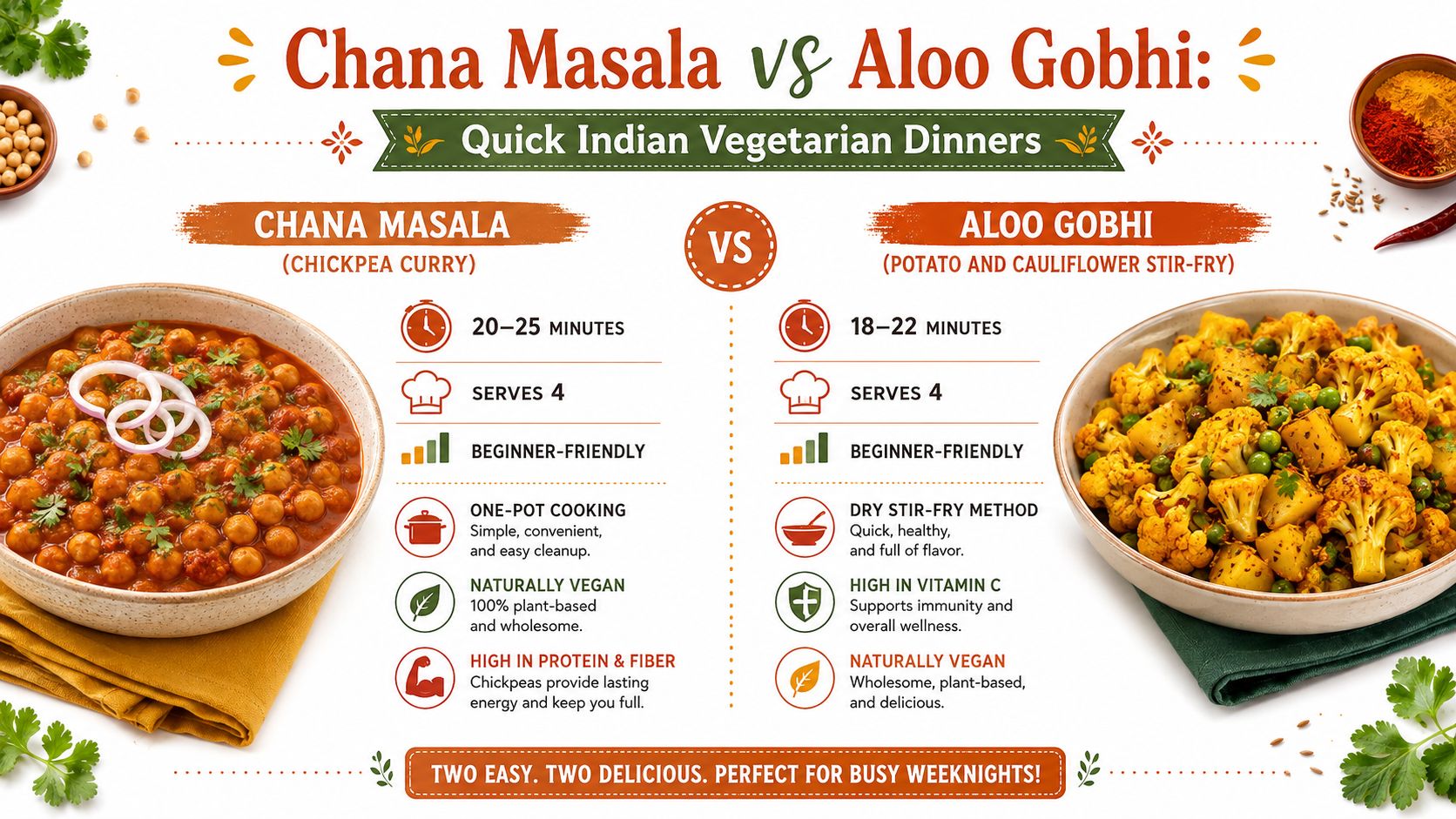
Canned or previously cooked chickpeas make chana masala a reliable pantry-staple dinner for a short evening. Build a tomato, onion, ginger, and garlic base with cumin, coriander, turmeric, chili, and garam masala, then simmer the chickpeas until they absorb the sauce. Allow 20 to 25 minutes for the full dish, using that range as a practical kitchen benchmark rather than a source-backed statistic.
Heat the pan first, then chop the onion, garlic, and ginger while the oil warms. Whole cumin or coriander seeds can be toasted briefly in a dry pan for 1 to 2 minutes before grinding, although ground spices keep the process faster. Add the tomato base, cover the pan over medium heat, and let the chickpeas warm gently. Aggressive boiling can make the sauce splatter without improving the result.
Practical rule: Rinse canned chickpeas, then spend your time developing the sauce. They only need enough simmering to warm through and take on its flavor.
Serve chana masala with rice, roti, naan, or yogurt. Coconut milk stirred in near the end adds dairy-free richness, but it also softens the tomato and spice profile. For a single serving, use the portioning advice in quick dinner recipes for one to avoid several days of leftovers.
Refrigerated chana masala keeps its texture well, and individual portions freeze effectively. Reheat gently with a splash of water, adding more only if the sauce has tightened. For another shortcut-focused digital collection, The Air Fryer Everyday Cookbook | Digital PDF presents recipes built around less oil, less time, and less effort, with instructions for reading on a device or printing at home.
2. Aloo Gobhi
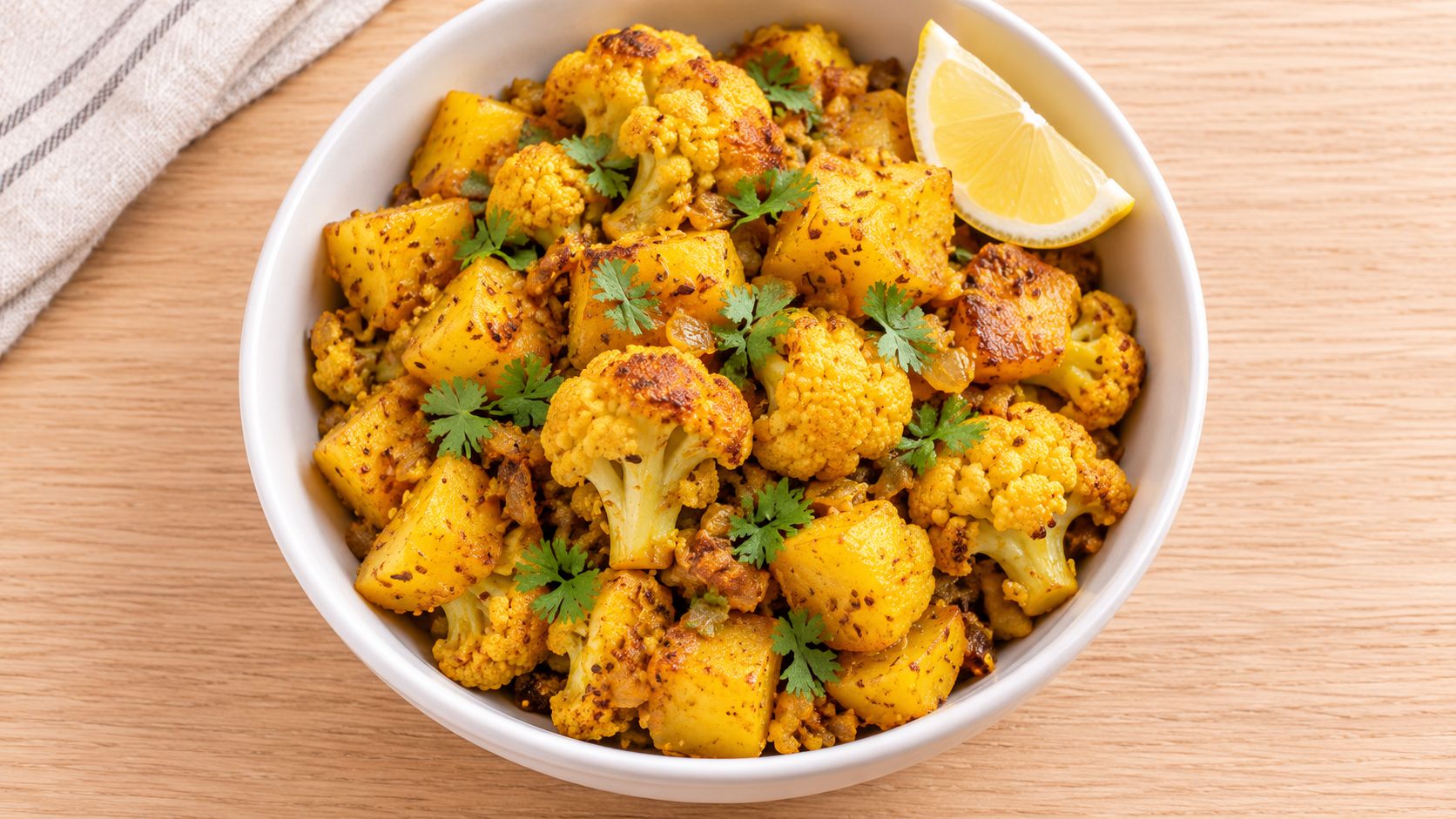
Aloo gobhi delivers a dry Indian dinner in about 20 minutes, with the active work concentrated in cutting the vegetables. Potatoes and cauliflower cook together with turmeric, chili, cumin, and coriander until their edges brown and their centers turn tender.
Cut the potatoes into small cubes so they finish alongside the cauliflower. A brief soak can remove excess starch, but a wide pan has a greater effect on the result. Spread the vegetables out so they fry rather than steam.
Heat the oil, add the potatoes first, then add the cauliflower shortly afterward. Bloom turmeric and chili in the oil before adding the vegetables for deeper color and aroma. Keep the pan uncovered, and turn the pieces only after they have had time to brown. This dry-cooking method keeps the ingredient list short and limits washing up.
Make it a complete dinner
Serve aloo gobhi with roti, paratha, or rice, then add cucumber raita, plain yogurt, or a quick tomato and onion salad for contrast. Leftover dal adds substance without requiring another cooked dish.
Storage brings a clear trade-off. The seasoning holds well, but refrigeration softens the browned edges. Transfer leftovers to a shallow container and reheat them in a wide skillet, where excess moisture can evaporate. The microwave is faster, but it produces softer vegetables.
Finish with lemon juice and fresh cilantro just before serving. These additions restore brightness after reheating without creating another sauce or pan.
3. Palak Paneer
Palak paneer uses blending as its weeknight shortcut. Frozen spinach eliminates the blanching, cooling, and draining associated with fresh leaves, allowing a vibrant green curry to reach the table in roughly 25 to 30 minutes. Quick Indian vegetarian dinner guidance commonly places paneer curries and similar dishes in the short-prep range, as outlined by Recipes Des Des.
Thaw the spinach and squeeze out excess water before blending it with the cooked aromatics. A completely smooth puree gives the sauce a silkier texture. Meanwhile, cube the paneer and keep it ready. Add it only during the last few minutes, because prolonged simmering can make the cheese firm and chewy.
Build the sauce with onion, ginger, garlic, tomato, cumin, coriander, and garam masala. If the spinach tastes sharp, a small amount of yogurt or cream stirred in after turning off the heat will soften the flavor without making the sauce heavy. Dairy-free cooks can replace paneer with tofu and use a plant-based finishing ingredient.
Blend first, finish later. The spinach sauce can simmer while you prepare the bread or rice, but the paneer should be treated as a final warming ingredient.
Serve palak paneer with jeera rice, roti, naan, or a simple grain. It keeps well for the next meal, although the color may darken slightly. Store the sauce and paneer together for convenience, or keep them separate if you prefer to warm the paneer gently before serving.
4. Sambar
Toor dal, tamarind, sambar powder, and seasonal vegetables make sambar a tangy one-pot dinner in 25 to 30 minutes. Pressure cooking keeps the lentils moving while you prepare rice or another accompaniment, and the finished stew already combines protein, vegetables, and sauce.
Use the pressure cooker for the dal and harder vegetables, such as carrots or potatoes. Add softer choices, including okra or leafy greens, afterward so they keep some texture. Tamarind concentrate avoids soaking and straining whole tamarind. Prepared sambar powder also removes the work of assembling and roasting spices, making pantry staples the shortcut for this meal.
Make the tempering in a small pan while the stew finishes. Heat oil with mustard seeds, dried chili, and curry leaves, then pour it into the sambar at the end. Hot oil can splatter on contact with the liquid, so add it carefully.
How to serve and store it
Serve sambar with rice, idli, dosa, or thick toast. Coconut chutney or plain yogurt adds a cool contrast if the meal needs one.
Sambar suits batch cooking because its flavor settles as it rests, and it freezes well in portions. Refrigerate leftovers promptly, then reheat with extra water nearby. Lentils continue absorbing liquid in storage, so loosen the stew gradually until it reaches a pourable consistency. For a complete weeknight plate, cook the rice while the pressure cooker works, then temper and serve from the same pot.
5. Bhaindi Fry
Bhaindi fry is the fastest option here when you want a 15 to 18 minute dry dinner with no sauce to reduce. Okra cooks with onion, tomato, turmeric, chili, and other spices until tender inside and lightly crisp around the edges. The short total time makes it useful for evenings when even a lentil dish feels too involved.
The technique is simple but unforgiving. Wash the okra, then dry it thoroughly before slicing. Any excess water encourages the vegetable to steam and become slimy. Use a wide, flat-bottomed pan, cook uncovered, and stir every few minutes so the pieces brown without breaking apart.
Keep the texture under control
Buy fresh okra close to the time you plan to cook it. Older pods can become fibrous, and no amount of spice will fix that texture. Add lemon juice only after cooking, when it can brighten the dish without making the pan wetter during the crisping stage.
Bhaindi fry is best served immediately with roti, dal, or plain rice. It can be refrigerated, but reheating softens the edges, so make only what you expect to eat. If you're pairing it with dal, start the lentils first and cook the okra while they simmer. That creates a fuller plate without adding another complicated recipe.
Texture test: Keep the lid off. Covered okra traps steam, and steam is the main enemy of a dry, lightly crisp finish.
6. Dal Tadka
Dal tadka suits nights when dinner must cook in parallel. Rinse red or yellow lentils, start them with turmeric and salt, then prepare the onion, tomato, spices, and tempering while they soften. The full meal takes about 30 minutes, with the lentils simmering while you handle the finishing components.
Add water gradually rather than flooding the pot. The finished dal should be thick enough to coat a spoon but loose enough to pour. For a clearer explanation of the cooking process, use this guide to how to cook lentils.
The tempering supplies the strongest flavor, so make it near serving time. Heat ghee or oil in a small pan, add cumin, dried chili, garlic, and onion, then cook until the onion turns golden. Pour the sizzling mixture over the dal and stir once or twice. Keep the lentils soft and spoonable, rather than reducing them until they become pasty.
A pressure cooker shortens active cooking and keeps the process contained, while stovetop simmering gives you more control over thickness. Choose the cooker when speed matters, or use the pot when you want to adjust the consistency as it cooks.
Build the plate
Serve dal tadka with rice, roti, or leftover grains. Cucumber salad or yogurt adds freshness without another cooked side. Use oil instead of ghee for a vegan version.
Dal freezes well, especially when stored slightly looser than you plan to serve it. Reheat with water, taste for salt, and add lemon if the flavor needs lifting. The tempering aroma fades in storage, so a small fresh tempering during reheating makes leftovers taste newly cooked.
7. Shahi Paneer
Shahi paneer is the richer choice for nights when you want a restaurant-style dinner without restaurant-style planning. Paneer cooks in a creamy tomato and nut sauce in about 25 to 30 minutes, provided you make the cashew paste while the sauce simmers. The method has more moving parts than chana masala, but the payoff is a smooth, indulgent curry.
Soak cashews in hot water, then blend them with only enough water to create a smooth paste. Cashews are faster to soften and puree than whole almonds, which makes them better suited to a short cooking window. Build the tomato sauce separately with onion, ginger, garlic, and mild spices.
Lightly browning the paneer in another pan is optional. It adds a surface crust and another dish to wash, so skip it when speed matters more than texture. Add the paneer near the end either way, because long cooking makes it firm.
Trade-off: Toasted paneer adds character, but unbrowned paneer saves a pan. Choose the version that matches your energy level tonight.
Finish with cream or yogurt off the heat. If the tomatoes taste too acidic, balance them with a small pinch of sugar rather than adding more cream. Serve with naan, roti, or basmati rice, plus sliced cucumber to cut through the richness.
Shahi paneer is best fresh, though leftovers remain useful for the next day. Refrigerate promptly and reheat over low heat with a splash of water. Avoid vigorous boiling, which can cause the creamy sauce to separate.
8. Toor Dal with Vegetables
A pressure cooker turns toor dal, vegetables, and seasoning into a practical one-pot dinner. Cook the lentils with turmeric and firm vegetables first, then add delicate ingredients and the tempering afterward. Allow about 30 to 35 minutes from preparation to serving, including the time needed for the cooker to come to pressure and release it.
Cut carrots, beans, zucchini, or potatoes into small, even pieces so they soften with the dal. Add peas or leafy greens near the end. They need only brief cooking, and this keeps their color and texture instead of letting them dissolve into the stew.
Use the pressure-cooking shortcut to reduce both active work and washing-up. Rinse the dal, load the cooker, and prepare the tempering while it cooks. The trade-off is texture: pressure cooking produces a softer, more blended dish than stovetop simmering, but it removes the need for constant stirring.
For the tempering, heat oil with cumin, curry leaves, and dried chili in a small pan. Pour it over the tender dal just before serving. This concentrated finishing step brings more aroma than adding many extra spices to the cooking pot.
Choose the serving format
Serve the dal over rice, with roti, or in a bowl topped with yogurt. If the vegetables make it filling enough, serve it alone and skip a separate side. Add lemon at the table to sharpen the flavor.
Refrigerate leftovers promptly, or freeze them in individual portions. The dal thickens as it cools, so reheat it gently with water until it reaches a spoonable consistency. For a dairy-free bowl, use oil for the tempering and pair the dal with rice.
9. Paneer Tikka Masala
Paneer tikka masala takes the marinade and sauce approach to a quick dinner. Marinate paneer in yogurt and spices while you prepare the tomato sauce. With the marinade handled ahead of time, the dish can reach the table in about 30 minutes, although the hands-on work is spread across the cooking period.
Pat the paneer dry before browning it in a hot pan. Cook each side briefly, just long enough to create color, then move the pieces into the finished sauce. If you cook paneer aggressively or leave it simmering for too long, it loses its soft texture.
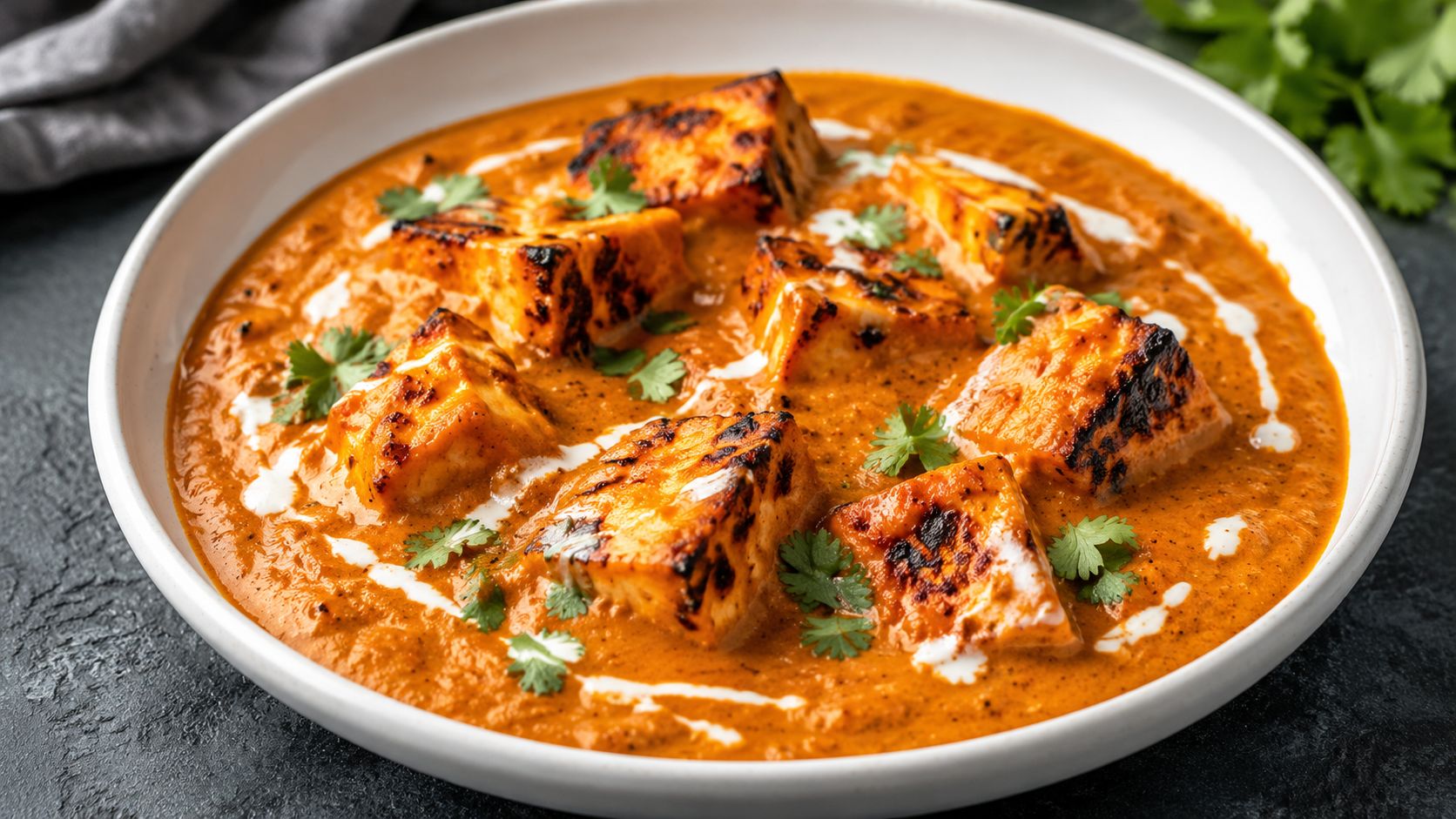
Blend the tomatoes and yogurt for a smoother sauce, then season with cumin, coriander, chili, garam masala, and a little cream if desired. Add the cooked paneer during the last couple of minutes. This collection of quick curry recipes can provide more ideas for using the same sauce-building rhythm on busy nights.
The best pairings are naan, roti, or rice, with cucumber, onion, and lemon on the side. Leftovers are convenient, but the sauce may thicken and the paneer may firm up. Reheat gently and add water before the curry reaches a simmer.
A short visual reference can help with the order of browning, sauce preparation, and final assembly.
10. Khichdi
On a night when rice and dal would mean separate pots, one-pot comfort meal khichdi keeps the work contained. Rice and lentils simmer with mild spices, ghee, and optional vegetables until soft and cohesive. Allow about 25 to 30 minutes from preparation to serving.
Use equal parts rice and lentils, adjusting the water to suit a thick or porridge-like consistency. Rinse both, then cut carrots, peas, or potatoes small enough to cook in the same cycle. Warm ghee, temper cumin and hing, and add the rice, lentils, turmeric, vegetables, and water.
Cover and cook over medium heat, stirring occasionally so the base does not catch. Keep extra hot water nearby. Khichdi thickens as it stands, so stir in water before reheating, while it is still easy to loosen.
Serve it simply
Top with cilantro and a little ghee. Plain yogurt, pickle, papad, or cucumber salad adds contrast without requiring another substantial dish. For a vegan bowl, use oil instead of ghee.
Portion leftovers before refrigerating for the next meal. Freezing may change the texture slightly, but gentle reheating with water brings back much of its softness. Keep the shared pot mild for mixed households, then let each person add chili oil, pickle, or extra spice at the table. This approach reduces duplicate cooking while keeping the base adaptable.
Quick Indian Vegetarian Dinners, 10-Recipe Comparison
| Dish | Implementation complexity | Resource requirements | Expected outcomes | Ideal use cases | Key advantages |
|---|---|---|---|---|---|
| Chana Masala (Chickpea Curry) | Low, one-pot; basic spice blending | Pantry staples; canned chickpeas & tomatoes, spices | Bold, protein-rich tomato-spice curry; freezer-friendly | Busy weeknights, meal prep, vegetarian mains | Inexpensive, high-protein, quick |
| Aloo Gobhi (Potato & Cauliflower) | Low, dry stir-fry; needs even cutting | Common vegetables, basic spices, wide pan | Crispy-tender vegetables; dry curry texture | Side dish, packed lunch, quick dinners | Fast, minimal ingredients, holds well warm |
| Palak Paneer (Spinach & Cottage Cheese) | Medium, spinach blending; gentle paneer handling | Paneer, fresh/frozen spinach, blender, dairy | Creamy, iron- and calcium-rich curry | Weeknight entertaining, nutritious mains | Visually striking, nutrient-dense, freezer-friendly |
| Sambar (South Indian Vegetable Stew) | Medium, tempering, tamarind, lentils | Sambar powder, tamarind, lentils, seasonal veg | Tangy, vegetable-forward stew; complete with rice | Served with rice/idli; batch cooking, meal prep | Versatile, adaptable to vegetables, improves with time |
| Bhaindi Fry (Crispy Okra Stir-Fry) | Low, fast but requires active stirring | Fresh okra, onion, tomato, basic spices | Crispy, caramelized okra; high in vitamins | Quick side dish, seasonal summer meals, packed lunch | Fastest cook time, minimal ingredients, low oil |
| Dal Tadka (Tempered Lentil Curry) | Low, lentils + tempering; timing coordination | Red/yellow lentils, ghee/oil, spices | Creamy, protein-rich dal with aromatic tadka | Everyday staple, pairs with rice/bread, meal prep | Economical, shelf-stable ingredients, reheats well |
| Shahi Paneer (Creamy Paneer in Nut-Tomato Sauce) | Medium, nut paste and cream finish | Paneer, nuts (cashew/almond), cream, blender | Rich, luxurious tomato-nut curry | Entertaining, special occasions, restaurant-style meals | Elegant presentation, rich flavor, make-ahead nut paste |
| Toor Dal with Vegetables | Medium, lentils + veg; pressure-cooker friendly | Toor dal, curry leaves, seasonal vegetables | Light, broth-based lentil stew; nutritious | Lighter family dinners, one-pot meals, meal prep | One-pot, vegetable-forward, lower-fat alternative |
| Paneer Tikka Masala (Marinated Paneer) | Medium, marination + sauce; timing for marinade | Paneer, yogurt marinade, tomatoes, spices | Silky tomato-yogurt sauce with charred paneer | Entertaining, weekend cooking, make-ahead marinade | Deep marinated flavor, restaurant-quality at home |
| Khichdi (Rice & Lentil One-Pot) | Low, very forgiving one-pot recipe | Rice, lentils, minimal spices, ghee/oil | Porridge-like, easily digestible complete meal | Comfort food, recovery meals, simple family dinners | Minimal cleanup, highly adaptable, soothing and quick |
Build a Reliable Indian Weeknight Rotation
The most useful way to choose among these dinners is by cooking shortcut, not by craving alone. If you need the fastest dry dish, choose bhaindi fry. It demands fresh, dry okra and attention at the pan, but it doesn't require sauce reduction or a second pot. Aloo gobhi follows the same dry-cooking logic, though the potatoes make knife size and pan space more important.
For pantry-led protein, chana masala and dal tadka are the strongest choices. Chickpeas make chana masala especially convenient when canned ingredients are available. Dal tadka asks for a little more timing discipline because the lentils and tempering finish separately, but it rewards that effort with a more layered aroma. Sambar and toor dal with vegetables are better when you want lentils and vegetables together, especially if you have a pressure cooker.
Khichdi is the simplest answer for one-pot comfort and low cleanup. It won't deliver the crisp edges of a dry stir-fry or the richness of paneer curry, but it's adaptable and easy to portion. Add vegetables directly to the pot, keep the seasoning mild, and let each person finish the bowl with pickle, yogurt, lemon, or ghee.
Paneer dishes sit at the richer end of the rotation. Palak paneer is the most practical when frozen spinach is already available. Shahi paneer and paneer tikka masala need extra blending, marinating, or browning, so they're better for evenings when you can give dinner a little more attention. That trade-off is worthwhile when you want a meal that feels more special without committing to a long simmer.
India's vegetarian audience is broad but not uniform. Pew Research found that 39% of Indian adults describe themselves as vegetarian, while 81% say they limit meat in some way, a pattern that supports flexible vegetarian meals for households with different food preferences. The same research found that 44% of Hindus in India identify as vegetarian. These figures point to a practical recipe strategy, not a rigid label. Lentils, chickpeas, paneer, vegetables, rice, and flatbreads can serve strict vegetarians, occasional meat eaters, and diaspora households alike. Read the Pew Research findings on Indian dietary patterns for the underlying survey context.
A simple make-ahead plan
Batch-cook a lentil or chickpea dish when you have time, then cool and portion it promptly. Keep rice, roti, or flatbread ready separately so dinner becomes reheating and assembly rather than a full cooking session. Freeze portions of sambar, dal, or chana masala, and reserve fresh garnishes for serving.
For more Indian home-cooking ideas, Indian Comfort Food | Digital PDF includes 100 recipes, instant digital access, device compatibility, and lifetime access with updates. It can sit alongside a quick-dinner rotation when you want familiar Indian dishes beyond the fastest weeknight formats.
Keep a few hardy herbs or garnishes nearby, and choose varieties that suit easy-care herbs for busy schedules. Fresh cilantro, curry leaves, mint, and green chili can make a simple bowl feel finished, but the recipes above remain workable without an elaborate garnish routine.
Just Cook It offers downloadable digital cookbooks with clear, kitchen-tested recipes for everyday home cooking, including Indian dishes that fit the same practical weeknight mindset. Visit Just Cook It to browse recipe collections for quick dinners, comfort food, and other cuisines you can read on your phone, tablet, laptop, or e-reader.