Dairy-free baking doesn't automatically mean dry cakes, fragile pastry, or desserts that taste like compromises. The popular advice to “swap the milk and butter” is too simple because dairy performs several different jobs. Butter contributes fat, water, aeration, and flakiness. Milk adds liquid, protein, and tenderness. Eggs can bind ingredients and help a cake rise, even though they aren't dairy. Successful baking recipes dairy free replace each function deliberately instead of treating every ingredient as interchangeable.
The recipes below move from approachable everyday bakes to more technique-sensitive treats. You'll find chocolate cake, pie crust, cookies, muffins, brownies, banana bread, pancakes, bars, and no-bake desserts. Each one centers on a plant-based ingredient and explains what it contributes to texture, structure, moisture, richness, or flavor.
A little troubleshooting matters. Chilling dough can control spread, soaking cashews can create a smooth filling, and choosing full-fat coconut milk can make a quick bread feel rich without butter. Read labels carefully if you need to avoid dairy strictly, since some packaged chocolate, margarine, baking powder, and flavorings may contain milk ingredients.
Table of Contents
- 1. Dairy-Free Chocolate Cake With Aquafaba
- 2. Coconut Oil Pie Crust
- 3. Almond Flour Cookies
- 4. Oat-Based Muffins With Applesauce
- 5. Avocado Brownies
- 6. Banana Bread With Coconut Milk
- 7. Tahini Energy Balls
- 8. Rice Flour Pancakes With Almond Milk
- 9. Oat Flour Blondies With Walnut Butter
- 10. Cashew Cream Cheesecake
- Dairy-Free Baking: 10-Recipe Comparison
- Build Your Dairy-Free Baking Playbook
1. Dairy-Free Chocolate Cake With Aquafaba
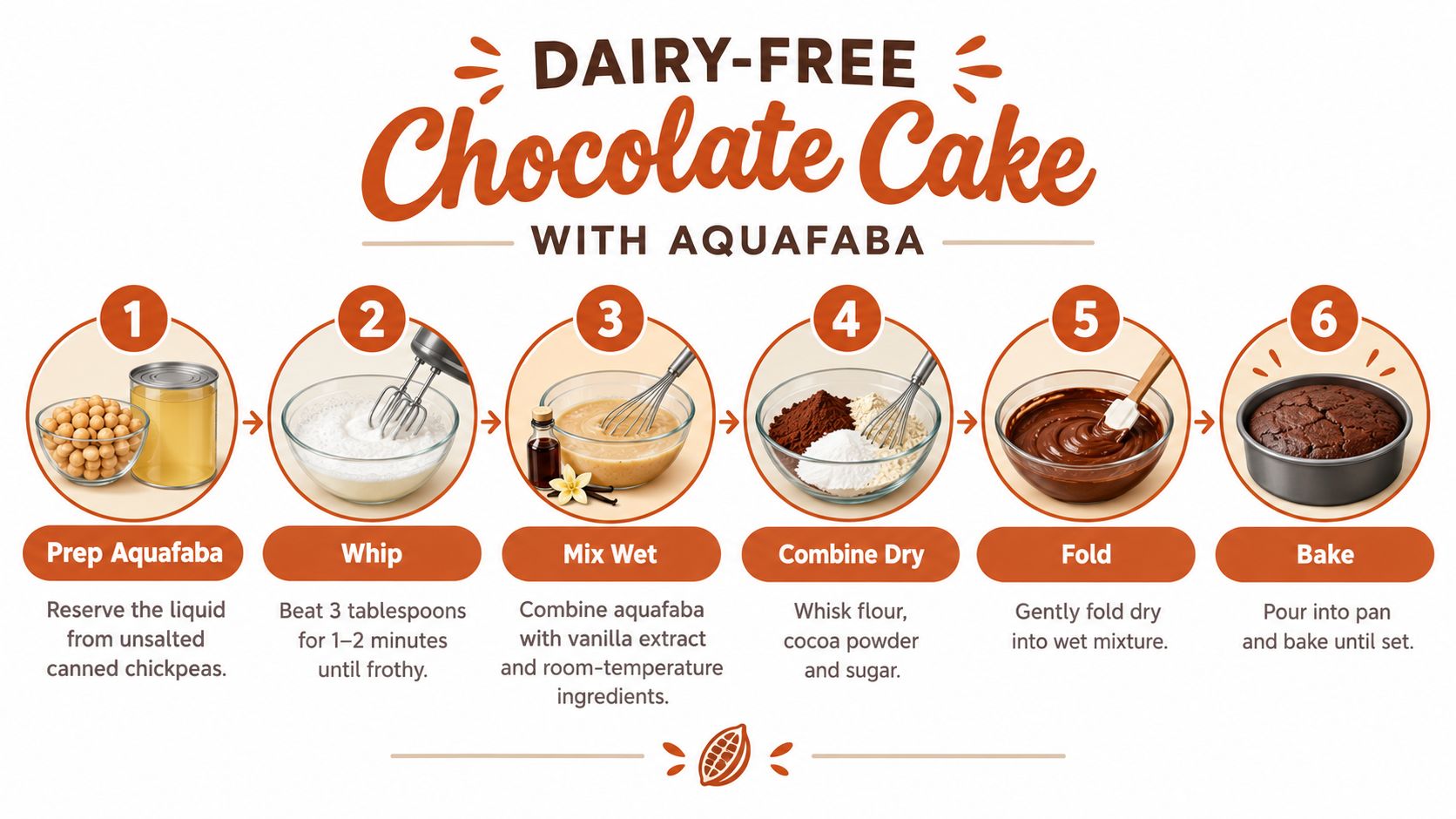
Aquafaba, the liquid from cooked chickpeas, can provide structure and lift in a chocolate cake without eggs, milk, or butter. Because cocoa has a strong flavor, it also helps cover any faint legume note, while vanilla rounds out the finish.
Use liquid from unsalted canned chickpeas when possible. Salted aquafaba can make the cake taste savory, and heavily seasoned cooking liquid won't suit a dessert. Whip the aquafaba for 1 to 2 minutes until lightly foamy before folding it into the batter. It doesn't need to form stiff peaks for this style of cake.
Build lift without overmixing
Keep the other ingredients at room temperature so the oil, plant milk, and aquafaba combine more evenly. Add the dry ingredients gently and stop mixing as soon as no obvious streaks of flour remain. Excessive mixing can make an egg-free cake dense because the batter has less traditional protein structure to rely on.
Bake the layers until the center springs back lightly. Let them cool completely before frosting, since warm layers can soften dairy-free frosting and slide apart.
Practical rule: Aquafaba adds lift, but it can't compensate for a batter that's overmixed or left standing too long after the raising agents are activated.
For a beginner-friendly cake method, follow this simple cake guide for beginners, then adapt the liquid and fat to suit your dairy-free formula. For a wider collection of indulgent baking inspiration, Dessert After Dark: 75 Viral Dessert Recipes | Digital PDF includes chocolate desserts, molten centers, cheesecakes, meringues, and other after-dark treats. The aquafaba cake itself works best with a dairy-free chocolate frosting or a simple dusting of cocoa.
2. Coconut Oil Pie Crust
Coconut oil replaces butter's fat in this pie crust, but it behaves differently. Butter contains both fat and water, while coconut oil is almost entirely fat, so the dough needs careful handling and a measured addition of ice water to become workable.
Use refined coconut oil for a neutral flavor. Keep it cool but workable, around 65 to 70°F, so you can break it into pea-sized pieces through the flour. If it melts completely before the dough reaches the oven, the crust can spread and lose its layers.
Keep the fat cold
Work quickly with a pastry cutter, fork, or your fingertips. Add ice water a little at a time, stopping when the dough holds together when pressed. Don't knead it into a smooth ball. A few visible pieces of coconut oil can create tenderness, while too much handling develops gluten and makes the crust tough.
Wrap the dough and chill it for at least 30 minutes before rolling. Roll it between sheets of parchment if you don't want to add extra flour. For a wet filling, prick the base with a fork and blind-bake it with pie weights or dried beans so the base doesn't puff or turn soggy.
The crust is useful for fruit pies, chocolate fillings, and savory vegetable pies. If you plan to add toasted coconut to a filling or topping, use this guide to toast flaked coconut without burning it.
3. Almond Flour Cookies
Finely ground almond flour gives these cookies their fat, tenderness, and nutty flavor without butter. Almonds contain natural oils, so the dough can feel rich even when the ingredient list is short. They also provide a soft, dense crumb rather than the lighter bite of wheat-flour cookies.
Choose finely milled blanched almond flour for the most even texture. Almond meal, which includes the darker skins and is often more coarsely ground, can make cookies rougher and more crumbly. If you want a chewier result, use coconut sugar. Regular granulated sugar encourages a crisper edge.
Control spread and browning
Almond flour browns quickly because of its natural fat content. Lower the oven temperature by 25°F compared with a standard wheat-flour cookie recipe if the edges darken before the centers set. Chill the dough for 15 minutes before scooping to reduce spreading.
These cookies are a good example of a recipe where the flour does more than provide bulk. It replaces some of the richness normally supplied by butter, while the sweetener controls the surface texture. Add orange zest, cinnamon, chopped dark chocolate, or a little cardamom for variation, but check chocolate labels if you're avoiding dairy.
Look for doneness at the edges rather than waiting for the centers to feel firm. The middle will continue cooking on the hot tray after you remove the cookies. Let them cool there briefly before transferring them, because warm almond flour cookies can break easily.
A home baker making these for different dietary needs should also check whether the almond flour facility handles other allergens. Dairy-free doesn't automatically mean nut-free, and almond flour is unsuitable for anyone avoiding tree nuts.
4. Oat-Based Muffins With Applesauce
Applesauce supplies moisture and some binding, while oats bring body and a pleasantly soft chew. Together, they can replace much of the structure that eggs and dairy-based ingredients normally provide in a breakfast muffin.
Use unsweetened applesauce so you can control the sweetness. If the rolled oats are large, pulse them briefly in a food processor or blender. Don't turn every oat into powder. A mixture of fine oat pieces and small flakes gives the muffins a more interesting crumb.
Give the batter enough lift
Combine baking powder and baking soda when the formula includes enough acidity from applesauce or another acidic ingredient. The two raising agents help the batter expand, but the muffins still need gentle mixing. Stir only until the dry ingredients are moistened.
Fill each muffin cup about two-thirds full. Overfilled cups can spill before the center sets, while too little batter produces shallow, dry muffins. Add blueberries, grated apple, raisins, or a few dairy-free chocolate pieces, keeping additions modest so the oat batter can support them.
Applesauce creates tenderness, but too much makes muffins gummy. If the center stays wet, reduce the applesauce slightly in your next batch and bake until a toothpick comes out clean.
These muffins suit school mornings, packed lunches, and beginner baking sessions because the batter doesn't require creaming butter or separating eggs. Let them cool before storing, since trapped steam can soften the tops and make the texture seem heavier than it is.
5. Avocado Brownies
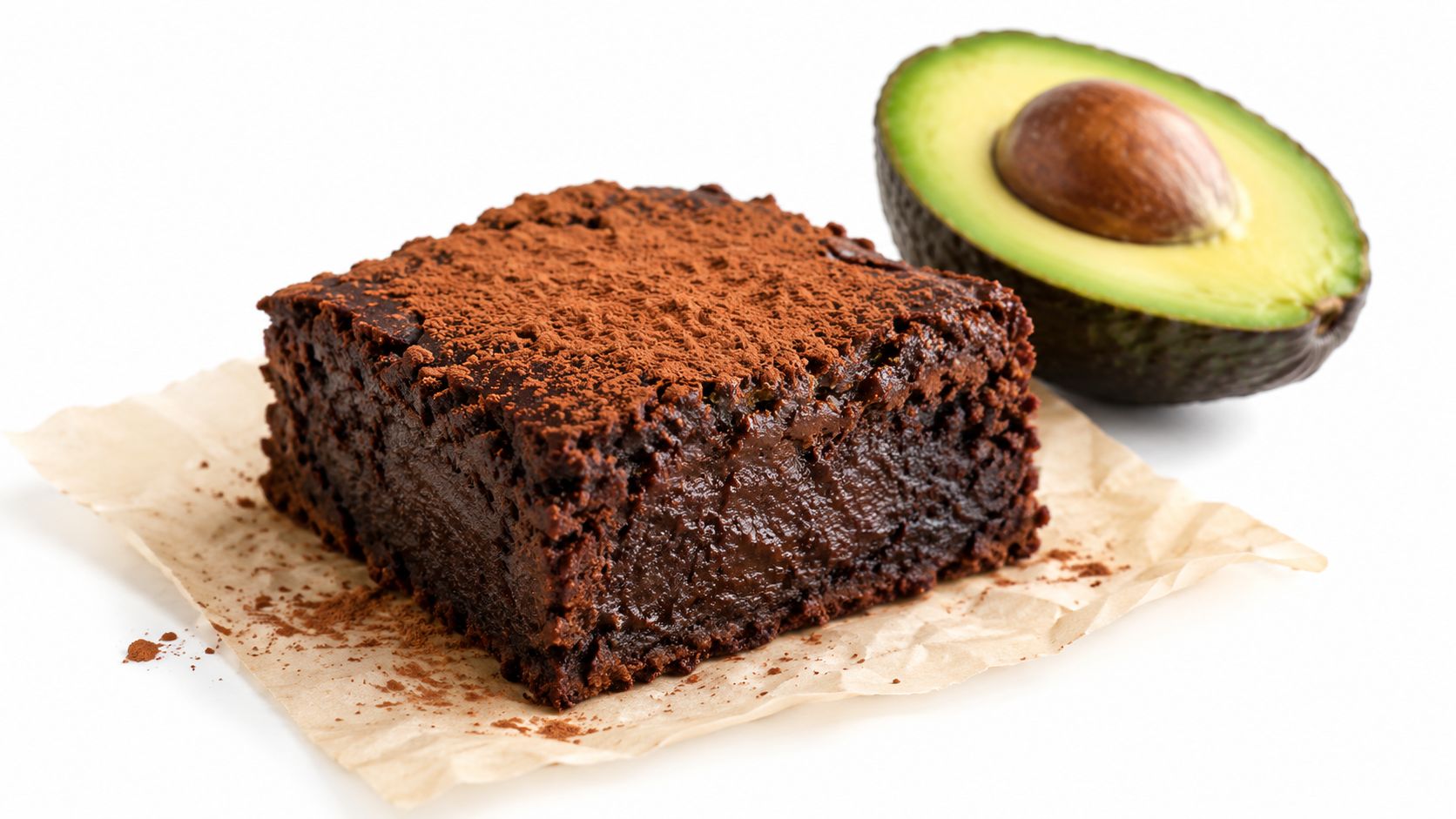
Ripe avocado replaces some of the fat and moisture usually supplied by butter and eggs in these brownies. Its creamy texture helps create a fudgy center, while dark cocoa and chocolate provide enough intensity to make the avocado subtle rather than dominant.
Choose an avocado that's just ripe enough to mash smoothly. An overripe one may contribute excess water or an unpleasant flavor. Mash or blend it until completely smooth before adding it to the batter. Even small green lumps can remain visible after baking and create a bitter pocket.
Protect the fudgy texture
Use dark cocoa powder for a deeper chocolate profile, then balance it with sugar, vanilla, and a pinch of salt. Mix the batter only until combined. Overmixing can make the brownies cakier and tougher, while an underdeveloped blend can leave uneven moisture.
Bake at 350°F for 22 to 25 minutes. Remove the pan while the center still looks slightly soft if you want a fudgy result. It will firm as it cools. A clean toothpick can indicate a more fully baked brownie, but a few moist crumbs are preferable for a dense center.
For a smoother preparation, see this guide on using avocados in cooking. Cut the brownies only after they cool completely. If you want sharp pieces, chill the pan first and wipe the knife between cuts.
These brownies demonstrate why a substitution should be chosen by function. Avocado isn't imitating butter in every way. It supplies creamy fat and moisture, but it doesn't create the same aeration or crisp edges as creamed butter.
6. Banana Bread With Coconut Milk
Full-fat coconut milk brings liquid, fat, and a creamy mouthfeel to banana bread. Ripe bananas add their own moisture and sweetness, so the combination can produce a tender loaf without dairy.
Use bananas with brown speckles for the strongest natural sweetness and a soft texture. Mash them thoroughly, but leave a few small pieces if you enjoy pockets of banana. Large chunks can create wet spots that make the loaf seem underbaked even when the rest is set.
Choose the right coconut milk
Shake the can well before opening so the liquid and coconut cream combine. If your product has separated and you're looking for a richer loaf, use the thick cream portion, but don't add so much that the batter becomes greasy or heavy. Coconut milk varies in thickness, so the batter should be thick enough to fall slowly from a spoon.
Bake at 350°F for 55 to 65 minutes, checking the center with a toothpick. If the top browns before the inside is ready, tent the loaf loosely with foil. Cool it in the pan briefly, then move it to a rack so steam doesn't collect around the base.
Coconut gives the bread a faint tropical note, especially when paired with toasted coconut, lime zest, or macadamias. For a more classic banana bread, use vanilla and cinnamon to keep the flavor familiar.
This is one of the best starting points for dairy-free baking because the bananas provide forgiveness. They add moisture and body even if your plant milk measurement isn't perfectly precise, but the loaf still benefits from accurate flour measurement and a gentle hand when mixing.
7. Tahini Energy Balls
Tahini is a seed butter made from sesame seeds, so it contributes fat, flavor, and a little binding power without an oven. Dates supply sticky sweetness and help the mixture hold together, while coconut oil firms the finished bites after chilling.
Use soft Medjool dates when possible. Remove the pits and pulse the dates with tahini first, before adding oats, ground seeds, cocoa, or other dry ingredients. This creates a cohesive paste instead of leaving separate chunks that won't bind.
Let time do the work
If the mixture feels loose, add dry ingredients gradually. If it feels crumbly, add another small spoonful of tahini or a little more date. Chill the mixture for 30 minutes before rolling. Cold dough is easier to shape and less likely to coat your hands.
Wet your hands slightly as you roll each portion. Finish the balls in cocoa powder, shredded coconut, sesame seeds, or crushed nuts. Store them chilled so the coconut oil remains firm.
Texture check: The mixture should compress when squeezed. If it falls apart in your palm, it needs more sticky fruit or seed butter, not more chilling.
These no-bake bites are useful when you want a dairy-free treat without turning on the oven. They're also a gentle introduction to ingredient functions. Tahini enriches, dates bind, and chilling gives the fat time to set the shape. If you use them for a lunchbox, check the school or workplace rules around sesame and nuts.
8. Rice Flour Pancakes With Almond Milk
Rice flour creates a delicate, naturally light crumb, while unsweetened almond milk supplies the liquid needed to form the batter. Because rice flour contains no gluten, the pancakes won't develop the stretch or chew of wheat pancakes. That makes them tender, but it also means they need careful handling.
Sift the rice flour with the raising agent to prevent stubborn lumps. Let the batter rest for 5 minutes so the flour can hydrate. The mixture may thicken slightly during this pause, which makes it easier to portion onto the pan.
Cook gently and patiently
Use medium heat rather than turning the burner high. Rice flour pancakes can brown on the outside before the center has set. Wait until bubbles appear across the surface and the edges look less wet before flipping. Turn them only once, then finish cooking until the second side is lightly golden.
If you're making several batches, keep the cooked pancakes warm in a 200°F oven. Place them on a rack or a baking sheet rather than stacking them immediately, since trapped steam can soften the surfaces.
Almond milk has a mild flavor, so vanilla, cinnamon, citrus zest, or a little maple syrup can shape the final taste. Use a dairy-free spread or fruit compote on top, and check packaged toppings for milk ingredients.
These pancakes work well for a quick breakfast because they don't require yeast, laminating, or a long proof. The main lesson is heat control. A thinner, gently cooked pancake is usually more successful than a thick one rushed over a hot burner.
9. Oat Flour Blondies With Walnut Butter
Walnut butter supplies fat and nutty depth, while oat flour gives these blondies a soft, chewy base. The combination creates a bar with more body than a cake but more tenderness than a crisp cookie.
Make oat flour by blending rolled oats until fine, or use packaged oat flour. If you blend your own, stop before the oats turn into a paste. Choose creamy walnut butter rather than a jar with a separated oil layer. If the butter is oily, stir it thoroughly before measuring so the blondies don't bake up greasy.
Keep the center chewy
Spread the batter evenly in a lined pan. The edges will set before the middle, so judge the bake by a toothpick carrying moist crumbs rather than liquid batter. Slightly underbake the blondies at around 22 minutes if you prefer a chewy center, then let them cool fully in the pan.
Cooling matters more here than it does with many muffins. The starches firm as the slab cools, allowing you to cut clean squares instead of soft, ragged pieces. Use parchment overhang to lift the slab, and wipe the knife between cuts.
Walnut butter adds a distinct flavor, so pair it with vanilla, cinnamon, espresso powder, or dark chocolate. If you need a nut-free option, sunflower seed butter can provide a similar fatty texture, though the flavor and color will change.
For a busy household, these bars offer a practical way to use oat flour and seed or nut butter in one bake. They don't need frosting to feel complete, which also reduces the number of dairy-free ingredients you need to verify.
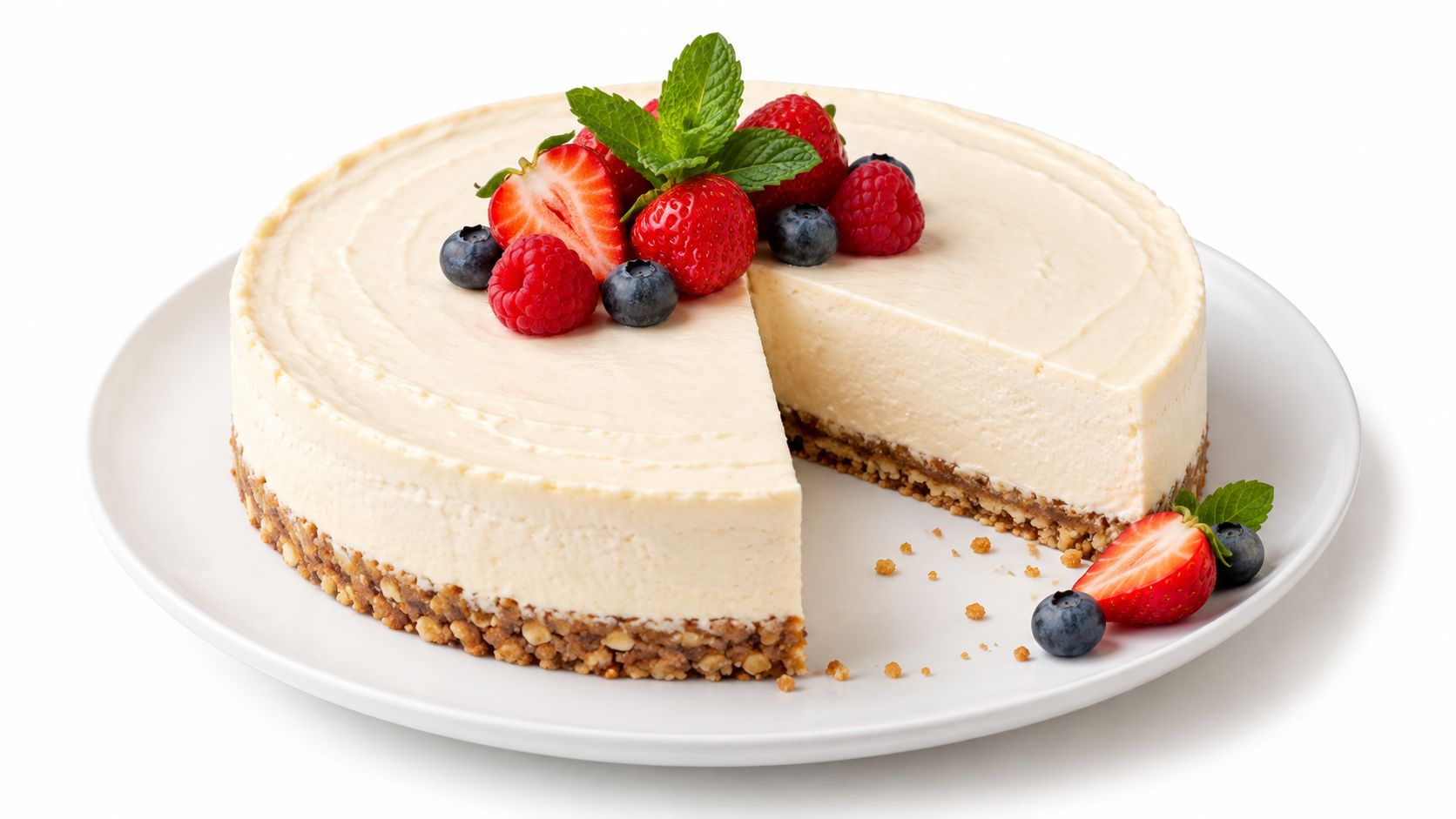
10. Cashew Cream Cheesecake
Soaked cashews can be blended into a creamy filling that replaces cream cheese in a no-bake cheesecake. The cashews provide fat and body, while lemon juice supplies the tang that makes the dessert taste cheesecake-like rather than just nutty.
Soak the cashews in boiling water for 1 hour when you need a faster method. Drain them thoroughly before blending. Excess water dilutes the filling and can prevent it from firming properly. Add lemon juice, vanilla, sweetener, and a small amount of coconut oil or another firming fat, then blend until smooth.
Make the filling silky
A high-powered blender helps, but you don't need specialist equipment to improve the result. Blend in stages, scrape down the sides, and give the mixture time to become completely creamy. Pass it through a fine-mesh strainer if you want an especially smooth texture.
Pour the filling over a chilled nut-and-date crust, then refrigerate for at least 4 hours. Overnight chilling usually produces a firmer slice because the fats have more time to set. Serve it cold, since the filling softens as it warms.
For a citrus-led variation, use this no-bake lemon cheesecake method as a reference for flavor balance and chilling. Readers interested in another plant-based variation can also try this easy no-bake matcha cheesecake.
Dairy-Free Baking: 10-Recipe Comparison
| Recipe | Implementation complexity | Resource requirements | Expected outcomes | Ideal use cases | Key advantages |
|---|---|---|---|---|---|
| Dairy-Free Chocolate Cake with Aquafaba | Medium, requires whipping aquafaba and ratio control | Standard bakeware; canned chickpeas, cocoa, flour, sugar | Rich, moist chocolate cake with tender crumb (egg-free) | Vegan layer cakes, allergy-conscious baking, freezing | Vegan-friendly, low-cost aquafaba, pantry ingredients |
| Coconut Oil Pie Crust | Medium, cold-fat technique and chilling needed | Pastry tools; refined coconut oil, flour, ice water | Flaky, tender crust suitable for sweet or savory fillings | Dairy-free pies/tarts, beginners building pastry skills | Traditional flakiness without butter; longer shelf life |
| Almond Flour Cookies | Low, simple mixing, no creaming required | Mixing bowl; finely blanched almond flour, add-ins | Dense, chewy, nutty cookies (gluten-free) | Gluten-free, keto snacks, quick home baking | Grain-free, higher protein, easy customization |
| Oat-Based Muffins with Applesauce | Low, one-bowl method, minimal steps | One bowl; rolled oats, unsweetened applesauce, leaveners | Tender, whole‑grain muffins with natural sweetness | School snacks, whole-grain breakfasts, bulk baking | Affordable, reduced sugar, fiber-rich |
| Avocado Brownies | Medium, blending and texture control | Blender or mixer; ripe avocados, cocoa, flour | Fudgy, rich brownies with slightly denser crumb | Vegan desserts, health-forward treats, freezing | Healthy fats, moist texture, egg/dairy-free |
| Banana Bread with Coconut Milk | Low, standard quick-bread method | Loaf pan; ripe bananas, coconut milk, basic pantry staples | Creamy, moist quick bread with subtle coconut note | Easy everyday bake, use-up ripe bananas, make-ahead | Very accessible, freezes well, flexible mix-ins |
| Tahini Energy Balls | Very low, no-bake, minimal prep | Bowl/food processor; tahini, dates, coconut oil | Dense, chewy no-bake bites, nutrient-dense | On-the-go snacks, beginner cooks, school lunches | No oven, shelf-stable ingredients, refined-sugar free |
| Rice Flour Pancakes with Almond Milk | Low, quick batter, short cook time | Skillet/griddle; rice flour, almond milk, leavening | Light, tender pancakes with neutral flavor | Quick breakfasts, allergen-friendly family meals | Fast to make, dairy-free, kid-friendly |
| Oat Flour Blondies with Walnut Butter | Low–Medium, single-pan bake, no mixer | Baking pan; oat flour, walnut butter, eggs or binder | Chewy, dense bar cookies with nutty depth | Batch baking, snacks, pre/post-workout fuel | Whole-grain and nut protein, freezer-friendly |
| Cashew Cream Cheesecake (No-Bake) | High, soaking, high-speed blending, chilling | High-powered blender/food processor; cashews, coconut oil crust | Silky, firm no-bake cheesecake when chilled | Special-occasion vegan desserts, make-ahead entertaining | Luxurious texture, impressive presentation, vegan-friendly |
Build Your Dairy-Free Baking Playbook
The most reliable dairy-free bakers stop asking, “What replaces butter?” and start asking, “What job is butter doing in this recipe?” If the recipe needs binding, aquafaba or applesauce may be more useful than a simple plant-based fat. Aquafaba can help create lift and structure in chocolate cake, while applesauce adds moisture and cohesion in oat muffins.
Choose coconut oil or avocado when richness and moisture matter. Coconut oil works especially well in pie crust and can firm after chilling, but it doesn't contain butter's water, so pastry needs careful hydration. Avocado creates a creamy, fudgy texture in brownies, although it won't produce the same aeration as creamed butter.
For cookies and bars, nut and seed ingredients can carry much of the richness. Almond flour makes tender cookies with a naturally nutty flavor. Walnut butter gives oat blondies a chewy, dense texture, while tahini adds fat and stickiness to no-bake energy balls. These ingredients change flavor as well as structure, so pair them with strong supporting flavors such as cocoa, citrus, vanilla, cinnamon, or espresso.
Time is another ingredient. Chill cookie dough when you need to control spreading. Chill coconut oil pastry before rolling and again before baking if it starts to soften. Soak cashews until they blend smoothly, then refrigerate the cheesecake until its filling firms. A rushed recipe often fails because the fat hasn't set or the dry ingredients haven't hydrated.
A quick troubleshooting guide
- Dry bake: Add moisture through applesauce, banana, plant milk, or full-fat coconut milk, but adjust gradually so the crumb doesn't become gummy.
- Gummy center: Reduce excess fruit purée or liquid, avoid overfilling the pan, and bake until the center is properly set.
- Dense cake: Check that the raising agents are fresh, mix gently, and move activated batter into the oven promptly.
- Greasy pastry or bars: Keep coconut oil or nut butter from overheating, measure separated nut butter carefully, and chill the shaped dough.
- Over-browned surface: Lower the oven temperature, use a lighter pan if available, or cover the top loosely once it has colored.
- Crumbly cookies: Add a little more binder or fat, let the dough rest, and allow the cookies to cool before moving them.
If you're avoiding dairy for an allergy, don't rely only on the recipe title. Check labels on chocolate, margarine, plant-based yogurt, baking mixes, flavorings, and prepared toppings. Shared equipment and “may contain” statements can matter as much as the ingredient list.
Start with banana bread, oat muffins, or tahini energy balls. They offer forgiving textures and straightforward methods. Move to almond flour cookies and brownies when you're comfortable judging doneness, then try coconut oil pastry and cashew cheesecake once chilling, hydration, and temperature control feel familiar.
Just Cook It can be an optional source for broader home-cooking collections, with downloadable cookbooks, clear instructions, photography, device-compatible reading, lifetime access, and updates. Its catalog covers everyday cooking across cuisines, so check each recipe individually rather than assuming every collection is dairy free. You can also explore complementary resources such as these pro-level pizza recipes when you want to expand beyond desserts.
Just Cook It offers downloadable cookbook e-books with clear, kitchen-tested instructions, photography, device-friendly reading, and lifetime access with updates. For more dependable ideas to build around dairy-free cakes, breads, desserts, and everyday cooking, visit Just Cook It and choose a collection that fits your kitchen.