If you've ever pulled apart a dry chicken breast and thought, “This is fine for dinner, but it'll ruin chicken salad,” you're already halfway to the right method. The slow cooker isn't just a convenience tool here, it's the easiest way to make chicken that stays moist enough to shred cleanly and still holds texture after it's dressed. For a dependable batch, use the cooker to control the chicken first, then build the salad around that result.
Table of Contents
- Why Your Slow Cooker Is the Secret to Better Chicken Salad
- The Foolproof Method for Moist Shredded Chicken
- Customizing Your Chicken with Flavorful Liquids and Spices
- The Art of Shredding and Assembling Your Salad
- Make-Ahead Tips and Answering Your Top Questions
Why Your Slow Cooker Is the Secret to Better Chicken Salad
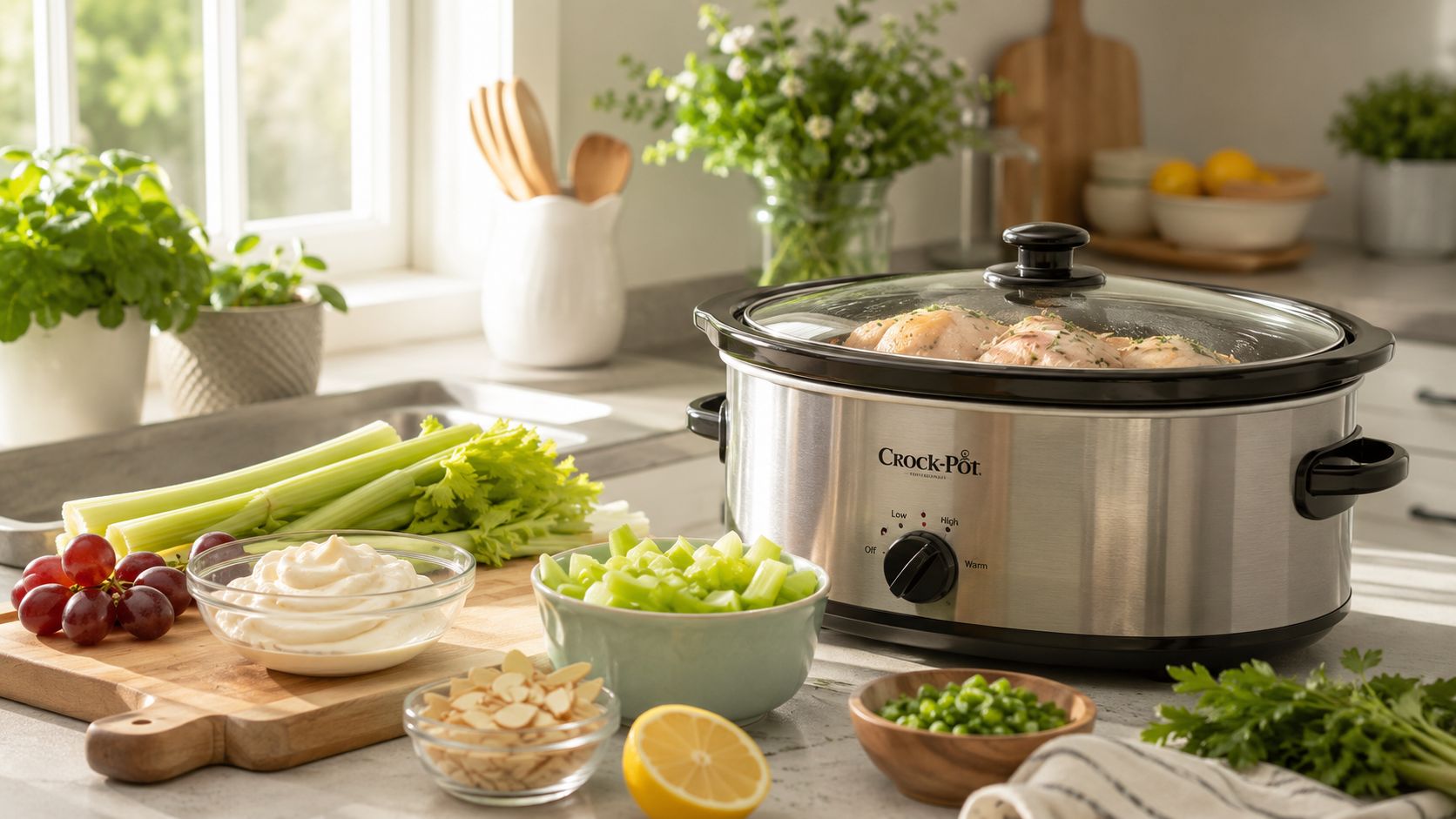
Dry chicken is the quickest way to make chicken salad feel flat and stringy. Boiling can wash flavor away, and baking can push lean breasts from juicy to chalky before you notice the change. A slow cooker gives you a gentler heat curve, so the meat cooks through without getting bullied by high oven heat or a rolling boil.
Why the texture turns out better
The payoff is simple. Low, steady heat keeps the chicken breast tender enough to shred instead of crumbling into dry bits, and that matters because chicken salad depends on a soft but structured base. The predictable workflow also makes sense for batch cooking, since slow-cooker chicken salad recipes commonly aim for a finished shredded yield of about 2 1/2 to 3 cups and a cook window of 3 to 4 hours on high or 6 to 8 hours on low, with the chicken shredded once it reaches 165°F in the center. Those ranges show up in tested recipes because they're built around real home-kitchen timing, not guesswork. Cotter Crunch's slow-cooker chicken salad method
The other advantage is flexibility. Once the chicken is cooked well, the same batch can go into sandwiches, lettuce cups, crackers, or wraps without needing a second round of cooking, which is why a recipe like Just Cook It's easy slow cooker meals resource fits naturally into a practical meal-prep routine.
Practical rule: If the chicken is right, the salad is easy. If the chicken is dry or rubbery, no amount of mayo can rescue the texture.
The Foolproof Method for Moist Shredded Chicken
The base method is plain on purpose. Boneless, skinless chicken breasts, a small amount of broth, and simple seasoning are enough when the cooking process is controlled. The goal isn't to braise the meat into a stew, it's to let steam and gentle moisture do the work so the fibers separate cleanly later.
Set up the pot for even cooking
Use a 6- to 8-quart slow cooker and arrange the chicken in a single layer when possible. That keeps the pieces cooking at the same pace, which matters because uneven sizes finish unevenly and can leave one piece dry while another still needs time. A little broth plus aromatics gives the cooker enough liquid to create moisture without turning the chicken into a boiled texture, and one kitchen-tested workflow recommends checking the thickest piece with an instant-read thermometer until it hits 165°F (74°C) before shredding. Another tested range notes that breasts can be ready in as little as 2.5 to 3 hours on LOW, while cooking much longer increases the chance of dry meat. iHeartNaptime's slow cooker chicken salad guidance
Remove the chicken as soon as it's done, don't let the slow cooker decide for you.
That small habit makes a real difference. Expert guidance also warns that heat trapped under the lid and uneven piece size can push the chicken past the point of tenderness, so the safest habit is to check early, cover quickly, and pull the chicken when it's just done rather than waiting for it to “seem extra safe.” The Fresh Cooky's chicken-for-chicken-salad method
Cook, cool, and shred with restraint
Once the chicken reaches temperature, let it rest briefly before shredding. Shredding too early can make it mushy, and if you mix hot chicken into the final salad right away, it keeps steaming in its own residual heat. That steaming is what steals the clean, juicy bite people want in chicken salad.
If you like cookbook-style cooking that leans on time-honored home techniques, Mexican Home Cooking – 49 Authentic Everyday Recipes from the Mexican Kitchen follows that same practical mindset, where simple ingredients and repeatable methods carry the recipe.
Customizing Your Chicken with Flavorful Liquids and Spices
The cooking liquid is the quiet flavor builder. Chicken broth gives the most neutral result, which is ideal if you want the finished salad to taste bright, classic, or apple-forward later. Stronger liquids change the direction from the beginning, so the best choice depends on how you plan to serve the salad.
| Poaching Liquid Flavor Profiles | Resulting Flavor Profile | Pairs Well With |
|---|---|---|
| Chicken broth | Clean, savory, neutral | Celery, grapes, dill, classic mayo dressing |
| Vegetable broth | Light, slightly earthy | Herbs, chopped apples, toasted nuts |
| White wine with herbs | Brighter, more aromatic | Lemon, thyme, tarragon, sandwich fillings |
| Dill pickle juice with broth | Tangy and sharp | Pickles, red onion, crackers, lettuce cups |
A neutral broth is the easiest starting point, especially if you're still learning how much seasoning the final salad needs. If you want a smoky angle, add smoked paprika and cumin to the raw chicken before cooking. If you want a more classic deli-style profile, dried thyme and dill work well because they read as familiar instead of aggressive.
One useful technical note is to think of broth and bouillon differently. If you're deciding between them, what chicken bouillon is matters because bouillon can push the salt level and intensity higher than a mild homemade broth, so it's better suited to a bolder final salad.
For a lighter everyday result, keep the seasoning simple and let the dressing do the talking. For a more assertive version, season the chicken early so the flavor reaches the center of the meat, not just the surface.
The Art of Shredding and Assembling Your Salad
Shredding sounds like a small step, but it's where texture is either saved or ruined. The cleanest result comes from chicken that's cooked through, rested briefly, and then pulled apart while it's warm, not steaming hot. That little pause helps the fibers settle so the meat doesn't collapse into pasty strands.
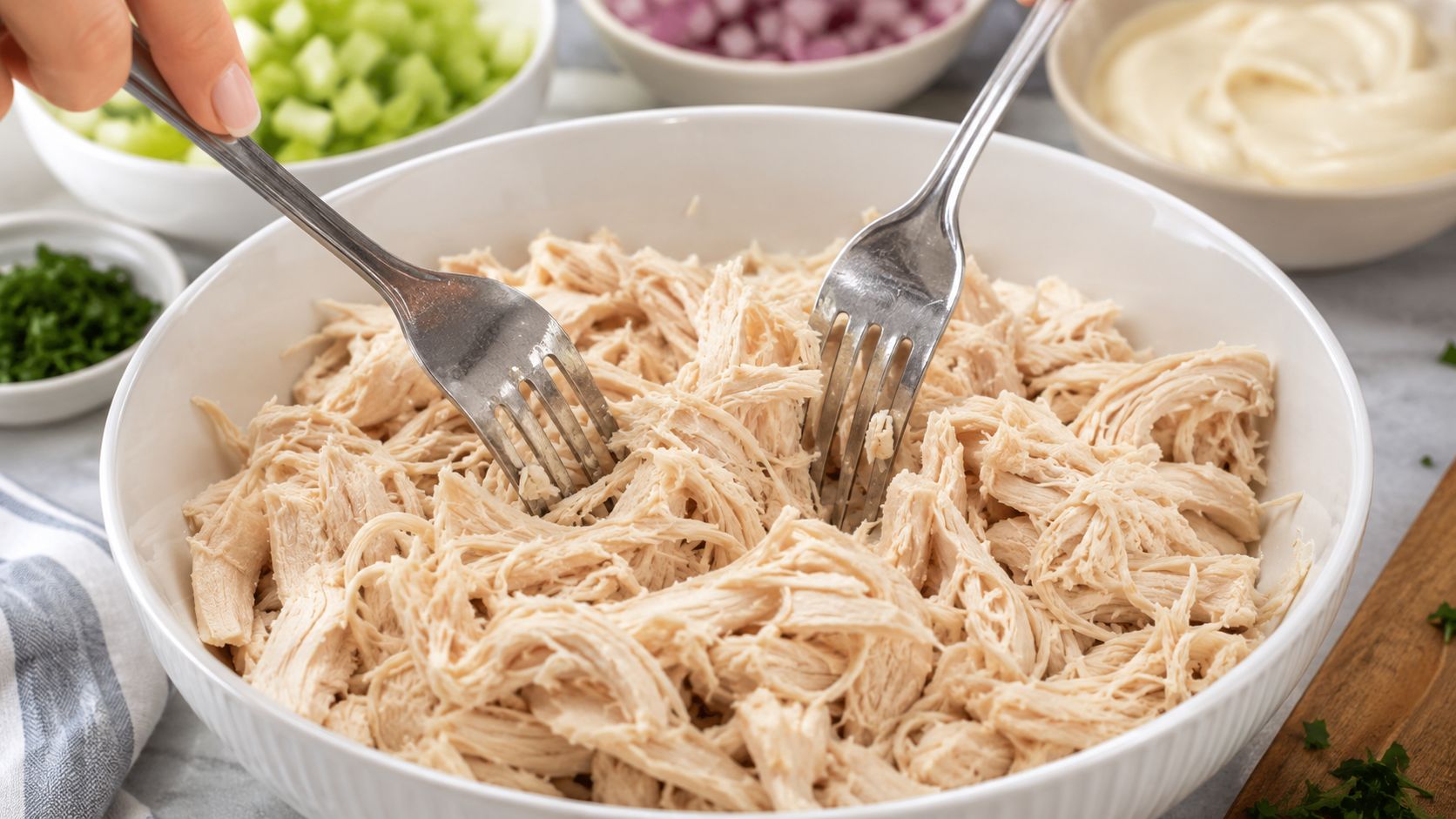
A pair of forks does the job well, and a stand mixer can save time if you're making a larger batch. The mixer trick works best when the chicken is cool enough to handle but still soft, because you want loose shreds, not a whipped paste. That same principle is why you shouldn't rush the dressing stage either, since warm chicken can thin mayo or yogurt and make the whole salad look oily.
Build the salad only after the chicken settles
A straightforward dressing starts with mayo, a little acid, and salt. From there, fold in celery for crunch, onion for bite, and anything sweet or tart you like. The key is to stop mixing as soon as everything looks evenly coated, because overmixing breaks down the shreds and gives the salad a heavier, denser feel.
Cool chicken makes better salad. Hot chicken keeps cooking, and that residual heat works against the texture you just protected.
The image matters here because it shows the exact motion you want, a gentle pull, not a chop. The Fresh Cooky's guidance on cooling before shredding matches the same practical reality: if you move too fast, the meat can turn mushy and keep steaming in its own heat. The Fresh Cooky's chicken-for-chicken-salad method
Make-Ahead Tips and Answering Your Top Questions
The easiest way to keep chicken salad good for several days is to store the components separately until serving. Keep the shredded chicken in its own container with a little cooking liquid if needed, then mix it with the dressing when you're ready to eat. That protects the texture, which is the part most likely to fade if the salad sits already dressed.
Quick answers for common kitchen questions
Can you start with frozen chicken?
It's a bad shortcut for this method. Slow cookers can keep frozen meat in the danger zone too long unless the recipe and appliance are validated for it, and U.S. food-safety guidance generally advises thawing meat before slow-cooking. Spirited and Then Some's chicken salad safety note
Do chicken thighs work?
Yes, and they're a practical option if you want a richer result. Thighs are more forgiving than breasts, so they can handle longer cooking a little better, but the same rule still applies, cook to 165°F and stop once the meat is ready.
How do you keep the batch from drying out later?
Don't shred until the chicken has rested, don't drown it in dressing, and don't leave the lid open while the chicken is still finishing. If the meat looks dry, spoon a little cooking liquid over it before it goes into the fridge.
For quick lunch planning, Just Cook It's quick lunch meal prep resource fits neatly into the same routine, especially if you like making one protein and using it in more than one meal.
Make the chicken first, treat the slow cooker as your texture tool, and the salad takes care of itself from there. If you want more kitchen-tested, no-fuss recipes that respect your time and give you dependable results, visit Just Cook It.