Boneless, skinless chicken thighs usually finish in about 2–3 hours on High or 3–5 hours on Low, while bone-in thighs typically need about 3–4 hours on High or 5–7 hours on Low. Start checking with a thermometer near the shorter end of the range, because the finished temperature and texture matter more than the timer.
You've loaded the slow cooker before work, added seasoned chicken thighs, and now dinner needs to be ready without turning dry or stringy. Slow cooking is forgiving, but chicken still needs a control point. For dependable results, use the clock to plan and internal temperature to decide.
Table of Contents
- Why Temperature Beats Time for Slow Cooker Chicken Thighs
- How to Cook Chicken Thighs in a Slow Cooker Step by Step
- Boneless Skinless vs Bone-In Thighs for Slow Cooking
- Seasoning Strategies and Simple Flavor Variations
- Troubleshooting Dry, Bland, or Overcooked Slow Cooker Thighs
- Final Checks Before You Serve
Why Temperature Beats Time for Slow Cooker Chicken Thighs
A slow cooker isn't a precision timer. Appliance heat output varies, the amount of food changes how quickly the pot warms, and lifting the lid releases heat while extending the cooking process. That's why a recipe that works perfectly in one kitchen can leave thicker or more tightly packed thighs underdone in another.
The reliable safety target is clear: all poultry should reach 165°F, including chicken thighs, according to Maine Cooperative Extension's slow-cooker safety guidance. The number answers the safety question, but it doesn't fully answer the eating-quality question. Dark meat often becomes more tender as connective tissue softens beyond the minimum, so “safe” and “at its best” aren't always the same stopping point.
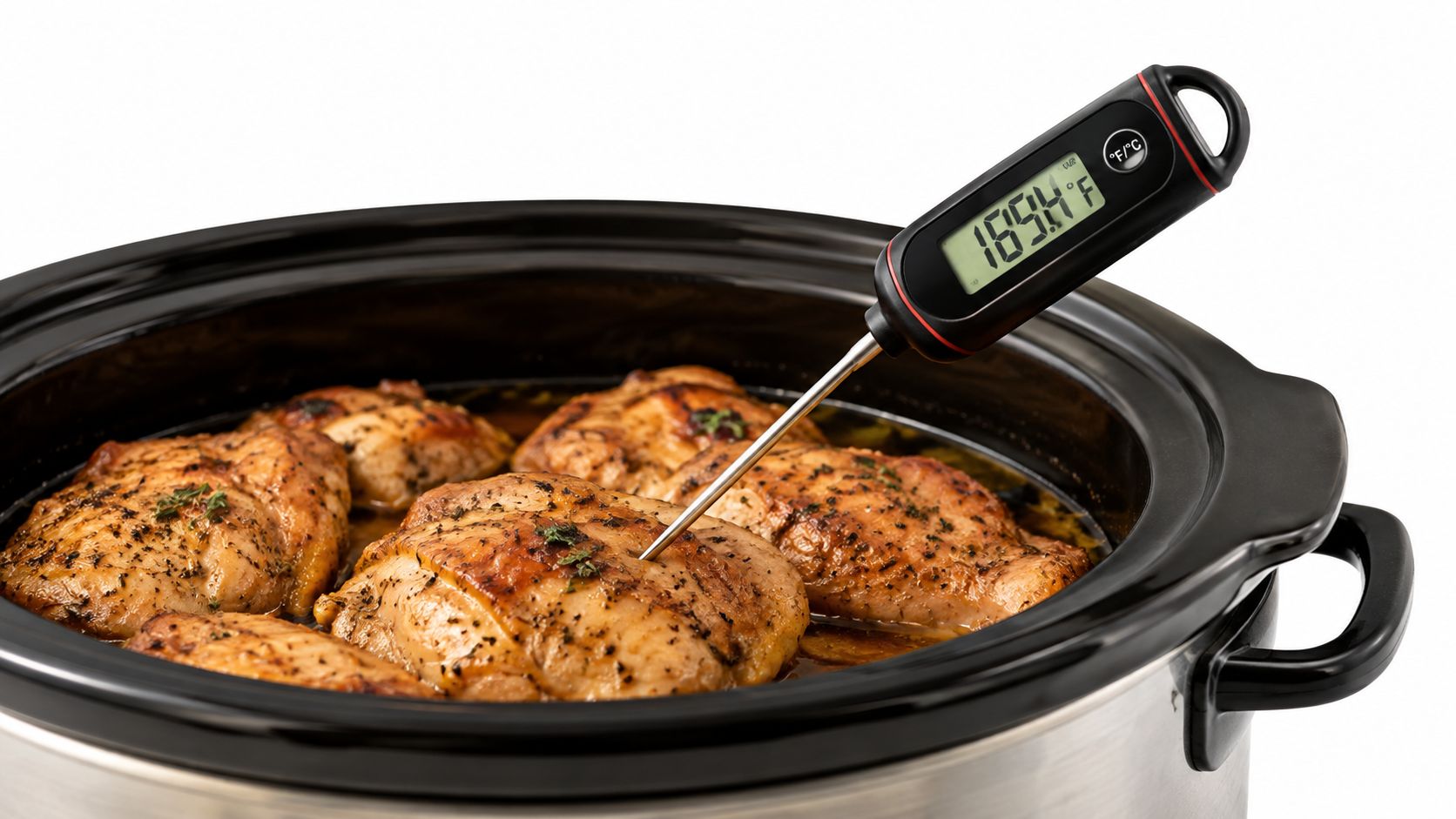
The three controls that matter
- Temperature: Check the thickest part of the meat with a thermometer.
- Texture: Stop at the safe temperature for sliceable thighs, or allow more cooking for a softer, shreddable result.
- Heat circulation: Keep the cooker covered and avoid packing it too tightly.
The same Maine guidance recommends filling a slow cooker no less than half full and no more than two-thirds full, keeping the lid on during cooking, and using a thermometer instead of timing alone. Those details affect more than convenience. A very sparse or overfilled cooker can heat differently, while repeated lid lifting slows the cooking process.
Practical rule: Use the cooking range to know when to check, not when to serve.
Chicken thighs are especially dependable because dark meat can remain moist while it reaches the same safety standard required for breasts, wings, whole birds, and ground poultry. That forgiving quality doesn't make overcooking impossible, though. Too much time can push the meat from tender to shredding and leave a texture you didn't intend.
How to Cook Chicken Thighs in a Slow Cooker Step by Step
A good method has few moving parts. Season the meat, arrange it so heat reaches it evenly, keep the lid closed, and verify the center before serving.
Prepare and load the cooker
Pat the thighs dry before seasoning. Dry surfaces hold seasoning more evenly, and removing excess moisture helps the spices cling instead of sliding into the cooking liquid.
Place aromatics or vegetables underneath, then arrange the thighs in a reasonably even layer. Don't compress them into a dense stack if you can avoid it. The USDA slow-cooker safety guidance supports loading the cooker without overpacking and positioning the food for even heating.
Add enough sauce or liquid to support the recipe, but don't assume that submerging the chicken guarantees tenderness. Moisture in the pot can't prevent a thigh from becoming overcooked if it stays on heat too long.
Choose the setting and protect the heat
If your schedule allows, start on High for the first hour, then switch to Low. This approach can reduce the time poultry spends warming slowly and gives the cooker a stronger start, as described in the USDA guidance above.
Keep the lid closed. Check only when you're near the expected finish window, and have the thermometer ready before opening. Slow cookers generally operate around 170–280°F, so the cooker's setting and the food's internal temperature aren't interchangeable measurements.
For more weeknight meal ideas that use similarly direct instructions, see easy slow-cooker meals. If you also use an air fryer for crisp finishes or quick sides, The Air Fryer Everyday Cookbook | Digital PDF contains 100 recipes arranged across appetizers, main courses, sides, breads, desserts, snacks, salads, and sauces.
Check the thickest part
Insert the probe into the thickest section, avoiding bone, fat, or gristle. The chicken needs to reach 165°F / 74°C at that point. If one piece is much thicker than the others, test that piece first.
If the meat has reached the safety minimum but still feels firmer than you want, close the lid and continue cooking briefly. If it has reached the tender texture you want, remove it from direct heat rather than treating the recipe's maximum time as a requirement.
Boneless Skinless vs Bone-In Thighs for Slow Cooking
The cut changes the schedule more than most seasoning decisions. Boneless, skinless thighs suit a tighter weeknight window, while bone-in thighs take longer but can deliver a fuller, more substantial bite.
| Cut | High | Low |
|---|---|---|
| Boneless, skinless thighs | About 2–3 hours | About 3–5 hours |
| Bone-in thighs | Roughly 3–4 hours | Roughly 5–7 hours |
These benchmarks come from timing guidance for chicken thighs in a slow cooker, but they're starting points rather than guarantees. Stacked thighs, added vegetables, and a very full pot can push the finish later because the cooker has more food to heat through.
Choose boneless for schedule control
Boneless skinless thighs are easier to portion, easier to probe, and generally faster to cook. They work well when you want pieces that remain intact for serving over rice, grains, or vegetables. They also make sense when dinner has a narrow arrival window and you don't want the bones to complicate carving or eating.
Their trade-off is structural. With less connective and bone-related protection, they can move from juicy to overdone more quickly if you ignore the thermometer and leave them cooking far beyond the useful range.
Choose bone-in for a slower, richer result
Bone-in thighs are a good choice when you have more flexibility and want meat that can become particularly soft. They tolerate a longer cook well, but their shape makes temperature checking slightly more deliberate. Probe the thickest meat and avoid touching the bone, since the bone can distort the reading.
Neither cut is automatically better. Pick boneless when predictability and speed matter most. Pick bone-in when you want a more substantial texture and can accommodate the longer low-setting range.
The main mistake with both cuts is assuming that longer always means better. Thighs can become shreddably tender, but too much cooking can make them fall apart and lose their intended texture. Check temperature, then judge whether you want a clean slice or a pulled texture.
Seasoning Strategies and Simple Flavor Variations
Slow-cooker chicken thighs need seasoning that can stand up to moisture. A dry rub alone can taste muted after hours in a covered pot, so build flavor in layers with salt, aromatics, spices, and a finishing element such as acid or fresh herbs.
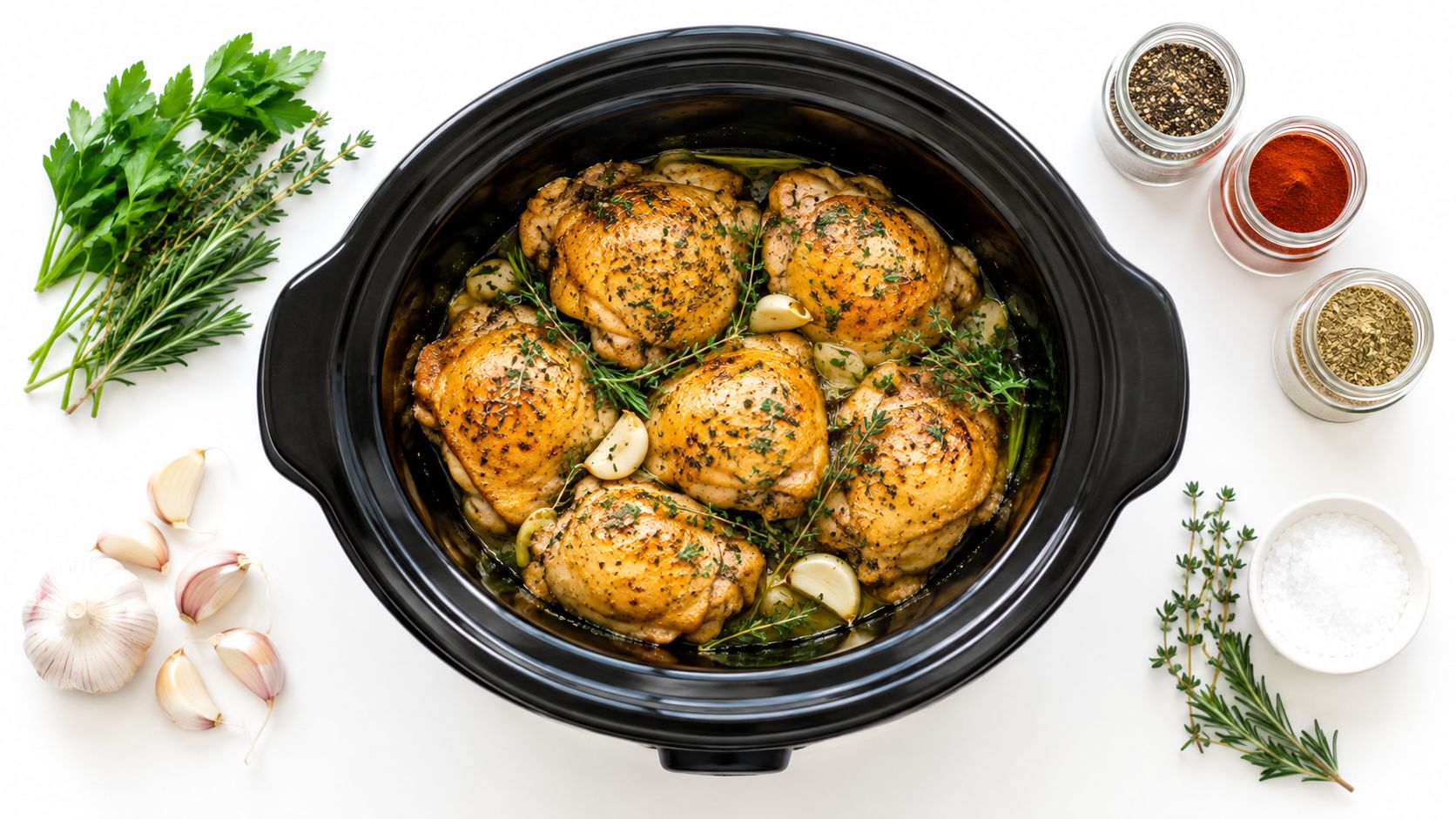
Start with salt and black pepper, then choose one clear flavor direction rather than adding every spice in the cabinet. Garlic, onion, paprika, dried herbs, mustard, and stock all work because they remain recognizable after a long, moist cook.
Four practical flavor paths
- Herb and garlic: Use garlic, oregano or thyme, onion, and a modest amount of stock. Finish with lemon juice or chopped parsley.
- Smoky and warm: Combine paprika, cumin, garlic, and a little chili. Serve with rice, beans, or tortillas.
- Sweet and sharp: Pair honey or another sweet element with mustard, garlic, and lemon. Add the acid carefully so it brightens rather than dominates.
- Mediterranean-style: Use oregano, garlic, onion, lemon, and olives. Add fresh herbs after cooking to keep their flavor distinct.
The liquid should support the seasoning, not wash it out. If the finished sauce tastes flat, adjust it after cooking with salt, acid, or a small amount of concentrated stock. For a deeper explanation of that pantry ingredient, use this guide to what chicken bouillon is.
Searing is optional, not a safety requirement. Browning the thighs first can add roasted flavor and improve the surface texture, but it creates another pan and another cleanup step. On a busy night, seasoning well and finishing with fresh herbs or a bright sauce may deliver a better effort-to-reward balance.
Recipe testing commonly places slow-cooker thighs around 4–5 hours on Low or 2–2.5 hours on High, with some guidance extending that to 4–6 hours on Low or 2–3 hours on High. Recipe timing and temperature guidance for slow-cooker thighs also distinguishes the safety floor from the texture range: thighs are safe at 165°F, while many cooks prefer them around 170°F to 185°F for a softer result.
Keep the temperature strategy unchanged when you switch flavors. A tomato-based sauce, a mustard glaze, or a broth with herbs may alter taste and moisture, but none replaces the final thermometer check.
Troubleshooting Dry, Bland, or Overcooked Slow Cooker Thighs
Dry thighs usually reflect a control problem, not a lack of liquid. The meat may have cooked past the texture you wanted, the pot may have been too full, or the lid may have been opened repeatedly. Liquid helps create a moist environment, but it can't reverse prolonged cooking.
Diagnose the result, then change one variable
Dry or stringy: Check earlier next time, especially with boneless pieces. Use the thermometer to find the safe finish, then stop once the texture suits the dish. If the batch is already dry, shred it and mix it with some cooking liquid, sauce, or dressing instead of serving large intact pieces.
Falling apart: The thighs have gone beyond a sliceable texture. That isn't automatically a failure. Use the meat for tacos, sandwiches, bowls, or a chicken salad, but shorten the next cook if you want pieces that hold together. This slow-cooker chicken salad resource is a useful direction for repurposing tender meat.
Bland: Slow cooking can soften the impact of surface seasoning. Taste the liquid before serving and correct it with salt, acid, herbs, or a concentrated savory ingredient. Add fresh garnishes at the end rather than expecting dried spices alone to provide all the brightness.
Unevenly cooked: Reconsider the arrangement. Stacked meat, added vegetables, and a very full cooker can extend the cooking window. Spread the thighs more evenly and avoid filling beyond the recommended capacity.
Safety still comes first
The useful distinction is between safe, tender, and overcooked. Public food-safety guidance sets poultry's minimum at 165°F / 74°C, while recipe guidance notes that thighs can become more tender around 175°F to 185°F. The best stopping point depends on whether you're serving intact thighs or intentionally pulling them apart.
Don't use appearance alone to judge doneness. Sauce color, browned spices, and the meat's surface can mislead you. Insert the probe correctly, avoid the bone, and let that reading guide the safety decision.
A thermometer prevents both undercooking and unnecessary cooking. It isn't just a safety tool, it's a texture tool.
Final Checks Before You Serve
Take one final reading in the thickest part of the largest thigh, keeping the probe away from bone, fat, and gristle. Confirm that it has reached 165°F, then decide whether the texture is right for the meal. If the meat is tender enough, remove it from the cooker instead of leaving it on heat while everyone gets ready.
Taste the cooking liquid before plating. Add salt or a little acid if it tastes dull, and use fresh herbs for a clean finish. If the sauce is thin, spoon it over the chicken or reduce it separately rather than cooking the thighs longer just to concentrate the liquid.
Serve intact thighs with rice, potatoes, grains, or vegetables, or shred them for wraps, tacos, salads, and sandwiches. The repeatable habit is simple: use time as a range, temperature as the safety check, and texture as the final decision.
Just Cook It offers downloadable cookbooks and practical recipe resources for everyday home cooking, including clear instructions that can be read on a phone, tablet, laptop, or e-reader. Visit Just Cook It to explore recipe collections that can help you build more dependable weeknight meals around techniques like this one.