These eight dinners don't depend on processed substitutes or protein powder. They build protein from lentils, beans, tofu, tempeh, grains, eggs and dairy, combined so a normal portion does real work. If you want an Indian angle on the same approach, try these protein-packed Indian veg ideas from DietOwl alongside the dal below.
You'll see the same strategy repeated with different flavours. Pair a legume with a grain, add soy or dairy as a second anchor, or use cheese and yogurt to lift an otherwise light bowl. Most use canned beans, frozen vegetables and pantry spices, so you can swap what's missing and still eat well. Protein notes here are practical estimates based on standard cooked portions, and they'll vary with brand, serving size and method. Cooked weight matters, because ingredients absorb water as they cook.
Table of Contents
- 1. Red Lentil Dal (Indian)
- 2. Black Bean and Corn Enchiladas (Mexican-Style)
- 3. Teriyaki Tofu and Edamame Rice Bowls (Japanese-Inspired)
- 4. Tempeh Stir-Fry with Vegetables
- 5. Lentil Bolognese Pasta
- 6. Greek Baked Gigantes with Feta
- 7. Halloumi and Chickpea Grain Bowls
- 8. Three-Bean Vegetarian Chili
- High-Protein Vegetarian Dinner Ideas: 8-Meal Comparison
- Build a Better Vegetarian Dinner Rotation
1. Red Lentil Dal (Indian)
Red lentil dal is the fastest route from pantry to bowl. Split red lentils soften in about 20 to 25 minutes with no soaking, then take on turmeric, cumin, garlic and ginger while they break down into a thick, spoonable stew.
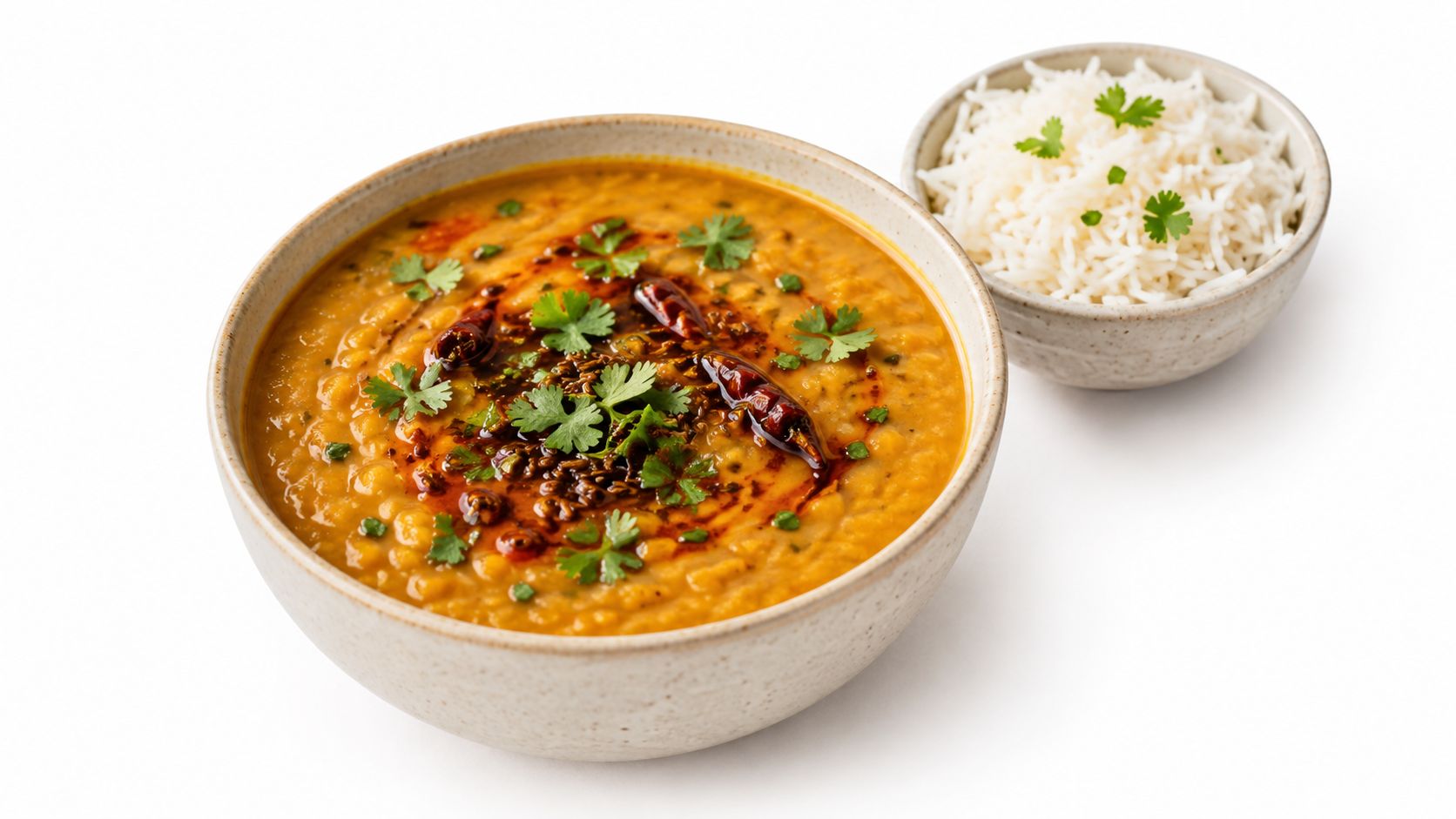
A cooked cup of lentils weighing about 198 grams supplies roughly 18 grams of protein, according to USDA FoodData Central data for cooked lentils. That same data puts cooked lentils at about 9.0 grams of protein per 100 grams, which is why you should judge the meal by cooked portions, not the higher numbers printed for dry lentils.
How to Make It Work on a Weeknight
- Rinse first: Wash red lentils until the water runs mostly clear to cut foam and grit.
- Finish with tadka: Bloom cumin seeds and dried chili in hot oil, then pour the sizzling mixture over the dal.
- Brighten at the end: Add lemon juice just before serving so the spices don't taste flat.
Serve it the way many households do, with basmati rice, roti and cucumber or yogurt on the side. The yogurt isn't garnish here. It's your second protein source. Dal tadka is the brighter, quicker everyday version, while dal makhani is richer and slower.
For more meals in this style, these quick Indian vegetarian dinner recipes use the same pantry logic.
Practical rule: If the dal tastes dull, it usually needs salt and acid, not more spice.
2. Black Bean and Corn Enchiladas (Mexican-Style)
Black beans, corn and cheese make a filling that's quick to assemble and substantial enough for dinner. Jarred enchilada sauce cuts prep time; plan on about 30 minutes from filling the tortillas to serving.
Corn tortillas hold seasoned black beans, sweet corn and cheese beneath red or green chile sauce. Beans provide the main plant protein, while cheese adds a second source. A typical half-cup serving of legumes provides approximately 8 grams of protein and 7 to 9 grams of fiber, according to a Harvard-published review of legume nutrition.
Small Details That Prevent Failure
Heat tortillas for 20 to 30 seconds in a dry skillet or microwave them under a damp towel. Flexible tortillas are easier to roll without cracking. Spread a little sauce in the baking dish first to prevent sticking and keep the bottoms from drying out.
Mash about a third of the beans into the filling so the corn and cheese stay in place as you roll. Use canned beans and frozen corn to save chopping and cooking time. Green enchilada sauce tastes brighter; red sauce brings a warmer, earthier flavor. Roasted poblano adds depth, though it takes extra time to prepare.
For more ideas using dried chiles, tomatoes, garlic, onions, cilantro and lime, Mexican Home Cooking | Digital PDF covers 49 everyday recipes. These healthy Mexican dinner ideas offer more weeknight options.
3. Teriyaki Tofu and Edamame Rice Bowls (Japanese-Inspired)
Tofu alone can feel light. Tofu plus edamame doesn't. That pairing is the point of this bowl, with pan-seared cubes glazed in teriyaki sauce over rice, cucumber and pickled vegetables for contrast.
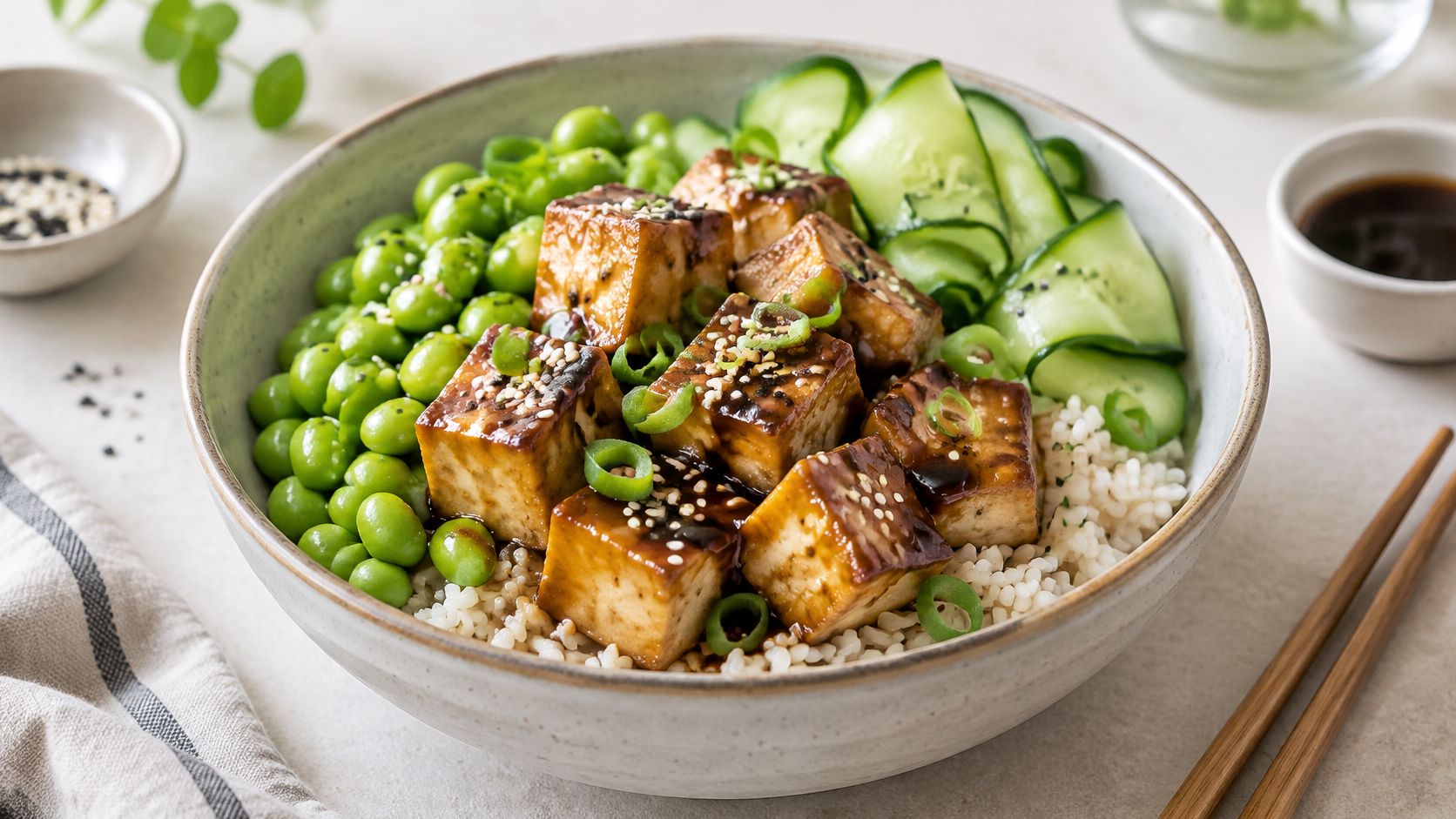
Protein quality improves when you don't rely on a single source. A 2025 modeling study found vegetarian meals worked best when 30 to 50% of protein came from soy foods and/or dairy and eggs, alongside beans, peas or lentils and a smaller share from grains, nuts or seeds, as reported in research on vegetarian meal protein quality. Tofu and edamame over rice fits that pattern in a very ordinary bowl.
Get the Tofu Crisp
Press firm tofu for 15 to 20 minutes, pat it dry and dust it lightly with cornstarch. If you skip pressing, it steams instead of browns. That's edible, but it won't hold the glaze well.
- Sear first, sauce last: Add teriyaki in the final minute so the sugars don't burn.
- Keep something raw: Cucumber or pickles stop the bowl turning soft and sweet.
- Batch the base: Cook extra rice and tofu on Sunday and portion them for the week.
Japanese home cooks often serve tofu with steamed rice, pickles and miso soup, and that structure works here too. For more in that direction, explore these Japanese home cooking recipes and adapt the sides.
4. Tempeh Stir-Fry with Vegetables
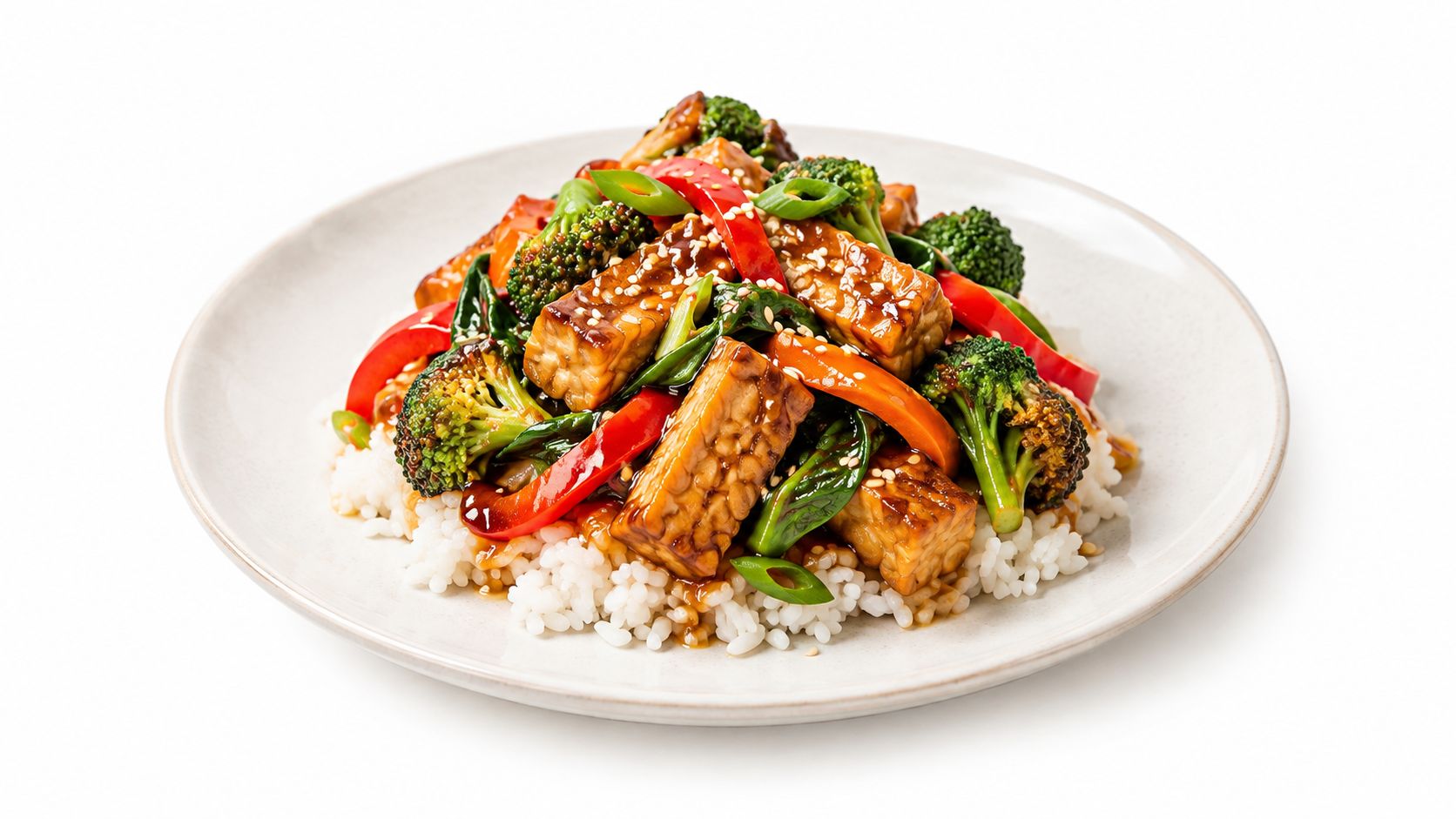
Tempeh splits opinion until it's cooked properly. Raw from the pack, it can taste bitter and dense. Steamed, marinated and browned hard in a hot pan, it becomes nutty, firm and savoury.
This fermented soybean cake is traditional in Indonesian cooking, including tempeh goreng and sambal-based dishes. Many U.S. grocery chains now stock it beside tofu, so it's no longer a specialist shop ingredient.
The Prep Step Most People Skip
Steam or simmer tempeh for 10 minutes before frying. It softens the texture and takes the edge off the bitterness, then the surface absorbs marinade far better. Cut it thin or into small cubes for maximum browning.
Marinate for at least 15 minutes in soy sauce, lime or rice vinegar and garlic. Longer is fine, but 15 minutes already changes the result.
Don't crowd the pan. Tempeh needs contact with hot metal, not steam from a pile of vegetables.
Cook the tempeh first, set it aside, then stir-fry broccoli, peppers or whatever frozen vegetables you have. Bring everything back together with soy, garlic, ginger and chili. Serve over rice or noodles, and you've got a soy anchor plus grains rather than soy alone.
The trade-off is flavour. Tempeh won't disappear into a dish the way tofu does, and that's either its strength or the reason you'll swap back. Try it once properly browned before deciding.
5. Lentil Bolognese Pasta
Lentil bolognese succeeds when you stop asking it to imitate beef. Brown or green lentils simmered with tomato, onion, carrot, celery, garlic and herbs break down just enough to make a thick ragù that coats pasta properly.
Start with the mirepoix and don't rush it. Onion, carrot and celery need to go soft and sweet before the lentils arrive, because that base carries the whole sauce. Add tomato paste and cook it briefly until it darkens. That step deepens colour and removes the raw, tinny edge.
Building a Sauce That Clings
Use brown or green lentils, not red ones. Red lentils collapse into dal territory, while brown lentils hold enough shape to feel like ragù. Simmer until tender, then stir in a splash of pasta water so the sauce binds to tagliatelle, pappardelle or penne.
- Pasta choice matters: Wide noodles catch more sauce than spaghetti.
- Finish in the pan: Toss pasta and sauce together for a minute instead of ladling sauce on top.
- Add a second anchor: Parmesan, a spoon of ricotta or a side of garlicky white beans lifts the meal further.
Many vegetarian Italian cookbooks treat lentil ragù as a weeknight staple for good reason. It freezes well, reheats without falling apart and feeds people who claim they don't like lentils, because the tomato and herbs lead.
The honest drawback is time. It needs a proper simmer, not ten hurried minutes. Make a double batch on Sunday and the weeknight version becomes just pasta and reheating.
6. Greek Baked Gigantes with Feta
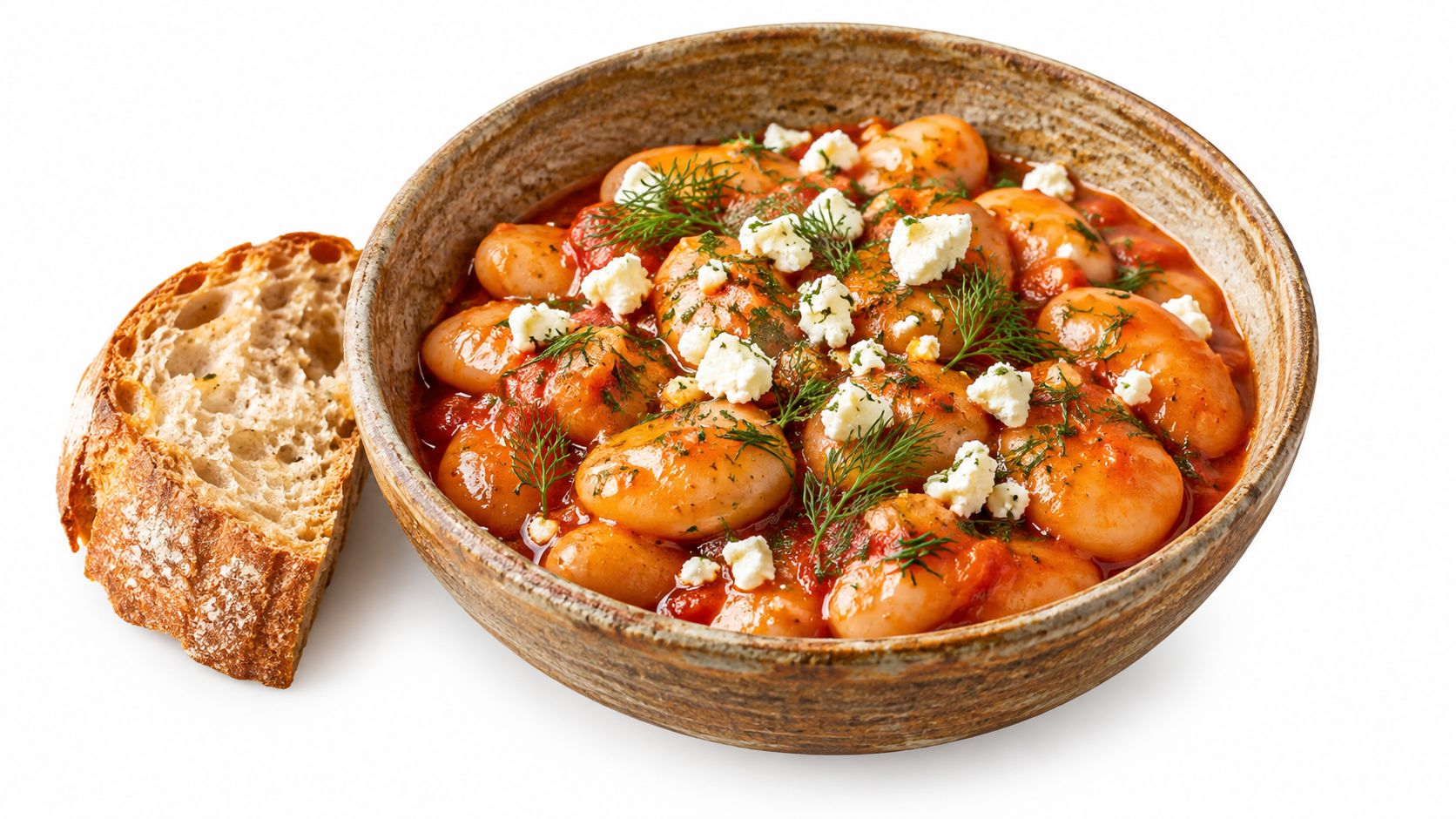
Gigantes plaki looks like a side dish and eats like a main. Large butter beans bake in tomato, olive oil, onion and dill until creamy inside, then get topped with feta, crusty bread and a sharp salad.
It's a common taverna dish across mainland Greece and the islands, usually served as meze. Increase the portion, add feta and bread, and the protein picture changes completely. Beans bring protein and fiber, feta adds a second, saltier anchor, and bread turns the sauce into part of the meal instead of something left in the dish.
The Canned Bean Shortcut
Use canned butter beans or cannellini beans and skip the overnight soak. Drain and rinse them well, then bake in the sauce until the liquid thickens to a loose, spoonable consistency. If it's watery, you've stopped too early.
Add feta during the last 10 minutes of baking if you want it softened, or crumble it over just before serving for a fresher, sharper bite. Both work. The baked version melds into the beans, the raw version stays distinct.
Weeknight judgement: Canned beans in a well seasoned sauce beat dried beans you never got around to soaking.
Serve with Greek salad and bread for the classic combination. Leftovers improve overnight as the beans absorb tomato and dill, which makes this a strong cook-once option. It's also naturally aligned with Mediterranean eating patterns without needing expensive ingredients or meat substitutes.
7. Halloumi and Chickpea Grain Bowls
Halloumi is the cheese that behaves like a protein centrepiece. This semi-hard brined cheese from Cyprus holds its shape in a hot pan, develops a golden crust and stays squeaky inside. Pair it with chickpeas and grains, and you've built a bowl with three textures doing different jobs.
Roast chickpeas with paprika and olive oil at 220°C (425°F) for 20 to 25 minutes until crisp at the edges. Cook bulgur or farro until just tender, then dress the grains while they're still warm so they absorb lemon and olive oil instead of leaving dressing pooled at the bottom.
Timing Is the Whole Recipe
Halloumi waits for no one. Pat the slices dry, fry in a non-stick pan over medium heat and serve immediately. Ten minutes later it firms up and loses its appeal.
- Grains first: Start bulgur or farro before anything else.
- Chickpeas second: Roast while you chop cucumber, tomatoes and herbs.
- Halloumi last: Sear, assemble, eat.
Halloumi grain bowls show up on Mediterranean-style menus because the formula is flexible. Swap farro for quinoa, chickpeas for white beans, or lemon dressing for yogurt sauce if you want more protein.
This kind of flexible, plant-forward eating is mainstream now. ADM's 2025 research reported that 46% of consumers identify as flexitarians, and 86% of plant-forward consumers believe obtaining protein from a wider variety of sources is healthier, as set out in ADM's 2025 alternative protein outlook. This bowl fits that mindset exactly.
8. Three-Bean Vegetarian Chili
Three-bean chili is the answer when you need to feed several people, fill the freezer or stop thinking about dinner for two days. Kidney, black and pinto beans simmer with tomatoes, onion, peppers, chili powder, cumin and smoked paprika into something thicker than soup and more forgiving than most stews.
Rinse canned beans to reduce sodium and foam. Using three beans isn't just for looks, each holds its shape differently, so the pot has texture instead of uniform softness.
Depth Without Meat
- Bloom the spices: Cook chili powder, cumin and smoked paprika in oil with the onion before adding tomatoes.
- Add cocoa: A teaspoon of cocoa powder or a square of dark chocolate adds depth you can't quite name.
- Thicken naturally: Stir in masa harina or mashed beans at the end rather than serving a watery chili.
Top bowls with avocado, shredded cheese and Greek yogurt, as many home cooks do at potlucks and game-day gatherings. The yogurt and cheese matter nutritionally, not just as toppings.
Plant proteins generally require fewer land, water and energy resources than animal proteins, as discussed in research on plant protein sustainability and processing, though comparisons shift when protein quality is included. Beans from a tin remain one of the simplest low-processing options.
For more ways to use the same tins, browse these easy recipes with beans before your next shop.
High-Protein Vegetarian Dinner Ideas: 8-Meal Comparison
| Dish | Preparation Complexity | Time and Resource Requirements | Protein Profile | Key Advantages | Ideal Use Case |
|---|---|---|---|---|---|
| Red Lentil Dal | Easy; simmer lentils and season | 20–25 minutes; basic pot and pantry spices | About 18 g per cup of cooked lentils | Inexpensive, high in fiber, freezes well | Quick weeknight meals and batch cooking |
| Black Bean and Corn Enchiladas | Easy; fill, roll, and bake | About 30 minutes; baking dish and tortillas | Black beans and cheese provide substantial protein | Adaptable, crowd-friendly, minimal cleanup | Make-ahead dinners and feeding a group |
| Teriyaki Tofu and Edamame Rice Bowls | Moderate; press and sear tofu, cook rice | Under 30 minutes; skillet and pot or rice cooker | High; tofu and edamame are complete soy proteins | Customizable and meal-prep friendly | Fast, balanced plant-based meals |
| Tempeh Stir-Fry with Vegetables | Moderate; steam, brown, and stir-fry | Quick; skillet and refrigerated tempeh | About 19 g per 100 g of tempeh | Protein-dense, firm texture, bold-sauce friendly | Quick dinners with a hearty soy protein |
| Lentil Bolognese Pasta | Easy to moderate; simmer sauce and cook pasta | 40–45 minutes; one pot plus pasta pot | Lentils provide about 18 g per cooked cup, plus pasta | Budget-friendly, familiar, freezes well | Family meals and meat-free pasta dinners |
| Greek Baked Gigantes with Feta | Easy with canned beans; longer with dried beans | 45–60 minutes baking; one baking dish | Beans provide about 15–17 g per cooked cup, plus feta | Fiber-rich and good warm or at room temperature | Mediterranean-style mains and shared meals |
| Halloumi and Chickpea Grain Bowls | Easy to moderate; sear cheese and assemble bowls | Quick; frying pan and grain pot | Halloumi provides about 20 g per 100 g; chickpeas add protein | Multiple protein sources and flexible serving temperature | Fast dinners and meal-prep bowls |
| Three-Bean Vegetarian Chili | Easy; combine and simmer ingredients | 30–45 minutes; one pot, longer for deeper flavor | About 15 g per cup of combined beans | Inexpensive, filling, freezes and reheats well | Batch cooking, potlucks, and feeding a group |
Build a Better Vegetarian Dinner Rotation
A reliable rotation doesn't need eight new recipes every week. It needs a small set of protein anchors you already know how to cook, plus bases and sauces that make those anchors taste different. Keep canned beans and dry lentils in the pantry, firm tofu or tempeh in the fridge, frozen vegetables ready to go, and one cooked grain you can reheat without thinking.
Then build the plate in threes. Pick one anchor, such as lentils, beans, tofu or tempeh. Add one base, such as rice, pasta, bulgur, farro or bread. Finish with one high-flavour element, such as tadka, teriyaki glaze, chile sauce, feta, yogurt sauce or a sharp lemon dressing.
That structure also helps you judge whether a meal described as high protein delivers. A 2025 systematic review found reported protein intake across vegetarian patterns ranged from 10% to 17.4% of energy, according to a review of protein intake in vegetarian diets. The practical lesson for home cooking is simple. Do not trust the label alone; check the portion and name the main protein sources in the serving you will really eat.
So, can a vegetarian dinner support higher protein goals without powders? Yes, if you plan for two anchors instead of hoping one ingredient carries the meal. Lentils plus yogurt, beans plus cheese, tofu plus edamame and chickpeas plus halloumi all do that in ordinary food. Active adults and beginners benefit most from that clarity, because realistic portions matter more than long ingredient lists.
Cost points the same way. The cheapest dependable dinners here are dal, lentil bolognese and three-bean chili, because lentils and canned beans keep well, cook predictably and don't need specialty substitutes. Tofu and tempeh cost more effort in prep than beans, but they repay it with texture and variety. Halloumi and feta are best treated as flavour-dense boosters rather than your only protein plan.
If soy, dairy or a specific grain doesn't work for you, swap within the same role. Use eggs or beans where tofu would go, yogurt sauce where cheese would go, and rice where farro or bulgur would go. You're protecting the structure of the meal, not following the recipe out of obligation.
For more structured planning, Just Cook It offers the Protein Powerhouse digital cookbook, with recipes organized from breakfast through dessert and nutrition information listed for each recipe. Use it if you want that protein-per-serving clarity built in, or rely on the anchor system above and start with whichever of these eight dinners matches what's already in your kitchen tonight.
Ready to cook high protein vegetarian dinners without guesswork or bland substitutes? Just Cook It publishes kitchen-tested digital cookbooks with clear instructions, everyday ingredients and lifetime access you can read on any device. Visit today and pick the collection that fits your weeknight rotation.