Sour cream makes waffles tender on the inside, crisp on the outside, and slightly tangy without tasting sour. It also adds richness to the batter, giving the waffles more flavor than a standard recipe. Serve them straight from the waffle iron with butter, maple syrup, or fresh berries for an easy breakfast worth making from scratch.
A lot of that same crisp, reheating-friendly thinking leads straight to The Air Fryer Everyday Cookbook | Digital PDF, a digital cookbook the publisher sells for home cooks who want simple, delicious recipes for busy days and practical ways to get food crisp with less fuss.
Table of Contents
Why Sour Cream Makes a Superior Waffle
A good sour cream waffle solves a problem plain waffle batter often creates. It gives you enough richness for a tender interior, but it also keeps the flavor from turning dull once butter and syrup hit the plate.
The biggest advantage is texture. Sour cream is thick, high in fat, and naturally acidic, so it changes how the batter sets in the iron. You get a softer, more delicate crumb than you would from a milk-based batter, but the waffle still feels structured enough to hold toppings without going limp right away. That balance is the whole appeal.
Acidity matters here, too. In a waffle batter, sour cream does more than add tang. It works with the leavening to encourage a lighter interior, and it tempers sweetness so the finished waffle tastes rounded instead of one-note. The flavor is subtle. The effect on the batter is not.
What sour cream is doing in the bowl
Sour cream pulls several jobs at once. It adds moisture, but because it is thicker than milk or buttermilk, it does not thin the batter too much. That thicker batter usually spreads more slowly in the waffle iron, which helps create a plush center instead of a flat, bready one.
It also brings enough fat to soften the crumb. That is why sour cream waffles often stay tender even after they cool for a few minutes. If you have ever made waffles that looked promising in the iron and then turned tough on the plate, this is one of the fixes.
This is also why smart substitutions matter. Greek yogurt can work, but it is usually leaner and tangier, so the waffle may lose some richness and set a little tighter. Full-fat yogurt gets closer. Crème fraîche gives excellent tenderness, though it is milder and often pricier. Knowing that trade-off helps you swap ingredients without losing the signature texture. Cooks who like working with cultured ingredients usually notice the same pattern across other fermented and cultured recipes. Acidity changes structure as much as flavor.
Why these waffles stand out on the plate
Sour cream waffles earn their keep before toppings even show up. They have built-in contrast, which is why they taste complete with nothing more than butter or a little jam.
-
Balanced flavor: The slight tang keeps maple syrup, fruit compote, or whipped cream from tasting overly sweet.
-
Tender interior: The fat and thickness of sour cream help the center stay soft and almost custardy.
-
Stronger texture: The batter has enough body to produce waffles that feel substantial, not thin or flimsy.
-
Better flexibility for swaps: Once you understand what sour cream contributes, you can substitute with purpose instead of guessing.
That last point is what makes this style especially useful for home cooks. Sour cream is not just a flavor choice. It is a texture tool, and once you treat it that way, the rest of the recipe starts to make more sense.
The Classic Sour Cream Waffle Recipe
Sunday-morning waffles usually fail in one of two ways. They turn heavy because the batter is overmixed, or they come out pale and bready because the recipe never built in enough lift to begin with. This classic sour cream version avoids both problems by using a rich cultured base and separating the eggs.
The old formula is simple: cake flour, plenty of sour cream, three eggs, baking powder, baking soda, a little sugar, and salt. The key move is beating the whites separately, then folding them in at the end. That extra step gives the batter a lighter structure without thinning it out, which is why these waffles stay tender instead of rubbery.
Ingredients
For the classic batch:
-
Cake flour: 1 cup
-
Sour cream: 2 cups
-
Eggs: 3, separated
-
Baking powder: 1.5 teaspoons
-
Sugar: 1 teaspoon
-
Baking soda: 1 teaspoon
-
Salt: a pinch
Method that keeps the batter light
Separate the eggs first. Put the yolks in a medium bowl and the whites in a clean bowl with enough room to expand. Whisk the yolks with the sour cream until the mixture is smooth and evenly blended.
In another bowl, stir together the cake flour, baking powder, sugar, baking soda, and salt. Add the dry ingredients to the sour cream mixture and stir just until no dry pockets remain. A few small lumps are fine.
Beat the egg whites until they hold soft peaks. They should look glossy and full, not stiff or chalky. Fold them into the batter in two additions with a wide spatula. The first addition lightens the base. The second keeps more of the air in place.
Egg-white fold: A gentle fold matters more than a perfectly smooth batter.
Why each step matters
Each part of this method has a job. The yolks enrich the batter and help it emulsify, so the waffles cook up evenly instead of separating in the iron. Cake flour keeps the crumb softer than all-purpose flour would. The sour cream brings enough body that the batter can hold the whipped whites, which is one reason this recipe feels more reliable than thinner waffle batters.
This is also a good example of technique doing the heavy lifting. The ingredient list is short, but the method creates the texture. That same approach shows up in other better-for-you comfort food makeovers, where structure and moisture matter as much as richness.
What to expect from the finished waffle
Expect a waffle with some heft. The outside should brown well, while the center stays soft and almost cake-like. These are not the lacy, ultra-thin kind. They hold butter, fruit, or syrup well because the interior has real structure.
If you have only made standard milk-based waffle batters, this one will feel thicker and a little more old-school. That is part of its strength. A thicker batter is easier to portion, less likely to run to the edges too fast, and more forgiving if your waffle iron runs hot in spots.
Secrets to a Perfectly Crisp Exterior
You pour the batter, close the iron, and a few minutes later the waffle looks browned. Then it bends instead of crackling. That usually comes down to moisture management, not the recipe itself.
For sour cream waffles, crispness depends on getting the outside to set before the interior gives off too much steam. A hot iron does that job. The waffle temperature guidance from KitchPrep puts the target at about 375°F (191°C), with an effective range near 350 to 400°F (175 to 200°C). If your iron runs cool, the batter sits and steams. If it is fully preheated, the exterior starts browning right away and the crust has a chance to dry out properly.
What to watch while the waffle cooks
Time matters less than the signals your waffle gives you. One sour cream waffle recipe may need a longer cook, another may finish faster, and both can be right because waffle irons vary so much in heat, plate depth, and how hard they trap steam.
A few cues are more reliable than the clock:
-
Steam: A strong burst at the start is expected. Once that slows down, the waffle is usually close to done.
-
Color: Look for an even golden brown. Pale patches usually mean the crust has not fully set.
-
Resistance: The lid should lift cleanly. If the waffle clings, give it another moment.
-
Portioning: Use a measured scoop so the batter reaches the grids without flooding the edges.
This is one of those small habits that pays off every time. Underfilling gives you thin sections that dry out before the rest browns. Overfilling forces batter out the sides and can leave the center less crisp because excess moisture has nowhere to go.
Holding and reheating without losing the crust
The minute a waffle leaves the iron, move it to a rack. Not a plate. A plate traps steam underneath and softens the bottom fast. For short holding, keep the waffles in a single layer on a rack in a low oven. That keeps them warm while the surface stays exposed to dry heat.
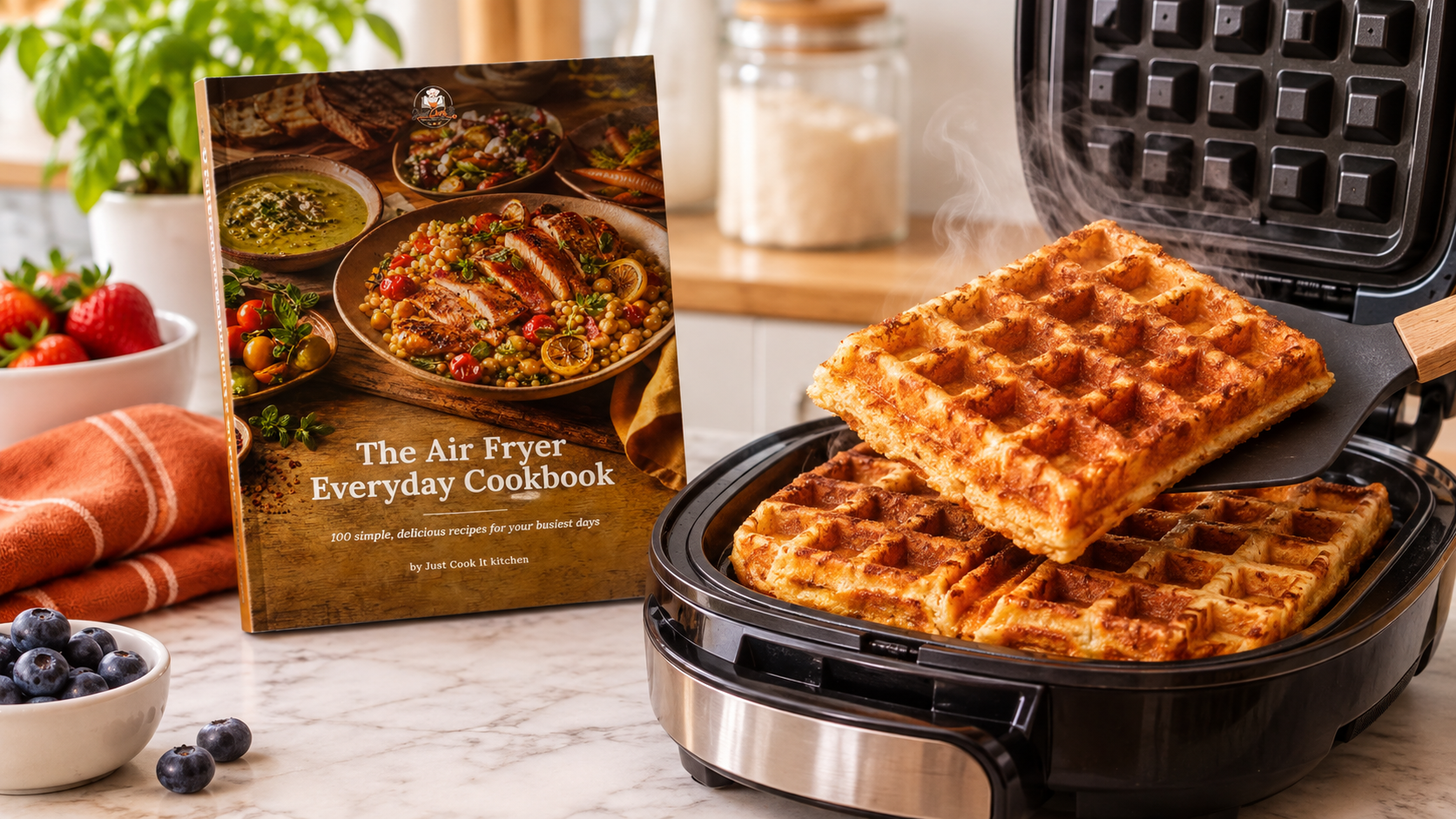
For leftovers, an air fryer is one of the better tools for bringing the crust back. The publisher sells The Air Fryer Everyday Cookbook | Digital PDF, a digital cookbook with 100 simple, delicious recipes for busy days built around crisp, golden results with less oil, less time, and less fuss.

The Air Fryer Everyday Cookbook | Digital PDF
Get the CookbookThe same rule applies whether the waffles are refrigerated or frozen. Give them space so hot air can move around them. This offers an advantage over a microwave, which reheats the center well but leaves the exterior soft, and over an overcrowded toaster oven, which can warm the waffles before it re-crisps them. Dry circulating heat restores texture. Moist trapped heat takes it away.
Smart Ingredient Swaps That Actually Work
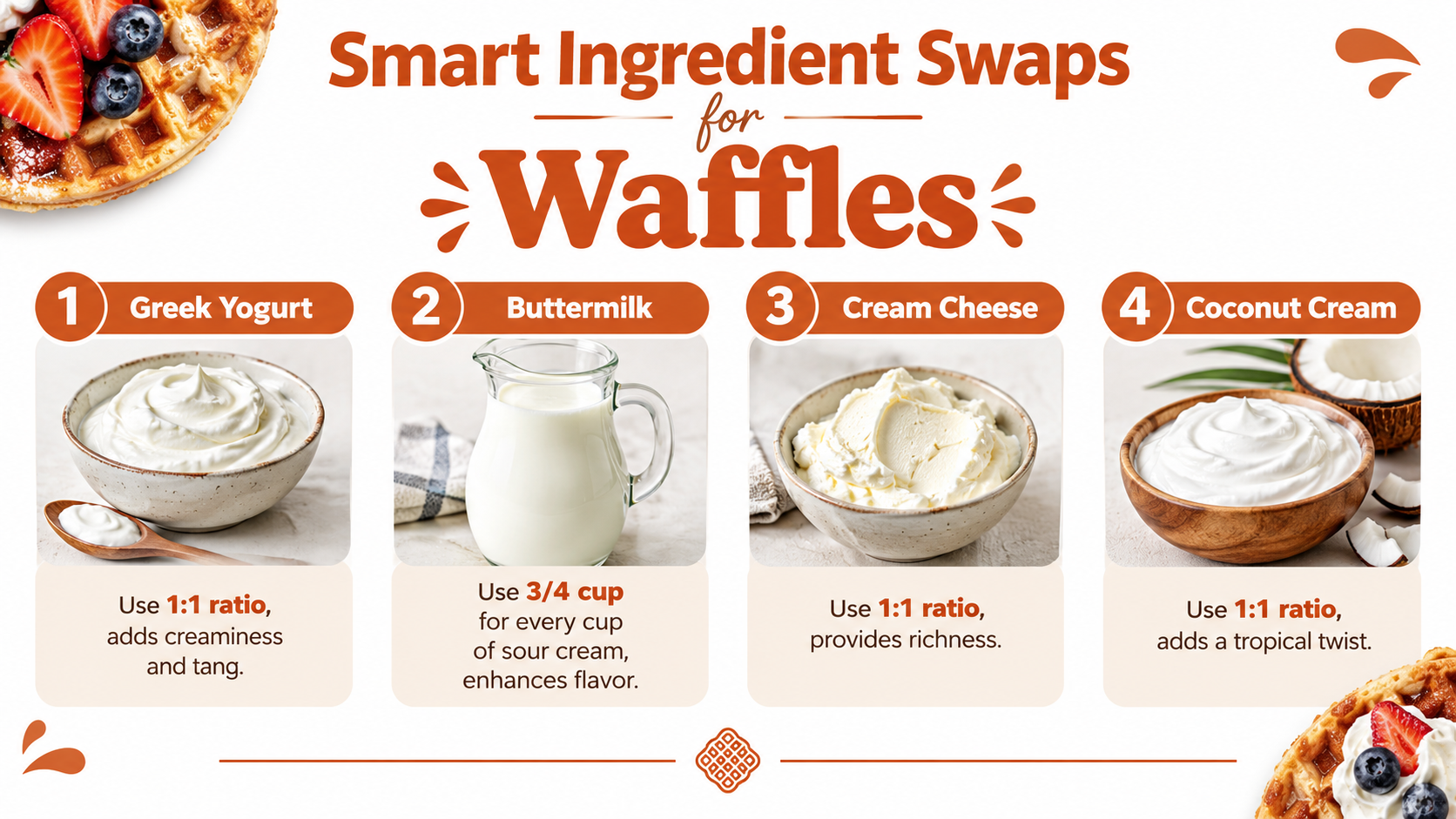
Most substitution advice for sour cream waffles is too casual. A 1:1 swap can work in the sense that the batter still cooks, but that doesn't mean the texture stays the same. For waffles, that difference matters.
The substitution discussion at A Pretty Life in the Suburbs notes that Greek yogurt is a common substitute, but its lower fat and higher protein content can produce a less tender waffle. That's the trade-off many recipes skip. Similar thickness doesn't guarantee similar browning, softness, or crispness.
Sour Cream Substitution Guide
| Ingredient | Ratio (for 1 cup Sour Cream) | Texture Impact | Flavor Impact | Adjustment Tip |
|---|---|---|---|---|
| Greek yogurt | 1:1 | Less tender, slightly firmer | Tangy, a bit cleaner | Add a little extra melted butter or a small splash of milk if batter seems tight |
| Full-fat plain yogurt | 1:1 | Closer to sour cream, still a touch lighter | Mild tang | Watch browning and keep mixing gentle |
| Buttermilk | Use enough to make a looser batter base, not a direct equal swap | Thinner batter, less rich | More pronounced tang | Reduce other liquid and expect a lighter interior |
| Crème fraîche | 1:1 | Rich and tender | Mild tang, fuller dairy flavor | Usually needs the fewest changes |
| Dairy-free yogurt | Start with a thick style | Varies by brand, often softer or less rich | Depends on base ingredient | Add fat if the batter seems lean |
| Cottage cheese | Blend smooth before using | Can be tender but less uniform if not blended well | Mild, slightly savory dairy note | Blend thoroughly and loosen with milk if needed |
How to choose the right swap
Not every substitute solves the same problem.
-
Missing sour cream: Use full-fat plain yogurt or crème fraîche when the goal is the closest texture.
-
Need more moisture: Buttermilk can help, but the rest of the liquid usually needs tightening.
-
Working around dairy limits: Thick dairy-free yogurt is more reliable than thin plant-based milk in this style of batter.
A batter that's gone too protein-heavy often cooks up tougher. A batter that's too wet may brown before it crisps. That balancing act is the same reason ingredient replacement guides for baking, including bran swap options that change texture in different ways, are more useful when they explain structure instead of just listing substitutes.
Same thickness doesn't mean same waffle. Fat, protein, and water all pull the texture in different directions.
What usually works and what usually doesn't
The safest path is to preserve richness first, then adjust looseness. Greek yogurt can absolutely work, but it often needs help. Crème fraîche usually behaves more naturally. Buttermilk is useful, but it changes the batter more dramatically than people expect.
That approach keeps the result closer to what makes sour cream waffles worth making in the first place.
Beyond Syrup Creative Serving Ideas
Sour cream waffles can handle sweeter toppings than plain waffles because the batter already has balance. That little bit of tang keeps dessert-style toppings from turning cloying. It gives the plate more range than a standard breakfast stack.
A simple version still works beautifully. Powdered sugar, berries, and softly whipped cream let the waffle stay in charge. But this batter also stands up to richer finishes, especially when the edges are crisp and the center stays tender.
Sweet toppings that fit the waffle
-
Berry route: Fresh berries and whipped cream keep the contrast bright.
-
Citrus angle: Lemon curd adds sharpness that matches the tang in the waffle.
-
Chocolate finish: Ganache and toasted nuts turn breakfast into dessert fast.
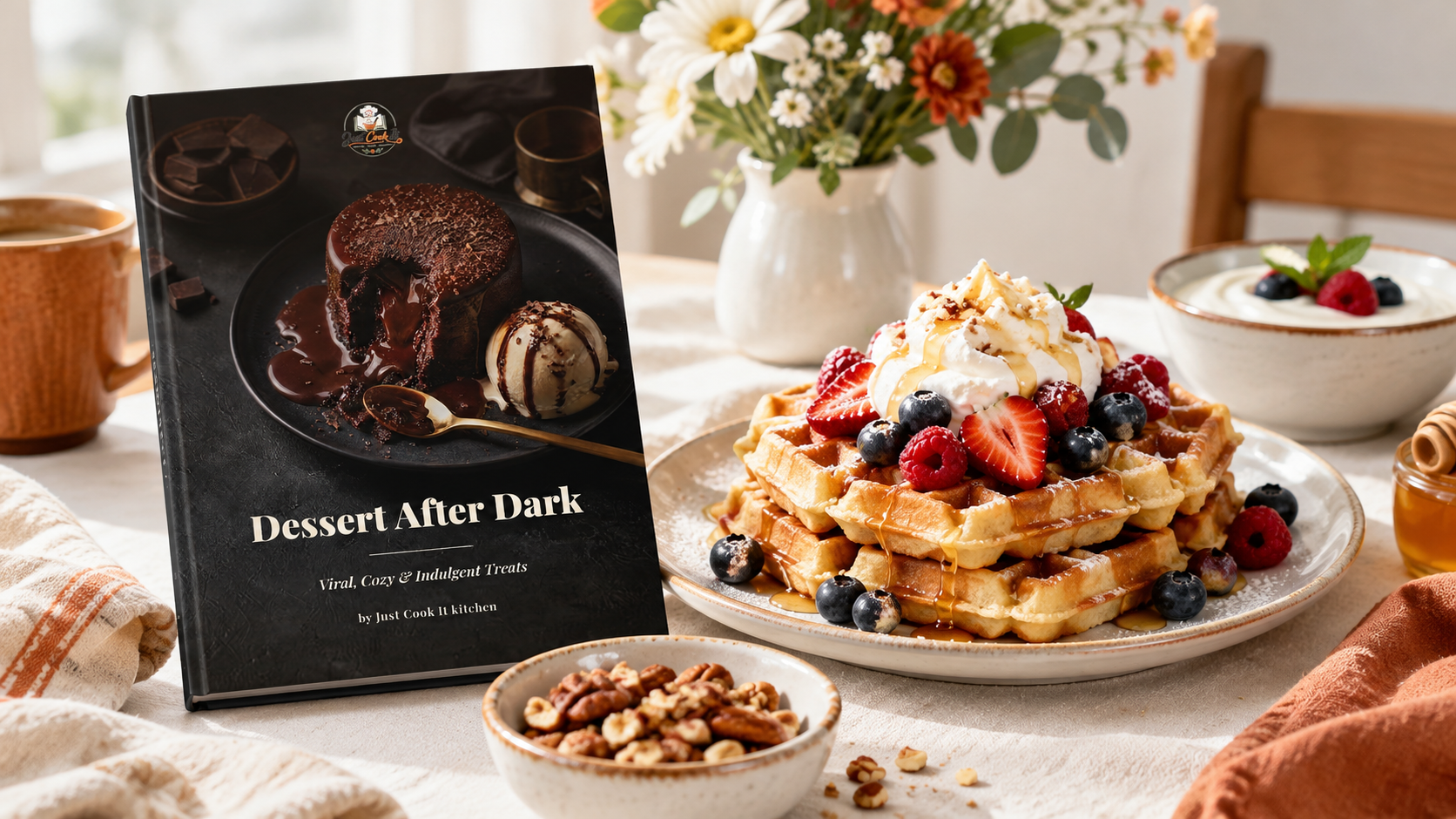
For cooks who want to push that dessert direction further, the publisher sells Dessert After Dark: 75 Viral Dessert Recipes | Digital PDF, a digital cookbook for cozy, indulgent after-dark baking with gooey centers, glossy ganache, and torched meringue in the mix.

Dessert After Dark: 75 Viral Dessert Recipes | Digital Cookbook (PDF)
Get the CookbookThat kind of dessert thinking works especially well here because sour cream waffles aren't one-note sweet. They can carry richer toppings without disappearing underneath them.
Savory and brunch-ready ideas
These waffles don't have to stay in dessert territory.
-
Egg pairing: A fried or poached egg turns the waffle into a full brunch plate.
-
Smoked salmon option: Tangy batter pairs well with creamy and salty toppings.
-
Herb finish: Chopped chives or dill can pull the whole plate away from sweetness.
A plain syrup pour is easy, but it doesn't show off what makes sour cream waffles distinct. Their flavor is already doing part of the work, so the toppings can be more intentional and less sugary by default.
Your Guide to Making and Freezing Waffles
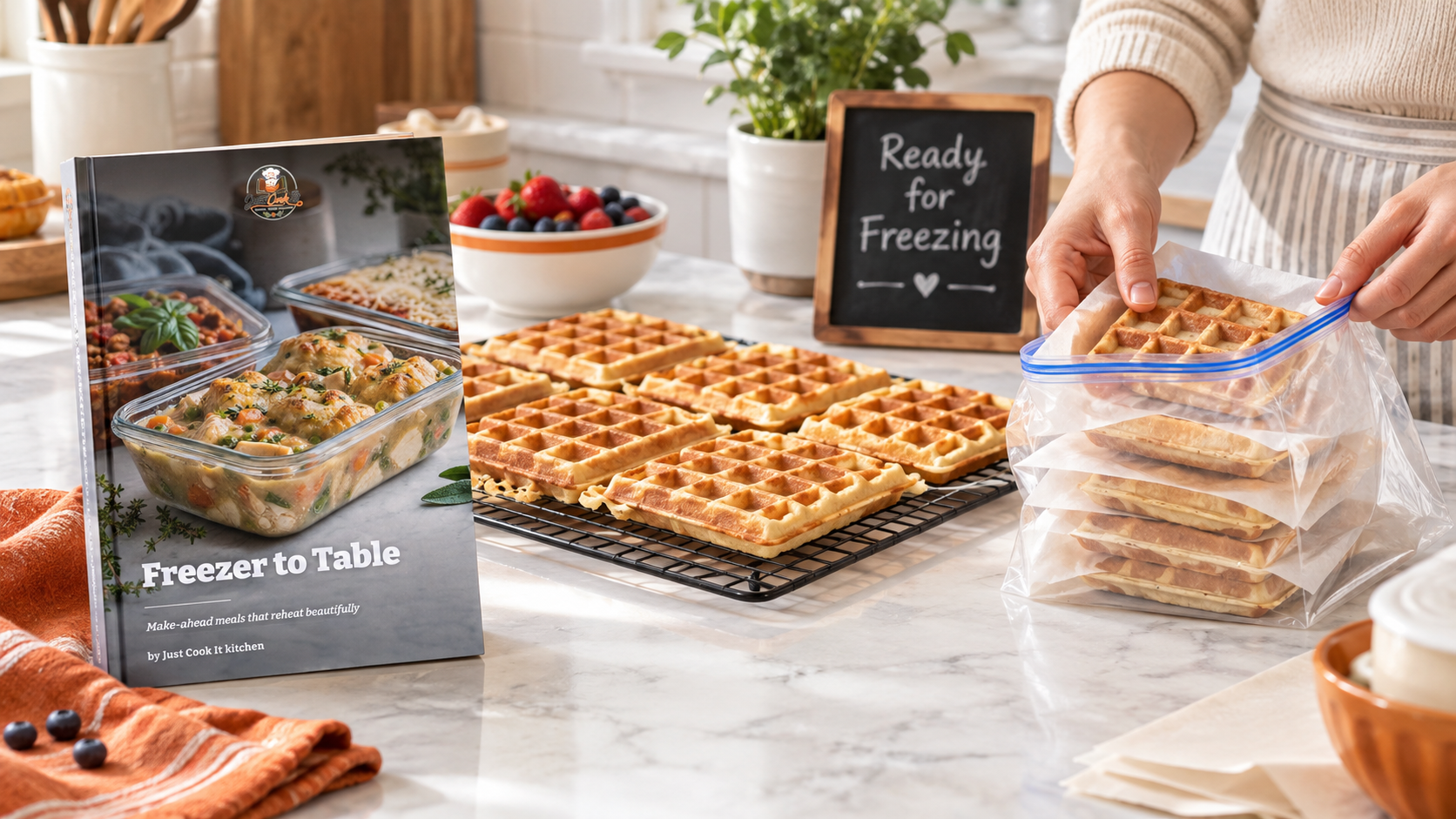
Batch-cooking sour cream waffles makes sense because the batter style reheats well when the waffles are cooled and stored properly. The key is to protect the crust before freezing. Warm waffles stacked too soon trap steam, and that moisture turns into ice and softness later.
Start by cooling the waffles in a single layer on a rack. Once the surface feels dry and no steam is hanging around them, they can be frozen without locking in extra moisture.
Freeze them in a way that protects texture
-
Rack cooling: Let each waffle cool completely before packing.
-
Sheet-pan freeze: Freeze in a single layer first so they don't stick together.
-
Bag storage: Move the frozen waffles to a freezer-safe bag once firm.
That first freeze on a tray matters. It keeps the waffles separate, so a cook can pull out only what the morning needs instead of thawing a whole stack.
The publisher sells Make-Ahead Freezer Meal Cookbook | Digital PDF, a digital cookbook of 75 make-ahead freezer meal recipes designed to reheat beautifully, and that same freezer-first mindset applies cleanly to breakfast prep.

Freezer to Table: 75 Make-Ahead Freezer Meal Recipes | Digital Cookbook PDF
Get the CookbookFor families trying to make mornings less chaotic, Grab-and-Go Breakfasts Before School | Digital PDF fits the same problem from the breakfast side. It's a digital cookbook the publisher sells with 75 make-ahead breakfasts kids can grab before school, built for rushed mornings and food that can be prepped ahead instead of improvised.
Reheat for crisp edges, not soft middles
A microwave warms the waffle, but it won't restore the crust. A toaster or air fryer is better because both expose the surface to dry heat. The air fryer is especially useful for thicker sour cream waffles that need to crisp outside while warming through the center.
A simple batch-prep routine
-
Cook fully: Let the waffles reach full color before pulling them from the iron.
-
Cool completely: Use a rack, never a sealed container.
-
Freeze flat: Start on a tray so each waffle stays separate.
-
Reheat dry: Use a toaster or air fryer when it's time to serve.
Frozen waffles only reheat well when they were cooked and cooled well in the first place.
That routine turns sour cream waffles into a practical make-ahead breakfast instead of a one-morning project.
Crisp reheating is what makes batch-made waffles worth the effort, and The Air Fryer Everyday Cookbook | Digital PDF is built around that kind of fast, less-fuss cooking for busy days. Get it to make better use of the air fryer for waffles, leftovers, and other meals that need real texture instead of a quick warm-up.