A lot of low sugar dessert advice gets one thing wrong. It treats sugar reduction like a straight subtraction problem, as if you can remove sweetness and keep everything else the same. That's why so many recipes turn out flat, icy, dry, or oddly bitter. Good low sugar treats work because something else steps up. Cocoa deepens flavor, citrus sharpens it, berries bring natural brightness, yogurt adds tang, avocado adds body, and alternative flours change texture in ways that can help or hurt depending on how you use them.
The better approach is to build satisfaction first, then keep sweetness measured. That usually means rich bases, careful salt, enough fat, and sweeteners chosen for the job instead of thrown in at random. It also helps to ignore the idea that every dessert has to chase maximum sweetness. Many home cooks do better when they aim for balanced desserts that feel finished, not desserts that imitate candy.
That matters because reduced-sugar eating isn't a fringe habit anymore. One market estimate values the low-sugar indulgent foods market at US$4.2 billion in 2025, with a projection to reach US$8.0 billion by 2035. If you're trying to avoid the all-or-nothing cycle, practical dessert technique matters more than ever. That's also true if you're trying to avoid the kind of excess-and-crash pattern people associate with a sugar rush slot analysis for homeowners.
Below, each dessert follows the same kitchen-first format: active prep time, texture target, swaps that are worth making, storage notes, and a simple nutrition context. Sugar content depends on the brands and ingredients you use, so check labels when specific dietary goals matter.
Table of Contents
- 1. Allulose-Sweetened Chocolate Mousse
- 2. Coconut Flour Brownies with Monk Fruit
- 3. Strawberry Shortcake with Erythritol Whipped Cream
- 4. Dark Chocolate Avocado Truffles
- 5. Almond Flour Lemon Cake with Powdered Monk Fruit
- 6. Peanut Butter Energy Balls with Dark Chocolate Coating
- 7. Greek Yogurt Parfait with Berries and Granola Crumble
- 8. Matcha Green Tea Cheesecake Bites with Allulose
- 8 Low-Sugar Treats Comparison
- Build Your Own Low-Sugar Treat Rotation
1. Allulose-Sweetened Chocolate Mousse
Active prep time is about 5 minutes, plus chilling. The texture target is soft, airy, and spoonable, not stiff like frosting.
Chocolate mousse is one of the easiest places to cut sugar without making the dessert feel compromised. Cocoa already brings bitterness and depth, and whipped cream provides structure. That means the sweetener only has to round the edges instead of carrying the whole flavor.
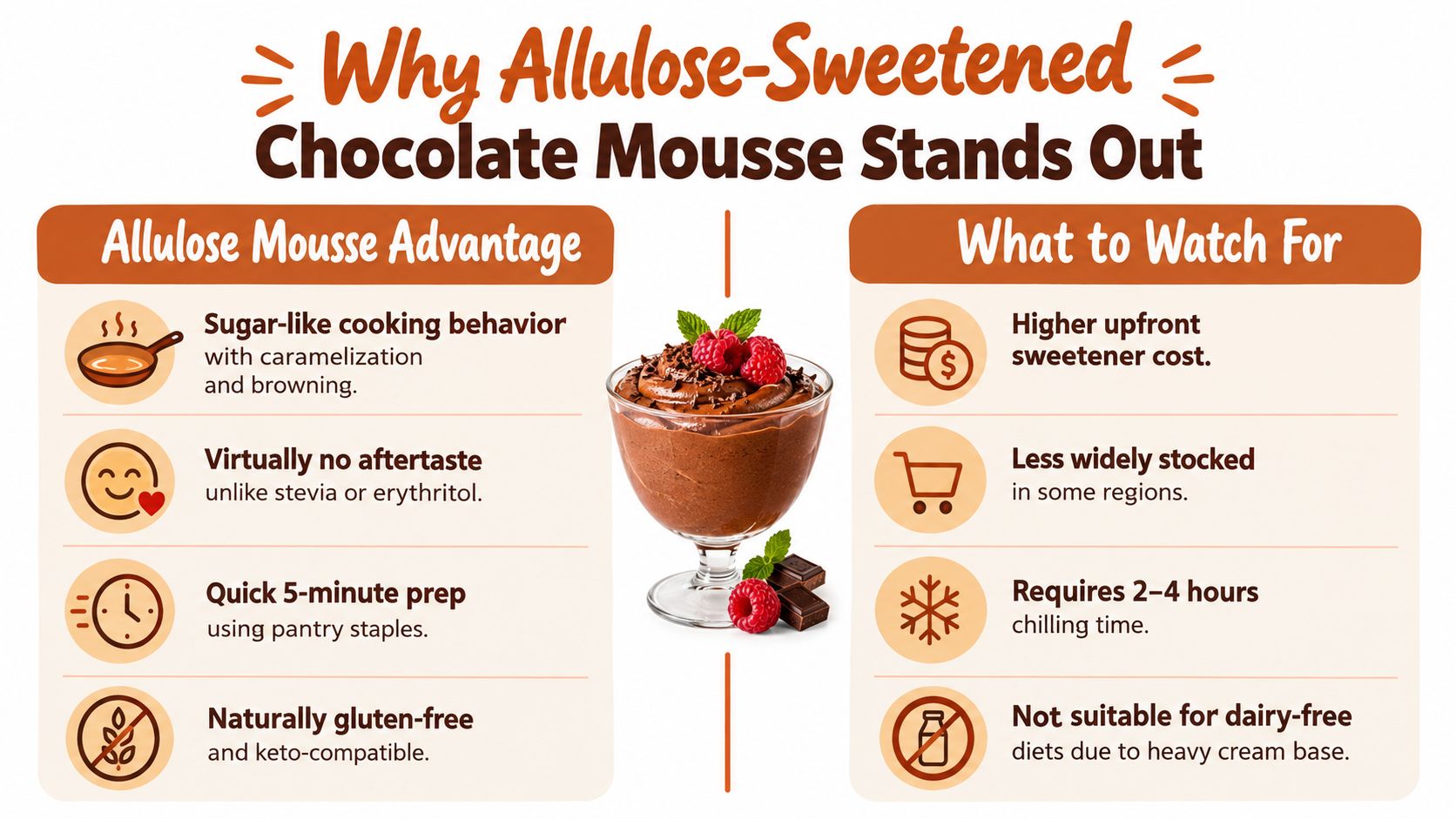
Use heavy cream, unsweetened cocoa powder, allulose, a pinch of salt, and vanilla if you like it. Sift the cocoa first. If you skip that step, you can whip for ages and still end up with tiny dry pockets that ruin the mousse.
What makes it work
Allulose fits mousse better than many granulated alternatives because it dissolves fairly easily and doesn't leave the same cooling effect some sweeteners do. Add it gradually while whisking so it disappears into the cream instead of sitting on the tongue.
Practical rule: If the mousse tastes slightly less sweet than you want before chilling, that's usually right. Cold desserts mute sweetness.
A few useful swaps:
- For deeper flavor: Add espresso powder or a little extra cocoa instead of more sweetener.
- For a firmer set: Chill in small glasses instead of one large bowl.
- For topping: Unsweetened whipped cream or a few dark chocolate shavings work better than sugary sauces.
This is also one of the few low sugar treats that still feels dinner-party ready in tiny portions. If you like collecting more dramatic dessert formats for other nights, Dessert After Dark: 75 Viral Dessert Recipes | Digital PDF is a separate dessert collection with 75 recipes across beverage and dessert chapters.
Storage is simple. Cover and refrigerate for a day or two. If it turns too firm, let it sit briefly before serving.
For nutrition context, keep it modest. This can be lower in sugar than a standard mousse, but it's still a rich dessert because the cream does much of the texture work.
2. Coconut Flour Brownies with Monk Fruit
These brownies reward accuracy more than instinct. Active prep is about 10 minutes, then a short bake, then a full cool before slicing. If the goal is a crackly, bakery-style brownie, coconut flour is the wrong tool. If the goal is a dense, dark square that holds together without much sugar, it can work very well.
The main trade-off is absorption. Coconut flour drinks up liquid fast, so a batter that looks fine for 30 seconds can tighten into paste a minute later. That is why these brownies succeed or fail on small details: measured flour, enough eggs, enough fat, and restraint with sweetener.
A visual guide helps with this kind of batter because consistency matters more than the ingredient list alone.
Start by mixing the wet ingredients until fully smooth, then whisk in cocoa, coconut flour, and monk fruit sweetener just until no dry streaks remain. Overmixing does not build anything useful here. It only gives the coconut flour more time to absorb and can push the batter from spreadable to stiff.
Use the batter itself as the checkpoint. It should look thick, but still soft enough to level in the pan with a spatula. If it looks crumbly or grabs the bowl in one mass, add milk or water 1 tablespoon at a time and wait a minute before adding more. Coconut flour keeps changing after mixing, which is why dumping in extra liquid too fast often creates gummy brownies instead of fudgy ones.
A few choices matter more than the recipe title:
- Pull the pan while the center still looks slightly soft if you want a fudgier result.
- Cool completely before cutting if you want tidy edges. Warm low-sugar brownies break and smear easily.
- Add salt on purpose. Reduced-sugar chocolate desserts often need contrast more than extra sweetness.
Monk fruit sweetener usually works best here in a blend, since pure monk fruit products can taste sharp or leave an aftertaste if the chocolate base is weak. If the flavor still reads flat, increase vanilla or use a little espresso powder. More sweetener is rarely the fix.
For swaps, butter gives a rounder flavor, while neutral oil keeps the crumb a little softer from the fridge. A spoonful of Greek yogurt or sour cream can help if previous batches turned dry, but too much will move the texture toward cake. Chopped walnuts or dark chocolate pieces also help the brownies eat more like dessert and less like a substitution project.
Nutrition-wise, keep expectations realistic. These can be lower in sugar than standard brownies, but they are still rich, calorie-dense, and portion-sensitive. The reason to make them is that they scratch the brownie itch with a different flour and less sugar, as long as you respect how that flour behaves.
3. Strawberry Shortcake with Erythritol Whipped Cream
Shortcake is one of the easier low-sugar desserts to get right because the berries carry so much of the flavor. The catch is that every weak choice shows up fast. Bland strawberries, a dry base, or grainy whipped cream can make the whole dessert feel like a compromise.
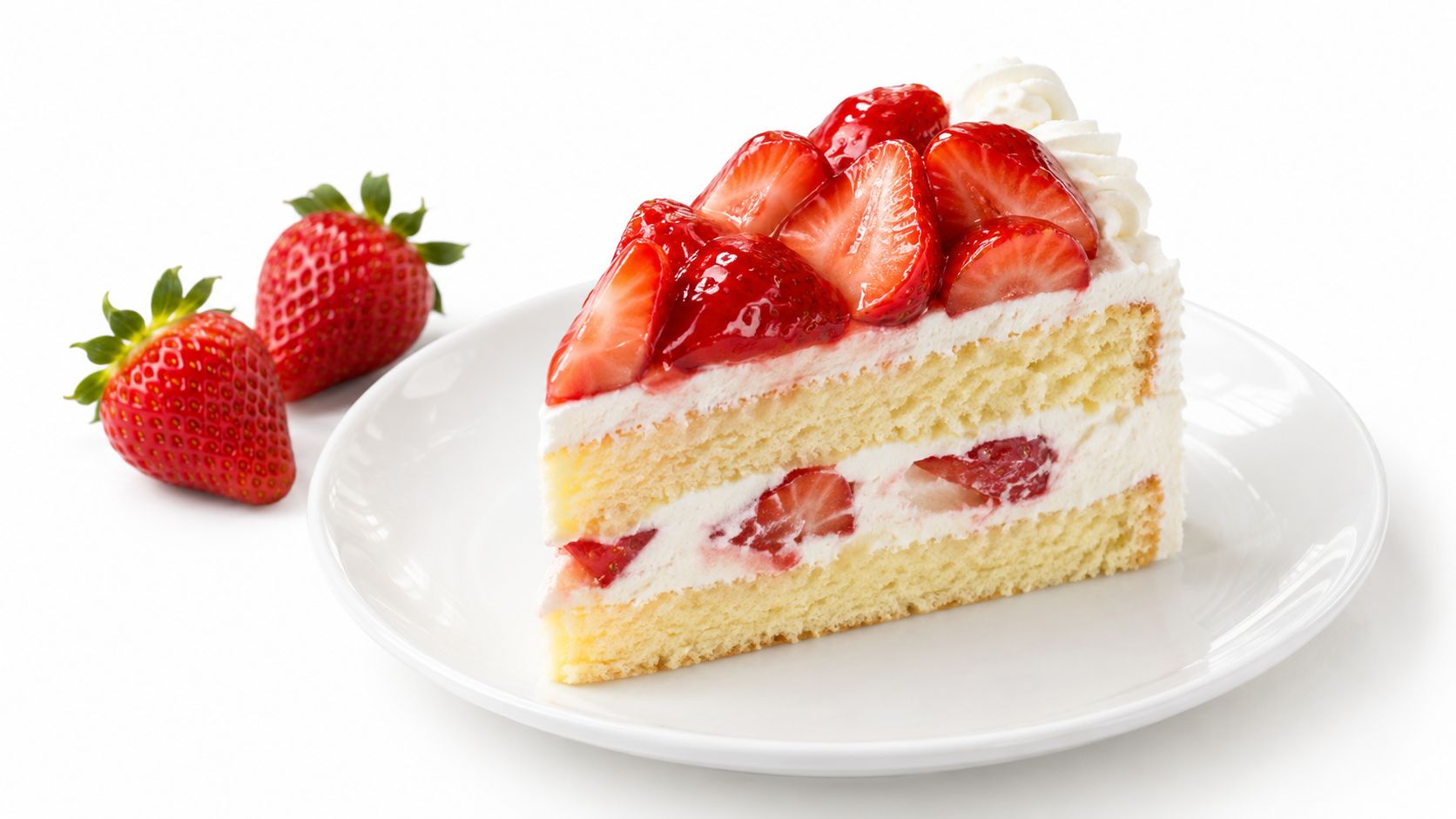
Plan on about 20 to 30 minutes of active prep if you use a quick biscuit or simple cake base, plus cooling time. For a weeknight version, I would rather make drop biscuits than a sponge. They are faster, more forgiving, and sturdy enough to handle juicy fruit without turning soggy.
The order matters here. Slice the strawberries first and toss them with a small amount of erythritol, then let them sit while the base cools. That rest draws out juice and gives you the syrupy layer shortcake needs. If your berries are tart but flavorful, a little lemon zest helps more than piling on extra sweetener.
Whipped cream takes a lighter hand than people expect. Start with cold cream and whip it to loose soft peaks before adding erythritol. Adding the sweetener at the start can slow the whip and leave a slightly sandy texture, especially if the erythritol is coarse. Powdered erythritol works better than granulated if graininess has been a problem.
A few smart adjustments make this dessert more reliable in real kitchens. Use raspberries or a mixed berry blend when strawberries are out of season. Keep the shortcake base on the less-sweet side so the fruit stays in front. If you need the cream to hold for a party, a spoonful of Greek yogurt or mascarpone will firm it up, though the finish becomes a little heavier and less airy.
Serve it soon after assembling. Warm cake collapses the cream, and a fully built shortcake softens quickly once the berry juices start moving.
Nutrition-wise, this usually lands on the lighter end of the dessert rotation, but it still depends on the base and how much cream you use. The practical win is simpler than that. You get a dessert that tastes like actual strawberries, not just sweetener.
4. Dark Chocolate Avocado Truffles
These work best for the reader who wants a small, rich dessert with almost no baking skill required. Active prep is about 10 minutes, then the mixture needs time in the fridge before it is firm enough to scoop and roll. The finish should be dense, smooth, and closer to ganache than frosting.
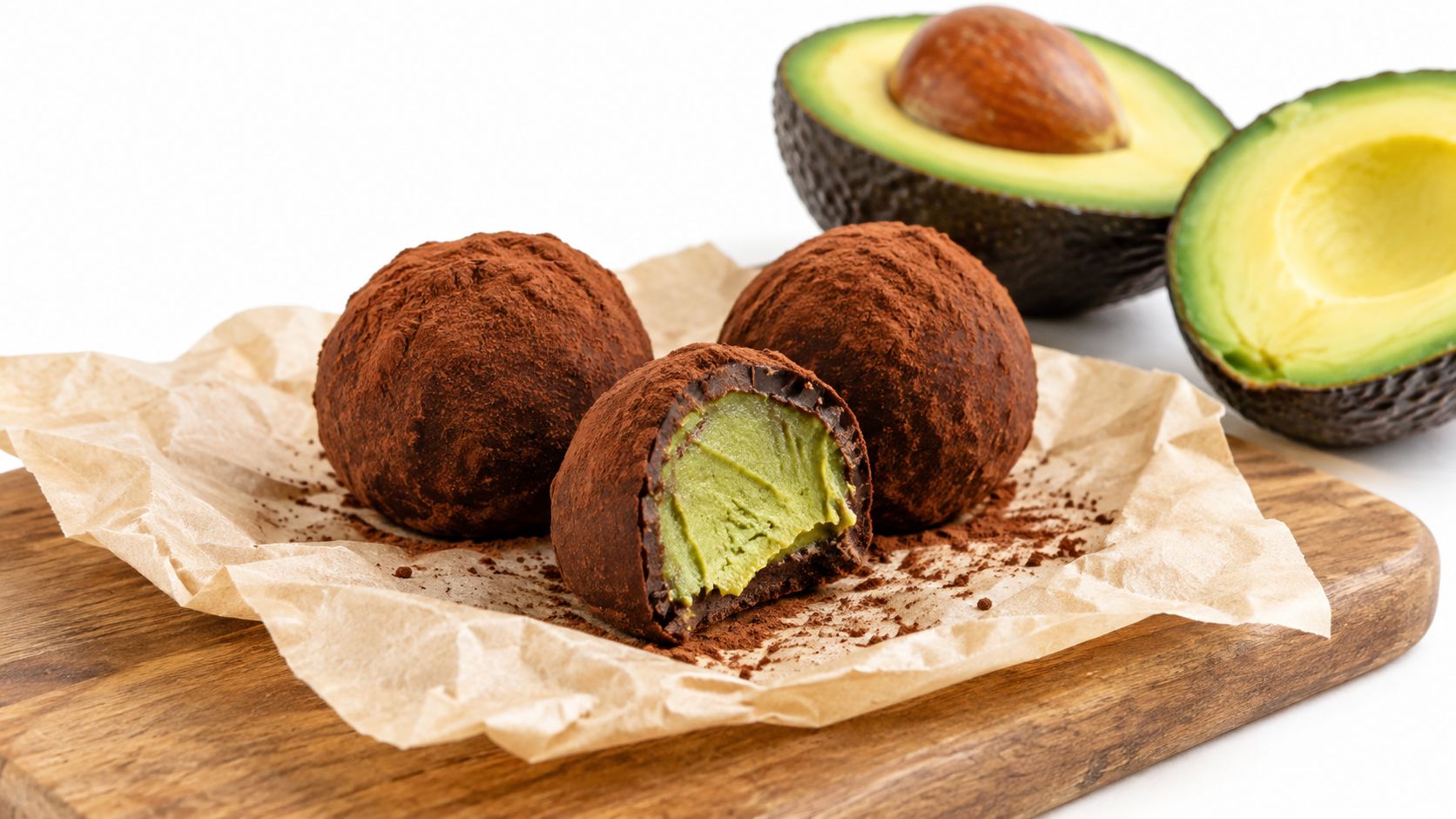
The main job here is balancing fat with cocoa solids. Avocado gives the center its body, but chocolate sets the shape and keeps the truffles from eating like a soft dip. I usually aim for dark chocolate in the bittersweet range because very dark bars can make the avocado taste flatter, while sweeter bars leave the center loose unless you chill it hard.
A food processor makes the smoothest filling. Blend ripe avocado with melted dark chocolate, cocoa powder, salt, and a low-sugar sweetener such as monk fruit or erythritol. Stop as soon as the mixture turns uniform and glossy. If you keep running the machine, the fat can separate slightly and the texture gets heavy.
Two common failure points show up fast. Underripe avocado leaves a grassy taste and tiny lumps. Too much cocoa powder makes the center pasty instead of silky. If you need a quick reference for picking and prepping the fruit, this guide on how to use avocados is useful.
For coating, choose based on use case instead of appearance alone. Cocoa powder is quickest and keeps them firmly in truffle territory. Finely chopped nuts hide messy shaping and add some crunch. Unsweetened shredded coconut softens bitterness, but it also pulls the flavor slightly away from dark chocolate.
Make-ahead is one of this recipe's strong points. Chill the mixture until scoopable, roll with cool hands, then store the finished truffles cold in an airtight container. They taste better after a short rest because the chocolate, avocado, and sweetener settle into each other.
Nutrition is simple here. These are lower in sugar than standard truffles, but still rich from avocado and chocolate. That trade-off is useful if the goal is a small portion that feels complete, not a dessert that pretends richness does not count.
5. Almond Flour Lemon Cake with Powdered Monk Fruit
This is the baked option for readers who want a real sliceable dessert, not a chilled snack rolled into shape. Active prep is about 15 minutes, and the payoff is different from the no-bake treats in this lineup. You get a tender, close crumb and a clean lemon finish that keeps the almond flour from reading as too rich.
Low-sugar lemon cake works because acid does part of the flavor work that sugar usually handles. Powdered monk fruit can leave a slight cooling or sharp note in some batters, but lemon zest, juice, and a small pinch of salt usually pull it back into balance. Vanilla helps less here than bakers often expect.
The main decision is expectation. Almond flour will not give the spring and height of a standard wheat cake, so the better target is a moist, compact cake that slices neatly and stays soft the next day. If you accept that style from the start, the recipe is much easier to get right.
A few technique choices matter more than extra ingredients. Use fresh zest, not bottled flavoring. Rub the zest into the eggs or fat first so the citrus oils spread through the batter instead of sitting in little bitter flecks. Then fold the almond flour in just until no dry pockets remain. Long mixing does not help structure here, and it can leave the crumb tighter and slightly oily.
One quick fix improves most test batches. Add more zest before adding more sweetener.
Pan size also matters with almond flour cakes because the batter does not have much margin for error. A wide pan can leave you with a thin layer that dries at the edges before the center is set. A smaller pan gives better height and a softer middle. If you want a refresher on pan prep and doneness signs, this guide on how to bake a simple cake for beginners is useful.
For serving, keep the finish light. A dusting of powdered monk fruit works. So does a spoon of plain or lightly sweetened yogurt. Heavy frosting usually covers the lemon and makes the cake feel heavier than it needs to. If presentation matters for a brunch table, market stall, or small food business, it helps to see practical display options like this cake stand NZ for cafes.
Clean swaps that usually work:
- Lime instead of lemon for a sharper finish.
- Orange for a softer, rounder citrus note.
- A small handful of berries on top, added lightly so the batter still bakes evenly.
Nutrition context is simple. This cake is lower in sugar than a standard lemon cake, but it is still cake, and almond flour keeps it rich. That trade-off suits readers who want one satisfying slice rather than a larger dessert that tastes flat.
6. Peanut Butter Energy Balls with Dark Chocolate Coating
These earn their place in a low-sugar rotation because they solve a specific problem. You get a quick, portionable treat with almost no equipment, and the peanut butter carries enough flavor that the sweetener can stay in the background.
Plan on about 15 minutes of active prep, plus chilling time. The finished center should feel dense and chewy, not dry or fudgy. If it turns cakey, the dry ingredients ran too high. If it sticks to your hands like frosting, the nut butter or oil went too far.
I get the most reliable texture by mixing natural peanut butter with cocoa powder and powdered monk fruit first, then adjusting in very small increments. Add coconut oil last, only if the mixture will not hold when pressed. That order matters. Extra oil makes rolling easier for about two minutes, then leaves the balls heavy and slightly greasy once chilled.
The chocolate coating is useful, but it is also the part most likely to fail. Cold centers help. Warm chocolate helps too, but only just warm enough to flow. If the centers are soft, they drag into the bowl. If the chocolate is too hot, the coating goes thin and patchy instead of setting with a clean snap.
A few swaps are worth making, and a few are not.
Almond butter works if you want a milder, less salty result. Tahini gives a more grown-up, slightly bitter edge that pairs well with dark chocolate, though it can read drier and may need a touch more fat. Espresso powder is one of the better flavor additions because it strengthens the chocolate taste without pushing sweetness higher. Flaky salt on top fixes flat-tasting peanut butter faster than extra sweetener does.
Skip oats unless you want a more snack-bar texture. They make the centers less candy-like and more bulky, which can be useful, but they also dull the peanut flavor and can make the coating look out of proportion.
Store these in the fridge for the neatest bite, or freeze them if you want a firmer shell. Nutrition-wise, they are lower in sugar than many packaged bites, but they are still energy-dense because of the nut butter and chocolate. That trade-off makes sense for a small, satisfying treat, especially on weeks when baking is not happening.
7. Greek Yogurt Parfait with Berries and Granola Crumble
Active prep time is about 10 minutes if the granola is already made. The texture target is creamy yogurt, fresh fruit, and a crisp topping that stays separate until the last minute.
This is the easiest option on the list to repeat through the week. It can read as breakfast, afternoon snack, or a light dessert depending on how you portion it and how rich the toppings are. Full-fat Greek yogurt usually gives the best result because the extra creaminess makes measured sweetness feel enough.
Use plain Greek yogurt, berries, and a homemade crumble based on nuts or seeds and a low-sugar sweetener blend. Keep the berry layer loose and fresh. If you cook it down into jam territory, the parfait starts feeling heavier and sweeter than it needs to.
Keep the crunch separate
Granola is the first thing to turn a good parfait into a soggy one. Store it on its own and add it right before serving. That one habit changes the dessert more than almost any ingredient swap.
There's also a broader consumer reason this format makes sense. The global low-sugar snacks market was valued at US$11.2 billion in 2025 and is projected to reach US$18.8 billion by 2034, which lines up with the appeal of easy, portionable treats made from familiar ingredients.
If you enjoy making cultured foods and want more context around yogurt-style ingredients and kitchen basics, this resource on fermentation recipes for beginners is worth a look.
A good parfait should contrast three things at once: cold creaminess, bright fruit, and dry crunch.
Nutrition context is simple here. Yogurt parfaits can be among the more everyday-friendly low sugar treats, but the final sugar level depends on the granola, fruit, and any flavorings you add. Labels matter if you're trying to stay within a specific target.
8. Matcha Green Tea Cheesecake Bites with Allulose
Active prep time is around 20 minutes, but these need a long chill or freeze before unmolding. The texture target is smooth, creamy, and slice-clean once fully set.
Matcha works in low sugar desserts because its bitterness gives sweetness a frame. That matters in cheesecake bites, where cream cheese and mascarpone can otherwise taste blunt without enough sugar. Matcha adds complexity, color, and a finish that keeps the dessert from feeling too rich.
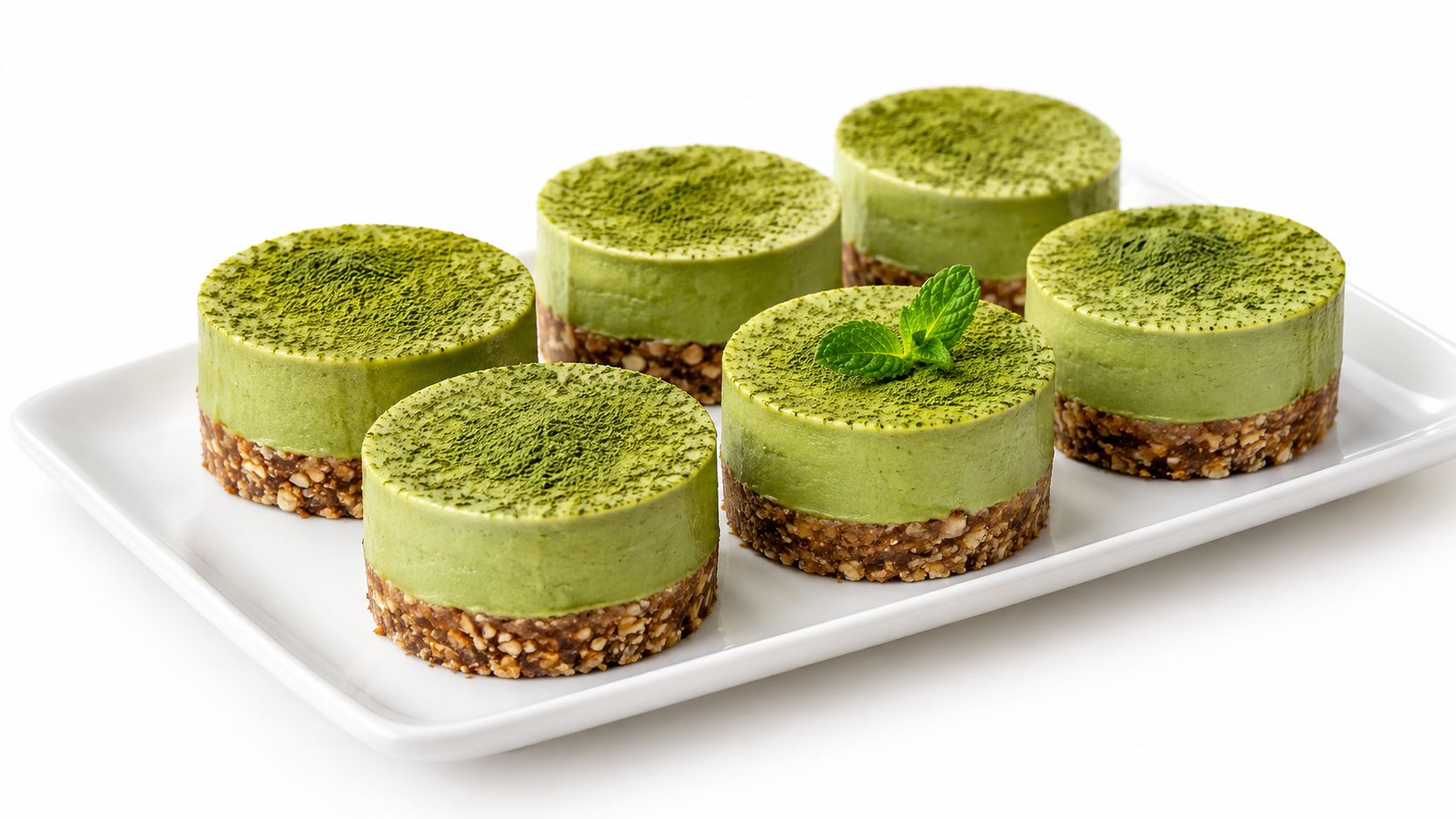
Bring the dairy to room temperature first. Cold cream cheese traps lumps, and no amount of late mixing fixes them gracefully. Sift the matcha before adding it. That small step keeps the filling smooth and the color even.
Batch dessert with a cleaner finish
An almond-flour crust gives these bites enough contrast without becoming the main event. Press it in firmly, but don't make it thick. The filling should dominate. Freeze or chill until the bites release cleanly from the pan or liners.
A few serving notes make the difference:
- Use bright, smooth matcha: Harsh matcha tastes harsher in low-sugar desserts.
- Keep the bites small: This is a rich dessert, and small portions suit it.
- Serve cold: They soften quickly, especially in warm rooms.
If you want a reference point for flavor direction and style, this article on perfect results from TOO MATCHA. shows the broader matcha cheesecake idea.
For nutrition context, these are best thought of as a batch-made treat for entertaining or planned portions. They're lower in sugar than many cheesecake formats, but the cream cheese and mascarpone still make them a rich choice.
8 Low-Sugar Treats Comparison
| Recipe | Implementation complexity | Resource requirements | Expected outcomes | Ideal use cases | Key advantages |
|---|---|---|---|---|---|
| Allulose-Sweetened Chocolate Mousse | Low, no-bake, 5 min active prep (plus chill) | Heavy cream, cocoa, allulose, hand mixer | Silky, authentic chocolate mousse; keto-friendly; needs 2–4 h chilling | Quick weeknight dessert, entertaining, low-sugar diets | Sugar-like cooking behavior; minimal aftertaste; familiar texture |
| Coconut Flour Brownies with Monk Fruit | Medium, precise measurements and baking (30 min) | Coconut flour, monk fruit, extra eggs, oven, scale recommended | Dense, fudgy gluten-free brownies high in fiber | Low-carb baking, batch cooking and freezing | Zero-glycemic sweetener; high fiber; reliable texture when measured |
| Strawberry Shortcake with Erythritol Whipped Cream | Low–Medium, bake sponge (20–30 min) + whip cream | Erythritol, fresh strawberries, eggs, oven, mixer | Light sponge with airy erythritol-sweetened cream; seasonal flavor | Summer entertaining, beginner bakers, social media-ready desserts | Erythritol dissolves well in dairy; seasonal cost-effectiveness; photogenic |
| Dark Chocolate Avocado Truffles | Low, no-bake; food processor and chilling | Ripe avocados, dark chocolate, erythritol/monk fruit, freezer | Fudgy, dairy-free truffles; vegan-friendly; freezer-stable | Vegan desserts, gift-making, no-bake summer treats | Healthy fats from avocado; one-tool prep; freezer stability |
| Almond Flour Lemon Cake with Powdered Monk Fruit | Medium, standard baking with precision (weighing advised) | Almond flour, powdered monk fruit, eggs, oven, kitchen scale | Moist, tender gluten-free cake that keeps 3–4 days | Beginner bakers, gatherings, paleo/keto occasions | Tender moist crumb; monk fruit mimics powdered sugar; bright lemon balances flavor |
| Peanut Butter Energy Balls with Dark Chocolate Coating | Low, no-bake mixing, rolling and chilling | Natural peanut butter, coconut oil, powdered monk fruit, dark chocolate | Protein-rich, portable energy bites; shelf-stable if cooled | Meal prep, portable snacks, post-workout or busy weekdays | High protein and satiety; quick and customizable; cost-effective |
| Greek Yogurt Parfait with Berries and Granola Crumble | Low, assembly (granola optional bake) | Plain Greek yogurt, fresh berries, almond granola, optional erythritol | High-protein layered parfait; quick to assemble; granola may soften | Quick breakfasts, healthy desserts, meal-prep jars | No-cook assembly; high protein; highly adaptable |
| Matcha Green Tea Cheesecake Bites with Allulose | Low–Medium, no-bake blending, chilling, portioning | Matcha, cream cheese/mascarpone, allulose, almond flour, freezer | Bright green, portion-controlled cheesecake bites; keto-friendly | Entertaining, make-ahead desserts, specialty menus | Photogenic matcha flavor; allulose dissolves smoothly; freezer-stable |
Build Your Own Low-Sugar Treat Rotation
The easiest way to make low sugar treats part of real life is to stop treating them like a special project. Keep a few formats in rotation based on time, texture, and storage. If you want the fastest assembly, make the chocolate mousse or yogurt parfait. If you need something portable, the peanut butter energy balls are the most practical. If you like batch prep, avocado truffles and matcha cheesecake bites hold up well in the fridge. When you want to bake, the coconut flour brownies, strawberry shortcake, and almond flour lemon cake cover three very different moods.
Sweetener choice matters, but not as much as people think. Technique matters more. Allulose works well when you want a smoother, more sugar-like finish in creamy desserts. Erythritol can make sense in whipped cream and some chilled recipes. Monk fruit blends are useful in baked goods when the rest of the batter is solid. Whatever you use, add sweetness gradually when the recipe allows it. It's easier to increase than to fix an over-sweet batch with a lingering aftertaste.
It also helps to use texture cues instead of trusting the clock alone. Pull brownies when the center is still slightly soft. Chill mousse until it thickens but still looks silky. Wait for cake to cool fully before slicing or layering. Add granola at the last minute, not during meal prep. These are small decisions, but they determine whether a lower-sugar dessert feels satisfying or compromised.
If you're working within a specific sugar goal, labels matter. Public-health guidance has used concrete sugar benchmarks for years. The WHO recommends reducing free sugars to below 10% of total energy intake, with a further suggestion to go below 5% for additional benefit, and the UK NHS guidance translates that to about 30 grams of added sugar per day for people aged 11 and older. That doesn't mean every dessert needs to be mathematically perfect. It does mean brand differences in yogurt, chocolate, nut butter, and sweetener blends can change the final result more than the recipe title suggests.
One more practical point. Taste complaints are still common in this category. About 46% of consumers are unhappy with the taste of reduced-sugar products. That's exactly why these recipes lean on cocoa, citrus, berries, dairy, and texture, not just sweetener swaps.
If you want more tested ideas in one place, Just Cook It also offers a Low Carb Lifestyle digital cookbook with 75 recipes, including dessert and snack sections, listed nutrition information, instant digital access, and lifetime access. For many home cooks, that kind of organized recipe library makes it easier to keep a few reliable low sugar treats in rotation instead of improvising every week.
If you want more dependable ideas beyond these eight low sugar treats, Just Cook It publishes downloadable cookbooks and practical kitchen resources built for everyday home cooks. Visit Just Cook It for digital recipe collections, dessert inspiration, and step-by-step guidance you can use right away on your phone, tablet, or laptop.