Spicy carrot salad can turn watery and overly hot if the carrots are cut incorrectly, salted too early, or dressed too far in advance. The fix is to get the texture, seasoning, and timing right so the carrots stay crisp and the chili doesn't overpower the other flavors.
A dependable spicy carrot salad needs decision rules, not just an ingredient list. Cut size controls how quickly the carrots absorb flavor, salt controls water release, and each heat source changes the dressing's salt, sweetness, and acidity. Once those variables are deliberate, the salad becomes repeatable for a quick side, a mezze plate, or a make-ahead lunch.
Table of Contents
- Why Spicy Carrot Salad Deserves a Better Method
- Choosing Your Carrot Texture and Prep Method
- Building an Emulsified Dressing That Clings
- Calibrating Heat From Mild to Fiery
- Timing, Water Release, and Make-Ahead Fixes
- Putting It All Together
Why Spicy Carrot Salad Deserves a Better Method
A good spicy carrot salad should taste bright, crisp or pleasantly tender, and warm with chile rather than burn with it. The problem is that several small choices keep moving after you toss the ingredients together. Fine shreds absorb lemon and chili quickly, salt draws out moisture, and a paste such as gochujang brings seasoning of its own.
I've found that the most useful question isn't “Which recipe should I follow?” It's “When will I serve this, and what texture do I want then?” A raw salad dressed immediately can be excellent at the table, while the same fine shreds can turn soft by lunchtime. A cooked Moroccan-style version is meant to rest, but it still needs cooling and controlled seasoning.
Practical rule: Choose the carrot cut according to the serving time, then choose the dressing and heat level around that cut.
The method below focuses on the points that change the outcome:
- Texture: Decide between raw shreds, coarse ribbons, or tender cooked slices.
- Dressing: Mix the acid, salt, aromatics, and chili before whisking in the oil.
- Heat: Measure the source rather than relying on “one chili.”
- Timing: Taste early, check moisture again later, and reserve some dressing when preparing ahead.
These controls matter more than rigid ratios because carrots vary in sweetness and moisture, chilies differ in strength, and grating tools produce different sizes. Once you can read those variables, you can make a salad that still works after resting instead of one that only succeeds for the first few minutes.
Choosing Your Carrot Texture and Prep Method
Start with the texture you want at serving time. Fine grated carrots take on dressing and chili quickly, which makes them useful when you need a strongly seasoned salad fast. They also soften sooner and release moisture more readily. Julienned carrots or broad ribbons keep more bite because the thicker pieces expose less surface area to the dressing.
For a salad that will sit briefly, use a medium julienne or coarse ribbon. For immediate serving, fine shreds are convenient. If you're preparing a buffet or lunch component, keep the cut larger and add the dressing closer to eating.
Wash whole carrots under running water, trim damaged areas, and use a clean board and knife. The FDA's produce guidance recommends washing hands with soap and warm water for at least 20 seconds before and after preparation. Uniform pieces matter for more than appearance. Similar thickness means similar absorption and, if you cook the carrots, similar tenderness.
The cooked Moroccan route
The foundational Moroccan-style preparation uses cooked carrots with lemon, garlic, cumin, paprika or cayenne, olive oil, and fresh herbs. The dish belongs to a broad North African and Middle Eastern tradition with many regional versions, rather than one fixed recipe. Culinary accounts also describe Moroccan Jews bringing carrot salads to Israel in the 1940s, where the preparation became part of home meals, mezze assortments, and prepared-food counters through the modern history of Moroccan carrot salad.
Boil the carrots until tender, with about 10 minutes used in one documented version, then drain and slice. Toss them with the dressing while they're warm enough to absorb flavor, but cool the salad before refrigeration. Give it at least 1 hour for the lemon, cumin, garlic, and chile to settle into the carrots, and keep it refrigerated for up to 2 days, as described in the same culinary account.
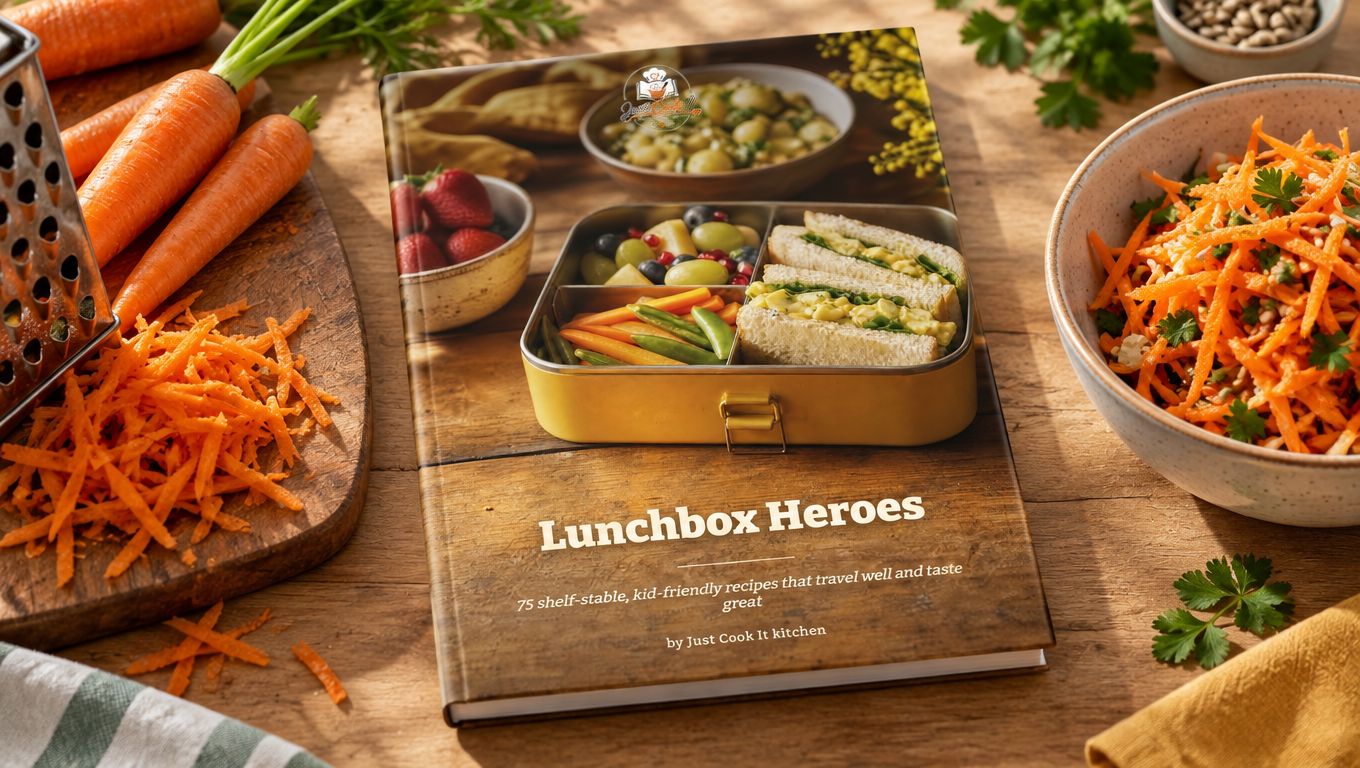
For more everyday carrot ideas, the easy honey-glazed carrots recipe uses the same ingredient in a warmer, sweeter direction. Cooks planning portable vegetable dishes may also come across School Lunch Cookbook: 75 Kid-Friendly Lunchbox Recipes | Digital PDF, which includes salads, wraps, muffins, and other lunchbox recipes designed for travel without refrigeration.
Building an Emulsified Dressing That Clings
Build the dressing in a separate bowl. If you pour lemon juice, oil, garlic, and chili directly over the carrots, the oil can pool while the salt and acidic ingredients distribute unevenly. That leaves some bites sharp and others bland.
Use this order:
- Start with acid. Add lemon juice or vinegar to the bowl.
- Dissolve the seasoning. Whisk in salt, chili, and minced garlic so the crystals and aromatics disperse through the liquid.
- Add the oil slowly. Pour it in while whisking, creating a dressing that coats rather than slides off.
- Taste before tossing. The dressing should taste slightly more intense than you want the final carrots to taste, because the vegetable will dilute it.
The amount of oil deserves a deliberate decision. Carotenoids are fat-soluble, and in a controlled human study, carotenoid appearance in blood was negligible after salads with fat-free dressing. A review reported that salad consumed with 20 grams of oil had double the total carotenoid bioavailability compared with salads containing 3 grams or 8 grams, though those findings don't mean that more oil is always better or guarantee the same result for every person as summarized in the human nutrition research.
For a light salad, begin with a measured teaspoon or tablespoon per serving, depending on the rest of the meal and the amount of acid. That gives the dressing enough fat to carry flavor without turning the carrots greasy. Tahini, yogurt, avocado, or a neutral unsaturated oil can fill the same practical role. If you want ideas for using avocado in dressings and other dishes, see how to use avocados.
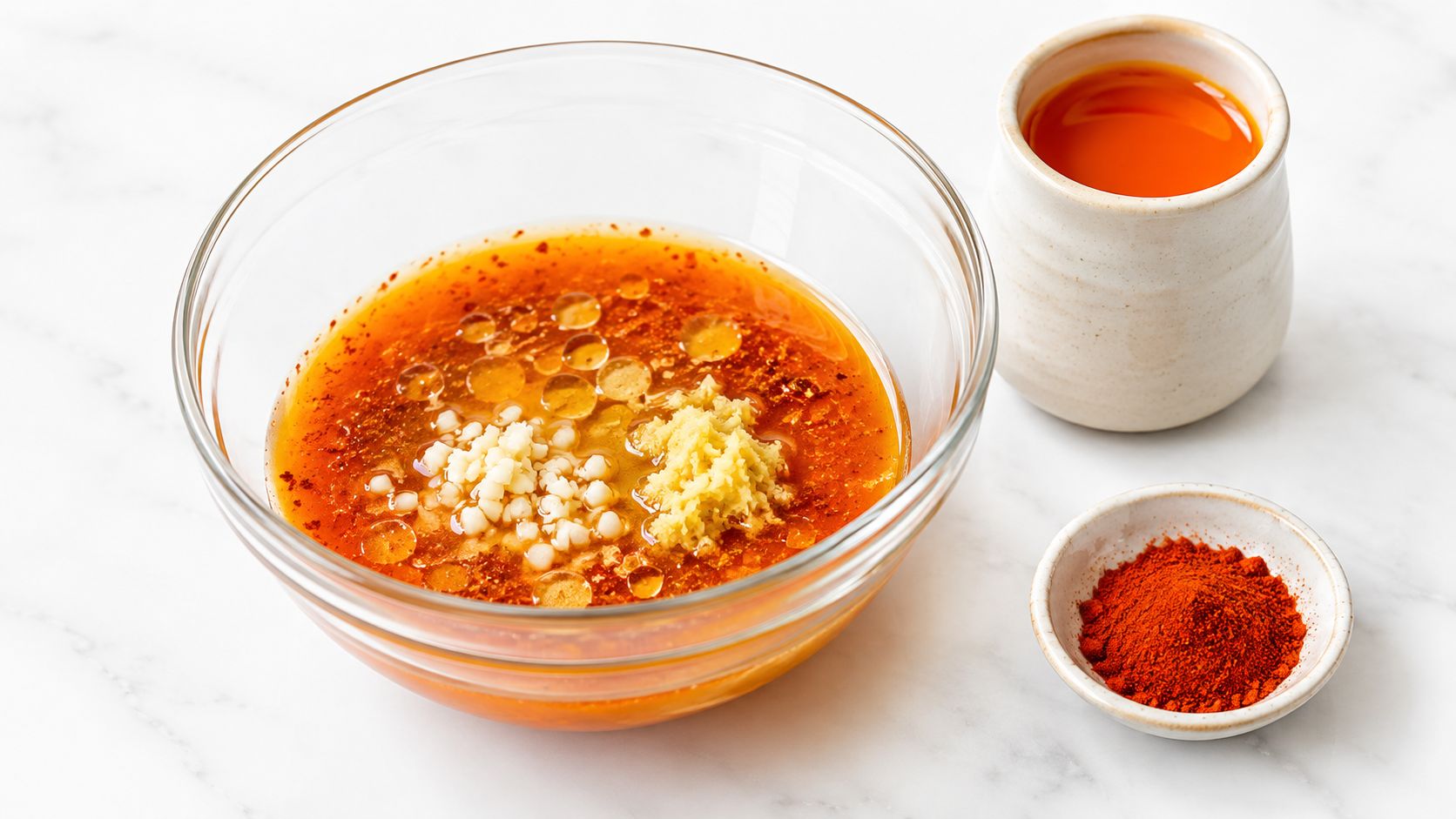
For raw carrots, toss the dressing shortly before serving. For cooked carrots, cool them before adding the final dressing adjustment. Fine cuts benefit from a thinner coating, while ribbons can handle a little more dressing without immediately collapsing.
A simple whisking demonstration can help if your oil repeatedly separates from acidic dressings.
Calibrating Heat From Mild to Fiery
“One chili” isn't a useful instruction across markets. A fresh chile may be grassy and sharp, dried flakes may spread heat unevenly, and chili oil may contribute more aroma than direct chile flavor. Harissa, gochujang, and sambal also bring different amounts of salt, sugar, and acidity, so changing the heat source can throw the entire dressing out of balance.
Use the table as a starting framework, then taste the dressing before it touches the carrots.
Heat sources compared for spicy carrot salad
| Heat Source | Relative Heat | Flavor Character | Also Adds |
|---|---|---|---|
| Fresh mild chile | Mild | Fresh, green, crisp | Moisture and vegetal flavor |
| Fresh hot chile | Medium to hot | Bright, grassy, direct | Moisture, aroma, variable heat |
| Dried chili flakes | Mild to hot | Toasty, concentrated | Dry spice and sometimes bitterness |
| Harissa | Mild to medium | Smoky, earthy, spiced | Oil, salt, acidity, and aromatics |
| Gochujang | Mild to medium | Fermented, savory, rounded | Salt, sweetness, and body |
| Sambal | Medium to hot | Fresh, sharp, garlicky | Moisture, salt, and acidity |
| Chili oil | Mild to hot | Fragrant, rich, lingering | Oil and sometimes toasted spice |
For a mild salad, use a small amount of fresh mild chile or a restrained spoonful of a seasoned paste. For medium heat, combine a measured amount of flakes with paprika, or use a moderate spoonful of harissa or sambal. For a hot version, increase the chile gradually rather than adding the full amount at once. The goal is to leave room for the carrots' sweetness and the lemon's lift.
Gochujang needs special care because it isn't just a heat powder. Its fermented depth and sweetness can make the salad heavier, so reduce other salty or sweet ingredients and add acid in small increments. The gochujang recipe ideas offer useful context for working with the paste beyond this salad.
Spice blends can also change the character without increasing heat. For ideas about cumin, paprika, and other Middle Eastern seasonings, shop Everti for spice inspiration, then keep the carrot salad balanced with lemon and garlic rather than piling on every spice at once.
Heat rule: Taste at the low end of your target. Resting lets chili distribute through the dressing, so a salad that seems gentle at first can become much hotter later.
Timing, Water Release, and Make-Ahead Fixes
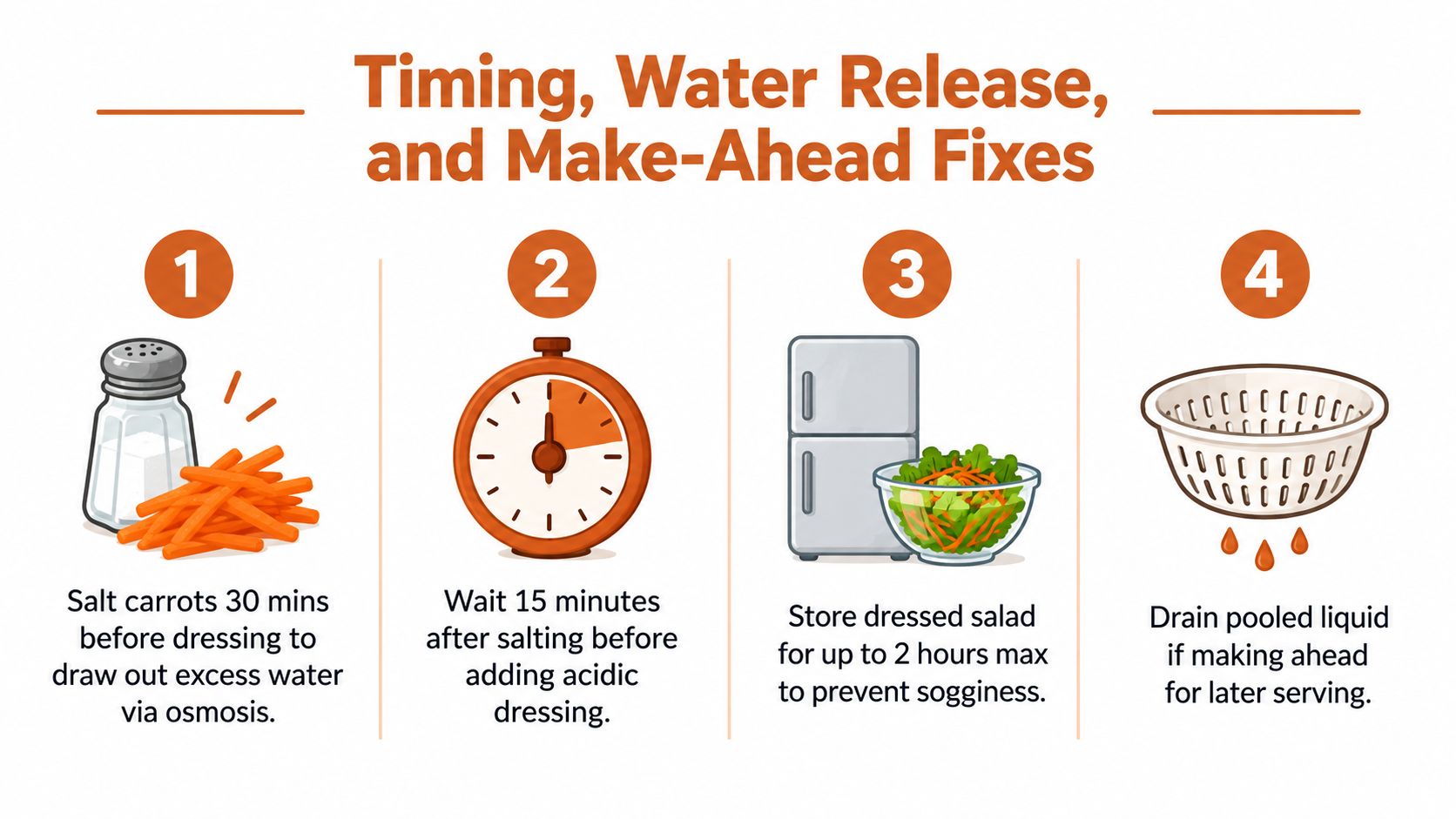
Salt starts changing the carrots as soon as it touches their cut surfaces. It initiates osmotic water movement, and if salted carrots sit for too long before serving, they can release enough liquid to thin the dressing and soften the texture. Fine shreds show this problem first because they have more exposed surface area.
Use two tasting checks instead of guessing:
- At 5 minutes, check heat, acidity, and salt.
- At 15 minutes, look for excessive moisture release and a weakening dressing.
If the bowl has become watery, drain it briefly. Don't add more salt, which can draw out still more moisture. Correct the flavor with fresh acid, a little chili, and a small amount of oil, then toss gently.
Make-ahead choices that hold up
For raw versions, keep the carrots and dressing separate until close to serving whenever possible. If you must combine them early, use coarse ribbons or julienne rather than fine shreds, reserve some dressing, and refresh the bowl just before eating. The Moroccan cooked version is more suited to resting because its tender carrot texture is part of the dish, but it still belongs in the refrigerator and shouldn't sit at room temperature during extended service.
Rescue sequence: Drain, refresh with acid and chili, add only a little oil, then taste again. Salt is rarely the right fix for a watery salad.
Fermented vegetables can teach useful lessons about salt, acidity, and timing, although they follow a different process. The beginner fermentation recipes are a separate resource for exploring those techniques without treating them as a shortcut for this salad.
Putting It All Together
Dinner is in half an hour and the carrots are already cut. This is the point where the salad either stays bright and punchy or turns watery, flat, and harsher than you meant. Start by matching the cut to the job. Fine shreds absorb fast and suit immediate serving. Coarse ribbons or julienne hold their bite longer. Cooked slices fit the softer Moroccan style and handle resting better.
Build the dressing in a separate bowl so you can taste it before it hits the carrots. Acid, salt, garlic, chili, and a measured amount of oil should read slightly strong on their own. Once they coat the carrots, the flavor settles.
Heat needs the same kind of control. Harissa brings spice with aromatic depth. Gochujang adds fermented sweetness and salt. Chili oil adds richness. Pick the one that fits the rest of the meal, then start lower than your target because the burn reads stronger after the salad sits.
- Texture: Match the cut to the serving time.
- Moisture: Avoid holding salted fine shreds for long periods.
- Dressing: Whisk it separately so it clings evenly.
- Heat: Start low because resting intensifies perception.
- Storage: Keep the salad chilled and use the practical window for the style you've chosen.
A dependable spicy carrot salad comes from deliberate choices: cut size, salt timing, dressing order, and measured heat.
Visit Just Cook It for more kitchen-tested dishes and practical recipe collections. The approach is the same. Clear method, sensible choices, and food that still tastes right when it reaches the table.