A good couscous summer salad should be light, fresh, and easy to serve at a picnic or barbecue. The trick is to keep the couscous fluffy, drain watery vegetables like cucumber, and add the dressing without making the grains soggy. Lemon juice and fresh herbs bring everything together, but proper storage matters too, especially if the salad will be served outdoors.
Table of Contents
- Why a Couscous Summer Salad Works When It Is Hot Outside
- Cooking the Couscous So Every Grain Stays Light
- Building the Bowl With Seasonal Produce
- Four Salad Directions to Match Your Pantry
- Serving Outdoors Without Risking the Bowl
- Fixing the Most Common Couscous Salad Problems
- Your Make-Ahead Game Plan for the Next Cook
Why a Couscous Summer Salad Works When It Is Hot Outside
The appeal is practical: you can prepare the base without committing to a hot main course, use whatever vegetables look good, and carry the finished dish in a covered container. It can accompany grilled food or become lunch with chickpeas, beans, or another protein. You don't need every ingredient in the market stall to make it interesting.
The useful distinction is between making ahead and mixing everything ahead. Those aren't the same job. A container of prepared couscous, dry vegetables, and separate dressing gives you flexibility that a fully dressed bowl doesn't.
An Adaptable Tradition, Not a Fixed Formula
Couscous has a much broader identity than a packaged side dish. UNESCO recognized the knowledge, know-how, and practices associated with couscous in December 2020, following a joint nomination by Algeria, Mauritania, Morocco, and Tunisia, as described in the history and cultural recognition of couscous.
That recognition encompasses preparation and social practices, including serving couscous with vegetables or meat according to region, season, and occasion. A cool, vegetable-forward bowl is a contemporary adaptation of that flexibility, not a claim that every couscous tradition looks alike.
For the home cook, that leaves room to make sensible choices:
- For a side dish, keep the grain loose and the vegetables prominent.
- For a packed lunch, add a substantial protein component rather than increasing the couscous.
- For a gathering, choose ingredients you can prepare separately and finish without taking over the kitchen.
A successful picnic salad should still taste intentional after the journey, not just immediately after mixing.
The trade-off is that a neutral base needs deliberate seasoning, while a moist prepared salad needs careful handling. More dressing won't rescue waterlogged vegetables, and more herbs won't correct gummy grains. Get the structure right first, then choose a flavor direction.
Cooking the Couscous So Every Grain Stays Light
Read the package before measuring the liquid. Fine instant couscous and pearl couscous aren't interchangeable cooking projects, and a universal water ratio is a poor substitute for the instructions on your particular packet.
For a delicate salad with finely chopped vegetables, choose fine couscous. For a more substantial bowl with larger pieces of produce, pearl couscous is a useful alternative. Make that choice before shopping, because it affects both preparation and the size of your other ingredients.
Keep the packet instructions beside your work area as you prepare the base.
Hydrate Without Overworking
Use the packet's measured liquid and cooking method. If it calls for steeping off the heat, don't turn that into an active boil; if you're using pearl couscous, follow its simmering instructions instead.
Season the cooking liquid thoughtfully. Water leaves more room for a pronounced dressing; stock contributes its own flavor and salt, which matters if feta, olives, or preserved lemon will follow. I'd rather start restrained than discover the finished salad has several competing salty ingredients.
Once the couscous is ready, use a fork to lift and separate, not a spoon to press and stir. Check the texture before adding anything else: the grains should be tender and distinct, without a wet paste collecting underneath.
- If liquid remains, deal with it according to the packet's method before transferring the couscous.
- If the grains are tender, stop cooking rather than waiting for them to look dry in a hot pan.
- If you're tempted to add dressing, leave it in its jar until the base is cold.
Cool in a Shallow Layer
Transfer the fluffed couscous to a shallow food-safe container. Keep it protected from contamination and refrigerate promptly rather than leaving a deep bowl on the counter until its center finally cools.
For context, the FDA Food Code cooling benchmark takes cooked temperature-controlled food from 135°F to 70°F within 2 hours, then to 41°F or below within 4 additional hours. That's a controlled cooling process, not permission to leave a salad out all afternoon.
At home, shallow portions are the practical tool. Don't tightly pack hot couscous into its final serving bowl, and don't mistake a cool surface for a cold center.
Texture checkpoint: Dress cold, separated couscous that has no visible puddle beneath it.
Building the Bowl With Seasonal Produce
Start with produce you want to eat raw, then decide what needs draining, trimming, or drying. A cucumber with a watery seed cavity needs different preparation from a firm bell pepper; treating them identically is how a crisp-looking salad becomes diluted.
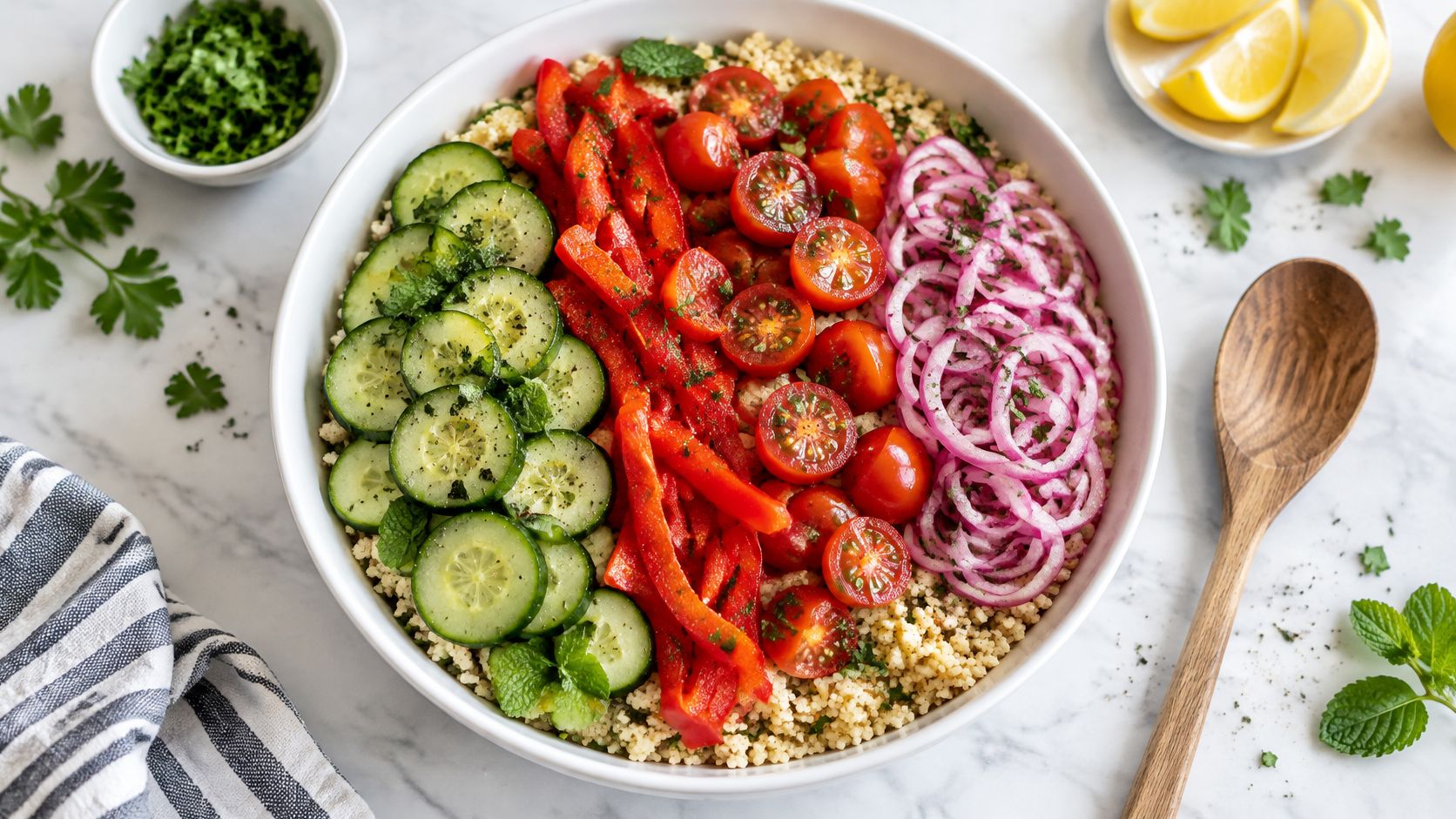
Use the vegetable bowl as a guide to variety, not a requirement to include everything pictured.
Chop for the Forkful
Aim for pieces that sit comfortably together on a fork. You don't need to cut cucumber down to the size of fine couscous; you do want to avoid huge chunks surrounded by loose grains. Dice pepper neatly, cut tomatoes into manageable pieces, and chop onion more finely so it doesn't dominate.
Build around distinct roles: crisp vegetables for substance, a drained pickled element for sharpness, herbs for freshness, and a finishing accent such as feta, olives, or toasted nuts. These Mediterranean vegetable recipe ideas offer other combinations when the usual tomato-and-cucumber bowl feels repetitive.
What Goes In by Season
| Season Slot | Best Produce | Herb Pairing |
|---|---|---|
| Early summer | Cucumber, radishes, tender peppers | Dill and parsley |
| Peak summer | Tomatoes, bell peppers, cucumber | Basil or mint |
| Late summer | Cooled cooked zucchini, corn, peppers | Parsley and basil |
| Pantry-supported | Drained chickpeas, preserved peppers, olives | Parsley |
Treat those as shopping suggestions rather than rigid seasonal rules. Local availability matters more than a calendar label.
Assemble Without Diluting
Wash vegetables and herbs, then dry them thoroughly before chopping. Drain quick-pickled onion or shallot instead of pouring its liquid into the bowl unintentionally.
For another visual reference during preparation, use the video below.
Fold sturdy vegetables into the cold couscous first. Add a light coating of dressing, taste, then fold in herbs and fragile cheese gently; keep nuts separate if you want their crunch at serving.
Before mixing, check cold base, dry produce, drained accents. That small inspection is more useful than trying to compensate later with extra oil or lemon.
Four Salad Directions to Match Your Pantry
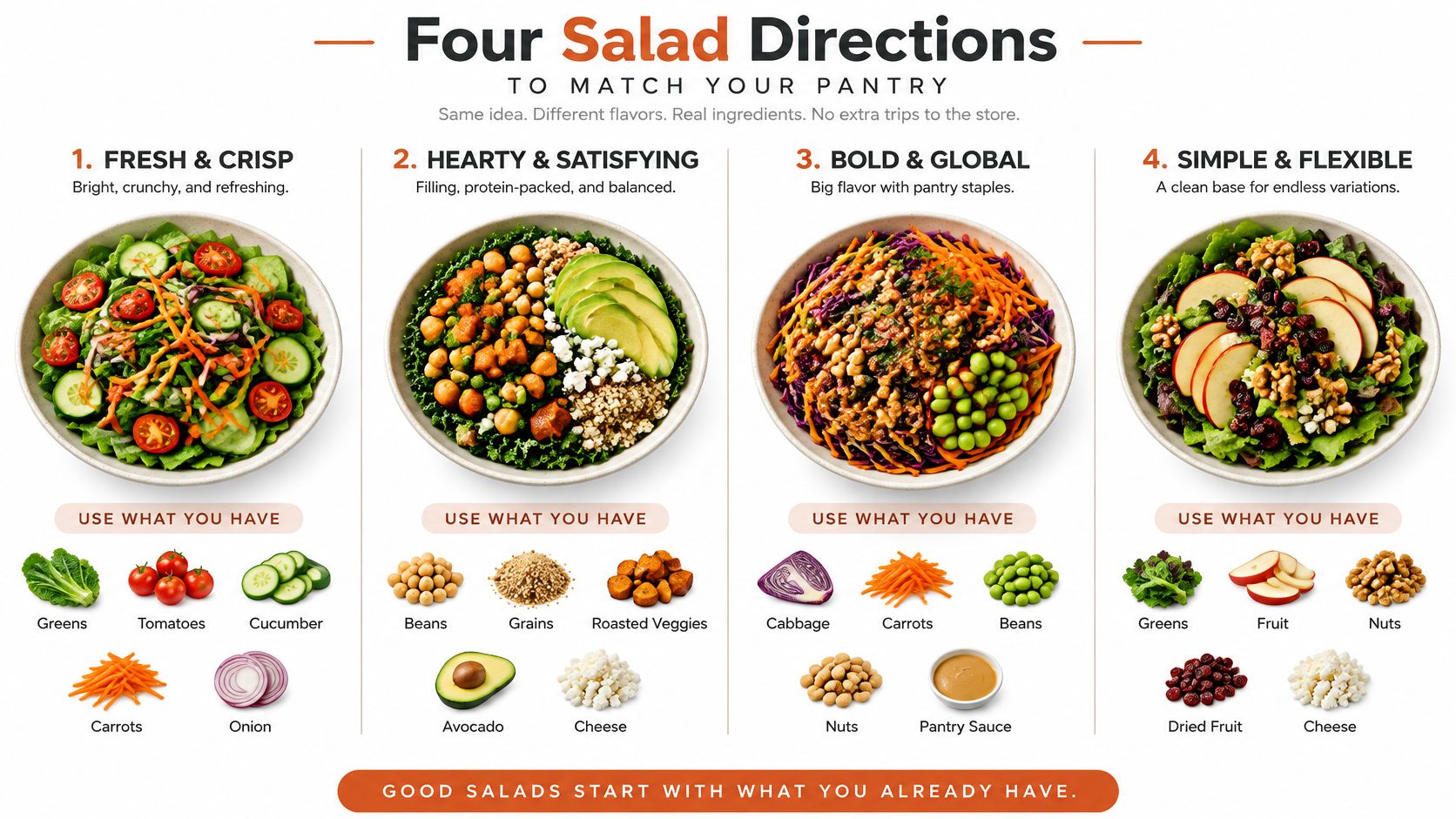
Choose a direction before opening every condiment in the fridge. Preserved lemon, feta, tahini, vinegar, and olives can all belong in couscous salad, but they don't all need to belong in the same bowl.
The shared base stays simple: cold couscous, prepared vegetables, dressing, and a finishing ingredient. Change the accents rather than rebuilding the method.
Choose the Dominant Flavor
| Direction | Acid and Fat | Herb Anchor | Substantial or Salty Accent |
|---|---|---|---|
| Mediterranean | Lemon and olive oil | Parsley with oregano | Feta or olives |
| Moroccan-inspired | Lemon juice, preserved lemon, olive oil | Parsley and mint | Chickpeas and almonds |
| Herby-lemon | Lemon and olive oil | A generous mix of soft herbs | Soft cheese |
| Plant-protein-heavy | Lemon with tahini | Parsley or dill | Chickpeas, white beans, or lentils |
Mediterranean is the straightforward choice for tomato, cucumber, and pepper. Taste after adding feta or olives, then decide whether the dressing needs salt. Otherwise, you're seasoning before all the salty ingredients have arrived.
For a Moroccan-inspired bowl, use a restrained warm-spice note in the cooking liquid, then finish with preserved lemon, herbs, and chickpeas. Preserved lemon is a seasoning, not a vegetable to add by the handful. Almonds make a useful final contrast.
The herby-lemon version suits a simpler bowl. Let parsley, mint, dill, or basil be noticeable rather than decorative, and avoid piling on competing pickled ingredients.
With a plant-protein-heavy version, use tahini for a dressing with body, loosening it until it folds through easily. Drain beans or lentils well so you aren't adding their packing or cooking liquid.
Decide Whether It's a Side or Lunch
For a meal, I'd increase legumes and vegetables rather than rely on a larger mound of grain. Whole-wheat couscous can offer more fiber, but it isn't automatically low-carbohydrate or low-glycemic, as the couscous nutrition overview explains. Avoid treating the word salad as a nutritional guarantee.
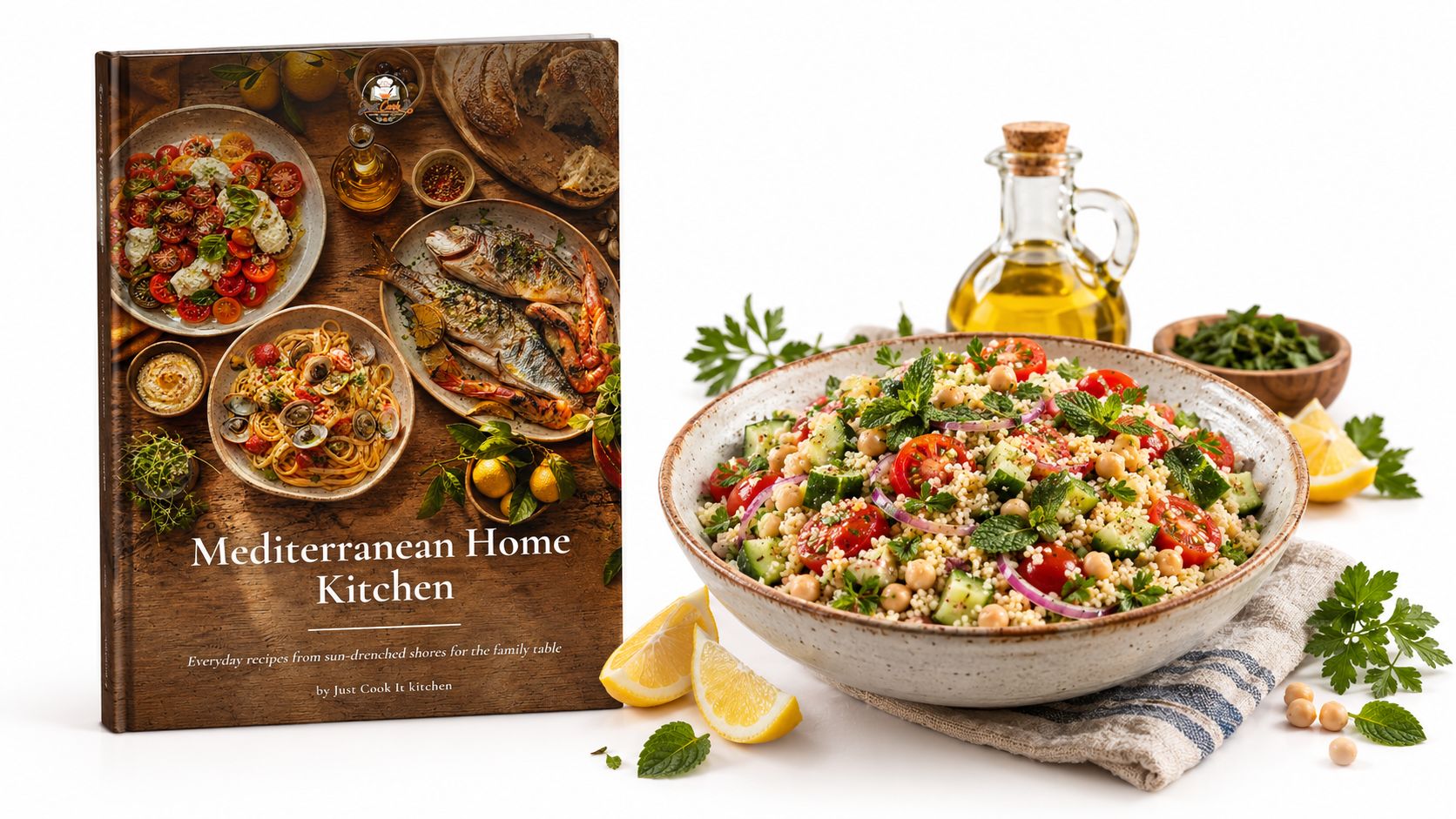
For more combinations, browse these Mediterranean bowl recipes. A downloadable collection is another planning option: Mediterranean Home Kitchen | Digital PDF includes vegetable-focused dishes, salads, and sauces alongside other home-cooking recipes.
Serving Outdoors Without Risking the Bowl
A salad doesn't become shelf-stable because it looks fresh or contains lemon. Cooked couscous, moist vegetables, dairy, and any added meat or fish make this a dish to transport and serve cold.
The USDA's summer food-safety guidance gives the practical limits: keep perishable food at 40°F or below, and refrigerate within 2 hours, reduced to 1 hour when temperatures exceed 90°F. Discard food that exceeds the applicable limit.
Pack Cold and Serve Small
Chill the salad before packing it. A cooler should maintain an already-cold dish, not serve as the place where a warm bowl finishes cooling. Pack it with ice or frozen packs, keep the lid closed between uses, and use a thermometer rather than judging the contents by touch.
For the broader packing list, the Lounge Wagon family picnic essentials resource is useful alongside a separate food-temperature plan. Chairs, utensils, and napkins solve different problems from keeping lunch cold.
Use this checklist as a reminder, with the temperature limits above taking priority.
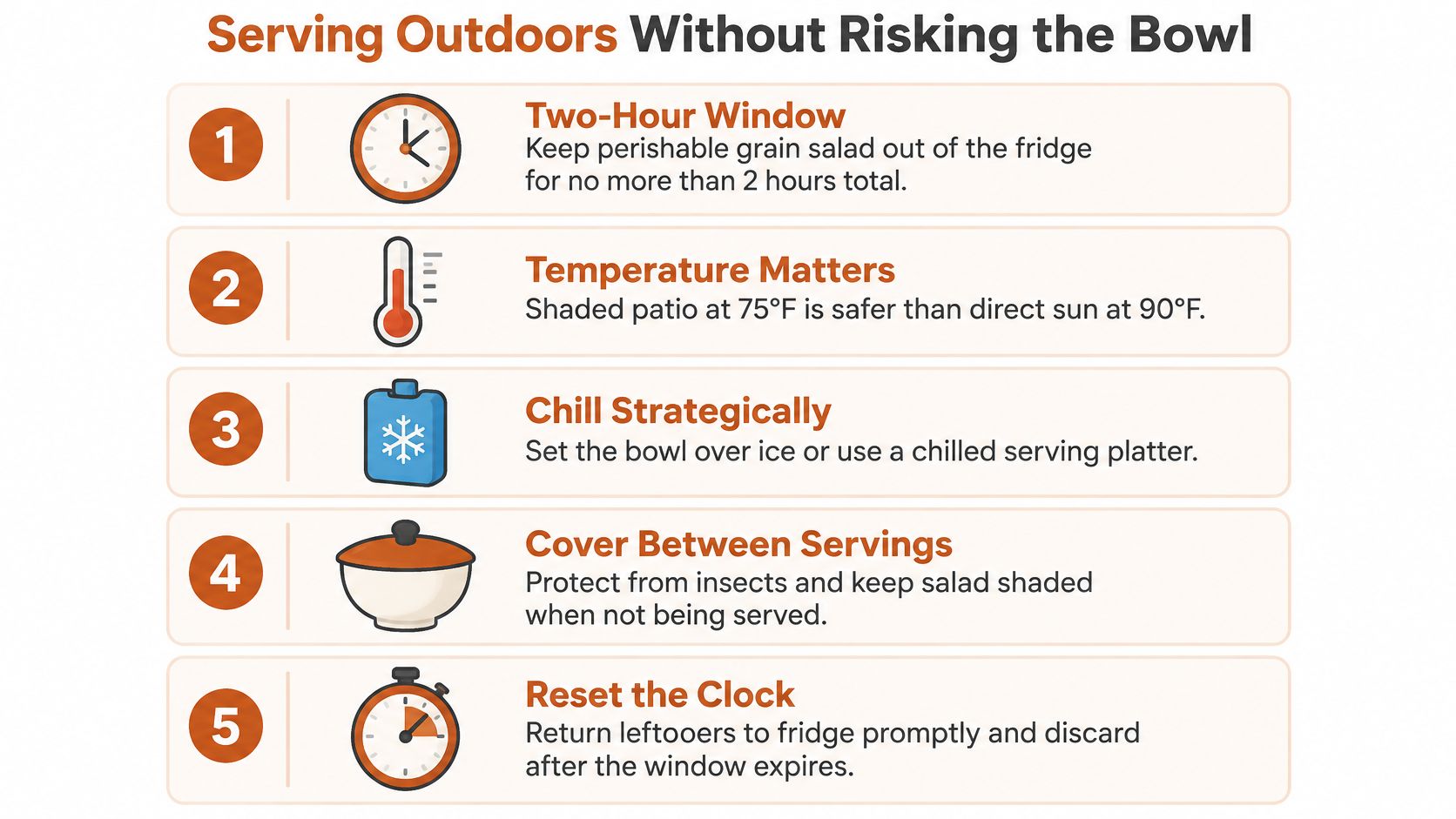
- Put out a small portion. Keep the reserve in the cooler and replenish with a clean serving utensil.
- Support cold holding. Nest the serving bowl over ice, keeping meltwater out of the food.
- Track exposure. Include packing, travel without adequate chilling, and table time in your assessment.
- Use shade sensibly. It's helpful for the setup, but it doesn't replace refrigeration or verified cold holding.
Returning the bowl to the cooler does not reset its accumulated time outside temperature control.
Know What to Keep
Refrigerate acceptable leftovers promptly in shallow, covered containers. Purdue Extension's leftover-storage guidance recommends using refrigerated leftovers within 3–4 days.
Label the preparation date, not just the date of the picnic. Don't use smell, appearance, or a small taste to decide whether mishandled salad is safe, and don't try to rescue an over-limit bowl by chilling it afterward.
Fixing the Most Common Couscous Salad Problems
Diagnose the problem before adding more dressing. A watery salad and a dry-tasting salad need different treatment, even if both seem bland.
Read the Texture First
| Problem | Likely Preparation Issue | Recovery Move |
|---|---|---|
| Watery bowl | Wet produce, poorly drained additions, or collected vegetable juices | Lift the salad into a clean bowl with a slotted spoon, then taste |
| Gummy grains | Too much cooking liquid or excessive handling | Separate gently where possible; don't beat or mash |
| Tired herbs | Herbs added too early for the intended serving time | Fold in freshly prepared herbs shortly before serving |
| Flat flavor | Dressing absorbed during storage or seasoning left incomplete | Taste a small portion with fresh acid before adjusting the batch |
Watery doesn't mean underdressed. Pouring in more vinaigrette usually leaves you with a larger puddle. Remove excess liquid first, then decide what's missing; next time, pay closer attention to drying and draining.
Gummy couscous has a firmer limit. You can loosen small clumps with a fork, but you can't reliably reverse grains that have cooked into paste. Serve an edible batch as a softer side rather than repeatedly stirring it in pursuit of fluffiness.
Restore Contrast Without Starting Over
If the herbs look tired, remove obvious wilted pieces and add a fresh finishing handful. That improves eating quality only; it doesn't change the food-safety decision.
For flat flavor, test a forkful with lemon, then another with a little salt, rather than changing the whole bowl at once. You may need brightness rather than richness.
A separate crunchy accompaniment can also help. A spicy carrot salad offers a different texture without requiring you to keep adding ingredients to the couscous.
Your Make-Ahead Game Plan for the Next Cook
Split preparation by task rather than assembling the whole salad as early as possible. These Mediterranean meal-prep ideas can help you use the same prepared vegetables and pantry ingredients across other meals.
The Night Before
- Prepare the base. Cook, fluff, and chill the couscous using the shallow-container method.
- Make the dressing. Store it separately so you can control the final texture.
- Prepare sturdy ingredients. Wash and dry produce, drain pantry additions, and let toasted nuts cool before storing.
On the Day
- Check the grain. Re-fluff gently and loosen any small clumps.
- Assemble deliberately. Fold in vegetables and enough dressing to coat without pooling.
- Hold back the finish. Reserve delicate herbs, nuts, and some vinaigrette for serving.
- Pack for the conditions. Take the cooler, thermometer, serving utensil, and a clear plan for leftovers.
Keep that checklist with your picnic supplies. If you prefer cooking from a downloadable collection, choose one with clear preparation instructions so the next grain-and-vegetable meal starts with less guesswork.
Just Cook It offers downloadable cookbooks and practical recipe resources for everyday home cooking. Visit Just Cook It to choose a collection for your next summer meal, then use this prep-and-packing plan to get your couscous salad to the table cold, bright, and ready to serve.