Quick, healthy dinners are easier to manage when the recipes fit the time and effort you have available. These healthy dinner ideas easy and quick are ranked from fastest to slowest, with most ready in 15–30 minutes. Each focuses on total prep, cooking, and cleanup time, so you can choose a meal that works for your evening without juggling extra sauces, side dishes, or pans.
The meals follow a practical plate structure: make vegetables or fruit a major part of dinner, add a lean or plant-based protein, and include a minimally processed carbohydrate. That approach fits the Harvard Healthy Eating Plate, which uses approximate proportions of vegetables and fruits, whole grains, and healthy protein rather than a fixed calorie prescription. For more personalized planning around food and activity, an AI fitness app for weight loss may also help you organize meals around your broader routine.
Table of Contents
- 1. 15-Minute Vegetable and Tofu Stir-Fry
- 2. Greek-Style Chickpea and Spinach Skillet
- 3. Chicken and Vegetable Donburi
- 4. Shrimp Fajita Bowls
- 5. Turkish Red Lentil Soup
- 6. Sheet-Pan Lemon-Herb Salmon with Roasted Vegetables
- 7. Whole-Wheat Pasta with Cherry Tomatoes, White Beans, and Basil
- 8. Balkan Grilled Chicken with Shopska Salad
- 9. Black Bean and Sweet Potato Tacos
- 10. Greek Chicken Souvlaki Bowls with Tzatziki
- 10 Quick & Healthy Dinner Ideas Comparison
- Pick One Fast Dinner Tonight and Build Your Week
1. 15-Minute Vegetable and Tofu Stir-Fry
When the main constraint is getting food on the table immediately, use a stir-fry. Firm tofu, frozen or fresh vegetables, and a quick sauce can become a complete dinner before a more elaborate recipe has finished preheating.
Press firm tofu while you slice the vegetables. Cut it into cubes, then sear it in a hot skillet or wok with a little oil. Keep the cubes in one layer so they brown instead of steaming. Remove them when golden, then cook broccoli, snap peas, carrots, and garlic in batches. This protects the high heat that gives stir-fried vegetables a crisp edge.
Mix the sauce before you start cooking. Soy sauce, rice vinegar, and a small amount of cornstarch create a savory, lightly thickened coating. Add the tofu back at the end and toss until everything is glossy. Serve it over steamed rice, whole-wheat noodles, or a microwaveable grain.
Practical rule: Don't pour a cold sauce into a crowded pan. Cook the vegetables first, then add the sauce in one step so the pan stays hot.
The best swap is edamame for tofu if you want less pressing and cutting. Frozen edamame heats quickly and adds another plant protein option. You can also use frozen broccoli or a bagged stir-fry blend, but add dense vegetables first and delicate greens later.
The common mistake is cooking everything together from the start. That lowers the pan temperature and leaves tofu pale, vegetables watery, and sauce thin. If you're building a gut-focused rotation, Nourish Your Gut | Digital PDF includes recipes using ingredients such as miso, kimchi, prebiotic vegetables, and tofu that can broaden this flavor profile.
For a visual example of the fast-cooking method, use this stir-fry technique as a guide:
2. Greek-Style Chickpea and Spinach Skillet
A chickpea skillet solves the no fresh protein problem. Canned chickpeas, canned tomatoes, spinach, onion, and garlic are enough for a warm dinner with very little preparation. The format draws on Greek revithia, a traditional chickpea dish, but it works with ordinary supermarket ingredients.
Start by softening diced onion and garlic in olive oil. Add smoked paprika, tomatoes, and rinsed chickpeas. Rinsing removes the packing liquid and helps control the salty taste. Let the mixture simmer for about five minutes, long enough for the tomato liquid to reduce and coat the beans.
Add spinach only after the base has thickened. Stir until the leaves just wilt, then finish with lemon juice, olive oil, and crumbled feta. Serve the skillet with whole-wheat pita, bulgur, or a small portion of brown rice. The chickpeas already provide substance, so you don't need a large starch serving.
The practical swap is white beans for chickpeas. Cannellini beans give the skillet a softer, creamier texture, while lentils make it more stew-like. If spinach isn't available, use frozen kale or chopped chard. Add frozen greens earlier so excess water can cook off.
The mistake to avoid is adding spinach too soon. It collapses into the sauce and can make the skillet watery. Keep the greens for the final stage, and don't skip the lemon. Acid gives canned ingredients a fresher finish without requiring a complicated sauce.
The fastest vegetarian dinners usually start with a shelf-stable protein, not an ambitious vegetable prep list.
3. Chicken and Vegetable Donburi
When you need one bowl with minimal assembly, make a chicken donburi. Donburi is a Japanese rice-bowl format built around a topping of simmered or stir-fried protein and vegetables. This quick version uses chicken thigh, onion, leafy greens, and a light soy-based sauce.
Start the rice first, ideally with cooked rice already in the refrigerator. Simmer sliced onion with soy sauce, mirin, and water. A simple 1:1:1 ratio gives you a useful starting point, but taste the sauce before adding the chicken because soy sauces vary in saltiness.
Add bite-sized chicken thigh and simmer until cooked through. Leafy greens such as spinach or bok choy can go in near the end. Beat an egg, pour it over the pan, cover, and let it set softly for about a minute. Spoon everything over warm rice and finish with sesame seeds or sliced scallions.
A useful swap is boneless chicken breast for thigh, especially if that's what you already have. Cut it into small, even pieces and avoid overcooking it. Tofu also works if you want a vegetarian bowl, but sear it separately so it doesn't crumble in the simmering sauce.
The main mistake is starting with cold, individual rice portions while the topping cooks. That stretches a quick meal into a slow one. Cook extra rice when you have time and refrigerate it promptly, then reheat only what you need.
For better texture: Add the egg last, cover the pan, and stop cooking while the center still looks slightly loose.
This bowl also handles different tastes well. Keep the base mild, then offer chili crisp, grated ginger, or toasted sesame at the table. That makes one dinner workable for people who don't want the same level of heat.
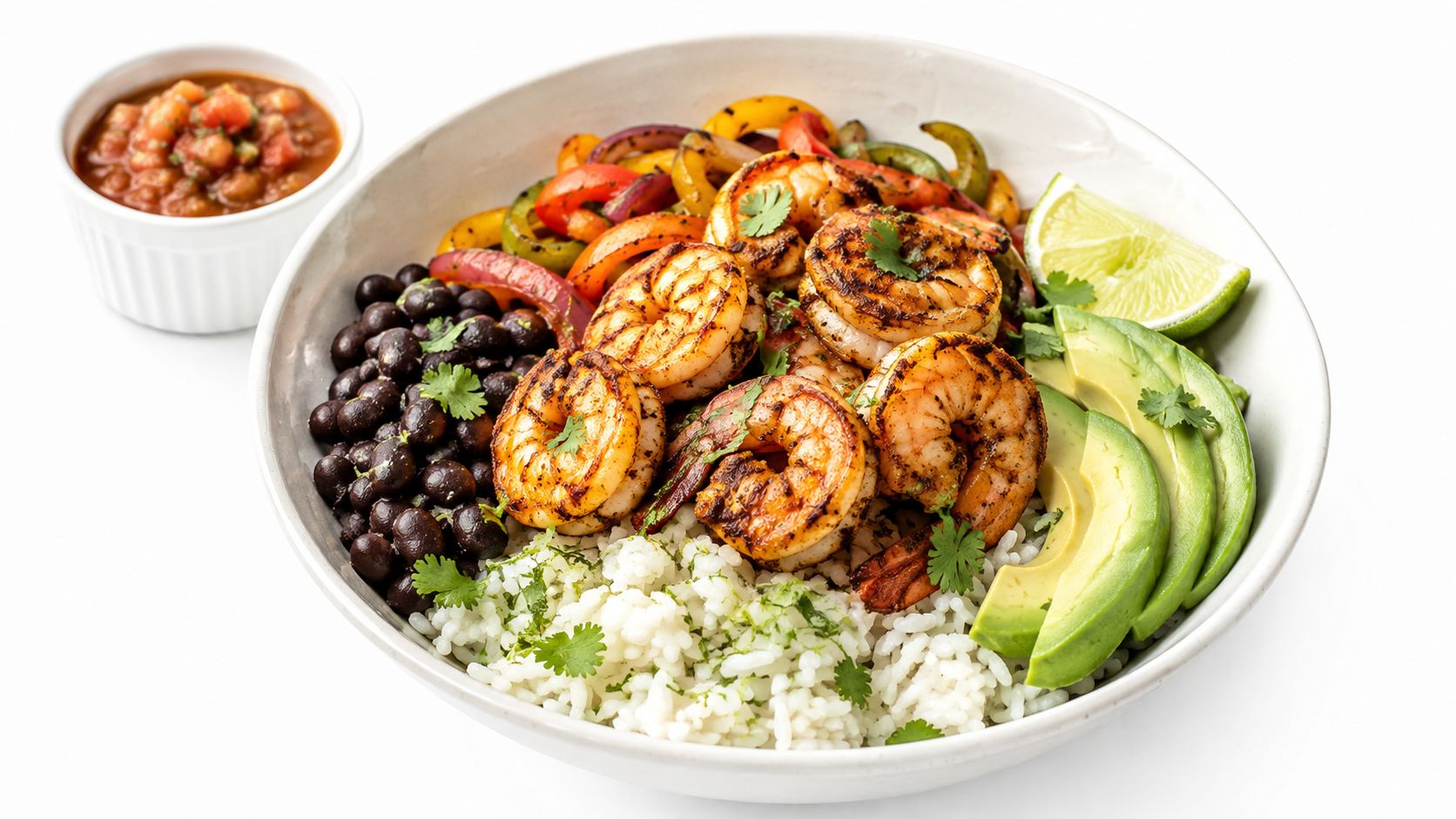
4. Shrimp Fajita Bowls
Shrimp fajita bowls solve the fast protein plus flexible toppings problem. Shrimp cooks quickly, while peppers, onions, black beans, avocado, salsa, and rice let each person build a bowl that suits them.
If you're using frozen shrimp, thaw it in cold water for 10 to 15 minutes, then pat it very dry. Wet shrimp steams in the pan and won't take on much seasoning. Toss it with cumin, chili powder, lime juice, and a small amount of oil. Cook the sliced peppers and onions first, then add the shrimp for the final 3 to 4 minutes, turning once.
Use brown rice, quinoa, or a prepared whole grain as the base. Black beans add more staying power and make the meal less dependent on a large shrimp portion. Top with avocado and salsa, then add pickled red onions if you have them. A squeeze of lime balances the smoky seasoning.
The best swap is canned salmon or drained white beans. Salmon needs only warming, while beans turn the bowl into a lower-cost vegetarian option. You can also use frozen corn in place of part of the peppers, but add it early enough to heat through.
The mistake is overcrowding the pan with wet shrimp and vegetables. Cook in batches if needed. A crowded skillet traps steam, softens the vegetables, and makes the shrimp harder to judge.
For more variations using beans, peppers, tortillas, and other familiar ingredients, see these healthy Mexican dinner recipes.
5. Turkish Red Lentil Soup
Red lentil soup is the answer when the constraint is low cost, low effort, and a meal that reheats well. Mercimek çorbası is common in Turkish home kitchens and restaurants. It uses red lentils, onion, carrot, and spices to make a thick, filling soup without a long simmer.
Rinse the lentils until the water runs mostly clear. Add them to a pot with diced onion, carrot, water or stock, and a little cumin or paprika. Simmer until the lentils soften, usually within 20 to 25 minutes. You don't need to soak red lentils first.
Blend half the soup with an immersion blender, leaving the rest chunky. This gives you a creamy texture without adding cream. Finish with lemon juice after cooking, then drizzle with olive oil or butter warmed with paprika or Aleppo pepper.
A practical swap is split yellow peas, though they'll need longer cooking and produce a firmer texture. For a quicker version, use canned lentils and reduce the simmering time. Add a side salad or chopped cucumber to increase the vegetable variety and provide contrast.
The mistake is adding lemon at the beginning. The soup can taste flat or overly sharp after a long simmer. Add the acid at the end, taste, and adjust gradually.
You'll find more technique guidance in this resource on how to cook lentils, especially if you want to move beyond canned legumes.
This is also a strong batch-cooking dinner. Store the soup separately from bread or salad, and loosen reheated portions with water if the lentils continue to thicken overnight.
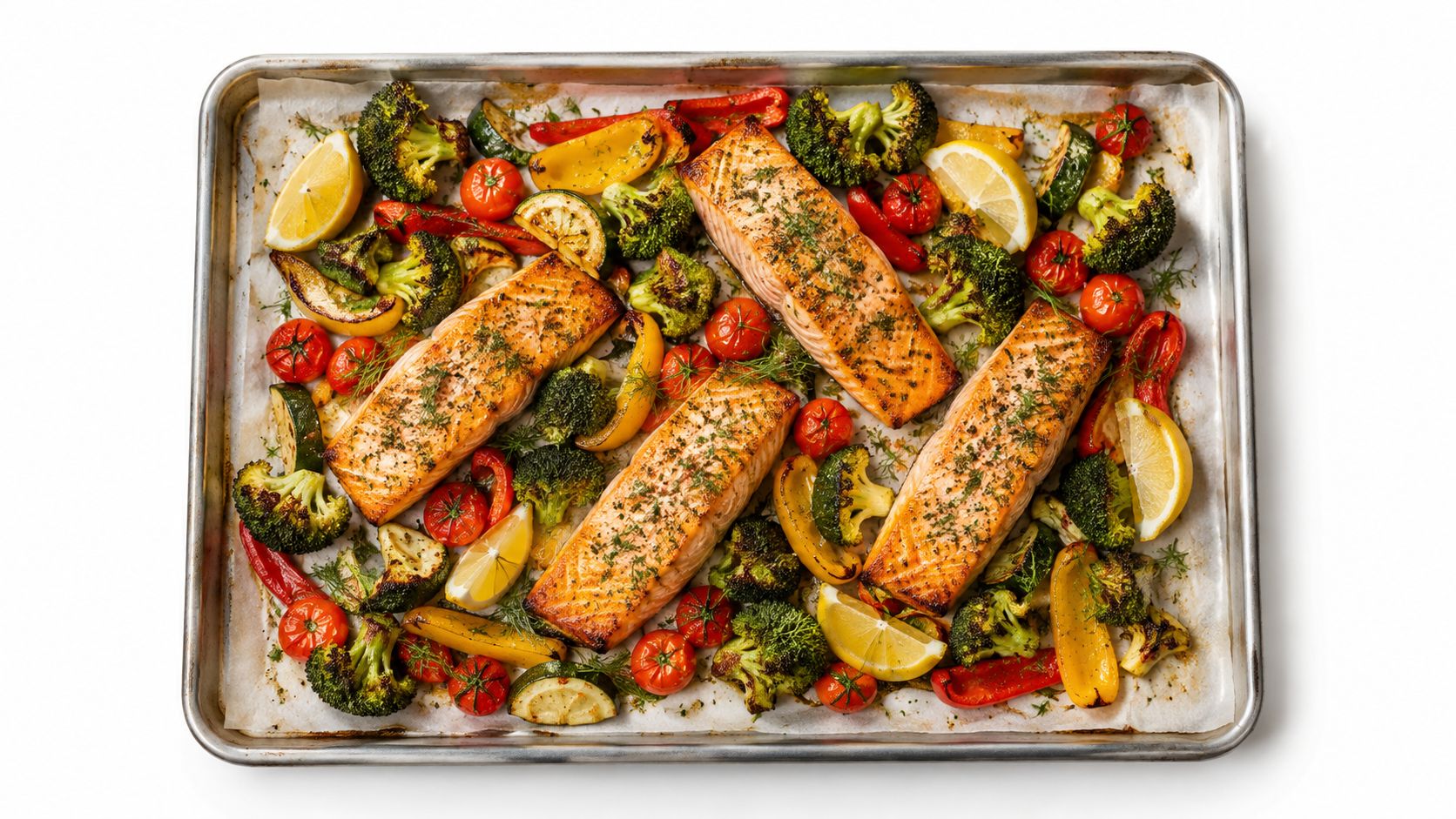
6. Sheet-Pan Lemon-Herb Salmon with Roasted Vegetables
A sheet-pan salmon dinner solves the cleanup problem. Everything roasts on one lined pan, but the order matters. Dense vegetables need a head start, while salmon needs less time.
Heat the oven and place broccoli, zucchini, cherry tomatoes, or sliced bell peppers on a parchment-lined sheet pan. Toss them with olive oil, garlic, salt, and pepper, then roast for 8 to 10 minutes. Add dry salmon fillets afterward and season with lemon, herbs, and more olive oil. Continue roasting until the vegetables are tender and the salmon flakes easily.
The best swap is trout or cod. Trout has a similar cooking approach, while cod is leaner and may finish sooner. You can also replace the vegetables with asparagus, green beans, or cauliflower, but cut dense pieces smaller so everything finishes together.
Pat the salmon dry before seasoning. That small step helps the surface roast instead of releasing water into the pan. Finish with lemon zest and fresh dill or parsley after cooking. Fresh herbs added too early can lose their aroma.
Mistake to avoid: Don't put salmon on the pan at the same time as large raw potatoes. The fish will dry out before the potatoes soften.
For more one-pan combinations, browse these healthy sheet-pan dinner recipes. A sheet pan is useful, but it doesn't make every ingredient cook at the same speed. Match the cuts before you rely on the timer.
7. Whole-Wheat Pasta with Cherry Tomatoes, White Beans, and Basil
This pasta handles the empty-pantry problem better than most dinners. Whole-wheat pasta, canned white beans, cherry tomatoes, garlic, olive oil, and basil create a complete bowl from ingredients that keep well.
Boil the pasta while you blister the tomatoes in olive oil over medium-high heat. Cook them until their skins split and their juices begin to collect in the pan. Add garlic, then stir in cannellini beans. Mash some of the beans against the skillet. Their starch helps form a creamy sauce without cream.
Reserve 1/2 cup pasta water before draining. Add enough to loosen the tomato and bean mixture, then toss in the pasta. Finish with basil off the heat so it stays fragrant. A little grated Parmesan is optional, but the beans and olive oil already provide body.
The practical swap is frozen peas for white beans if you want a lighter texture, or chickpeas if you prefer a firmer bite. Use whole-wheat spaghetti, penne, or another minimally processed grain-based pasta. If you use refined pasta, keep the beans and tomatoes so the meal still has texture and vegetable volume.
The main mistake is draining all the pasta water. Without it, the sauce can turn oily and sit at the bottom of the bowl. Add it gradually because too much will dilute the tomato flavor.
Pasta is often treated as the whole dinner. Here, it works better as one part of the plate alongside beans and tomatoes. That structure makes a pantry meal feel balanced without requiring a separate side dish.
8. Balkan Grilled Chicken with Shopska Salad
This meal is built for the freshness problem. Grilled chicken provides a warm, substantial center, while Shopska salad brings raw tomatoes, cucumbers, peppers, onion, parsley, and grated sirene cheese. The contrast keeps a fast chicken dinner from tasting repetitive.
Marinate chicken thighs or breasts in yogurt, paprika, garlic, and herbs. Overnight marinating gives the most tender result, but even a short rest improves the surface flavor. Pan-sear or grill the chicken, turning it as needed. Chicken should reach an internal temperature of 165°F, as outlined in this guidance on safe poultry cooking for food businesses.
While the chicken cooks, dice the salad ingredients. Salt the cucumbers and tomatoes lightly, then drain excess liquid if you want a crisp salad rather than a watery one. Add the grated cheese only shortly before serving.
The best swap is plain yogurt-marinated tofu. Press it first, then sear it in a hot pan. You can also use feta if sirene isn't available, though the flavor will be somewhat different. Serve with a spoonful of plain yogurt or a small portion of whole-grain bread.
The mistake is cutting the chicken into irregular pieces. Large pieces finish later than thin ones, so the smaller edges dry out while the centers catch up. Keep portions similar in thickness and check the thickest piece.
For related flavors and preparation ideas, explore these Balkan food recipes. This dinner works especially well when the salad is made fresh at the last moment.
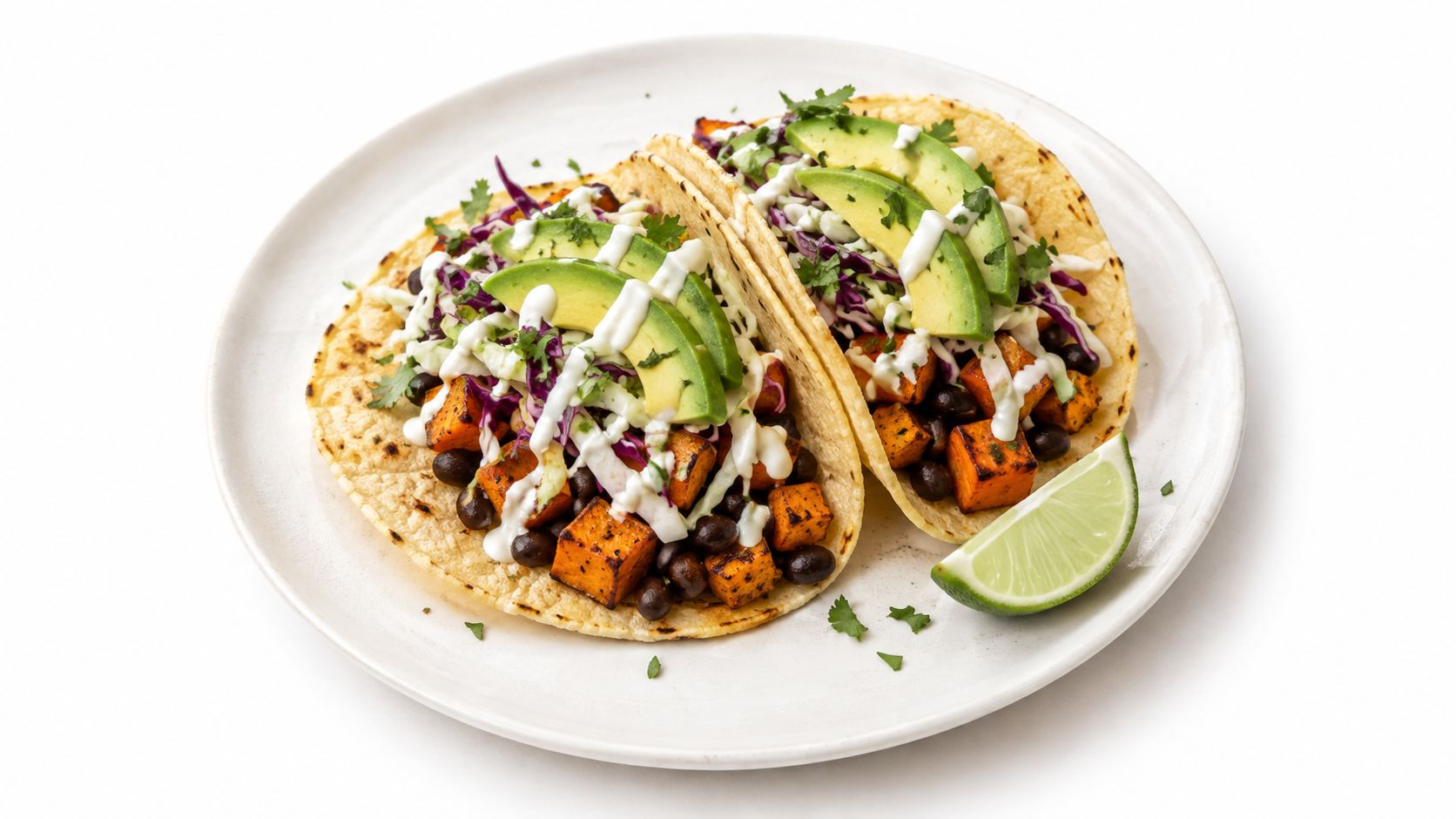
9. Black Bean and Sweet Potato Tacos
Sweet potato tacos solve the meatless dinner that still needs to feel satisfying problem. Roast small sweet potato cubes with cumin, chili powder, and oil. Combine them with black beans and corn, then serve in warm corn tortillas with cabbage, avocado, salsa, or pickled onions.
Cut the sweet potatoes into 1/2-inch cubes so they roast evenly at 425°F in about 20 minutes. Spread them out instead of piling them together. Crowding traps steam and prevents the caramelized edges that make this filling taste complete.
Warm the tortillas in a dry skillet for about 20 seconds per side, or heat them directly over a gas flame if you're comfortable doing so. Mash half the black beans with a fork, leaving the rest whole. The mashed beans act as a binder and reduce filling from falling out of the tortilla.
A useful swap is roasted cauliflower for sweet potato. It cooks in a similar way and takes on smoky spices well. Pinto beans can replace black beans, while shredded lettuce can stand in for cabbage. Add lime or salsa verde at the end for acidity.
The mistake is serving the filling without contrast. Sweet potato and beans are soft, so tacos need something crisp or sharp. Cabbage slaw, pickled onions, radishes, or a fresh salsa fixes the texture without adding much work.
These tacos also make good leftovers, but store the filling and toppings separately. Reheat the sweet potato and bean mixture in a skillet, then add fresh cabbage and avocado after warming.
10. Greek Chicken Souvlaki Bowls with Tzatziki
This bowl is the slowest option because it includes several separate components, but it solves the shared meal with different preferences problem. Chicken, grain, cucumber, tomato, onion, and tzatziki can be arranged separately, so each person builds a bowl with the flavors and portions they prefer.
Cut chicken into 1-inch pieces and marinate it with lemon, garlic, oregano, and olive oil. Small pieces cook quickly in a skillet, usually in 6 to 8 minutes, but don't rely on time alone. Check the thickest piece and remove the chicken once it's cooked through.
Make tzatziki with a 2:1 ratio of Greek yogurt to grated cucumber. Squeeze the cucumber well before mixing. Excess water makes the sauce thin and causes it to run into the grain. Add garlic, lemon, dill, and a little salt.
The practical swap is canned chickpeas for chicken. Warm them with oregano, lemon, and olive oil, then use the same cucumber, tomato, and tzatziki components. Quinoa or bulgur can replace rice when you want a different whole-grain base.
The mistake is storing tzatziki with the hot ingredients. Keep the sauce and raw toppings separate until serving. If you're packing leftovers, put the sauce in a small container and add it after reheating.
Warm pita or a cooked grain in the same pan after the chicken comes out. That uses the remaining seasoning and avoids another piece of equipment. The result takes longer than a one-pan soup, but it gives everyone a dinner they can assemble rather than negotiate.
10 Quick & Healthy Dinner Ideas Comparison
| Dish | Implementation complexity | Resource requirements | Expected outcomes | Ideal use cases | Key advantages | Potential drawbacks |
|---|---|---|---|---|---|---|
| 15-Minute Vegetable and Tofu Stir-Fry | Low–Moderate (15–20 min; needs high-heat sear and tofu pressing) | Firm tofu, mixed quick-cook vegetables, soy sauce/rice vinegar, cornstarch, wok/skillet, rice/noodles | Plant protein (~10–12 g/100 g), crisp vegetables, savory sauce | Busy weeknights, budget vegetarian dinners | Very fast, flexible, easily vegan | Tofu can stick/remain soft; sauces may be high in sodium |
| Greek-Style Chickpea and Spinach Skillet | Low (about 20 min; one-pan simmer) | Canned chickpeas, spinach, tomatoes, olive oil, lemon, optional feta | High fiber and plant protein, iron from spinach, warm stew | Pantry-based dinners, vegetarian comfort meals | Shelf-stable ingredients, easy vegan swap | Canned chickpeas may be high-sodium; spinach can thin sauce |
| Chicken and Vegetable Donburi | Low–Moderate (10–20 min; simple simmer) | Chicken thigh, soy/mirin/dashi (or substitutes), rice, onion, greens | Balanced protein–carb–veg bowl, portion-controlled meal | Leftover rice use, quick family dinners, Japanese-style meals | Quick, adaptable to other proteins, easy to plate | Soy/mirin can be salty; mirin/dashi may be specialty items |
| Shrimp Fajita Bowls | Low (≈20 min; timing-sensitive shrimp) | Shrimp, bell peppers, onions, cumin/chili powder, rice, black beans, avocado | Lean seafood protein, fiber-rich base, bright citrus flavors | Fast weeknights, light protein-focused meals, frozen-friendly | Very fast, low-calorie, scalable | Shrimp overcooks easily; store seasoning blends may be high-sodium |
| Turkish Red Lentil Soup (Mercimek Çorbası) | Low (20–25 min; simmer and optional blending) | Red lentils, onion, carrot, stock, lemon, paprika/olive oil | High soluble fiber and plant protein, filling and inexpensive | Budget meals, make-ahead/freezable comfort food | Very low cost, freezes/reheats well, pantry staples | Can thicken quickly; texture may be too thick/earthy for some |
| Sheet-Pan Lemon-Herb Salmon with Roasted Vegetables | Low (≈25 min; oven timing/space management) | Salmon fillets, seasonal vegetables, olive oil, lemon, sheet pan | Omega-3 rich protein, vegetable fiber, minimal cleanup | Easy entertaining, low-hands-on weeknights, family dinners | Minimal hands-on, scalable one-pan meal | Fresh salmon cost; overcrowding causes steaming not roasting |
| Whole-Wheat Pasta with Cherry Tomatoes & White Beans | Low–Moderate (≈25 min; timing to reserve pasta water) | Whole-wheat pasta, cannellini beans, cherry tomatoes, olive oil, basil | Higher fiber, plant protein, hearty vegetarian pasta | Pantry-based dinners, leftovers, meatless nights | Shelf-stable staples, creamy texture from beans, easy to double | Whole-wheat texture may be disliked; needs pasta-water timing |
| Balkan Grilled Chicken with Shopska Salad | Moderate (≈25 min plus marinating; best with 2+ hr marinate) | Chicken, yogurt marinade, paprika/garlic, grill/pan, tomatoes, cucumbers, sirene/feta | Lean protein, fresh raw salad, calcium from cheese | Grilling/seasonal dinners, family meals, Mediterranean-style | Fresh salad requires no cooking, tender marinated chicken | Marinating time recommended; sirene cheese may be hard to find |
| Black Bean and Sweet Potato Tacos | Moderate (≈30 min; roasting ~20–25 min) | Sweet potatoes, black beans, corn tortillas, cabbage slaw, avocado | Fiber-rich, vitamin A, plant protein, filling tacos | Vegetarian tacos, meal prep, budget-friendly dinners | Inexpensive, make-ahead roasted components, vegan-friendly | Roasting time longer than some weeknight options; tortillas can crack |
| Greek Chicken Souvlaki Bowls with Tzatziki | Moderate (≈30 min; marinate recommended) | Chicken, lemon/oregano/olive oil, Greek yogurt (tzatziki), grain base, fresh veg | Lean protein, balanced bowl, probiotic yogurt element | Meal prep bowls, Mediterranean meals, lunches/dinners | High protein, adaptable, components keep well | Marinating improves flavor; tzatziki can be watery if cucumber not drained |
Pick One Fast Dinner Tonight and Build Your Week
Choose one recipe under 25 minutes for tonight. If the fridge is nearly empty, pick the chickpea skillet, lentil soup, or white-bean pasta. If you have fresh vegetables but no plan, use the tofu stir-fry or salmon tray. If different people want different toppings, choose shrimp fajita bowls or souvlaki bowls.
Don't shop for ten unrelated recipes. Buy two or three shared ingredients that can move across meals, such as spinach, lemons, cooked grains, canned beans, yogurt, or frozen vegetables. Shared ingredients reduce waste and make the next dinner easier because you won't be starting from an empty kitchen.
Cook a double batch of rice, grains, or lentils when you have the time. Store the extra portion safely and use it for a donburi, fajita bowl, or leftover vegetable skillet. The goal isn't elaborate meal prep. It's removing one decision from tomorrow.
A realistic weeknight recipe should expose more than cooking time. Look for active preparation, total time, equipment, yield, substitutions, and a leftover plan. The average evening-meal preparation time in UK consumer-tracking data had fallen to 31 minutes, making total active time a useful benchmark for recipe planning, not just a marketing label (AHDB consumer cooking trends).
Nutrition also works better as a structure than as a list of rules. The World Health Organization's healthy diet guidance recommends at least 400 grams of fruit and vegetables daily for adults and children over age 10. You don't need to calculate that target at the stove, but you can make vegetables visible in dinner by using two generous handfuls, adding beans or lentils, and choosing a whole-grain base when practical.
Taste and cost determine whether a plan gets repeated. A 2025 Pew survey of 5,123 U.S. adults found that taste and cost mattered more than healthiness when people decided what to eat, and nearly nine in ten respondents ate home-cooked meals at least a few times weekly (Pew Research Center's food and eating report). That's why these dinners use ordinary beans, frozen vegetables, eggs, rice, canned tomatoes, and flexible sauces. A theoretically perfect dinner that nobody wants to cook again isn't a useful weeknight system.
For more complete recipes, browse the Quick Dinners and Healthy Eating filters on Just Cook It. The site publishes downloadable cookbook e-books with step-by-step instructions, photography, and recipes designed for ordinary home kitchens, so you can move from a general idea to a repeatable meal without collecting specialty equipment. A pantry guide from SouthRay Kitchen & Bath can also help you organize the shelf-stable ingredients that make these dinners possible.
Pick one dinner now, write down the ingredients you're missing, and start with the component that takes longest. Small sequencing choices, such as cooking rice first or roasting vegetables before adding salmon, do more for weeknight success than a complicated recipe ever will.
Just Cook It offers downloadable cookbook e-books with everyday recipes across global cuisines, including quick dinners and healthy eating collections. Visit Just Cook It to find dependable recipes you can read on a phone, tablet, laptop, or e-reader and use for your next weeknight meal.